TRANSFORMATION
Presented By
U TIN ZAN KYAW
Principal
Device Business Management Academy
tzk.device@gmail.com
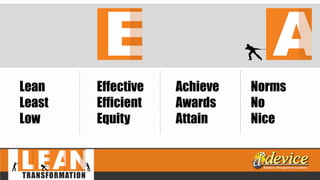
Lean
Least
Low
Effective
Efficient
Equity
Achieve
Awards
Attain
Norms
No
Nice
- William Hazlitt (English writer, 1778-1830)
“Prosperity is a great teacher;
adversity a greater.”
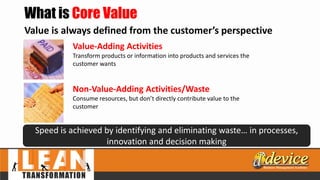
What is Core Value
Value is always defined from the customer’s perspective
Value-Adding Activities
Transform products or information into products and services the
customer wants
Non-Value-Adding Activities/Waste
Consume resources, but don’t directly contribute value to the
customer
Speed is achieved by identifying and eliminating waste… in processes,
innovation and decision making
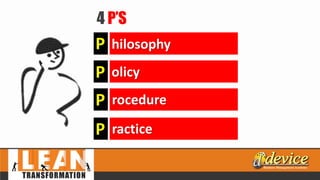
4 P’S
hilosophy
olicy
rocedure
P
P
P
racticeP
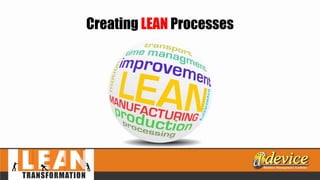
Creating LEAN Processes
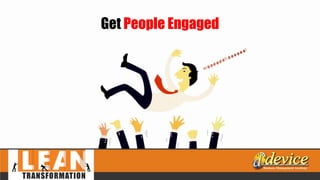
Get People Engaged
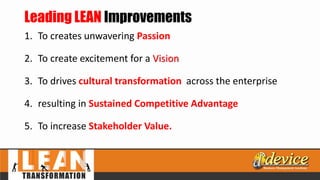
Leading LEAN Improvements
1. To creates unwavering Passion
2. To create excitement for a Vision
3. To drives cultural transformation across the enterprise
4. resulting in Sustained Competitive Advantage
5. To increase Stakeholder Value.
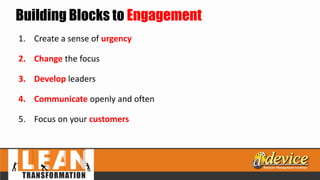
Building Blocks to Engagement
1. Create a sense of urgency
2. Change the focus
3. Develop leaders
4. Communicate openly and often
5. Focus on your customers
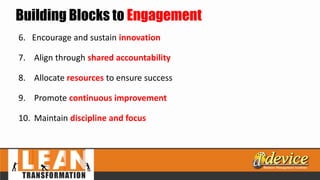
Building Blocks to Engagement
6. Encourage and sustain innovation
7. Align through shared accountability
8. Allocate resources to ensure success
9. Promote continuous improvement
10. Maintain discipline and focus
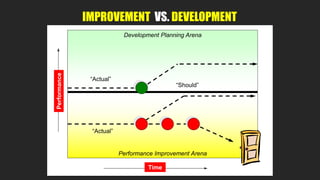
Performance Improvement Arena
Development Planning Arena
“Should”
“Actual”
“Actual”
Time
Performance
IMPROVEMENT VS. DEVELOPMENT
Your Role
Set the Tempo
 Set the business vision and strategies
 Create passion for leading the change
 Set stretch goals
 Define the critical few objectives
 Establish metrics and incentives
 Leverage Kaizen Breakthrough Events for engaging
associates in collaborative problem solving
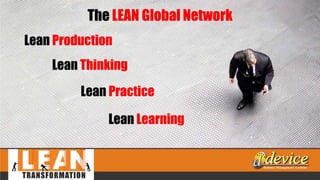
Lean Production
Lean Thinking
Lean Practice
Lean Learning
The LEAN Global Network
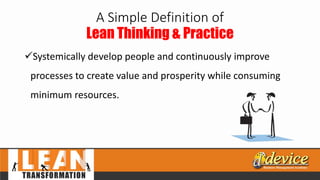
A Simple Definition of
Lean Thinking & Practice
Systemically develop people and continuously improve
processes to create value and prosperity while consuming
minimum resources.
Every Organization Must Address
Purpose – Provide value to customers (cost-effectively to prosper, etc.).
Process – Through value streams that are designed, operated, improved.
People – By engaging and respecting employees and other stakeholders.
 Aligning purpose, process, and people.
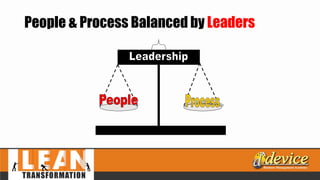
People & Process Balanced by Leaders
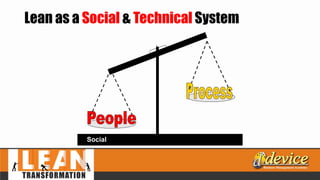
Lean as a Social & Technical System
Social
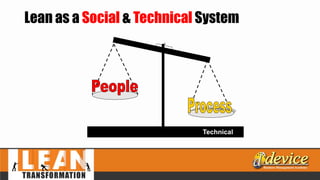
Lean as a Social & Technical System
Technical
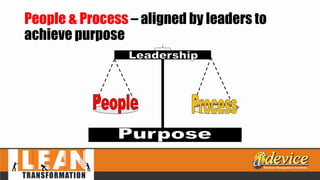
People & Process – aligned by leaders to
achieve purpose
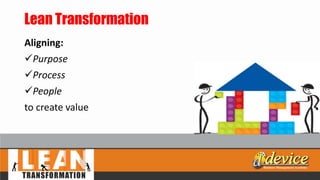
Lean Transformation
Aligning:
Purpose
Process
People
to create value
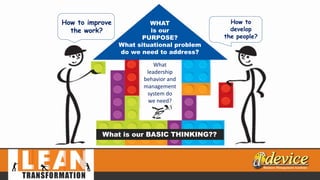
WHAT
is our
PURPOSE?
What situational problem
do we need to address?
How to improve
the work?
How to
develop
the people?
What is our BASIC THINKING??
What
leadership
behavior and
management
system do
we need?
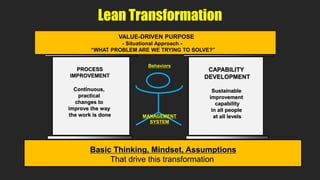
Lean Transformation
PROCESS
IMPROVEMENT
Continuous,
practical
changes to
improve the way
the work is done
CAPABILITY
DEVELOPMENT
Sustainable
improvement
capability
in all people
at all levels
VALUE-DRIVEN PURPOSE
- Situational Approach -
“WHAT PROBLEM ARE WE TRYING TO SOLVE?”
Basic Thinking, Mindset, Assumptions
That drive this transformation
Behaviors
MANAGEMENT
SYSTEM
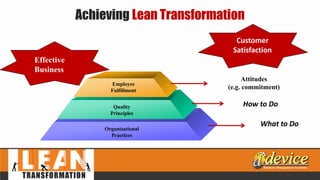
Employee
Fulfillment
Quality
Principles
Organizational
Practices
Effective
Business
Customer
Satisfaction
Attitudes
(e.g. commitment)
How to Do
What to Do
Achieving Lean Transformation
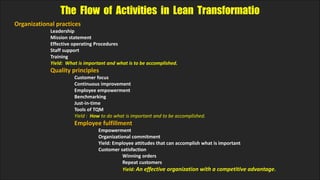
Organizational practices
Leadership
Mission statement
Effective operating Procedures
Staff support
Training
Yield: What is important and what is to be accomplished.
Quality principles
Customer focus
Continuous improvement
Employee empowerment
Benchmarking
Just-in-time
Tools of TQM
Yield : How to do what is important and to be accomplished.
Employee fulfillment
Empowerment
Organizational commitment
Yield: Employee attitudes that can accomplish what is important
Customer satisfaction
Winning orders
Repeat customers
Yield: An effective organization with a competitive advantage.
The Flow of Activities in Lean Transformatio
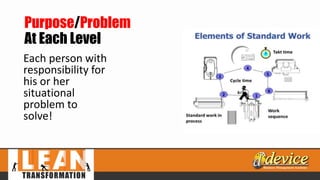
Purpose/Problem
At Each Level
Each person with
responsibility for
his or her
situational
problem to
solve!
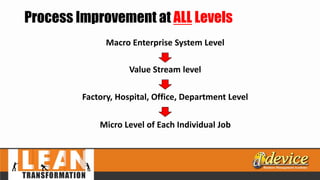
Process Improvement at ALL Levels
Macro Enterprise System Level
Value Stream level
Factory, Hospital, Office, Department Level
Micro Level of Each Individual Job
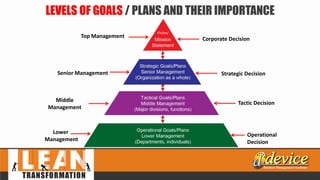
LEVELS OF GOALS / PLANS AND THEIR IMPORTANCE
Corporate Decision
Strategic Decision
Tactic Decision
Operational
Decision
Vision/
Top Management
Senior Management
Middle
Management
Lower
Management
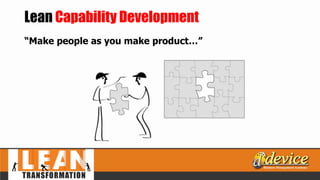
Lean Capability Development
“Make people as you make product…”
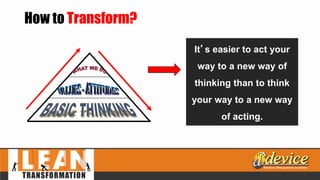
How to Transform?
It’s easier to act your
way to a new way of
thinking than to think
your way to a new way
of acting.
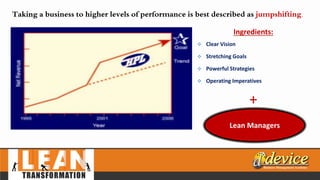
Taking a business to higher levels of performance is best described as jumpshifting.
Ingredients:
 Clear Vision
 Stretching Goals
 Powerful Strategies
 Operating Imperatives
+
Lean Managers
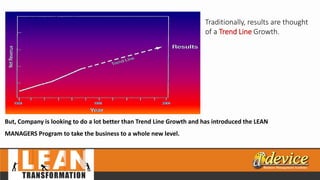
Traditionally, results are thought
of a Trend Line Growth.
But, Company is looking to do a lot better than Trend Line Growth and has introduced the LEAN
MANAGERS Program to take the business to a whole new level.
THINKING DIFFERENTLY
A Passion for Growth
A Passion for Change
A Passion for Sustained Momentum
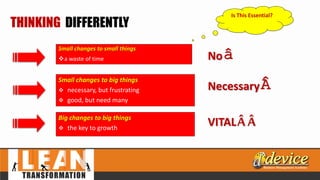
THINKING DIFFERENTLY
Small changes to small things
a waste of time
Is This Essential?
Small changes to big things
 necessary, but frustrating
 good, but need many
Big changes to big things
 the key to growth
Noâ
NecessaryÂ
VITALÂÂ
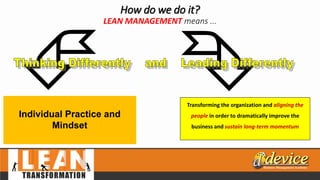
How do we do it?
LEAN MANAGEMENT means ...
Individual Practice and
Mindset
Transforming the organization and aligning the
people in order to dramatically improve the
business and sustain long-term momentum
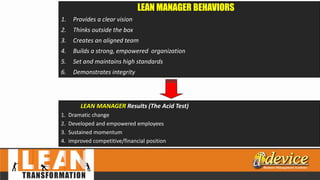
LEAN MANAGER BEHAVIORS
1. Provides a clear vision
2. Thinks outside the box
3. Creates an aligned team
4. Builds a strong, empowered organization
5. Set and maintains high standards
6. Demonstrates integrity
LEAN MANAGER Results (The Acid Test)
1. Dramatic change
2. Developed and empowered employees
3. Sustained momentum
4. improved competitive/financial position
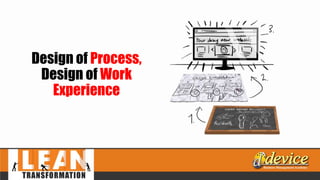
Design of Process,
Design of Work
Experience
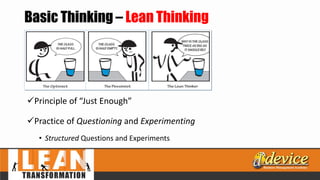
Basic Thinking – Lean Thinking
Principle of “Just Enough”
Practice of Questioning and Experimenting
• Structured Questions and Experiments
Lean Thinking
Principle of Respect for People
Practice of Continuous Improvement ( Kaizen)
Never ending learning…to make
things better…
in everything…everywhere
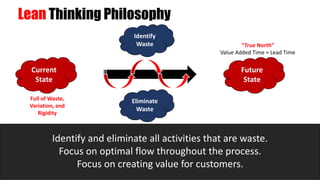
Lean Thinking Philosophy
Current
State
Future
State
Eliminate
Waste
Identify
Waste “True North”
Value Added Time = Lead Time
Full of Waste,
Variation, and
Rigidity
Identify and eliminate all activities that are waste.
Focus on optimal flow throughout the process.
Focus on creating value for customers.
Growing Your Business
Through
Lean Process
Improvement
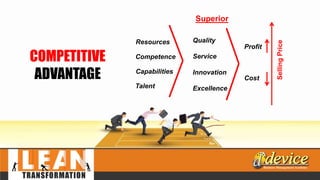
COMPETITIVE
ADVANTAGE
Quality
Service
Innovation
Excellence
Profit
Superior
Cost
SellingPrice
Resources
Competence
Capabilities
Talent
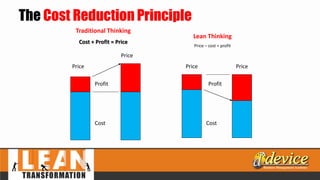
The Cost Reduction Principle
Cost
Profit
Price
Price
Traditional Thinking
Cost + Profit = Price
Cost
Profit
Price Price
Lean Thinking
Price – cost = profit
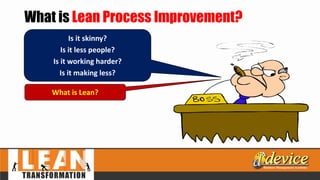
What is Lean Process Improvement?
What is Lean?
Is it skinny?
Is it less people?
Is it working harder?
Is it making less?
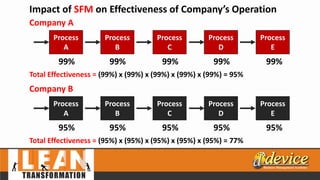
Impact of SFM on Effectiveness of Company’s Operation
Company A
Process
A
Process
B
Process
C
Process
D
Process
E
99% 99% 99% 99% 99%
Total Effectiveness = (99%) x (99%) x (99%) x (99%) x (99%) = 95%
Company B
Process
A
Process
B
Process
C
Process
D
Process
E
95% 95% 95% 95% 95%
Total Effectiveness = (95%) x (95%) x (95%) x (95%) x (95%) = 77%
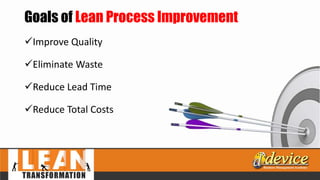
Goals of Lean Process Improvement
Improve Quality
Eliminate Waste
Reduce Lead Time
Reduce Total Costs
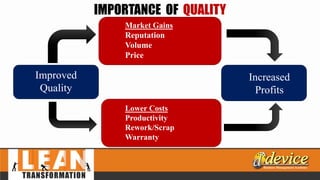
IMPORTANCE OF QUALITY
Market Gains
Reputation
Volume
Price
Lower Costs
Productivity
Rework/Scrap
Warranty
Increased
Profits
Improved
Quality
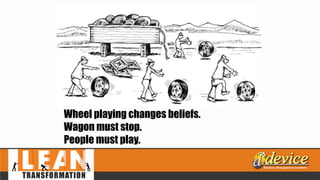
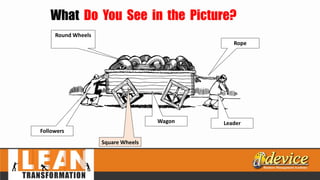
Wheel playing changes beliefs.
Wagon must stop.
People must play.
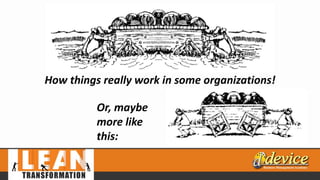
How things really work in some organizations!
Or, maybe
more like
this:
What Do You See in the Picture?
Wagon Leader
Followers
Square Wheels
Round Wheels
Rope
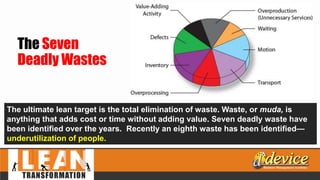
The Seven
Deadly Wastes
The ultimate lean target is the total elimination of waste. Waste, or muda, is
anything that adds cost or time without adding value. Seven deadly waste have
been identified over the years. Recently an eighth waste has been identified—
underutilization of people.
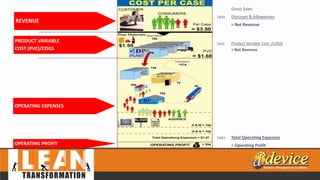
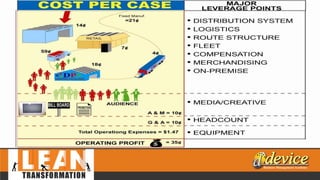
OPERATING PROFIT
OPERATING EXPENSES
PRODUCT VARIABLE
COST (PVC)/COGS
REVENUE
Gross Sales
Less Discount & Allowances
= Net Revenue
Less Product Variable Cost /COGS
= Net Revenue
Less Total Operating Expenses
= Operating Profit
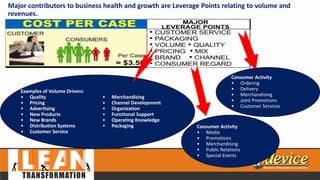
Major contributors to business health and growth are Leverage Points relating to volume and
revenues.
Examples of Volume Drivers:
• Quality
• Pricing
• Advertising
• New Products
• New Brands
• Distribution Systems
• Customer Service
• Merchandising
• Channel Development
• Organization
• Functional Support
• Operating Knowledge
• Packaging Consumer Activity
• Media
• Promotions
• Merchandising
• Public Relations
• Special Events
Consumer Activity
• Ordering
• Delivery
• Merchandising
• Joint Promotions
• Customer Services
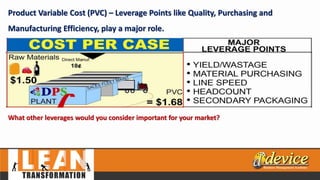
Product Variable Cost (PVC) – Leverage Points like Quality, Purchasing and
Manufacturing Efficiency, play a major role.
What other leverages would you consider important for your market?
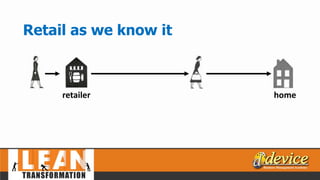
Retail as we know it
retailer home
home
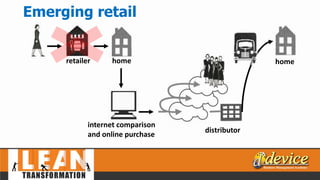
internet comparison
and online purchase
distributor
Emerging retail
retailer home
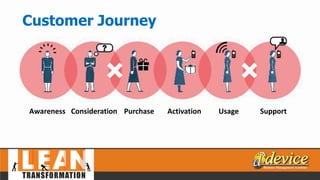
Customer Journey
Awareness Consideration Purchase Activation Usage Support
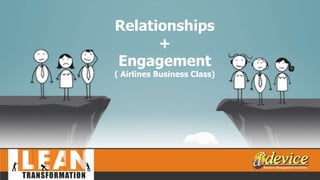
Relationships
+
Engagement
( Airlines Business Class)
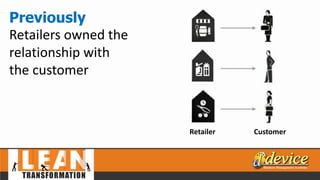
Previously
Retailers owned the
relationship with
the customer
Retailer Customer
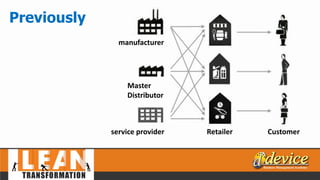
Previously
Retailer Customerservice provider
Master
Distributor
manufacturer
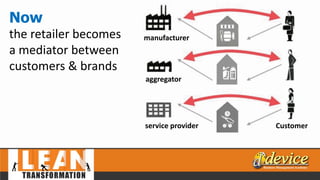
Now
the retailer becomes
a mediator between
customers & brands
Customerservice provider
aggregator
manufacturer
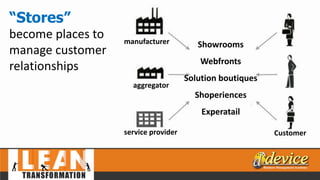
“Stores”
become places to
manage customer
relationships
Customerservice provider
aggregator
manufacturer Showrooms
Webfronts
Solution boutiques
Shoperiences
Experatail
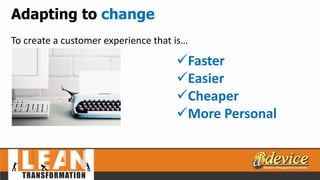
Adapting to change
To create a customer experience that is…
Faster
Easier
Cheaper
More Personal
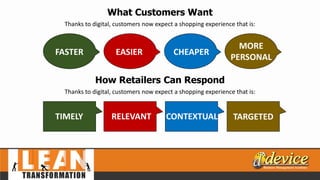
What Customers Want
Thanks to digital, customers now expect a shopping experience that is:
FASTER EASIER CHEAPER
MORE
PERSONAL
How Retailers Can Respond
Thanks to digital, customers now expect a shopping experience that is:
TIMELY RELEVANT CONTEXTUAL TARGETED
The Future of Retail
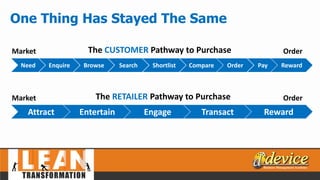
One Thing Has Stayed The Same
The CUSTOMER Pathway to Purchase
Need Enquire Browse Search Shortlist Compare Order Pay Reward
Market Order
Attract Entertain Engage Transact Reward
The RETAILER Pathway to PurchaseMarket Order
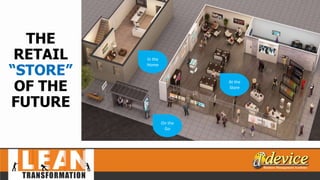
In the
Home
At the
Store
On the
Go
THE
RETAIL
“STORE”
OF THE
FUTURE
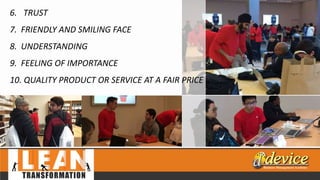
WHAT CUSTOMERS REALLY NEED,
WANT AND EXPECT
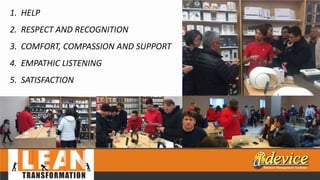
1. HELP
2. RESPECT AND RECOGNITION
3. COMFORT, COMPASSION AND SUPPORT
4. EMPATHIC LISTENING
5. SATISFACTION
6. TRUST
7. FRIENDLY AND SMILING FACE
8. UNDERSTANDING
9. FEELING OF IMPORTANCE
10. QUALITY PRODUCT OR SERVICE AT A FAIR PRICE
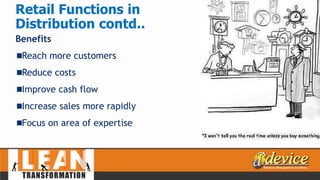
Benefits
Reach more customers
Reduce costs
Improve cash flow
Increase sales more rapidly
Focus on area of expertise
Retail Functions in
Distribution contd..
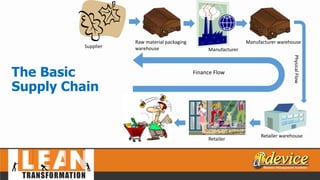
The Basic
Supply Chain
Finance Flow
Supplier
Raw material packaging
warehouse Manufacturer
Manufacturer warehouse
Retailer warehouse
Retailer
PhysicalFlow
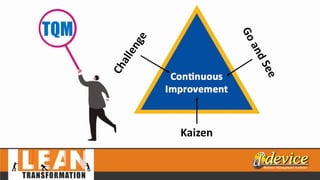
TQM
Kaizen
7 Process Wastes (TIMWOOD)
1. Transportation: Unnecessary movement things (parts or machines)
between processes
2. Inventory: Raw material, work in progress or finished goods which
is not having value added to it
3. Movement: Unnecessary movement of people within a process
4. Waiting: People or parts that wait for a work cycle to be complete
7 Process Wastes (TIMWOOD)
5. Overproduction: To produce sooner, faster or in greater quantities
than the customer demands
6. Over processing: Processing beyond the standard required by the
customer
7. Defects: Not right first time, repetition or correction of a process
Decisions—Decisions—Decisions
Is my company too small for Lean Process Improvement?
Isn’t Lean a manufacturing process? I am a service business.
Can I afford to implement Lean Process Improvement?
All of these industries have successfully applied Lean to their
processes
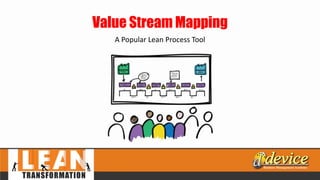
Value Stream Mapping
A Popular Lean Process Tool
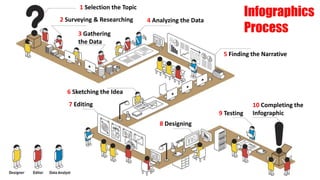
Infographics
Process
1 Selection the Topic
2 Surveying & Researching
3 Gathering
the Data
4 Analyzing the Data
5 Finding the Narrative
6 Sketching the Idea
7 Editing
8 Designing
9 Testing
10 Completing the
Infographic
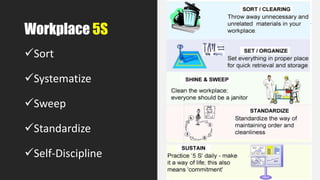
Workplace 5S
Sort
Systematize
Sweep
Standardize
Self-Discipline
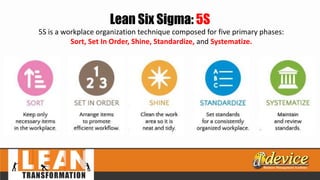
5S is a workplace organization technique composed for five primary phases:
Sort, Set In Order, Shine, Standardize, and Systematize.
Lean Six Sigma: 5S
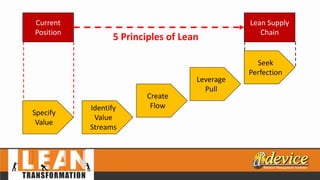
Specify
Value
Identify
Value
Streams
Create
Flow
Leverage
Pull
Seek
Perfection
Lean Supply
Chain
Current
Position
5 Principles of Lean
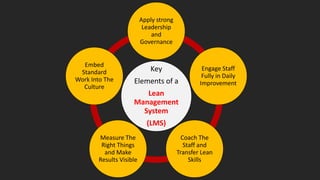
Key
Elements of a
Lean
Management
System
(LMS)
Apply strong
Leadership
and
Governance
Engage Staff
Fully in Daily
Improvement
Coach The
Staff and
Transfer Lean
Skills
Measure The
Right Things
and Make
Results Visible
Embed
Standard
Work Into The
Culture
Conclusion
 If you are the low cost producer of a good or service you have
a competitive advantage and will be able to grow your
business. Lean is the tool to reduce your costs.
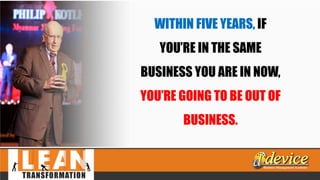
WITHIN FIVE YEARS, IF
YOU’RE IN THE SAME
BUSINESS YOU ARE IN NOW,
YOU’RE GOING TO BE OUT OF
BUSINESS.
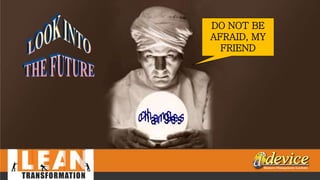
DO NOT BE
AFRAID, MY
FRIEND
Leading Through Turmoil
…use time as your focus and LEAN
as your foundation.
Thank you and good luck!

BFBM(5-2016) Lean in (lean transformation)