Lean Enterprise Transformation
Lean Global Network
www.lean.org
November 2014
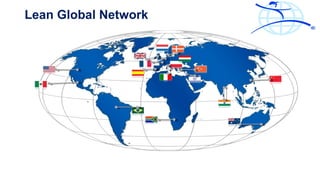
Lean Global Network
The Lean Global Network
• LGN is a network of mission-driven institutes taking
responsibility for bringing lean thinking and practices to
their countries and the world
• We believe lean thinking and practice can:
– Improve the performance of organisations and raise living
standards
– Enable prosperity while minimising resource use and
environmental impact
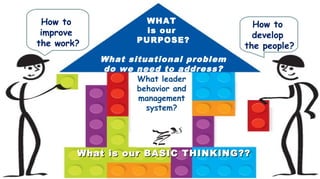
– Provide more fulfilling work and personal development for
everyone
– Enable consumers to create more value (consumer at center of
value-creation)
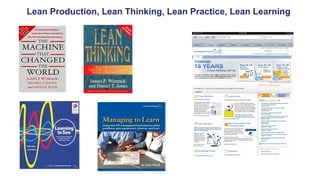
Lean Production, Lean Thinking, Lean Practice, Lean Learning
john shook
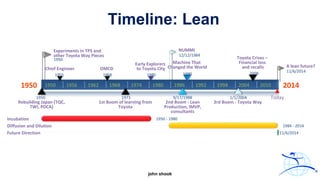
Timeline: Lean
1950 1950 1956 1962 1968 1974 1980 1986 1992 1998 2004 2010 2014
Today
A lean future?
11/6/2014
Toyota Crises –
Financial loss
and recalls
2008
3rd Boom - Toyota Way
1/1/2004
Machine That
Changed the World
1990
2nd Boom - Lean
Production, IMVP,
consultants
9/17/1988
NUMMI
12/12/1984
Early Explorers
to Toyota City
1980
1st Boom of learning from
Toyota
1973
OMCD
1968
Chief Engineer
1955
Experiments in TPS and
other Toyota Way Pieces
1950
Rebuilding Japan (TQC,
TWI, PDCA)
1950
Incubation 1950 - 1980
Diffusion and Dilution 1984 - 2014
Future Direction 11/6/2014
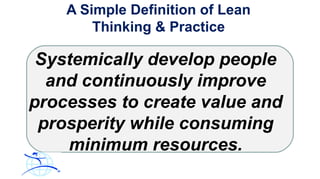
A Simple Definition of Lean
Thinking & Practice
Systemically develop people
and continuously improve
processes to create value and
prosperity while consuming
minimum resources.
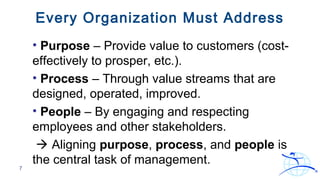
Every Organization Must Address
• Purpose – Provide value to customers (cost-
effectively to prosper, etc.).
• Process – Through value streams that are
designed, operated, improved.
• People – By engaging and respecting
employees and other stakeholders.
 Aligning purpose, process, and people is
the central task of management.
7
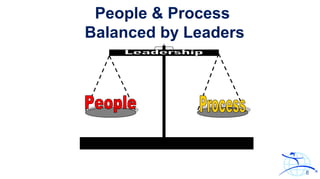
People & Process
Balanced by Leaders
8
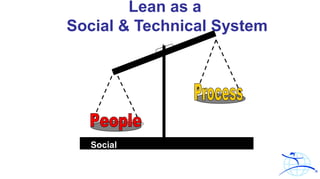
Lean as a
Social & Technical System
Social
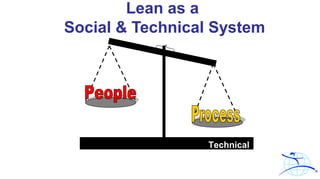
Lean as a
Social & Technical System
Technical
Process and People
• We should teach the art & craft of science.
• Science will give us a good technical
answer.
But…
• being technically “right” is only half the
“battle”.
11
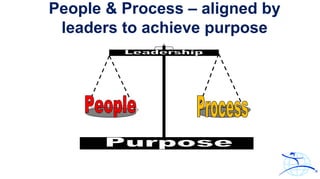
People & Process – aligned by
leaders to achieve purpose
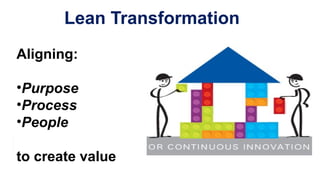
Lean Transformation
Aligning:
•Purpose
•Process
•People
to create value
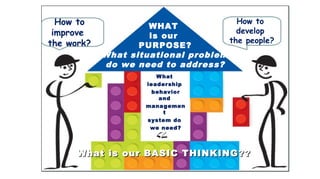
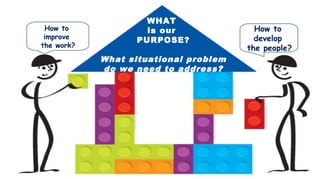
WHAT
is our
PURPOSE?
What situational problem
do we need to address?
How to
improve
the work?
How to
develop
the people?
What is our BASIC THINKING??What is our BASIC THINKING??
What
leadership
behavior
and
managemen
t
system do
we need?
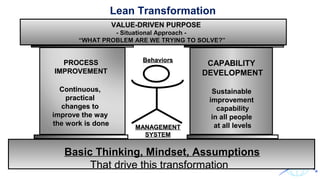
Lean Transformation Model
PROCESSPROCESS
IMPROVEMENTIMPROVEMENT
Continuous,Continuous,
practicalpractical
changes tochanges to
improve the wayimprove the way
the work is donethe work is done
CAPABILITYCAPABILITY
DEVELOPMENTDEVELOPMENT
SustainableSustainable
improvementimprovement
capabilitycapability
in all peoplein all people
at all levelsat all levels
VALUE-DRIVEN PURPOSEVALUE-DRIVEN PURPOSE
- Situational Approach -- Situational Approach -
““WHAT PROBLEM ARE WE TRYING TO SOLVE?”WHAT PROBLEM ARE WE TRYING TO SOLVE?”
Basic Thinking, Mindset, AssumptionsBasic Thinking, Mindset, Assumptions
That drive this transformationThat drive this transformation
BehaviorsBehaviors
MANAGEMENTMANAGEMENT
SYSTEMSYSTEM
Lean Transformation
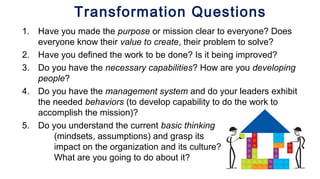
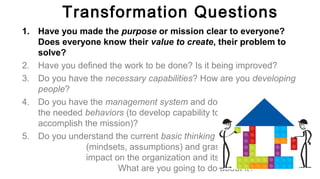
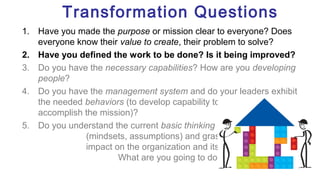
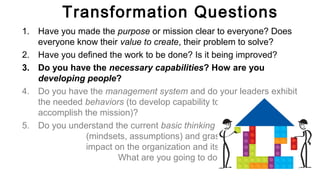
Transformation Questions
1. Have you made the purpose or mission clear to everyone? Does
everyone know their value to create, their problem to solve?
2. Have you defined the work to be done? Is it being improved?
3. Do you have the necessary capabilities? How are you developing
people?
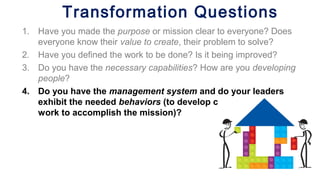
4. Do you have the management system and do your leaders exhibit
the needed behaviors (to develop capability to do the work to
accomplish the mission)?
5. Do you understand the current basic thinking
(mindsets, assumptions) and grasp its
impact on the organization and its culture?
What are you going to do about it?
Transformation Questions
1. Have you made the purpose or mission clear to everyone?
Does everyone know their value to create, their problem to
solve?
2. Have you defined the work to be done? Is it being improved?
3. Do you have the necessary capabilities? How are you developing
people?
4. Do you have the management system and do your leaders exhibit
the needed behaviors (to develop capability to do the work to
accomplish the mission)?
5. Do you understand the current basic thinking
(mindsets, assumptions) and grasp its
impact on the organization and its culture?
What are you going to do about it?
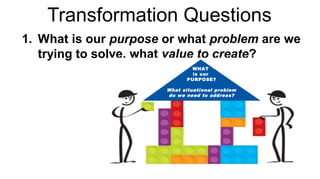
Transformation Questions
1. What is our purpose or what problem are we
trying to solve, what value to create?
WHAT
is our
PURPOSE?
What situational problem
do we need to address?
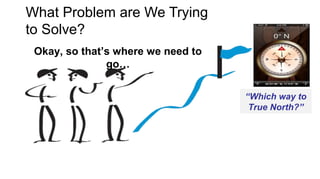
What Problem are We Trying
to Solve?
Okay, so that’s where we need to
go…
“Which way to
True North?”
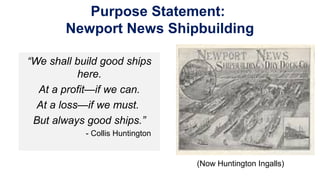
Purpose Statement:
Newport News Shipbuilding
“We shall build good ships
here.
At a profit—if we can.
At a loss—if we must.
But always good ships.”
- Collis Huntington
(Now Huntington Ingalls)
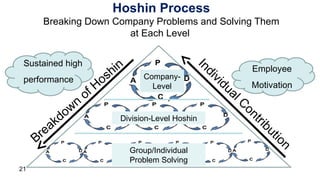
Hoshin Process
Breaking Down Company Problems and Solving Them
at Each Level
21
Company-
Level
Division-Level Hoshin
Group/Individual
Problem Solving
Breakdown
of Hoshin Individual C
ontribution
Sustained high
performance
Employee
Motivation
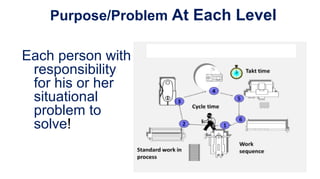
Purpose/Problem At Each Level
Each person with
responsibility
for his or her
situational
problem to
solve!
Transformation Questions
1. Have you made the purpose or mission clear to everyone? Does
everyone know their value to create, their problem to solve?
2. Have you defined the work to be done? Is it being improved?
3. Do you have the necessary capabilities? How are you developing
people?
4. Do you have the management system and do your leaders exhibit
the needed behaviors (to develop capability to do the work to
accomplish the mission)?
5. Do you understand the current basic thinking
(mindsets, assumptions) and grasp its
impact on the organization and its culture?
What are you going to do about it?
WHAT
is our
PURPOSE?
What situational problem
do we need to address?
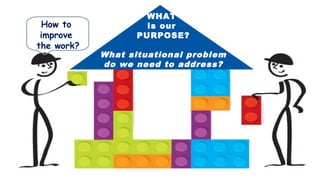
How to
improve
the work?
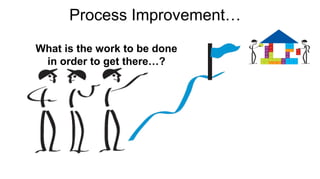
Process Improvement…
What is the work to be done
in order to get there…?
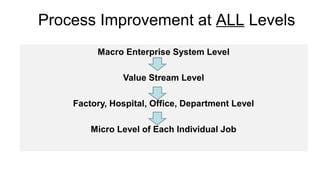
Process Improvement at ALL Levels
Macro Enterprise System Level
Value Stream Level
Factory, Hospital, Office, Department Level
Micro Level of Each Individual Job
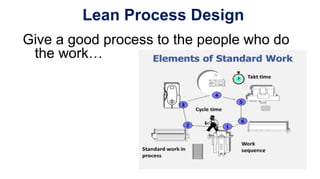
Lean Process Design
Give a good process to the people who do
the work…
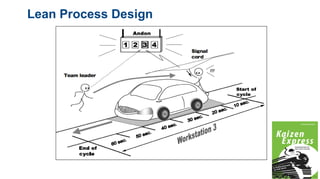
Lean Process Design
Transformation Questions
1. Have you made the purpose or mission clear to everyone? Does
everyone know their value to create, their problem to solve?
2. Have you defined the work to be done? Is it being improved?
3. Do you have the necessary capabilities? How are you
developing people?
4. Do you have the management system and do your leaders exhibit
the needed behaviors (to develop capability to do the work to
accomplish the mission)?
5. Do you understand the current basic thinking
(mindsets, assumptions) and grasp its
impact on the organization and its culture?
What are you going to do about it?
WHAT
is our
PURPOSE?
What situational problem
do we need to address?
How to
improve
the work?
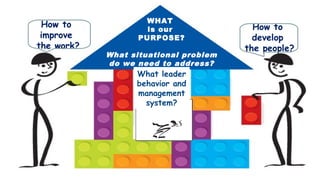
How to
develop
the people?
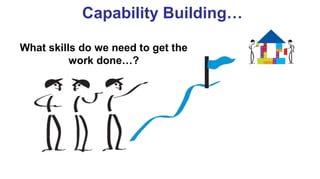
Capability Building…
What skills do we need to get the
work done…?
Lean Capability Development
“Make people as you
make product…”
“Make people as you
make product…”
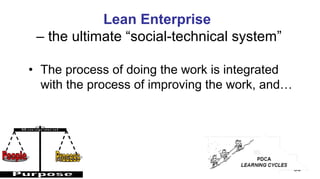
Lean Enterprise
– the ultimate “social-technical system”
33
• The process of doing the work is integrated
with the process of improving the work, and…
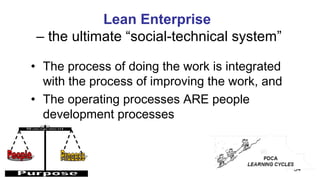
Lean Enterprise
– the ultimate “social-technical system”
34
• The process of doing the work is integrated
with the process of improving the work, and
• The operating processes ARE people
development processes
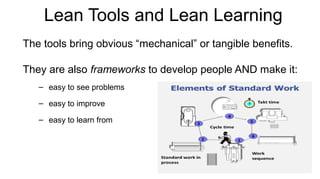
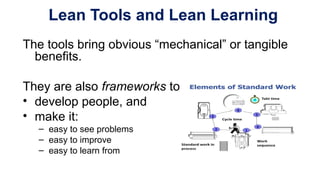
Lean Tools and Lean Learning
The tools bring obvious “mechanical” or tangible benefits.
They are also frameworks to develop people AND make it:
– easy to see problems
– easy to improve
– easy to learn from
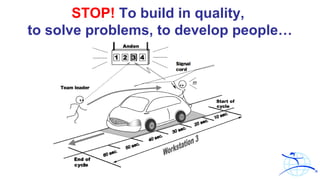
STOP! To build in quality,
to solve problems, to develop people…
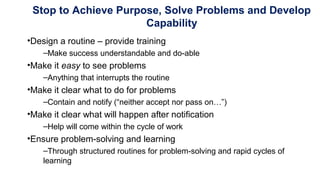
Stop to Achieve Purpose, Solve Problems and Develop
Capability
•Design a routine – provide training
–Make success understandable and do-able
•Make it easy to see problems
–Anything that interrupts the routine
•Make it clear what to do for problems
–Contain and notify (“neither accept nor pass on…”)
•Make it clear what will happen after notification
–Help will come within the cycle of work
•Ensure problem-solving and learning
–Through structured routines for problem-solving and rapid cycles of
learning
Lean Tools and Lean Learning
The tools bring obvious “mechanical” or tangible
benefits.
They are also frameworks to
• develop people, and
• make it:
– easy to see problems
– easy to improve
– easy to learn from
Transformation Questions
1. Have you made the purpose or mission clear to everyone? Does
everyone know their value to create, their problem to solve?
2. Have you defined the work to be done? Is it being improved?
3. Do you have the necessary capabilities? How are you developing
people?
4. Do you have the management system and do your leaders
exhibit the needed behaviors (to develop capability to do the
work to accomplish the mission)?
What
leadership
behavior and
management
system do
we need?
WHAT
is our
PURPOSE?
What situational problem
do we need to address?
How to
improve
the work?
How to
develop
the people?
What leader
behavior and
management
system?
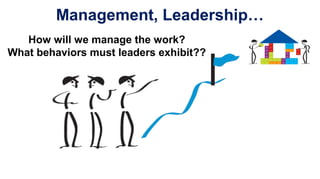
Management, Leadership…
How will we manage the work?
What behaviors must leaders exhibit??
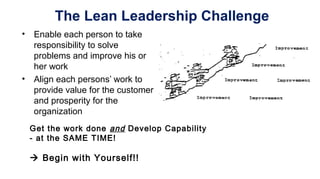
The Lean Leadership Challenge
• Enable each person to take
responsibility to solve
problems and improve his or
her work
• Align each persons’ work to
provide value for the customer
and prosperity for the
organization
Get the work done and Develop Capability
- at the SAME TIME!
 Begin with Yourself!!
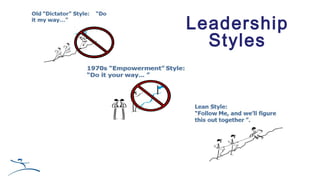
Leadership
Styles
What
leadership
behavior
and
managemen
t
system do
we need?
WHAT
is our
PURPOSE?
What situational problem
do we need to address?
How to
improve
the work?
How to
develop
the people?
What is our BASIC THINKING??What is our BASIC THINKING??
What leader
behavior and
management
system?
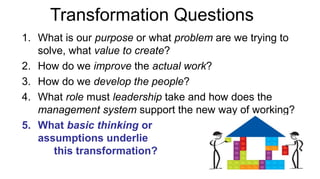
Transformation Questions
1. What is our purpose or what problem are we trying to
solve, what value to create?
2. How do we improve the actual work?
3. How do we develop the people?
4. What role must leadership take and how does the
management system support the new way of working?
5. What basic thinking or
assumptions underlie
this transformation?
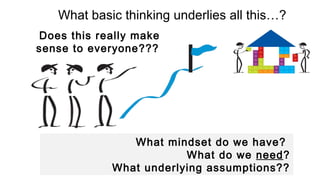
What basic thinking underlies all this…?
Does this really make
sense to everyone???
What mindset do we have?
What do we need?
What underlying assumptions??
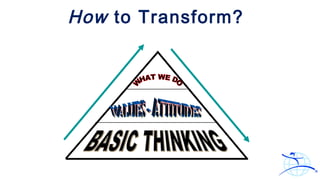
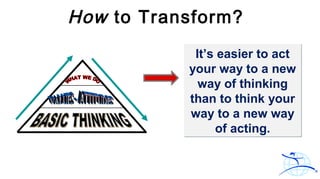
How to Transform?
It’s easier to act
your way to a new
way of thinking
than to think your
way to a new way
of acting.
It’s easier to act
your way to a new
way of thinking
than to think your
way to a new way
of acting.
How to Transform?
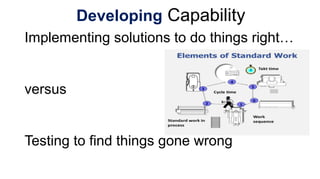
Developing Capability
Implementing solutions to do things right…
versus
Testing to find things gone wrong
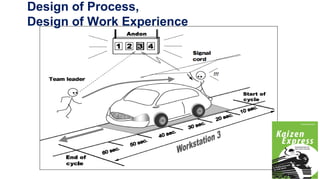
Design of Process,
Design of Work Experience
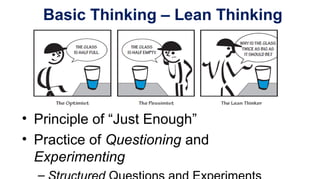
Basic Thinking – Lean Thinking
• Principle of “Just Enough”
• Practice of Questioning and
Experimenting
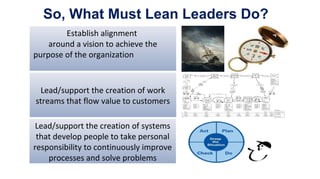
So, What Must Lean Leaders Do?
Lead/support the creation of work
streams that flow value to customers
Lead/support the creation of systems
that develop people to take personal
responsibility to continuously improve
processes and solve problems
Establish alignment
around a vision to achieve the
purpose of the organization
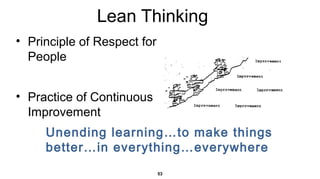
Lean Thinking
• Principle of Respect for
People
• Practice of Continuous
Improvement
53
Unending learning…to make things
better…in everything…everywhere

Lean Transformation Model

  • 1.
    Lean Enterprise Transformation LeanGlobal Network www.lean.org November 2014
  • 2.
  • 3.
    The Lean GlobalNetwork • LGN is a network of mission-driven institutes taking responsibility for bringing lean thinking and practices to their countries and the world • We believe lean thinking and practice can: – Improve the performance of organisations and raise living standards – Enable prosperity while minimising resource use and environmental impact – Provide more fulfilling work and personal development for everyone – Enable consumers to create more value (consumer at center of value-creation)
  • 4.
    Lean Production, LeanThinking, Lean Practice, Lean Learning
  • 5.
    john shook Timeline: Lean 19501950 1956 1962 1968 1974 1980 1986 1992 1998 2004 2010 2014 Today A lean future? 11/6/2014 Toyota Crises – Financial loss and recalls 2008 3rd Boom - Toyota Way 1/1/2004 Machine That Changed the World 1990 2nd Boom - Lean Production, IMVP, consultants 9/17/1988 NUMMI 12/12/1984 Early Explorers to Toyota City 1980 1st Boom of learning from Toyota 1973 OMCD 1968 Chief Engineer 1955 Experiments in TPS and other Toyota Way Pieces 1950 Rebuilding Japan (TQC, TWI, PDCA) 1950 Incubation 1950 - 1980 Diffusion and Dilution 1984 - 2014 Future Direction 11/6/2014
  • 6.
    A Simple Definitionof Lean Thinking & Practice Systemically develop people and continuously improve processes to create value and prosperity while consuming minimum resources.
  • 7.
    Every Organization MustAddress • Purpose – Provide value to customers (cost- effectively to prosper, etc.). • Process – Through value streams that are designed, operated, improved. • People – By engaging and respecting employees and other stakeholders.  Aligning purpose, process, and people is the central task of management. 7
  • 8.
  • 9.
    Lean as a Social& Technical System Social
  • 10.
    Lean as a Social& Technical System Technical
  • 11.
    Process and People •We should teach the art & craft of science. • Science will give us a good technical answer. But… • being technically “right” is only half the “battle”. 11
  • 12.
    People & Process– aligned by leaders to achieve purpose
  • 13.
  • 14.
    WHAT is our PURPOSE? What situationalproblem do we need to address? How to improve the work? How to develop the people? What is our BASIC THINKING??What is our BASIC THINKING?? What leadership behavior and managemen t system do we need?
  • 15.
    Lean Transformation Model PROCESSPROCESS IMPROVEMENTIMPROVEMENT Continuous,Continuous, practicalpractical changestochanges to improve the wayimprove the way the work is donethe work is done CAPABILITYCAPABILITY DEVELOPMENTDEVELOPMENT SustainableSustainable improvementimprovement capabilitycapability in all peoplein all people at all levelsat all levels VALUE-DRIVEN PURPOSEVALUE-DRIVEN PURPOSE - Situational Approach -- Situational Approach - ““WHAT PROBLEM ARE WE TRYING TO SOLVE?”WHAT PROBLEM ARE WE TRYING TO SOLVE?” Basic Thinking, Mindset, AssumptionsBasic Thinking, Mindset, Assumptions That drive this transformationThat drive this transformation BehaviorsBehaviors MANAGEMENTMANAGEMENT SYSTEMSYSTEM Lean Transformation
  • 16.
    Transformation Questions 1. Haveyou made the purpose or mission clear to everyone? Does everyone know their value to create, their problem to solve? 2. Have you defined the work to be done? Is it being improved? 3. Do you have the necessary capabilities? How are you developing people? 4. Do you have the management system and do your leaders exhibit the needed behaviors (to develop capability to do the work to accomplish the mission)? 5. Do you understand the current basic thinking (mindsets, assumptions) and grasp its impact on the organization and its culture? What are you going to do about it?
  • 17.
    Transformation Questions 1. Haveyou made the purpose or mission clear to everyone? Does everyone know their value to create, their problem to solve? 2. Have you defined the work to be done? Is it being improved? 3. Do you have the necessary capabilities? How are you developing people? 4. Do you have the management system and do your leaders exhibit the needed behaviors (to develop capability to do the work to accomplish the mission)? 5. Do you understand the current basic thinking (mindsets, assumptions) and grasp its impact on the organization and its culture? What are you going to do about it?
  • 18.
    Transformation Questions 1. Whatis our purpose or what problem are we trying to solve, what value to create? WHAT is our PURPOSE? What situational problem do we need to address?
  • 19.
    What Problem areWe Trying to Solve? Okay, so that’s where we need to go… “Which way to True North?”
  • 20.
    Purpose Statement: Newport NewsShipbuilding “We shall build good ships here. At a profit—if we can. At a loss—if we must. But always good ships.” - Collis Huntington (Now Huntington Ingalls)
  • 21.
    Hoshin Process Breaking DownCompany Problems and Solving Them at Each Level 21 Company- Level Division-Level Hoshin Group/Individual Problem Solving Breakdown of Hoshin Individual C ontribution Sustained high performance Employee Motivation
  • 22.
    Purpose/Problem At EachLevel Each person with responsibility for his or her situational problem to solve!
  • 23.
    Transformation Questions 1. Haveyou made the purpose or mission clear to everyone? Does everyone know their value to create, their problem to solve? 2. Have you defined the work to be done? Is it being improved? 3. Do you have the necessary capabilities? How are you developing people? 4. Do you have the management system and do your leaders exhibit the needed behaviors (to develop capability to do the work to accomplish the mission)? 5. Do you understand the current basic thinking (mindsets, assumptions) and grasp its impact on the organization and its culture? What are you going to do about it?
  • 24.
    WHAT is our PURPOSE? What situationalproblem do we need to address? How to improve the work?
  • 25.
    Process Improvement… What isthe work to be done in order to get there…?
  • 26.
    Process Improvement atALL Levels Macro Enterprise System Level Value Stream Level Factory, Hospital, Office, Department Level Micro Level of Each Individual Job
  • 27.
    Lean Process Design Givea good process to the people who do the work…
  • 28.
  • 29.
    Transformation Questions 1. Haveyou made the purpose or mission clear to everyone? Does everyone know their value to create, their problem to solve? 2. Have you defined the work to be done? Is it being improved? 3. Do you have the necessary capabilities? How are you developing people? 4. Do you have the management system and do your leaders exhibit the needed behaviors (to develop capability to do the work to accomplish the mission)? 5. Do you understand the current basic thinking (mindsets, assumptions) and grasp its impact on the organization and its culture? What are you going to do about it?
  • 30.
    WHAT is our PURPOSE? What situationalproblem do we need to address? How to improve the work? How to develop the people?
  • 31.
    Capability Building… What skillsdo we need to get the work done…?
  • 32.
    Lean Capability Development “Makepeople as you make product…” “Make people as you make product…”
  • 33.
    Lean Enterprise – theultimate “social-technical system” 33 • The process of doing the work is integrated with the process of improving the work, and…
  • 34.
    Lean Enterprise – theultimate “social-technical system” 34 • The process of doing the work is integrated with the process of improving the work, and • The operating processes ARE people development processes
  • 35.
    Lean Tools andLean Learning The tools bring obvious “mechanical” or tangible benefits. They are also frameworks to develop people AND make it: – easy to see problems – easy to improve – easy to learn from
  • 36.
    STOP! To buildin quality, to solve problems, to develop people…
  • 37.
    Stop to AchievePurpose, Solve Problems and Develop Capability •Design a routine – provide training –Make success understandable and do-able •Make it easy to see problems –Anything that interrupts the routine •Make it clear what to do for problems –Contain and notify (“neither accept nor pass on…”) •Make it clear what will happen after notification –Help will come within the cycle of work •Ensure problem-solving and learning –Through structured routines for problem-solving and rapid cycles of learning
  • 38.
    Lean Tools andLean Learning The tools bring obvious “mechanical” or tangible benefits. They are also frameworks to • develop people, and • make it: – easy to see problems – easy to improve – easy to learn from
  • 39.
    Transformation Questions 1. Haveyou made the purpose or mission clear to everyone? Does everyone know their value to create, their problem to solve? 2. Have you defined the work to be done? Is it being improved? 3. Do you have the necessary capabilities? How are you developing people? 4. Do you have the management system and do your leaders exhibit the needed behaviors (to develop capability to do the work to accomplish the mission)?
  • 40.
    What leadership behavior and management system do weneed? WHAT is our PURPOSE? What situational problem do we need to address? How to improve the work? How to develop the people? What leader behavior and management system?
  • 41.
    Management, Leadership… How willwe manage the work? What behaviors must leaders exhibit??
  • 42.
    The Lean LeadershipChallenge • Enable each person to take responsibility to solve problems and improve his or her work • Align each persons’ work to provide value for the customer and prosperity for the organization Get the work done and Develop Capability - at the SAME TIME!  Begin with Yourself!!
  • 43.
  • 44.
    What leadership behavior and managemen t system do we need? WHAT isour PURPOSE? What situational problem do we need to address? How to improve the work? How to develop the people? What is our BASIC THINKING??What is our BASIC THINKING?? What leader behavior and management system?
  • 45.
    Transformation Questions 1. Whatis our purpose or what problem are we trying to solve, what value to create? 2. How do we improve the actual work? 3. How do we develop the people? 4. What role must leadership take and how does the management system support the new way of working? 5. What basic thinking or assumptions underlie this transformation?
  • 46.
    What basic thinkingunderlies all this…? Does this really make sense to everyone??? What mindset do we have? What do we need? What underlying assumptions??
  • 47.
  • 48.
    It’s easier toact your way to a new way of thinking than to think your way to a new way of acting. It’s easier to act your way to a new way of thinking than to think your way to a new way of acting. How to Transform?
  • 49.
    Developing Capability Implementing solutionsto do things right… versus Testing to find things gone wrong
  • 50.
    Design of Process, Designof Work Experience
  • 51.
    Basic Thinking –Lean Thinking • Principle of “Just Enough” • Practice of Questioning and Experimenting
  • 52.
    So, What MustLean Leaders Do? Lead/support the creation of work streams that flow value to customers Lead/support the creation of systems that develop people to take personal responsibility to continuously improve processes and solve problems Establish alignment around a vision to achieve the purpose of the organization
  • 53.
    Lean Thinking • Principleof Respect for People • Practice of Continuous Improvement 53 Unending learning…to make things better…in everything…everywhere

Editor's Notes

  • #8 SAY: Every organization, to achieve it’s purpose, must get alignment between it’s people and it’s processes. And that is management’s central task.
  • #44 Of course, leaders can set alignment around the vision (PURPOSE), they can design and support processes that create/provide value to customers (PROCESS) and they can try to develop people (PEOPLE) to take personal responsibility for problem solving (PROBLEM SOLVING.) However the leadership style and behaviors (the way leaders act) are also a key factor in determining whether they will be successful. There are many different leadership styles, but the lean style is neither the old dictator style of “do it my way” nor is it the empowerment style “do it your way.” Instead lean leadership is about “follow me… and we’ll figure this out together.” Explain the team and the leader picture, originally developed from a Toyota illustration. – Lean style as different from dictator as from empowerment style. – About the leader guiding the work team so that together they are stronger. Leadership styles and behaviors are a key factor in determining the success a leader has when developing and implementing lean.
  • #53 25 minutes