
ALIGNING HR WITH BUSINESS
Animation of a mis-aligned motor
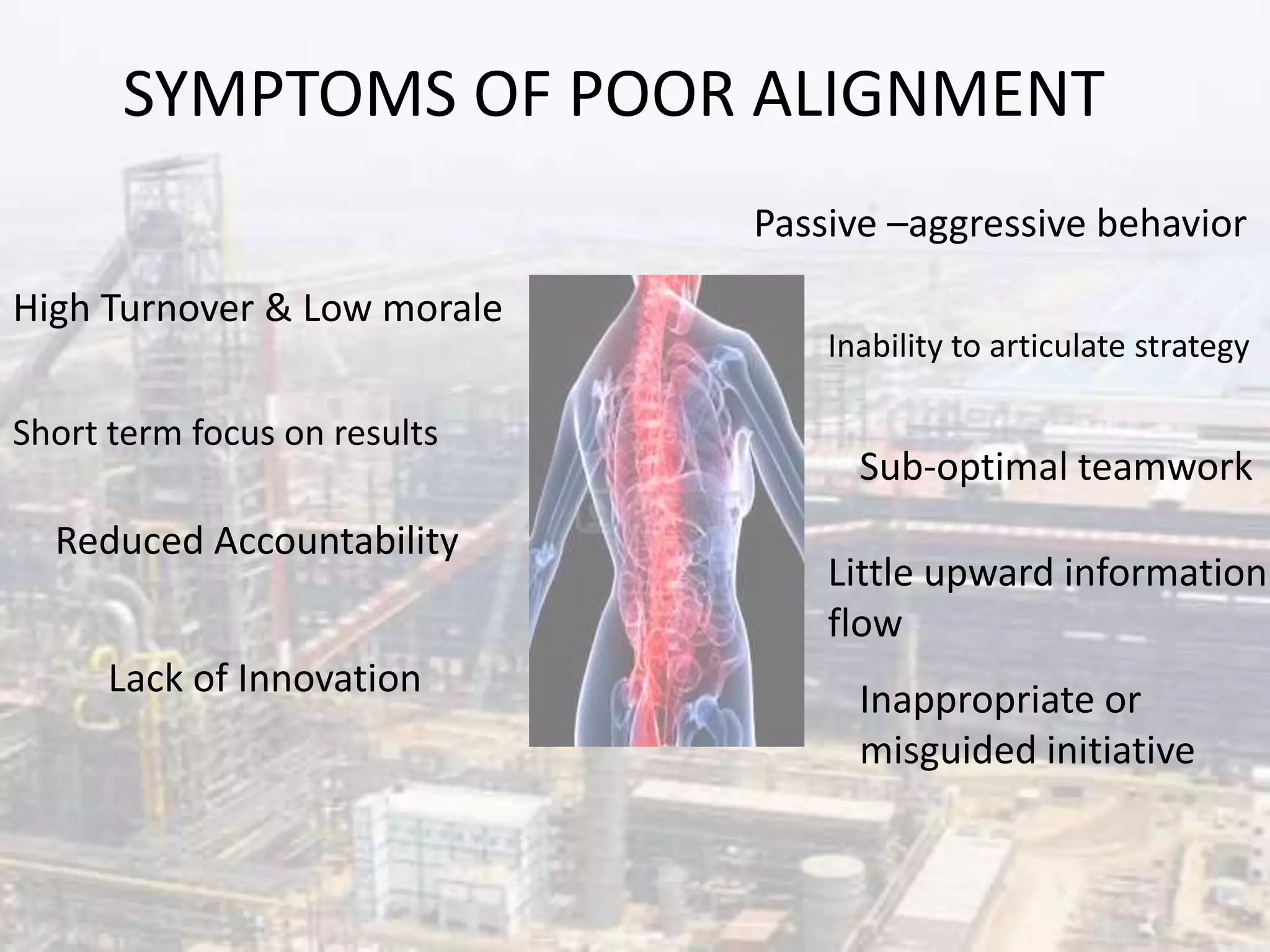
SYMPTOMS OF POOR ALIGNMENT
Short term focus on results
High Turnover & Low morale
Lack of Innovation
Passive –aggressive behavior
Inability to articulate strategy
Reduced Accountability
Sub-optimal teamwork
Little upward information
flow
Inappropriate or
misguided initiative
07 DEADLY SIGNS OF POOR ALIGNMENT
1. Expectations not met
2. Job Mismatch
3. Feeling of devalued, Lack of Recognition
4. Insufficient growth Prospects
5. Too Little coaching & Feedback
6. Lack of trust & confidence in senior leaders
7. Stress & Overwork
WHAT ARE WE LOOKING FOR?
The Key Questions are:-
1. What is our Business strategy?
2. What do you do/ What is our business?
3. How does what you do support the
strategy?
EMPLOYEE ENGAGEMENT
It is the outcome of one’s personal:
1. Satisfaction
2. Commitment
3. Pride
4. Loyalty
5. Sense of Purpose
6. Advocacy
7. Initiative
8. Persistence
A pre-requisite to correct alignment
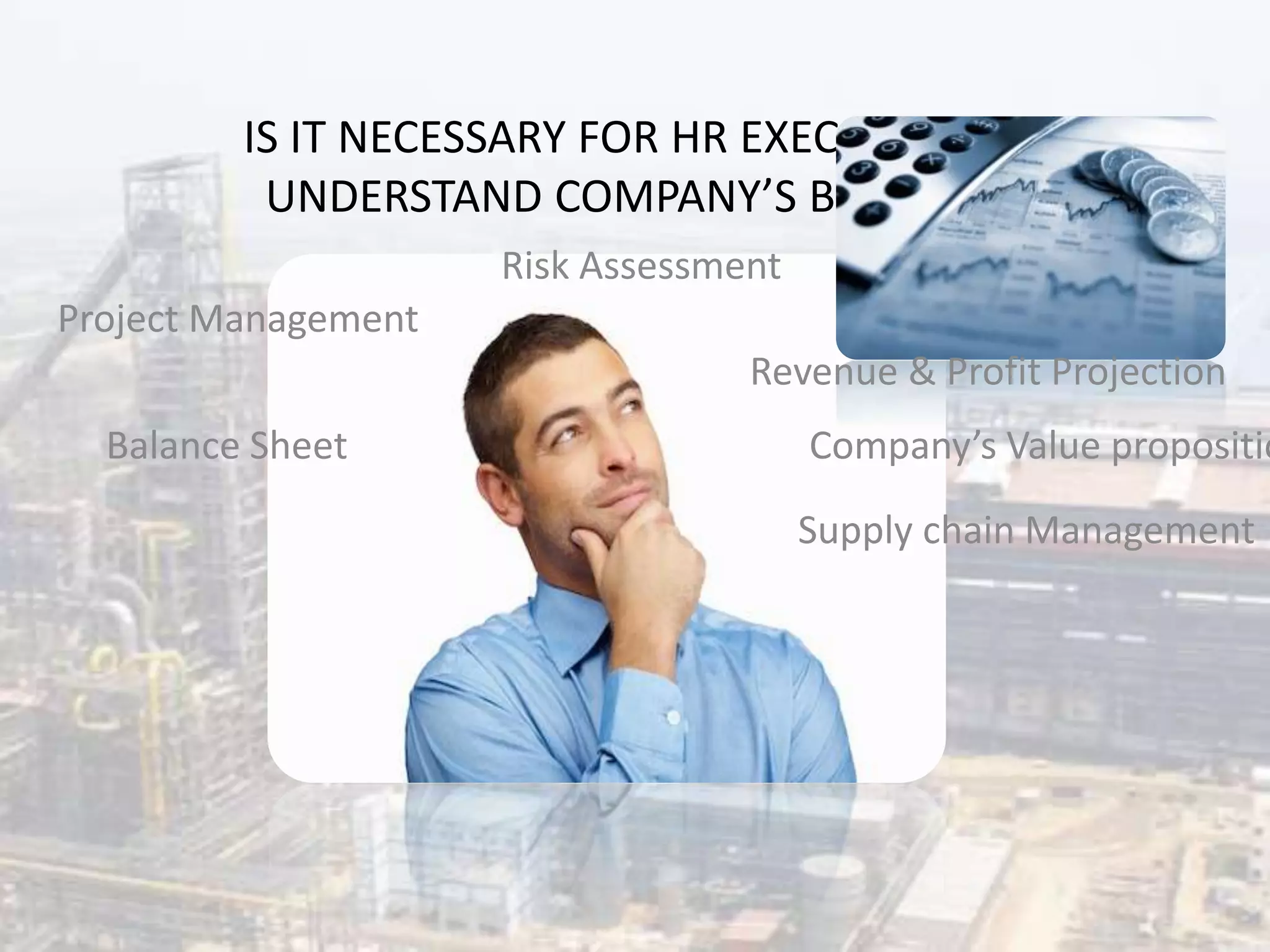
IS IT NECESSARY FOR HR EXECUTIVES TO
UNDERSTAND COMPANY’S BUSINESS?
Project Management
Balance Sheet
Revenue & Profit Projection
Risk Assessment
Supply chain Management
Company’s Value propositio
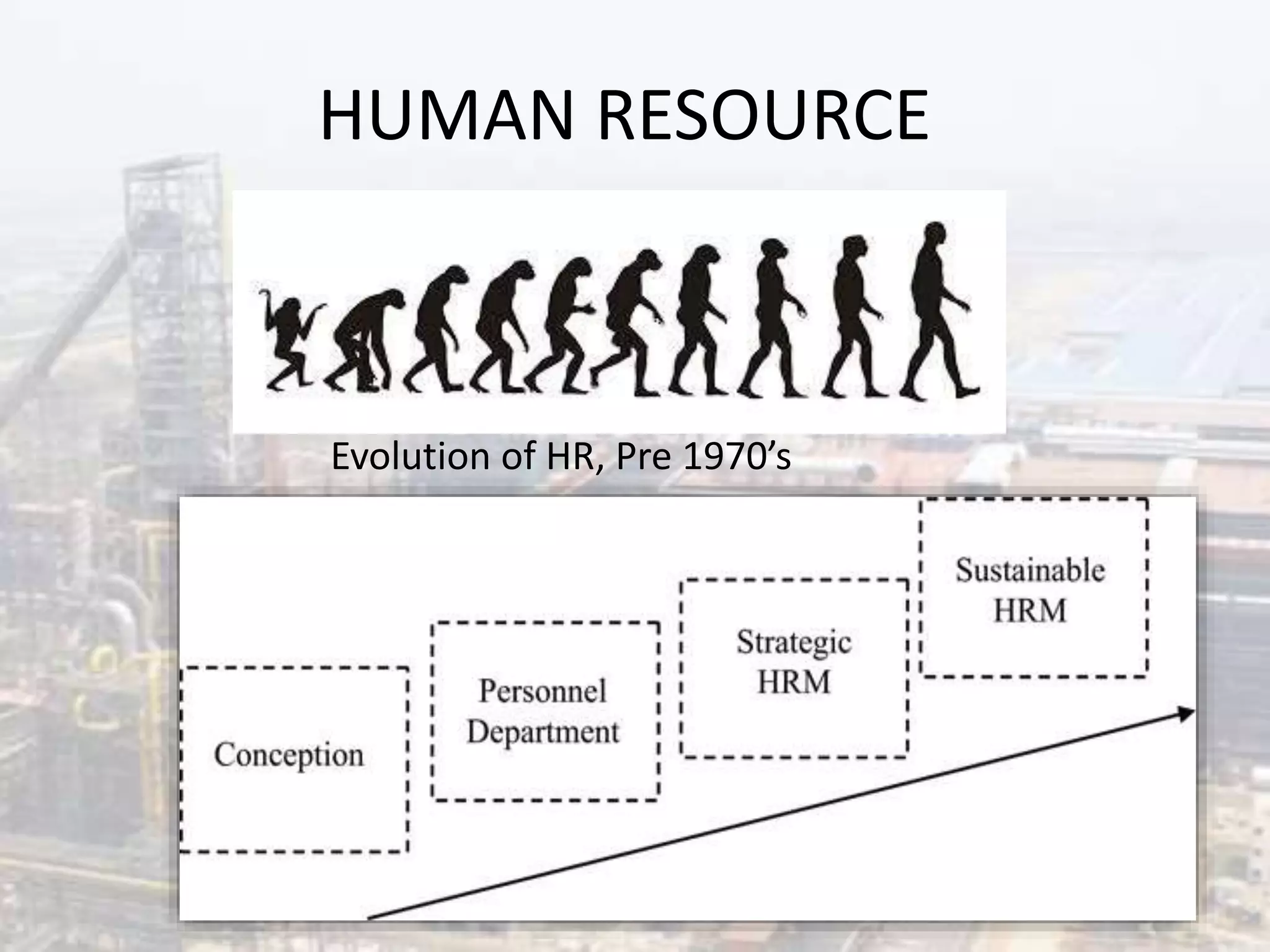
HUMAN RESOURCE
Evolution of HR, Pre 1970’s
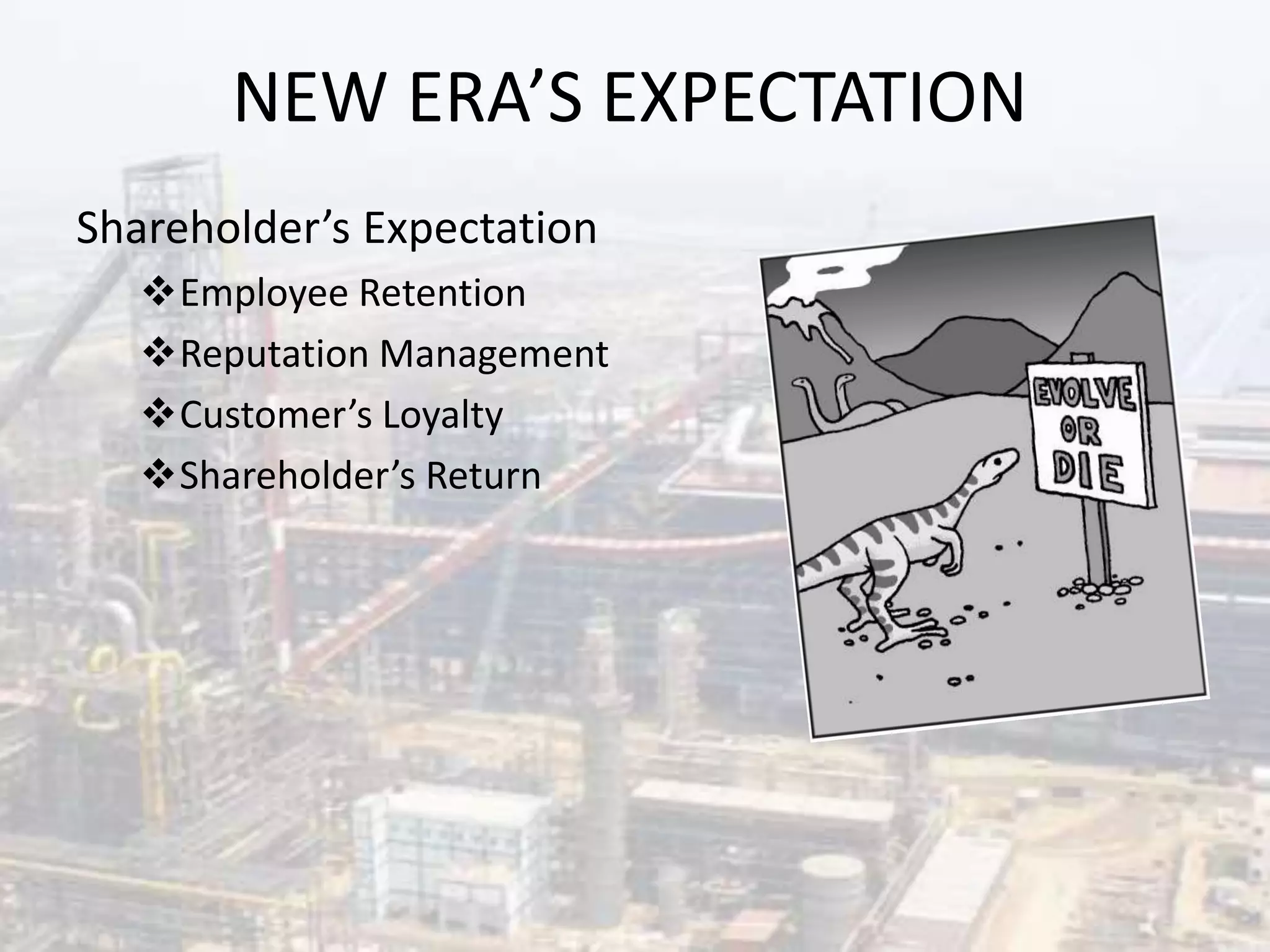
NEW ERA’S EXPECTATION
Shareholder’s Expectation
Employee Retention
Reputation Management
Customer’s Loyalty
Shareholder’s Return
WHAT IS EXPECTED FROM HR?
Staffing
Development
Organization Structure
Human Resource
Management
Legal Compliance
PMS
BUSINESS KNOWLEDGE
Value Chain Knowledge
Value Proposition
Knowledge
Labor Knowledge
 Knowledge Requirements
 Staying focused on issues that
matter to the business
 Delivering capabilities that
make a real difference
BECOMING A STRATEGIC BUSINESS PARTNER
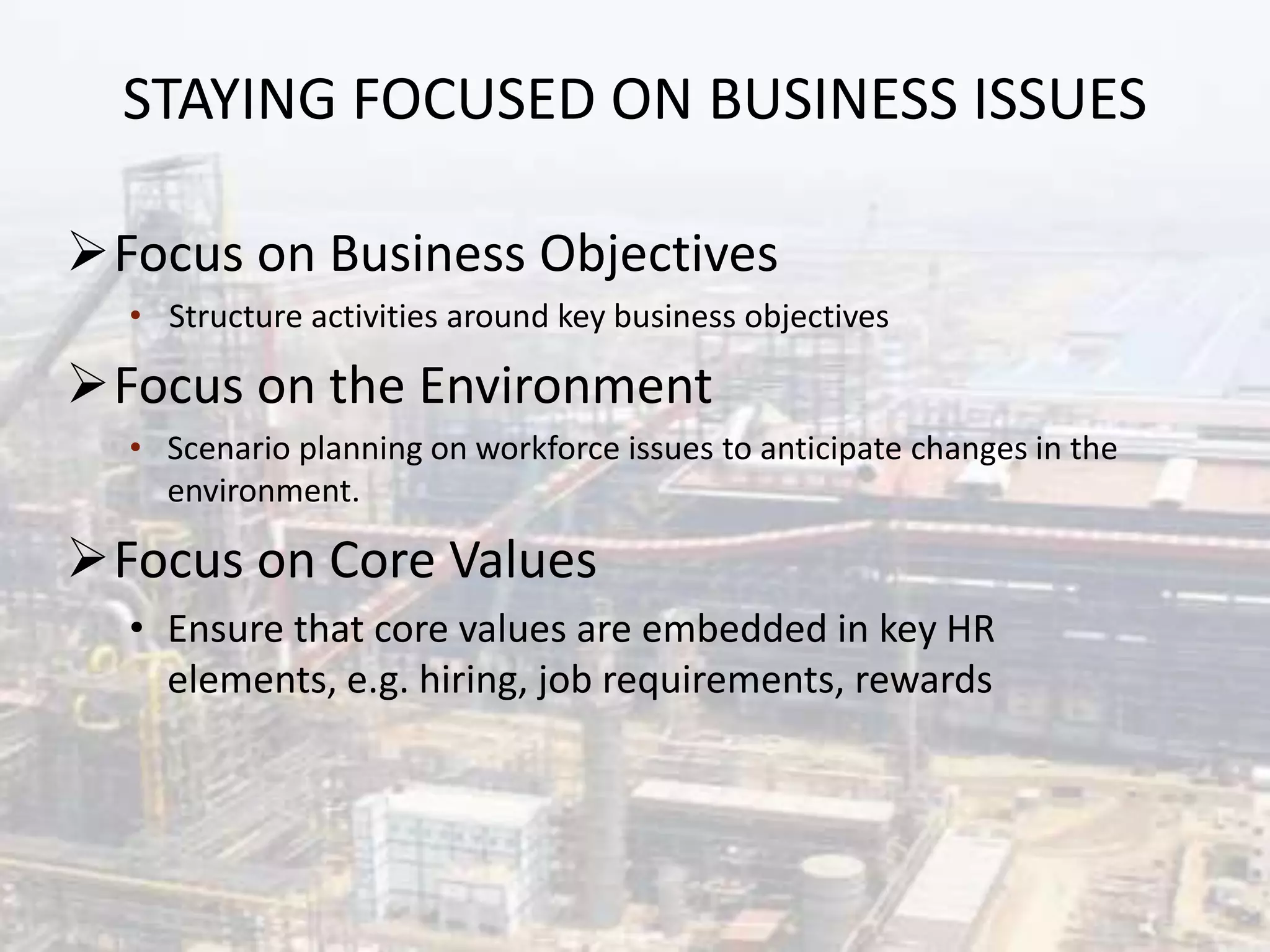
STAYING FOCUSED ON BUSINESS ISSUES
Focus on Business Objectives
• Structure activities around key business objectives
Focus on the Environment
• Scenario planning on workforce issues to anticipate changes in the
environment.
Focus on Core Values
• Ensure that core values are embedded in key HR
elements, e.g. hiring, job requirements, rewards
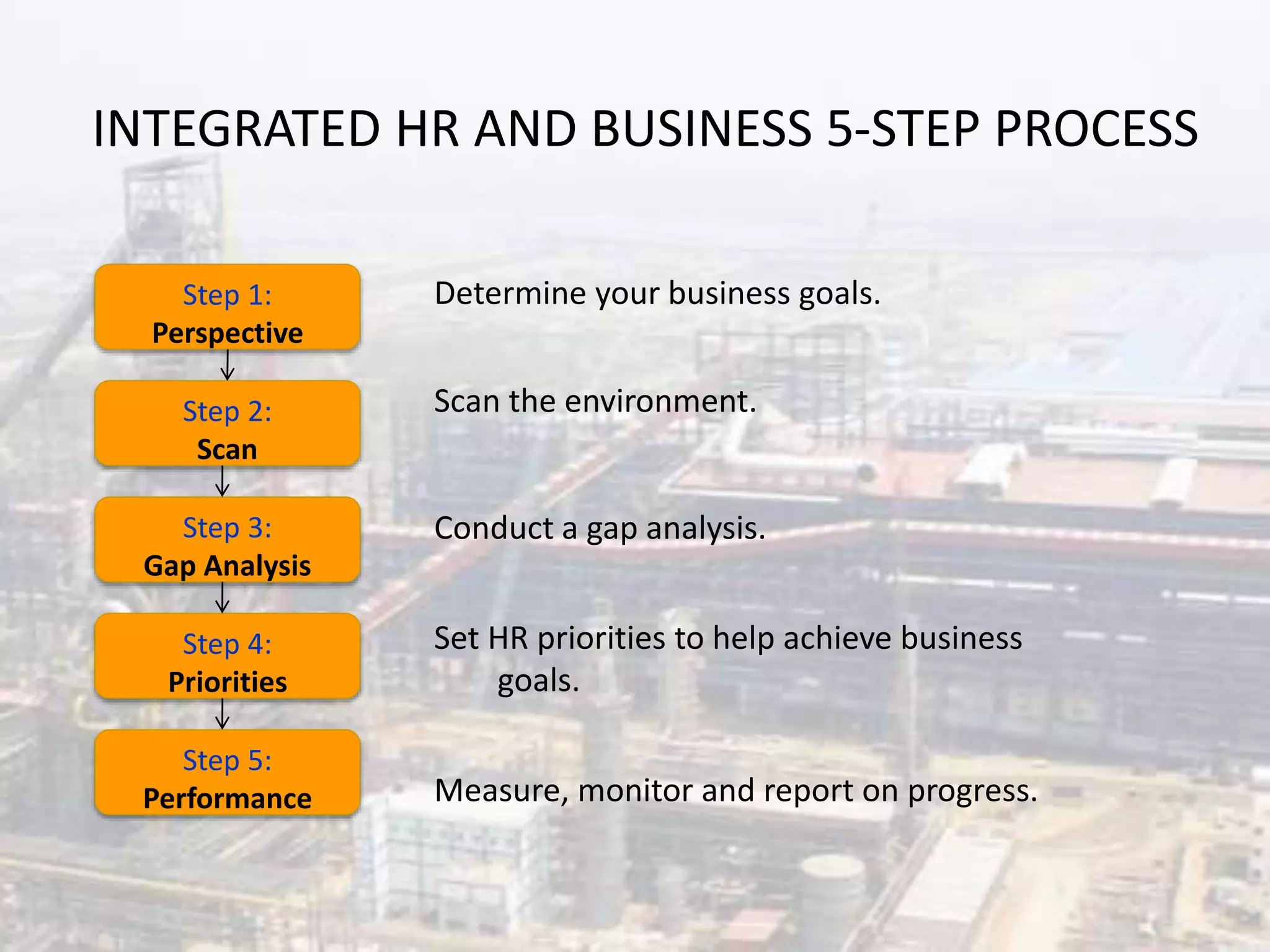
INTEGRATED HR AND BUSINESS 5-STEP PROCESS
Determine your business goals.
Scan the environment.
Conduct a gap analysis.
Set HR priorities to help achieve business
goals.
Measure, monitor and report on progress.
Step 1:
Perspective
Step 2:
Scan
Step 3:
Gap Analysis
Step 5:
Performance
Step 4:
Priorities
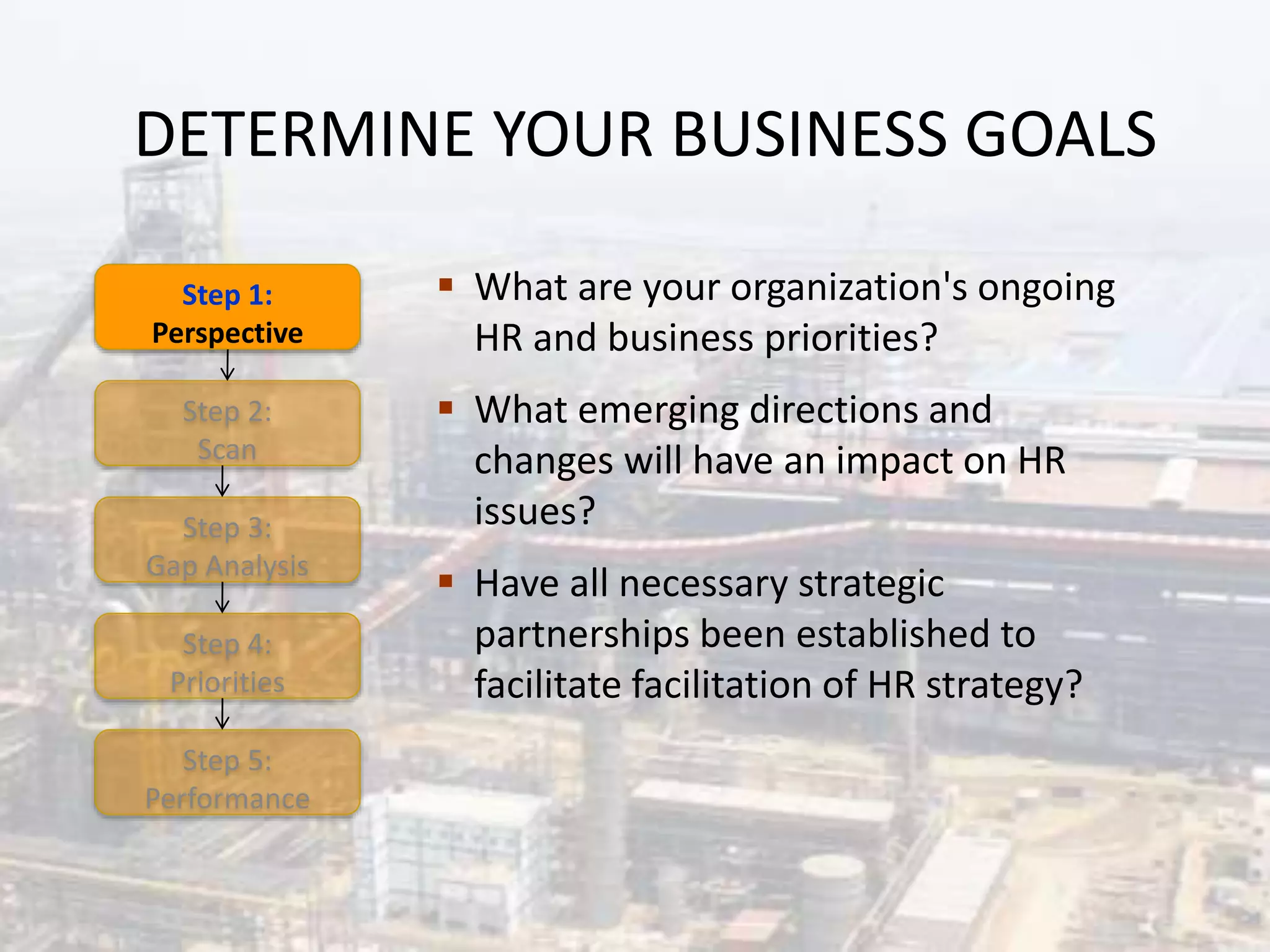
DETERMINE YOUR BUSINESS GOALS
Step 1:
Perspective
Step 2:
Scan
Step 3:
Gap Analysis
Step 5:
Performance
Step 4:
Priorities
 What are your organization's ongoing
HR and business priorities?
 What emerging directions and
changes will have an impact on HR
issues?
 Have all necessary strategic
partnerships been established to
facilitate facilitation of HR strategy?
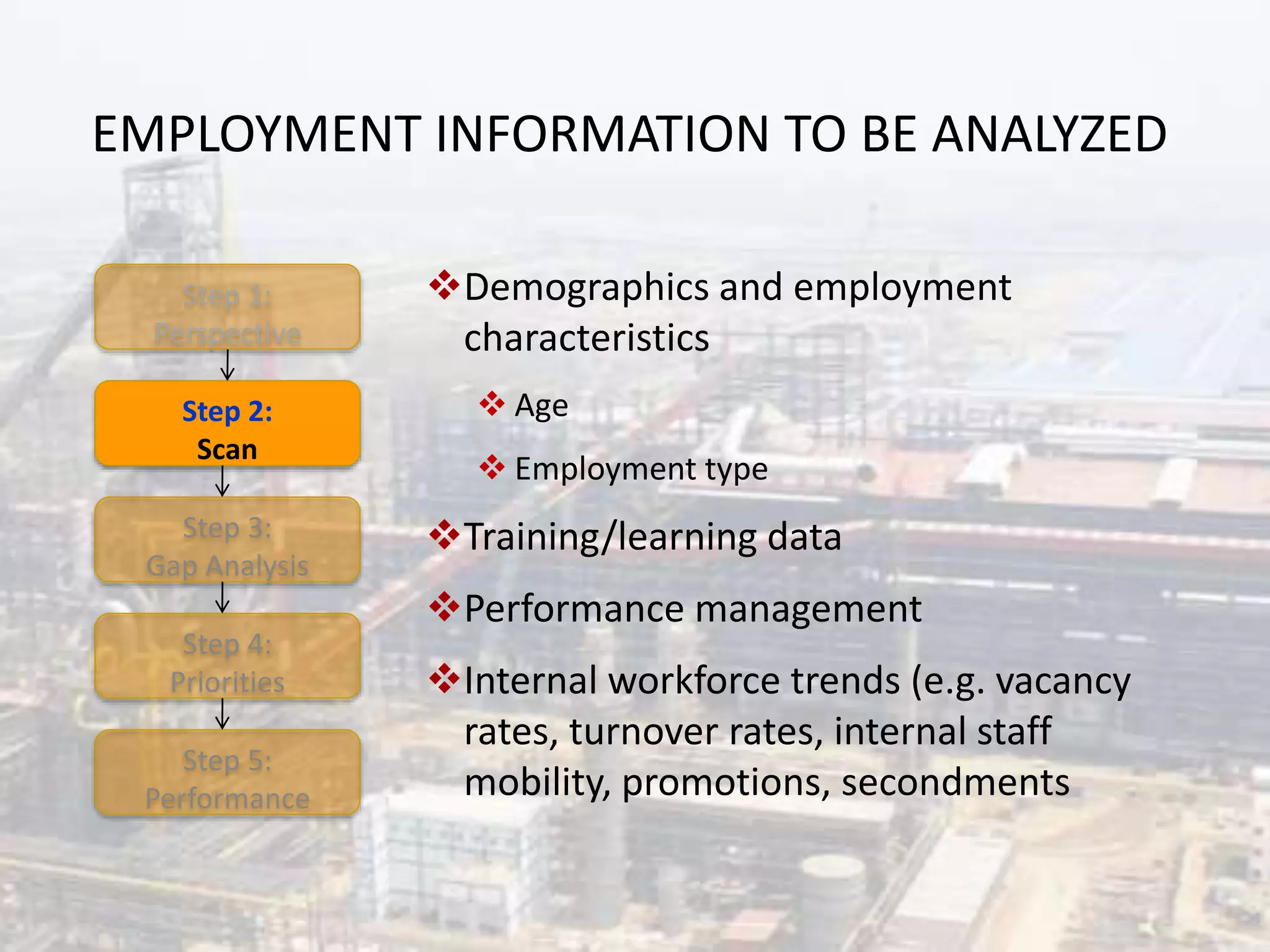
EMPLOYMENT INFORMATION TO BE ANALYZED
Step 1:
Perspective
Step 2:
Scan
Step 3:
Gap Analysis
Step 5:
Performance
Step 4:
Priorities
Demographics and employment
characteristics
 Age
 Employment type
Training/learning data
Performance management
Internal workforce trends (e.g. vacancy
rates, turnover rates, internal staff
mobility, promotions, secondments
INTERNAL SCAN
Step 1:
Perspective
Step 2:
Scan
Step 3:
Gap Analysis
Step 5:
Performance
Step 4:
Priorities
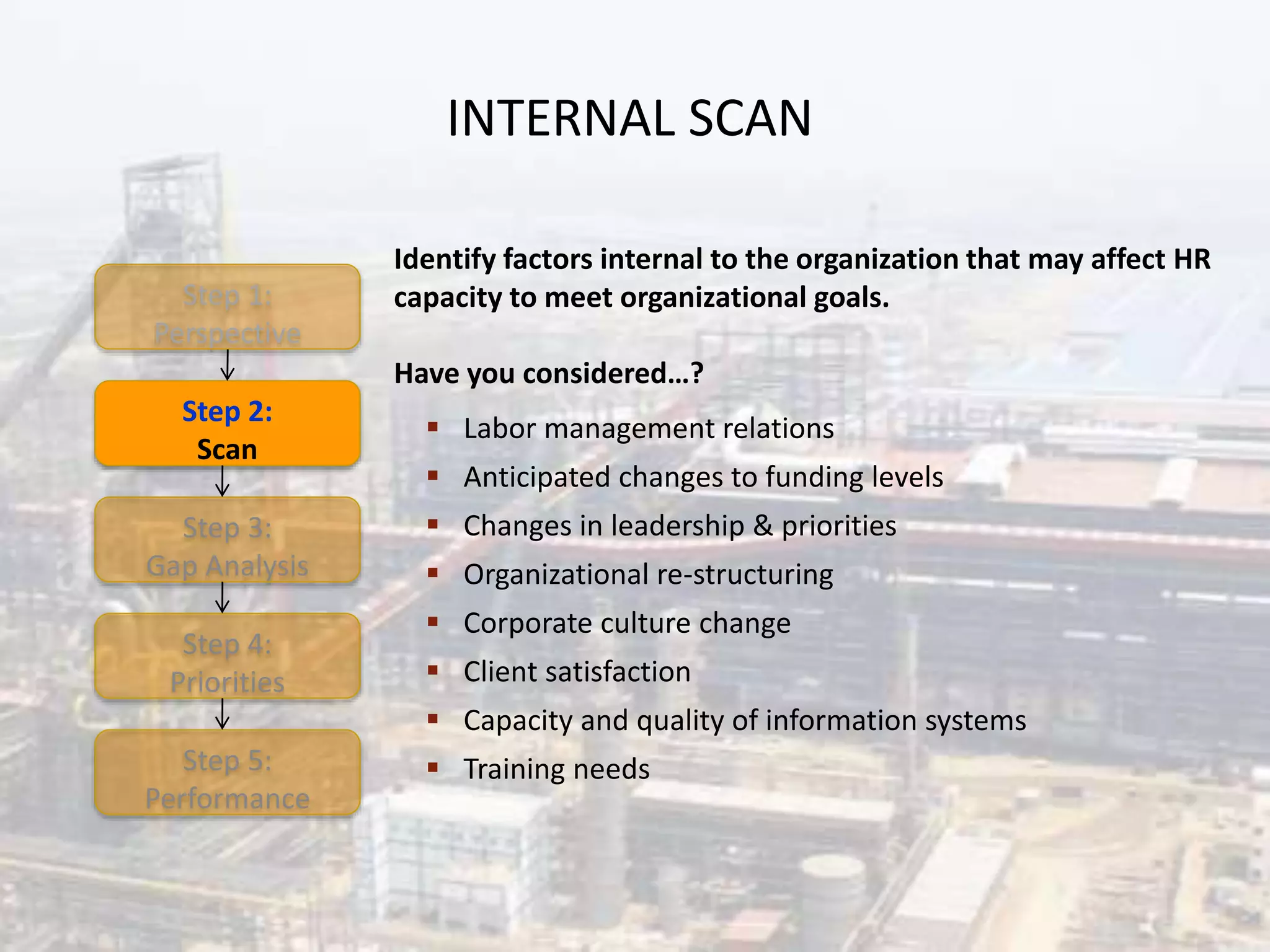
Identify factors internal to the organization that may affect HR
capacity to meet organizational goals.
Have you considered…?
 Labor management relations
 Anticipated changes to funding levels
 Changes in leadership & priorities
 Organizational re-structuring
 Corporate culture change
 Client satisfaction
 Capacity and quality of information systems
 Training needs
CONDUCT A GAP ANALYSIS
Step 1:
Perspective
Step 2:
Scan
Step 3:
Gap Analysis
Step 5:
Performance
Step 4:
Priorities
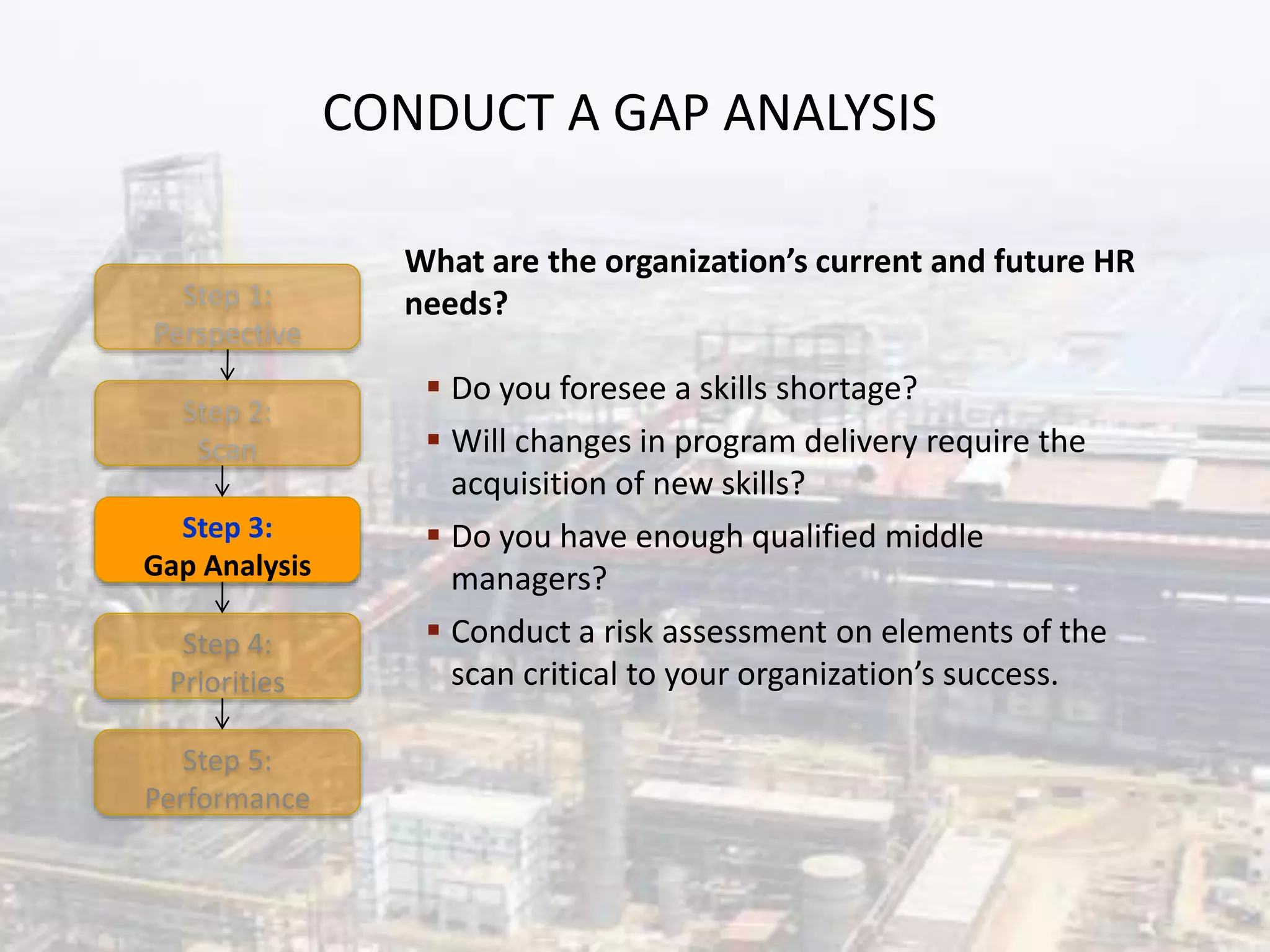
What are the organization’s current and future HR
needs?
 Do you foresee a skills shortage?
 Will changes in program delivery require the
acquisition of new skills?
 Do you have enough qualified middle
managers?
 Conduct a risk assessment on elements of the
scan critical to your organization’s success.
SET HR PRIORITIES
Step 1:
Perspective
Step 2:
Scan
Step 3:
Gap Analysis
Step 5:
Performance
Step 4:
Priorities
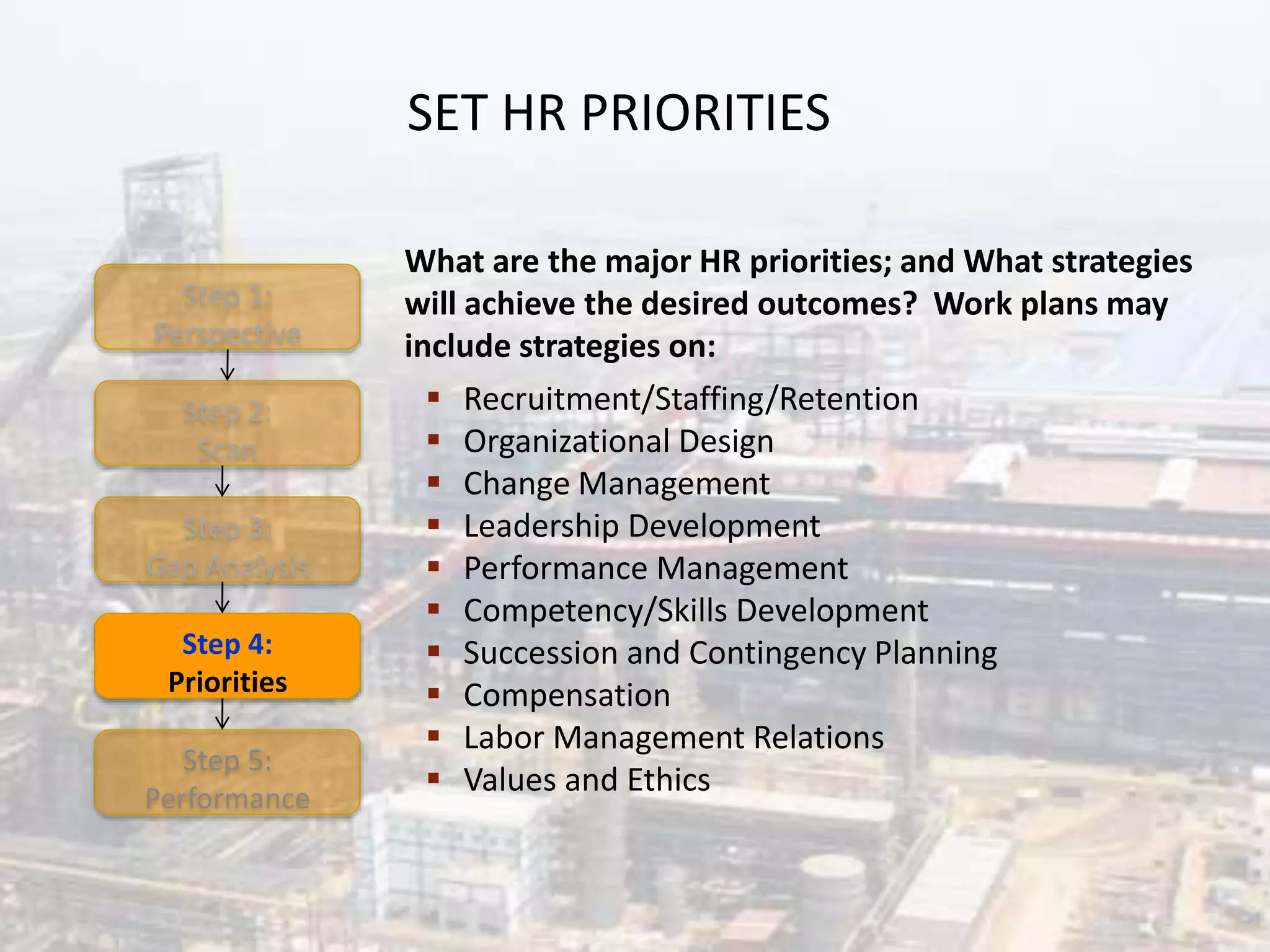
What are the major HR priorities; and What strategies
will achieve the desired outcomes? Work plans may
include strategies on:
 Recruitment/Staffing/Retention
 Organizational Design
 Change Management
 Leadership Development
 Performance Management
 Competency/Skills Development
 Succession and Contingency Planning
 Compensation
 Labor Management Relations
 Values and Ethics
MEASURE, MONITOR AND REPORT ON PROGRESS
Step 1:
Perspective
Step 2:
Scan
Step 3:
Gap Analysis
Step 5:
Performance
Step 4:
Priorities
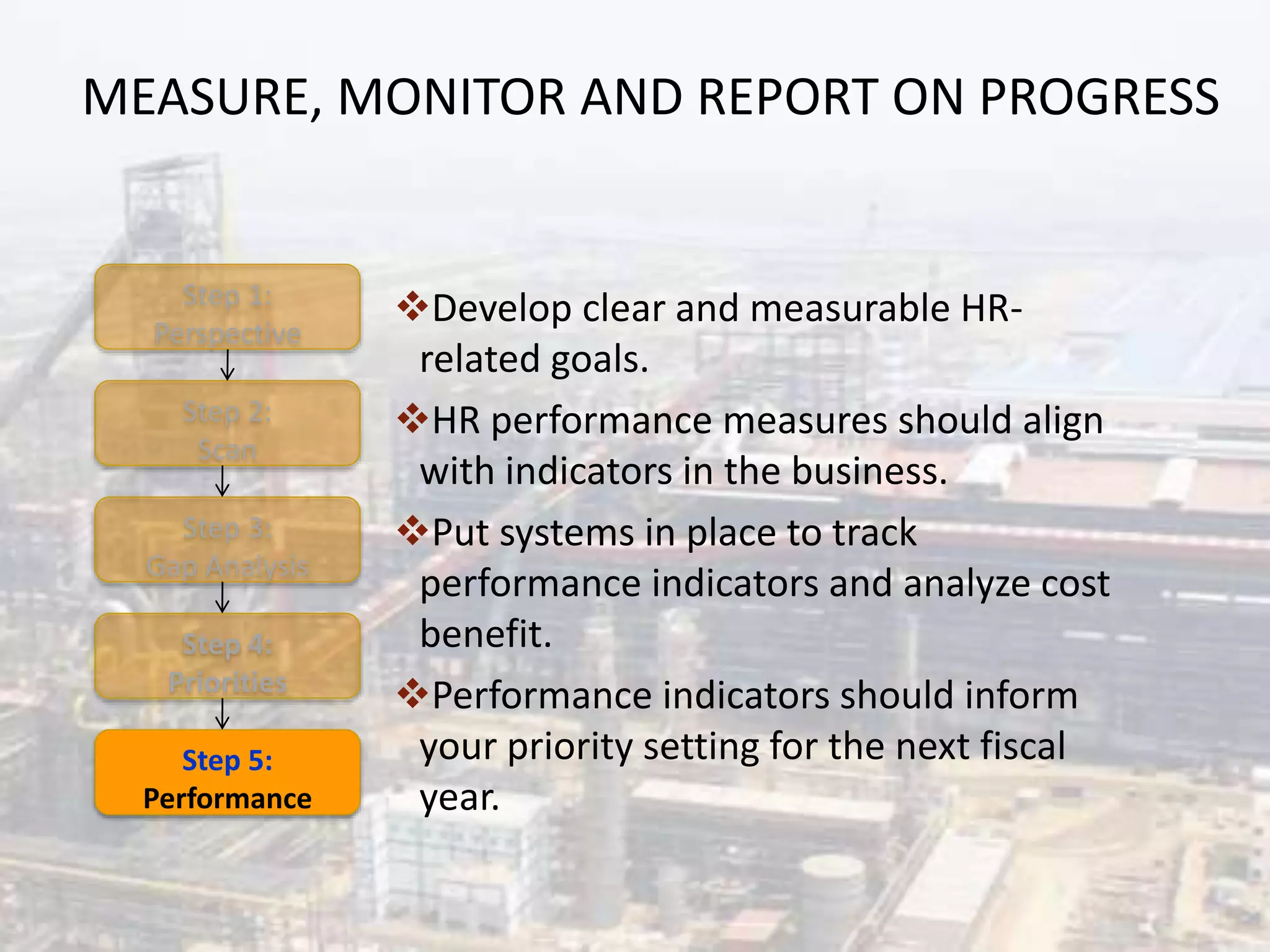
Develop clear and measurable HR-
related goals.
HR performance measures should align
with indicators in the business.
Put systems in place to track
performance indicators and analyze cost
benefit.
Performance indicators should inform
your priority setting for the next fiscal
year.
THANK YOU

Hr alignment with business slideshare

  • 1.
    ALIGNING HR WITHBUSINESS Animation of a mis-aligned motor
  • 2.
    SYMPTOMS OF POORALIGNMENT Short term focus on results High Turnover & Low morale Lack of Innovation Passive –aggressive behavior Inability to articulate strategy Reduced Accountability Sub-optimal teamwork Little upward information flow Inappropriate or misguided initiative
  • 4.
    07 DEADLY SIGNSOF POOR ALIGNMENT 1. Expectations not met 2. Job Mismatch 3. Feeling of devalued, Lack of Recognition 4. Insufficient growth Prospects 5. Too Little coaching & Feedback 6. Lack of trust & confidence in senior leaders 7. Stress & Overwork
  • 5.
    WHAT ARE WELOOKING FOR? The Key Questions are:- 1. What is our Business strategy? 2. What do you do/ What is our business? 3. How does what you do support the strategy?
  • 6.
    EMPLOYEE ENGAGEMENT It isthe outcome of one’s personal: 1. Satisfaction 2. Commitment 3. Pride 4. Loyalty 5. Sense of Purpose 6. Advocacy 7. Initiative 8. Persistence A pre-requisite to correct alignment
  • 7.
    IS IT NECESSARYFOR HR EXECUTIVES TO UNDERSTAND COMPANY’S BUSINESS? Project Management Balance Sheet Revenue & Profit Projection Risk Assessment Supply chain Management Company’s Value propositio
  • 8.
  • 9.
    NEW ERA’S EXPECTATION Shareholder’sExpectation Employee Retention Reputation Management Customer’s Loyalty Shareholder’s Return
  • 10.
    WHAT IS EXPECTEDFROM HR? Staffing Development Organization Structure Human Resource Management Legal Compliance PMS
  • 12.
    BUSINESS KNOWLEDGE Value ChainKnowledge Value Proposition Knowledge Labor Knowledge
  • 13.
     Knowledge Requirements Staying focused on issues that matter to the business  Delivering capabilities that make a real difference BECOMING A STRATEGIC BUSINESS PARTNER
  • 14.
    STAYING FOCUSED ONBUSINESS ISSUES Focus on Business Objectives • Structure activities around key business objectives Focus on the Environment • Scenario planning on workforce issues to anticipate changes in the environment. Focus on Core Values • Ensure that core values are embedded in key HR elements, e.g. hiring, job requirements, rewards
  • 15.
    INTEGRATED HR ANDBUSINESS 5-STEP PROCESS Determine your business goals. Scan the environment. Conduct a gap analysis. Set HR priorities to help achieve business goals. Measure, monitor and report on progress. Step 1: Perspective Step 2: Scan Step 3: Gap Analysis Step 5: Performance Step 4: Priorities
  • 16.
    DETERMINE YOUR BUSINESSGOALS Step 1: Perspective Step 2: Scan Step 3: Gap Analysis Step 5: Performance Step 4: Priorities  What are your organization's ongoing HR and business priorities?  What emerging directions and changes will have an impact on HR issues?  Have all necessary strategic partnerships been established to facilitate facilitation of HR strategy?
  • 17.
    EMPLOYMENT INFORMATION TOBE ANALYZED Step 1: Perspective Step 2: Scan Step 3: Gap Analysis Step 5: Performance Step 4: Priorities Demographics and employment characteristics  Age  Employment type Training/learning data Performance management Internal workforce trends (e.g. vacancy rates, turnover rates, internal staff mobility, promotions, secondments
  • 18.
    INTERNAL SCAN Step 1: Perspective Step2: Scan Step 3: Gap Analysis Step 5: Performance Step 4: Priorities Identify factors internal to the organization that may affect HR capacity to meet organizational goals. Have you considered…?  Labor management relations  Anticipated changes to funding levels  Changes in leadership & priorities  Organizational re-structuring  Corporate culture change  Client satisfaction  Capacity and quality of information systems  Training needs
  • 19.
    CONDUCT A GAPANALYSIS Step 1: Perspective Step 2: Scan Step 3: Gap Analysis Step 5: Performance Step 4: Priorities What are the organization’s current and future HR needs?  Do you foresee a skills shortage?  Will changes in program delivery require the acquisition of new skills?  Do you have enough qualified middle managers?  Conduct a risk assessment on elements of the scan critical to your organization’s success.
  • 20.
    SET HR PRIORITIES Step1: Perspective Step 2: Scan Step 3: Gap Analysis Step 5: Performance Step 4: Priorities What are the major HR priorities; and What strategies will achieve the desired outcomes? Work plans may include strategies on:  Recruitment/Staffing/Retention  Organizational Design  Change Management  Leadership Development  Performance Management  Competency/Skills Development  Succession and Contingency Planning  Compensation  Labor Management Relations  Values and Ethics
  • 21.
    MEASURE, MONITOR ANDREPORT ON PROGRESS Step 1: Perspective Step 2: Scan Step 3: Gap Analysis Step 5: Performance Step 4: Priorities Develop clear and measurable HR- related goals. HR performance measures should align with indicators in the business. Put systems in place to track performance indicators and analyze cost benefit. Performance indicators should inform your priority setting for the next fiscal year.
  • 22.

Editor's Notes

  • #3 Video of an employee showing demotivation , devalued due to mis alignment
  • #4 Click on the video to play
  • #5 Video of a demotivated employee
  • #9 Industrial Relation pre 1970s Workers Health & Safety Accounting Compensation Benefits Administration Personnel Activity
  • #10 Vision 2020
  • #11 How can HR contribute in the best possible way to fulfill the Business objective and expectations of each stakeholders…
  • #14 Vision 2020
  • #15 Our core competency : Making Steel, Power , Oil & Gas
  • #17 As you begin your integrated HR and business planning, ask the following questions-
  • #18 A key component of integrated planning is understanding your workforce and planning for projected shortages and surpluses in specific occupations and skills sets. e.g. age, years of service, employment type, leave usage, reasons for leaving, absenteeism, grievances)
  • #22 Measuring, monitoring and reporting HR performance outcomes is key to assessing progress in target areas, organizational learning and improvement, and determining future priorities.