Language and meaning (Ch3)
MARIA SUBERT
What is language?
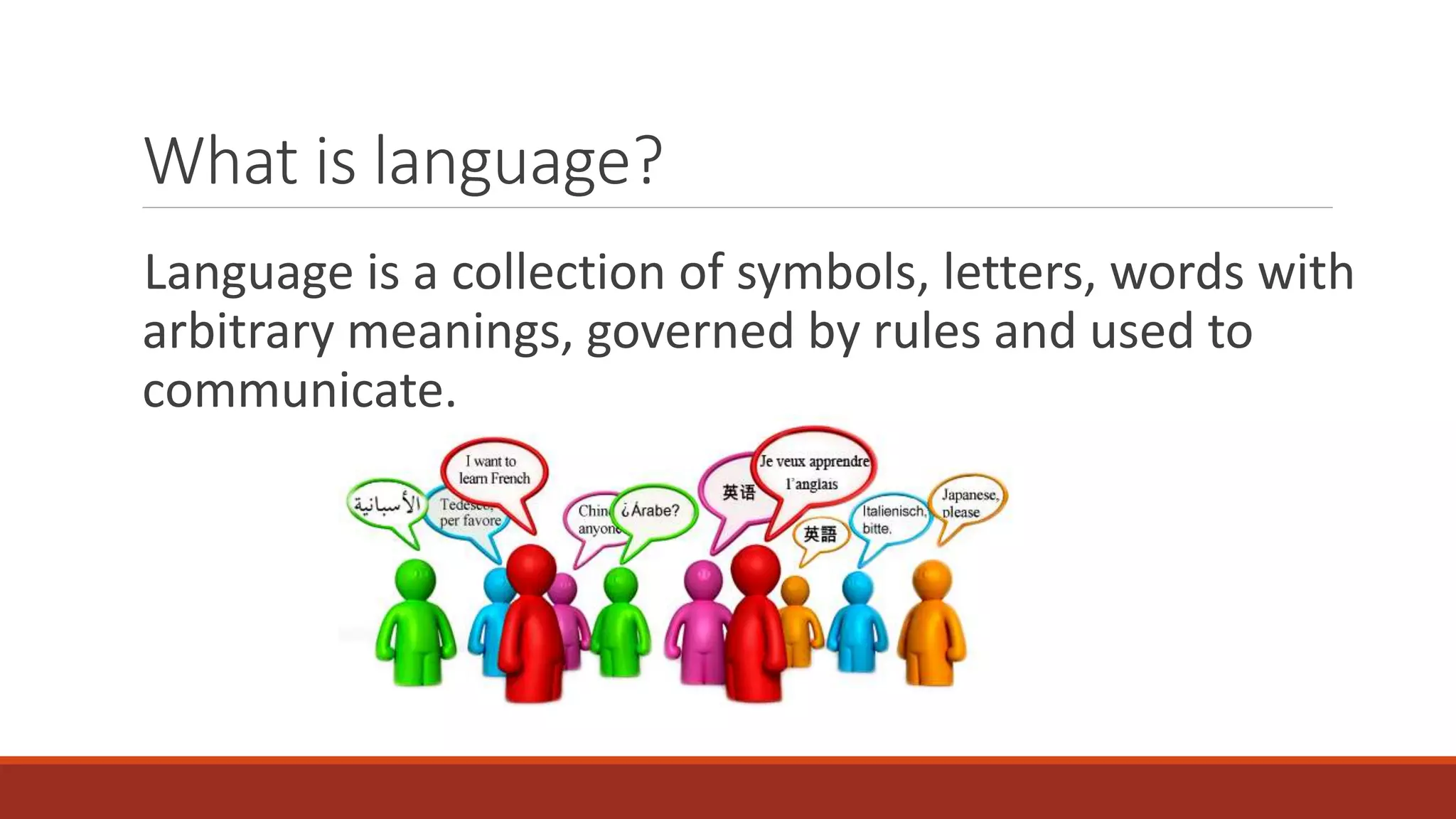
Language is a collection of symbols, letters, words with
arbitrary meanings, governed by rules and used to
communicate.
Language has rules:
osemantics
osyntax
opragmatics
Semantics:
The study of the way humans use language to evoke
meaning in others.
https://www.youtube.com/watch?v=GcBvGToIxgA
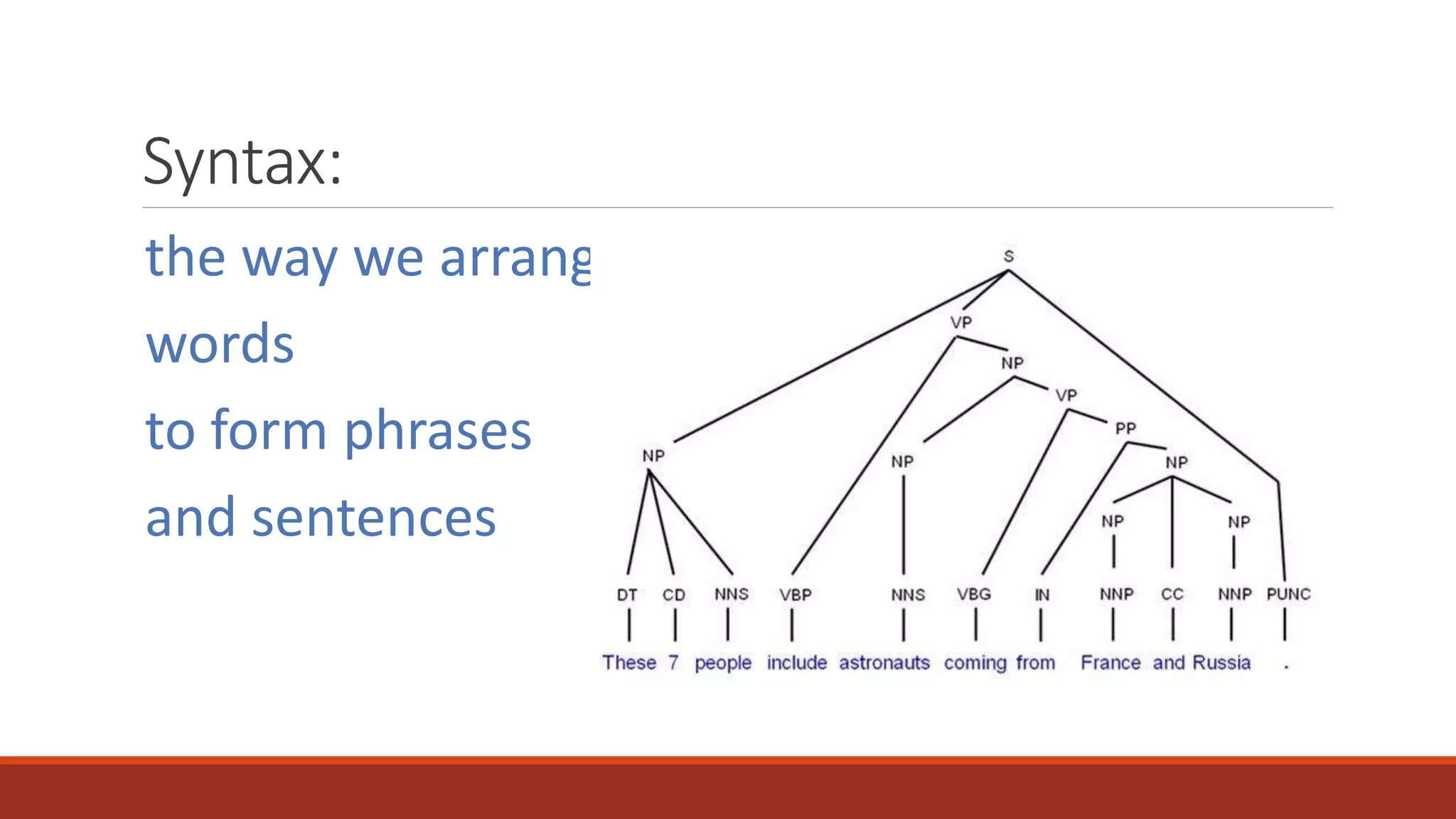
Syntax:
the way we arrange
words
to form phrases
and sentences
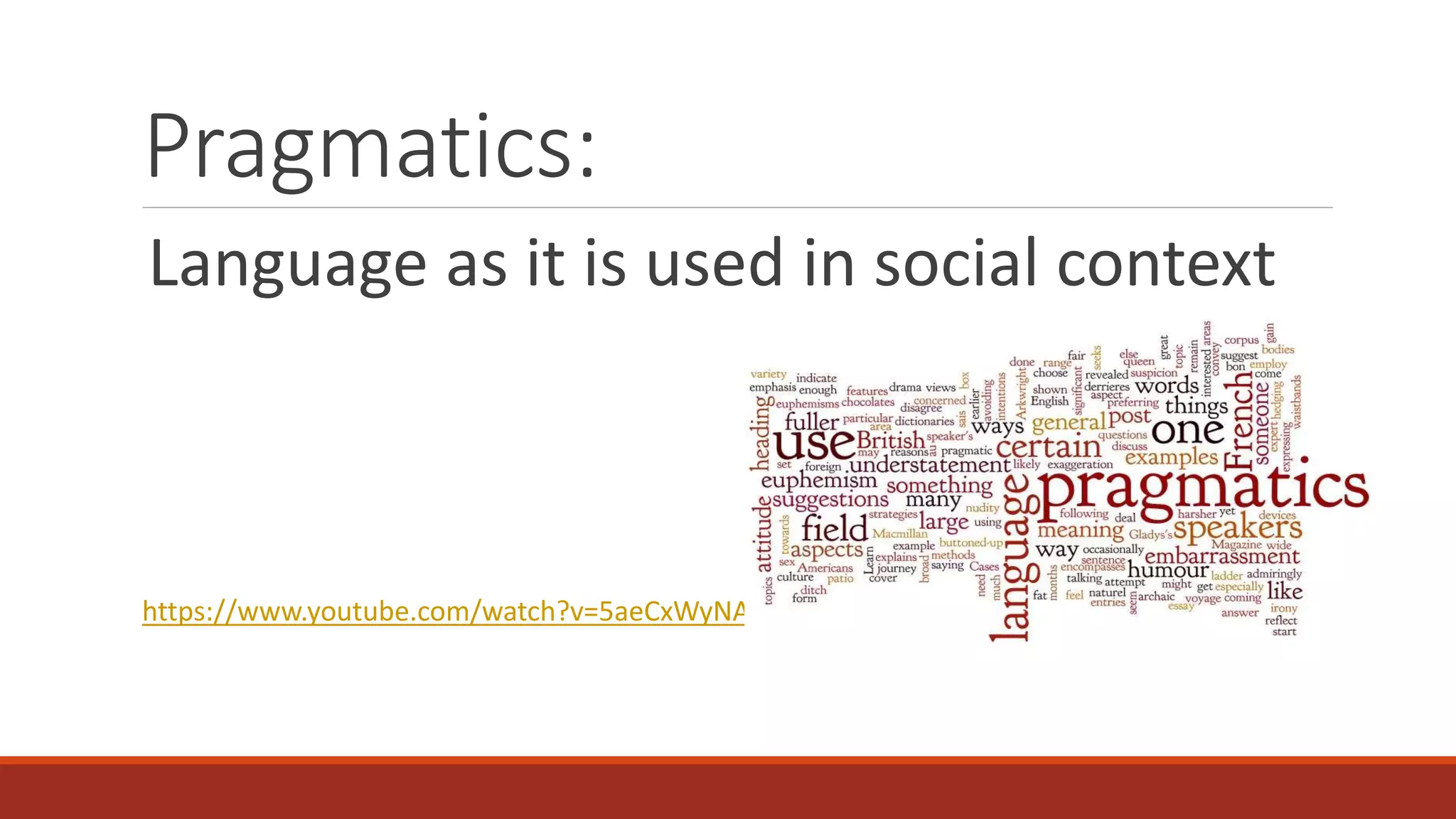
Pragmatics:
Language as it is used in social context
https://www.youtube.com/watch?v=5aeCxWyNAQQ
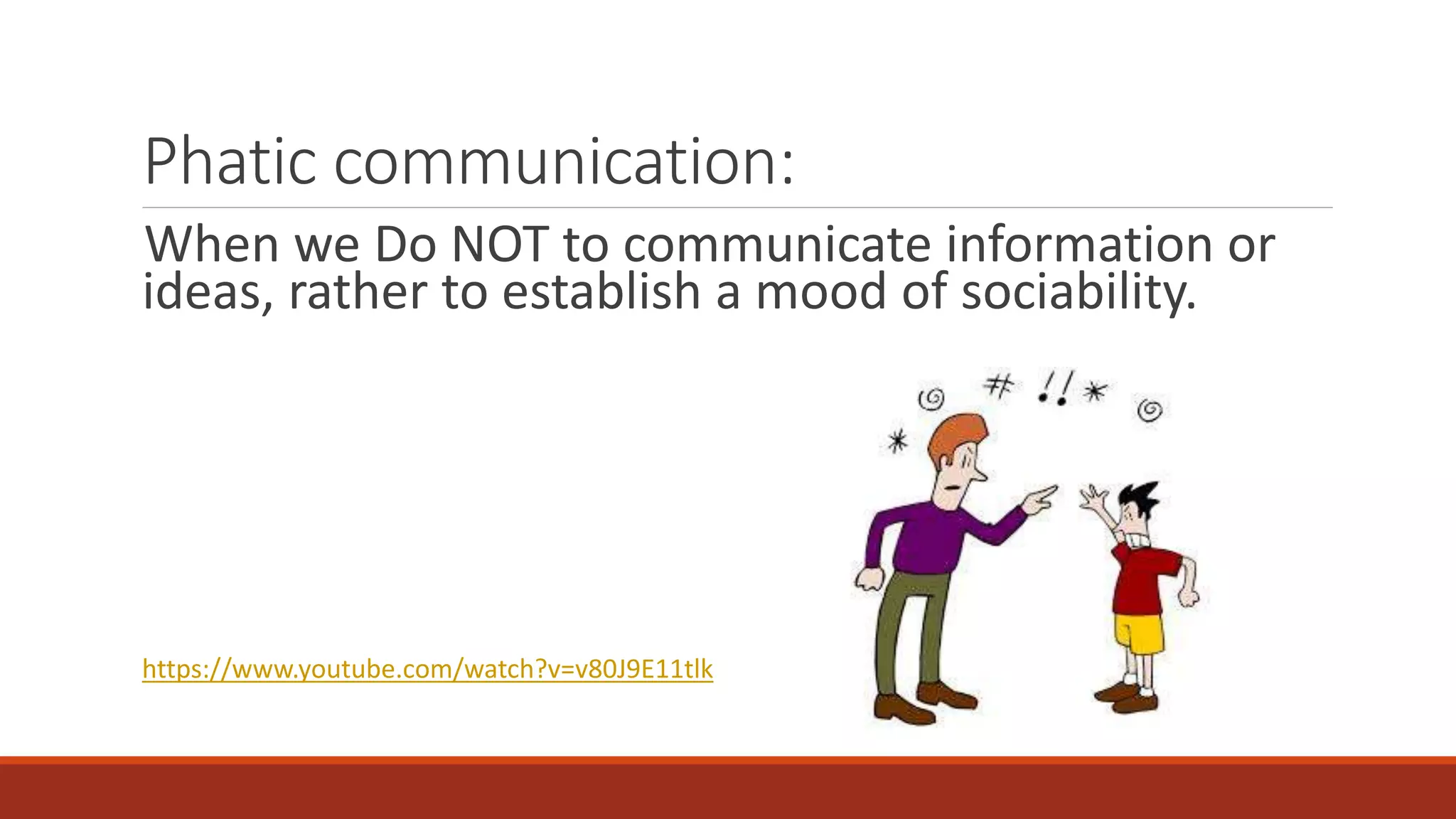
Phatic communication:
When we Do NOT to communicate information or
ideas, rather to establish a mood of sociability.
https://www.youtube.com/watch?v=v80J9E11tlk
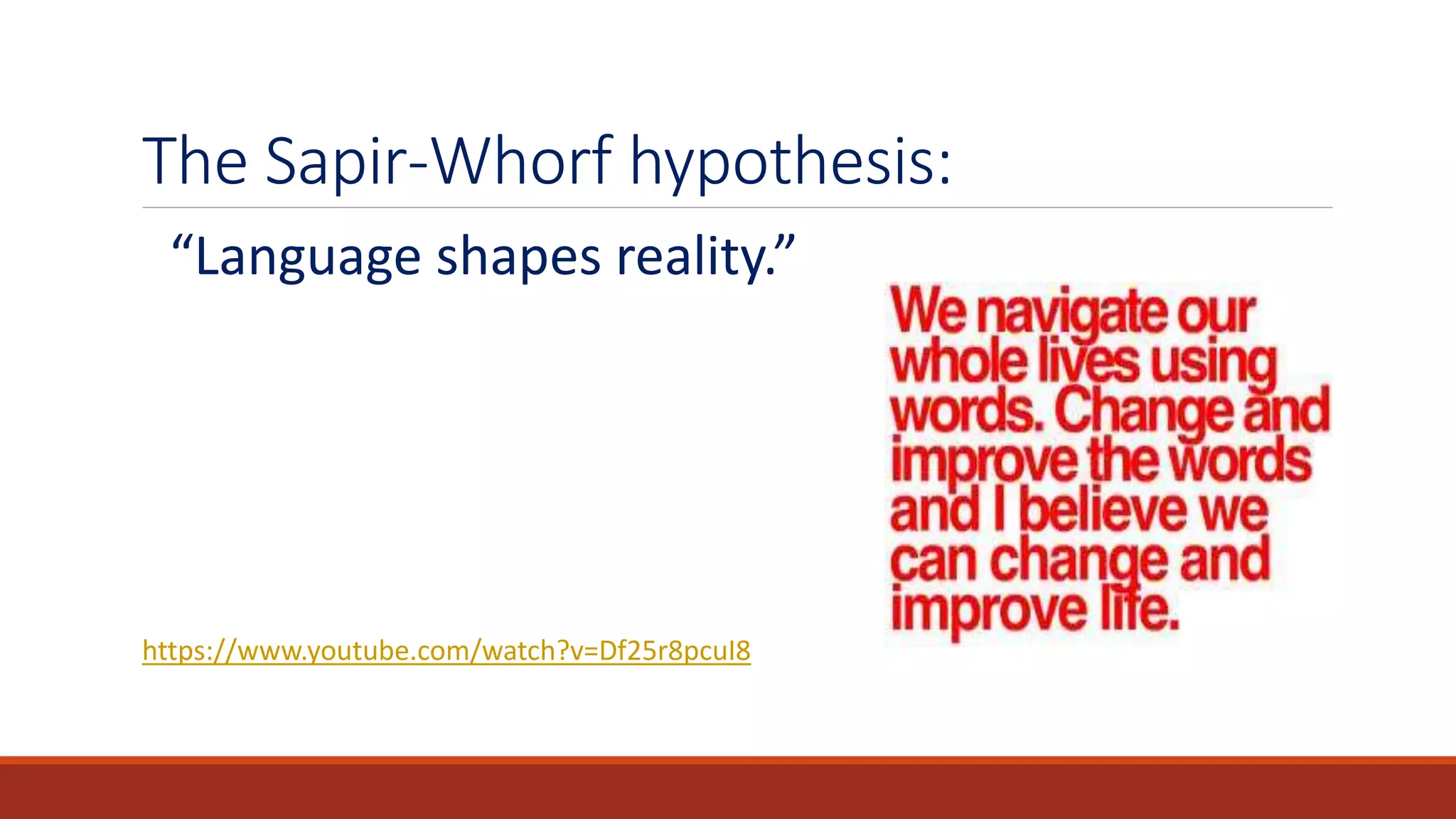
The Sapir-Whorf hypothesis:
“Language shapes reality.”
https://www.youtube.com/watch?v=Df25r8pcuI8
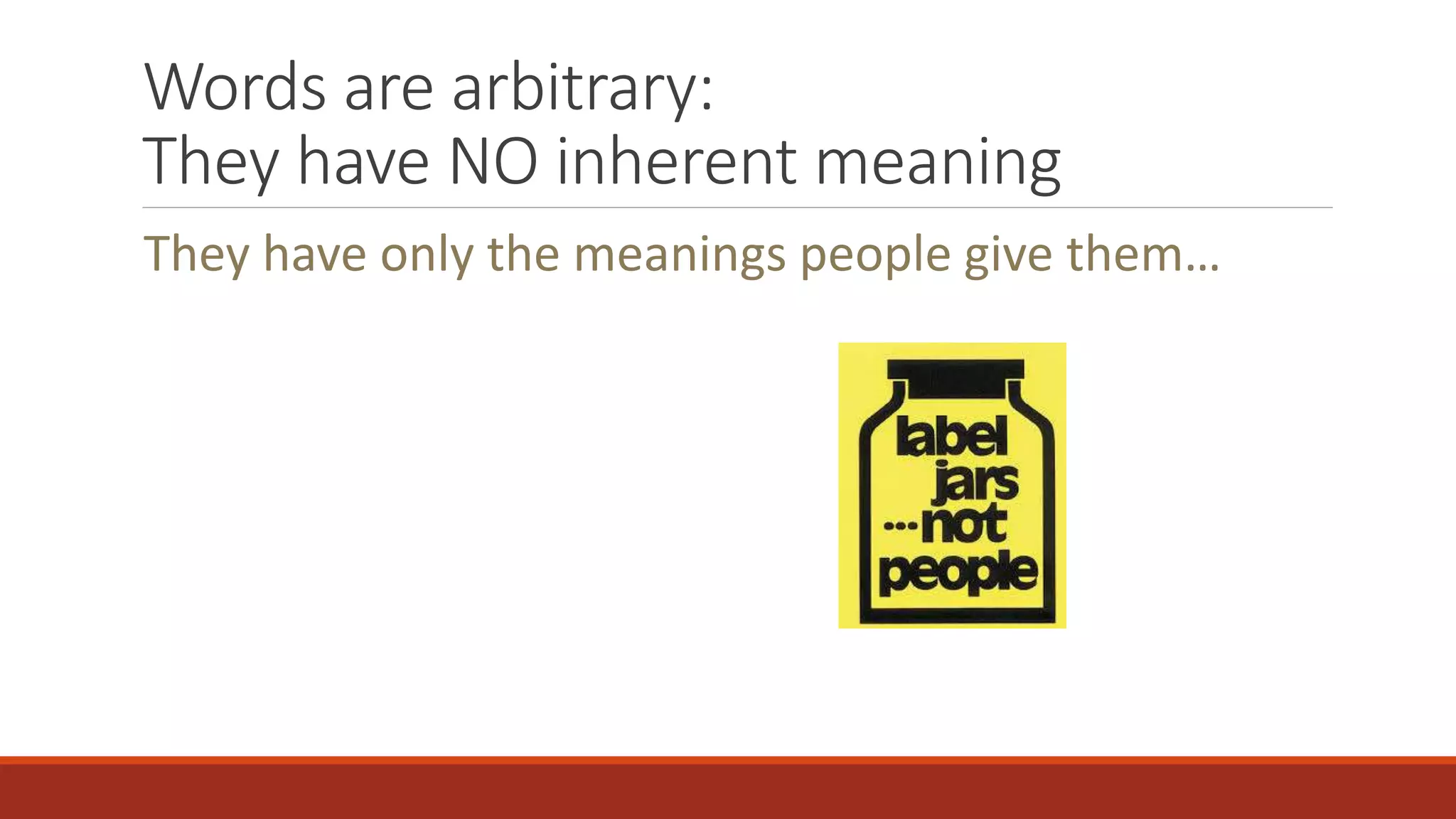
Words are arbitrary:
They have NO inherent meaning
They have only the meanings people give them…
Denotative meaning:
the dictionary meaning of a world
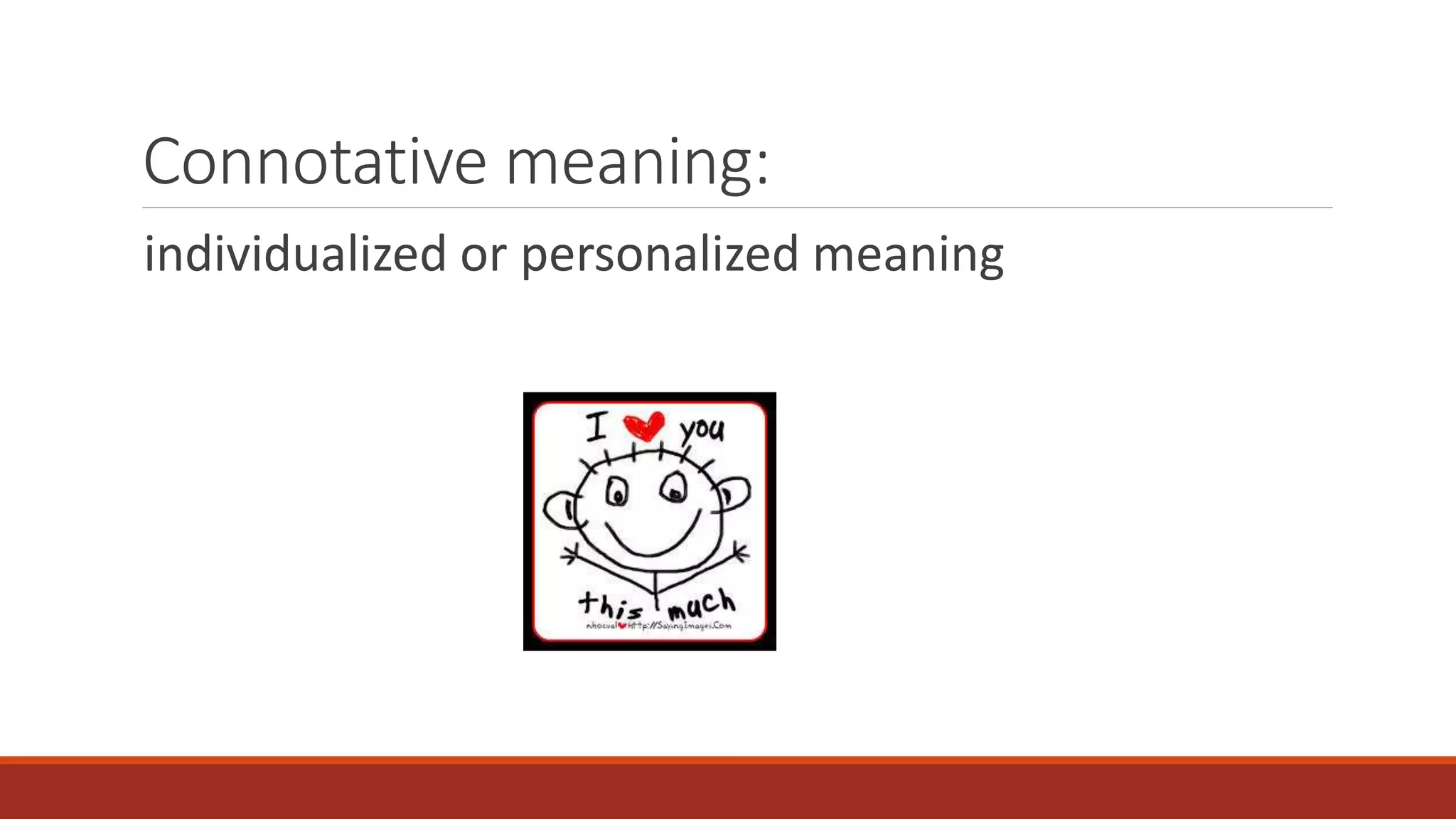
Connotative meaning:
individualized or personalized meaning
avoid these when you speak:
grammatical errors
Slang
Clichés
Euphemism
Profanity
Jargon
Regionalism
 sexist/racist/heterosexist/ageist languages
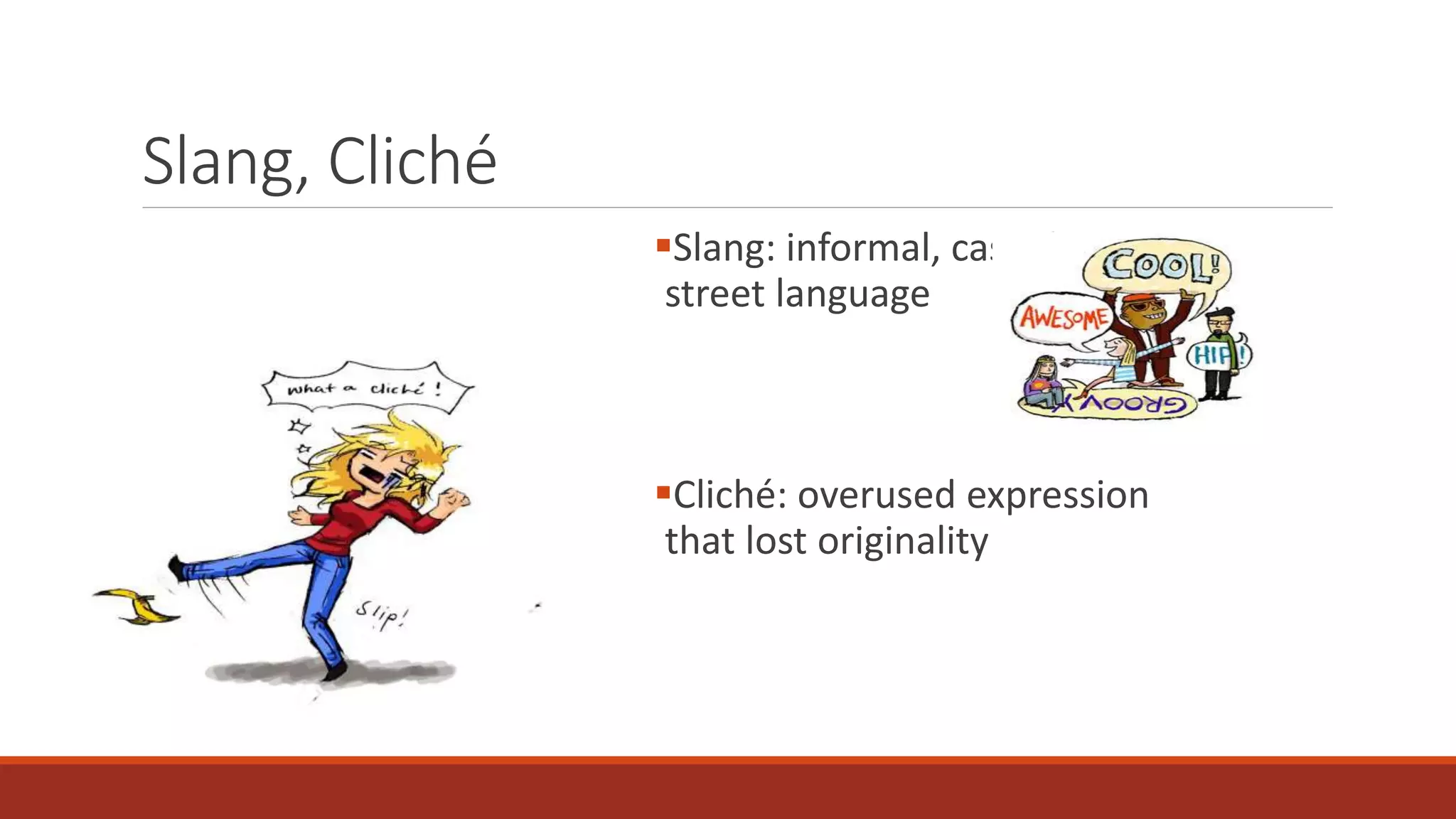
Slang, Cliché
Slang: informal, casual
street language
Cliché: overused expression
that lost originality
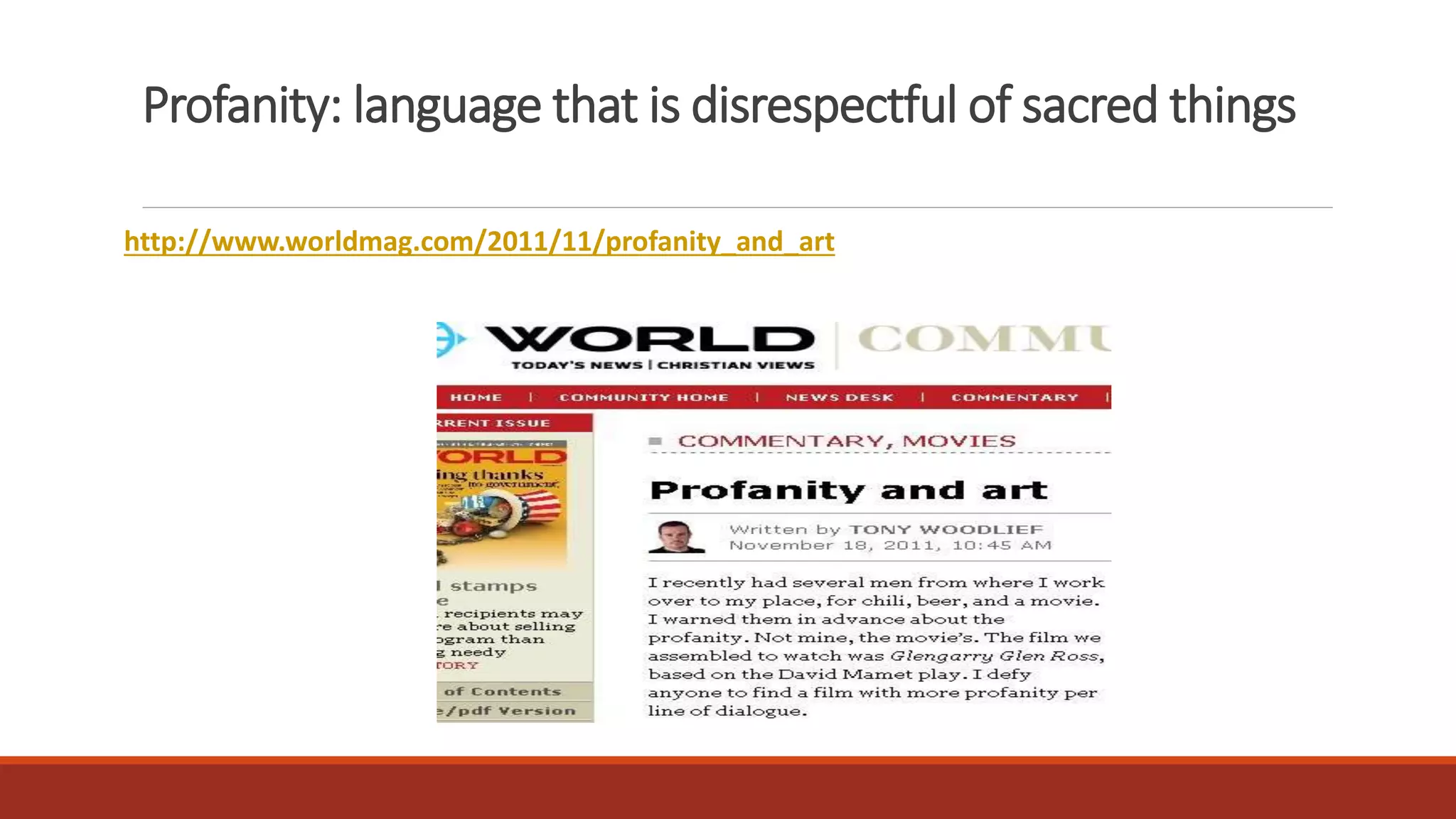
Profanity: language that is disrespectful of sacred things
http://www.worldmag.com/2011/11/profanity_and_art
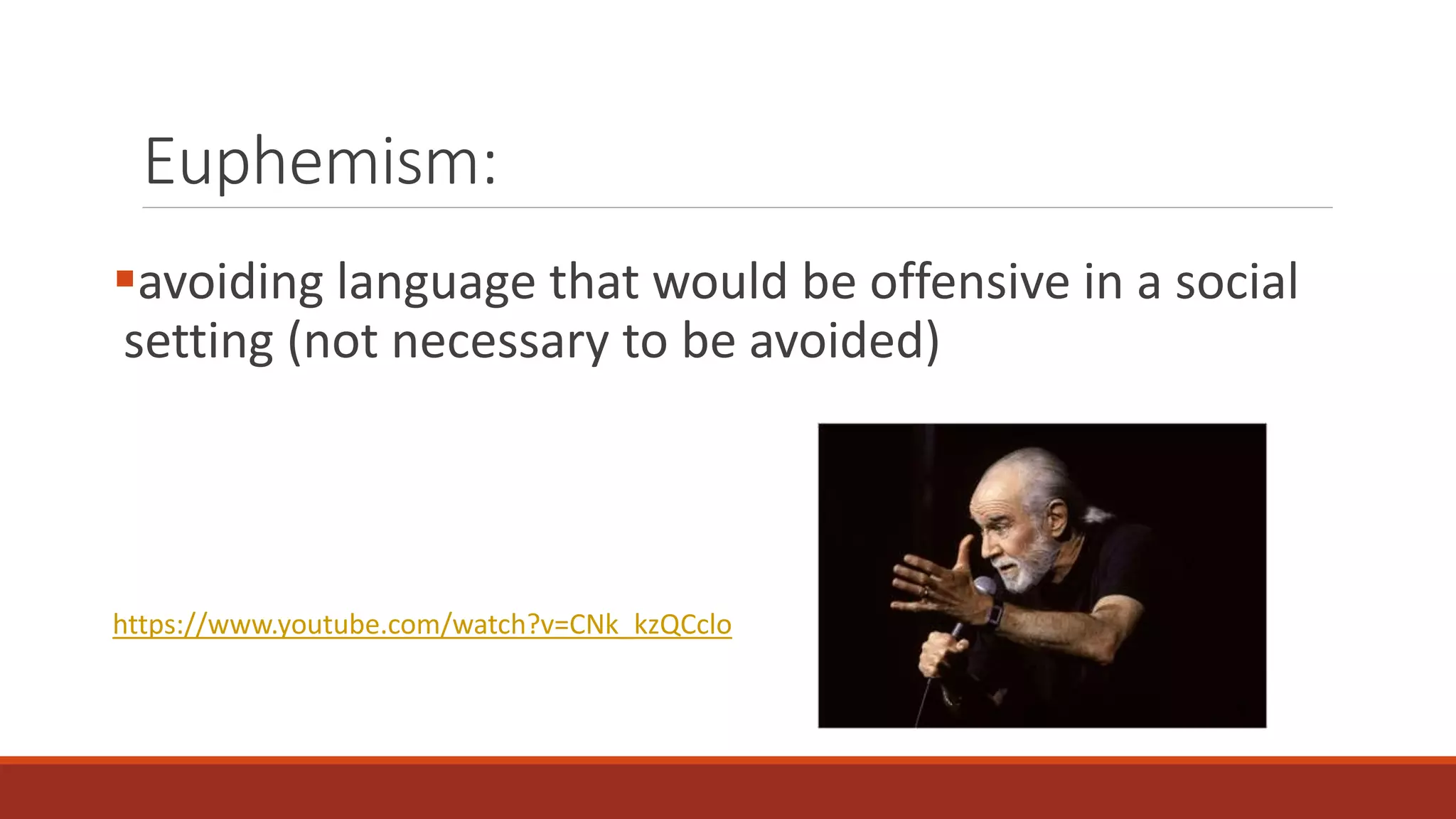
Euphemism:
avoiding language that would be offensive in a social
setting (not necessary to be avoided)
https://www.youtube.com/watch?v=CNk_kzQCclo
Jargon, Regionalism
Jargon: language particular to a specific profession
Regionalism: words and phrases specific to a region
Technical Jargon: https://www.youtube.com/watch?v=aW2LvQUcwqc
Regionalism, and why it works: https://www.youtube.com/watch?v=w8TWfuOiNzE
Descriptiveness and Paraphrasing
Descriptiveness: instead of judging it, we describe the observed
behavior or phenomena
Paraphrasing is restating the content of the message by rephrasing
Operational definition
identifying something by describing
◦how it works
◦how it is made
◦what it consist
Confusion can arise…
If you suspect someone might misunderstand your terminology, you
must define the term.
Define potentially confusing words when you speak.
It is recommended to use concrete language rather
than vague or abstract when you speak.
Dating & Frozen evaluation
Dating: specify when you made the observation since everything
changes over time.
Frozen evaluation: in which you don’t allow your assessment to
change over time.
Dating is the opposite of frozen evaluation.
Observation & Inferences
Observation: descriptions of what is sensed
Inferences: conclusions drawn from observations

Language and meaning (ch 3) power point