LANGUAGE
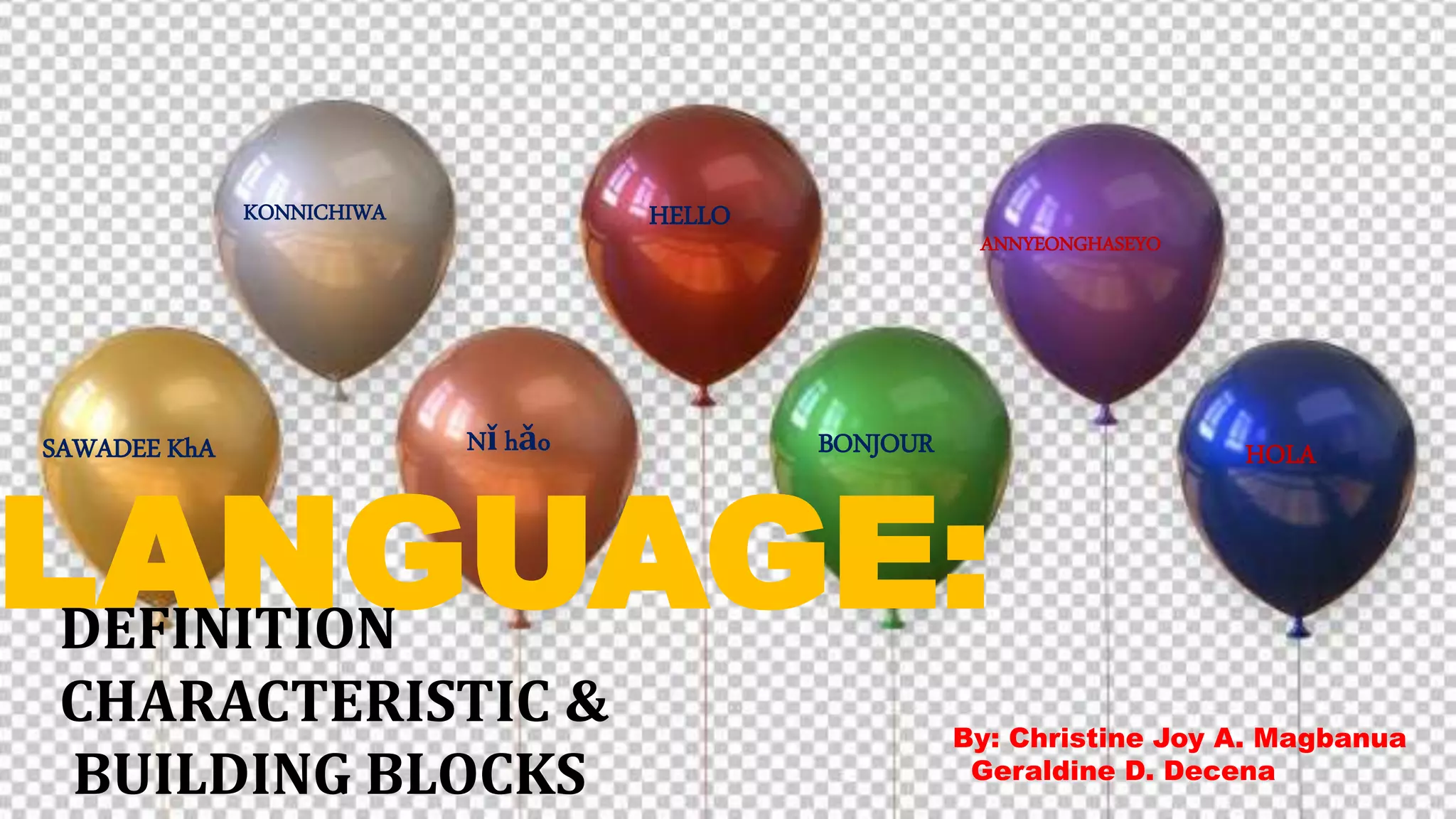
HELLOKONNICHIWA
ANNYEONGHASEYO
SAWADEE KhA Nǐ hǎo BONJOUR HOLA
LANGUAGE:DEFINITION
CHARACTERISTIC &
BUILDING BLOCKS
By: Christine Joy A. Magbanua
Geraldine D. Decena
What is language?
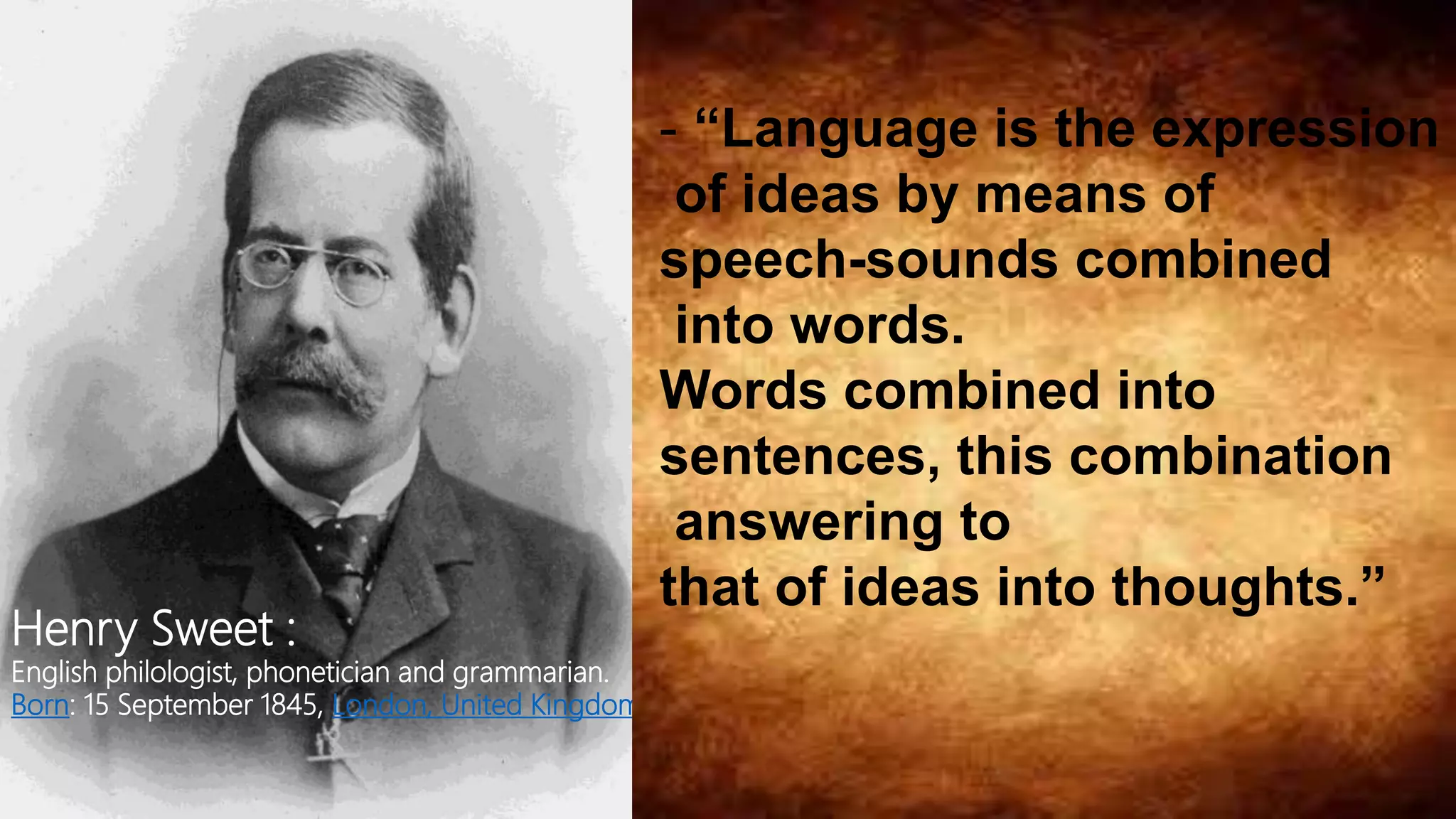
Henry Sweet :
English philologist, phonetician and grammarian.
Born: 15 September 1845, London, United Kingdom
- “Language is the expression
of ideas by means of
speech-sounds combined
into words.
Words combined into
sentences, this combination
answering to
that of ideas into thoughts.”
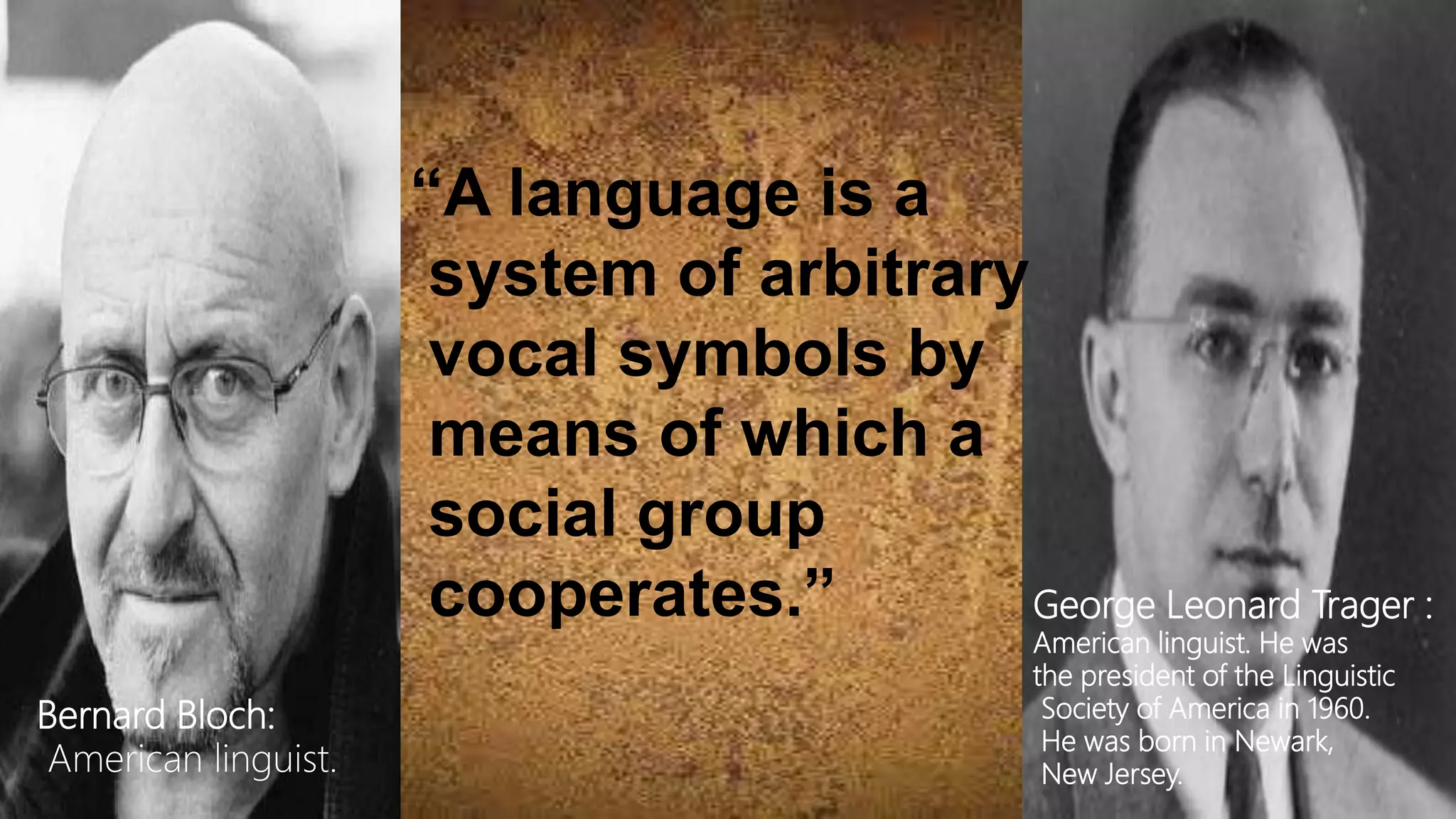
George Leonard Trager :
American linguist. He was
the president of the Linguistic
Society of America in 1960.
He was born in Newark,
New Jersey.
Bernard Bloch:
American linguist.
“A language is a
system of arbitrary
vocal symbols by
means of which a
social group
cooperates.”
“Language is not only a vehicle
for the expression of thoughts,
perceptions, sentiments,
and values characteristics of a
community; it also represents
a fundamental expression of
social identity.”
- Is an abstract system of symbols
and meanings. This system includes
the rules (grammar) that relate
symbols and meanings so that
we can communicate with each
other.
Anything that stands for
anything else.
Language is a tool to
 learn knowledge
Transmit information
Express feelings, emotions and ideas
Forge cultural ties
Construct social identity
Criteria of the
System Of
Communication
Language
uses
Symbols
Language
Is
generative
Language
is
Meaningful
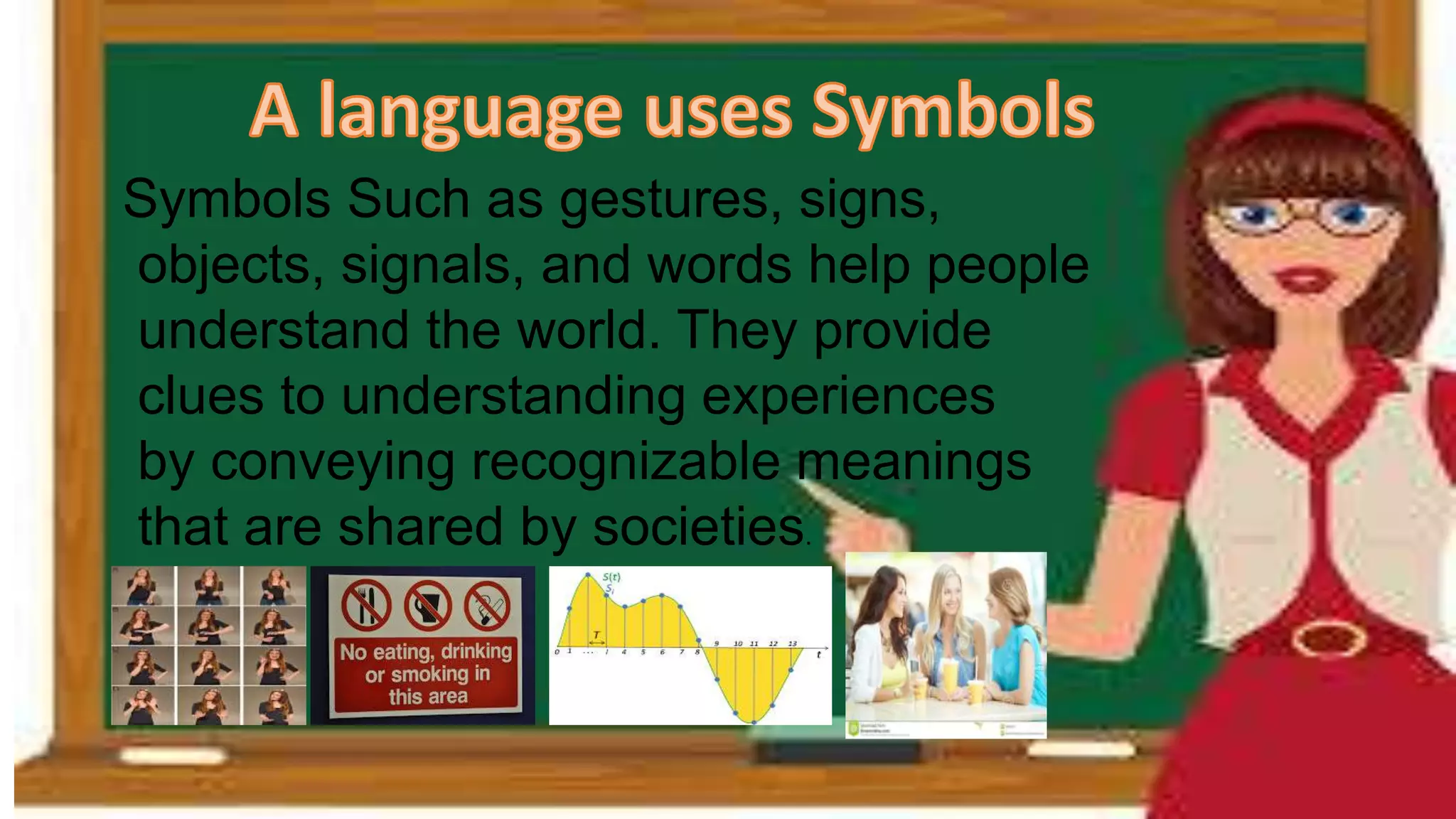
Symbols Such as gestures, signs,
objects, signals, and words help people
understand the world. They provide
clues to understanding experiences
by conveying recognizable meanings
that are shared by societies.
Language is meaningful especially in human live.
Through this, we can understand each other and
eliminate misunderstanding. It also a bridge into world
communication gaps and it also help every countries
leaders to improve their economic industries.
It is generative for it can be combined to
produced limit-less messages and meaning.
Characteristics
of Language
Arbitrary
Social Phenomenon
Symbolic System
Vocal, Verbal
and Sound
Non-instinctive,
conventional
Productive
and Creative
System Of
Communication
Unique, Complex
and Modifiable
Language is arbitrary in the sense that there
is no inherent relation between the words
of a language and their meanings or the ideas
conveyed by them.
Language should be considered as a social phenomenon.
Language is social that exists in our human society;
it is as a means of nourishing and developing culture
and establishing human relations.
Language signifies as a symbolic system.
It consists of different types of sound symbols and
their graph logical partners that are utilized to give
a few objects, occurrences or significance.
Language is Systematic
In spite of the fact that language is symbolic,
its symbols are arranged in specific systems.
All languages have their arrangement of plans.
Each language is an arrangement of systems.
Furthermore, all languages have phonological
and syntactic systems and within a system,
there are also several sub-systems.
Language is a system of vocal and verbal
symbolism. It is essentially comprised of
vocal sounds just created by a physiological
articulatory component in the human body.
First and foremost, it shows up as vocal
sounds only. Language takes verbal elements
such as sounds, words and phrases which are
fixed up in certain ways to make several
sentences.
No language was made in multi-day out of a commonly
settled upon the recipe by a gathering of people.
Language is the result of advancement and tradition.
Every age transmits this tradition on to the following.
Language has efficiency and innovativeness.
The auxiliary components of human language joined to
created new expressions, which neither the speaker nor
his/her listeners may ever have made or heard previously.
Truly, the two sides comprehend without trouble.
Language changes as indicated by the necessities
of society. After all, language has the power of
productivity and creativity.
Language is strong, convenient and the best form
of communication. It is the best ways to express
everything. It is through language that we human
express our thoughts, desires, emotions and feelings.
Further, we can interact with each other easily through
the welfare of language. After all, we may say that
language is the best system of communication
around the world.
Human language is open-minded, extendable and
modifiable on the other hand animal language is not.
Language should be modifiable through time to time.
No species other than humans have been
endowed with language.
So we can say that language is naturally
human and in some cases, structurally
complex and modifiable.
Language is a unique phenomenon in the world.
It has its own creativity and productivity. Despite
their common features and language universals,
each language has its peculiarities and distinctive
features.
And this is how language has its own
potentiality to be unique, complex and
modifiable by the change of time and culture.
They are the most basic unit of speech;
An individual sound. All languages use phonem
English uses approximately forty.
They can have distinctive, features voiced or
unvoiced components.
Phonemes are so basic that they
do not have meaning until put
together.
Great Expectations (by Charles Dickens)
Morpheme
A morpheme is the smallest meaningful
unit of language, formed from a
combination of phonemes.
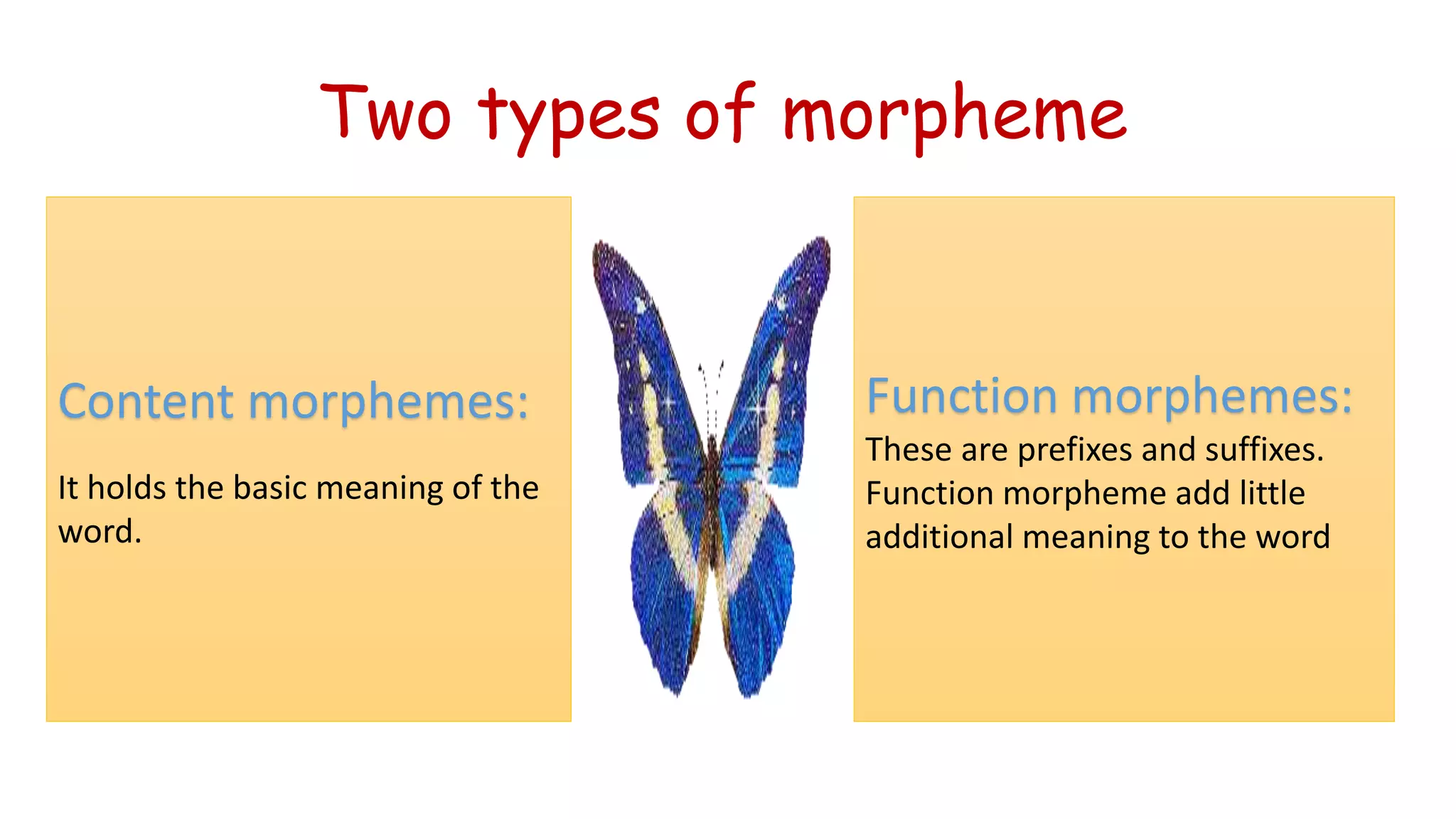
Two types of morpheme
Content morphemes:
It holds the basic meaning of the
word.
Function morphemes:
These are prefixes and suffixes.
Function morpheme add little
additional meaning to the word
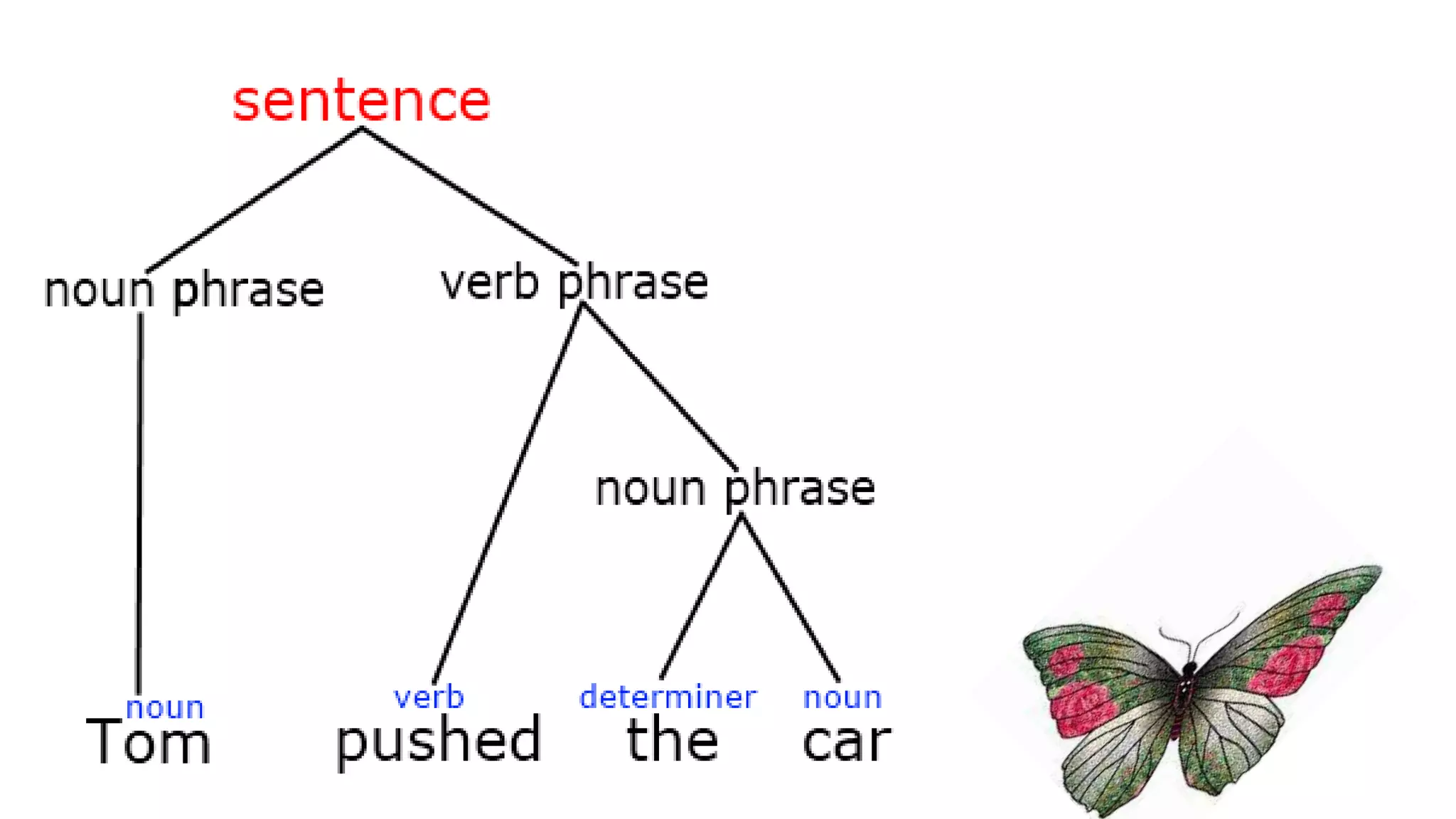
Syntax is a system of rules that governs how words can
be meaningfully arranged to form phrases and sentences.
References
Bloch, J. (2007). Abdullah's blogging: A generation 1.5 student enters the blogosphere.
Journal of Language Learning and Technology, 11, 128–141.
http://www. Journal of Language Learning and Technology.Google Scholar
Sapir, E. (1921). Language an Introduction to the study of Speech
https://www.ugr.es/~fmanjon/Sapir,%20Edward%20-
%20Language,%20An%20Introduction%20to%20the%20Study%20of%20Speech.pdf
Sweet. (1899) The Practical Study of Language
https://www.jstor.org/stable/43346066?seq=1
Merriam Webster, Language
http://www.Meriam-webster.com/dictionary/language
Schumann, J. (1978). The pidginization process: A model for second language acquisition.
Rowley, MA: Newbury House.
http://www.ThePidginizationprocess.Google Scholar
Sparknotes (2020) Language and Cognition
https://www.sparknotes.com/psychology/psych101/languageandcognition/section1/

Criteria of the System of Communication.

  • 1.
    LANGUAGE HELLOKONNICHIWA ANNYEONGHASEYO SAWADEE KhA Nǐhǎo BONJOUR HOLA LANGUAGE:DEFINITION CHARACTERISTIC & BUILDING BLOCKS By: Christine Joy A. Magbanua Geraldine D. Decena
  • 2.
  • 3.
    Henry Sweet : Englishphilologist, phonetician and grammarian. Born: 15 September 1845, London, United Kingdom - “Language is the expression of ideas by means of speech-sounds combined into words. Words combined into sentences, this combination answering to that of ideas into thoughts.”
  • 4.
    George Leonard Trager: American linguist. He was the president of the Linguistic Society of America in 1960. He was born in Newark, New Jersey. Bernard Bloch: American linguist. “A language is a system of arbitrary vocal symbols by means of which a social group cooperates.”
  • 5.
    “Language is notonly a vehicle for the expression of thoughts, perceptions, sentiments, and values characteristics of a community; it also represents a fundamental expression of social identity.”
  • 6.
    - Is anabstract system of symbols and meanings. This system includes the rules (grammar) that relate symbols and meanings so that we can communicate with each other.
  • 7.
    Anything that standsfor anything else.
  • 8.
    Language is atool to  learn knowledge Transmit information Express feelings, emotions and ideas Forge cultural ties Construct social identity
  • 9.
    Criteria of the SystemOf Communication Language uses Symbols Language Is generative Language is Meaningful
  • 10.
    Symbols Such asgestures, signs, objects, signals, and words help people understand the world. They provide clues to understanding experiences by conveying recognizable meanings that are shared by societies.
  • 11.
    Language is meaningfulespecially in human live. Through this, we can understand each other and eliminate misunderstanding. It also a bridge into world communication gaps and it also help every countries leaders to improve their economic industries.
  • 12.
    It is generativefor it can be combined to produced limit-less messages and meaning.
  • 13.
    Characteristics of Language Arbitrary Social Phenomenon SymbolicSystem Vocal, Verbal and Sound Non-instinctive, conventional Productive and Creative System Of Communication Unique, Complex and Modifiable
  • 14.
    Language is arbitraryin the sense that there is no inherent relation between the words of a language and their meanings or the ideas conveyed by them.
  • 15.
    Language should beconsidered as a social phenomenon. Language is social that exists in our human society; it is as a means of nourishing and developing culture and establishing human relations.
  • 16.
    Language signifies asa symbolic system. It consists of different types of sound symbols and their graph logical partners that are utilized to give a few objects, occurrences or significance.
  • 17.
    Language is Systematic Inspite of the fact that language is symbolic, its symbols are arranged in specific systems. All languages have their arrangement of plans. Each language is an arrangement of systems.
  • 18.
    Furthermore, all languageshave phonological and syntactic systems and within a system, there are also several sub-systems.
  • 19.
    Language is asystem of vocal and verbal symbolism. It is essentially comprised of vocal sounds just created by a physiological articulatory component in the human body.
  • 20.
    First and foremost,it shows up as vocal sounds only. Language takes verbal elements such as sounds, words and phrases which are fixed up in certain ways to make several sentences.
  • 21.
    No language wasmade in multi-day out of a commonly settled upon the recipe by a gathering of people. Language is the result of advancement and tradition. Every age transmits this tradition on to the following.
  • 22.
    Language has efficiencyand innovativeness. The auxiliary components of human language joined to created new expressions, which neither the speaker nor his/her listeners may ever have made or heard previously.
  • 23.
    Truly, the twosides comprehend without trouble. Language changes as indicated by the necessities of society. After all, language has the power of productivity and creativity.
  • 24.
    Language is strong,convenient and the best form of communication. It is the best ways to express everything. It is through language that we human express our thoughts, desires, emotions and feelings.
  • 25.
    Further, we caninteract with each other easily through the welfare of language. After all, we may say that language is the best system of communication around the world.
  • 26.
    Human language isopen-minded, extendable and modifiable on the other hand animal language is not. Language should be modifiable through time to time. No species other than humans have been endowed with language.
  • 27.
    So we cansay that language is naturally human and in some cases, structurally complex and modifiable.
  • 28.
    Language is aunique phenomenon in the world. It has its own creativity and productivity. Despite their common features and language universals, each language has its peculiarities and distinctive features.
  • 29.
    And this ishow language has its own potentiality to be unique, complex and modifiable by the change of time and culture.
  • 31.
    They are themost basic unit of speech; An individual sound. All languages use phonem English uses approximately forty. They can have distinctive, features voiced or unvoiced components.
  • 32.
    Phonemes are sobasic that they do not have meaning until put together.
  • 33.
    Great Expectations (byCharles Dickens)
  • 34.
    Morpheme A morpheme isthe smallest meaningful unit of language, formed from a combination of phonemes.
  • 35.
    Two types ofmorpheme Content morphemes: It holds the basic meaning of the word. Function morphemes: These are prefixes and suffixes. Function morpheme add little additional meaning to the word
  • 37.
    Syntax is asystem of rules that governs how words can be meaningfully arranged to form phrases and sentences.
  • 39.
    References Bloch, J. (2007).Abdullah's blogging: A generation 1.5 student enters the blogosphere. Journal of Language Learning and Technology, 11, 128–141. http://www. Journal of Language Learning and Technology.Google Scholar Sapir, E. (1921). Language an Introduction to the study of Speech https://www.ugr.es/~fmanjon/Sapir,%20Edward%20- %20Language,%20An%20Introduction%20to%20the%20Study%20of%20Speech.pdf Sweet. (1899) The Practical Study of Language https://www.jstor.org/stable/43346066?seq=1 Merriam Webster, Language http://www.Meriam-webster.com/dictionary/language Schumann, J. (1978). The pidginization process: A model for second language acquisition. Rowley, MA: Newbury House. http://www.ThePidginizationprocess.Google Scholar Sparknotes (2020) Language and Cognition https://www.sparknotes.com/psychology/psych101/languageandcognition/section1/