LANDSLIDES
BY:
M.Priya dharshana,Researc h Scholar (Botany)
V.O.Chidambaram college,Thoothukudi.
DEFINITION
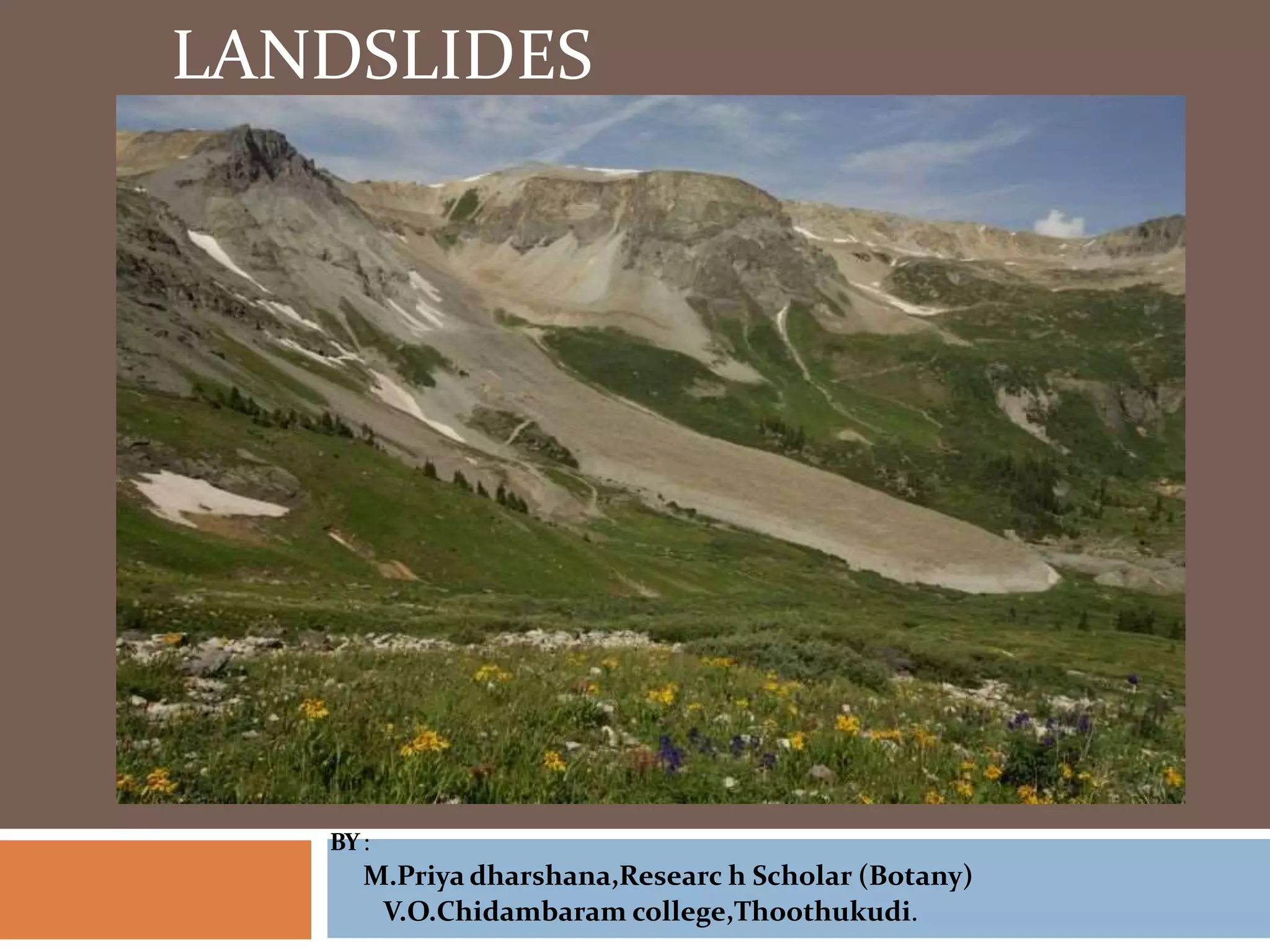
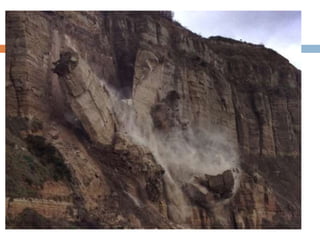
 A landslide is a sudden flow down of a large
massof rock, mud and debrisalong theside of
theslope
 It is a naturalhazard.
 It is also known as land slips orslope failure
slumps.
CAUSES OF LANDSLIDES
The landslide is caused by the followingfactors.
Theyare
o Earthquake
o Excessiverainfall
o Snow melt
o Rapid change intemperature
o Deforestation
o Forest fires
o Mining of Earth
CAUSES OF LANDSLIDES
 Rapid snow melt
 Erosion byrivers
 Ocean waves andtides
 Saturation of rock andsoil
 Floods
 Steepslopes
 Absence of adequate surfacedraina ge
Formation of land slides
 Whenever there is a natural disturbance or
instability in the land on hill, slopeand mountains
there isa potential of a landslide.
 Earth material is held in a place by natural bonding
and gravity
 When the earth material loses its bonding due to
weathering, erosion there may bea chanceof land
slde.
 The land slides usuallydepend on the following
conditions such as slope, water and earth
movements.
How to recognize landslides?
Land slides are recognized by the followingclues:
 Abnormal terrainconfigurations
 Unususal wetted surface
 Bulging of down slopes
 Cracks in buildings
 Break in hill sides
 Leaks in dams andresorvoirs.
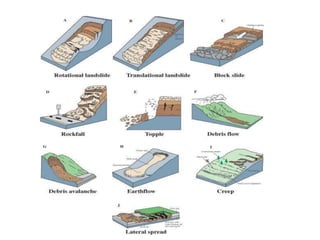
TYPES OF LANDSLIDES:
 The land slidesare differentiated by thenature
of its movement and earth material involved.
Theyare
 Slide
 Topple
 Fall
 Flows-Debris flow, debris
avalanche,mudflow,creep and earthflow
 Torrent
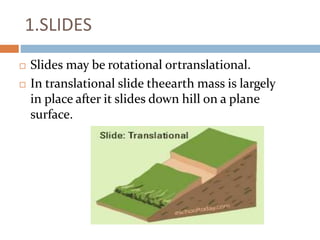
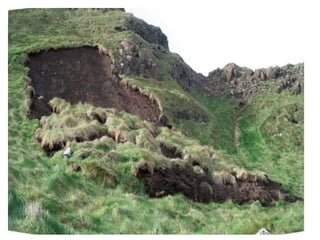
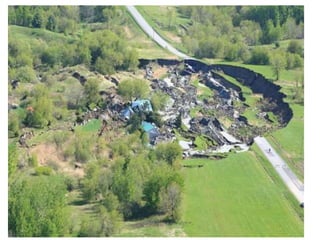
1.SLIDES
 Slides may be rotational ortranslational.
 In translational slide theearth mass is largely
in place after it slides down hill on a plane
surface.
1.SLIDES
 In a rotational slide the movement of theearth
material is rotational in nature.
 It is also known asslumps.
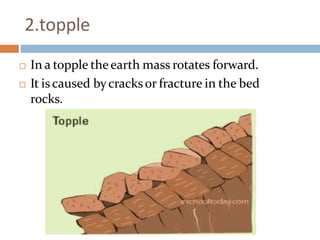
2.topple
 In a topple theearth mass rotates forward.
 It is caused bycracksor fracture in the bed
rocks.
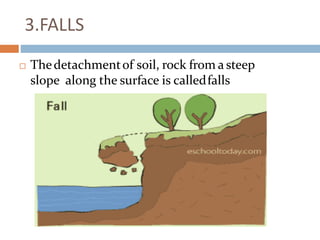
3.FALLS
 Thedetachmentof soil, rock from a steep
slope along the surface is calledfalls
4.flows
 Flows are of manytypes
 DEBRIS FLOW
It involves the downhill movement ofearth
material mixed with organic matter andwater.
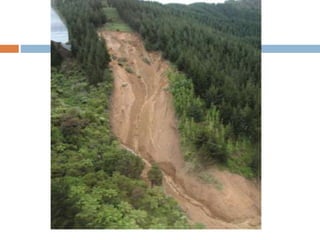
DEBRIS AVALANCHE
It is similar todebris flow but its flow is rapid
when compared to debrisflow
Earth flow
 Earth flow is a stream of soil, rockmaterial
saturated with water
 It flows down slope under the pull of gravity
 It is an intermediatestage between creep and
mud flow.
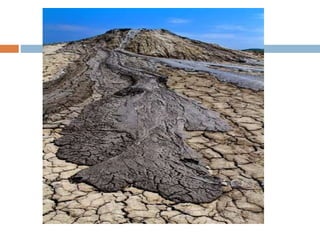
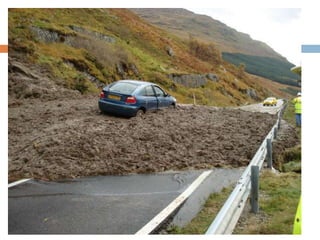
Mud flow
 It is a flow of waterthatcontains largeamount
of suspended particles such as organic
materials, debris andsilt
 It has higherviscosityand density than stream
flow
 It mostlyoccurson steep slopes
 They may rush down ata speed of 100 kmper
hour and cause great damage to life and
property
creep
 It is a slow downward movement of particles
that occurs on each slope covered with loose
weathered soil
 It is indicated by tilting if trees , poles andgrave
stones and otherobjects in the hill.
 Other process occursduring creep slides are
wedging action of roots growth and wettingand
drying of soil layers
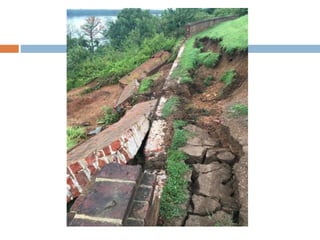
Torrent
 It is a violent flowof water
 It involves the break upand down hill flow of
rock, mud water and anything caught in the
path.
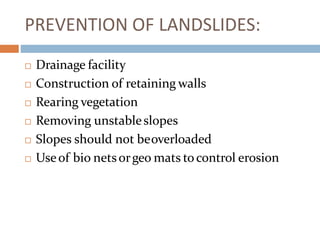
PREVENTION OF LANDSLIDES:
 Drainage facility
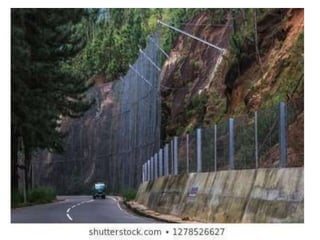
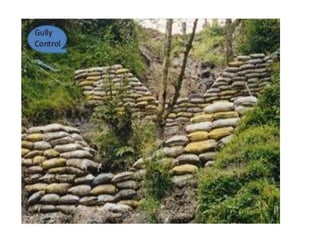
 Construction of retaining walls
 Rearing vegetation
 Removing unstableslopes
 Slopes should not beoverloaded
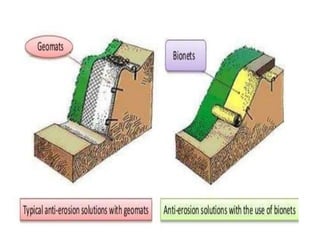
 Useof bio netsorgeo mats tocontrol erosion
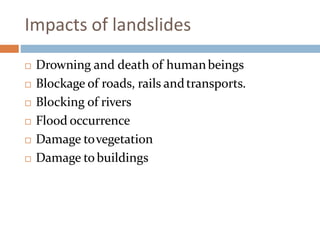
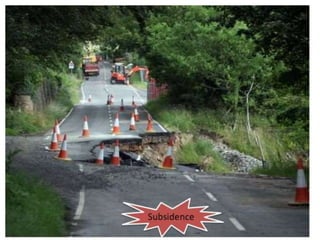
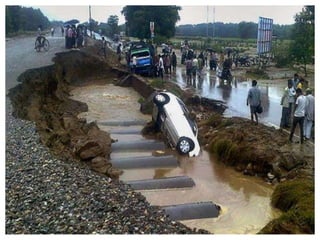
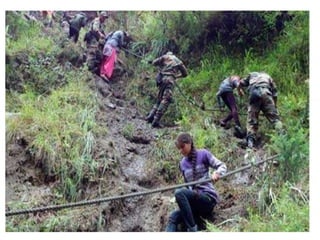
Impacts of landslides
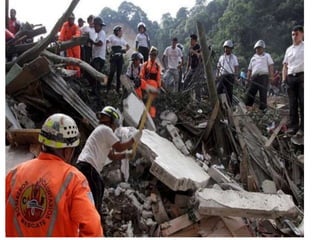
 Drowning and death of humanbeings
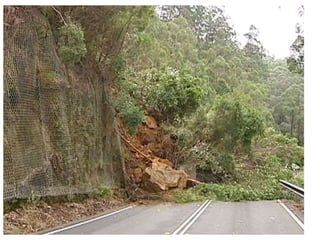
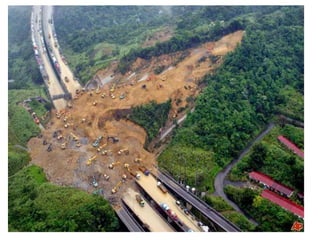
 Blockage of roads, rails andtransports.
 Blocking of rivers
 Flood occurrence
 Damage tovegetation
 Damage tobuildings
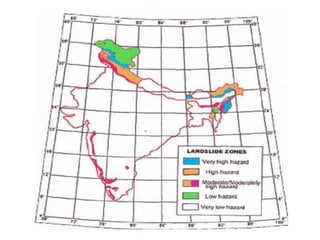
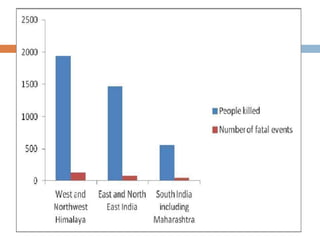
RISKY LAND SLIDE AREAS IN INDIA
 Himalayas- Uttarpradesh, Himachal pradesh,
Jammu and Kashmir, West Bengal, Sikkim,
Arunachal Pradesh.
 Arakkan mountain Belt- Nagaland, Manipur,
Mizoram, Tiripura.
 Western Ghats-Nilgiris, Maharashtra, Goa,
Karnataka and Kerala
Landslides
Landslides
Landslides

Landslides

  • 1.
    LANDSLIDES BY: M.Priya dharshana,Researc hScholar (Botany) V.O.Chidambaram college,Thoothukudi.
  • 2.
    DEFINITION  A landslideis a sudden flow down of a large massof rock, mud and debrisalong theside of theslope  It is a naturalhazard.  It is also known as land slips orslope failure slumps.
  • 3.
    CAUSES OF LANDSLIDES Thelandslide is caused by the followingfactors. Theyare o Earthquake o Excessiverainfall o Snow melt o Rapid change intemperature o Deforestation o Forest fires o Mining of Earth
  • 4.
    CAUSES OF LANDSLIDES Rapid snow melt  Erosion byrivers  Ocean waves andtides  Saturation of rock andsoil  Floods  Steepslopes  Absence of adequate surfacedraina ge
  • 5.
    Formation of landslides  Whenever there is a natural disturbance or instability in the land on hill, slopeand mountains there isa potential of a landslide.  Earth material is held in a place by natural bonding and gravity  When the earth material loses its bonding due to weathering, erosion there may bea chanceof land slde.  The land slides usuallydepend on the following conditions such as slope, water and earth movements.
  • 6.
    How to recognizelandslides? Land slides are recognized by the followingclues:  Abnormal terrainconfigurations  Unususal wetted surface  Bulging of down slopes  Cracks in buildings  Break in hill sides  Leaks in dams andresorvoirs.
  • 7.
    TYPES OF LANDSLIDES: The land slidesare differentiated by thenature of its movement and earth material involved. Theyare  Slide  Topple  Fall  Flows-Debris flow, debris avalanche,mudflow,creep and earthflow  Torrent
  • 8.
    1.SLIDES  Slides maybe rotational ortranslational.  In translational slide theearth mass is largely in place after it slides down hill on a plane surface.
  • 10.
    1.SLIDES  In arotational slide the movement of theearth material is rotational in nature.  It is also known asslumps.
  • 12.
    2.topple  In atopple theearth mass rotates forward.  It is caused bycracksor fracture in the bed rocks.
  • 14.
    3.FALLS  Thedetachmentof soil,rock from a steep slope along the surface is calledfalls
  • 16.
    4.flows  Flows areof manytypes  DEBRIS FLOW It involves the downhill movement ofearth material mixed with organic matter andwater.
  • 18.
    DEBRIS AVALANCHE It issimilar todebris flow but its flow is rapid when compared to debrisflow
  • 20.
    Earth flow  Earthflow is a stream of soil, rockmaterial saturated with water  It flows down slope under the pull of gravity  It is an intermediatestage between creep and mud flow.
  • 22.
    Mud flow  Itis a flow of waterthatcontains largeamount of suspended particles such as organic materials, debris andsilt  It has higherviscosityand density than stream flow  It mostlyoccurson steep slopes  They may rush down ata speed of 100 kmper hour and cause great damage to life and property
  • 24.
    creep  It isa slow downward movement of particles that occurs on each slope covered with loose weathered soil  It is indicated by tilting if trees , poles andgrave stones and otherobjects in the hill.  Other process occursduring creep slides are wedging action of roots growth and wettingand drying of soil layers
  • 26.
    Torrent  It isa violent flowof water  It involves the break upand down hill flow of rock, mud water and anything caught in the path.
  • 29.
    PREVENTION OF LANDSLIDES: Drainage facility  Construction of retaining walls  Rearing vegetation  Removing unstableslopes  Slopes should not beoverloaded  Useof bio netsorgeo mats tocontrol erosion
  • 33.
    Impacts of landslides Drowning and death of humanbeings  Blockage of roads, rails andtransports.  Blocking of rivers  Flood occurrence  Damage tovegetation  Damage tobuildings
  • 38.
    RISKY LAND SLIDEAREAS IN INDIA  Himalayas- Uttarpradesh, Himachal pradesh, Jammu and Kashmir, West Bengal, Sikkim, Arunachal Pradesh.  Arakkan mountain Belt- Nagaland, Manipur, Mizoram, Tiripura.  Western Ghats-Nilgiris, Maharashtra, Goa, Karnataka and Kerala