Food Processing and Preserving
Pickling
Pickling
 Pickling is one of the ancient methods of food preservation technique. It began 4000 years
ago.
 The term pickle is derived from the Dutch word ‘Peckle’ meaning brine. It is called as
‘achaar’ in North India
 The process of preservation of food in common salt or vinegar is called pickling.
 Pickles are good appetizers and they aid in digestion by stimulating the flow of gastric
juice.
Raw Materials:
Raw materials used in pickling should possess certain definite characteristics
Salt
 For pickling, any variety of common salt is suitable, provided it is pure.
 Salts should be free from lime, as it reduces the acidity of the vinegar in which brined
vegetables are pickled.
 Salts should also be free from iron, which in contact with the tannin of fruit, vegetable, and
spice, produces blackening of the pickle.
 It should not also contain magnesium salts which impart a bitter taste to the pickle.
Vinegar
 Vinegar of good quality containing at least 4 % percent acetic acid is suitable for pickling.
 Vinegar of low acid content is not suitable for pickling.
Spices
 Spices are added depending upon the kind of fruit or vegetable took and the kind of flavor
desired.
 The spices commonly used in a pickle are bay leaves, cardamom, chillies, cinnamon,
turmeric, clove, coriander, ginger, mace, mustard, black pepper, cumin, garlic, fennel,
aniseed, etc.
Food Processing and Preserving
Water
 Only potable water should be used for the preparation of brine.
 If hard water is to be used, a small quantity of vinegar should also be added to the brine to
neutralize its alkalinity.
Colouring and Hardening Agents
 Colours are not generally added to pickles, although they are used to some extent in
sauces.
 Some manufacturers use alum for firmness in pickles.
Pickling Equipment
 Utensils made of zinc, iron, brass, copper, or galvanized metal should not be used.
 For preparing fresh pickles, large containers made of stainless steel or glass can be used.
Common Fruits and Vegetables used in Pickling
 Raw Mango
 Lemon
 Amla
 Green chillies
 Garlic
 Onion
 Cauliflower
 Tomato
 Plums
 Grapes
 Apples
 Papaya
 Beetroot
 Boiled beans
 Cucumber
 Cabbage
 Radish
 Ginger
Food Processing and Preserving
Pickling process
Dry Salting
 The vegetable is selected, washed thoroughly in running cold water, drained, and weighed.
 For every 100 kg of the vegetable, 3kg of salt is used.
 The vegetable is placed about 2.5cm deep in the keg and is sprinkled with a small quantity
of salt from the weighed amount.
 Another layer of the vegetable is added and again sprinkled with salt.
 The salt is added layer by layer in this manner till the keg is three–quarters full.
 Then two – folds of cheesecloth are spread over-salted vegetables, tucked at the sides and
the wooden board is placed on the top.
 A clean stone, which does not react with salt and organic salt is placed on the board to
press the vegetable to form a brine. Generally, a stone weighing about 4.5 kg will be
sufficient or 22 litres keg.
 Generally, brine is formed in about 24 hours.
 After packing the vegetable, the keg is placed in a warm and dry place and to proceed
fermentation process.
 In a short time, due to osmosis, the juice from the vegetables forms the brine covering the
whole mass.
 As soon as the brine formed, the bubbles of carbon dioxide begin to rise from the liquid.
 The fermentation process is usually completed in 8 to 10 days under favourable conditions
 The product is now preserved and kept by excluding the air.
 If the excluding process is not done, "Pickle scum", a kind of wild yeast appears on the
surface and destroys the lactic acid formation by fermentation, and the pickle might be
spoiled.
Fermentation in Brine
 Steeping of the vegetables in a salt solution of pre-determined concentration for a certain
length of time is called brining.
 This type of treatment is adopted in the case of cucumbers and other vegetables which do
not contain sufficient juice to form brine with dry salt.
 Brine can be prepared by dissolving common salt in water and filtering it through jelly
bags to remove insoluble impurities.
 The amount of brine necessary to cover the vegetable is usually equal to about half of the
volume of the material to be fermented.
Food Processing and Preserving
 The duration of Brining is very important. If the vegetables are soaked for a short period,
the curing of vegetable tissues will be incomplete and the pickle will not have a proper
texture and taste.
 On curing, the vegetables become semi-translucent and their colour changes from green to
dark olive green or yellowish-green. This is an indication of correct curing. This usually
takes 4 to 5 weeks.
 During curing, the vegetables lose their raw flavour and become firm and crisp.
 By this method, the vegetables can be kept for an indefinite period, provided the right
storage.
With Salt
 In this method, the vegetables are packed with a large quantity of salt to inhibit
fermentation.
 Generally, 25 kg of salt is mixed with every 100 kgs of prepared vegetables.
 The cured vegetables are drained and the excess salt is removed by soaking them in cold
water or warm water.
 After removing the salt, the vegetables are stored for several weeks in plain vinegar of 10%
strength. This treatment reduces the tendency of vegetables to shrivel when packed.
Packing methods
 Pickled onions and mixed pickles should be packed finally into bottles and jars loosely so as
not to damage the shape and appearance of the pieces.
 Fresh vinegar is then added to fill up the spaces between the spaces.
 Pickles are then stored for few days depending upon the vegetables, size of pieces and
conditions of the cured vegetables, etc., to ensure thorough absorption of the vinegar
before the pickles are sent to the market.
Top three Brands of Pickle
 Mother’s Recipe
 Nilon’s
 Tops
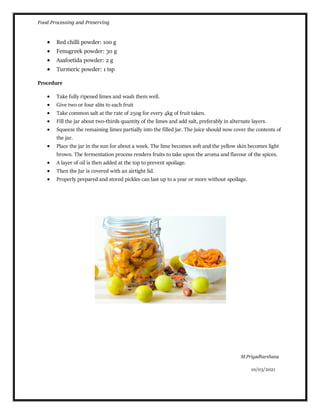
Preparation of the lime pickle
Ingredients
 Lime fruit: 1 Kg
 Common Salt: 250g
Food Processing and Preserving
 Red chilli powder: 100 g
 Fenugreek powder: 30 g
 Asafoetida powder: 2 g
 Turmeric powder: 1 tsp
Procedure
 Take fully ripened limes and wash them well.
 Give two or four slits to each fruit
 Take common salt at the rate of 250g for every 4kg of fruit taken.
 Fill the jar about two-thirds quantity of the limes and add salt, preferably in alternate layers.
 Squeeze the remaining limes partially into the filled jar. The juice should now cover the contents of
the jar.
 Place the jar in the sun for about a week. The lime becomes soft and the yellow skin becomes light
brown. The fermentation process renders fruits to take upon the aroma and flavour of the spices.
 A layer of oil is then added at the top to prevent spoilage.
 Then the Jar is covered with an airtight lid.
 Properly prepared and stored pickles can last up to a year or more without spoilage.
M.Priyadharshana
10/03/2021

Pickling

  • 1.
    Food Processing andPreserving Pickling Pickling  Pickling is one of the ancient methods of food preservation technique. It began 4000 years ago.  The term pickle is derived from the Dutch word ‘Peckle’ meaning brine. It is called as ‘achaar’ in North India  The process of preservation of food in common salt or vinegar is called pickling.  Pickles are good appetizers and they aid in digestion by stimulating the flow of gastric juice. Raw Materials: Raw materials used in pickling should possess certain definite characteristics Salt  For pickling, any variety of common salt is suitable, provided it is pure.  Salts should be free from lime, as it reduces the acidity of the vinegar in which brined vegetables are pickled.  Salts should also be free from iron, which in contact with the tannin of fruit, vegetable, and spice, produces blackening of the pickle.  It should not also contain magnesium salts which impart a bitter taste to the pickle. Vinegar  Vinegar of good quality containing at least 4 % percent acetic acid is suitable for pickling.  Vinegar of low acid content is not suitable for pickling. Spices  Spices are added depending upon the kind of fruit or vegetable took and the kind of flavor desired.  The spices commonly used in a pickle are bay leaves, cardamom, chillies, cinnamon, turmeric, clove, coriander, ginger, mace, mustard, black pepper, cumin, garlic, fennel, aniseed, etc.
  • 2.
    Food Processing andPreserving Water  Only potable water should be used for the preparation of brine.  If hard water is to be used, a small quantity of vinegar should also be added to the brine to neutralize its alkalinity. Colouring and Hardening Agents  Colours are not generally added to pickles, although they are used to some extent in sauces.  Some manufacturers use alum for firmness in pickles. Pickling Equipment  Utensils made of zinc, iron, brass, copper, or galvanized metal should not be used.  For preparing fresh pickles, large containers made of stainless steel or glass can be used. Common Fruits and Vegetables used in Pickling  Raw Mango  Lemon  Amla  Green chillies  Garlic  Onion  Cauliflower  Tomato  Plums  Grapes  Apples  Papaya  Beetroot  Boiled beans  Cucumber  Cabbage  Radish  Ginger
  • 3.
    Food Processing andPreserving Pickling process Dry Salting  The vegetable is selected, washed thoroughly in running cold water, drained, and weighed.  For every 100 kg of the vegetable, 3kg of salt is used.  The vegetable is placed about 2.5cm deep in the keg and is sprinkled with a small quantity of salt from the weighed amount.  Another layer of the vegetable is added and again sprinkled with salt.  The salt is added layer by layer in this manner till the keg is three–quarters full.  Then two – folds of cheesecloth are spread over-salted vegetables, tucked at the sides and the wooden board is placed on the top.  A clean stone, which does not react with salt and organic salt is placed on the board to press the vegetable to form a brine. Generally, a stone weighing about 4.5 kg will be sufficient or 22 litres keg.  Generally, brine is formed in about 24 hours.  After packing the vegetable, the keg is placed in a warm and dry place and to proceed fermentation process.  In a short time, due to osmosis, the juice from the vegetables forms the brine covering the whole mass.  As soon as the brine formed, the bubbles of carbon dioxide begin to rise from the liquid.  The fermentation process is usually completed in 8 to 10 days under favourable conditions  The product is now preserved and kept by excluding the air.  If the excluding process is not done, "Pickle scum", a kind of wild yeast appears on the surface and destroys the lactic acid formation by fermentation, and the pickle might be spoiled. Fermentation in Brine  Steeping of the vegetables in a salt solution of pre-determined concentration for a certain length of time is called brining.  This type of treatment is adopted in the case of cucumbers and other vegetables which do not contain sufficient juice to form brine with dry salt.  Brine can be prepared by dissolving common salt in water and filtering it through jelly bags to remove insoluble impurities.  The amount of brine necessary to cover the vegetable is usually equal to about half of the volume of the material to be fermented.
  • 4.
    Food Processing andPreserving  The duration of Brining is very important. If the vegetables are soaked for a short period, the curing of vegetable tissues will be incomplete and the pickle will not have a proper texture and taste.  On curing, the vegetables become semi-translucent and their colour changes from green to dark olive green or yellowish-green. This is an indication of correct curing. This usually takes 4 to 5 weeks.  During curing, the vegetables lose their raw flavour and become firm and crisp.  By this method, the vegetables can be kept for an indefinite period, provided the right storage. With Salt  In this method, the vegetables are packed with a large quantity of salt to inhibit fermentation.  Generally, 25 kg of salt is mixed with every 100 kgs of prepared vegetables.  The cured vegetables are drained and the excess salt is removed by soaking them in cold water or warm water.  After removing the salt, the vegetables are stored for several weeks in plain vinegar of 10% strength. This treatment reduces the tendency of vegetables to shrivel when packed. Packing methods  Pickled onions and mixed pickles should be packed finally into bottles and jars loosely so as not to damage the shape and appearance of the pieces.  Fresh vinegar is then added to fill up the spaces between the spaces.  Pickles are then stored for few days depending upon the vegetables, size of pieces and conditions of the cured vegetables, etc., to ensure thorough absorption of the vinegar before the pickles are sent to the market. Top three Brands of Pickle  Mother’s Recipe  Nilon’s  Tops Preparation of the lime pickle Ingredients  Lime fruit: 1 Kg  Common Salt: 250g
  • 5.
    Food Processing andPreserving  Red chilli powder: 100 g  Fenugreek powder: 30 g  Asafoetida powder: 2 g  Turmeric powder: 1 tsp Procedure  Take fully ripened limes and wash them well.  Give two or four slits to each fruit  Take common salt at the rate of 250g for every 4kg of fruit taken.  Fill the jar about two-thirds quantity of the limes and add salt, preferably in alternate layers.  Squeeze the remaining limes partially into the filled jar. The juice should now cover the contents of the jar.  Place the jar in the sun for about a week. The lime becomes soft and the yellow skin becomes light brown. The fermentation process renders fruits to take upon the aroma and flavour of the spices.  A layer of oil is then added at the top to prevent spoilage.  Then the Jar is covered with an airtight lid.  Properly prepared and stored pickles can last up to a year or more without spoilage. M.Priyadharshana 10/03/2021