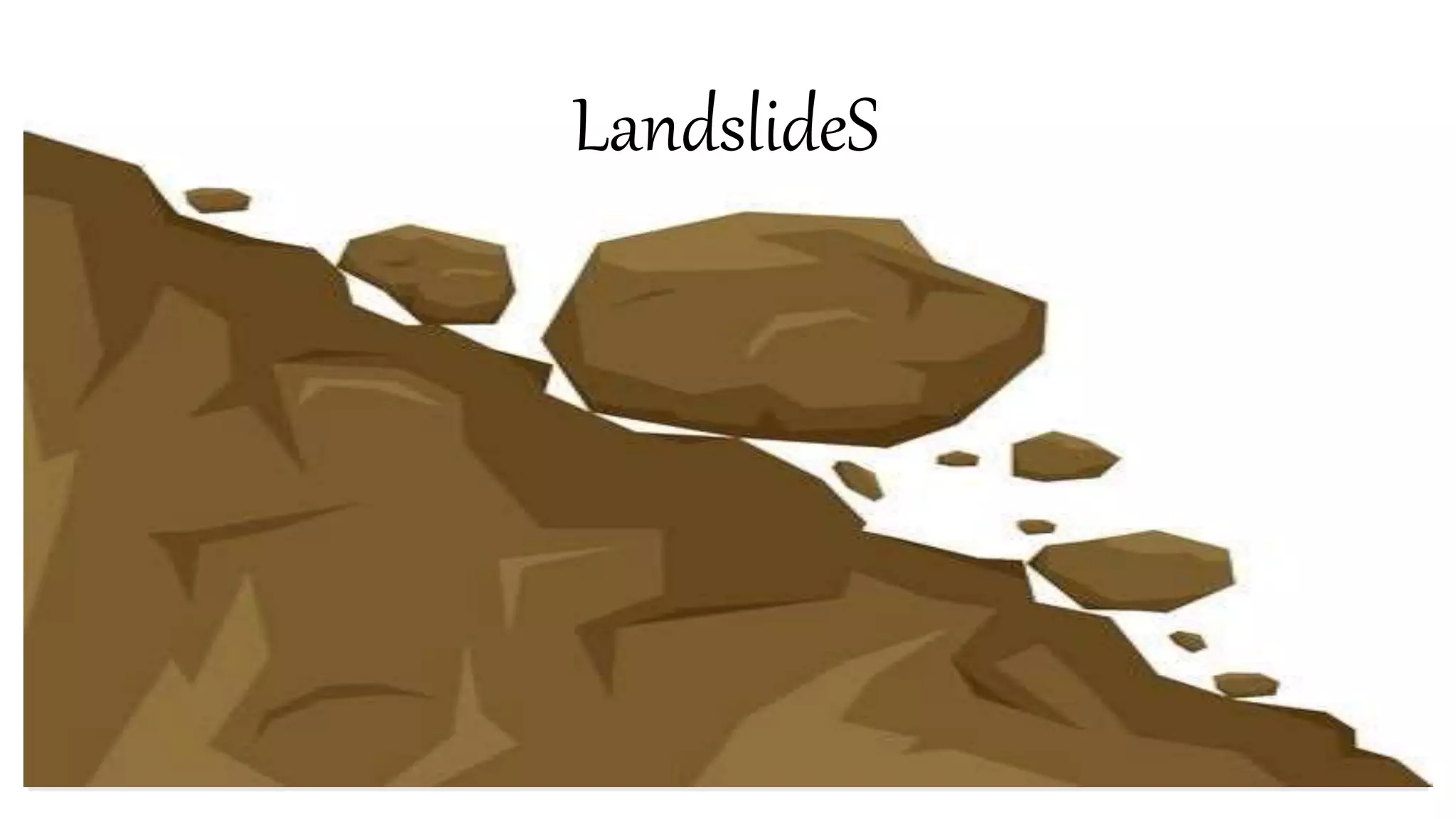
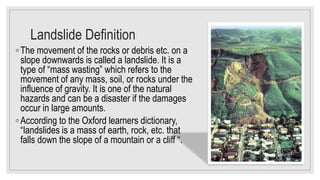
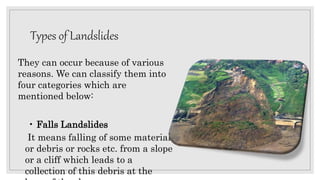
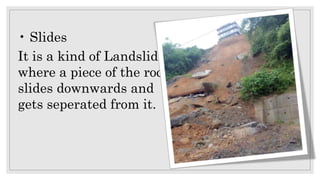
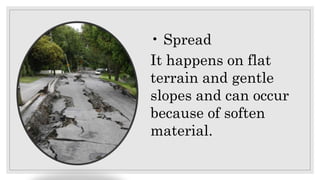
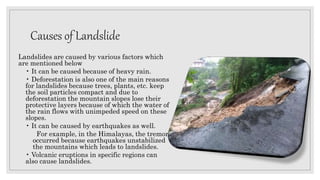
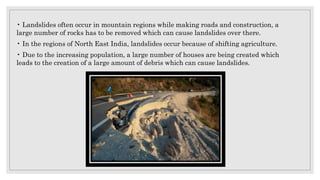
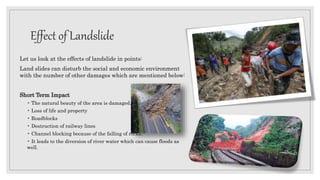
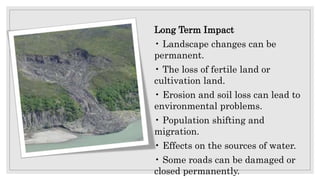
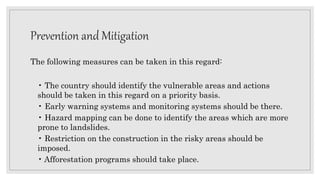
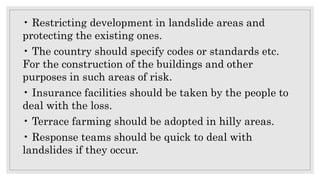
Landslides refer to the movement of rocks, debris or earth down a slope under the influence of gravity. They are classified into four main types: falls, topples, slides, and spreads. Landslides are often caused by heavy rain, deforestation, earthquakes, volcanic eruptions, construction projects, shifting agriculture, and development. The effects of landslides can be both short-term, such as loss of life, property damage and blocked roads/rivers, and long-term, including permanent landscape changes, loss of farmland, erosion and population migration. Prevention methods include hazard mapping, restricting development in at-risk areas, afforestation, early warning systems and disaster response preparedness.