

INTERNATIONAL UNIVERSITY
Fetal circulation
Dr. Sam Nang
• All of the respiratory, excretory,
and nutritional needs of the fetus
are provided for by diffusion across
the placenta instead of by the fetal
lungs, kidneys, and
gastrointestinal tract.
• Fetal circulation is adaptive to these
conditions.
Objective :
• Describe the fetal circulation
to and from the placenta.
• Describe the structure and
function of the foramen
ovale, ductus venosus, and
ductus arteriosus.
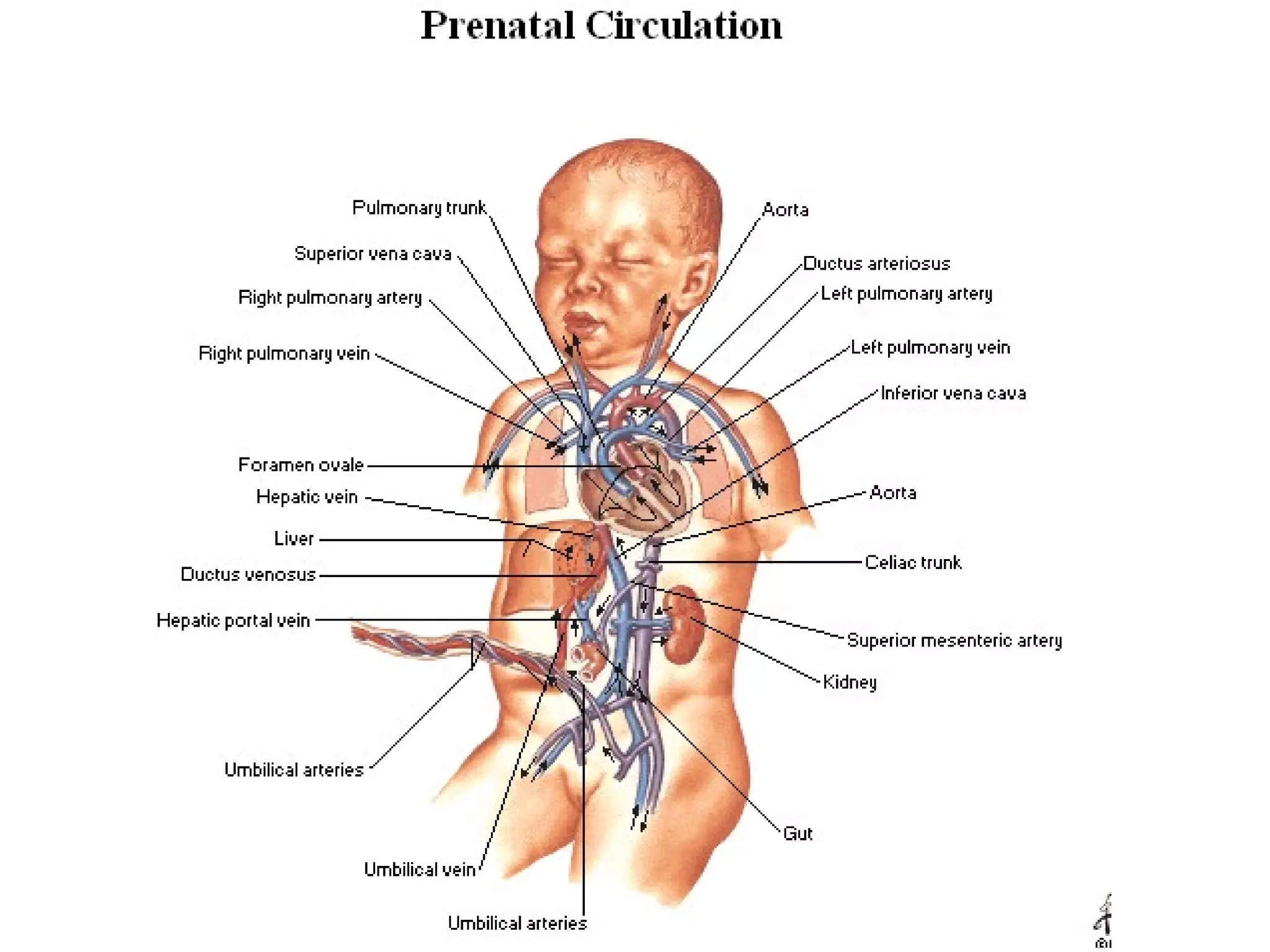
• The circulation of blood through
a fetus is by necessity different
from blood circulation in a
newborn .
• Respiration, the procurement of
nutrients, and the elimination of
metabolic wastes occur through
the maternal blood instead of
through the organs of the fetus.
• The capillary exchange between
the maternal and fetal
circulation occurs within the
placenta .
• This remarkable structure, which
includes maternal and fetal
capillary beds, is discharged
following delivery as the
afterbirth.
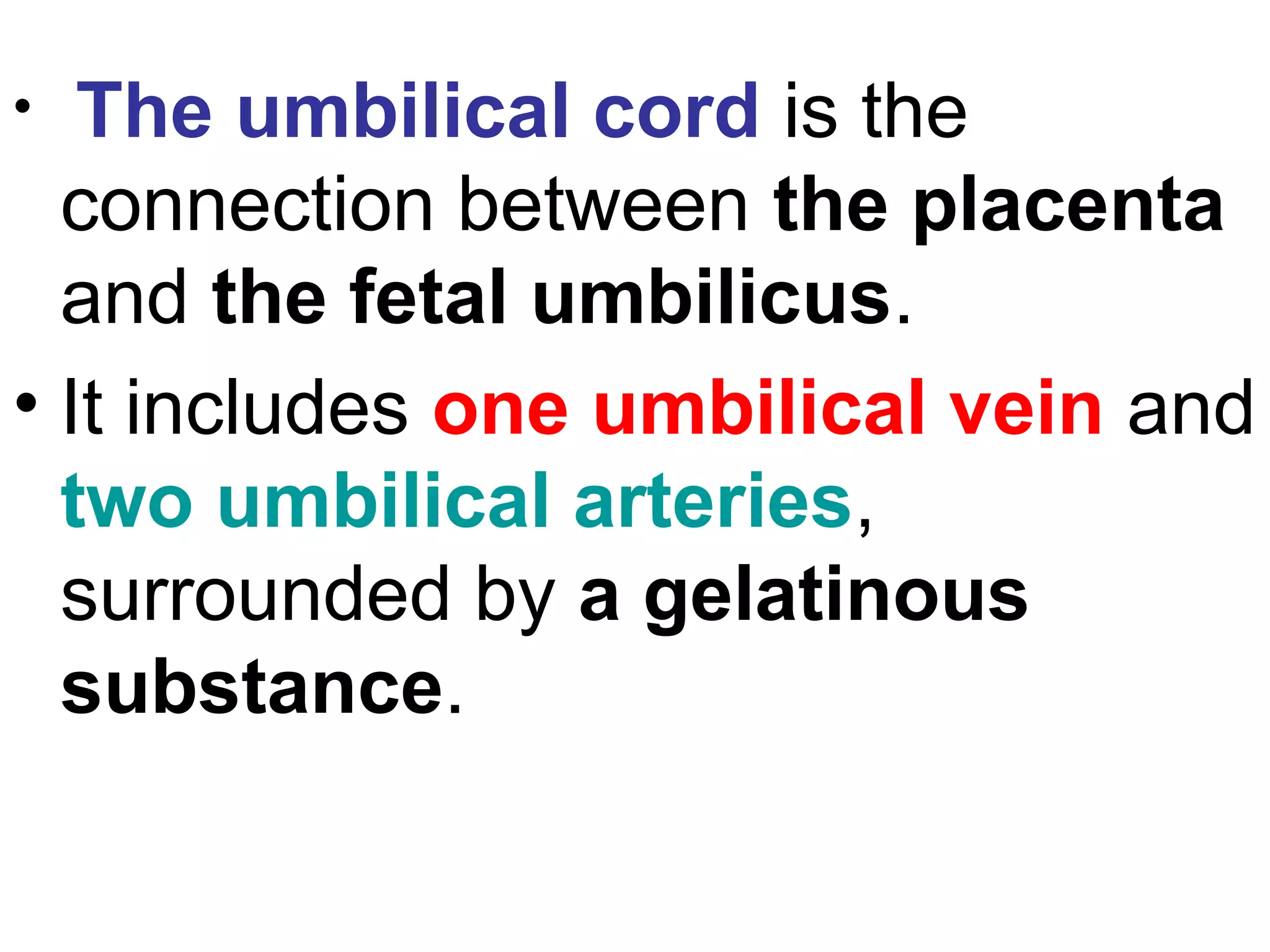
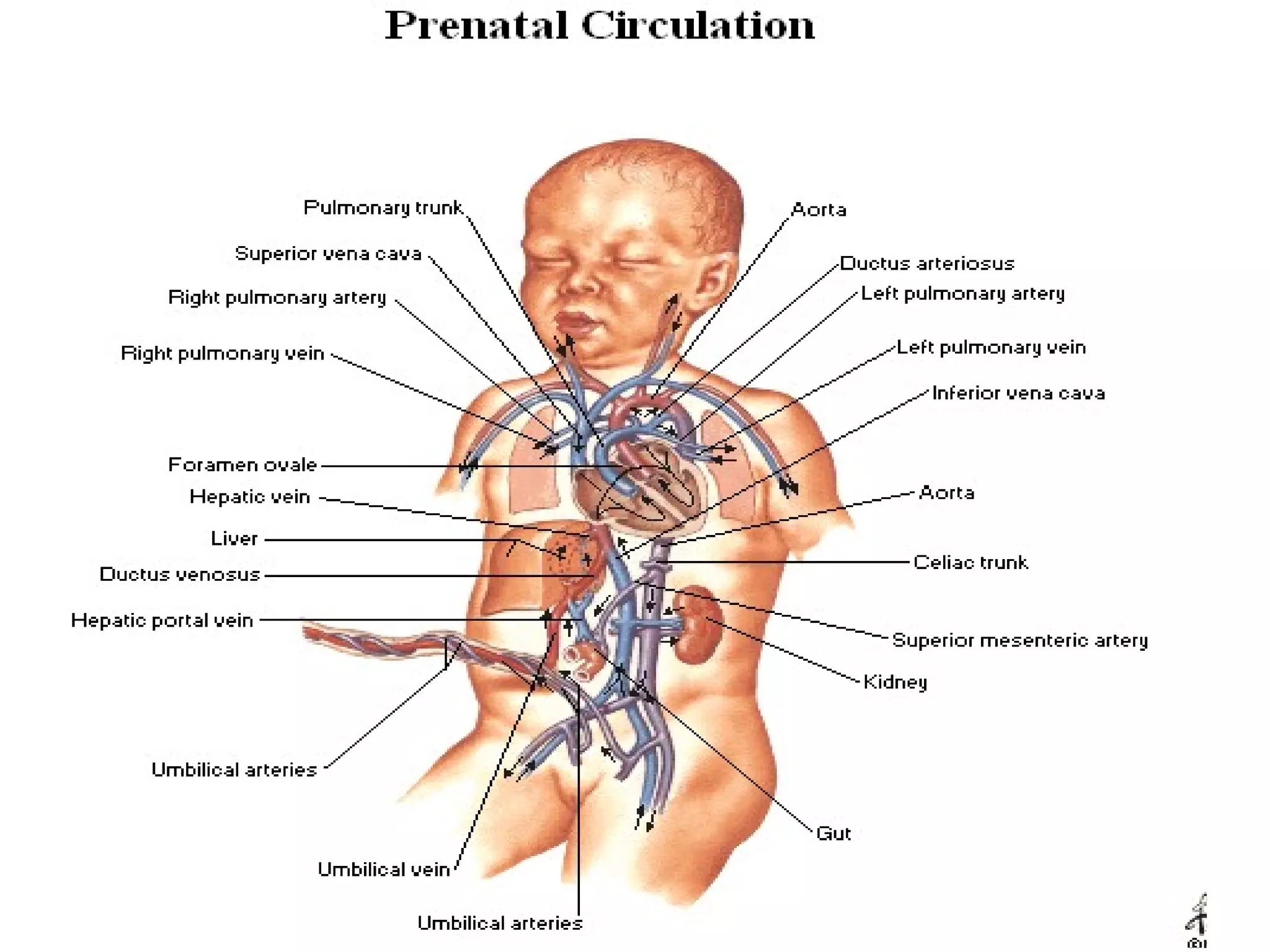
• The umbilical cord is the
connection between the placenta
and the fetal umbilicus.
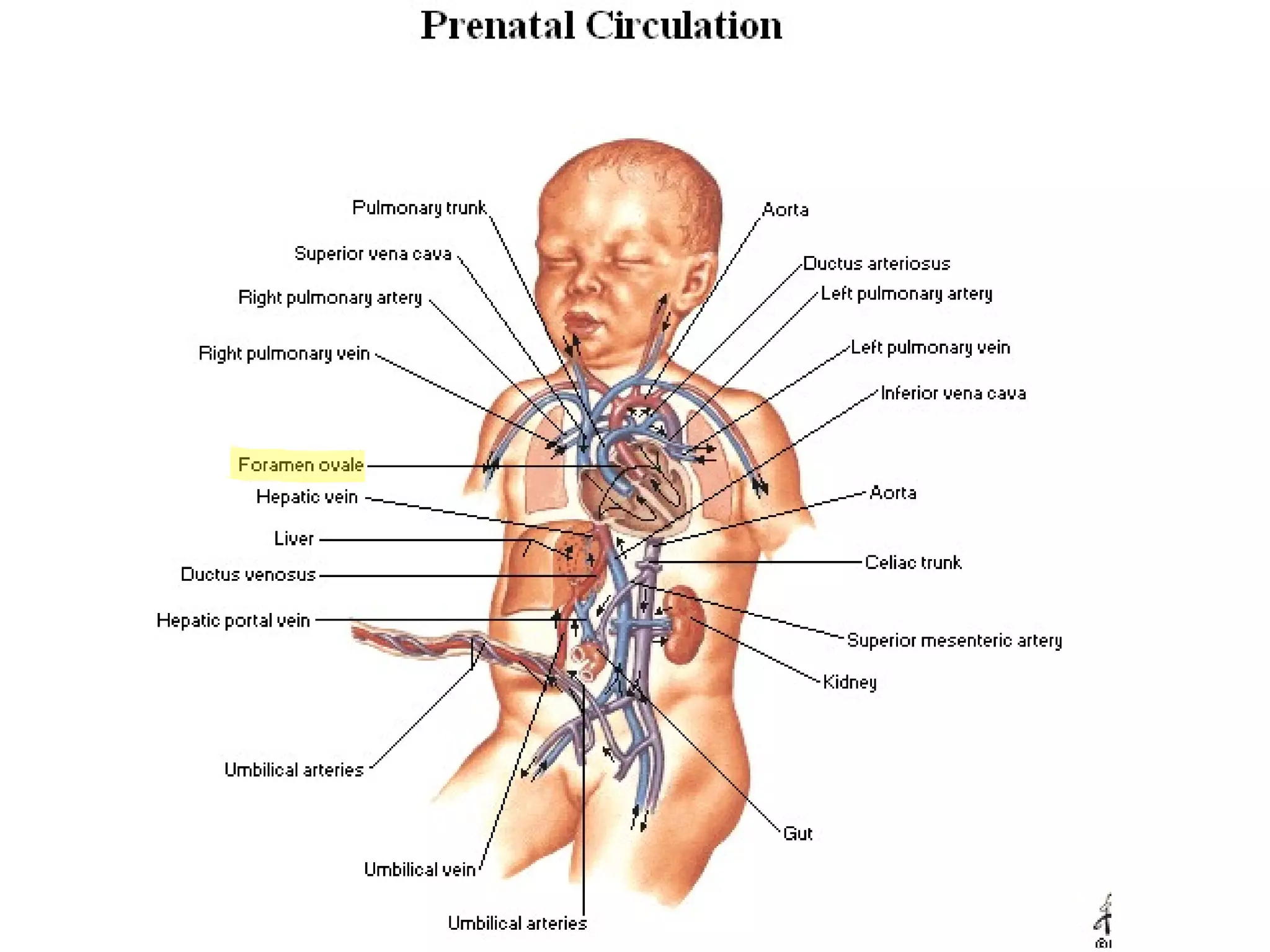
• It includes one umbilical vein and
two umbilical arteries,
surrounded by a gelatinous
substance.
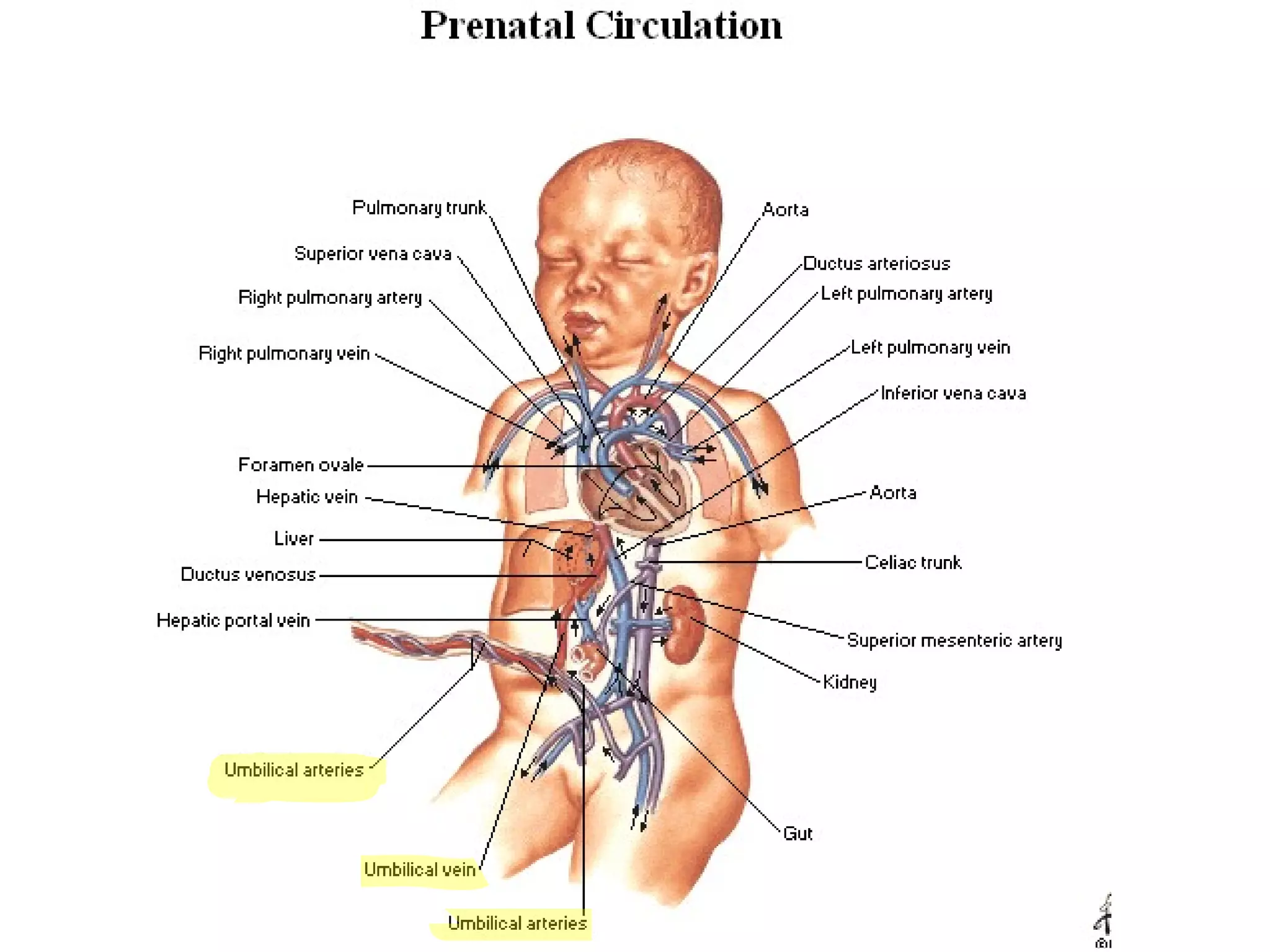
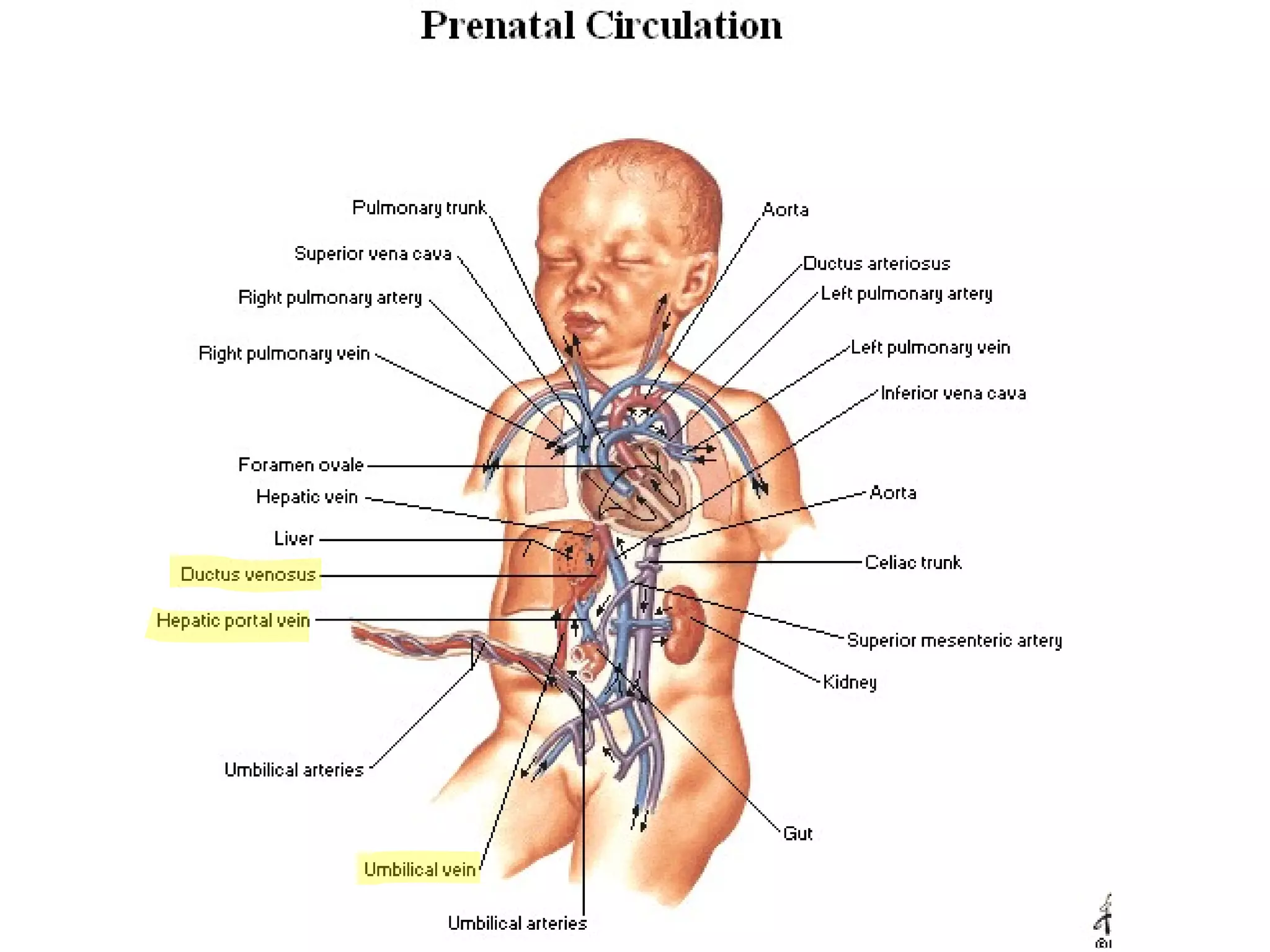
• Oxygenated and nutrient
rich blood flows through the
umbilical vein toward the
inferior surface of the liver.
• At this point, the umbilical
vein divides into two
branches.
• One branch merges with the
portal vein, while the other
branch, called the ductus
venosus , enters the inferior
vena cava.
• Thus, oxygenated blood is
mixed with venous blood
returning from the lower
extremities of the fetus before it
enters the heart.
• The umbilical vein is the only
vessel of the fetus that carries
fully oxygenated blood.
• The inferior vena cava
empties into the right atrium
of the fetal heart.
• Most of the blood passes from
the right atrium into the left
atrium through the foramen
ovale, an opening between
the two atria.
• Here, it mixes with a small
quantity of blood returning
through the pulmonary
circulation.
• The blood then passes in to
the left ventricle, from which
it is pumped into the aorta and
through the body of the fetus.
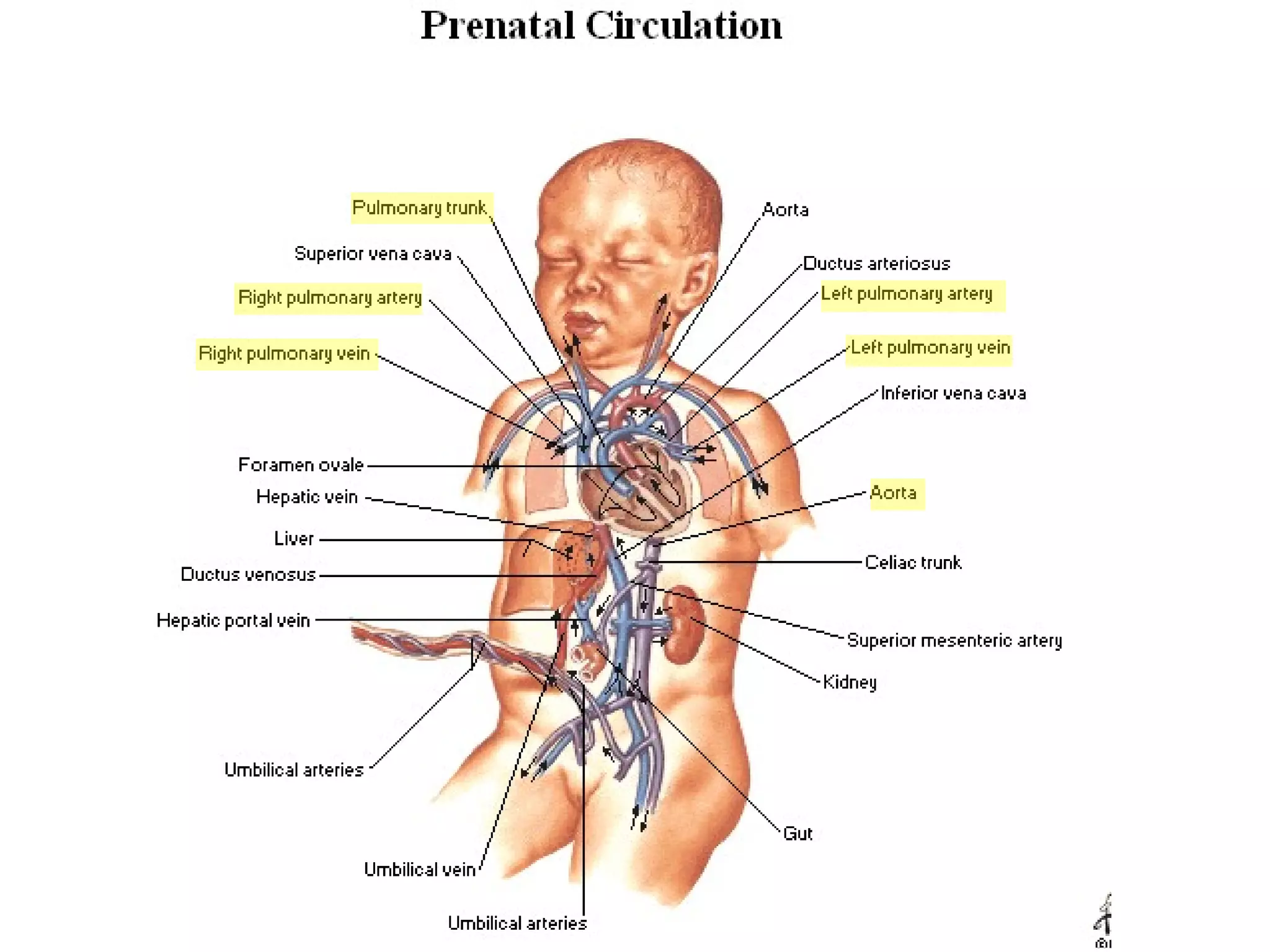
• Some blood entering the right
atrium passes into the right
ventricle and out of the heart via
the pulmonary trunk.
• Since the lungs of the fetus are
not functional, only a small portion
of blood continues through the
pulmonary circulation (the
resistance to blood flow is very
high in the collapsed fetal lungs).
• Most of the blood in the pulmonary
trunk passes through the ductus
arteriosus into the aortic arch,
where it mixes with blood coming from
the left ventricle.
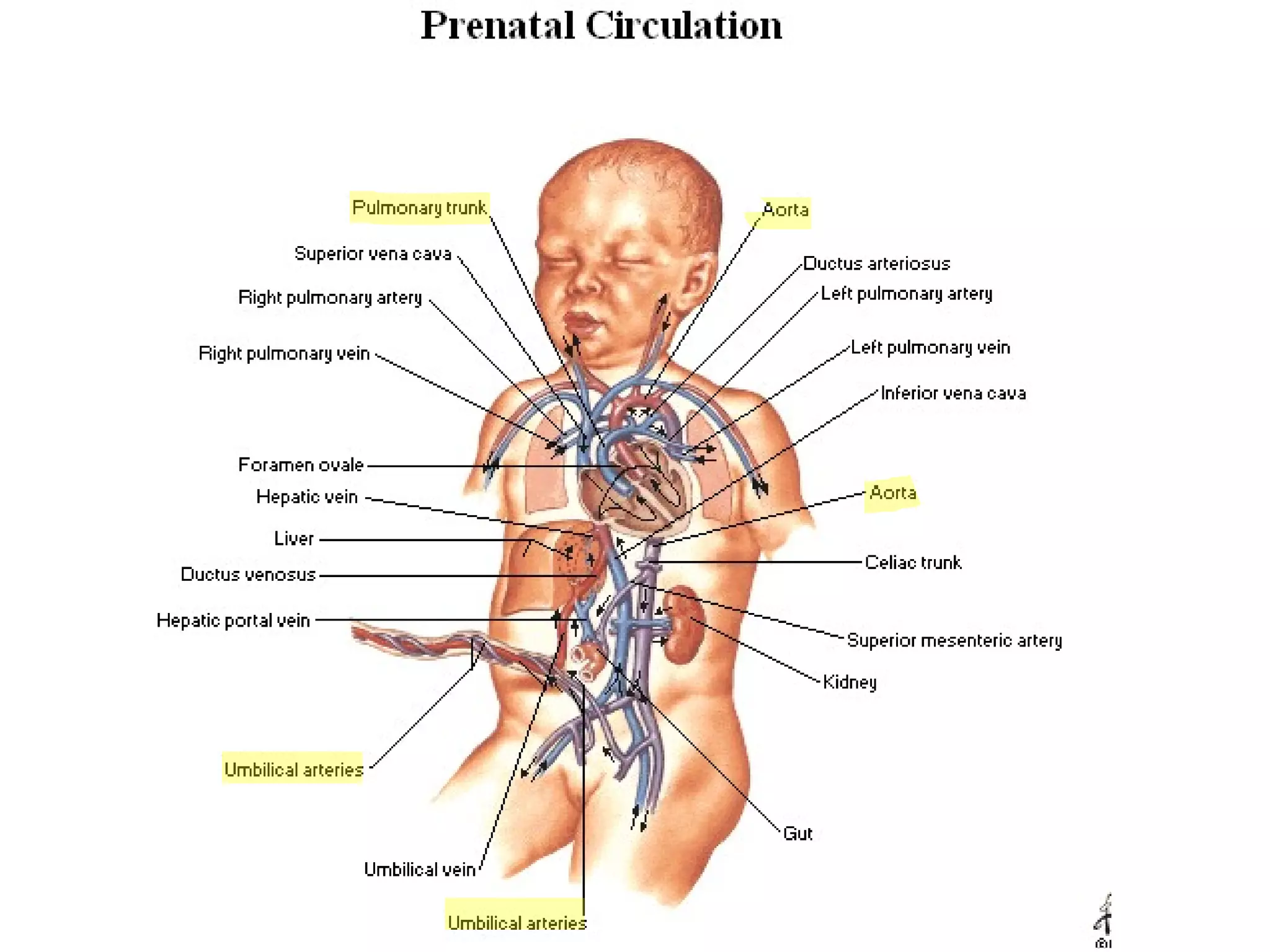
• Blood is returned to the placenta by
the two umbilical arteries that arise
from the internal iliac arteries.
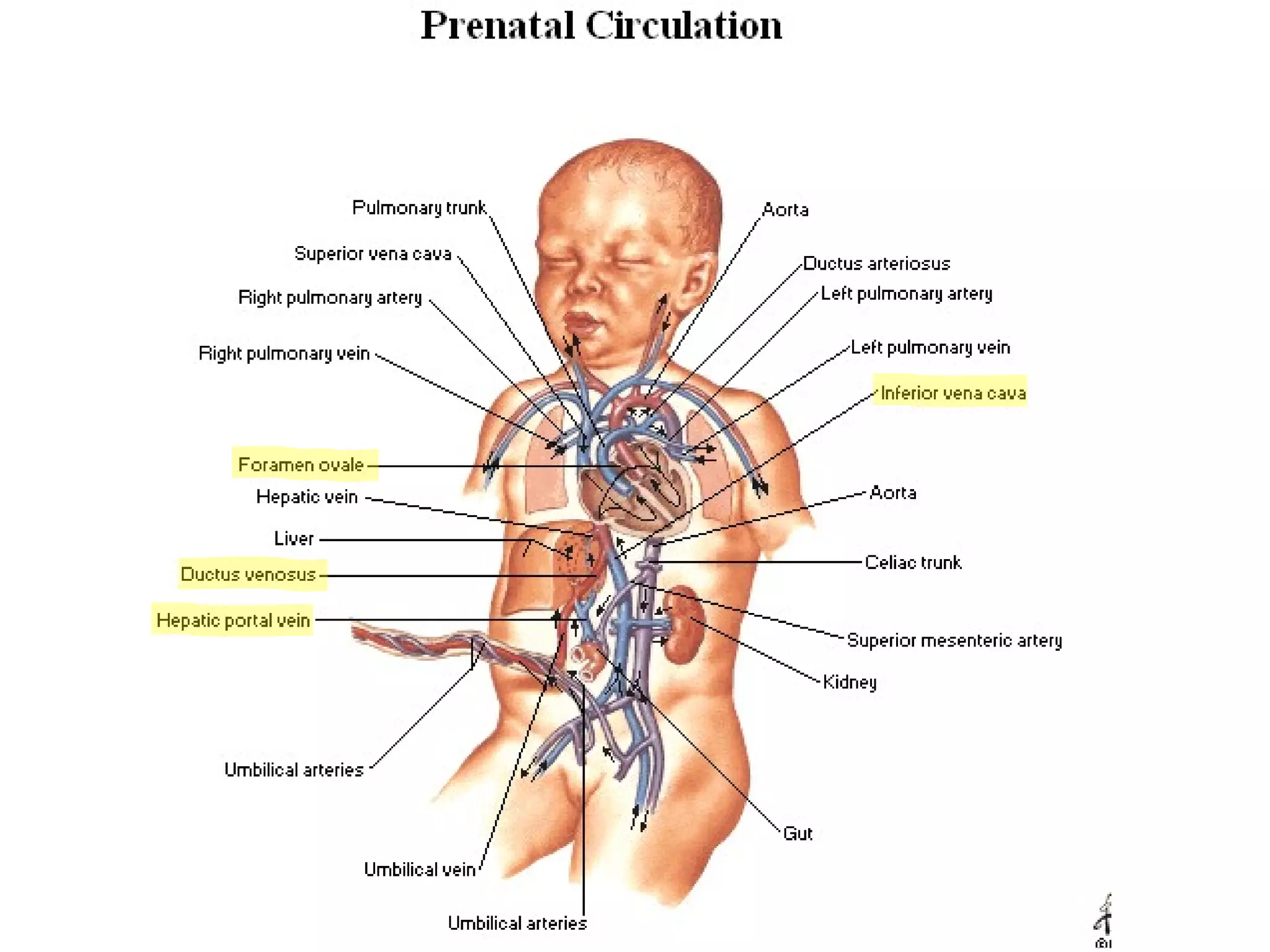
• Notice that, in the fetus,
oxygen-rich blood is
transported by the inferior
vena cava to the heart, and
via the foramen ovale and
ductus arteriosus to the
systemic circulation.
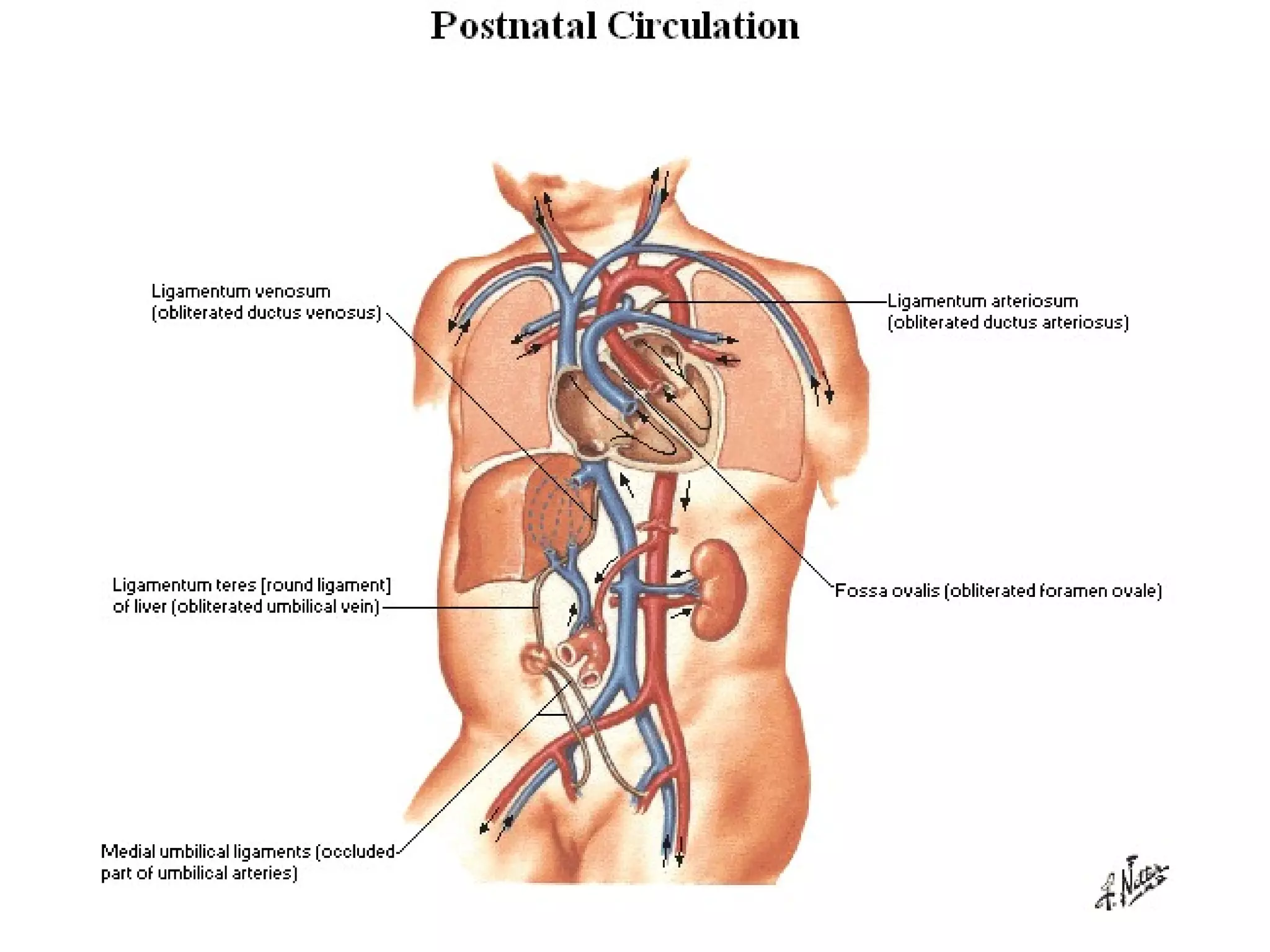
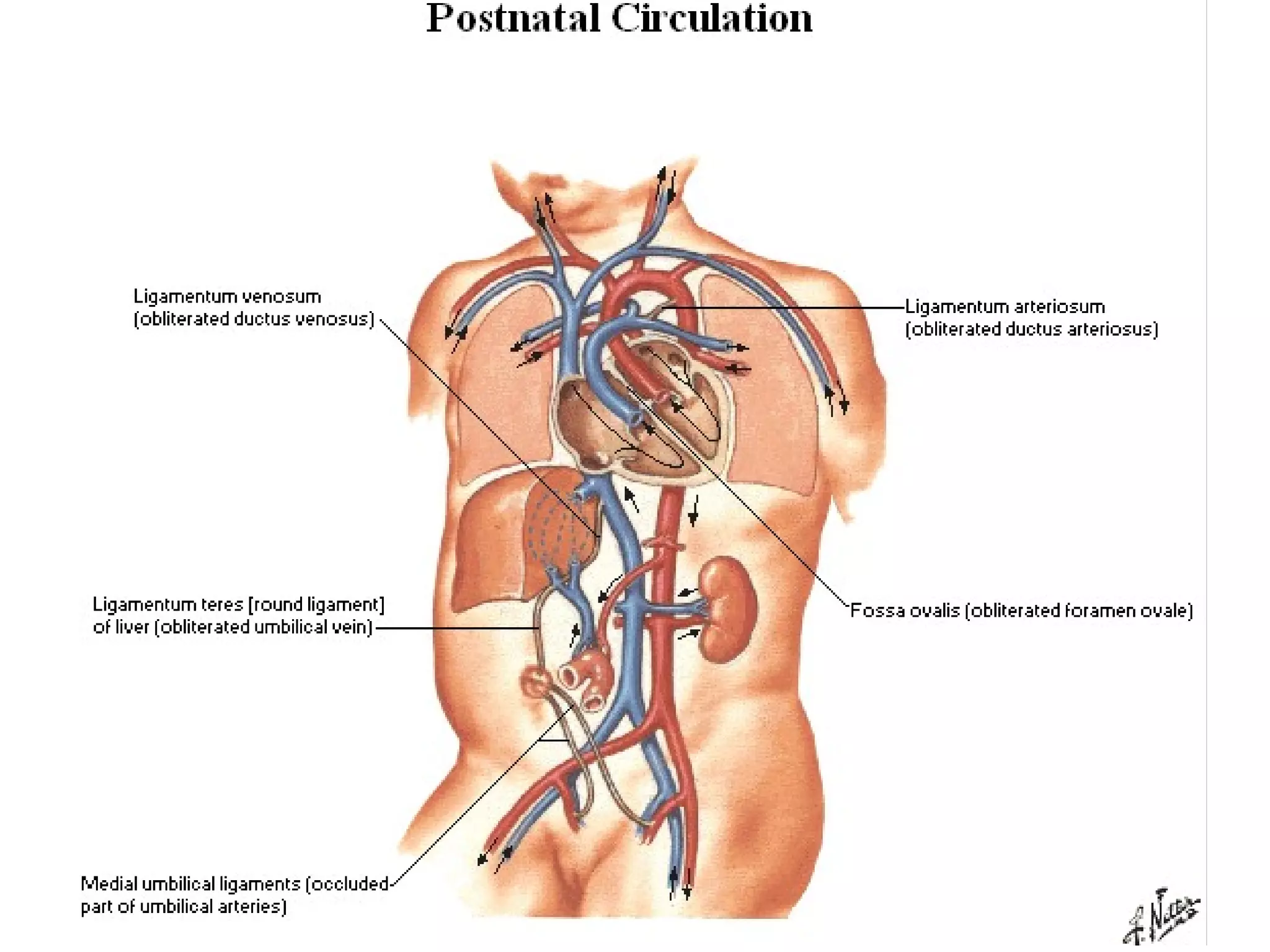
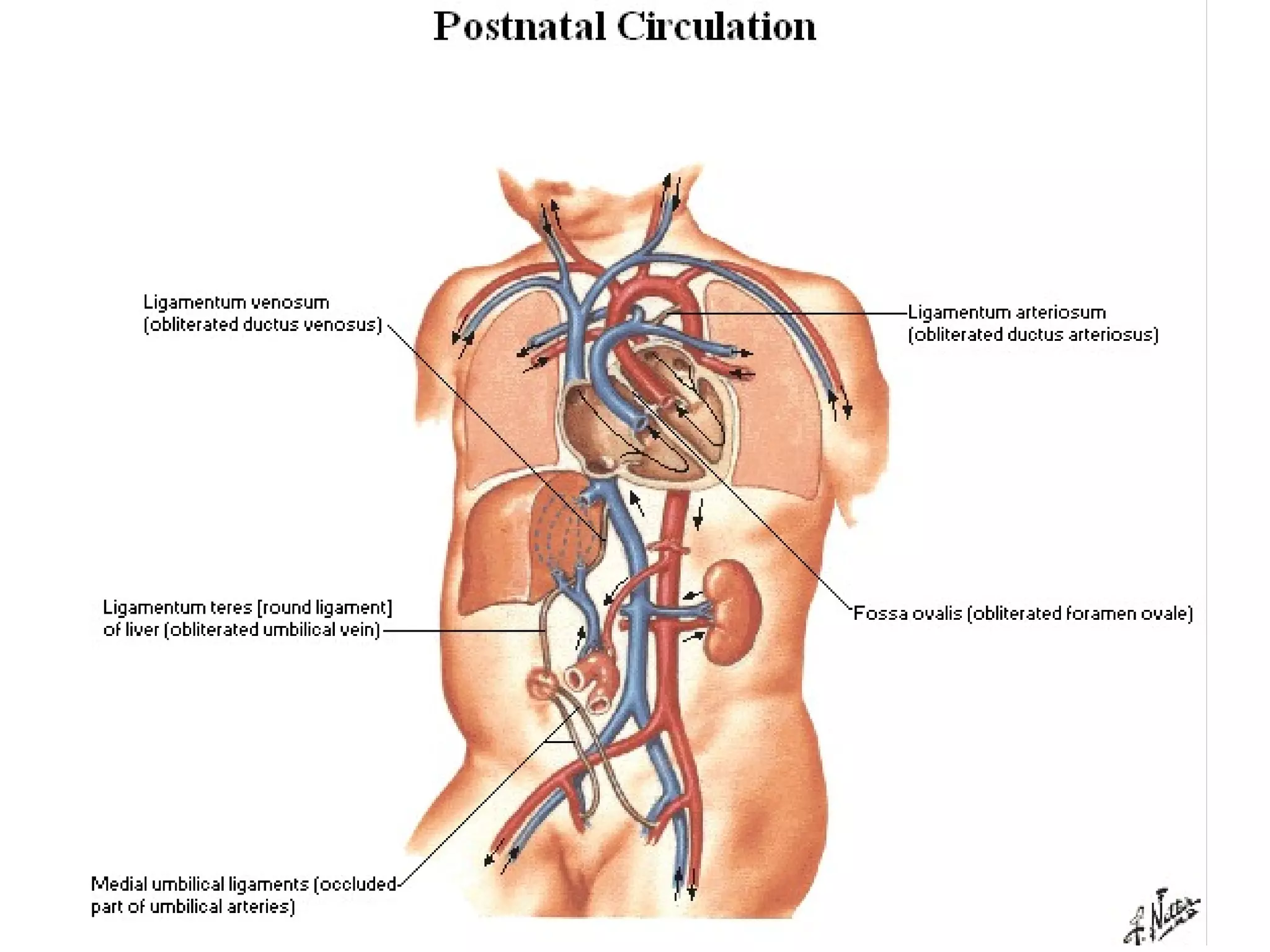
• Important changes occur in
the cardiovascular system at
birth.
• The foramen ovale, ductus
arteriosus, ductus venosus,
and the umbilical vessels are
no longer necessary.
• The foramen ovale abruptly
close with the first breath of
air because the reduced
pressure in the right side of
the heart causes a flap to
cover the opening.
• This reduction in pressure occurs
because the vascular resistance to
blood flow in the pulmonary
circulation falls far below that of the
systemic circulation when the lungs
fill with air.
• The pressure in the inferior vena
cava and right atrium falls as a result
of the loss of the placental
circulation.
• The constriction of the
ductus arteriosus occurs
gradually over a period of
about 6 weeks after birth as
the vascular smooth muscle
fibers constrict in response to
the higher oxygen
concentration in the
postnatal blood.
• The remaining structure of the
ductus arteriosus gradually
atrophies and becomes
nonfunctional as a blood vessel.
• Transformation of the unique fetal
cardiovascular system is
summarized in table 16.6.
THE END
L11 fetal circulation

L11 fetal circulation

  • 1.
  • 3.
    • All ofthe respiratory, excretory, and nutritional needs of the fetus are provided for by diffusion across the placenta instead of by the fetal lungs, kidneys, and gastrointestinal tract. • Fetal circulation is adaptive to these conditions.
  • 4.
    Objective : • Describethe fetal circulation to and from the placenta. • Describe the structure and function of the foramen ovale, ductus venosus, and ductus arteriosus.
  • 5.
    • The circulationof blood through a fetus is by necessity different from blood circulation in a newborn . • Respiration, the procurement of nutrients, and the elimination of metabolic wastes occur through the maternal blood instead of through the organs of the fetus.
  • 6.
    • The capillaryexchange between the maternal and fetal circulation occurs within the placenta . • This remarkable structure, which includes maternal and fetal capillary beds, is discharged following delivery as the afterbirth.
  • 7.
    • The umbilicalcord is the connection between the placenta and the fetal umbilicus. • It includes one umbilical vein and two umbilical arteries, surrounded by a gelatinous substance.
  • 9.
    • Oxygenated andnutrient rich blood flows through the umbilical vein toward the inferior surface of the liver. • At this point, the umbilical vein divides into two branches.
  • 12.
    • One branchmerges with the portal vein, while the other branch, called the ductus venosus , enters the inferior vena cava.
  • 13.
    • Thus, oxygenatedblood is mixed with venous blood returning from the lower extremities of the fetus before it enters the heart. • The umbilical vein is the only vessel of the fetus that carries fully oxygenated blood.
  • 14.
    • The inferiorvena cava empties into the right atrium of the fetal heart. • Most of the blood passes from the right atrium into the left atrium through the foramen ovale, an opening between the two atria.
  • 16.
    • Here, itmixes with a small quantity of blood returning through the pulmonary circulation. • The blood then passes in to the left ventricle, from which it is pumped into the aorta and through the body of the fetus.
  • 18.
    • Some bloodentering the right atrium passes into the right ventricle and out of the heart via the pulmonary trunk. • Since the lungs of the fetus are not functional, only a small portion of blood continues through the pulmonary circulation (the resistance to blood flow is very high in the collapsed fetal lungs).
  • 19.
    • Most ofthe blood in the pulmonary trunk passes through the ductus arteriosus into the aortic arch, where it mixes with blood coming from the left ventricle. • Blood is returned to the placenta by the two umbilical arteries that arise from the internal iliac arteries.
  • 21.
    • Notice that,in the fetus, oxygen-rich blood is transported by the inferior vena cava to the heart, and via the foramen ovale and ductus arteriosus to the systemic circulation.
  • 22.
    • Important changesoccur in the cardiovascular system at birth. • The foramen ovale, ductus arteriosus, ductus venosus, and the umbilical vessels are no longer necessary.
  • 24.
    • The foramenovale abruptly close with the first breath of air because the reduced pressure in the right side of the heart causes a flap to cover the opening.
  • 25.
    • This reductionin pressure occurs because the vascular resistance to blood flow in the pulmonary circulation falls far below that of the systemic circulation when the lungs fill with air. • The pressure in the inferior vena cava and right atrium falls as a result of the loss of the placental circulation.
  • 27.
    • The constrictionof the ductus arteriosus occurs gradually over a period of about 6 weeks after birth as the vascular smooth muscle fibers constrict in response to the higher oxygen concentration in the postnatal blood.
  • 28.
    • The remainingstructure of the ductus arteriosus gradually atrophies and becomes nonfunctional as a blood vessel. • Transformation of the unique fetal cardiovascular system is summarized in table 16.6.
  • 31.