FETAL CIRCULATION
P.THIRUNAGALINGA PANDIYAN
M.Sc., (Child Health Nursing)
Faculty in Nursing
Madurai Medical College, Madurai
INTRODUCTION
•During pregnancy, the fetus depends on its mother
for nutrition and oxygen.
•The fetus doesn’t breathe air
•The placenta is the air exchange place instead of lungs
INTRODUCTION
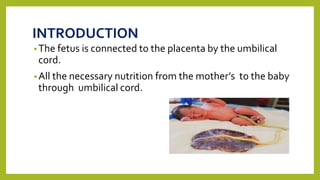
•The fetus is connected to the placenta by the umbilical
cord.
•All the necessary nutrition from the mother’s to the baby
through umbilical cord.
INTRODUCTION
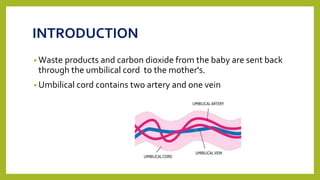
• Waste products and carbon dioxide from the baby are sent back
through the umbilical cord to the mother's.
• Umbilical cord contains two artery and one vein
INTRODUCTION
• While the baby is still in the uterus, his or her lungs are not
being used.
• The baby’s liver is not fully developed.
• Circulating blood bypasses the lungs and liver by special
openings called shunts.
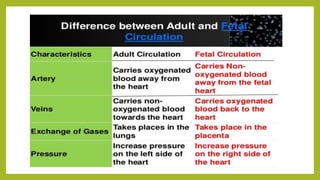
ADULT CIRCULATION
ADULT CIRCULATION
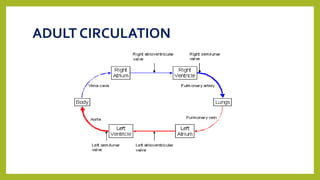
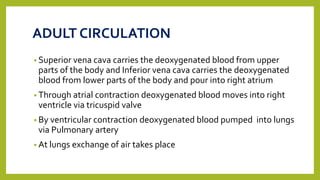
• Superior vena cava carries the deoxygenated blood from upper
parts of the body and Inferior vena cava carries the deoxygenated
blood from lower parts of the body and pour into right atrium
• Through atrial contraction deoxygenated blood moves into right
ventricle via tricuspid valve
• By ventricular contraction deoxygenated blood pumped into lungs
via Pulmonary artery
• At lungs exchange of air takes place
ADULT CIRCULATION
• Oxygenated blood moves to left atrium via pulmonary veins
• Through atrial contraction Oxygenated blood transfer to Left
ventricle via mitral valve
• By ventricular contraction Oxygenated blood pumped into all
parts of the body through Aorta
FETAL CIRCULATION
AT UTERUS
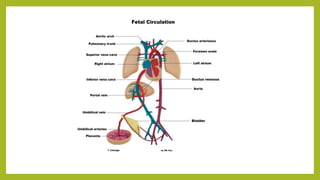
 From the Placenta, oxygenated blood and nutrients are carried
through the Umbilical Vein to the liver.
 There, in the Ductus venosus, this blood mixes with some
deoxygenated blood from the portal vein (draining the gut) and then
exits via the Inferior Vena Cava.
FETAL CIRCULATION
 In the Inferior vena cava the blood mixes with more deoxygenated
blood returning from the legs and trunk and is carried to the
right atrium.
 In the right atrium the partially oxygenated blood (62-67%) is mostly
shunted through the foramen ovale to the left atrium where it mixes
with a very small amount of deoxygenated blood from the lungs.
FETAL CIRCULATION
 From the left atrium, the blood flows into the left ventricle and is
pumped out the ascending aorta, delivering partially oxygenated
blood to the head and arms and to the descending aorta.
FETAL CIRCULATION
 Deoxygenated blood returning to the right atrium from the superior
vena cava (draining head and arms) flows mostly into the right
ventricle and is pumped out the Pulmonary trunk.
FETAL CIRCULATION
 The ductus arteriosus shunts much of this blood from the
pulmonary trunk to the descending aorta where it mixes with the
blood that did not enter the arteries to the head and arms.
FETAL CIRCULATION
 The descending aorta carries semi-oxygenated blood (57%) to the
gut and lower extremities, with a branch to the umbilical arteries
that deliver the poorly oxygenated blood to the placenta for
oxygenation.
FETAL CIRCULATION
• AT BIRTH
• When child breath the alveoli fill with air, the pulmonary vessels
dilate and decrease the pressure in the pulmonary system.
• Decreased pressure in the pulmonary arteries prevents blood
from being shunted through the ductus arteriosus, and the duct
usually closes within 10 to 15 hours of birth.
FETAL CIRCULATION
• Blood flowing back into the left atrium from the lungs increases the
pressure in that chamber and presses the septum and closing the
foramen ovale.
• At the same time, spontaneous constriction of the umbilical vessels
(or clamping) cuts off the exchange of blood with the placenta.
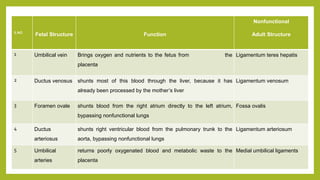
S.NO
Fetal Structure Function
Nonfunctional
Adult Structure
1 Umbilical vein Brings oxygen and nutrients to the fetus from the
placenta
Ligamentum teres hepatis
2 Ductus venosus shunts most of this blood through the liver, because it has
already been processed by the mother’s liver
Ligamentum venosum
3 Foramen ovale shunts blood from the right atrium directly to the left atrium,
bypassing nonfunctional lungs
Fossa ovalis
4 Ductus
arteriosus
shunts right ventricular blood from the pulmonary trunk to the
aorta, bypassing nonfunctional lungs
Ligamentum arteriosum
5 Umbilical
arteries
returns poorly oxygenated blood and metabolic waste to the
placenta
Medial umbilical ligaments
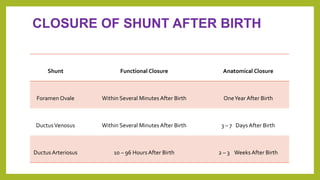
CLOSURE OF SHUNT AFTER BIRTH
Shunt Functional Closure Anatomical Closure
Foramen Ovale Within Several Minutes After Birth OneYear After Birth
DuctusVenosus Within Several Minutes After Birth 3 – 7 Days After Birth
Ductus Arteriosus 10 – 96 Hours After Birth 2 – 3 Weeks After Birth
•THANK YOU

Fetal circulation

  • 1.
    FETAL CIRCULATION P.THIRUNAGALINGA PANDIYAN M.Sc.,(Child Health Nursing) Faculty in Nursing Madurai Medical College, Madurai
  • 2.
    INTRODUCTION •During pregnancy, thefetus depends on its mother for nutrition and oxygen. •The fetus doesn’t breathe air •The placenta is the air exchange place instead of lungs
  • 3.
    INTRODUCTION •The fetus isconnected to the placenta by the umbilical cord. •All the necessary nutrition from the mother’s to the baby through umbilical cord.
  • 4.
    INTRODUCTION • Waste productsand carbon dioxide from the baby are sent back through the umbilical cord to the mother's. • Umbilical cord contains two artery and one vein
  • 5.
    INTRODUCTION • While thebaby is still in the uterus, his or her lungs are not being used. • The baby’s liver is not fully developed. • Circulating blood bypasses the lungs and liver by special openings called shunts.
  • 6.
  • 7.
    ADULT CIRCULATION • Superiorvena cava carries the deoxygenated blood from upper parts of the body and Inferior vena cava carries the deoxygenated blood from lower parts of the body and pour into right atrium • Through atrial contraction deoxygenated blood moves into right ventricle via tricuspid valve • By ventricular contraction deoxygenated blood pumped into lungs via Pulmonary artery • At lungs exchange of air takes place
  • 8.
    ADULT CIRCULATION • Oxygenatedblood moves to left atrium via pulmonary veins • Through atrial contraction Oxygenated blood transfer to Left ventricle via mitral valve • By ventricular contraction Oxygenated blood pumped into all parts of the body through Aorta
  • 9.
    FETAL CIRCULATION AT UTERUS From the Placenta, oxygenated blood and nutrients are carried through the Umbilical Vein to the liver.  There, in the Ductus venosus, this blood mixes with some deoxygenated blood from the portal vein (draining the gut) and then exits via the Inferior Vena Cava.
  • 11.
    FETAL CIRCULATION  Inthe Inferior vena cava the blood mixes with more deoxygenated blood returning from the legs and trunk and is carried to the right atrium.  In the right atrium the partially oxygenated blood (62-67%) is mostly shunted through the foramen ovale to the left atrium where it mixes with a very small amount of deoxygenated blood from the lungs.
  • 12.
    FETAL CIRCULATION  Fromthe left atrium, the blood flows into the left ventricle and is pumped out the ascending aorta, delivering partially oxygenated blood to the head and arms and to the descending aorta.
  • 13.
    FETAL CIRCULATION  Deoxygenatedblood returning to the right atrium from the superior vena cava (draining head and arms) flows mostly into the right ventricle and is pumped out the Pulmonary trunk.
  • 14.
    FETAL CIRCULATION  Theductus arteriosus shunts much of this blood from the pulmonary trunk to the descending aorta where it mixes with the blood that did not enter the arteries to the head and arms.
  • 15.
    FETAL CIRCULATION  Thedescending aorta carries semi-oxygenated blood (57%) to the gut and lower extremities, with a branch to the umbilical arteries that deliver the poorly oxygenated blood to the placenta for oxygenation.
  • 16.
    FETAL CIRCULATION • ATBIRTH • When child breath the alveoli fill with air, the pulmonary vessels dilate and decrease the pressure in the pulmonary system. • Decreased pressure in the pulmonary arteries prevents blood from being shunted through the ductus arteriosus, and the duct usually closes within 10 to 15 hours of birth.
  • 17.
    FETAL CIRCULATION • Bloodflowing back into the left atrium from the lungs increases the pressure in that chamber and presses the septum and closing the foramen ovale. • At the same time, spontaneous constriction of the umbilical vessels (or clamping) cuts off the exchange of blood with the placenta.
  • 18.
    S.NO Fetal Structure Function Nonfunctional AdultStructure 1 Umbilical vein Brings oxygen and nutrients to the fetus from the placenta Ligamentum teres hepatis 2 Ductus venosus shunts most of this blood through the liver, because it has already been processed by the mother’s liver Ligamentum venosum 3 Foramen ovale shunts blood from the right atrium directly to the left atrium, bypassing nonfunctional lungs Fossa ovalis 4 Ductus arteriosus shunts right ventricular blood from the pulmonary trunk to the aorta, bypassing nonfunctional lungs Ligamentum arteriosum 5 Umbilical arteries returns poorly oxygenated blood and metabolic waste to the placenta Medial umbilical ligaments
  • 19.
    CLOSURE OF SHUNTAFTER BIRTH Shunt Functional Closure Anatomical Closure Foramen Ovale Within Several Minutes After Birth OneYear After Birth DuctusVenosus Within Several Minutes After Birth 3 – 7 Days After Birth Ductus Arteriosus 10 – 96 Hours After Birth 2 – 3 Weeks After Birth
  • 21.