SMS 1053 Dr. Mohanad R. Alwan
Anatomy and Physiology Fetus depends on placenta to meet O2 needs while organs continue formation Oxygenated blood flows from the placenta To the fetus via the  umbilical vein After reaching fetus the blood flows through the  inferior vena cava
The Placenta The circulatory system of the mother is not directly connected to that of the fetus, so the placenta functions as the  respiratory center  for the fetus  as well as a site of filtration for plasma nutrients and wastes. Water, glucose, amino acids, vitamins, and inorganic salts freely diffuse across the placenta along with oxygen.  The uterine arteries carry oxygenated blood to the placenta, and permeates the sponge like material there.
Anatomy and Physiology Fetal Circulation Umbilical cord 2 umbilical arteries:  return non-oxygenated blood, fecal waste, CO2 to placenta 1umbilical vein : brings oxygenated blood and nutrients to the fetus Facilitates gas and nutrient exchange between maternal and fetal blood.The blood itself does not mix.
Fetal Circulation
How does the blood move?? Umbilical VEIN  carries oxygenated blood and nutrients from the placenta to the fetus Where does the vein enter?? At the navel and ascends into the liver How is the blood dispersed?? ½ of the blood enters the liver while the other half comes into the  ductus Venosus  and then into the  inferior vena cava
Foramen Ovale Blood is shunted from right atrium to left atrium, skipping the lungs. More than one-third of blood takes this route. Is a valve with two flaps that prevent back-flow.
Fetal Circulation Blood continues to travel from the inferior vena cava to the  ductus Venosus Ductus Venosus :  shunts a significant majority (80%) of the blood flow of the  umbilical vein  directly to the inferior vena cava.  Ductus Venosus  it allows oxygenated blood from the  placenta  to bypass the  liver  and puts blood into the hepatic veins. Small amount of blood routed to growing liver Increased blood flow leads to large liver in newborns
What happens to the blood after it reaches the right atrium?? Blood flows right into the left atrium through the  foramen ovale. Alamak,What is that? It’s  Small opening in the septum of the heart Foramen ovale Small opening in the septum of the heart Completely by passes the non-functioning lungs Here again it mixes with a smaller amount of deoxygenated blood from the pulmonary veins.
F.C Some of the  blood  entering the right atrium does not pass directly to the  left atrium  through the  foramen ovale ,  but enters the  right ventricle  and is pumped into the  pulmonary artery . In the fetus, there is a special connection between the  pu l monary artery  and  the aorta , called the  ductus arteriosus ,  which directs most of this  blood away  from the lungs (which aren't being used for  respiration  at this point as the  fetus  is suspended in  amniotic fluid)
Ductus Arteriousus
Fetal Circulation After it proceeds to  the  left ventricle  where it is pumped to the heart and brain Blood continues journey to the   left ventricle   blood is then pumped into the  aorta Blood is circulated to the upper extremities Blood then returns to the  right atrium
What about the rest of the blood?? The blood still in the right atrium goes into the right ventricle then to the pulmonary artery. Once there most of the blood by passes the lungs and heads to the aorta through the  ductus arteriosus.  About  15% of the blood flows through lungs  to the right atrium by way of the pulmonary veins Pulmonary arteries Small amount goes to the maturing lungs Rest of blood is shunted away from lungs by  ductous ateriosus  back to aorta
What is happening further down?? Common iliac arteries branch into the external and internal iliacs.  The blood in the internal iliacs come into the umbilical arteries and flow back to the placenta to gather oxygen and to get rid of the waste products Some of the blood moves from the aorta through the internal iliac arteries to the umbilical arteries, and re-enters the placenta, the maternal circulation
Fetal Circulation Low pressure system Lungs are closed Most oxygenated blood flows between the atria of the heart through the  foramen ovale This oxygen rich blood flows to the brain through the  ductus arteriosus
What happens after birth? Once the baby is born and the lung, renal, digestive and liver functions are working the fetal circulation undergoes some changes since they are no longer needed
Conversion of Fetal to Infant Circulation At birth Clamping the cord shuts down low-pressure system Increased atmospheric pressure(increased systemic vascular resistance) causes lungs to inflate with oxygen Lungs now become a low-pressure system Pressure from increased blood flow
Conversion (cont) What happens to these special structures after birth? Umbilical arteries atrophy Umbilical vein becomes part of the fibrous support ligament for the liver The foramen ovale, ductus arteriosus, ductus venosus atrophy and become fibrous ligaments
Overview of Conversion Umbilical cord is clamped Loose placenta Closure of ductus venosus Blood is transported to liver and portal system
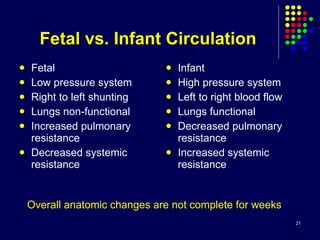
Fetal vs. Infant Circulation Fetal Low pressure system Right to left shunting Lungs non-functional Increased pulmonary resistance Decreased systemic resistance Infant High pressure system Left to right blood flow Lungs functional Decreased pulmonary resistance Increased systemic resistance Overall anatomic changes are not complete for weeks
 1-fetal circulation
 1-fetal circulation

1-fetal circulation

  • 1.
    SMS 1053 Dr.Mohanad R. Alwan
  • 2.
    Anatomy and PhysiologyFetus depends on placenta to meet O2 needs while organs continue formation Oxygenated blood flows from the placenta To the fetus via the umbilical vein After reaching fetus the blood flows through the inferior vena cava
  • 3.
    The Placenta Thecirculatory system of the mother is not directly connected to that of the fetus, so the placenta functions as the respiratory center for the fetus as well as a site of filtration for plasma nutrients and wastes. Water, glucose, amino acids, vitamins, and inorganic salts freely diffuse across the placenta along with oxygen. The uterine arteries carry oxygenated blood to the placenta, and permeates the sponge like material there.
  • 4.
    Anatomy and PhysiologyFetal Circulation Umbilical cord 2 umbilical arteries: return non-oxygenated blood, fecal waste, CO2 to placenta 1umbilical vein : brings oxygenated blood and nutrients to the fetus Facilitates gas and nutrient exchange between maternal and fetal blood.The blood itself does not mix.
  • 5.
  • 6.
    How does theblood move?? Umbilical VEIN carries oxygenated blood and nutrients from the placenta to the fetus Where does the vein enter?? At the navel and ascends into the liver How is the blood dispersed?? ½ of the blood enters the liver while the other half comes into the ductus Venosus and then into the inferior vena cava
  • 7.
    Foramen Ovale Bloodis shunted from right atrium to left atrium, skipping the lungs. More than one-third of blood takes this route. Is a valve with two flaps that prevent back-flow.
  • 8.
    Fetal Circulation Bloodcontinues to travel from the inferior vena cava to the ductus Venosus Ductus Venosus : shunts a significant majority (80%) of the blood flow of the umbilical vein directly to the inferior vena cava. Ductus Venosus it allows oxygenated blood from the placenta to bypass the liver and puts blood into the hepatic veins. Small amount of blood routed to growing liver Increased blood flow leads to large liver in newborns
  • 9.
    What happens tothe blood after it reaches the right atrium?? Blood flows right into the left atrium through the foramen ovale. Alamak,What is that? It’s Small opening in the septum of the heart Foramen ovale Small opening in the septum of the heart Completely by passes the non-functioning lungs Here again it mixes with a smaller amount of deoxygenated blood from the pulmonary veins.
  • 10.
    F.C Some ofthe blood entering the right atrium does not pass directly to the left atrium through the foramen ovale , but enters the right ventricle and is pumped into the pulmonary artery . In the fetus, there is a special connection between the pu l monary artery and the aorta , called the ductus arteriosus , which directs most of this blood away from the lungs (which aren't being used for respiration at this point as the fetus is suspended in amniotic fluid)
  • 11.
  • 12.
    Fetal Circulation Afterit proceeds to the left ventricle where it is pumped to the heart and brain Blood continues journey to the left ventricle blood is then pumped into the aorta Blood is circulated to the upper extremities Blood then returns to the right atrium
  • 14.
    What about therest of the blood?? The blood still in the right atrium goes into the right ventricle then to the pulmonary artery. Once there most of the blood by passes the lungs and heads to the aorta through the ductus arteriosus. About 15% of the blood flows through lungs to the right atrium by way of the pulmonary veins Pulmonary arteries Small amount goes to the maturing lungs Rest of blood is shunted away from lungs by ductous ateriosus back to aorta
  • 15.
    What is happeningfurther down?? Common iliac arteries branch into the external and internal iliacs. The blood in the internal iliacs come into the umbilical arteries and flow back to the placenta to gather oxygen and to get rid of the waste products Some of the blood moves from the aorta through the internal iliac arteries to the umbilical arteries, and re-enters the placenta, the maternal circulation
  • 16.
    Fetal Circulation Lowpressure system Lungs are closed Most oxygenated blood flows between the atria of the heart through the foramen ovale This oxygen rich blood flows to the brain through the ductus arteriosus
  • 17.
    What happens afterbirth? Once the baby is born and the lung, renal, digestive and liver functions are working the fetal circulation undergoes some changes since they are no longer needed
  • 18.
    Conversion of Fetalto Infant Circulation At birth Clamping the cord shuts down low-pressure system Increased atmospheric pressure(increased systemic vascular resistance) causes lungs to inflate with oxygen Lungs now become a low-pressure system Pressure from increased blood flow
  • 19.
    Conversion (cont) Whathappens to these special structures after birth? Umbilical arteries atrophy Umbilical vein becomes part of the fibrous support ligament for the liver The foramen ovale, ductus arteriosus, ductus venosus atrophy and become fibrous ligaments
  • 20.
    Overview of ConversionUmbilical cord is clamped Loose placenta Closure of ductus venosus Blood is transported to liver and portal system
  • 21.
    Fetal vs. InfantCirculation Fetal Low pressure system Right to left shunting Lungs non-functional Increased pulmonary resistance Decreased systemic resistance Infant High pressure system Left to right blood flow Lungs functional Decreased pulmonary resistance Increased systemic resistance Overall anatomic changes are not complete for weeks

Editor's Notes