BONE 
JOINT 
SOFT TISSUE
Modeling/RE-modeling
CELLS of BONE 
• OSTEOPROGENITOR (“STEM”)(TGFβ) 
• OSTEOBLASTS (surface of spicule) 
• OSTEOCYTES (completely within spicule) 
• OSTEOCLASTS (macrophage lineage)
Proteins (organic) of BONE 
• Type 1 collagen (90%) 
• Cell adhesion proteins 
• Calcium-binding proteins 
• Proteins involved in mineralization 
• Enzymes 
• Growth factors 
– GF-1, TGF-β, PDGF 
• Cytokines 
– Prostaglandins, IL-1, IL-6, RANKL 
• Proteins Concentrated from Serum 
– β2 –microglobulinAlbumin 
– IGF, insulin-like growth factor 
– TGF, transforming growth factor 
– PDGF, platelet-derived growth factor 
– IL, interleukin 
– RANKL, RANK ligand
Minerals (INorganic) of BONE 
HYDROXY-APATITE 
Ca5(PO4)3(OH) 
Ca10(PO4)6(OH)2
ADJECTIVES of BONE 
•Compact 
•Spongy 
• Cancellous 
• Membranous 
• Dense 
• Cortical 
• Endosteal 
• Woven 
• Lamellar 
• Spicular
Woven vs. “Lamellar”
-BLASTS/-CLASTS
BONE DISEASES • 1) MALFORMATIONS AND DISEASES CAUSED BY DEFECTS IN NUCLEAR PROTEINS 
AND TRANSCRIPTION FACTORS, polydactyly, syndactyly, absence of a bone 
• 2) DISEASES CAUSED BY DEFECTS IN HORMONES AND SIGNAL TRANSDUCTION 
MECHANISMS, achondroplasia, thanatophoria 
• 3) DISEASES ASSOCIATED WITH DEFECTS IN EXTRACELLULAR STRUCTURAL 
PROTEINS 
– Type 1 Collagen Diseases (Osteogenesis Imperfecta) 
– Types 2, 10, and 11 Collagen Diseases 
• 4) DISEASES ASSOCIATED WITH DEFECTS IN FOLDING AND DEGRADATION OF 
MACROMOLECULES 
– Mucopolysaccharidoses 
• 5) DISEASES ASSOCIATED WITH DEFECTS IN METABOLIC PATHWAYS (ENZYMES, 
ION CHANNELS, AND TRANSPORTERS) 
– Osteopetrosis 
• 6) DISEASES ASSOCIATED WITH DECREASED BONE MASS 
– Osteoporosis 
• 7) DISEASES CAUSED BY OSTEOCLAST DYSFUNCTION 
– Paget Disease (Osteitis Deformans) 
• 8) DISEASES ASSOCIATED WITH ABNORMAL MINERAL HOMEOSTASIS 
– Ricketts and Osteomalacia 
– Hyperparathyroidism 
– Renal Osteodystrophy
1) MALFORMATIONS AND 
DISEASES CAUSED BY DEFECTS 
IN NUCLEAR PROTEINS AND 
TRANSCRIPTION FACTORS 
• Congenital absence of a, usually single, 
bone: phalanx, rib, clavicle 
• Supernumerary digit (polydactyly) 
• Syndactyly 
• CRANIORACHISCHISIS
2) DISEASES CAUSED BY 
DEFECTS IN HORMONES AND 
SIGNAL TRANSDUCTION 
MECHANISMS 
• Achondroplasia, dwarf (non-lethal) 
• Thanatophoria, dwarf (lethal) 
• a point mutation (usually Arg for Gly375) in the gene 
that codes for FGF receptor 3 (FGFR3), which is located 
on the short arm of chromosome 4. In the normal 
growth plate, activation of FGFR3 inhibits cartilage 
proliferation; 
• A MUTATION causes FGFR3 to be constantly activated.
3) DISEASES ASSOCIATED WITH 
DEFECTS IN EXTRACELLULAR 
STRUCTURAL PROTEINS 
• OSTEOGENESS IMPERFECTA TYPES 
• (“Brittle” bone disease, too LITTLE bone), 
BLUE sclerae 
• Mutations in genes which code for the 
alpha-1 and alpha-2 chains of COLLAGEN 1 
• Mutations of COLLAGEN 2,10, 11 manifest 
themselves as CARTILAGE diseases, 
ranging from joint cartilage destruction to 
fatal
Osteogenesis Imperfecta
4) DISEASES ASSOCIATED WITH 
DEFECTS IN FOLDING AND 
DEGRADATION OF 
MACROMOLECULES 
• MUCOPOLYSACCHARIDOSIS (one of MANY lysosome 
storage diseases) 
• DECREASES in ENZYMES which degrade: 
– DERMATAN 
– HEPARAN 
– KERATAN 
• Chiefly CARTILAGE disorders: short, chest wall, 
malformed bones
MUCOPOLYSACCHARIDOSES
5) DISEASES ASSOCIATED WITH 
DEFECTS IN METABOLIC 
PATHWAYS (ENZYMES, ION 
CHANNELS, AND 
TRANSPORTERS) 
• OSTEOPETROSIS, 4 types 
• One common one has a CARBONIC 
ANHYDRASE deficiency 
• DECREASED osteoclast resorption 
• “MARBLE” bone, brittle, sclerosis
OSTEOPETROSIS
6) DISEASES ASSOCIATED WITH 
DECREASED BONE MASS 
•OSTEOPOROSIS 
• “PEAK” bone mass is early adulthood 
• Normal decline, slow 
• Osteoporosis is accelerated bone loss 
• Factors: 
– AGE 
– Physical activity 
– Estrogen 
– Nutrition (Ca++) 
– Genetics
Categories of Generalized Osteoporosis 
Primary 
Postmenopausal Idiopathic 
Senile 
Secondary 
Endocrine disorders Rheumatologic disease 
Hyperparathyroidism Drugs 
Hypo-hyperthyroidism Anticoagulants 
Hypogonadism Chemotherapy 
Pituitary tumors Corticosteroids 
Diabetes, type 1 Anticonvulsants 
Addison disease Alcohol 
Neoplasia Miscellaneous 
Multiple myeloma Osteogenesis imperfecta 
Carcinomatosis Immobilization 
Gastrointestinal Pulmonary disease 
Malnutrition, Malbs., Hepatic Insuf., Vit 
C,D 
Homocystinuria 
Anemia
OSTEOPOROSIS
7) DISEASES CAUSED BY 
OSTEOCLAST DYSFUNCTION 
Paget Disease (Osteitis 
Deformans) 
• Matrix madness, Osteoblasts/-cytes gone wild 
• THREE PHASES: 
– 1) Increased osteoclast resorption 
– 2) Increased “hectic” bone formation (osteoblasts) 
– 3) Osteosclerosis 
• ELEVATED ALKALINE-PHOSPHATASE 
• ELEVATED urine HYDROXYPROLINE
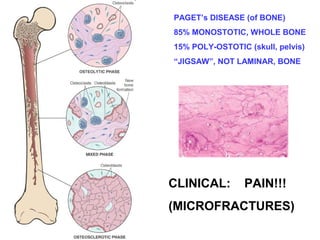
PAGET’s DISEASE (of BONE) 
85% MONOSTOTIC, WHOLE BONE 
15% POLY-OSTOTIC (skull, pelvis) 
“JIGSAW”, NOT LAMINAR, BONE 
CLINICAL: PAIN!!! 
(MICROFRACTURES)
PAGET’s DISEASE
8) DISEASES ASSOCIATED WITH 
ABNORMAL MINERAL 
HOMEOSTASIS 
– Ricketts and Osteomalacia 
• VITAMIN D deficiency/dysfunction 
– Hyperparathyroidism, PRIMARY (PTH 
ADENOMA) 
• ENTIRE SKELETON 
• OSTEITIS FIBROSIS CYSTICA (von 
Recklinghausen’s disease (of bone) 
• “BROWN” TUMOR 
– Hyperparathyroidism, SECONDARY (RENAL) 
(NOT AS SEVERE AS 1º) 
– Renal Osteodystrophy = ANY bone disorder 
due to chronic renal disease
PRIMARY 
HYPERPARATHYROIDISM 
OSTEITIS FIBROSA 
CYSTICA 
“BROWN” “TUMOR”
RENAL OSTEODYSTROPHY 
• PHOSPHATE RETENTION 
• HYPOPHOSPHATEMIA 
• HYPOCALCEMIA 
• INCREASED PTH 
• INCREASED OSTEOCLASTS 
• METABOLIC ACIDOSIS  release of 
HYDROXYAPATITES from matrix
FRACTURES
FRACTURES, 
adjectives 
• Complete, incomplete 
• Closed, open (communicating) 
• Communited (splintered) 
• Displaced (NON-aligned) 
• PATHOGENIC, (non-traumatic, 2º to other 
disease, often metastases) 
• “STRESS” fracture
FRACTURES 
• THREE PHASES 
– HEMATOMA, minutes days PGDF, TGF-β, 
FGF 
– SOFT CALLUS (“PRO”-CALLUS), ~1 week 
– HARD CALLUS (BONY CALLUS), several 
weeks 
• COMPLICATIONS 
– PSEUDARTHROSIS 
– INFECTION (especially OPEN [communicating] 
fractures)
FRACTURES
OSTEONECROSIS 
• Also called AVASCULAR necrosis 
• Also called ASEPTIC necrosis 
• CAUSE: ISCHEMIA 
– Trauma 
– Steroids 
– Thrombus/Embolism 
– Vessel injury, e.g., radiation 
– INCREASED intra-osseous pressurevascular 
compression 
– Venous hypertension too
OSTEONECROSIS 
Disorders Associated with Osteonecrosis 
Idiopathic Pregnancy 
Trauma Gaucher disease 
Corticosteroid 
administration 
Sickle cell and other 
anemias 
Infection Alcohol abuse 
Dysbarism Chronic pancreatitis 
Radiation therapy Tumors 
Connective tissue 
disorders 
Epiphyseal disorders
OSTEONECROSIS
OSTEONECROSIS
OSTEOMYELITIS 
• Pyogenic: Staph, E. coli, Pseudom, Kleb 
–Hematogenous 
–Contiguous 
– Direct implantation 
• TB 
• Syphilis
OSTEOMYELITIS 
• DX: X-ray, Bone scan
OSTEOMYELITIS 
• DX: Histology
OSTEOMYELITIS 
• COMPLICATIONS 
–Subperiosteal abscess 
– Draining sinus 
– Joint involvement 
• SEQUESTRUM vs. INVOLUCRUM
OSTEOMYELITIS 
• Tuberculous 
–Usually blood borne 
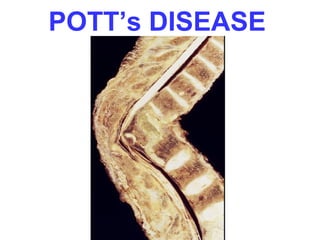
–TB of spine is known as POTTS 
disease 
• Syphilis 
–CONGENITAL 
–TERTIARY, “SABRE” shins
POTT’s DISEASE
SABER SHINS
Classification of Primary Tumors Involving Bones 
Histologic Type Benign Malignant 
Hematopoietic (40%) Myeloma 
Malignant lymphoma 
Chondrogenic (22%) Osteochondroma Chondrosarcoma 
Chondroma Dedifferentiated chondrosarcoma 
Chondroblastoma Mesenchymal chondrosarcoma 
Chondromyxoid fibroma 
Osteogenic (19%) Osteoid osteoma Osteosarcoma 
Osteoblastoma 
Unknown origin (10%) Giant cell tumor tumor 
Giant cell tumor 
Adamantinoma 
Histiocytic origin Fibrous histiocytoma Malignant fibrous histiocytoma 
Fibrogenic Metaphyseal fibrous defect (fibroma) Desmoplastic fibroma 
Fibrosarcoma 
Notochordal Chordoma 
Vascular Hemangioma Hemangioendothelioma 
Hemangiopericytoma 
Lipogenic Lipoma Liposarcoma 
Neurogenic Neurilemmoma
BONE TUMORS 
• BONE 
• CARTILAGE 
• FIBROUS 
• MISC. 
–Ewing’s “sarcoma” 
–Giant Cell Tumor 
–METASTASES
BONE- BONE TUMORS 
• OSTEOMA 
• OSTEOID OSTEOMA 
• OSTEOBLASTOMA 
• OSTEOSARCOMA (OSTEOGENIC 
SARCOMA)
OSTEOMA 
• SOLITARY 
• MIDDLE AGE 
• FROM SUBPERIOSTEAL or ENDOSTEAL 
surfaces 
• SKULL, FACE, most common 
• Totally BENIGN 
• To be distinguished from REACTIVE BONE
FRONTAL SINUS 
Why am I not showing you HISTOLOGY?
OSTEOID OSTEOMA 
• At least 2 cm in diameter 
• Teens, twenties, APPENDICULAR 
skeleton 
• M>>F 
• PAINFUL 
• Has a NIDUS 
• Responds to aspirin 
• Induces a MARKED bony reaction
NIDUS
OSTEOBLASTOMA 
• AXIAL SKELETON, i.e., SPINE 
• NO Nidus 
• NO bony reaction 
• NOT relieved by aspirin
OSTEOSARCOMA 
(OSTEOGENIC SARCOMA) 
LATE TEENS 
KNEES 
METAPHYSES 
PAINFUL!!!
TYPES of OSTEOSARCOMAS 
• • The anatomic portion of the bone from which 
they arise (intramedullary, intracortical, or surface) 
• • Degree of differentiation 
• • Multicentricity (synchronous, metachronous) 
• • Primary (underlying bone is unremarkable) or 
secondary (e.g., osteosarcoma associated with 
pre-existing disorders such as benign tumors, 
Paget disease, bone infarcts, previous irradiation) 
• • Histologic variants (osteoblastic, chondroblastic, 
fibroblastic, telangiectatic, small cell, and giant 
cell)
The most common subtype is osteosarcoma that arises in the 
metaphysis of long bones; is primary, solitary, intramedullary, and 
poorly differentiated; and produces a predominantly bony matrix
BONE- CARTILAGE TUMORS 
• OSTEOCHONDROMA (EXOSTOSIS) 
• CHONDROMA 
• CHONDROBLASTOMA 
• CHONDROMYXOID FIBROMA 
• CHONDROSARCOMA
OSTEOCHONDROMA 
(EXOSTOSIS) 
• Common, Cartilage AND Bone present 
• Often MULTIPLE as a hereditary 
syndrome 
• M>>>F 
• PELVIS, SCAPULAE, RIBS
CHONDROMA 
• Chondroma vs. EN-chondroma 
• PURE Hyaline Cartilage 
• MULTIPLE enchondromas = Ollier’s 
dis. 
• Maffucci synd. if hemangiomas present
CHONDROBLASTOMA • RARE, in teenagers 
• M>>F 
• KNEES, usually 
• Epiphyses 
• MUCH LESS matrix than a chondroma
CHONDROMYXOID FIBROMA 
• RAREST of all 
• TEENS, MALES 
• “MYXOID” concept 
• “ATYPIA”
CHONDROSARCOMA 
• ANATOMY 
– INTRAMEDULLARY 
– JUXTACORTICAL 
• HISTOLOGY 
– CONVENTIONAL 
• HYALINE 
• MYXOID 
– CLEAR 
– DE-DIFFERENTIATED 
– MESENCHYMAL
CHONDROSARCOMA
BONE- FIBROUS TUMORS 
• FIBROUS CORTICAL DEFECT/NON-OSSIFYING 
FIBROMA 
• FIBROUS DYSPLASIA 
• FIBROSARCOMA/MALIGNANT 
FIBROUS HISTIOCYTOMA
FIBROUS CORTICAL DEFECT 
• COMMON, usually LESS 
THAN 1 CM 
• CHILDREN >2 
• IF MORE THAN 5-6 CM, 
they are then called NON-OSSIFYING 
FIBROMA
FIBROUS DYSPLASIA 
• BENIGN TUMOR 
• THREE TYPES 
–SINGLE BONE (70%) 
–POLY-OSTOTIC (27%) 
–POLY-OSTOTIC (3%) with café-au-lait 
and endocrine disorders, especially 
precocious puberty
1) CURVED spicules 
2) LACK of osteoblastic rimming
FIBROSARCOMA/MFH 
• METAPHYSES of LONG BONES 
• PELVIC FLAT BONES 
• LYTIC 
• FRACTURES 
• OF COURSE, SARCOMATOUS 
METASTASIS
FIBROSARCOMA/MFH
MISC. TUMORS of BONE 
• EWING sarcoma/PNET 
(Primitive NeuroEctodermal 
Tumor) 
• GIANT CELL TUMOR 
• METASTASES
EWING/PNET 
• SAME TUMOR 
• SMALL ROUND 
• NEUROENDOCRINE 
• IDENTICAL CHROMOSOME 
TRANSLOCATION 
• SECOND most COMMON bone 
malignancy in CHILDREN 
• ARISE IN MEDULLARY CAVITY of BONE 
• LOOK LIKE LYMPHOMA
GCT (Giant Cell Tumor), BONE
METASTASES 
MALE: PROSTATE 
FEMALE: BREAST 
RENAL, THYROID also 
seek bone early also 
LYTIC? 
BLASTIC?
SYNOVIAL JOINTS
JOINT DISEASES 
•“ARTHRITIS” 
– DEGENERATIVE (OSTEOARTHRITIS) 
– RHEUMATOID 
– “JUVENILE” RHEUMATOID 
– NON-INFECTIOUS: Ankylosing Spond., 
Reactive, Psoriasis, IBD 
– INFECTIOUS: Supp., TB, Lyme, Viral 
– GOUT (URATE) 
– PSEUDOGOUT (PYROPHOSPHATE) 
• Tumors 
– Ganglion (Synovial Cyst) 
– Giant Cell Tumor (Pigmented VilloNodular Synovitis[PVNS]) 
– Synovial Sarcoma
DEGENERATIVE ARTHRITIS 
• Etiology/Risk Factors: Age, Trauma, 
Genes 
• Pathogenesis: Progressive EROSION 
of articular cartilage 
• Morphology: X-Ray, “eburnation”, 
“joint mice”, osteophytes 
• Clinical Expression: PAIN, Limitation 
of motion
HEBERDEN’S NODES 
DIP, NOT MP or PIP
RHEUMATOID ARTHRITIS 
Rheumatoid arthritis (RA) is a 
chronic systemic inflammatory 
disorder that may affect many 
tissues and organs—skin, blood 
vessels, heart, lungs, and muscles— 
but principally attacks the joints, 
producing a nonsuppurative 
proliferative and inflammatory 
synovitis that often progresses to 
destruction of the articular cartilage 
and ankylosis of the joints.
RHEUMATOID ARTHRITIS 
• Etiology/Risk Factors: Autoimmune 
• Pathogenesis: Progressive SYNOVITIS 
• Morphology: Synovial lymphocytes, 
macrophages, plasma cells, neutrophils, 
osteoclasts, “pannus”, hyperemia, 
rheumatoid “nodules”, vasculitis 
• Clinical Expression: PAIN, Limitation of 
motion, malaise, fatigue, rheumatoid 
factor IgM-IgGFc,
HANDSWRISTELBOWS 
The rheumatoid “nodule” shows “palisading” 
fibroblasts
DIAGNOSIS 
• CLINICAL FEATURES (1% of population F>>M) 
– MORNING STIFFNESS 
– ARTHRITIS in MORE THAN 3 JOINT AREAS 
– “TYPICAL” hand findings 
– SYMMETRIC ARTHRITIS 
– SERUM RHEUMATOID FACTOR 
– “TYPICAL” X-RAY findings
“JUVENILE” Rheumatoid Arthritis 
• Begins BEFORE age 16, by 
definition 
• Generally LARGER joints than RA 
• Often POSITIVE ANA
“SERONEGATIVE” ARTHRITIDES 
• ANKYLOSING SPONDYLITIS (aka, 
“rheumatoid” spondylitis, or Marie- 
Strumpell Disease [HLA-B27] (M>>F) 
• “REACTIVE” ARTHRITIS (FOLLOWS 
GU or GI INFECTIONS) 
–REITER SYDROME (urethral & 
conjunctival inflammation too) [HLA-B27] 
–Arthritis associated with IBD 
• PSORIATIC ARTHRITIS
Ankylosing Spondylitis
INFECTIOUS ARTHRITIS 
• From OSTEOMYELITIS 
• USUALLY SUPPURATIVE 
• GC, staph, strep, H. flu, E. coli, 
(Salmonella in sicklers) 
• 4 cardinal signs, fever, 
leukocytosis, ESR
INFECTIOUS ARTHRITIS 
• TB 
• LYME Disease, i.e., Borrelia 
burgdorferi 
• VIRAL 
–Parvovirus B19 
–Rubella 
–Hepatitis C
GOUT 
• Endpoint of HYPERURICEMIA from 
ANY cause resulting in JOINT 
deposition of Monosodium crystals 
(TOPHI) 
–ACUTE 
–CHRONIC 
• 10% of population has 
hyperuricemia (>7 mg/dl), but only 
1/20 of these has gout
Classification of Gout 
Clinical Category Metabolic Defect 
Primary Gout (90% of cases) 
Enzyme defects unknown (85%–90% 
of primary gout) 
■ Overproduction of uric acid 
Normal excretion (majority) 
Increased excretion (minority) 
Underexcretion of uric acid with 
normal production 
Known enzyme defects—e.g., partial 
HGPRT deficiency (rare) 
■ Overproduction of uric acid 
Secondary Gout (10% of cases) 
Associated with increased nucleic 
acid turnover—e.g., leukemias 
■ Overproduction of uric acid with 
increased urinary excretion 
Chronic renal disease ■ Reduced excretion of uric acid with 
normal production 
Inborn errors of metabolism—e.g., 
complete HGPRT deficiency (Lesch- 
Nyhan syndrome) 
■ Overproduction of uric acid with 
increased urinary excretion 
HGPRT, hypoxanthine guanine phosphoribosyl transferase.
HYPERURICEMIA GOUT 
• Age of the individual and duration of the 
hyperuricemia are factors. Gout rarely appears before 
20 to 30 years of hyperuricemia. 
• Genetic predisposition is another factor. In 
addition to the well-defined X-linked abnormalities of 
HGPRT, primary gout follows multifactorial 
inheritance and runs in families. 
• Heavy alcohol consumption predisposes to attacks 
of gouty arthritis. 
• Obesity increases the risk of asymptomatic gout. 
• Certain drugs (e.g., thiazides) predispose to the 
development of gout. 
• Lead toxicity increases the tendency to develop 
saturnine gout
FEATURES 
• TOPHACEOUS ARTHRITIS 
• GOUTY NEPHROPATHY
GOUTY NEPHROPATHY
GOUT 
• Associated with ATHEROSCLEROSIS 
• Associated with HYPERTENSION
Pseudo-GOUT • Gout: Monosodium Urate 
• Pseudo-GOUT: Calcium Pyrophosphate 
• PSEUDOGOUT is also called 
CHONDROCALCINOSIS, or CPPD (Calcium 
Phosphate Deposition Disease) 
• IDIOPATHIC, HEREDITARY, SECONDARY 
–Secondary joint damage, 
hyperparathyroidism, hemochromatosis, 
hypomagnesemia, hypothyroidism, ochronosis, and 
diabetes
GOUT vs. PSEUDOGOUT
JOINT TUMORS 
• BENIGN 
– GANGLION (SYNOVIAL CYST) 
– GIANT CELL TUMOR of TENDON SHEATH, 
aka PVNS, Pigmented VilloNodular 
Synovitis 
• MALIGNANT 
– SYNOVIAL SARCOMA
GANGLION
PVNS/GCT
“SOFT TISSUE” TUMORS 
• FAT 
• FIBROUS TISSUE 
• FIBROHISTIOCYTIC 
• SKELETAL MUSCLE 
• SMOOTH MUSCLE 
• VASCULAR 
• PERIPHERAL NERVE 
• UNCERTAIN: SYNOVIAL SARCOMA, ALVEOLAR 
SOFT PART SARCOMA, EPITHELIOD SARCOMA
CAUSES 
• MOSTLY UNKNOWN 
• RADIATION association 
• CHEMICAL BURN association 
• THERMAL BURN association 
• TRAUMA association 
• VIRUS association (HHV8 for Kaposi) 
• GENETICS 
• Parts of many SYNDROMES 
• MANY TRANSLOCATIONS
Chromosomal and Genetic Abnormalities in Soft Tissue Sarcomas 
Tumor Cytogenetic Abnormality Genetic Abnormality 
Extraosseous Ewing sarcoma and 
t(11:22)(q24;q12) FLI-1-EWS fusion gene 
primitive neuroectodermal tumor 
t(21:22)(q22;q12) ERG-EWS fusion gene 
t(7;22)(q22;q12) ETV1-EWS fusion gene 
Liposarcoma—myxoid and round cell 
type 
t(12:16)(q13;p11) CHOP/TLS fusion gene 
Synovial sarcoma t(x;18)(p11;q11) SYT-SSX fusion gene 
Rhabdomyosarcoma—alveolar type t(2;13)(q35;q14) PAX3-FKHR fusion gene 
t(1;13)(p36;q14) PAX7-FKHR fusion gene 
Extraskeletal myxoid chondrosarcoma t(9;22)(q22;q12) CHN-EWS fusion gene 
Desmoplastic small round cell tumor t(11;22)(p13;q12) EWS-WT1 fusion gene 
Clear cell sarcoma t(12;22)(q13;q12) EWS-ATF1 fusion gene 
Dermatofibrosarcoma protuberans t(17:22)(q22;q15) COLA1-PDGFB fusion 
gene 
Alveolar soft part sarcoma t(X;17)(p11.2;q25) TFE3-ASPL fusion gene 
Congenital fibrosarcoma t(12;15)(p13;q23) ETV6-NTRK3 fusion 
gene
SOFT TISSUE TUMORS 
• ALL “SPINDLY” 
• Deep (desmoid) vs. Superficial 
• Importance of MITOSES 
• Importance of STAGING 
• Importance of 
IMMUNOPEROXIDASE 
• Importance of CONSULTATION
FAT 
• LIPOMA 
• LIPOSARCOMA 
NORMAL FAT LIPOMA, 
encapsulated 
LIPOSARCOMA, 
often retroperitoneal
FIBROUS TISSUE 
• NODULAR FASCIITIS 
(pseudosarcomatous) 
• FIBROMATOSES 
(plantar, palmar, penile) 
• FIBROSARCOMA
MYOSITIS OSSIFICANS 
• BENIGN FIBROUS TISSUE 
PROLIFERATION PLUS 
OSSEOUS METAPLASIA
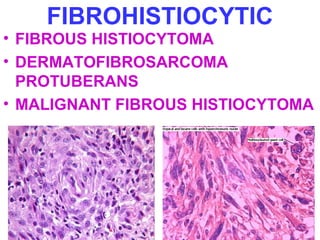
FIBROHISTIOCYTIC 
• FIBROUS HISTIOCYTOMA 
• DERMATOFIBROSARCOMA 
PROTUBERANS 
• MALIGNANT FIBROUS HISTIOCYTOMA
SKELETAL MUSCLE 
• RHABDOMYOMA 
• RHABDOMYOSARCOMA
SMOOTH MUSCLE 
• LEIOMYOMA 
• LEIOMYOSARCOMA
VASCULAR 
• HEMANGIOMA 
• LYMPHANGIOMA 
• HEMANGIOENDOTHELIOMA 
• HEMANGIOPERICYTOMA 
• ANGIOSARCOMA
PERIPHERAL NERVE 
• NEUROFIBROMA 
• SCHWANNOMA 
• GRANULAR CELL TUMOR 
• MALIGNANT (SCHWANNOMA)
UNCERTAIN 
• SYNOVIAL SARCOMA 
• ALVEOLAR “SOFT PART” SARCOMA 
• EPITHELIOD SARCOMA

27 ortho

  • 1.
  • 3.
  • 4.
    CELLS of BONE • OSTEOPROGENITOR (“STEM”)(TGFβ) • OSTEOBLASTS (surface of spicule) • OSTEOCYTES (completely within spicule) • OSTEOCLASTS (macrophage lineage)
  • 5.
    Proteins (organic) ofBONE • Type 1 collagen (90%) • Cell adhesion proteins • Calcium-binding proteins • Proteins involved in mineralization • Enzymes • Growth factors – GF-1, TGF-β, PDGF • Cytokines – Prostaglandins, IL-1, IL-6, RANKL • Proteins Concentrated from Serum – β2 –microglobulinAlbumin – IGF, insulin-like growth factor – TGF, transforming growth factor – PDGF, platelet-derived growth factor – IL, interleukin – RANKL, RANK ligand
  • 6.
    Minerals (INorganic) ofBONE HYDROXY-APATITE Ca5(PO4)3(OH) Ca10(PO4)6(OH)2
  • 7.
    ADJECTIVES of BONE •Compact •Spongy • Cancellous • Membranous • Dense • Cortical • Endosteal • Woven • Lamellar • Spicular
  • 8.
  • 10.
  • 11.
    BONE DISEASES •1) MALFORMATIONS AND DISEASES CAUSED BY DEFECTS IN NUCLEAR PROTEINS AND TRANSCRIPTION FACTORS, polydactyly, syndactyly, absence of a bone • 2) DISEASES CAUSED BY DEFECTS IN HORMONES AND SIGNAL TRANSDUCTION MECHANISMS, achondroplasia, thanatophoria • 3) DISEASES ASSOCIATED WITH DEFECTS IN EXTRACELLULAR STRUCTURAL PROTEINS – Type 1 Collagen Diseases (Osteogenesis Imperfecta) – Types 2, 10, and 11 Collagen Diseases • 4) DISEASES ASSOCIATED WITH DEFECTS IN FOLDING AND DEGRADATION OF MACROMOLECULES – Mucopolysaccharidoses • 5) DISEASES ASSOCIATED WITH DEFECTS IN METABOLIC PATHWAYS (ENZYMES, ION CHANNELS, AND TRANSPORTERS) – Osteopetrosis • 6) DISEASES ASSOCIATED WITH DECREASED BONE MASS – Osteoporosis • 7) DISEASES CAUSED BY OSTEOCLAST DYSFUNCTION – Paget Disease (Osteitis Deformans) • 8) DISEASES ASSOCIATED WITH ABNORMAL MINERAL HOMEOSTASIS – Ricketts and Osteomalacia – Hyperparathyroidism – Renal Osteodystrophy
  • 12.
    1) MALFORMATIONS AND DISEASES CAUSED BY DEFECTS IN NUCLEAR PROTEINS AND TRANSCRIPTION FACTORS • Congenital absence of a, usually single, bone: phalanx, rib, clavicle • Supernumerary digit (polydactyly) • Syndactyly • CRANIORACHISCHISIS
  • 14.
    2) DISEASES CAUSEDBY DEFECTS IN HORMONES AND SIGNAL TRANSDUCTION MECHANISMS • Achondroplasia, dwarf (non-lethal) • Thanatophoria, dwarf (lethal) • a point mutation (usually Arg for Gly375) in the gene that codes for FGF receptor 3 (FGFR3), which is located on the short arm of chromosome 4. In the normal growth plate, activation of FGFR3 inhibits cartilage proliferation; • A MUTATION causes FGFR3 to be constantly activated.
  • 16.
    3) DISEASES ASSOCIATEDWITH DEFECTS IN EXTRACELLULAR STRUCTURAL PROTEINS • OSTEOGENESS IMPERFECTA TYPES • (“Brittle” bone disease, too LITTLE bone), BLUE sclerae • Mutations in genes which code for the alpha-1 and alpha-2 chains of COLLAGEN 1 • Mutations of COLLAGEN 2,10, 11 manifest themselves as CARTILAGE diseases, ranging from joint cartilage destruction to fatal
  • 17.
  • 18.
    4) DISEASES ASSOCIATEDWITH DEFECTS IN FOLDING AND DEGRADATION OF MACROMOLECULES • MUCOPOLYSACCHARIDOSIS (one of MANY lysosome storage diseases) • DECREASES in ENZYMES which degrade: – DERMATAN – HEPARAN – KERATAN • Chiefly CARTILAGE disorders: short, chest wall, malformed bones
  • 19.
  • 20.
    5) DISEASES ASSOCIATEDWITH DEFECTS IN METABOLIC PATHWAYS (ENZYMES, ION CHANNELS, AND TRANSPORTERS) • OSTEOPETROSIS, 4 types • One common one has a CARBONIC ANHYDRASE deficiency • DECREASED osteoclast resorption • “MARBLE” bone, brittle, sclerosis
  • 21.
  • 22.
    6) DISEASES ASSOCIATEDWITH DECREASED BONE MASS •OSTEOPOROSIS • “PEAK” bone mass is early adulthood • Normal decline, slow • Osteoporosis is accelerated bone loss • Factors: – AGE – Physical activity – Estrogen – Nutrition (Ca++) – Genetics
  • 23.
    Categories of GeneralizedOsteoporosis Primary Postmenopausal Idiopathic Senile Secondary Endocrine disorders Rheumatologic disease Hyperparathyroidism Drugs Hypo-hyperthyroidism Anticoagulants Hypogonadism Chemotherapy Pituitary tumors Corticosteroids Diabetes, type 1 Anticonvulsants Addison disease Alcohol Neoplasia Miscellaneous Multiple myeloma Osteogenesis imperfecta Carcinomatosis Immobilization Gastrointestinal Pulmonary disease Malnutrition, Malbs., Hepatic Insuf., Vit C,D Homocystinuria Anemia
  • 24.
  • 25.
    7) DISEASES CAUSEDBY OSTEOCLAST DYSFUNCTION Paget Disease (Osteitis Deformans) • Matrix madness, Osteoblasts/-cytes gone wild • THREE PHASES: – 1) Increased osteoclast resorption – 2) Increased “hectic” bone formation (osteoblasts) – 3) Osteosclerosis • ELEVATED ALKALINE-PHOSPHATASE • ELEVATED urine HYDROXYPROLINE
  • 26.
    PAGET’s DISEASE (ofBONE) 85% MONOSTOTIC, WHOLE BONE 15% POLY-OSTOTIC (skull, pelvis) “JIGSAW”, NOT LAMINAR, BONE CLINICAL: PAIN!!! (MICROFRACTURES)
  • 27.
  • 28.
    8) DISEASES ASSOCIATEDWITH ABNORMAL MINERAL HOMEOSTASIS – Ricketts and Osteomalacia • VITAMIN D deficiency/dysfunction – Hyperparathyroidism, PRIMARY (PTH ADENOMA) • ENTIRE SKELETON • OSTEITIS FIBROSIS CYSTICA (von Recklinghausen’s disease (of bone) • “BROWN” TUMOR – Hyperparathyroidism, SECONDARY (RENAL) (NOT AS SEVERE AS 1º) – Renal Osteodystrophy = ANY bone disorder due to chronic renal disease
  • 29.
    PRIMARY HYPERPARATHYROIDISM OSTEITISFIBROSA CYSTICA “BROWN” “TUMOR”
  • 30.
    RENAL OSTEODYSTROPHY •PHOSPHATE RETENTION • HYPOPHOSPHATEMIA • HYPOCALCEMIA • INCREASED PTH • INCREASED OSTEOCLASTS • METABOLIC ACIDOSIS  release of HYDROXYAPATITES from matrix
  • 31.
  • 32.
    FRACTURES, adjectives •Complete, incomplete • Closed, open (communicating) • Communited (splintered) • Displaced (NON-aligned) • PATHOGENIC, (non-traumatic, 2º to other disease, often metastases) • “STRESS” fracture
  • 33.
    FRACTURES • THREEPHASES – HEMATOMA, minutes days PGDF, TGF-β, FGF – SOFT CALLUS (“PRO”-CALLUS), ~1 week – HARD CALLUS (BONY CALLUS), several weeks • COMPLICATIONS – PSEUDARTHROSIS – INFECTION (especially OPEN [communicating] fractures)
  • 34.
  • 35.
    OSTEONECROSIS • Alsocalled AVASCULAR necrosis • Also called ASEPTIC necrosis • CAUSE: ISCHEMIA – Trauma – Steroids – Thrombus/Embolism – Vessel injury, e.g., radiation – INCREASED intra-osseous pressurevascular compression – Venous hypertension too
  • 36.
    OSTEONECROSIS Disorders Associatedwith Osteonecrosis Idiopathic Pregnancy Trauma Gaucher disease Corticosteroid administration Sickle cell and other anemias Infection Alcohol abuse Dysbarism Chronic pancreatitis Radiation therapy Tumors Connective tissue disorders Epiphyseal disorders
  • 37.
  • 38.
  • 39.
    OSTEOMYELITIS • Pyogenic:Staph, E. coli, Pseudom, Kleb –Hematogenous –Contiguous – Direct implantation • TB • Syphilis
  • 40.
    OSTEOMYELITIS • DX:X-ray, Bone scan
  • 41.
  • 42.
    OSTEOMYELITIS • COMPLICATIONS –Subperiosteal abscess – Draining sinus – Joint involvement • SEQUESTRUM vs. INVOLUCRUM
  • 44.
    OSTEOMYELITIS • Tuberculous –Usually blood borne –TB of spine is known as POTTS disease • Syphilis –CONGENITAL –TERTIARY, “SABRE” shins
  • 45.
  • 46.
  • 47.
    Classification of PrimaryTumors Involving Bones Histologic Type Benign Malignant Hematopoietic (40%) Myeloma Malignant lymphoma Chondrogenic (22%) Osteochondroma Chondrosarcoma Chondroma Dedifferentiated chondrosarcoma Chondroblastoma Mesenchymal chondrosarcoma Chondromyxoid fibroma Osteogenic (19%) Osteoid osteoma Osteosarcoma Osteoblastoma Unknown origin (10%) Giant cell tumor tumor Giant cell tumor Adamantinoma Histiocytic origin Fibrous histiocytoma Malignant fibrous histiocytoma Fibrogenic Metaphyseal fibrous defect (fibroma) Desmoplastic fibroma Fibrosarcoma Notochordal Chordoma Vascular Hemangioma Hemangioendothelioma Hemangiopericytoma Lipogenic Lipoma Liposarcoma Neurogenic Neurilemmoma
  • 48.
    BONE TUMORS •BONE • CARTILAGE • FIBROUS • MISC. –Ewing’s “sarcoma” –Giant Cell Tumor –METASTASES
  • 50.
    BONE- BONE TUMORS • OSTEOMA • OSTEOID OSTEOMA • OSTEOBLASTOMA • OSTEOSARCOMA (OSTEOGENIC SARCOMA)
  • 51.
    OSTEOMA • SOLITARY • MIDDLE AGE • FROM SUBPERIOSTEAL or ENDOSTEAL surfaces • SKULL, FACE, most common • Totally BENIGN • To be distinguished from REACTIVE BONE
  • 52.
    FRONTAL SINUS Whyam I not showing you HISTOLOGY?
  • 53.
    OSTEOID OSTEOMA •At least 2 cm in diameter • Teens, twenties, APPENDICULAR skeleton • M>>F • PAINFUL • Has a NIDUS • Responds to aspirin • Induces a MARKED bony reaction
  • 54.
  • 55.
    OSTEOBLASTOMA • AXIALSKELETON, i.e., SPINE • NO Nidus • NO bony reaction • NOT relieved by aspirin
  • 56.
    OSTEOSARCOMA (OSTEOGENIC SARCOMA) LATE TEENS KNEES METAPHYSES PAINFUL!!!
  • 57.
    TYPES of OSTEOSARCOMAS • • The anatomic portion of the bone from which they arise (intramedullary, intracortical, or surface) • • Degree of differentiation • • Multicentricity (synchronous, metachronous) • • Primary (underlying bone is unremarkable) or secondary (e.g., osteosarcoma associated with pre-existing disorders such as benign tumors, Paget disease, bone infarcts, previous irradiation) • • Histologic variants (osteoblastic, chondroblastic, fibroblastic, telangiectatic, small cell, and giant cell)
  • 58.
    The most commonsubtype is osteosarcoma that arises in the metaphysis of long bones; is primary, solitary, intramedullary, and poorly differentiated; and produces a predominantly bony matrix
  • 59.
    BONE- CARTILAGE TUMORS • OSTEOCHONDROMA (EXOSTOSIS) • CHONDROMA • CHONDROBLASTOMA • CHONDROMYXOID FIBROMA • CHONDROSARCOMA
  • 60.
    OSTEOCHONDROMA (EXOSTOSIS) •Common, Cartilage AND Bone present • Often MULTIPLE as a hereditary syndrome • M>>>F • PELVIS, SCAPULAE, RIBS
  • 62.
    CHONDROMA • Chondromavs. EN-chondroma • PURE Hyaline Cartilage • MULTIPLE enchondromas = Ollier’s dis. • Maffucci synd. if hemangiomas present
  • 63.
    CHONDROBLASTOMA • RARE,in teenagers • M>>F • KNEES, usually • Epiphyses • MUCH LESS matrix than a chondroma
  • 64.
    CHONDROMYXOID FIBROMA •RAREST of all • TEENS, MALES • “MYXOID” concept • “ATYPIA”
  • 65.
    CHONDROSARCOMA • ANATOMY – INTRAMEDULLARY – JUXTACORTICAL • HISTOLOGY – CONVENTIONAL • HYALINE • MYXOID – CLEAR – DE-DIFFERENTIATED – MESENCHYMAL
  • 66.
  • 68.
    BONE- FIBROUS TUMORS • FIBROUS CORTICAL DEFECT/NON-OSSIFYING FIBROMA • FIBROUS DYSPLASIA • FIBROSARCOMA/MALIGNANT FIBROUS HISTIOCYTOMA
  • 69.
    FIBROUS CORTICAL DEFECT • COMMON, usually LESS THAN 1 CM • CHILDREN >2 • IF MORE THAN 5-6 CM, they are then called NON-OSSIFYING FIBROMA
  • 70.
    FIBROUS DYSPLASIA •BENIGN TUMOR • THREE TYPES –SINGLE BONE (70%) –POLY-OSTOTIC (27%) –POLY-OSTOTIC (3%) with café-au-lait and endocrine disorders, especially precocious puberty
  • 71.
    1) CURVED spicules 2) LACK of osteoblastic rimming
  • 72.
    FIBROSARCOMA/MFH • METAPHYSESof LONG BONES • PELVIC FLAT BONES • LYTIC • FRACTURES • OF COURSE, SARCOMATOUS METASTASIS
  • 73.
  • 74.
    MISC. TUMORS ofBONE • EWING sarcoma/PNET (Primitive NeuroEctodermal Tumor) • GIANT CELL TUMOR • METASTASES
  • 75.
    EWING/PNET • SAMETUMOR • SMALL ROUND • NEUROENDOCRINE • IDENTICAL CHROMOSOME TRANSLOCATION • SECOND most COMMON bone malignancy in CHILDREN • ARISE IN MEDULLARY CAVITY of BONE • LOOK LIKE LYMPHOMA
  • 77.
    GCT (Giant CellTumor), BONE
  • 78.
    METASTASES MALE: PROSTATE FEMALE: BREAST RENAL, THYROID also seek bone early also LYTIC? BLASTIC?
  • 83.
  • 84.
    JOINT DISEASES •“ARTHRITIS” – DEGENERATIVE (OSTEOARTHRITIS) – RHEUMATOID – “JUVENILE” RHEUMATOID – NON-INFECTIOUS: Ankylosing Spond., Reactive, Psoriasis, IBD – INFECTIOUS: Supp., TB, Lyme, Viral – GOUT (URATE) – PSEUDOGOUT (PYROPHOSPHATE) • Tumors – Ganglion (Synovial Cyst) – Giant Cell Tumor (Pigmented VilloNodular Synovitis[PVNS]) – Synovial Sarcoma
  • 85.
    DEGENERATIVE ARTHRITIS •Etiology/Risk Factors: Age, Trauma, Genes • Pathogenesis: Progressive EROSION of articular cartilage • Morphology: X-Ray, “eburnation”, “joint mice”, osteophytes • Clinical Expression: PAIN, Limitation of motion
  • 88.
  • 89.
    RHEUMATOID ARTHRITIS Rheumatoidarthritis (RA) is a chronic systemic inflammatory disorder that may affect many tissues and organs—skin, blood vessels, heart, lungs, and muscles— but principally attacks the joints, producing a nonsuppurative proliferative and inflammatory synovitis that often progresses to destruction of the articular cartilage and ankylosis of the joints.
  • 90.
    RHEUMATOID ARTHRITIS •Etiology/Risk Factors: Autoimmune • Pathogenesis: Progressive SYNOVITIS • Morphology: Synovial lymphocytes, macrophages, plasma cells, neutrophils, osteoclasts, “pannus”, hyperemia, rheumatoid “nodules”, vasculitis • Clinical Expression: PAIN, Limitation of motion, malaise, fatigue, rheumatoid factor IgM-IgGFc,
  • 91.
    HANDSWRISTELBOWS The rheumatoid“nodule” shows “palisading” fibroblasts
  • 92.
    DIAGNOSIS • CLINICALFEATURES (1% of population F>>M) – MORNING STIFFNESS – ARTHRITIS in MORE THAN 3 JOINT AREAS – “TYPICAL” hand findings – SYMMETRIC ARTHRITIS – SERUM RHEUMATOID FACTOR – “TYPICAL” X-RAY findings
  • 94.
    “JUVENILE” Rheumatoid Arthritis • Begins BEFORE age 16, by definition • Generally LARGER joints than RA • Often POSITIVE ANA
  • 95.
    “SERONEGATIVE” ARTHRITIDES •ANKYLOSING SPONDYLITIS (aka, “rheumatoid” spondylitis, or Marie- Strumpell Disease [HLA-B27] (M>>F) • “REACTIVE” ARTHRITIS (FOLLOWS GU or GI INFECTIONS) –REITER SYDROME (urethral & conjunctival inflammation too) [HLA-B27] –Arthritis associated with IBD • PSORIATIC ARTHRITIS
  • 96.
  • 97.
    INFECTIOUS ARTHRITIS •From OSTEOMYELITIS • USUALLY SUPPURATIVE • GC, staph, strep, H. flu, E. coli, (Salmonella in sicklers) • 4 cardinal signs, fever, leukocytosis, ESR
  • 98.
    INFECTIOUS ARTHRITIS •TB • LYME Disease, i.e., Borrelia burgdorferi • VIRAL –Parvovirus B19 –Rubella –Hepatitis C
  • 99.
    GOUT • Endpointof HYPERURICEMIA from ANY cause resulting in JOINT deposition of Monosodium crystals (TOPHI) –ACUTE –CHRONIC • 10% of population has hyperuricemia (>7 mg/dl), but only 1/20 of these has gout
  • 100.
    Classification of Gout Clinical Category Metabolic Defect Primary Gout (90% of cases) Enzyme defects unknown (85%–90% of primary gout) ■ Overproduction of uric acid Normal excretion (majority) Increased excretion (minority) Underexcretion of uric acid with normal production Known enzyme defects—e.g., partial HGPRT deficiency (rare) ■ Overproduction of uric acid Secondary Gout (10% of cases) Associated with increased nucleic acid turnover—e.g., leukemias ■ Overproduction of uric acid with increased urinary excretion Chronic renal disease ■ Reduced excretion of uric acid with normal production Inborn errors of metabolism—e.g., complete HGPRT deficiency (Lesch- Nyhan syndrome) ■ Overproduction of uric acid with increased urinary excretion HGPRT, hypoxanthine guanine phosphoribosyl transferase.
  • 101.
    HYPERURICEMIA GOUT •Age of the individual and duration of the hyperuricemia are factors. Gout rarely appears before 20 to 30 years of hyperuricemia. • Genetic predisposition is another factor. In addition to the well-defined X-linked abnormalities of HGPRT, primary gout follows multifactorial inheritance and runs in families. • Heavy alcohol consumption predisposes to attacks of gouty arthritis. • Obesity increases the risk of asymptomatic gout. • Certain drugs (e.g., thiazides) predispose to the development of gout. • Lead toxicity increases the tendency to develop saturnine gout
  • 102.
    FEATURES • TOPHACEOUSARTHRITIS • GOUTY NEPHROPATHY
  • 106.
  • 107.
    GOUT • Associatedwith ATHEROSCLEROSIS • Associated with HYPERTENSION
  • 108.
    Pseudo-GOUT • Gout:Monosodium Urate • Pseudo-GOUT: Calcium Pyrophosphate • PSEUDOGOUT is also called CHONDROCALCINOSIS, or CPPD (Calcium Phosphate Deposition Disease) • IDIOPATHIC, HEREDITARY, SECONDARY –Secondary joint damage, hyperparathyroidism, hemochromatosis, hypomagnesemia, hypothyroidism, ochronosis, and diabetes
  • 109.
  • 110.
    JOINT TUMORS •BENIGN – GANGLION (SYNOVIAL CYST) – GIANT CELL TUMOR of TENDON SHEATH, aka PVNS, Pigmented VilloNodular Synovitis • MALIGNANT – SYNOVIAL SARCOMA
  • 111.
  • 112.
  • 113.
    “SOFT TISSUE” TUMORS • FAT • FIBROUS TISSUE • FIBROHISTIOCYTIC • SKELETAL MUSCLE • SMOOTH MUSCLE • VASCULAR • PERIPHERAL NERVE • UNCERTAIN: SYNOVIAL SARCOMA, ALVEOLAR SOFT PART SARCOMA, EPITHELIOD SARCOMA
  • 114.
    CAUSES • MOSTLYUNKNOWN • RADIATION association • CHEMICAL BURN association • THERMAL BURN association • TRAUMA association • VIRUS association (HHV8 for Kaposi) • GENETICS • Parts of many SYNDROMES • MANY TRANSLOCATIONS
  • 115.
    Chromosomal and GeneticAbnormalities in Soft Tissue Sarcomas Tumor Cytogenetic Abnormality Genetic Abnormality Extraosseous Ewing sarcoma and t(11:22)(q24;q12) FLI-1-EWS fusion gene primitive neuroectodermal tumor t(21:22)(q22;q12) ERG-EWS fusion gene t(7;22)(q22;q12) ETV1-EWS fusion gene Liposarcoma—myxoid and round cell type t(12:16)(q13;p11) CHOP/TLS fusion gene Synovial sarcoma t(x;18)(p11;q11) SYT-SSX fusion gene Rhabdomyosarcoma—alveolar type t(2;13)(q35;q14) PAX3-FKHR fusion gene t(1;13)(p36;q14) PAX7-FKHR fusion gene Extraskeletal myxoid chondrosarcoma t(9;22)(q22;q12) CHN-EWS fusion gene Desmoplastic small round cell tumor t(11;22)(p13;q12) EWS-WT1 fusion gene Clear cell sarcoma t(12;22)(q13;q12) EWS-ATF1 fusion gene Dermatofibrosarcoma protuberans t(17:22)(q22;q15) COLA1-PDGFB fusion gene Alveolar soft part sarcoma t(X;17)(p11.2;q25) TFE3-ASPL fusion gene Congenital fibrosarcoma t(12;15)(p13;q23) ETV6-NTRK3 fusion gene
  • 116.
    SOFT TISSUE TUMORS • ALL “SPINDLY” • Deep (desmoid) vs. Superficial • Importance of MITOSES • Importance of STAGING • Importance of IMMUNOPEROXIDASE • Importance of CONSULTATION
  • 117.
    FAT • LIPOMA • LIPOSARCOMA NORMAL FAT LIPOMA, encapsulated LIPOSARCOMA, often retroperitoneal
  • 118.
    FIBROUS TISSUE •NODULAR FASCIITIS (pseudosarcomatous) • FIBROMATOSES (plantar, palmar, penile) • FIBROSARCOMA
  • 119.
    MYOSITIS OSSIFICANS •BENIGN FIBROUS TISSUE PROLIFERATION PLUS OSSEOUS METAPLASIA
  • 120.
    FIBROHISTIOCYTIC • FIBROUSHISTIOCYTOMA • DERMATOFIBROSARCOMA PROTUBERANS • MALIGNANT FIBROUS HISTIOCYTOMA
  • 121.
    SKELETAL MUSCLE •RHABDOMYOMA • RHABDOMYOSARCOMA
  • 122.
    SMOOTH MUSCLE •LEIOMYOMA • LEIOMYOSARCOMA
  • 125.
    VASCULAR • HEMANGIOMA • LYMPHANGIOMA • HEMANGIOENDOTHELIOMA • HEMANGIOPERICYTOMA • ANGIOSARCOMA
  • 126.
    PERIPHERAL NERVE •NEUROFIBROMA • SCHWANNOMA • GRANULAR CELL TUMOR • MALIGNANT (SCHWANNOMA)
  • 127.
    UNCERTAIN • SYNOVIALSARCOMA • ALVEOLAR “SOFT PART” SARCOMA • EPITHELIOD SARCOMA

Editor's Notes

  • #4 Intramembranous and Endochondral ossification, note: 1, Reserve zone. 2, Zone of proliferation. 3, Zone of hypertrophy. 4, Zone of mineralization. 5, Primary spongiosa.
  • #16 Achondroplastic and thanatophoric dwarfs
  • #22 Diffusely DENSE bone with Erlenmeyer Flask deformity of distal humerus
  • #58 Primary = YOUNGER patients, Secondary = OLDER patients
  • #62 Osteochondroma
  • #68 Conventional hyaline, mesenchymal, clear, conventional myxoid
  • #78 GCT occurs in patients, 20s-40-s, and GCT has a MACROPHAGE lineage
  • #110 Biurate has the OPPOSITE polarization pattern of pyrophosphate. In GOUT, as seen here, the yellow needles are vertical and the blue needles are horizontal, under polarization. IN PSEUDOGOUT, the OPPOSITE is seen.
  • #113 These diseases are related, but PVN appears as shaggy or “villous” projections of synovium, and GCT is a solid tumor. BOTH are regarded as BENIGN proliferations of synovium and reactive cells.
  • #119 What is a herring bone pattern?
  • #125 The MAIN difference between leiomyomas and leiomyosarcomas is the number of mitoses per high power field! How many do you see here?