CARDIAC DEVELOPMENT & FETAL
CIRCULATION
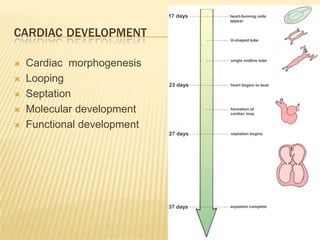
CARDIAC DEVELOPMENT
 Cardiac morphogenesis
 Looping
 Septation
 Molecular development
 Functional development
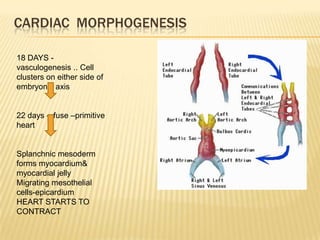
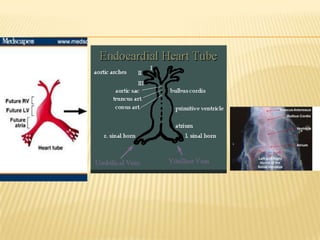
CARDIAC MORPHOGENESIS
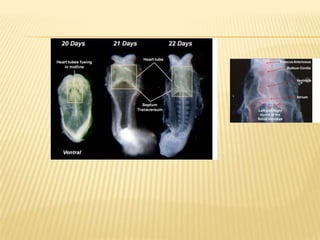
18 DAYS -
vasculogenesis .. Cell
clusters on either side of
embryonic axis
22 days – fuse –primitive
heart
Splanchnic mesoderm
forms myocardium&
myocardial jelly
Migrating mesothelial
cells-epicardium
HEART STARTS TO
CONTRACT
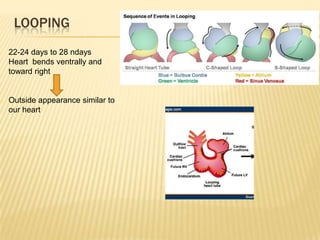
LOOPING
22-24 days to 28 ndays
Heart bends ventrally and
toward right
Outside appearance similar to
our heart
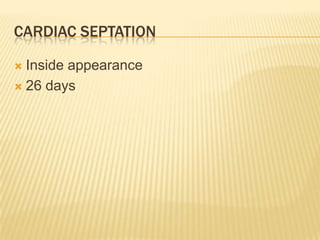
CARDIAC SEPTATION
 Inside appearance
 26 days
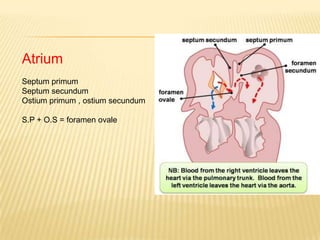
Atrium
Septum primum
Septum secundum
Ostium primum , ostium secundum
S.P + O.S = foramen ovale
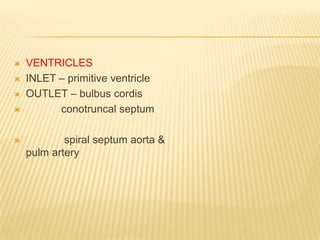
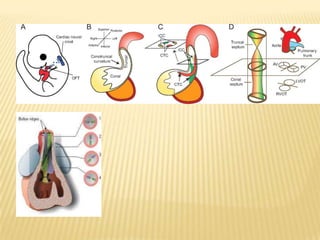
 VENTRICLES
 INLET – primitive ventricle
 OUTLET – bulbus cordis
 conotruncal septum
 spiral septum aorta &
pulm artery
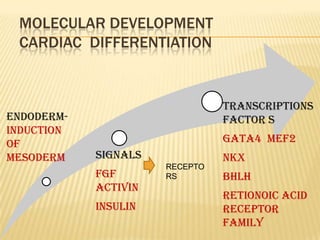
MOLECULAR DEVELOPMENT
CARDIAC DIFFERENTIATION
ENDODERM-
INDUCTION
OF
MESODERM SIGNALS
FGF
ACTIVIN
INSULIN
TRANSCRIPTIONS
FACTOR S
GATA4 MEF2
NKX
BHLH
RETIONOIC ACID
RECEPTOR
FAMILY
RECEPTO
RS
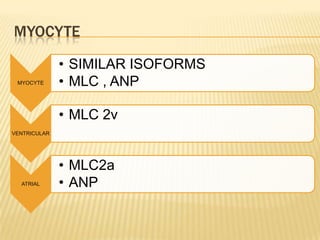
MYOCYTE
MYOCYTE
• SIMILAR ISOFORMS
• MLC , ANP
VENTRICULAR
• MLC 2v
ATRIAL
• MLC2a
• ANP
FUNCTIONAL DEVELOPMENT
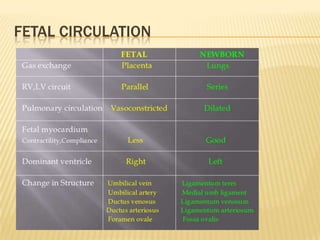
FETAL CIRCULATION
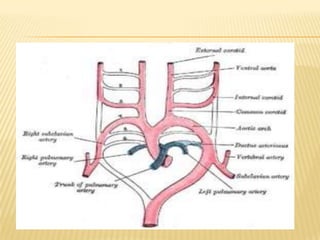
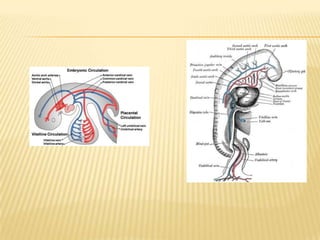
 the dorsal aortae develop at the same time as the early heart tubes. These connect to the heart
tubes prior to fusion via the first aortic arch arteries. Other arches develop, which go on to form
the arteries of the head and neck. We also previously saw the way in which the aorta and
pulmonary trunk form. The dorsal aorta gives off branches which supply blood to the rest of the
embryo:
 Gut (ventral/front) branches
 Lateral (side) branches
 Intersegmental arteries
 Fetal Circulation
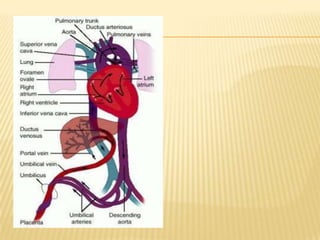
 As the embryo progresses to a fetus the vasculature is still remarkably different to that of the
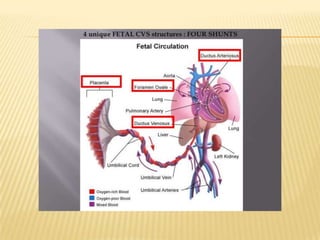
adult, including the presence of three vascular shunts:
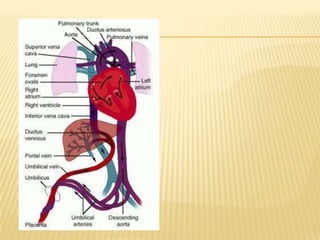
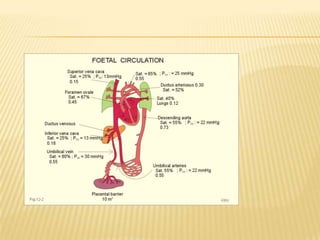
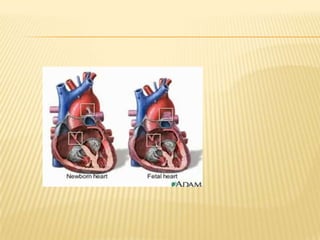
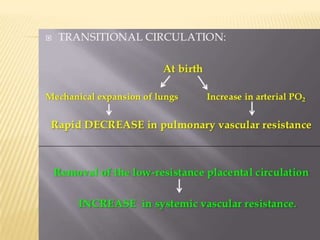
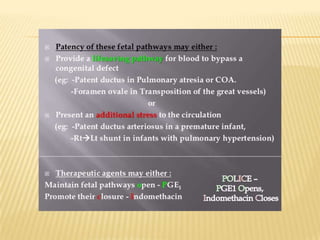
 foramen ovale (seen previously) - blood travels from the right atrium to the left atrium
 ductus venosus - blood from the umbilical vein bypasses the liver to enter the inferior vena
cava
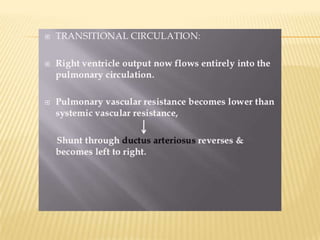
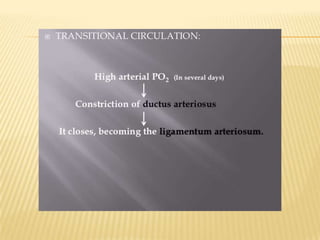
 ductus arteriosus - blood passes from the pulmonary trunk into the aorta
 These shunts allow blood to bypass the lungs, liver and kidneys, whose functions are
performed by the placenta while in utero.
 The following diagram shows the movement of blood throughout the fetal circulation. The main
flow of blood is as follows:
 Placenta → umbilical vein → ductus venosus → inferior vena cava → right atrium → foramen
ovale → left atrium → left ventricle → aorta → hypogastric arteries → umbilical arteries →
placenta. Blood that passes from the right atrium to the right ventricle travels:
 Right ventricle → pulmonary trunk → ductus arteriosus → aorta
Cardiac development & fetal  circulation (2)

Cardiac development & fetal circulation (2)

  • 1.
    CARDIAC DEVELOPMENT &FETAL CIRCULATION
  • 2.
    CARDIAC DEVELOPMENT  Cardiacmorphogenesis  Looping  Septation  Molecular development  Functional development
  • 3.
    CARDIAC MORPHOGENESIS 18 DAYS- vasculogenesis .. Cell clusters on either side of embryonic axis 22 days – fuse –primitive heart Splanchnic mesoderm forms myocardium& myocardial jelly Migrating mesothelial cells-epicardium HEART STARTS TO CONTRACT
  • 6.
    LOOPING 22-24 days to28 ndays Heart bends ventrally and toward right Outside appearance similar to our heart
  • 7.
    CARDIAC SEPTATION  Insideappearance  26 days
  • 8.
    Atrium Septum primum Septum secundum Ostiumprimum , ostium secundum S.P + O.S = foramen ovale
  • 9.
     VENTRICLES  INLET– primitive ventricle  OUTLET – bulbus cordis  conotruncal septum  spiral septum aorta & pulm artery
  • 11.
    MOLECULAR DEVELOPMENT CARDIAC DIFFERENTIATION ENDODERM- INDUCTION OF MESODERMSIGNALS FGF ACTIVIN INSULIN TRANSCRIPTIONS FACTOR S GATA4 MEF2 NKX BHLH RETIONOIC ACID RECEPTOR FAMILY RECEPTO RS
  • 12.
    MYOCYTE MYOCYTE • SIMILAR ISOFORMS •MLC , ANP VENTRICULAR • MLC 2v ATRIAL • MLC2a • ANP
  • 13.
  • 14.
  • 19.
     the dorsalaortae develop at the same time as the early heart tubes. These connect to the heart tubes prior to fusion via the first aortic arch arteries. Other arches develop, which go on to form the arteries of the head and neck. We also previously saw the way in which the aorta and pulmonary trunk form. The dorsal aorta gives off branches which supply blood to the rest of the embryo:  Gut (ventral/front) branches  Lateral (side) branches  Intersegmental arteries  Fetal Circulation  As the embryo progresses to a fetus the vasculature is still remarkably different to that of the adult, including the presence of three vascular shunts:  foramen ovale (seen previously) - blood travels from the right atrium to the left atrium  ductus venosus - blood from the umbilical vein bypasses the liver to enter the inferior vena cava  ductus arteriosus - blood passes from the pulmonary trunk into the aorta  These shunts allow blood to bypass the lungs, liver and kidneys, whose functions are performed by the placenta while in utero.  The following diagram shows the movement of blood throughout the fetal circulation. The main flow of blood is as follows:  Placenta → umbilical vein → ductus venosus → inferior vena cava → right atrium → foramen ovale → left atrium → left ventricle → aorta → hypogastric arteries → umbilical arteries → placenta. Blood that passes from the right atrium to the right ventricle travels:  Right ventricle → pulmonary trunk → ductus arteriosus → aorta