Downloaded 36 times
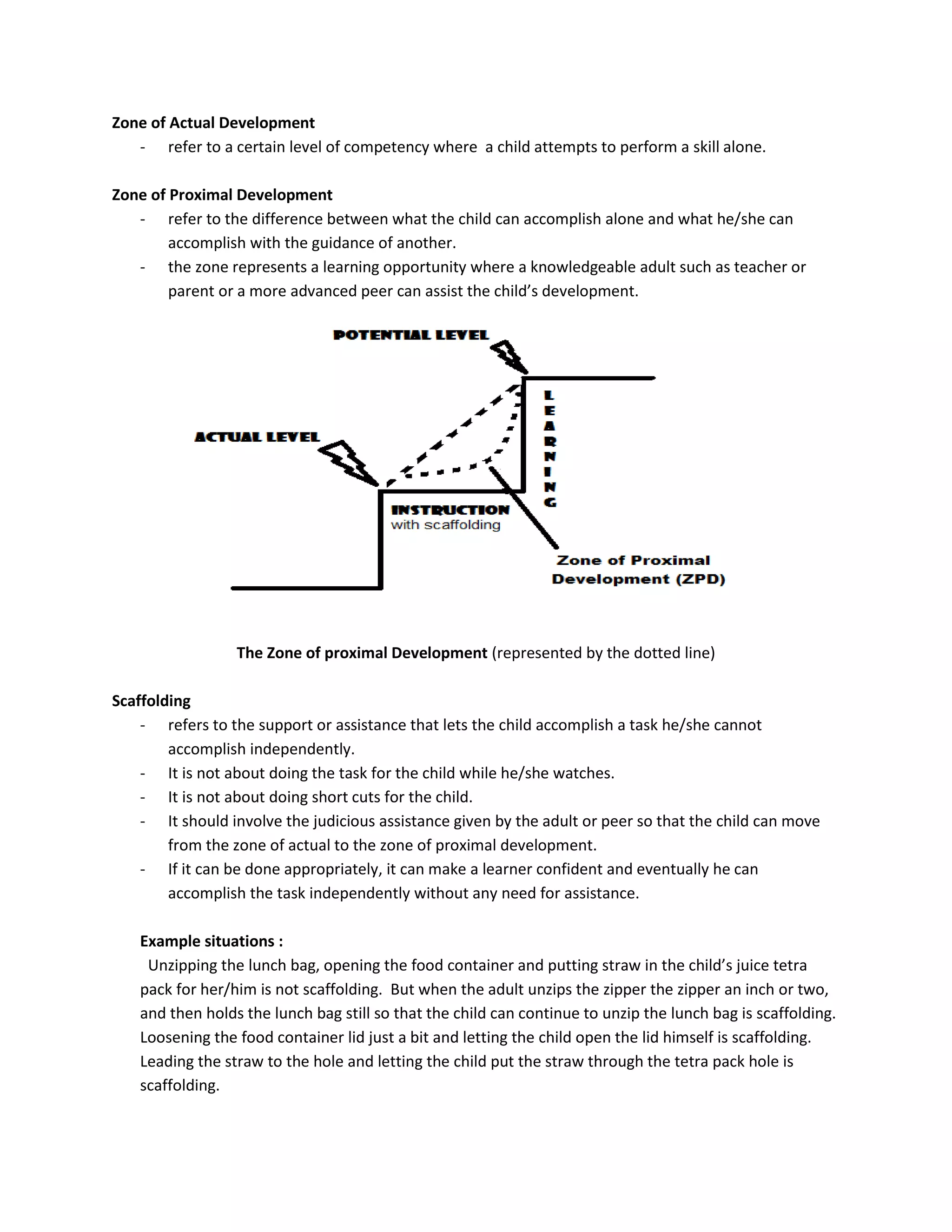

Lev Vygotsky developed the socio-cultural theory of development which emphasizes that cognitive development is a result of social interactions and culture. He believed that thinking and learning occur on two levels: through interaction with others and independently. Vygotsky identified the zone of proximal development as the difference between what a child can do independently and with guidance, representing a learning opportunity. Scaffolding refers to the support provided to help a child accomplish a task within their zone of proximal development and then gradually removing assistance as the child masters the skill.


