SCIENCE,
TECHNOLOGY AND
SOCIETY from 18th
century to 19th
century
Science, Technology and
Growth of Industry
THREE PERIODS of the Growth of Industry and
the Development of Science and Technology
Latent Era
Revolutionary Era
Capitalism Era
LATENT ERA
(1690-1760)
 The initial impetus of the Scientific Revolution seemed to
falter and die away towards the middle of the 18th
century.
 The temporary pause might due to the following reasons:
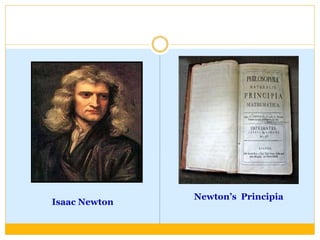
 The prestige of Isaac Newton and the very finished and character of
his work “Principia , 1687” surpassed his contemporaries by a very
large distance.
 Social and economic factors such as new generations of merchants
who were not yet conscious of the possibilities and potential of
science.
Newton’s Principia
Isaac Newton
 During this era, the new science and the capitalist
method were still largely separated.
 Ideology of rational progress on science and philosophy
of 18th century sought to apply the method of science to
all intellectual and social activities.
 There was a development in agricultural practices. And
there were goals such as improvement in mining and
transportation methods and new method of making iron.
REVOLUTIONARY ERA
(1760-1830)
 This era covers years as decisive in science as well as
in politics.
 It includes the revolution in Britain and the political
revolution in America and France.
 This era was crucial for humanity a decisive turn was
taken in many conquest and mastery of nature in the
substitution of multiple mechanisms.
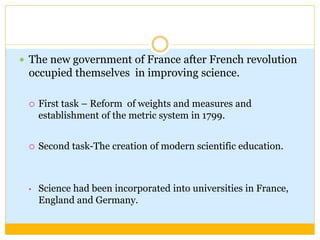
 The new government of France after French revolution
occupied themselves in improving science.
 First task – Reform of weights and measures and
establishment of the metric system in 1799.
 Second task-The creation of modern scientific education.
• Science had been incorporated into universities in France,
England and Germany.
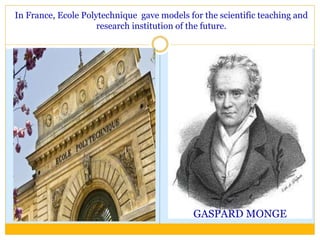
GASPARD MONGE
In France, Ecole Polytechnique gave models for the scientific teaching and
research institution of the future.
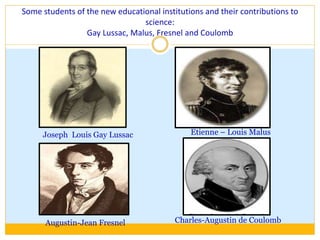
Some students of the new educational institutions and their contributions to
science:
Gay Lussac, Malus, Fresnel and Coulomb
Joseph Louis Gay Lussac
Augustin-Jean Fresnel
Etienne – Louis Malus
Charles-Augustin de Coulomb
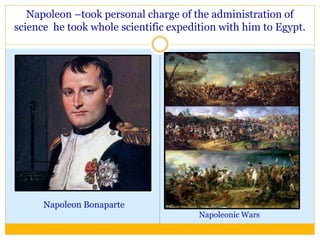
 Napoleonic wars had indirectly beneficial to science.
 Napoleon took personal charge of the administration of
science he took whole scientific expedition with him to
Egypt and attended scientific meetings.
 The Napoleonic war did not extent into the field of
science but serve to promote scientist of different
countries.
 The number of scientific societies multiplied rapidly as
scientific specialization grew.
Napoleon –took personal charge of the administration of
science he took whole scientific expedition with him to Egypt.
Napoleon Bonaparte
Napoleonic Wars
 By the 1750 in England the textile industry came to
deal with cotton imported from India.
 The market for textile determined the outbreak of
the industrial revolution in particularly favorable
offered by Britain.
 The market for textile machinery, textile
processing and industrial products stimulated the
chemical and iron industries.
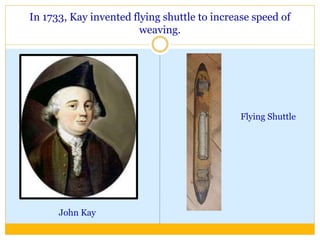
In 1733, Kay invented flying shuttle to increase speed of
weaving.
John Kay
Flying Shuttle
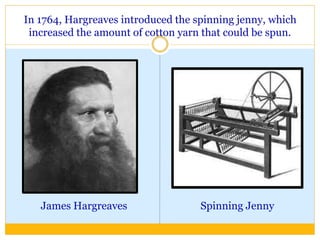
In 1764, Hargreaves introduced the spinning jenny, which
increased the amount of cotton yarn that could be spun.
James Hargreaves Spinning Jenny
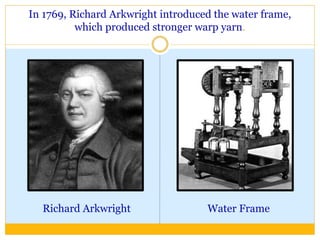
In 1769, Richard Arkwright introduced the water frame,
which produced stronger warp yarn.
Richard Arkwright Water Frame
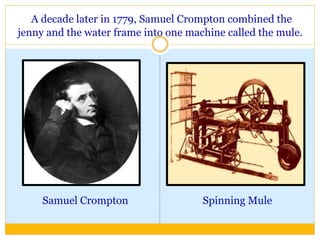
A decade later in 1779, Samuel Crompton combined the
jenny and the water frame into one machine called the mule.
Samuel Crompton Spinning Mule
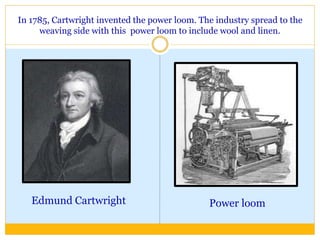
In 1785, Cartwright invented the power loom. The industry spread to the
weaving side with this power loom to include wool and linen.
Edmund Cartwright Power loom
 The ever increasing supply demand of coal
provided changes in mining and transportations.
 The main innovation in transportation of 19th
century was railroad.
 The agricultural development was a mixture of
empirical breeding, crop rotation and
mechanization.
CAPITALISM ERA
(1830-1895)
 The contribution of science to technological
advancement in the 18th century was basically
modest.
 The most important exception is the case of steam
engine which originated as an attempt to solve the
technological problem of draining water from tin and
coal mines.
 The 19th century marked a crucial turning point in
science-technology relationship.
 In the second half of century products in most industries
would not come into being without the knowledge coming
from the scientific activities.
 The industries involved were the so called - Science-based
Industries.
 These included the most prominent coal-tar dye
manufacture and the electrical power generation and its
machinery.
 In the middle of the 19th century chemistry was far
advanced in its technological applications especially in
Germany.
 This marked the birth of the industrial research laboratory where the
direction of research was determined by the specific needs of the
firm.
 Prior scientific discoveries were adapted to practical problems and
commercial requirements.
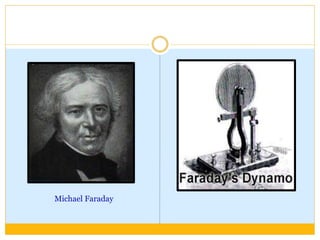
 The construction of public power system starting in 1880 made use
of current dynamo a direct application of Faraday’s discovery in
1831.
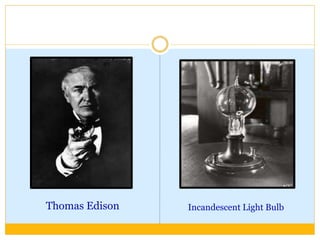
 The exploitation of this discovery was an answer to Thomas Edison
desire to replace gas lightning with independently controlled
residential electrical lightning system using his successful invention
of incandescent electric light bulb.
Michael Faraday
Thomas Edison Incandescent Light Bulb
THANK YOU

Prepared By: LEIZEL A. DESPI BSED 2C
UPNEXT  IMPORTANT DEVELOPMENT
IN SCIENCE FROM 18TH TO 19TH
CENTURY to be reported by Shiela Mae
Gallego 

Science during 18th and 19th century

  • 1.
    SCIENCE, TECHNOLOGY AND SOCIETY from18th century to 19th century
  • 2.
  • 3.
    THREE PERIODS ofthe Growth of Industry and the Development of Science and Technology Latent Era Revolutionary Era Capitalism Era
  • 4.
  • 5.
     The initialimpetus of the Scientific Revolution seemed to falter and die away towards the middle of the 18th century.  The temporary pause might due to the following reasons:  The prestige of Isaac Newton and the very finished and character of his work “Principia , 1687” surpassed his contemporaries by a very large distance.  Social and economic factors such as new generations of merchants who were not yet conscious of the possibilities and potential of science.
  • 6.
  • 7.
     During thisera, the new science and the capitalist method were still largely separated.  Ideology of rational progress on science and philosophy of 18th century sought to apply the method of science to all intellectual and social activities.  There was a development in agricultural practices. And there were goals such as improvement in mining and transportation methods and new method of making iron.
  • 8.
  • 9.
     This eracovers years as decisive in science as well as in politics.  It includes the revolution in Britain and the political revolution in America and France.  This era was crucial for humanity a decisive turn was taken in many conquest and mastery of nature in the substitution of multiple mechanisms.
  • 10.
     The newgovernment of France after French revolution occupied themselves in improving science.  First task – Reform of weights and measures and establishment of the metric system in 1799.  Second task-The creation of modern scientific education. • Science had been incorporated into universities in France, England and Germany.
  • 11.
    GASPARD MONGE In France,Ecole Polytechnique gave models for the scientific teaching and research institution of the future.
  • 12.
    Some students ofthe new educational institutions and their contributions to science: Gay Lussac, Malus, Fresnel and Coulomb Joseph Louis Gay Lussac Augustin-Jean Fresnel Etienne – Louis Malus Charles-Augustin de Coulomb
  • 13.
     Napoleonic warshad indirectly beneficial to science.  Napoleon took personal charge of the administration of science he took whole scientific expedition with him to Egypt and attended scientific meetings.  The Napoleonic war did not extent into the field of science but serve to promote scientist of different countries.  The number of scientific societies multiplied rapidly as scientific specialization grew.
  • 14.
    Napoleon –took personalcharge of the administration of science he took whole scientific expedition with him to Egypt. Napoleon Bonaparte Napoleonic Wars
  • 15.
     By the1750 in England the textile industry came to deal with cotton imported from India.  The market for textile determined the outbreak of the industrial revolution in particularly favorable offered by Britain.  The market for textile machinery, textile processing and industrial products stimulated the chemical and iron industries.
  • 16.
    In 1733, Kayinvented flying shuttle to increase speed of weaving. John Kay Flying Shuttle
  • 17.
    In 1764, Hargreavesintroduced the spinning jenny, which increased the amount of cotton yarn that could be spun. James Hargreaves Spinning Jenny
  • 18.
    In 1769, RichardArkwright introduced the water frame, which produced stronger warp yarn. Richard Arkwright Water Frame
  • 19.
    A decade laterin 1779, Samuel Crompton combined the jenny and the water frame into one machine called the mule. Samuel Crompton Spinning Mule
  • 20.
    In 1785, Cartwrightinvented the power loom. The industry spread to the weaving side with this power loom to include wool and linen. Edmund Cartwright Power loom
  • 21.
     The everincreasing supply demand of coal provided changes in mining and transportations.  The main innovation in transportation of 19th century was railroad.  The agricultural development was a mixture of empirical breeding, crop rotation and mechanization.
  • 22.
  • 23.
     The contributionof science to technological advancement in the 18th century was basically modest.  The most important exception is the case of steam engine which originated as an attempt to solve the technological problem of draining water from tin and coal mines.  The 19th century marked a crucial turning point in science-technology relationship.
  • 24.
     In thesecond half of century products in most industries would not come into being without the knowledge coming from the scientific activities.  The industries involved were the so called - Science-based Industries.  These included the most prominent coal-tar dye manufacture and the electrical power generation and its machinery.  In the middle of the 19th century chemistry was far advanced in its technological applications especially in Germany.
  • 25.
     This markedthe birth of the industrial research laboratory where the direction of research was determined by the specific needs of the firm.  Prior scientific discoveries were adapted to practical problems and commercial requirements.  The construction of public power system starting in 1880 made use of current dynamo a direct application of Faraday’s discovery in 1831.  The exploitation of this discovery was an answer to Thomas Edison desire to replace gas lightning with independently controlled residential electrical lightning system using his successful invention of incandescent electric light bulb.
  • 26.
  • 27.
  • 28.
    THANK YOU  Prepared By:LEIZEL A. DESPI BSED 2C UPNEXT  IMPORTANT DEVELOPMENT IN SCIENCE FROM 18TH TO 19TH CENTURY to be reported by Shiela Mae Gallego 