UNIT 2.2
STUDENT DIVERSITY
Facilitating Learning
Kristine L. Mangundayao
Lipa City Colleges
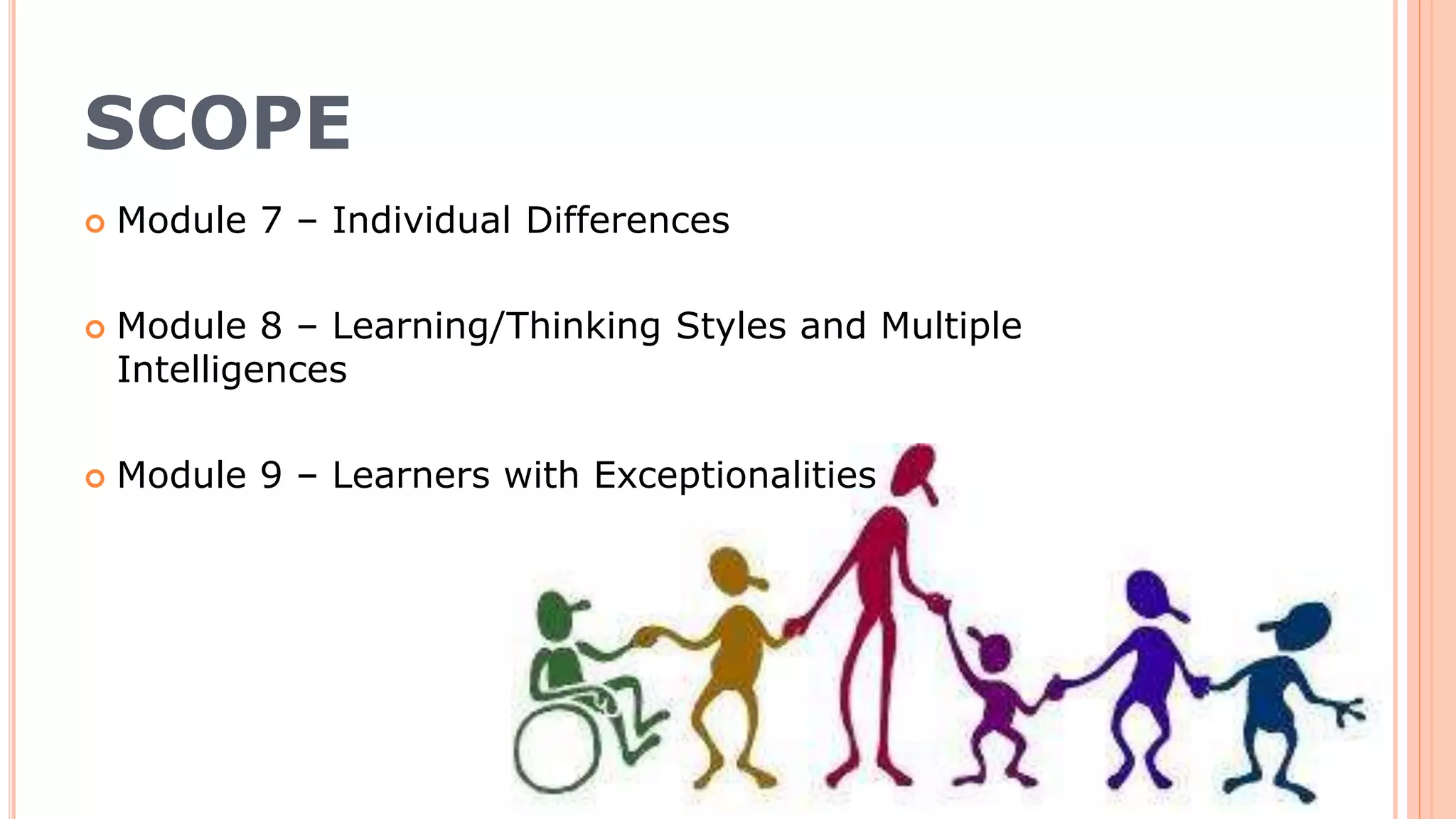
SCOPE
 Module 7 – Individual Differences
 Module 8 – Learning/Thinking Styles and Multiple
Intelligences
 Module 9 – Learners with Exceptionalities
Individual Differences
Module 7
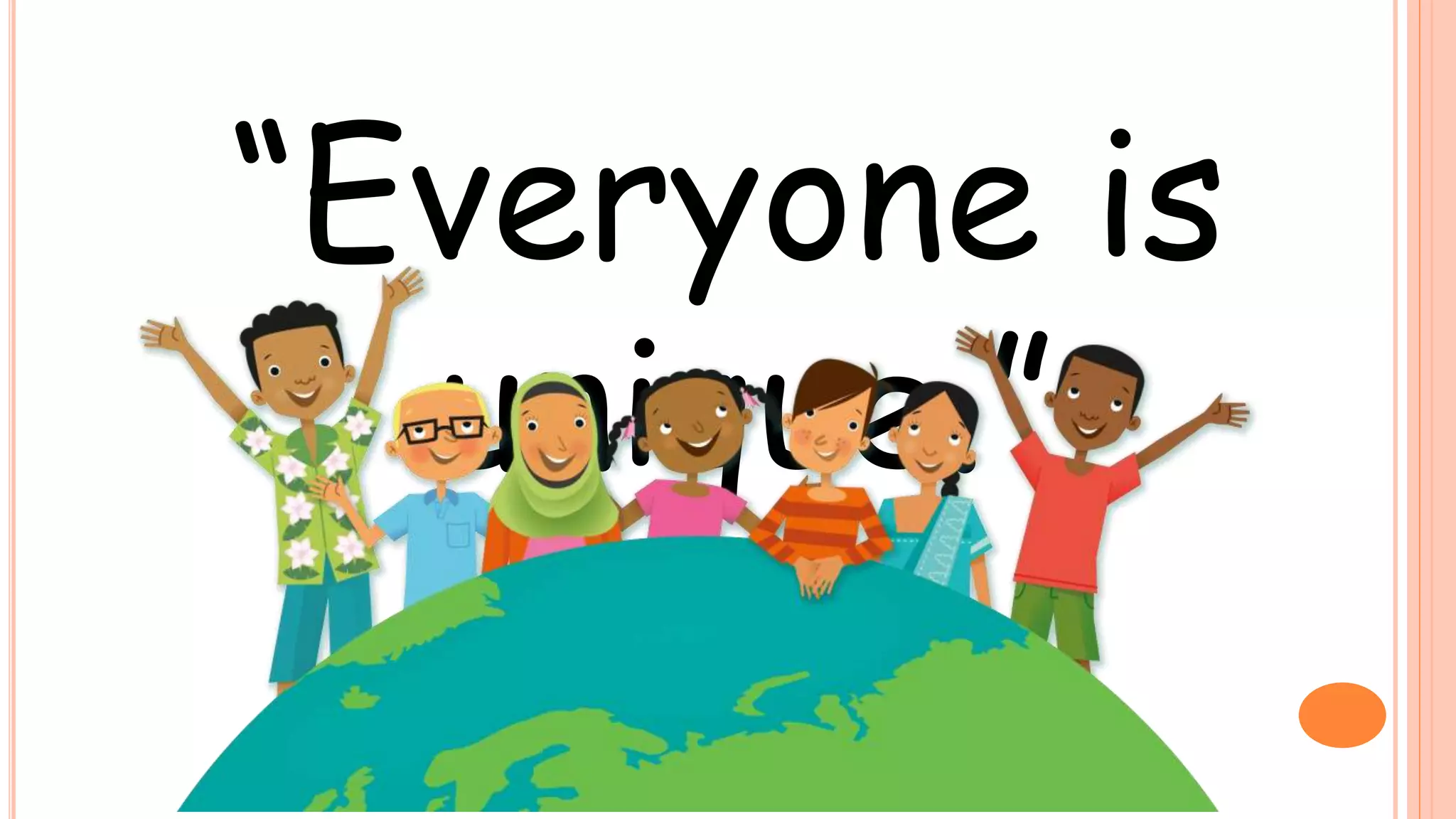
“Everyone is
unique.”
FACTORS THAT BRING ABOUT STUDENT DIVERSITY
1. Socioeconomic Status
(lower income, middle income or higher)
2. Thinking/ Learning style
(better in seeing, listening or manipulating
something)
3. Exceptionalities
(difficulty in spoken language or hearing, seeing etc.)
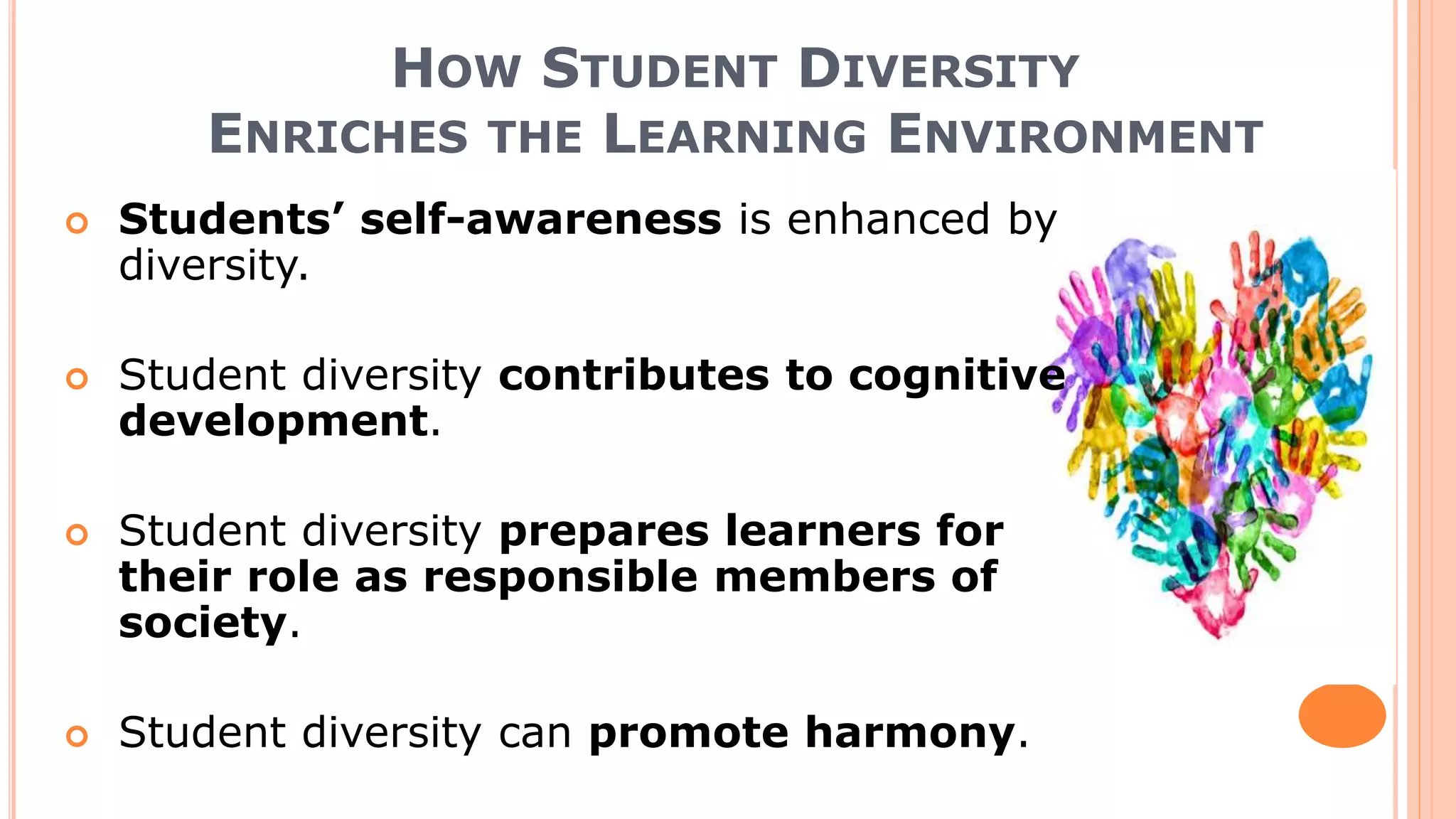
HOW STUDENT DIVERSITY
ENRICHES THE LEARNING ENVIRONMENT
 Students’ self-awareness is enhanced by
diversity.
 Student diversity contributes to cognitive
development.
 Student diversity prepares learners for
their role as responsible members of
society.
 Student diversity can promote harmony.
SOME TIPS ON STUDENT DIVERSITY:
 Encourage learners to share their personal history
and experiences.
 Integrate learning experiences and activities which
promote students’ multicultural and cross-cultural
awareness.
 Aside from highlighting diversity, identify patterns of
unity that transcend group differences.
SOME TIPS ON STUDENT DIVERSITY:
 Communicate high expectations to students
from all sub-groups.
 Use varied instructional methods to
accommodate student diversity in learning styles.
 Sensory/perceptual modalities
 Instructional formats/procedures
 Student-centered/ teacher-centered
 Unstructured/ structured
 Independent/ Interdependent learning
SOME TIPS ON STUDENT DIVERSITY:
 Vary the examples you use to illustrate concepts in
order to provide multiple contexts relevant to students
from diverse backgrounds.
 Adapt to the students’ diverse backgrounds and
learning styles by allowing them personal choice and
decision-making opportunities.
 Diversify your method of assessing and evaluating
student learning.
SOME TIPS ON STUDENT DIVERSITY:
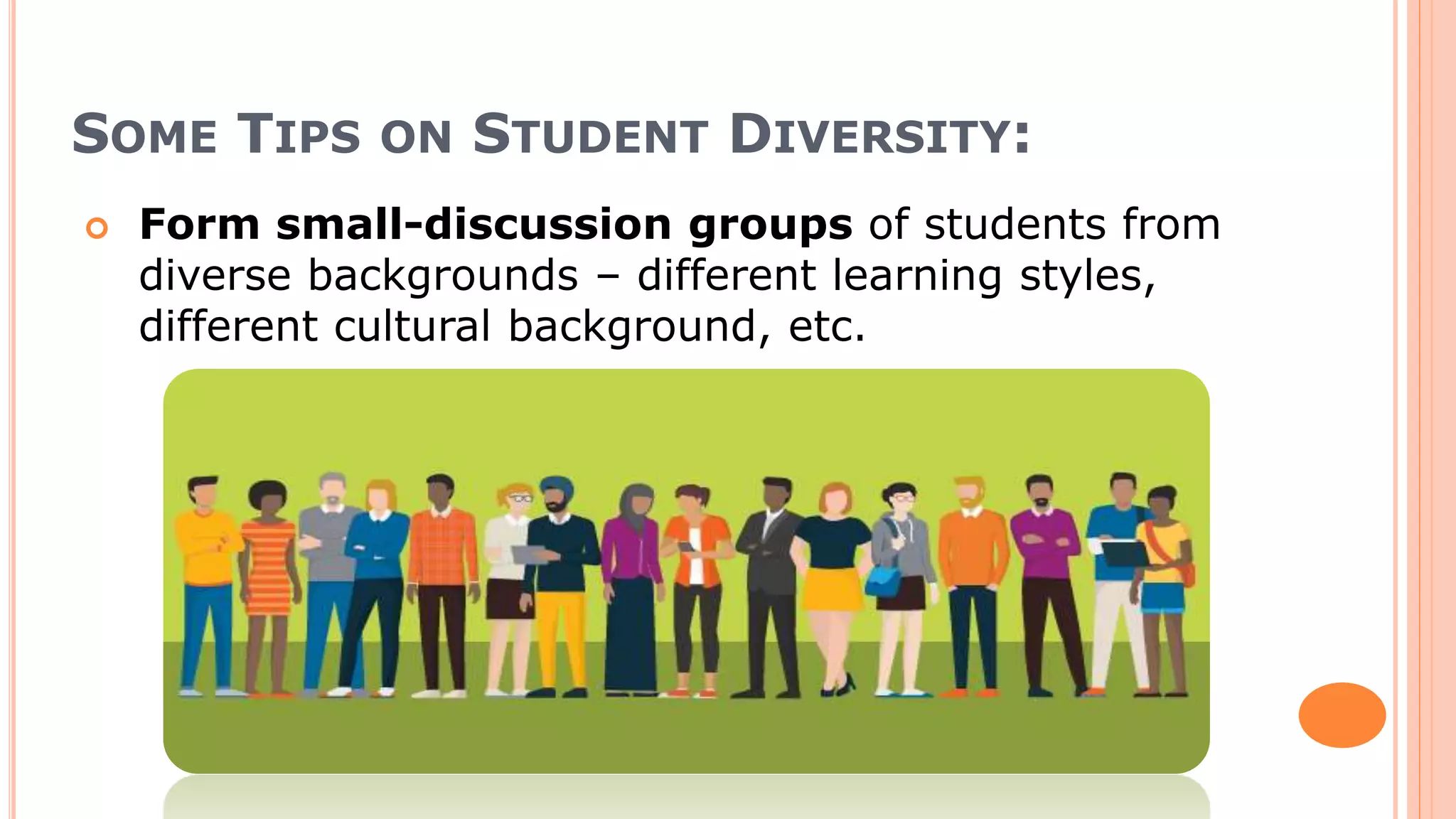
 Form small-discussion groups of students from
diverse backgrounds – different learning styles,
different cultural background, etc.
Learning/Thinking Styles
and Multiple Intelligences
Module 8
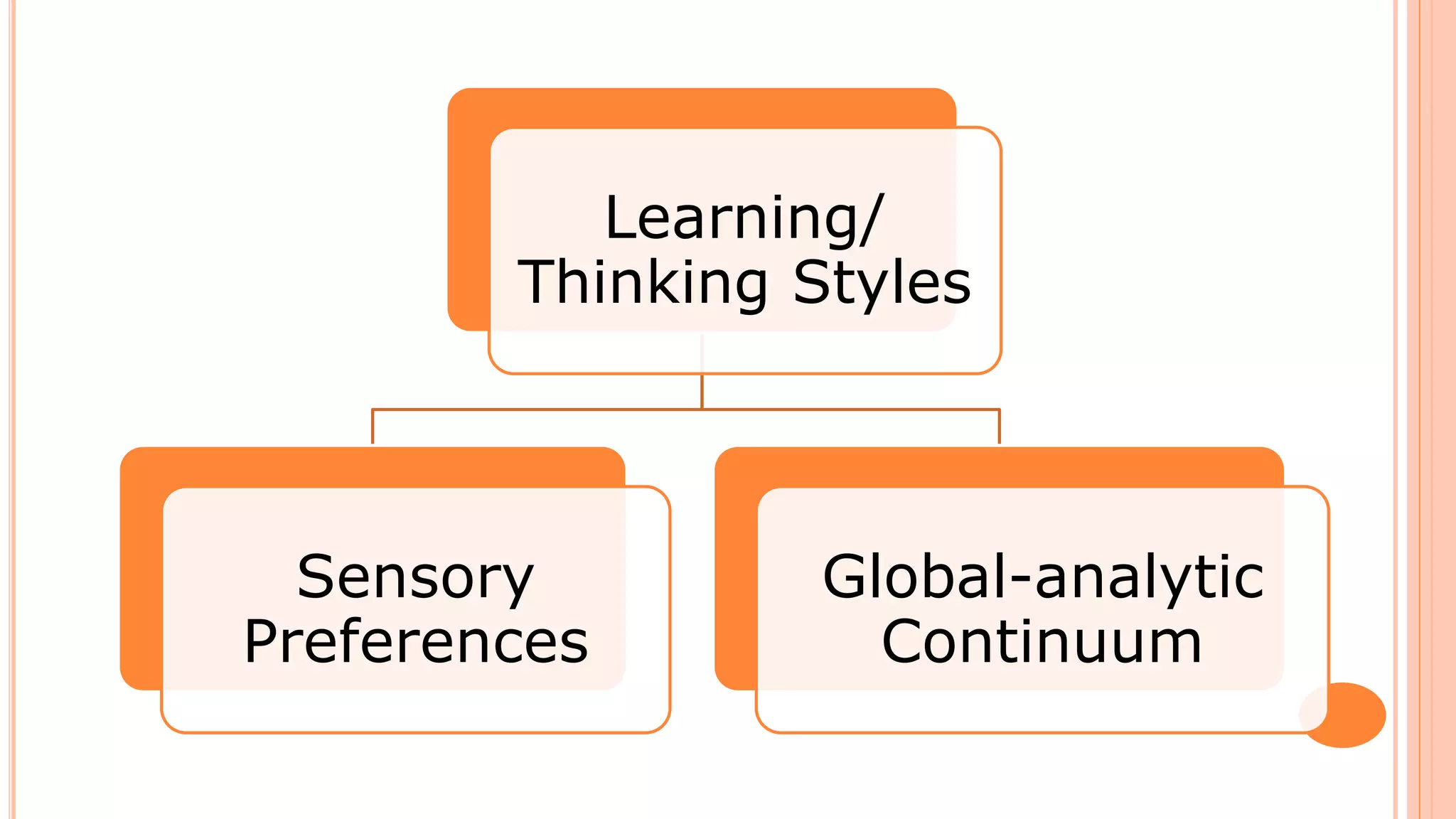
Learning/
Thinking Styles
Sensory
Preferences
Global-analytic
Continuum
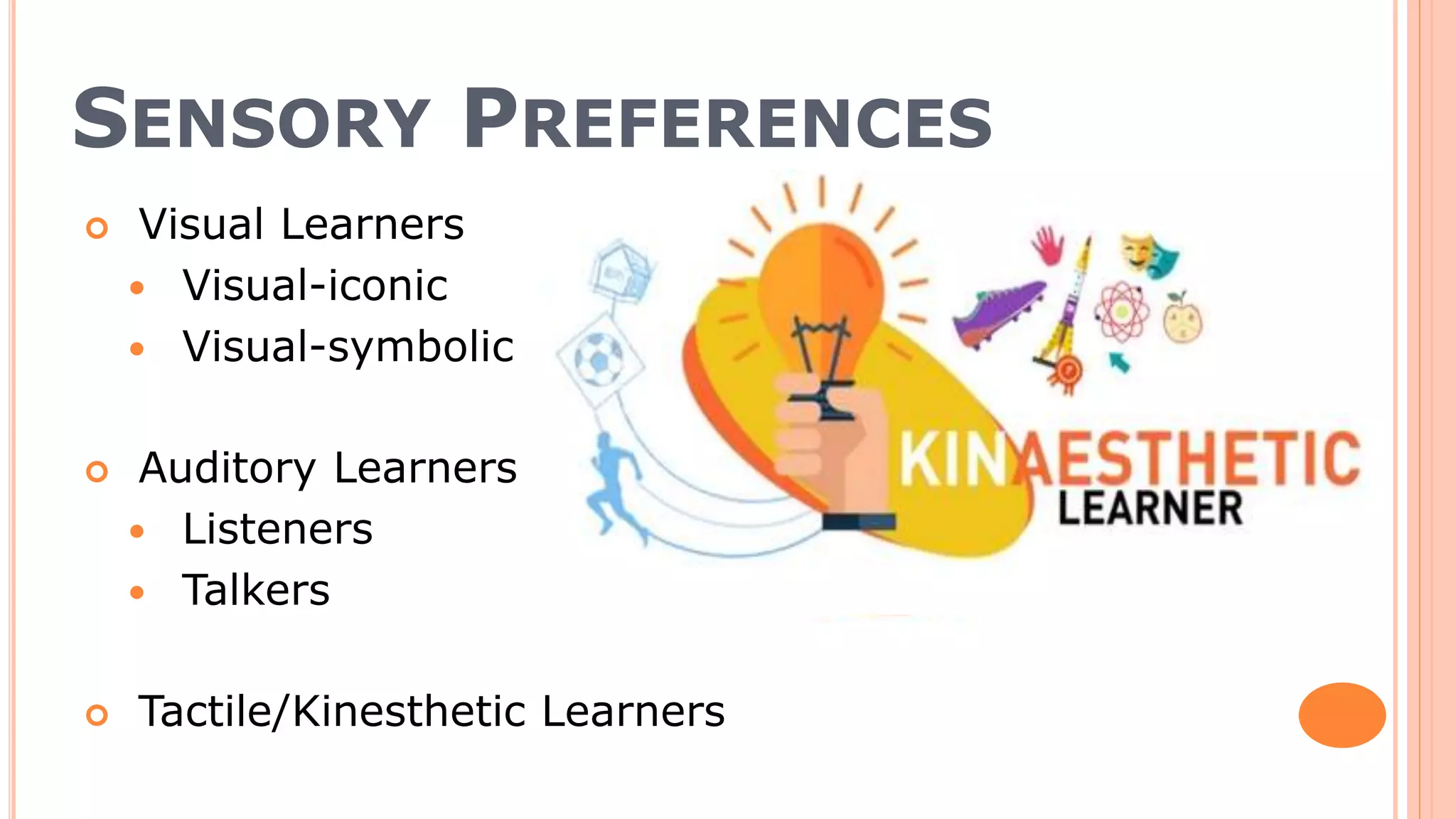
SENSORY PREFERENCES
 Visual Learners
 Visual-iconic
 Visual-symbolic
 Auditory Learners
 Listeners
 Talkers
 Tactile/Kinesthetic Learners
GLOBAL-ANALYTIC CONTINUUM
Analytic thinkers tend toward the linear,
step-by-step processes of learning.
Global thinkers lean towards non-linear thought
and tend to see the whole pattern rather than
particle elements.
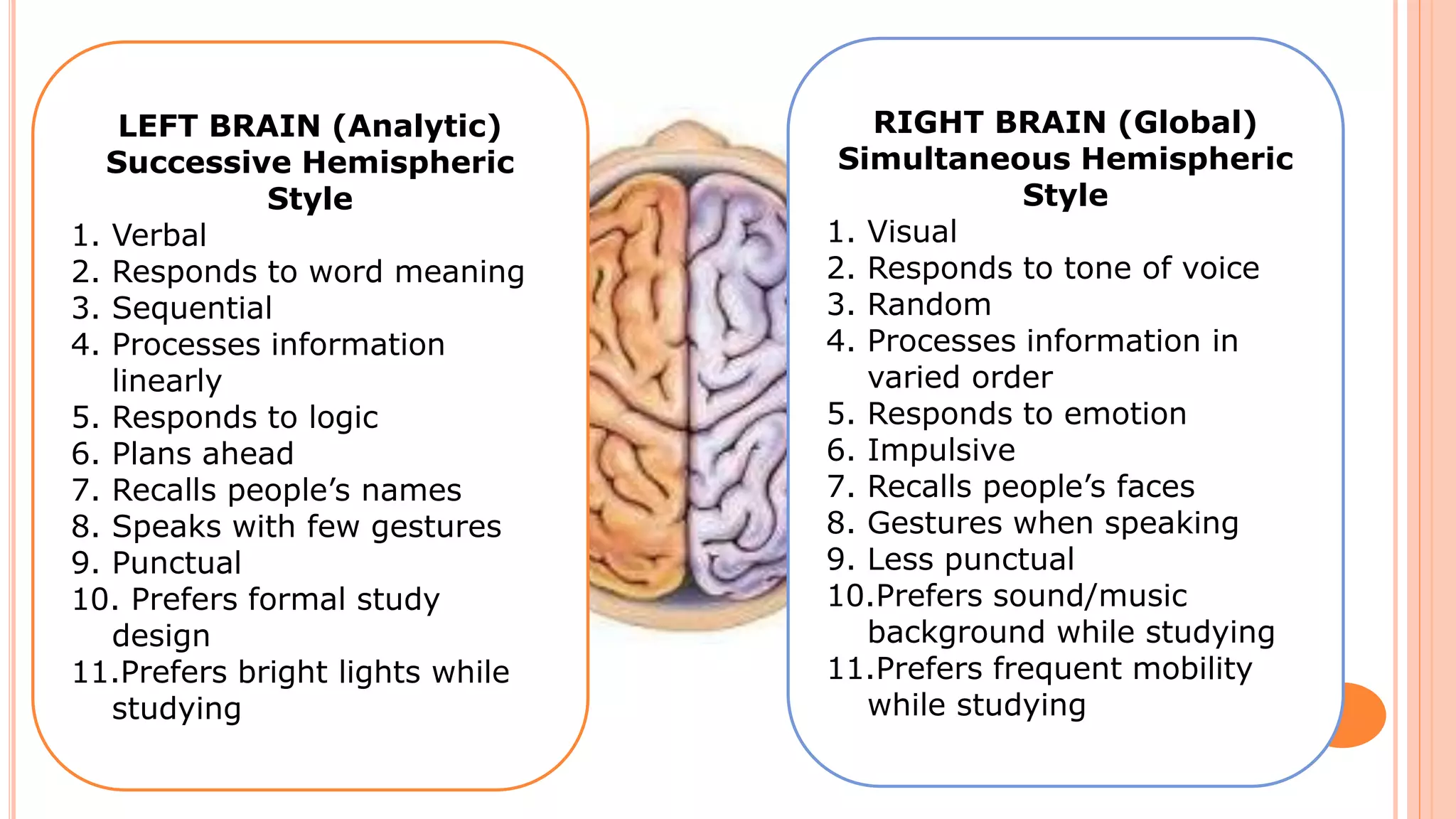
LEFT BRAIN (Analytic)
Successive Hemispheric
Style
1. Verbal
2. Responds to word meaning
3. Sequential
4. Processes information
linearly
5. Responds to logic
6. Plans ahead
7. Recalls people’s names
8. Speaks with few gestures
9. Punctual
10. Prefers formal study
design
11.Prefers bright lights while
studying
RIGHT BRAIN (Global)
Simultaneous Hemispheric
Style
1. Visual
2. Responds to tone of voice
3. Random
4. Processes information in
varied order
5. Responds to emotion
6. Impulsive
7. Recalls people’s faces
8. Gestures when speaking
9. Less punctual
10.Prefers sound/music
background while studying
11.Prefers frequent mobility
while studying
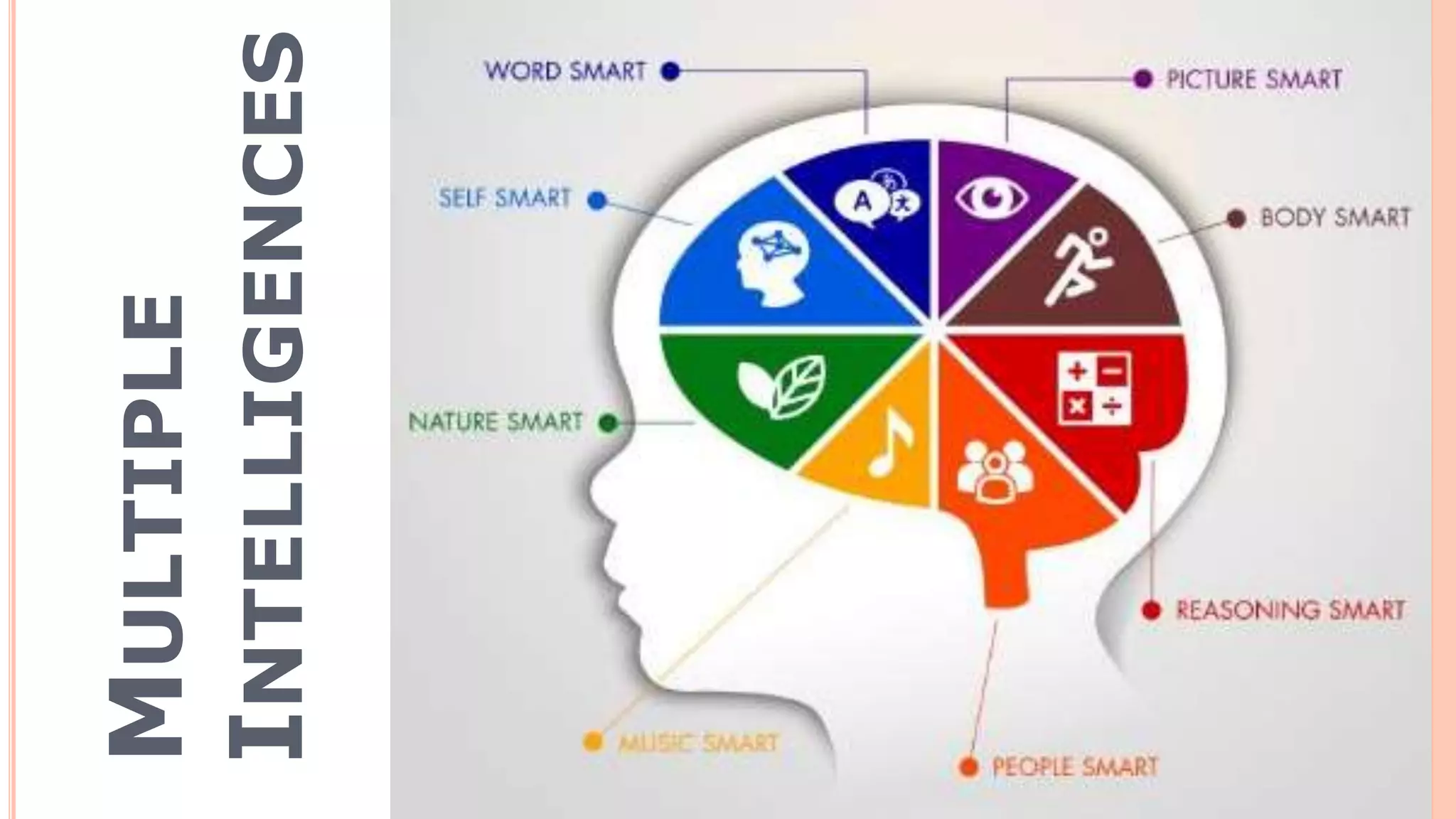
MULTIPLE
INTELLIGENCES
TEACHING STRATEGIES GUIDED
BY THINKING/LEARNING STYLES
AND MULTIPLE INTELLIGENCES
1. Use questions of all types to stimulate various levels of
thinking
2. Provide a general overview of material to be learned
3. Allow sufficient time for information to be processed
and integrate using both the right- and left-
hemispheres
4. Set clear purposes before any listening, viewing or
reading experience
5. Warm up before the lesson development
6. Use multisensory means for both processing and
retrieving information
7. Use a variety of review and reflection strategies
8. Use descriptive feedback rather than simply praising
Learners with
Exceptionalities
Module 9
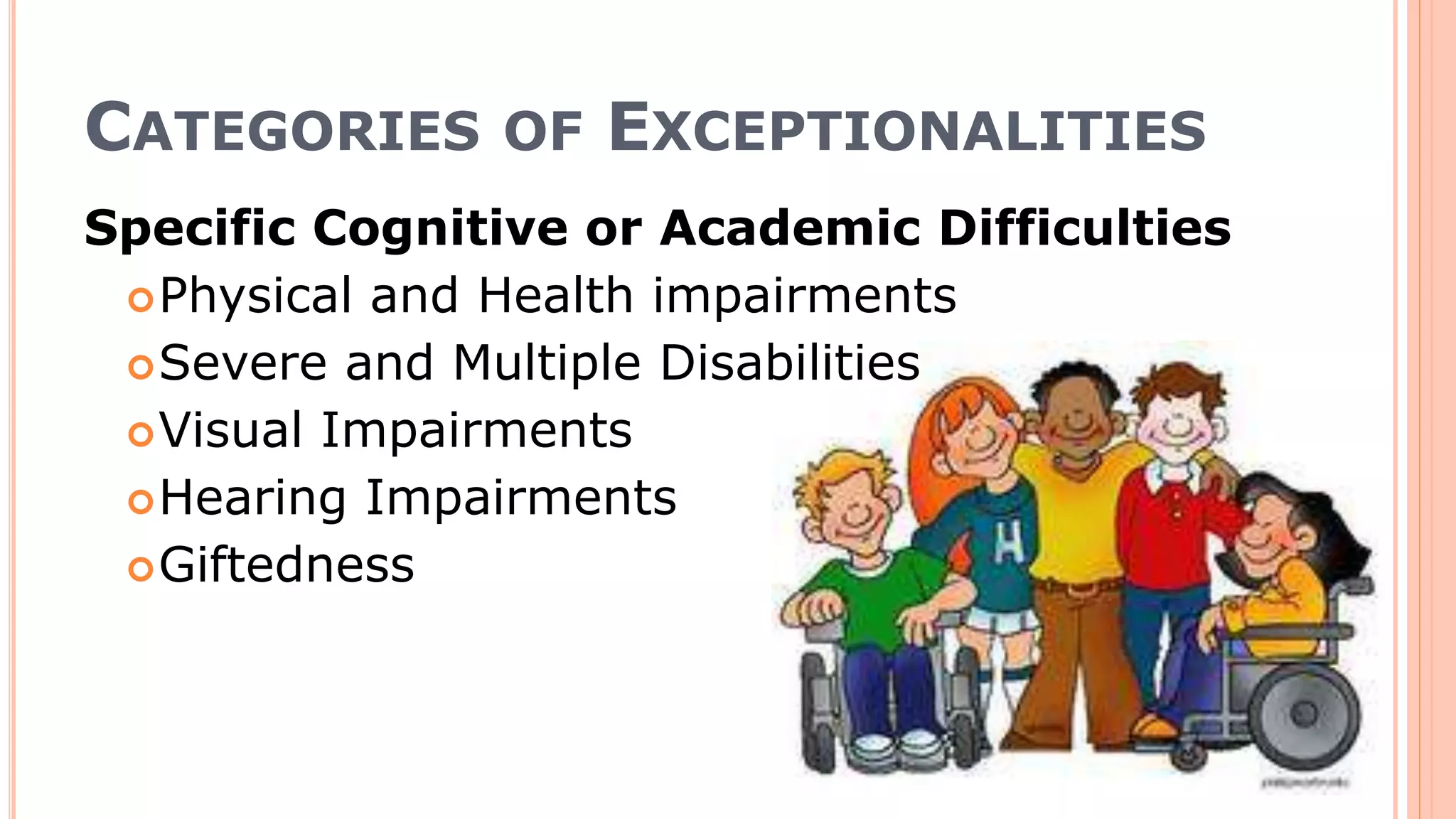
CATEGORIES OF EXCEPTIONALITIES
Specific Cognitive or Academic Difficulties
Physical and Health impairments
Severe and Multiple Disabilities
Visual Impairments
Hearing Impairments
Giftedness
CATEGORIES OF EXCEPTIONALITIES
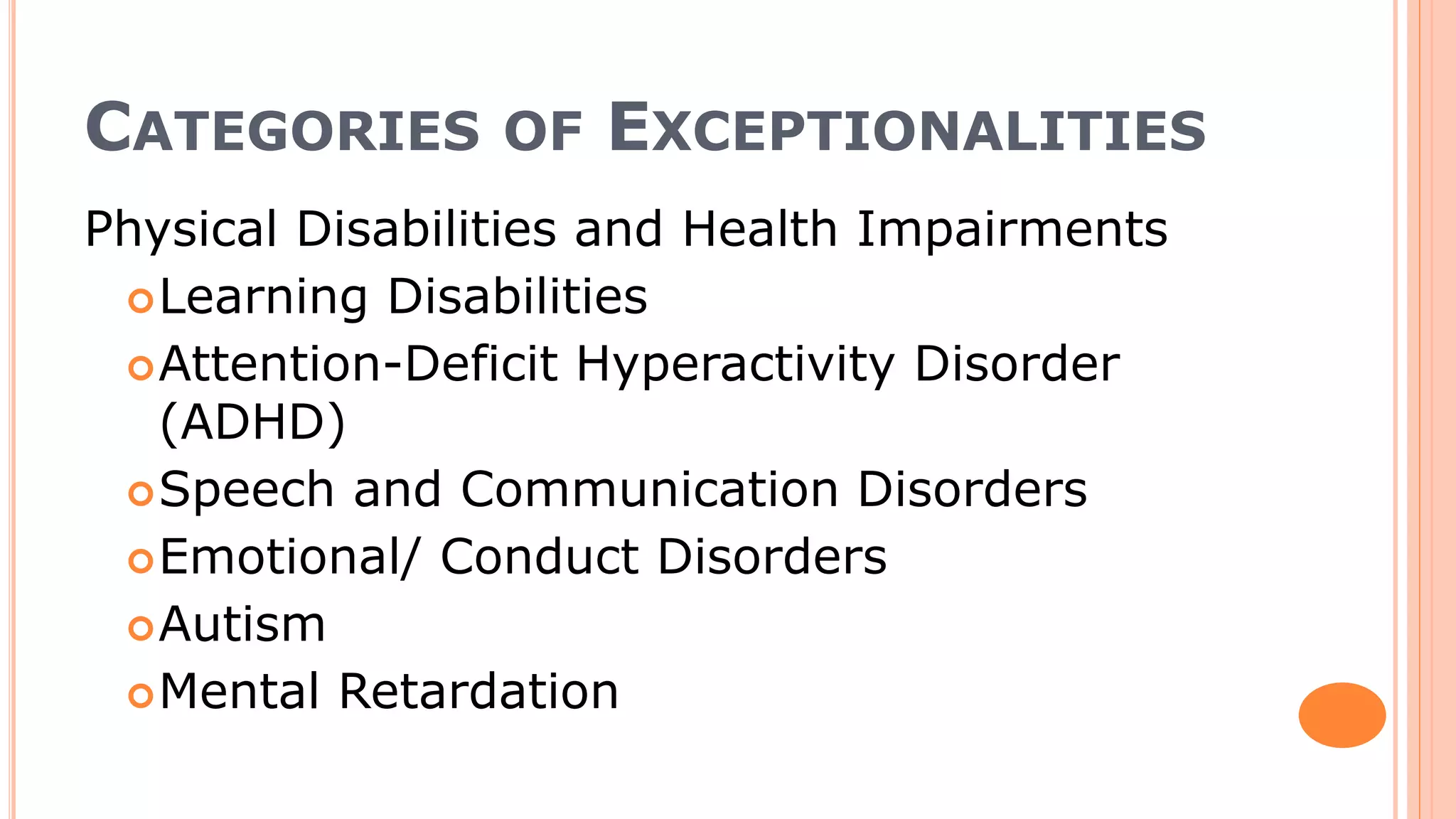
Physical Disabilities and Health Impairments
Learning Disabilities
Attention-Deficit Hyperactivity Disorder
(ADHD)
Speech and Communication Disorders
Emotional/ Conduct Disorders
Autism
Mental Retardation
CATEGORIES OF EXCEPTIONALITIES
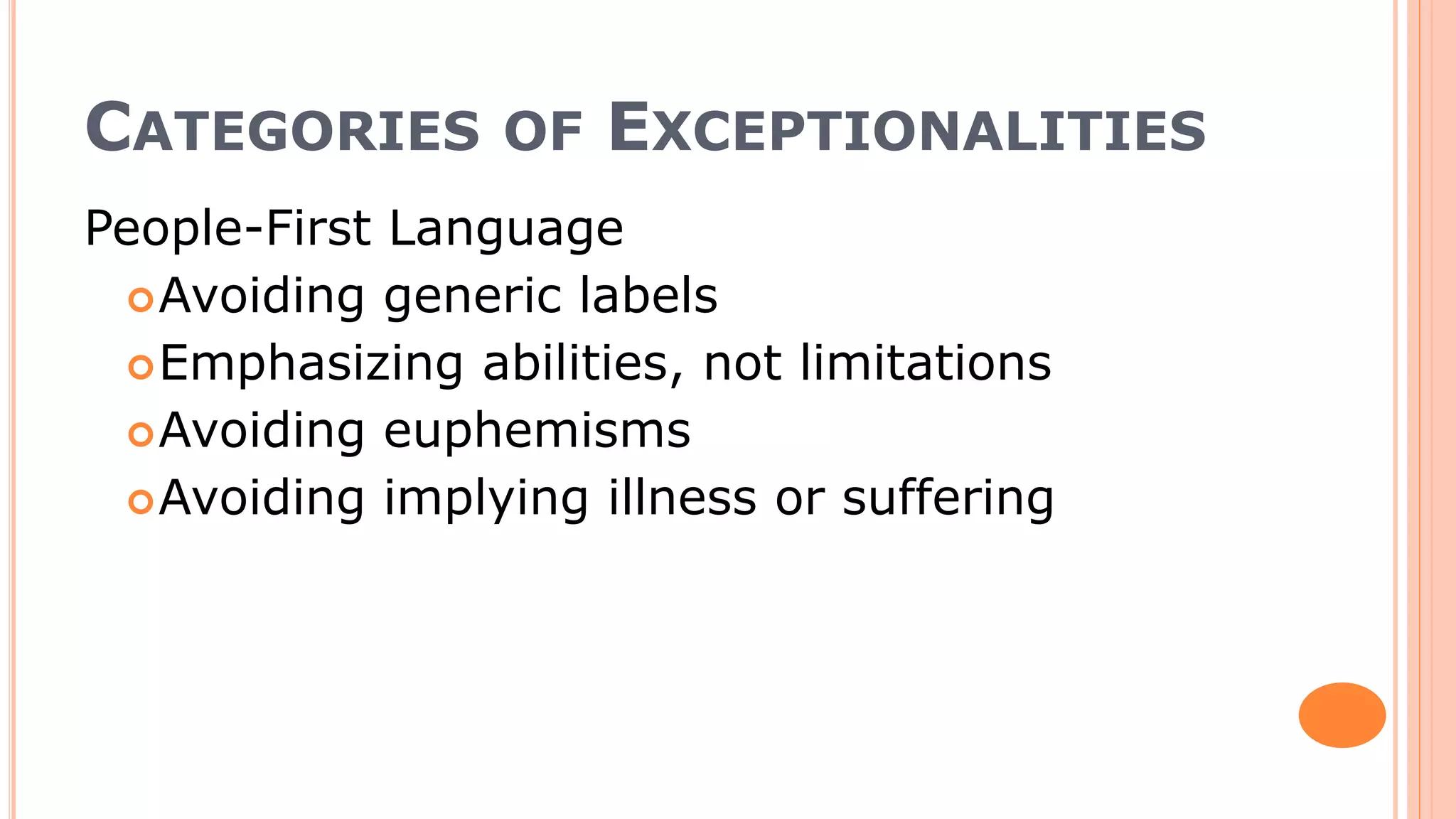
People-First Language
Avoiding generic labels
Emphasizing abilities, not limitations
Avoiding euphemisms
Avoiding implying illness or suffering
CONSOLIDATION
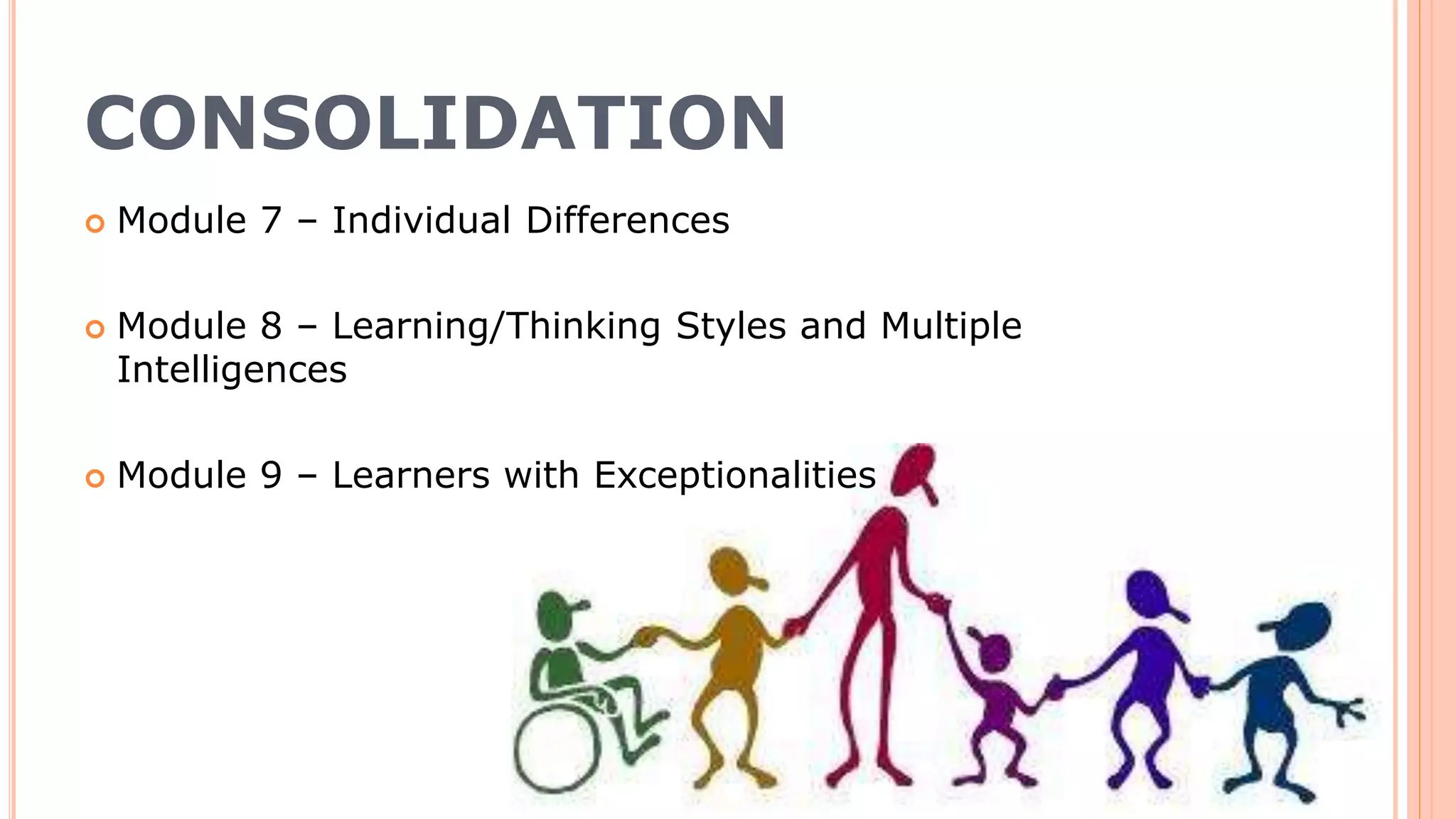
 Module 7 – Individual Differences
 Module 8 – Learning/Thinking Styles and Multiple
Intelligences
 Module 9 – Learners with Exceptionalities

Unit 2.2- Student Diversity

  • 1.
    UNIT 2.2 STUDENT DIVERSITY FacilitatingLearning Kristine L. Mangundayao Lipa City Colleges
  • 2.
    SCOPE  Module 7– Individual Differences  Module 8 – Learning/Thinking Styles and Multiple Intelligences  Module 9 – Learners with Exceptionalities
  • 3.
  • 4.
  • 5.
    FACTORS THAT BRINGABOUT STUDENT DIVERSITY 1. Socioeconomic Status (lower income, middle income or higher) 2. Thinking/ Learning style (better in seeing, listening or manipulating something) 3. Exceptionalities (difficulty in spoken language or hearing, seeing etc.)
  • 6.
    HOW STUDENT DIVERSITY ENRICHESTHE LEARNING ENVIRONMENT  Students’ self-awareness is enhanced by diversity.  Student diversity contributes to cognitive development.  Student diversity prepares learners for their role as responsible members of society.  Student diversity can promote harmony.
  • 7.
    SOME TIPS ONSTUDENT DIVERSITY:  Encourage learners to share their personal history and experiences.  Integrate learning experiences and activities which promote students’ multicultural and cross-cultural awareness.  Aside from highlighting diversity, identify patterns of unity that transcend group differences.
  • 8.
    SOME TIPS ONSTUDENT DIVERSITY:  Communicate high expectations to students from all sub-groups.  Use varied instructional methods to accommodate student diversity in learning styles.  Sensory/perceptual modalities  Instructional formats/procedures  Student-centered/ teacher-centered  Unstructured/ structured  Independent/ Interdependent learning
  • 9.
    SOME TIPS ONSTUDENT DIVERSITY:  Vary the examples you use to illustrate concepts in order to provide multiple contexts relevant to students from diverse backgrounds.  Adapt to the students’ diverse backgrounds and learning styles by allowing them personal choice and decision-making opportunities.  Diversify your method of assessing and evaluating student learning.
  • 10.
    SOME TIPS ONSTUDENT DIVERSITY:  Form small-discussion groups of students from diverse backgrounds – different learning styles, different cultural background, etc.
  • 11.
  • 12.
  • 13.
    SENSORY PREFERENCES  VisualLearners  Visual-iconic  Visual-symbolic  Auditory Learners  Listeners  Talkers  Tactile/Kinesthetic Learners
  • 14.
    GLOBAL-ANALYTIC CONTINUUM Analytic thinkerstend toward the linear, step-by-step processes of learning. Global thinkers lean towards non-linear thought and tend to see the whole pattern rather than particle elements.
  • 16.
    LEFT BRAIN (Analytic) SuccessiveHemispheric Style 1. Verbal 2. Responds to word meaning 3. Sequential 4. Processes information linearly 5. Responds to logic 6. Plans ahead 7. Recalls people’s names 8. Speaks with few gestures 9. Punctual 10. Prefers formal study design 11.Prefers bright lights while studying RIGHT BRAIN (Global) Simultaneous Hemispheric Style 1. Visual 2. Responds to tone of voice 3. Random 4. Processes information in varied order 5. Responds to emotion 6. Impulsive 7. Recalls people’s faces 8. Gestures when speaking 9. Less punctual 10.Prefers sound/music background while studying 11.Prefers frequent mobility while studying
  • 17.
  • 18.
    TEACHING STRATEGIES GUIDED BYTHINKING/LEARNING STYLES AND MULTIPLE INTELLIGENCES
  • 19.
    1. Use questionsof all types to stimulate various levels of thinking 2. Provide a general overview of material to be learned 3. Allow sufficient time for information to be processed and integrate using both the right- and left- hemispheres 4. Set clear purposes before any listening, viewing or reading experience 5. Warm up before the lesson development 6. Use multisensory means for both processing and retrieving information 7. Use a variety of review and reflection strategies 8. Use descriptive feedback rather than simply praising
  • 20.
  • 21.
    CATEGORIES OF EXCEPTIONALITIES SpecificCognitive or Academic Difficulties Physical and Health impairments Severe and Multiple Disabilities Visual Impairments Hearing Impairments Giftedness
  • 22.
    CATEGORIES OF EXCEPTIONALITIES PhysicalDisabilities and Health Impairments Learning Disabilities Attention-Deficit Hyperactivity Disorder (ADHD) Speech and Communication Disorders Emotional/ Conduct Disorders Autism Mental Retardation
  • 23.
    CATEGORIES OF EXCEPTIONALITIES People-FirstLanguage Avoiding generic labels Emphasizing abilities, not limitations Avoiding euphemisms Avoiding implying illness or suffering
  • 24.
    CONSOLIDATION  Module 7– Individual Differences  Module 8 – Learning/Thinking Styles and Multiple Intelligences  Module 9 – Learners with Exceptionalities

Editor's Notes