KANBAN
SYSTEM
Guided By:
Mrs. Apurva Omer Ma’am
Computer Science Dept. Submitted By:
Nidhi B. Satija
BCA- II Year
1. Brief introduction to Agile Methodology?
2. Introduction to Kanban .
3. Principles of the Kanban .
4. How does Kanban work? - The Concept .
5. How to use Kanban?
6. Examples & Facts.
7. Pros & Cons.
8. Conclusion
CONTENTS:
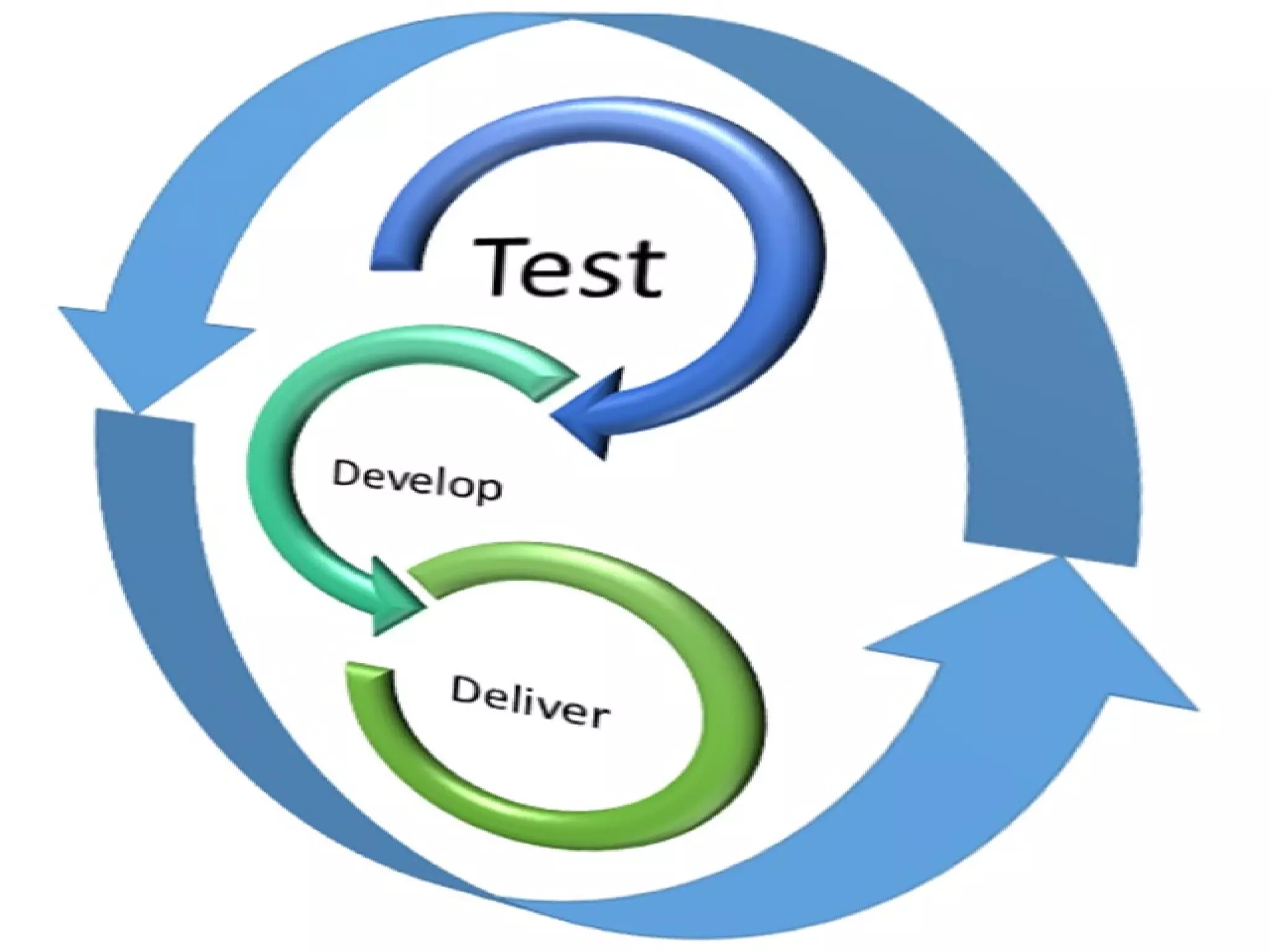
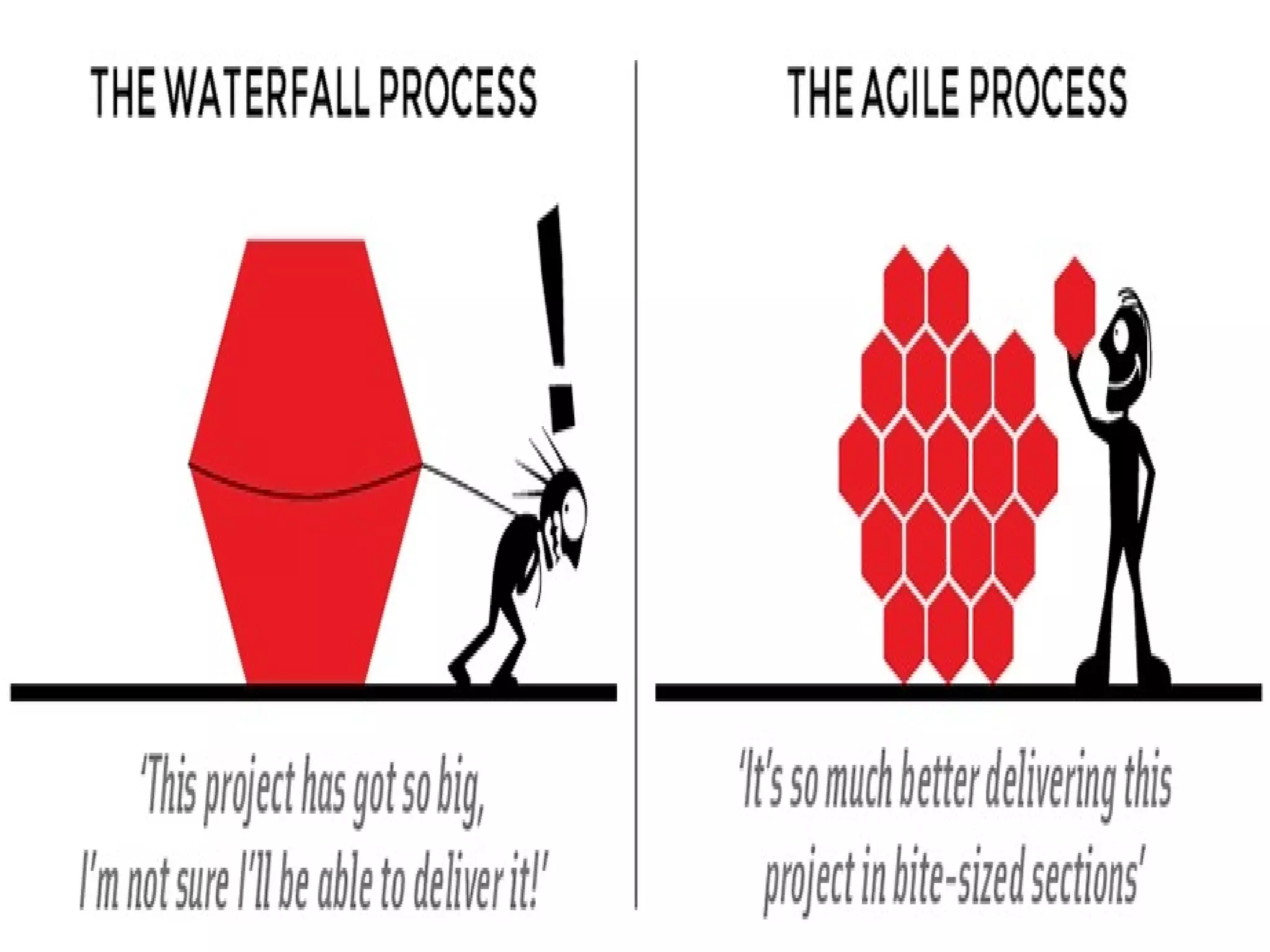
Agile SDLC model is a combination of iterative and
incremental process models with focus on process
adaptability and customer satisfaction by rapid
delivery of working software product. Agile Methods
break the product into small incremental builds. These
builds are provided in iterations.
The agile software development emphasizes on four core
values.
1. Individual and team interactions over processes and tools.
2. Working software over comprehensive documentation.
3. Customer collaboration over contract negotiation.
4. Responding to change over following a plan.
ADVANTAGES AND LIMITATIONS:
ADVANTAGES:
● Shortened software
development cycle time.
● High Stability in work load.
● High Flexibility in changing
the plans.
● Can achieve higher quality
in the software.
● The developers focus only on
implementation.
LIMITATIONS:
● Customer Collaboration.
● Lack of Documentation.
● Larger teams.
● Lack of support in Critical
systems.
Microsoft Team Foundation Systems group is doing
a pretty good job at it, delivering a new release every
three weeks with 3000 people.
Example of Agile Methodology:
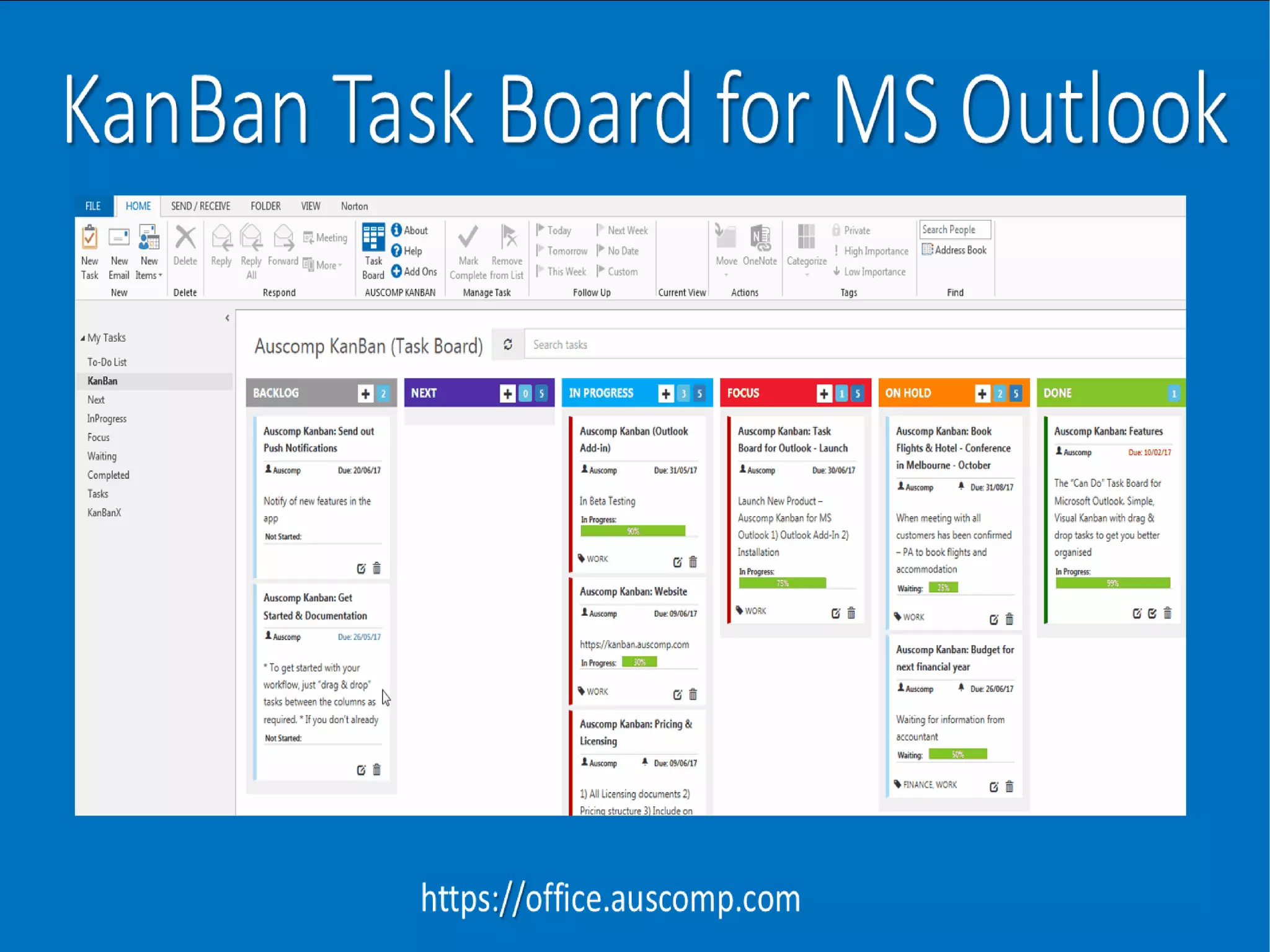
Kanban is a visual system for managing
work as it moves through a process.
Kanban visualizes both the process (the
workflow) and the actual work passing
through that process.
The goal of Kanban is to identify potential
bottlenecks in your process and fix
them so work can flow through it cost-
effectively at an optimal speed
or throughput.
It all started in the early 1940s.
The first Kanban system was
developed by Taiichi Ohno
(Industrial Engineer and
Businessman) for Toyota
automotive in Japan.
It was created as a simple planning system, the aim of
which was to control and manage work and inventory at
every stage of production optimally.
Where did Kanban originate?
- A Brief History on Kanban
Kanban, also spelled “kamban ” in Japanese,
translates to “Billboard” (“ signboard” in Chinese )
that indicates “ available capacity (to work)”.
Kanban is a concept related to lean and just-in-time
(JIT) production, where tells what to produce, when to
produce it, and how much to produce.
The customer demands is the main
principle .
The Three Principles of Kanban Development :
1. Visualize the workflow: It helps determine the current status of
tasks. It useful for working on a big project .
2. Limit WIP: Restricts the number of active tasks for every phase of
the project, gives an ability to control the available resources and
avoid the possible idleness.
3. Continuous measure and improvement
of the life cycle: The possibility to make changes
during the working process is a distinctive feature
of the Agile methodology.
HOW
KANBAN
WORKS ?
Kanban is a non-disruptive evolutionary change management system.
This means that the existing process is improved in small steps.
The first step in the introduction of Kanban is to visualize the
workflow.
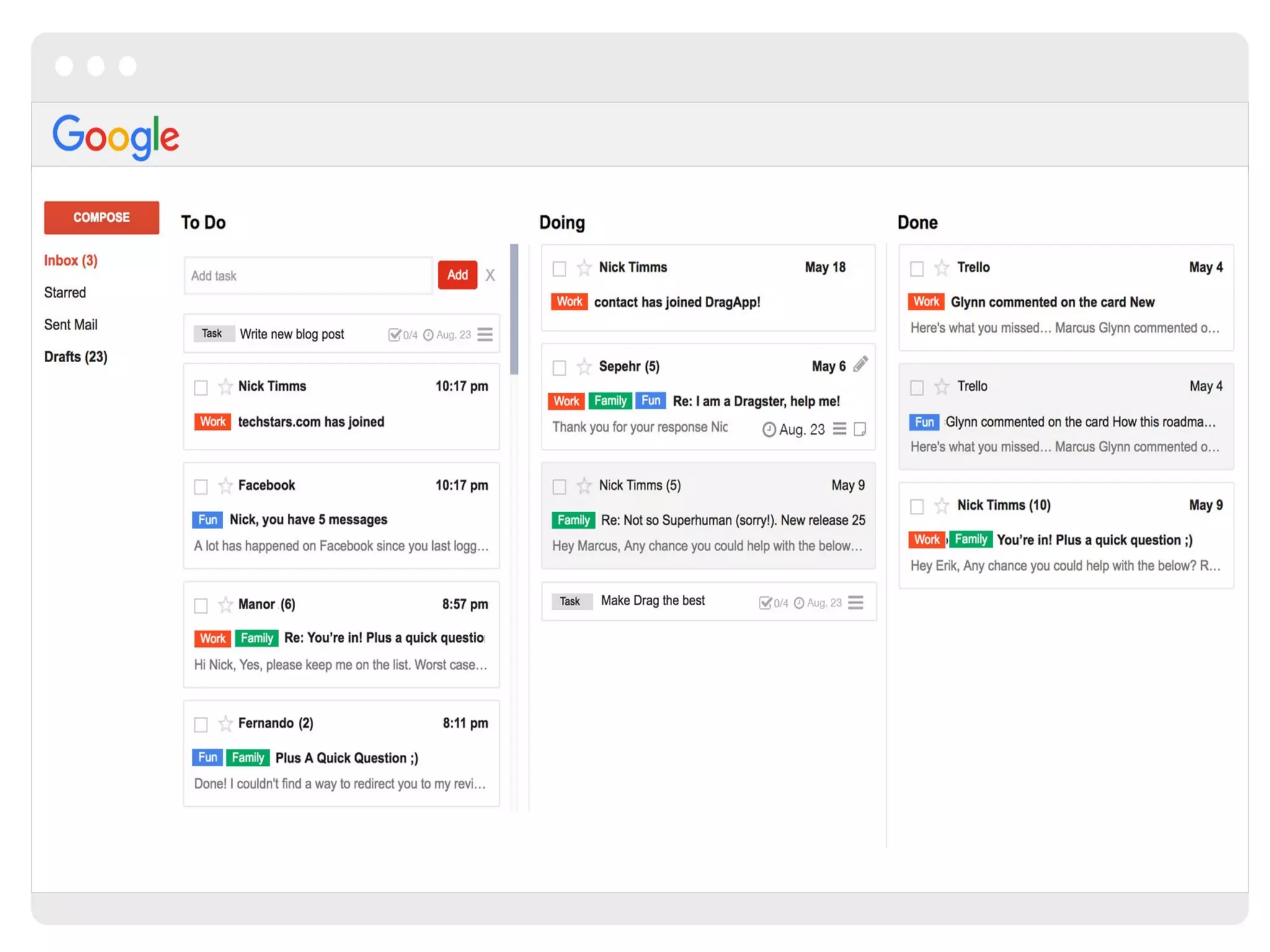
“To Do”: This column lists the tasks that are not yet started. (aka
“backlog”)
“Doing”: Consists of the tasks that are in progress.
“Done”: Consists of the tasks that are completed.
This simple visualization alone leads to a great deal of transparency about
the distribution of the work as well as existing bottlenecks if any.
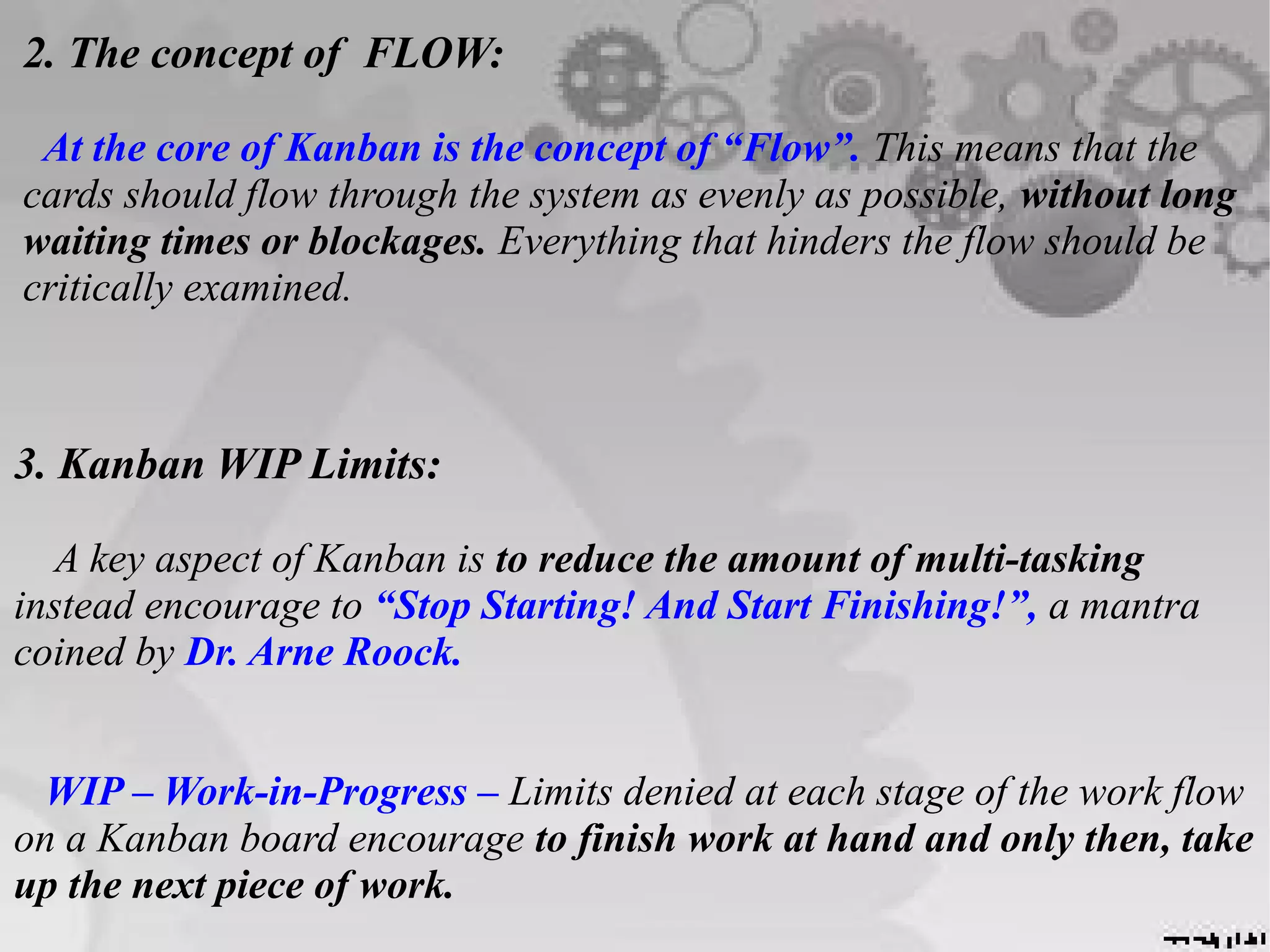
2. The concept of FLOW:
At the core of Kanban is the concept of “Flow”. This means that the
cards should flow through the system as evenly as possible, without long
waiting times or blockages. Everything that hinders the flow should be
critically examined.
3. Kanban WIP Limits:
A key aspect of Kanban is to reduce the amount of multi-tasking
instead encourage to “Stop Starting! And Start Finishing!”, a mantra
coined by Dr. Arne Roock.
WIP – Work-in-Progress – Limits denied at each stage of the work flow
on a Kanban board encourage to finish work at hand and only then, take
up the next piece of work.
How to Use Kanban?
1. Divide the Development Process.
1. Product backlog
2. Requirement
3. Design
4. Development
5. Testing
6. Deployment
7. Done
2. Creating the Kanban Board .
3. Finding the Bottlenecks.
4. Optimizing the Working Process .
EXAMPLES
ADVANTAGES:
DISADVANTAGES
1. Reduces waste and scrap
2. Provides flexibility in production
3. Increases Output & Improves Flow
4. Reduces Total Cost
5. Prevents overproduction
6. Improves responsiveness to changes in demand
7. Totally customer driven demand
8. Better machine utilization
9. Reduced or eliminated queues
ADVANTAGES:
AREA OF IMPROVEMENT:
1. It is less effective in shared-resource situations.
2.It is less suited to industries where mix and volumes
fluctuate.
3. Kanban in itself doesn't eliminate variability,so
unpredictable and lengthy down times could disrupt the
system.
4. A breakdown in the kanban system can result in the
entire line shutting down.
5. The throughput of a kanban system is not managed but
is instead a result of controlled WIP and known cycle.
CONCLUSION:
Use the  available resources in the best possible way .
Finding the bottlenecks before they become a big unsolvable
problem.
Workflow visualization.
It’ s easy to use since it consists of three easy principles.
Useful to know what is the current status of the project .
There’s no need to change the existing methods and processes.
Incremental improvements.
BIBLIOGRAPHY:
● whatis.techtarget.com/definition/kanban
● kanbanize.com
● en.wikipedia.org/wiki/Kanban
● www.digite.com
Se ppt
Se ppt

Se ppt

  • 1.
    KANBAN SYSTEM Guided By: Mrs. ApurvaOmer Ma’am Computer Science Dept. Submitted By: Nidhi B. Satija BCA- II Year
  • 2.
    1. Brief introductionto Agile Methodology? 2. Introduction to Kanban . 3. Principles of the Kanban . 4. How does Kanban work? - The Concept . 5. How to use Kanban? 6. Examples & Facts. 7. Pros & Cons. 8. Conclusion CONTENTS:
  • 4.
    Agile SDLC modelis a combination of iterative and incremental process models with focus on process adaptability and customer satisfaction by rapid delivery of working software product. Agile Methods break the product into small incremental builds. These builds are provided in iterations. The agile software development emphasizes on four core values. 1. Individual and team interactions over processes and tools. 2. Working software over comprehensive documentation. 3. Customer collaboration over contract negotiation. 4. Responding to change over following a plan.
  • 8.
    ADVANTAGES AND LIMITATIONS: ADVANTAGES: ●Shortened software development cycle time. ● High Stability in work load. ● High Flexibility in changing the plans. ● Can achieve higher quality in the software. ● The developers focus only on implementation. LIMITATIONS: ● Customer Collaboration. ● Lack of Documentation. ● Larger teams. ● Lack of support in Critical systems.
  • 10.
    Microsoft Team FoundationSystems group is doing a pretty good job at it, delivering a new release every three weeks with 3000 people. Example of Agile Methodology:
  • 15.
    Kanban is avisual system for managing work as it moves through a process. Kanban visualizes both the process (the workflow) and the actual work passing through that process. The goal of Kanban is to identify potential bottlenecks in your process and fix them so work can flow through it cost- effectively at an optimal speed or throughput.
  • 16.
    It all startedin the early 1940s. The first Kanban system was developed by Taiichi Ohno (Industrial Engineer and Businessman) for Toyota automotive in Japan. It was created as a simple planning system, the aim of which was to control and manage work and inventory at every stage of production optimally. Where did Kanban originate? - A Brief History on Kanban
  • 17.
    Kanban, also spelled“kamban ” in Japanese, translates to “Billboard” (“ signboard” in Chinese ) that indicates “ available capacity (to work)”. Kanban is a concept related to lean and just-in-time (JIT) production, where tells what to produce, when to produce it, and how much to produce. The customer demands is the main principle .
  • 19.
    The Three Principlesof Kanban Development : 1. Visualize the workflow: It helps determine the current status of tasks. It useful for working on a big project . 2. Limit WIP: Restricts the number of active tasks for every phase of the project, gives an ability to control the available resources and avoid the possible idleness. 3. Continuous measure and improvement of the life cycle: The possibility to make changes during the working process is a distinctive feature of the Agile methodology.
  • 23.
  • 24.
    Kanban is anon-disruptive evolutionary change management system. This means that the existing process is improved in small steps. The first step in the introduction of Kanban is to visualize the workflow. “To Do”: This column lists the tasks that are not yet started. (aka “backlog”) “Doing”: Consists of the tasks that are in progress. “Done”: Consists of the tasks that are completed. This simple visualization alone leads to a great deal of transparency about the distribution of the work as well as existing bottlenecks if any.
  • 25.
    2. The conceptof FLOW: At the core of Kanban is the concept of “Flow”. This means that the cards should flow through the system as evenly as possible, without long waiting times or blockages. Everything that hinders the flow should be critically examined. 3. Kanban WIP Limits: A key aspect of Kanban is to reduce the amount of multi-tasking instead encourage to “Stop Starting! And Start Finishing!”, a mantra coined by Dr. Arne Roock. WIP – Work-in-Progress – Limits denied at each stage of the work flow on a Kanban board encourage to finish work at hand and only then, take up the next piece of work.
  • 26.
    How to UseKanban? 1. Divide the Development Process. 1. Product backlog 2. Requirement 3. Design 4. Development 5. Testing 6. Deployment 7. Done 2. Creating the Kanban Board . 3. Finding the Bottlenecks. 4. Optimizing the Working Process .
  • 29.
  • 32.
  • 33.
    1. Reduces wasteand scrap 2. Provides flexibility in production 3. Increases Output & Improves Flow 4. Reduces Total Cost 5. Prevents overproduction 6. Improves responsiveness to changes in demand 7. Totally customer driven demand 8. Better machine utilization 9. Reduced or eliminated queues ADVANTAGES:
  • 34.
    AREA OF IMPROVEMENT: 1.It is less effective in shared-resource situations. 2.It is less suited to industries where mix and volumes fluctuate. 3. Kanban in itself doesn't eliminate variability,so unpredictable and lengthy down times could disrupt the system. 4. A breakdown in the kanban system can result in the entire line shutting down. 5. The throughput of a kanban system is not managed but is instead a result of controlled WIP and known cycle.
  • 35.
    CONCLUSION: Use the  availableresources in the best possible way . Finding the bottlenecks before they become a big unsolvable problem. Workflow visualization. It’ s easy to use since it consists of three easy principles. Useful to know what is the current status of the project . There’s no need to change the existing methods and processes. Incremental improvements.
  • 37.