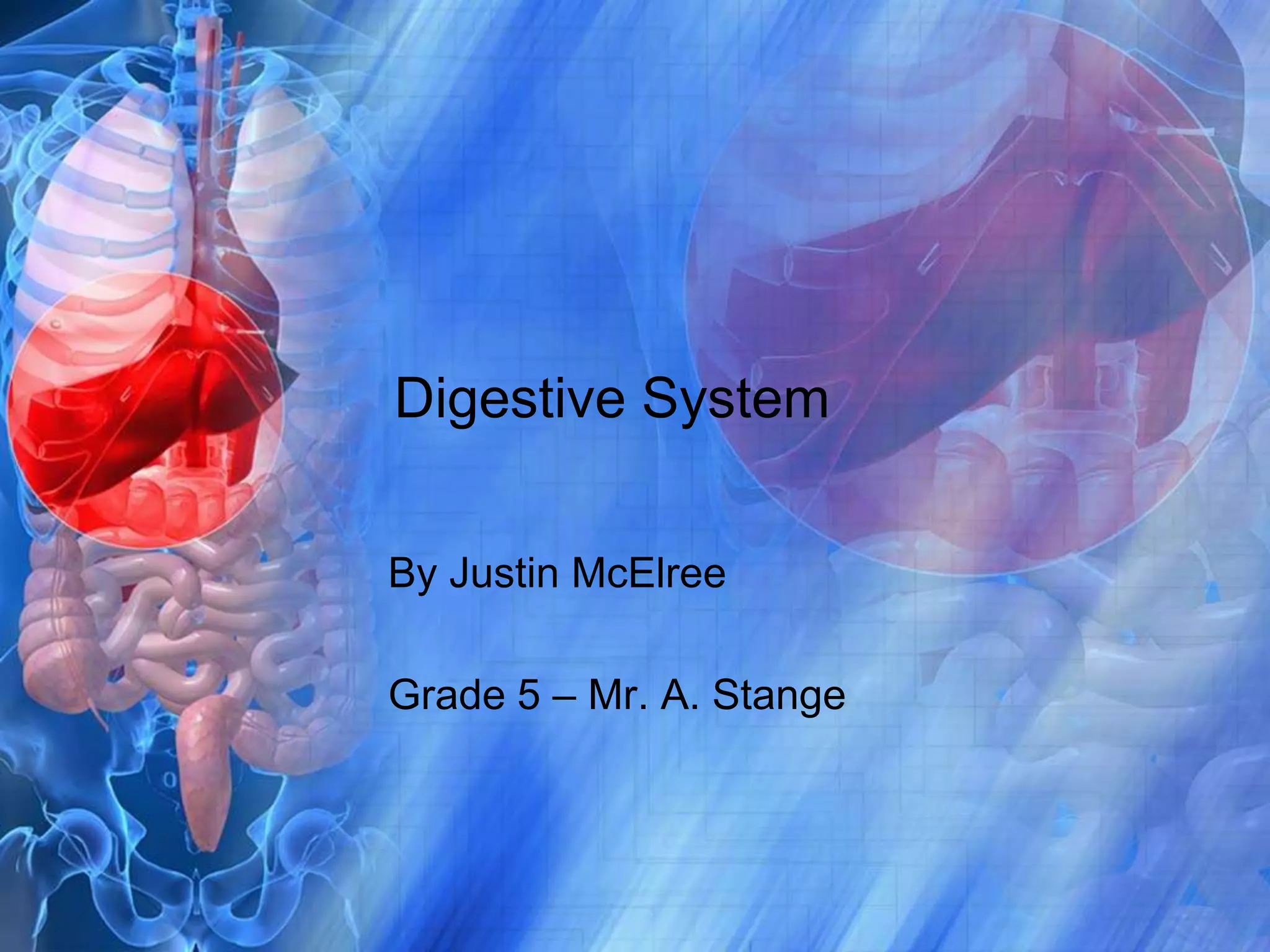
Digestive SystemBy Justin McElreeGrade 5 – Mr. A. Stange
What is the digestive system?The Digestive System is made up of the digestive tract – a series of hollow organs joined in a long twisting tube from the mouth to the anus – and other organs that help the body break down and absorb food.   Did you know?It can take 72 hours to digest a piece of food.
Why the Digestive System Is ImportantDigestion is the process by which food and drink are broken down into their smallest parts so the body can use them to build and nourish cells and to provide energy.Did you know?It takes 8 seconds for food to travel down the food pipe,3-5 hours in the small intestine and 3-4 days in the large intestine.
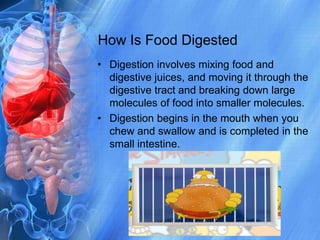
How Is Food DigestedDigestion involves mixing food and digestive juices, and moving it through the digestive tract and breaking down large molecules of food into smaller molecules.Digestion begins in the mouth when you chew and swallow and is completed in the small intestine.
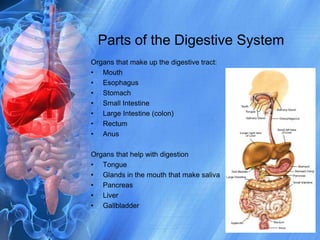
Parts of the Digestive SystemOrgans that make up the digestive tract: MouthEsophagusStomachSmall IntestineLarge Intestine (colon)RectumAnusOrgans that help with digestion TongueGlands in the mouth that make salivaPancreasLiverGallbladder
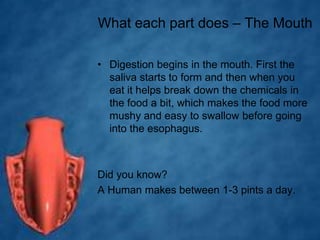
What each part does – The MouthDigestion begins in the mouth. First the saliva starts to form and then when you eat it helps break down the chemicals in the food a bit, which makes the food more mushy and easy to swallow before going into the esophagus.Did you know?A Human makes between 1-3 pints a day.
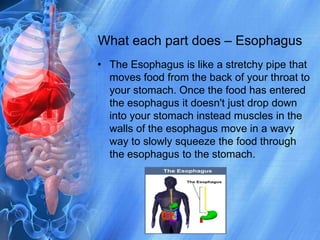
What each part does – EsophagusThe Esophagus is like a stretchy pipe that moves food from the back of your throat to your stomach. Once the food has entered  the esophagus it doesn't just drop down into your stomach instead muscles in the walls of the esophagus move in a wavy way to slowly squeeze the food through the esophagus to the stomach.
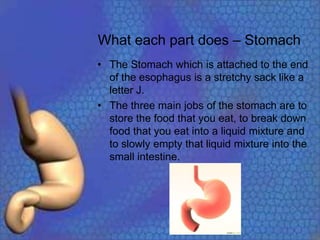
What each part does – StomachThe Stomach which is attached to the end of the esophagus is a stretchy sack like a letter J.The three main jobs of the stomach are to store the food that you eat, to break down food that you eat into a liquid mixture and to slowly empty that liquid mixture into the small intestine.
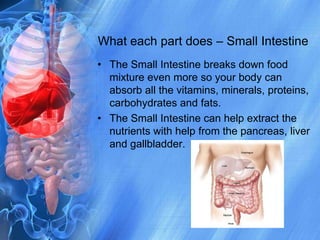
What each part does – Small Intestine The Small Intestine breaks down food mixture even more so your body can absorb all the vitamins, minerals, proteins, carbohydrates and fats.The Small Intestine can help extract the nutrients with help from the pancreas, liver and gallbladder.
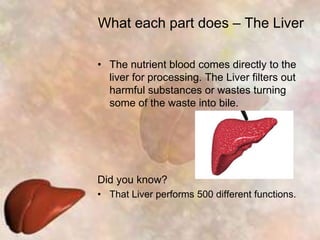
What each part does – The LiverThe nutrient blood comes directly to the liver for processing. The Liver filters out harmful substances or wastes turning some of the waste into bile.Did you know?That Liver performs 500 different functions.
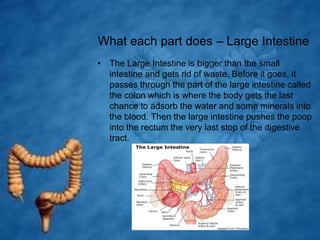
What each part does – Large IntestineThe Large Intestine is bigger than the small intestine and gets rid of waste. Before it goes, it passes through the part of the large intestine called the colon which is where the body gets the last chance to adsorb the water and some minerals into the blood. Then the large intestine pushes the poop into the rectum the very last stop of the digestive tract.

Justin digestive system power point presentation for mr. stange

  • 1.
    Digestive SystemBy JustinMcElreeGrade 5 – Mr. A. Stange
  • 2.
    What is thedigestive system?The Digestive System is made up of the digestive tract – a series of hollow organs joined in a long twisting tube from the mouth to the anus – and other organs that help the body break down and absorb food. Did you know?It can take 72 hours to digest a piece of food.
  • 3.
    Why the DigestiveSystem Is ImportantDigestion is the process by which food and drink are broken down into their smallest parts so the body can use them to build and nourish cells and to provide energy.Did you know?It takes 8 seconds for food to travel down the food pipe,3-5 hours in the small intestine and 3-4 days in the large intestine.
  • 4.
    How Is FoodDigestedDigestion involves mixing food and digestive juices, and moving it through the digestive tract and breaking down large molecules of food into smaller molecules.Digestion begins in the mouth when you chew and swallow and is completed in the small intestine.
  • 5.
    Parts of theDigestive SystemOrgans that make up the digestive tract: MouthEsophagusStomachSmall IntestineLarge Intestine (colon)RectumAnusOrgans that help with digestion TongueGlands in the mouth that make salivaPancreasLiverGallbladder
  • 6.
    What each partdoes – The MouthDigestion begins in the mouth. First the saliva starts to form and then when you eat it helps break down the chemicals in the food a bit, which makes the food more mushy and easy to swallow before going into the esophagus.Did you know?A Human makes between 1-3 pints a day.
  • 7.
    What each partdoes – EsophagusThe Esophagus is like a stretchy pipe that moves food from the back of your throat to your stomach. Once the food has entered the esophagus it doesn't just drop down into your stomach instead muscles in the walls of the esophagus move in a wavy way to slowly squeeze the food through the esophagus to the stomach.
  • 8.
    What each partdoes – StomachThe Stomach which is attached to the end of the esophagus is a stretchy sack like a letter J.The three main jobs of the stomach are to store the food that you eat, to break down food that you eat into a liquid mixture and to slowly empty that liquid mixture into the small intestine.
  • 9.
    What each partdoes – Small Intestine The Small Intestine breaks down food mixture even more so your body can absorb all the vitamins, minerals, proteins, carbohydrates and fats.The Small Intestine can help extract the nutrients with help from the pancreas, liver and gallbladder.
  • 10.
    What each partdoes – The LiverThe nutrient blood comes directly to the liver for processing. The Liver filters out harmful substances or wastes turning some of the waste into bile.Did you know?That Liver performs 500 different functions.
  • 11.
    What each partdoes – Large IntestineThe Large Intestine is bigger than the small intestine and gets rid of waste. Before it goes, it passes through the part of the large intestine called the colon which is where the body gets the last chance to adsorb the water and some minerals into the blood. Then the large intestine pushes the poop into the rectum the very last stop of the digestive tract.