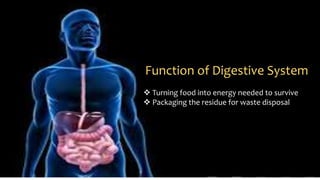
Function of Digestive System
 Turning food into energy needed to survive
 Packaging the residue for waste disposal
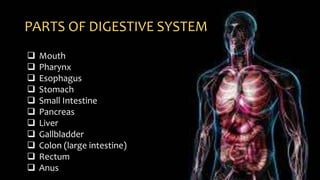
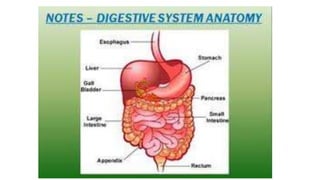
PARTS OF DIGESTIVE SYSTEM
 Mouth
 Pharynx
 Esophagus
 Stomach
 Small Intestine
 Pancreas
 Liver
 Gallbladder
 Colon (large intestine)
 Rectum
 Anus
STRUCTURE and FUNCTION
Mouth
• Also known as ORAL CAVITY
• the beginning of the digestive tract
• accessory organs- the teeth,tongue,salivary glands
 Teeth chops - saliva moistened - tongue push to pharynx
Pharynx
• A funnel-shaped connected to the posterior end of the mouth
• Passes chewed food from mouth to esophagus
• Contains epiglottis that acts as “switch” to route food to
esophagus and air to larynx
Esophagus
• A muscular tube connecting pharynx to the stomach
• Carries masses of chewed food along its length
• Cardiac sphincter-it close the end of the esophagus and trap food in
trap food in the stomach
-found at the inferior end of stomach
Stomach
• A muscular sac located at the left side of the abdominal
cavity
• Acts as a storage tank for food
• Contains hydrochloric acid and digestive enzymes that
continues the digestion
Small Intestine
• A long, thin tube bout 1 inch in diameter and 10 feet long
and part of lower gastrointestinal tract
• It’s coiled like a hose and its inside surface has many ridges
and folds
• Takes up most of the space in the stomach
• The folds maximize the digestion of food and absorption of
nutrients
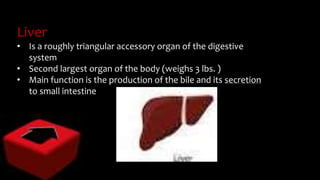
Liver
• Is a roughly triangular accessory organ of the digestive
system
• Second largest organ of the body (weighs 3 lbs. )
• Main function is the production of the bile and its secretion
to small intestine
Gallbladder
• A small pear-shaped organ located just posterior end of
the liver
• Use to store and recycle excess bile from the small
intestine
Pancreas
• A large gland located just inferior and posterior of the
stomach
• Secretes digestive enzymes into small intestine
complete to complete food digestion
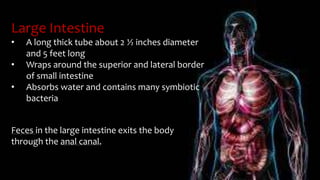
Large Intestine
• A long thick tube about 2 ½ inches diameter
and 5 feet long
• Wraps around the superior and lateral border
of small intestine
• Absorbs water and contains many symbiotic
bacteria
Feces in the large intestine exits the body
through the anal canal.
1. Ingestion of food
2. Secretion of fluids and digestive enzymes
3. Mixing and movement of food and wastes through
the body
4. Digestion of food into smaller pieces
5. Absorption of nutrients
6. Excretion of wastes
6 primary processes of digestive system
INGESTION
• Intake of food
Responsible organ:
mouth
stomach-storage of food to be digested
SECRETION
• Digestive system secretes 7 liters of fluids/day
 Saliva – moistens dry food and contains digestive amylase
 Mucus – serves as protective barrier and lubricant inside GI tract
 Hydrochloric acid – helps digest food chemically and protects body
 Enzymes – disassemble large macromolecules like proteins,
carbohydrates, and lipids into smaller components
 Bile – used to emulsify large masses of lipids into tiny globules for
easy digestion
MIXING AND MOVEMENT
3 main process to mix and move
 Swallowing
 Peristalsis
 Segmentation – occurs only in small intestine
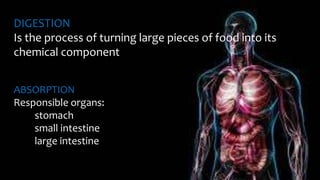
DIGESTION
Is the process of turning large pieces of food into its
chemical component
ABSORPTION
Responsible organs:
stomach
small intestine
large intestine
EXCRETION
The final function of the digestive system is the
excretion of waste in a process known as
defecation. Defecation removes indigestible
substances from the body so that they do not
accumulate inside the gut.
The final function of the digestive system is the excretion of waste in a process known as defecation. Defecation removes indigestible substances from the body so that they do not accumul
Digestive system
Digestive system

Digestive system

  • 2.
    Function of DigestiveSystem  Turning food into energy needed to survive  Packaging the residue for waste disposal
  • 3.
    PARTS OF DIGESTIVESYSTEM  Mouth  Pharynx  Esophagus  Stomach  Small Intestine  Pancreas  Liver  Gallbladder  Colon (large intestine)  Rectum  Anus
  • 4.
    STRUCTURE and FUNCTION Mouth •Also known as ORAL CAVITY • the beginning of the digestive tract • accessory organs- the teeth,tongue,salivary glands  Teeth chops - saliva moistened - tongue push to pharynx
  • 5.
    Pharynx • A funnel-shapedconnected to the posterior end of the mouth • Passes chewed food from mouth to esophagus • Contains epiglottis that acts as “switch” to route food to esophagus and air to larynx
  • 6.
    Esophagus • A musculartube connecting pharynx to the stomach • Carries masses of chewed food along its length • Cardiac sphincter-it close the end of the esophagus and trap food in trap food in the stomach -found at the inferior end of stomach
  • 7.
    Stomach • A muscularsac located at the left side of the abdominal cavity • Acts as a storage tank for food • Contains hydrochloric acid and digestive enzymes that continues the digestion
  • 8.
    Small Intestine • Along, thin tube bout 1 inch in diameter and 10 feet long and part of lower gastrointestinal tract • It’s coiled like a hose and its inside surface has many ridges and folds • Takes up most of the space in the stomach • The folds maximize the digestion of food and absorption of nutrients
  • 9.
    Liver • Is aroughly triangular accessory organ of the digestive system • Second largest organ of the body (weighs 3 lbs. ) • Main function is the production of the bile and its secretion to small intestine
  • 10.
    Gallbladder • A smallpear-shaped organ located just posterior end of the liver • Use to store and recycle excess bile from the small intestine
  • 11.
    Pancreas • A largegland located just inferior and posterior of the stomach • Secretes digestive enzymes into small intestine complete to complete food digestion
  • 12.
    Large Intestine • Along thick tube about 2 ½ inches diameter and 5 feet long • Wraps around the superior and lateral border of small intestine • Absorbs water and contains many symbiotic bacteria Feces in the large intestine exits the body through the anal canal.
  • 13.
    1. Ingestion offood 2. Secretion of fluids and digestive enzymes 3. Mixing and movement of food and wastes through the body 4. Digestion of food into smaller pieces 5. Absorption of nutrients 6. Excretion of wastes 6 primary processes of digestive system
  • 14.
    INGESTION • Intake offood Responsible organ: mouth stomach-storage of food to be digested
  • 15.
    SECRETION • Digestive systemsecretes 7 liters of fluids/day  Saliva – moistens dry food and contains digestive amylase  Mucus – serves as protective barrier and lubricant inside GI tract  Hydrochloric acid – helps digest food chemically and protects body  Enzymes – disassemble large macromolecules like proteins, carbohydrates, and lipids into smaller components  Bile – used to emulsify large masses of lipids into tiny globules for easy digestion
  • 16.
    MIXING AND MOVEMENT 3main process to mix and move  Swallowing  Peristalsis  Segmentation – occurs only in small intestine
  • 17.
    DIGESTION Is the processof turning large pieces of food into its chemical component ABSORPTION Responsible organs: stomach small intestine large intestine
  • 18.
    EXCRETION The final functionof the digestive system is the excretion of waste in a process known as defecation. Defecation removes indigestible substances from the body so that they do not accumulate inside the gut. The final function of the digestive system is the excretion of waste in a process known as defecation. Defecation removes indigestible substances from the body so that they do not accumul