BRISSO ARACKAL
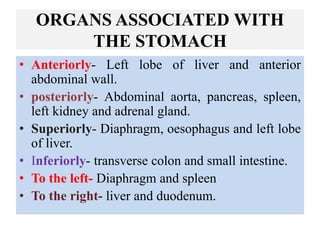
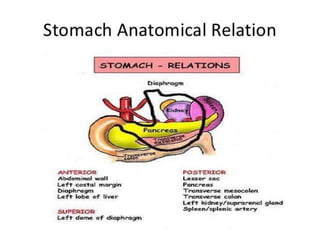
ORGANS ASSOCIATED WITH
THE STOMACH
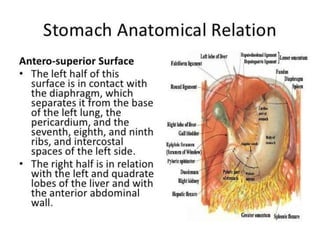
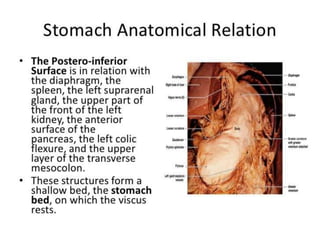
• Anteriorly- Left lobe of liver and anterior
abdominal wall.
• posteriorly- Abdominal aorta, pancreas, spleen,
left kidney and adrenal gland.
• Superiorly- Diaphragm, oesophagus and left lobe
of liver.
• Inferiorly- transverse colon and small intestine.
• To the left- Diaphragm and spleen
• To the right- liver and duodenum.
STOMACH : SIZE
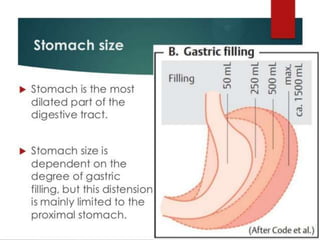
• The stomach is a very distensible organ.
• It is about 25 cm. long.
• The mean capacity is one ounce (30 ml) at
birth, one litre (1000ml) at puberty, and 1.5 t0
2 litres or more in adults.
EXTERNAL FEATURES OF
STOMACH
The stomach has
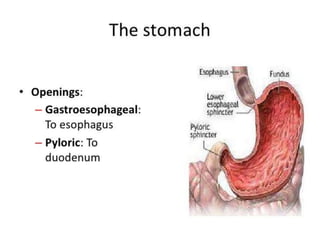
 Two orifices or openings
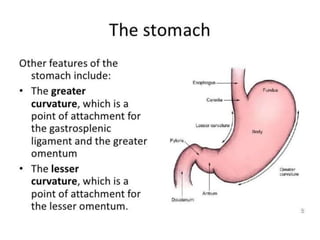
 Two curvatures or borders and
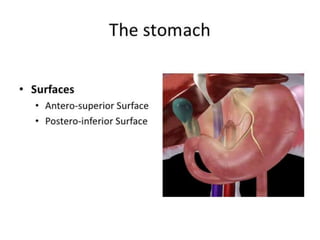
 Two surfaces
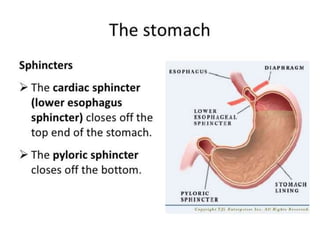
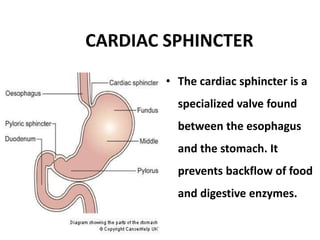
CARDIAC SPHINCTER
• The cardiac sphincter is a
specialized valve found
between the esophagus
and the stomach. It
prevents backflow of food
and digestive enzymes.
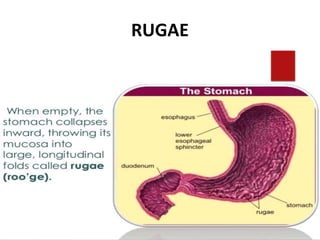
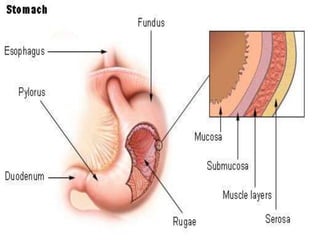
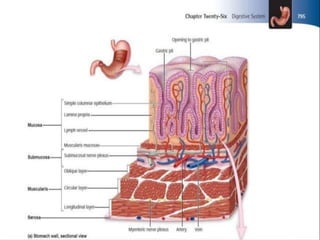
RUGAE
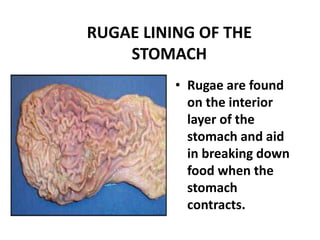
RUGAE LINING OF THE
STOMACH
• Rugae are found
on the interior
layer of the
stomach and aid
in breaking down
food when the
stomach
contracts.
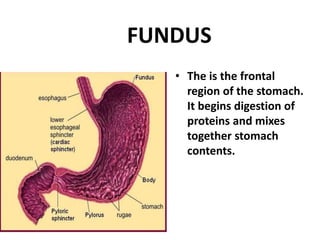
FUNDUS
• The is the frontal
region of the stomach.
It begins digestion of
proteins and mixes
together stomach
contents.
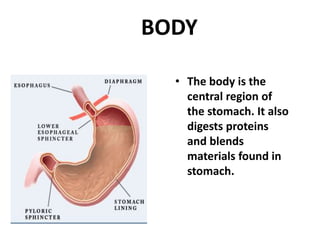
BODY
• The body is the
central region of
the stomach. It also
digests proteins
and blends
materials found in
stomach.
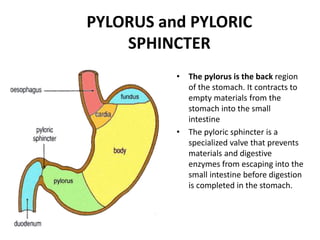
PYLORUS and PYLORIC
SPHINCTER
• The pylorus is the back region
of the stomach. It contracts to
empty materials from the
stomach into the small
intestine
• The pyloric sphincter is a
specialized valve that prevents
materials and digestive
enzymes from escaping into the
small intestine before digestion
is completed in the stomach.
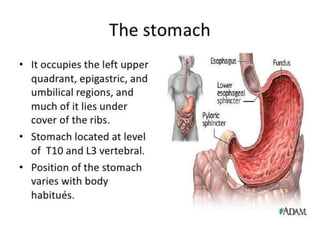
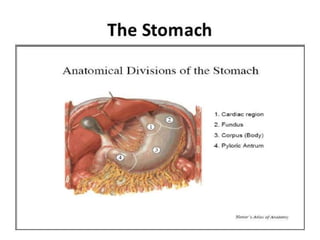
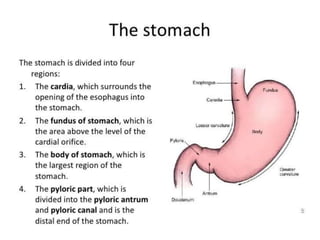
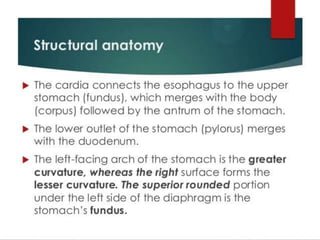
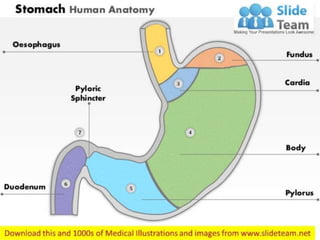
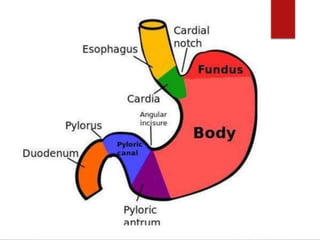
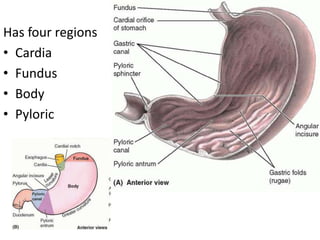
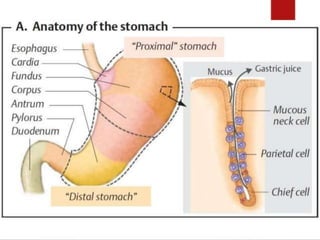
Has four regions
• Cardia
• Fundus
• Body
• Pyloric
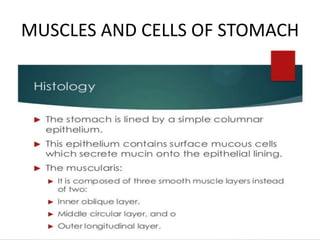
MUSCLES AND CELLS OF STOMACH
Stomach
Stomach
Stomach
Stomach
Stomach
Stomach
Stomach
Stomach
Stomach
Stomach
Stomach
Stomach
Stomach
Stomach
Stomach
Stomach

Stomach

  • 2.
  • 8.
    ORGANS ASSOCIATED WITH THESTOMACH • Anteriorly- Left lobe of liver and anterior abdominal wall. • posteriorly- Abdominal aorta, pancreas, spleen, left kidney and adrenal gland. • Superiorly- Diaphragm, oesophagus and left lobe of liver. • Inferiorly- transverse colon and small intestine. • To the left- Diaphragm and spleen • To the right- liver and duodenum.
  • 10.
    STOMACH : SIZE •The stomach is a very distensible organ. • It is about 25 cm. long. • The mean capacity is one ounce (30 ml) at birth, one litre (1000ml) at puberty, and 1.5 t0 2 litres or more in adults.
  • 14.
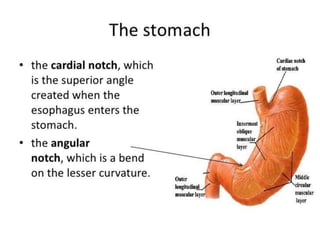
    EXTERNAL FEATURES OF STOMACH Thestomach has  Two orifices or openings  Two curvatures or borders and  Two surfaces
  • 21.
    CARDIAC SPHINCTER • Thecardiac sphincter is a specialized valve found between the esophagus and the stomach. It prevents backflow of food and digestive enzymes.
  • 24.
  • 25.
    RUGAE LINING OFTHE STOMACH • Rugae are found on the interior layer of the stomach and aid in breaking down food when the stomach contracts.
  • 28.
    FUNDUS • The isthe frontal region of the stomach. It begins digestion of proteins and mixes together stomach contents.
  • 29.
    BODY • The bodyis the central region of the stomach. It also digests proteins and blends materials found in stomach.
  • 30.
    PYLORUS and PYLORIC SPHINCTER •The pylorus is the back region of the stomach. It contracts to empty materials from the stomach into the small intestine • The pyloric sphincter is a specialized valve that prevents materials and digestive enzymes from escaping into the small intestine before digestion is completed in the stomach.
  • 34.
    Has four regions •Cardia • Fundus • Body • Pyloric
  • 35.