The Power of Images
The Brian Shipman Theory of Video:

“A little video, plus a little audio, and
before you know it we’ve got a story!”
 Me…….
 You probably know my wife.
  Sometimes she claims to know
  me
“I don’t know why you help with
   videos and do them for free. It
really makes it difficult for those of
   us who need to charge for our
           services…….”
   Program – Explains your mission
    and group
   Event – Feature upcoming and past
    events to create interest
   Fundraising – Why you need funds
    and how they’re used
   Impact – Examples of how your
    group has made a difference - POV
   Concept – What is your message and
    who is your target audience?
   What tools and options do you have?
   Do you have any budget? Discs and
    other items still cost a little
   How will you deliver your message?
    Broadcast PSA, appearances at civic
    groups, special event, person-to-person,
    internet, delivered DVD……..
   Look within your agency and Board
   Schools – Kids know how it all
    works. Some need community
    service projects.
   Broadcast groups and agencies
   Your family
   You!
   Determine mission & develop a
    script
   Shelf life. How long will you keep it?
   Who will deliver? Who’s your
    talent?
   Stick to your message
   Keep it simple yet interesting
   What is the goal?
   Think of who your audience and
    delivery method is
   Conversationally & within time
   Tell a story. Beginning, middle, end.
   Data & graphics
   “In their own words.”
   The “Call to action.”
   Keep it short. 5 - 7minutes is long
    enough (But consider who your
    audience is and platform.)
   Have others read and review. Make
    changes and be open to suggestions
   Finalize and read again for timing
   Technological advances
     Smaller cameras
     Phones and Flip video
     Digital SLR cameras
     Editing on computers
     Sharing your production
   Audience and delivery method
   Determine your topic and content
   Develop script
   Locate talent or voice work

   Write script or important points on que
    cards or possibly a computer.
   Rehearse and refine
   Rehearse until they feel comfortable
   Make script changes as you go along
   Some wording may not make sense or
    may cause problems for talent. Be flexible
   Make the talent comfortable
   Have them properly attired and framed
    well
   Can you hear them?
   Determine location and make sure it’s
    available. Is it appropriate for content?
   No distractions
   Look at the background. Clutter, strange
    things behind talent. Unnecessary
    movements
   Frame them and position camera
    correctly
   Use the cameras monitor or external one
   Moving shot? Practice!
1.   Make it louder
2.   Make it brighter
   Limit distractions. If you can hear it, it
    will be on the recording
   Microphones – Use one if possible. If not
    limit the distracting sounds and speak up
   Monitor the audio. Headphone or
    speaker? Record & playback
   Record voice track separately in a quiet
    setting
   Don’t overuse music
   Check levels
   Use a tripod to stabilize the camera
     If it looks shaky when you shoot it, it
      will be shaky when you edit
   Shot composition
     Avoid windows and back-lit situations
     Look at the setting in your viewfinder
      or a monitor
     Adjust and move what you don’t like
   Interviews
     Be at same level as the interview
     Have interviewer sit to the side of the
      camera. Even if it’s the operator.
     Remember shot composition and distractions
   Make them look good
     Adjust clothing, hair, etc.
   Framing and talent issues
     Leave headroom
     Crop the shot to look pleasing
     Eye-level with talent
   On Camera Talent Segments
     Do run-through shoots on camera
     Record them. One of them might be the best
      one. They also make for blooper material. 
     Identify the take you liked. Hand, paper,
      something to make it recognizable.
   Plan ahead for editing
       Know what video you need to have
       Write to your video if possible
   Pans & Zooms
       Avoid if possible or limit.
   If there are repetitive actions, Shoot a sequence
   Overshoot-”Better safe than sorry”
       It’s better to have too much than not enough
       You won’t need all of it
       Keep the camera rolling after the shot is over to help
        with editing
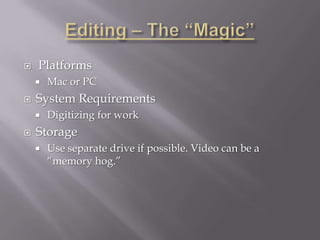
   Platforms
       Mac or PC
   System Requirements
       Digitizing for work
   Storage
       Use separate drive if possible. Video can be a
        “memory hog.”
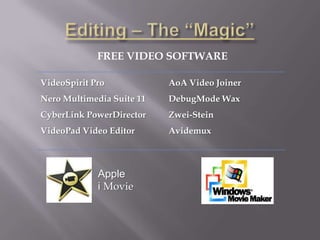
FREE VIDEO SOFTWARE

VideoSpirit Pro            AoA Video Joiner
Nero Multimedia Suite 11   DebugMode Wax
CyberLink PowerDirector    Zwei-Stein
VideoPad Video Editor      Avidemux


             Apple
             i Movie
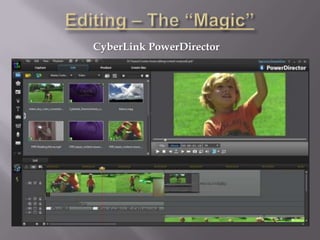
CyberLink PowerDirector
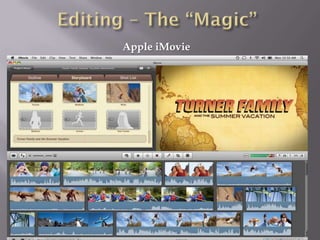
Apple iMovie
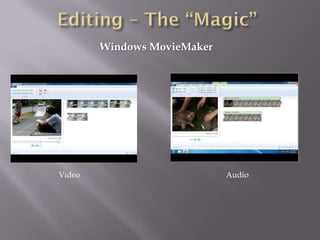
Windows MovieMaker


Video                        Audio
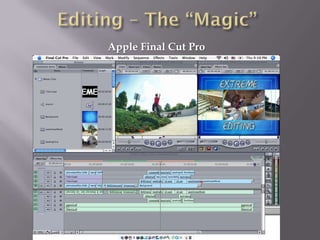
Apple Final Cut Pro
   Minimize effects if used. They can be
    distracting
   Have names and titles spelled correctly
   Photos: Use in place of or to enhance video.
   Stock footage and images. Check for copyrights
    and credit requests.
Joel ppoint
Joel ppoint
Joel ppoint
Joel ppoint

Joel ppoint

  • 1.
  • 6.
    The Brian ShipmanTheory of Video: “A little video, plus a little audio, and before you know it we’ve got a story!”
  • 8.
     Me…….  Youprobably know my wife. Sometimes she claims to know me
  • 9.
    “I don’t knowwhy you help with videos and do them for free. It really makes it difficult for those of us who need to charge for our services…….”
  • 10.
    Program – Explains your mission and group  Event – Feature upcoming and past events to create interest  Fundraising – Why you need funds and how they’re used  Impact – Examples of how your group has made a difference - POV
  • 11.
    Concept – What is your message and who is your target audience?  What tools and options do you have?  Do you have any budget? Discs and other items still cost a little  How will you deliver your message? Broadcast PSA, appearances at civic groups, special event, person-to-person, internet, delivered DVD……..
  • 12.
    Look within your agency and Board  Schools – Kids know how it all works. Some need community service projects.  Broadcast groups and agencies  Your family  You!
  • 13.
    Determine mission & develop a script  Shelf life. How long will you keep it?  Who will deliver? Who’s your talent?  Stick to your message  Keep it simple yet interesting
  • 14.
    What is the goal?  Think of who your audience and delivery method is  Conversationally & within time  Tell a story. Beginning, middle, end.  Data & graphics  “In their own words.”  The “Call to action.”
  • 15.
    Keep it short. 5 - 7minutes is long enough (But consider who your audience is and platform.)  Have others read and review. Make changes and be open to suggestions  Finalize and read again for timing
  • 16.
    Technological advances  Smaller cameras  Phones and Flip video  Digital SLR cameras  Editing on computers  Sharing your production
  • 17.
    Audience and delivery method  Determine your topic and content  Develop script  Locate talent or voice work  Write script or important points on que cards or possibly a computer.  Rehearse and refine
  • 18.
    Rehearse until they feel comfortable  Make script changes as you go along  Some wording may not make sense or may cause problems for talent. Be flexible  Make the talent comfortable  Have them properly attired and framed well  Can you hear them?
  • 19.
    Determine location and make sure it’s available. Is it appropriate for content?  No distractions  Look at the background. Clutter, strange things behind talent. Unnecessary movements  Frame them and position camera correctly  Use the cameras monitor or external one  Moving shot? Practice!
  • 20.
    1. Make it louder 2. Make it brighter
  • 21.
    Limit distractions. If you can hear it, it will be on the recording  Microphones – Use one if possible. If not limit the distracting sounds and speak up  Monitor the audio. Headphone or speaker? Record & playback
  • 22.
    Record voice track separately in a quiet setting  Don’t overuse music  Check levels
  • 23.
    Use a tripod to stabilize the camera  If it looks shaky when you shoot it, it will be shaky when you edit  Shot composition  Avoid windows and back-lit situations  Look at the setting in your viewfinder or a monitor  Adjust and move what you don’t like
  • 24.
    Interviews  Be at same level as the interview  Have interviewer sit to the side of the camera. Even if it’s the operator.  Remember shot composition and distractions  Make them look good  Adjust clothing, hair, etc.  Framing and talent issues  Leave headroom  Crop the shot to look pleasing  Eye-level with talent
  • 25.
    On Camera Talent Segments  Do run-through shoots on camera  Record them. One of them might be the best one. They also make for blooper material.   Identify the take you liked. Hand, paper, something to make it recognizable.
  • 26.
    Plan ahead for editing  Know what video you need to have  Write to your video if possible  Pans & Zooms  Avoid if possible or limit.  If there are repetitive actions, Shoot a sequence  Overshoot-”Better safe than sorry”  It’s better to have too much than not enough  You won’t need all of it  Keep the camera rolling after the shot is over to help with editing
  • 27.
    Platforms  Mac or PC  System Requirements  Digitizing for work  Storage  Use separate drive if possible. Video can be a “memory hog.”
  • 28.
    FREE VIDEO SOFTWARE VideoSpiritPro AoA Video Joiner Nero Multimedia Suite 11 DebugMode Wax CyberLink PowerDirector Zwei-Stein VideoPad Video Editor Avidemux Apple i Movie
  • 29.
  • 30.
  • 31.
  • 32.
  • 33.
    Minimize effects if used. They can be distracting  Have names and titles spelled correctly
  • 34.
    Photos: Use in place of or to enhance video.  Stock footage and images. Check for copyrights and credit requests.