MAKE IT COUNT

  2013 Nonprofit Sustainability Conference

      Building a Culture of Fundraising


           Wendy Dyer
      Fund Development Consultants
                   “
                                            1
                                     © 2013 WD Inc
Philosophies in Fundraising
•   20+ years in the trenches
•   We live in a time of abundance
•   Stop thinking people are poor
•   Don’t give them a way out – recession/busy/other
    interests
•   People want to be heroes/do good – that’s your job
•   People are giving money away anyway, might as
    well be to you
•   Stop shopping for shoes in a bakery
•   Get out of your comfort zone – don’t stay safe!

                                                         2
We Are Powerful
• 83% of donations from individuals yet focus elsewhere
• 2004 = $240 billion
• 2011 = $306 billion = 27%

•   Is that a lot of money? What does it buy?
   1,530,000 Ferraris
   838 Busch Stadiums
   6.8 billion tickets to the Baldknobbers
   EVERY YEAR

• What do we have to offer?
                                                          3
   1 thing
We Are Resilient
Glorious 1980’s
     unrestricted $
Who took the fun away?
     we did
     how?
We put up with whims and trends and natural
  disasters
     but we keep on going
     why? Nobody else does what we do
                                              4
But Are We Using Our Muscle?
Outcomes on steroids
 unrealistic expectations
 overpromising – everyone loses
Collaborations as mandatory
 corporate mergers?
Threat of stripping tax deductibility
Trump challenge to Obama
 charities held hostage to politics

                                        5
My Challenges to You for 2013
• Make your voice heard
• Engage in meaningful conversations with
  donors
• It’s not what you have done, it’s what you
  haven’t done – broaden your thinking
• Engage in intentional fundraising
 Capture research-based best practices
 Embrace transformational philanthropy
                                               6
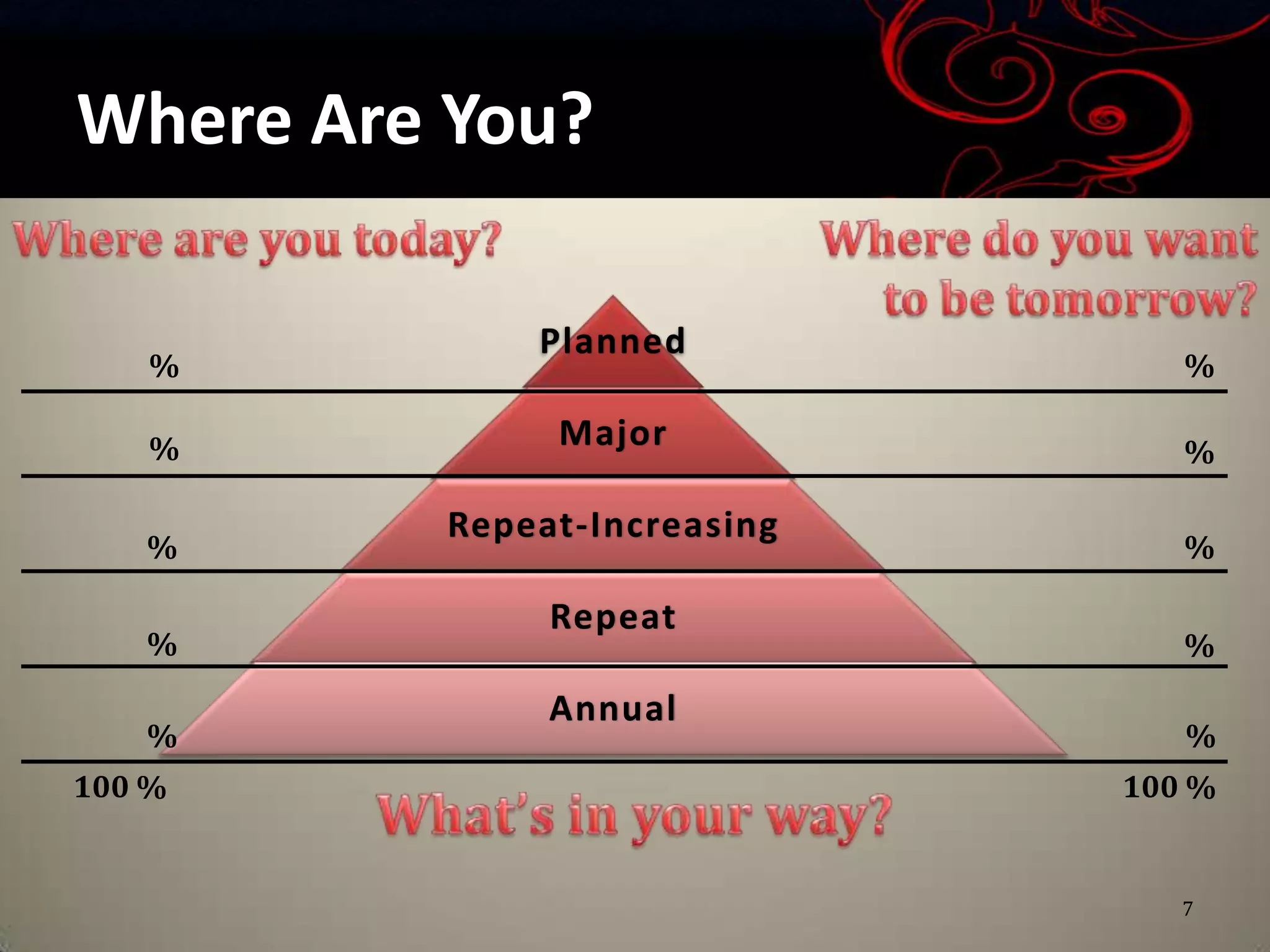
Where Are You?

              Planned
    %                            %

    %          Major             %

          Repeat-Increasing
   %                             %

               Repeat
   %                             %

               Annual
   %                             %
100 %                         100 %


                                 7
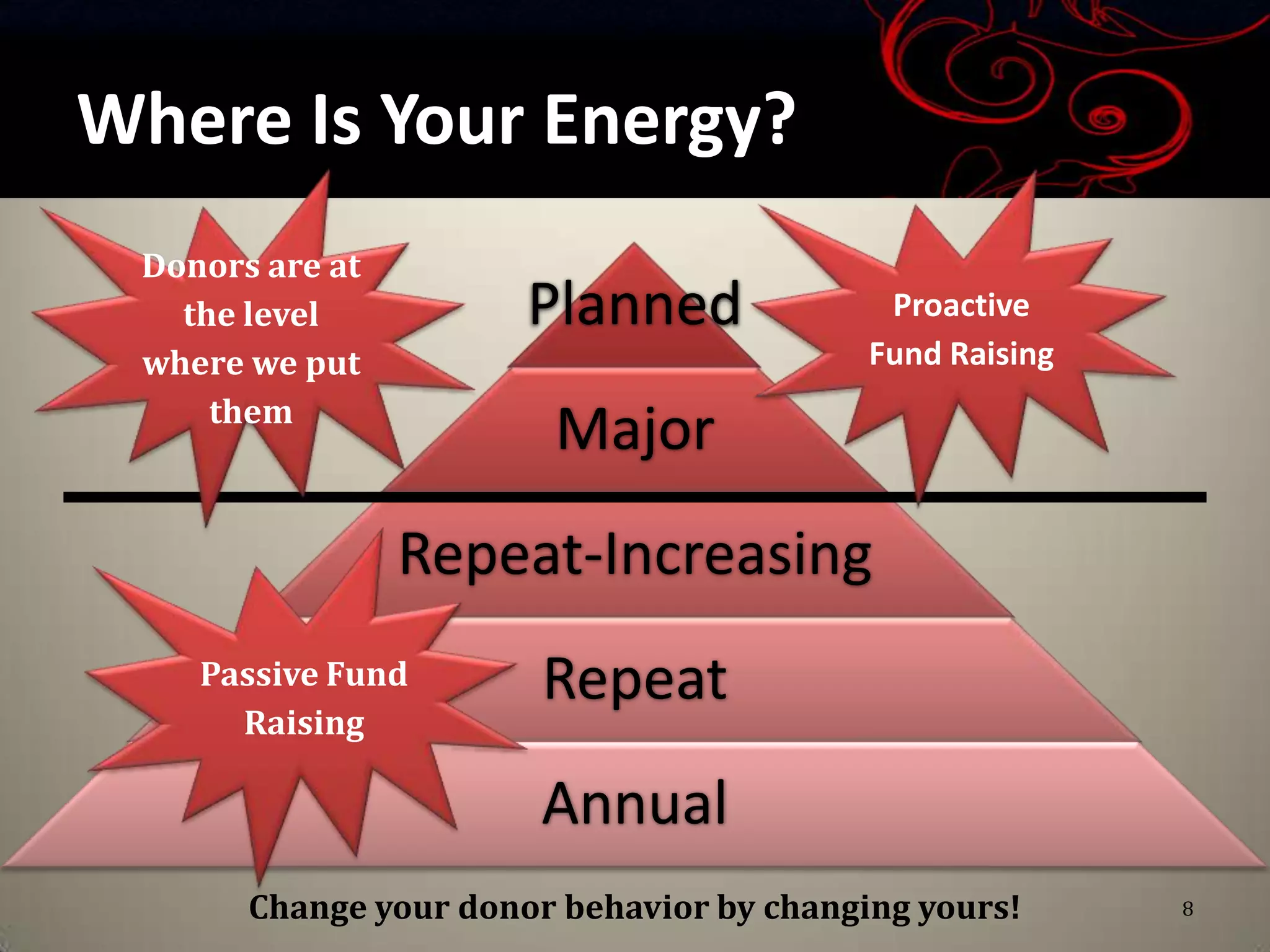
Where Is Your Energy?
 Donors are at
   the level           Planned              Proactive
 where we put                              Fund Raising
     them
                        Major
                 Repeat-Increasing
    Passive Fund        Repeat
      Raising

                        Annual
       Change your donor behavior by changing yours!      8
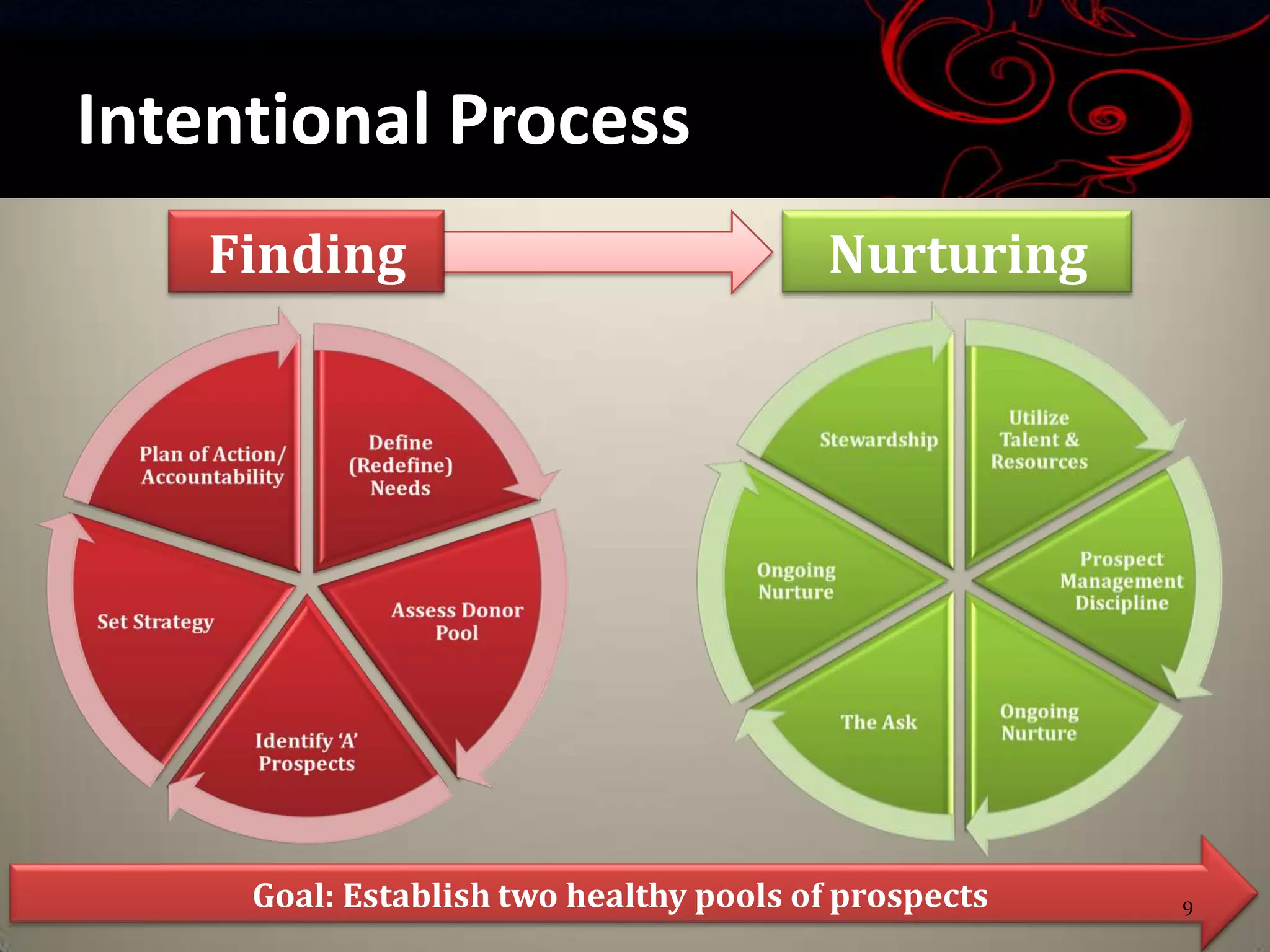
Intentional Process
    Finding                             Nurturing


     Goal: Establish two healthy pools of prospects   9
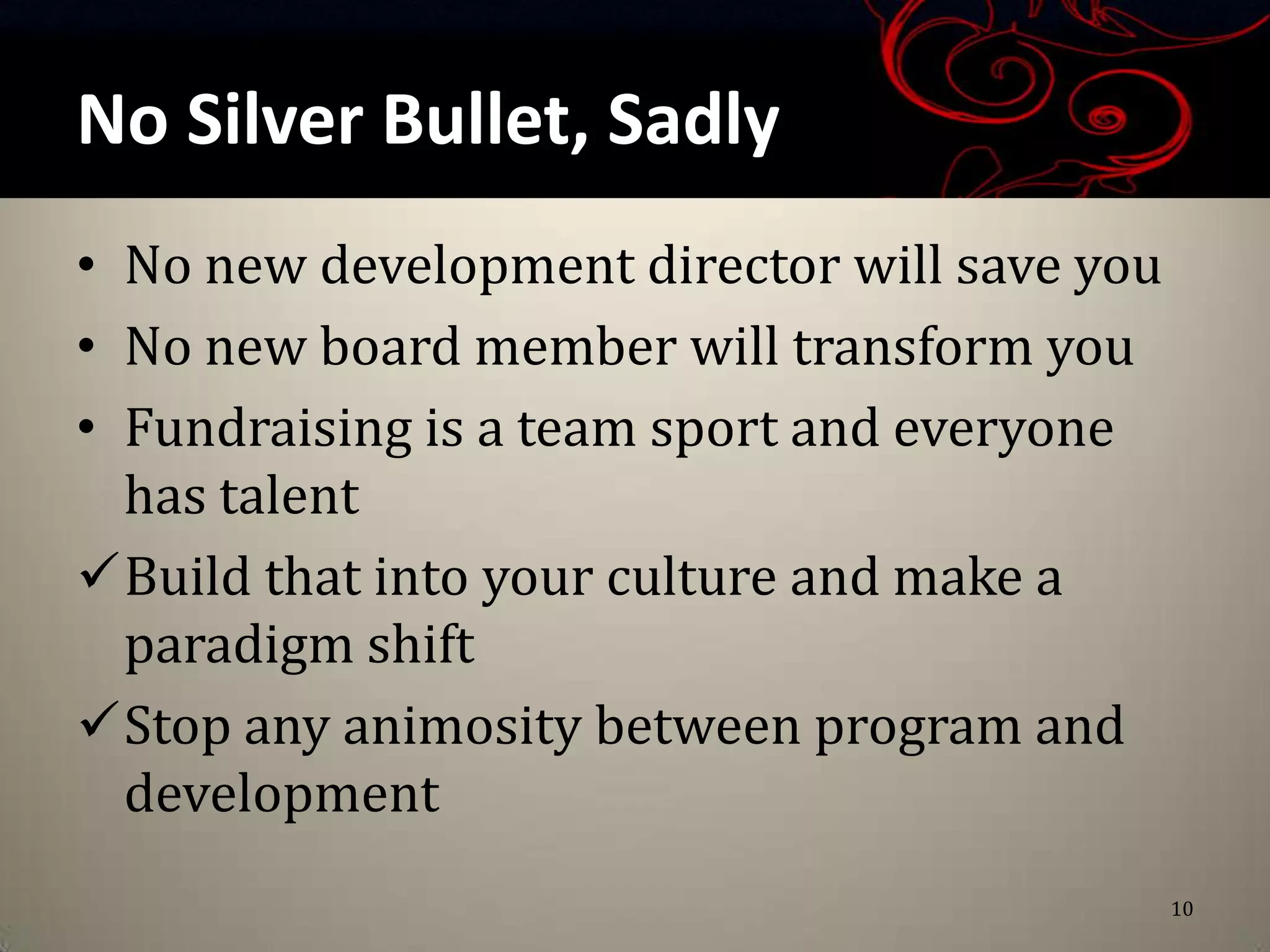
No Silver Bullet, Sadly
• No new development director will save you
• No new board member will transform you
• Fundraising is a team sport and everyone
  has talent
Build that into your culture and make a
  paradigm shift
Stop any animosity between program and
  development
                                              10
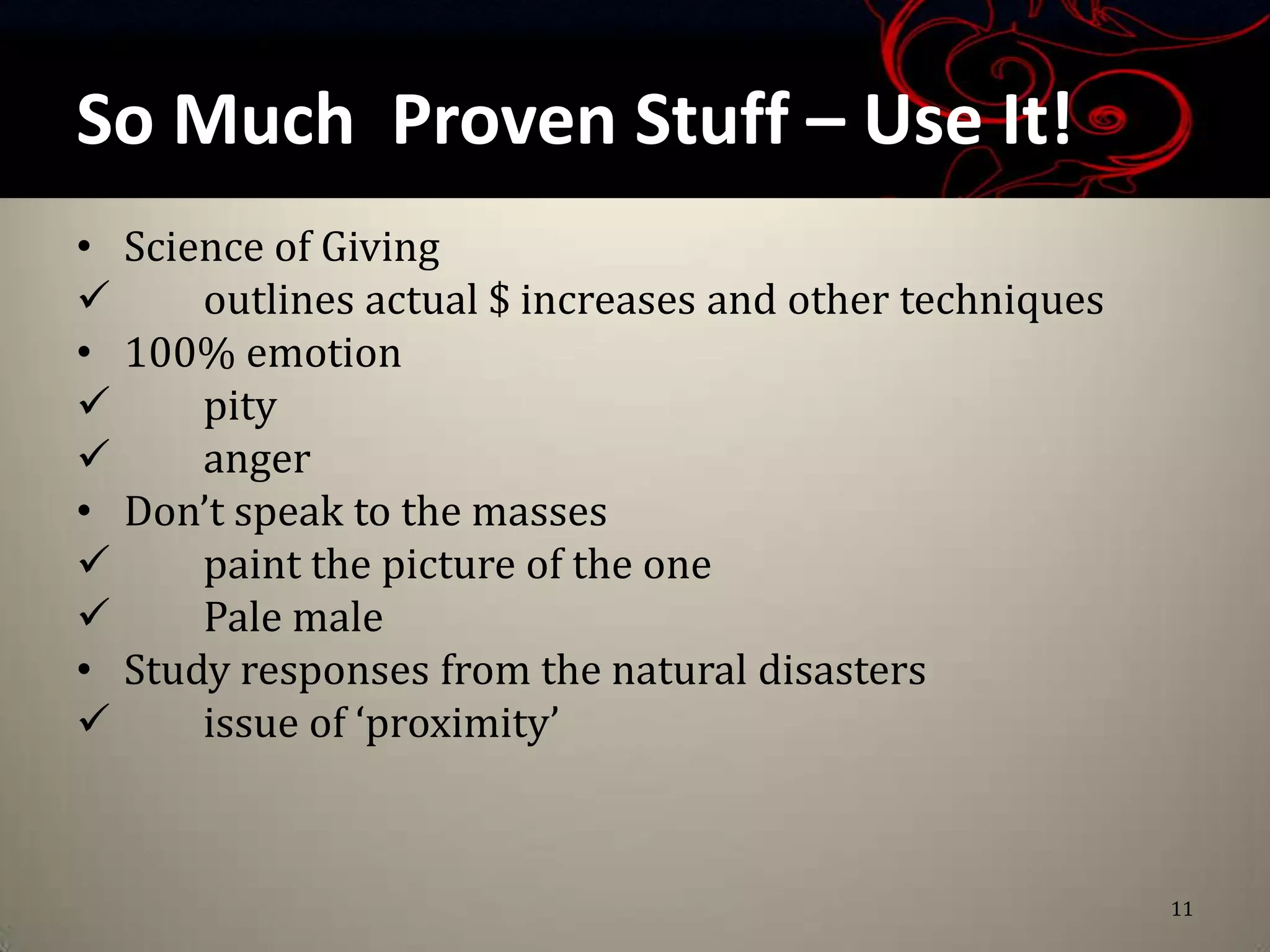
So Much Proven Stuff – Use It!
• Science of Giving
     outlines actual $ increases and other techniques
• 100% emotion
     pity
     anger
• Don’t speak to the masses
     paint the picture of the one
     Pale male
• Study responses from the natural disasters
     issue of ‘proximity’


                                                         11
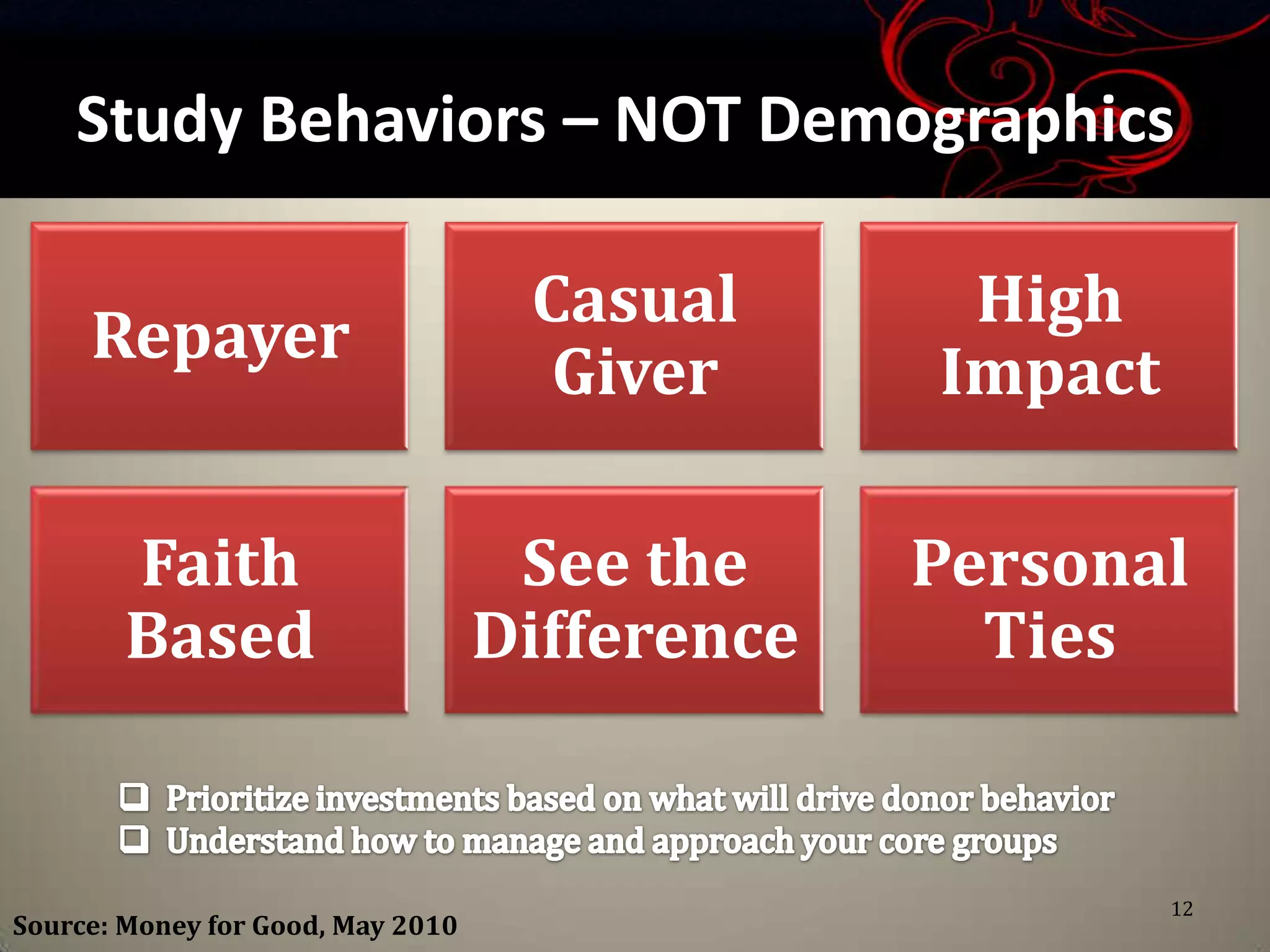
Study Behaviors – NOT Demographics

                                    Casual       High
     Repayer
                                     Giver      Impact

        Faith                       See the     Personal
        Based                      Difference     Ties


                                                         12
Source: Money for Good, May 2010
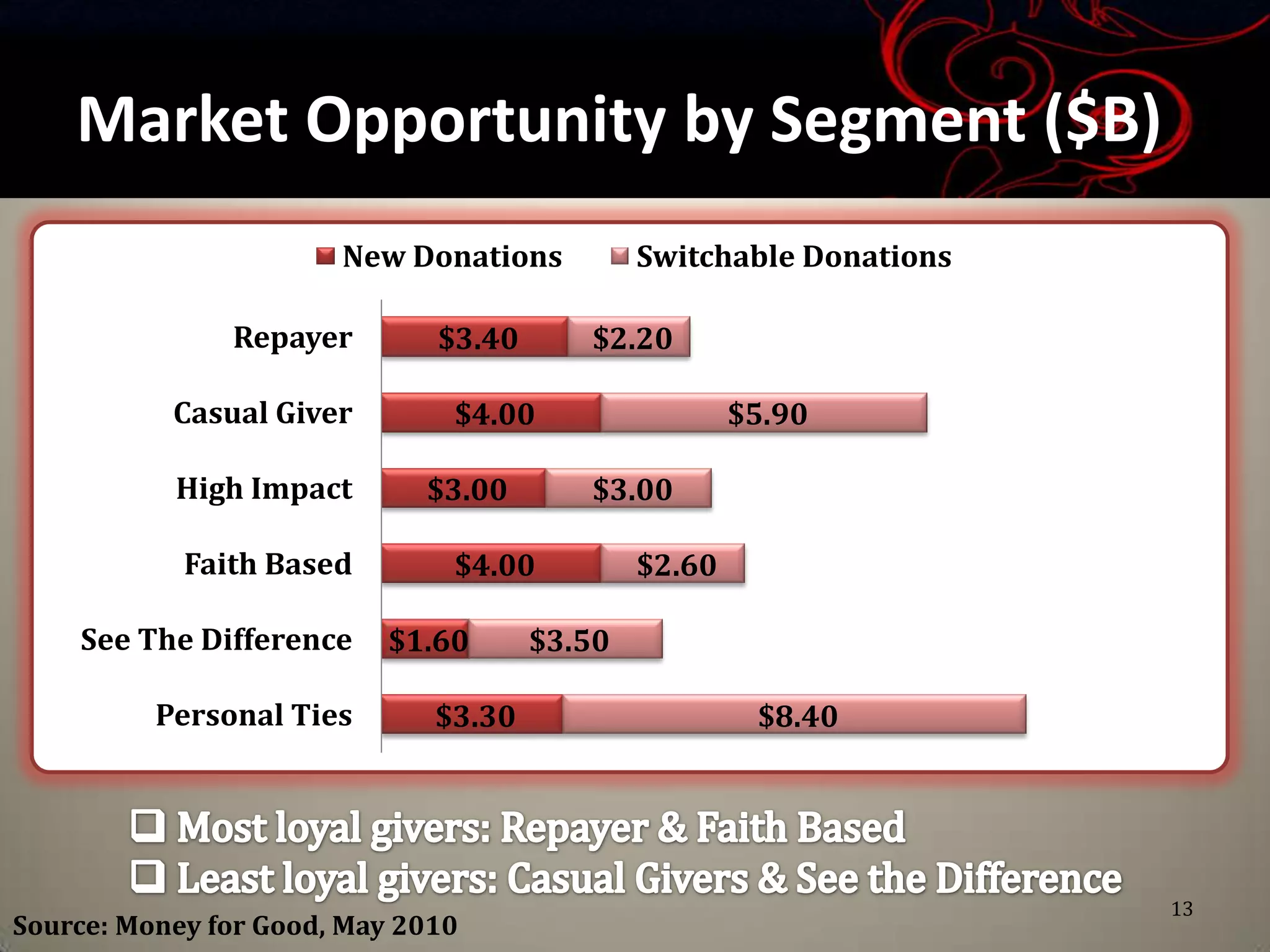
Market Opportunity by Segment ($B)
                       New Donations          Switchable Donations

               Repayer        $3.40      $2.20

           Casual Giver        $4.00                  $5.90

           High Impact       $3.00       $3.00

            Faith Based        $4.00          $2.60

    See The Difference    $1.60       $3.50

          Personal Ties       $3.30                    $8.40


                                                                     13
Source: Money for Good, May 2010
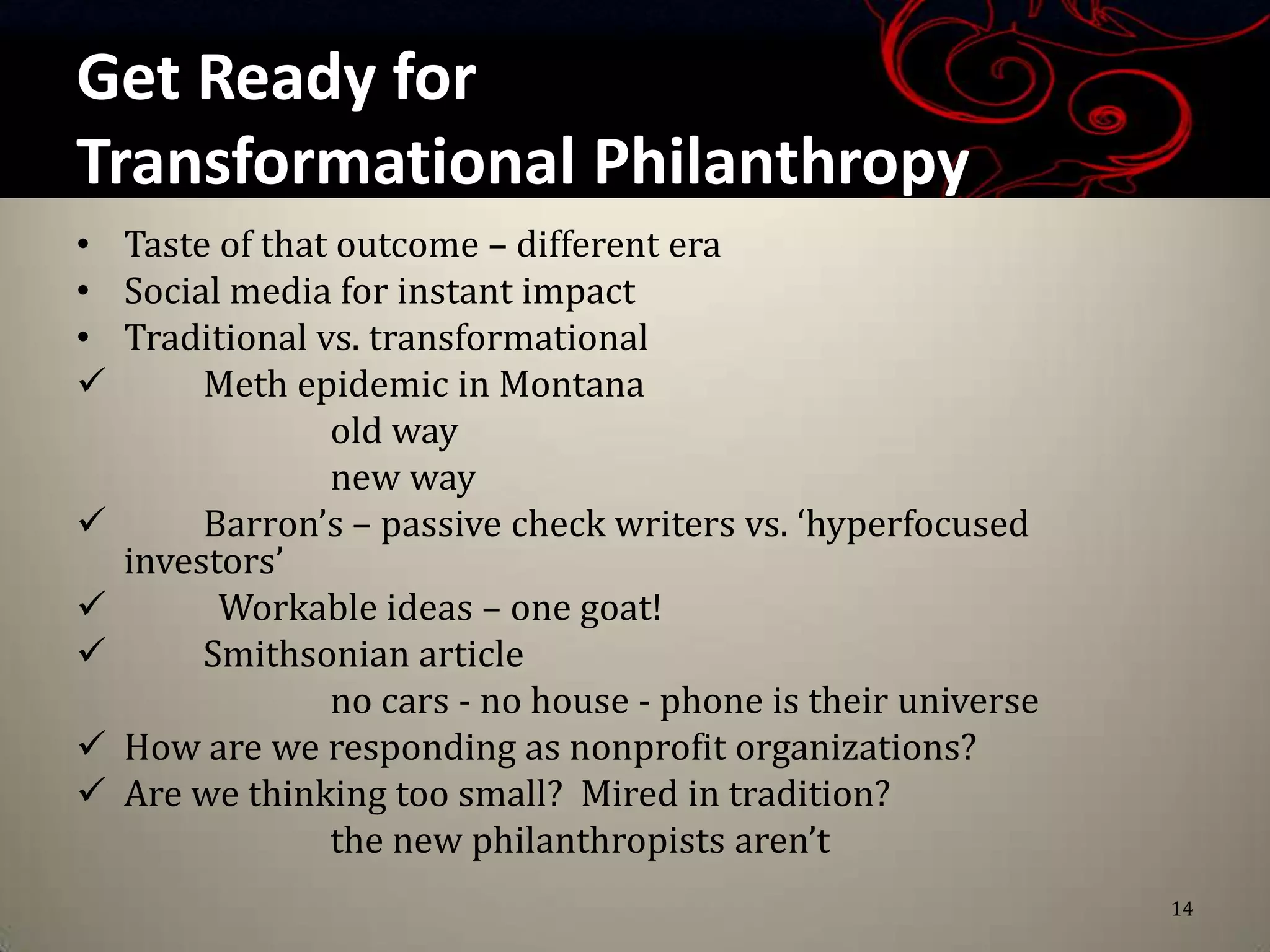
Get Ready for
Transformational Philanthropy
• Taste of that outcome – different era
• Social media for instant impact
• Traditional vs. transformational
      Meth epidemic in Montana
               old way
               new way
      Barron’s – passive check writers vs. ‘hyperfocused
  investors’
       Workable ideas – one goat!
      Smithsonian article
               no cars - no house - phone is their universe
 How are we responding as nonprofit organizations?
 Are we thinking too small? Mired in tradition?
               the new philanthropists aren’t
                                                              14
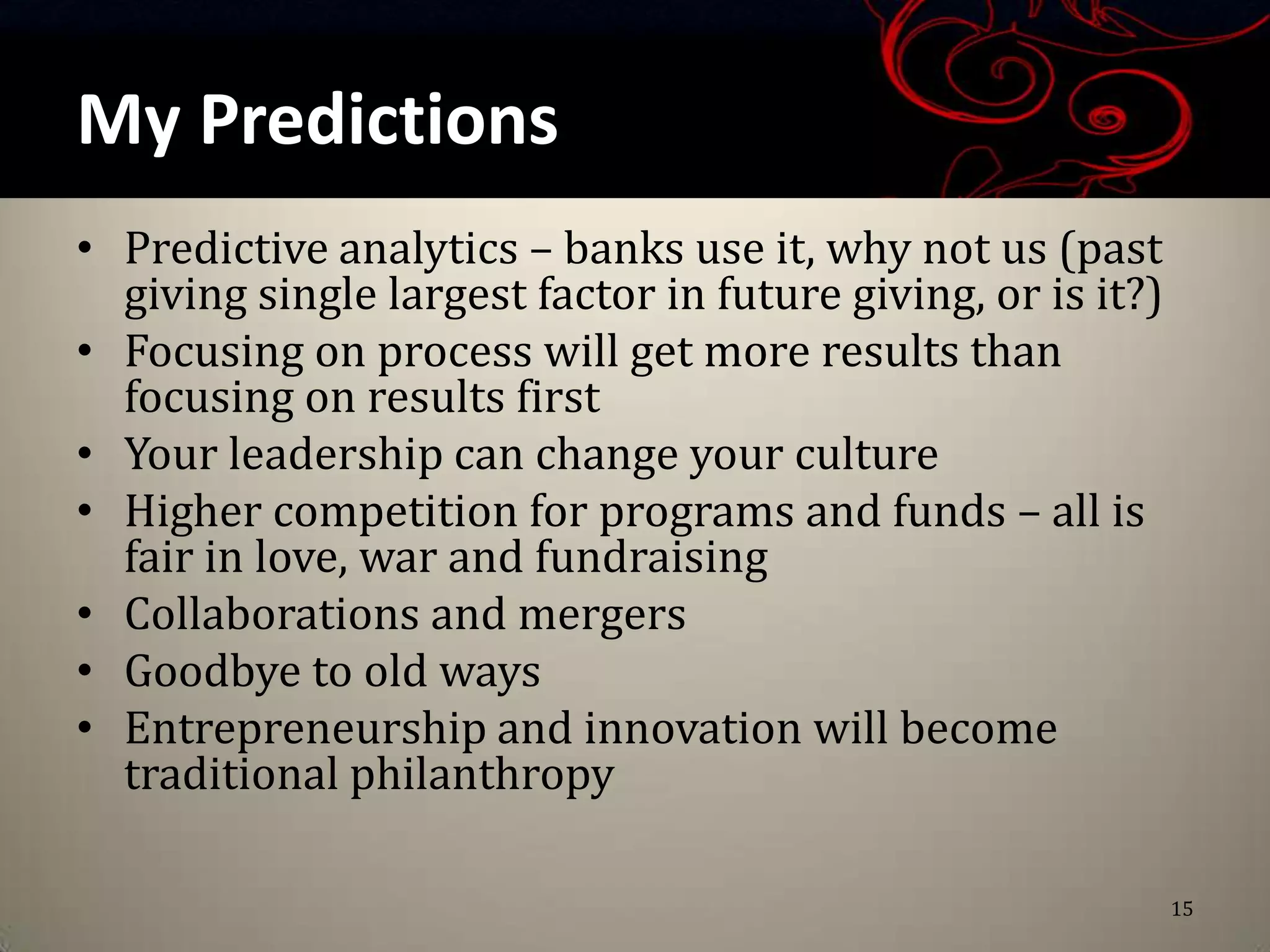
My Predictions
• Predictive analytics – banks use it, why not us (past
  giving single largest factor in future giving, or is it?)
• Focusing on process will get more results than
  focusing on results first
• Your leadership can change your culture
• Higher competition for programs and funds – all is
  fair in love, war and fundraising
• Collaborations and mergers
• Goodbye to old ways
• Entrepreneurship and innovation will become
  traditional philanthropy

                                                              15
Now, Go Get It
  Started!


                 16

Dyer ppoint

  • 1.
    MAKE IT COUNT 2013 Nonprofit Sustainability Conference Building a Culture of Fundraising Wendy Dyer Fund Development Consultants “ 1 © 2013 WD Inc
  • 2.
    Philosophies in Fundraising • 20+ years in the trenches • We live in a time of abundance • Stop thinking people are poor • Don’t give them a way out – recession/busy/other interests • People want to be heroes/do good – that’s your job • People are giving money away anyway, might as well be to you • Stop shopping for shoes in a bakery • Get out of your comfort zone – don’t stay safe! 2
  • 3.
    We Are Powerful •83% of donations from individuals yet focus elsewhere • 2004 = $240 billion • 2011 = $306 billion = 27% • Is that a lot of money? What does it buy?  1,530,000 Ferraris  838 Busch Stadiums  6.8 billion tickets to the Baldknobbers  EVERY YEAR • What do we have to offer? 3  1 thing
  • 4.
    We Are Resilient Glorious1980’s  unrestricted $ Who took the fun away?  we did  how? We put up with whims and trends and natural disasters  but we keep on going  why? Nobody else does what we do 4
  • 5.
    But Are WeUsing Our Muscle? Outcomes on steroids  unrealistic expectations  overpromising – everyone loses Collaborations as mandatory  corporate mergers? Threat of stripping tax deductibility Trump challenge to Obama  charities held hostage to politics 5
  • 6.
    My Challenges toYou for 2013 • Make your voice heard • Engage in meaningful conversations with donors • It’s not what you have done, it’s what you haven’t done – broaden your thinking • Engage in intentional fundraising  Capture research-based best practices  Embrace transformational philanthropy 6
  • 7.
    Where Are You? Planned % % % Major % Repeat-Increasing % % Repeat % % Annual % % 100 % 100 % 7
  • 8.
    Where Is YourEnergy? Donors are at the level Planned Proactive where we put Fund Raising them Major Repeat-Increasing Passive Fund Repeat Raising Annual Change your donor behavior by changing yours! 8
  • 9.
    Intentional Process Finding Nurturing Goal: Establish two healthy pools of prospects 9
  • 10.
    No Silver Bullet,Sadly • No new development director will save you • No new board member will transform you • Fundraising is a team sport and everyone has talent Build that into your culture and make a paradigm shift Stop any animosity between program and development 10
  • 11.
    So Much ProvenStuff – Use It! • Science of Giving  outlines actual $ increases and other techniques • 100% emotion  pity  anger • Don’t speak to the masses  paint the picture of the one  Pale male • Study responses from the natural disasters  issue of ‘proximity’ 11
  • 12.
    Study Behaviors –NOT Demographics Casual High Repayer Giver Impact Faith See the Personal Based Difference Ties 12 Source: Money for Good, May 2010
  • 13.
    Market Opportunity bySegment ($B) New Donations Switchable Donations Repayer $3.40 $2.20 Casual Giver $4.00 $5.90 High Impact $3.00 $3.00 Faith Based $4.00 $2.60 See The Difference $1.60 $3.50 Personal Ties $3.30 $8.40 13 Source: Money for Good, May 2010
  • 14.
    Get Ready for TransformationalPhilanthropy • Taste of that outcome – different era • Social media for instant impact • Traditional vs. transformational  Meth epidemic in Montana old way new way  Barron’s – passive check writers vs. ‘hyperfocused investors’  Workable ideas – one goat!  Smithsonian article no cars - no house - phone is their universe  How are we responding as nonprofit organizations?  Are we thinking too small? Mired in tradition? the new philanthropists aren’t 14
  • 15.
    My Predictions • Predictiveanalytics – banks use it, why not us (past giving single largest factor in future giving, or is it?) • Focusing on process will get more results than focusing on results first • Your leadership can change your culture • Higher competition for programs and funds – all is fair in love, war and fundraising • Collaborations and mergers • Goodbye to old ways • Entrepreneurship and innovation will become traditional philanthropy 15
  • 16.
    Now, Go GetIt Started! 16

Editor's Notes

  • #9 Steven….
  • #13 DEMOGRAPHICS THAT ARE SOMETIMES USE, SUCH AS ZIP CODES, ARE NOT CRITICAL PREDICTORS OF BEHAVIORThe Money for Good survey and research discovered there are 6 prominent donor behaviors: Repayer, Faith Based, Casual Giver, See the Difference, High Impact, and Personal Ties. Repayers Support Organizations that impact them or a loved oneFaith Based Give to Organizations that fit with their religious beliefsCasual Givers Primarily give to well known nonprofits through a payroll deduction at workSee the Difference generallyGive to local charities where they feel they can make a differenceHigh Impact givers Support causes that seem overlooked by othersPersonal Ties donors Give when they are familiar with the people within the organizationThe most advisable strategy is to pick 2 core groups to focus on, then prioritize your investments based on what will drive donor behavior. Understanding the differences between these core groups can help your organization better understand how to manage and approach these prospective donors.
  • #14 SUFFICIENT MARKET OPPORTUNITY EXISTS IN EACH SEGMENT!!! And each segment has its own Pro’s/Con’s. For example: The Personal Ties segment provide the greatest opportunity for Switchable Donations to your organization. However, they are also the highest risk segment because they generally leave when the people they have ties with leave the organization.You must remember that you Cannot be everything to everyone – choose segments to focus your efforts on!!!Which donor behavior segments make up the 20% that produce 80% of the MONEY for your organization?