From setting the stage to setting
trends
Canadian Knowledge
Mobilization Forum
Mandy Sangha
Specialist, Knowledge Management
Methods and Adoption
Karen Singh
Director, Knowledge Management
Presentation Outline
Overview of the Partnership, our mandate
and our approach to the Management of
Knowledge Resources
Conceptual Framing of the KTE Challenge
CPAC’s approach to Evaluating the Impact
of KTE
CPAC’s Assessment of our KTE
Measurement Approach (the Standard KTE
Survey)
3
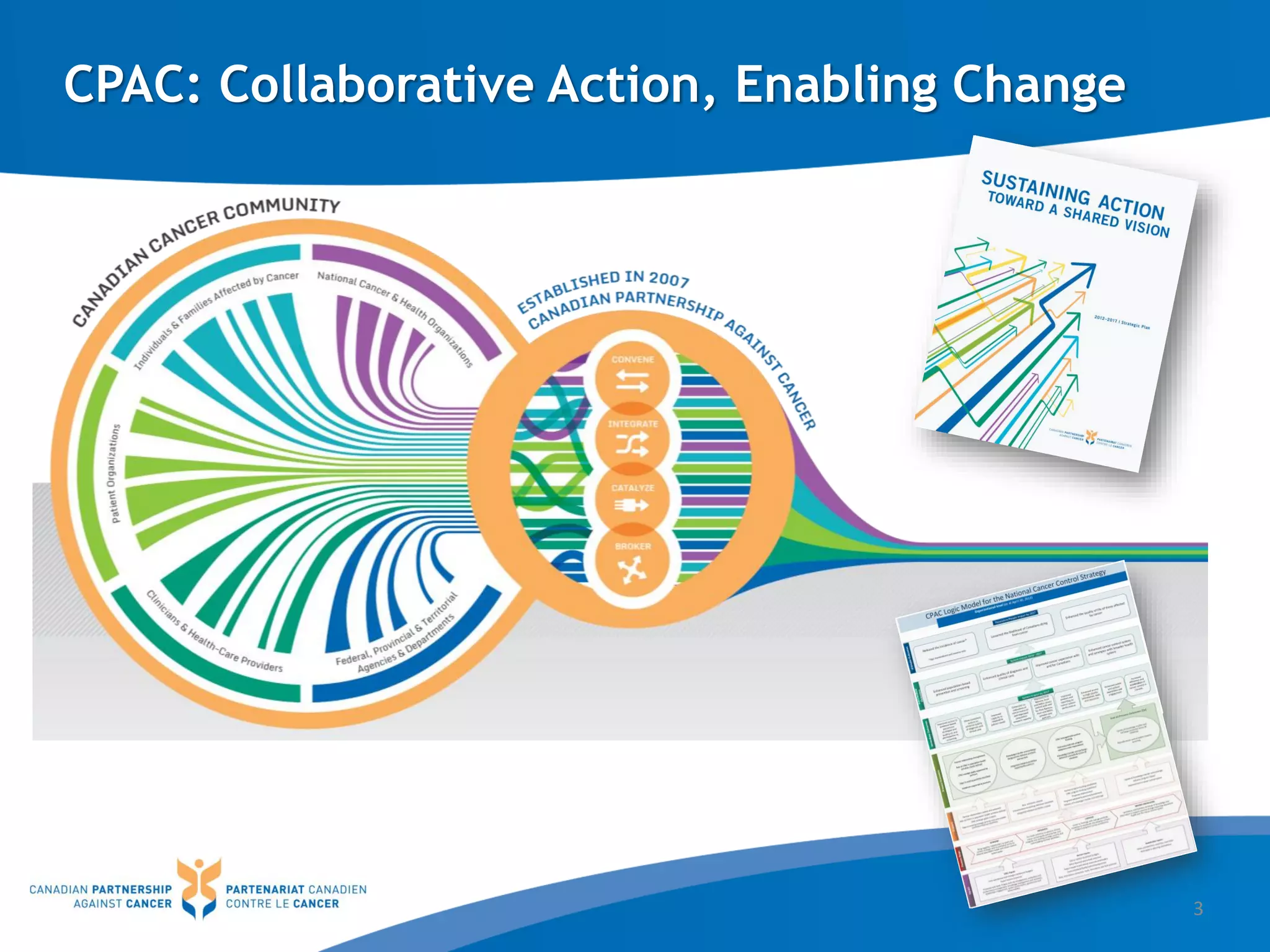
CPAC: Collaborative Action, Enabling Change
4
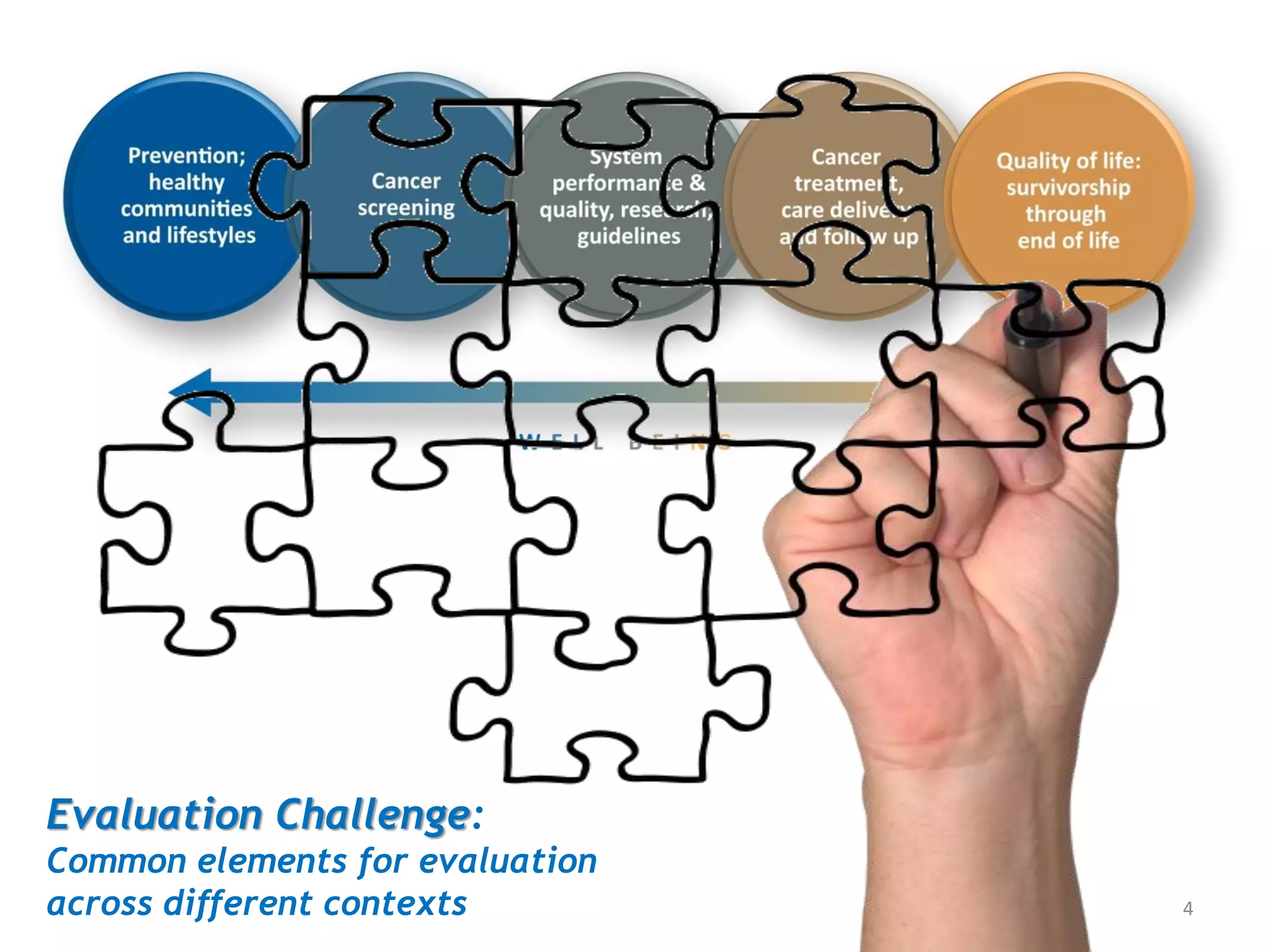
Evaluation Challenge:
Common elements for evaluation
across different contexts
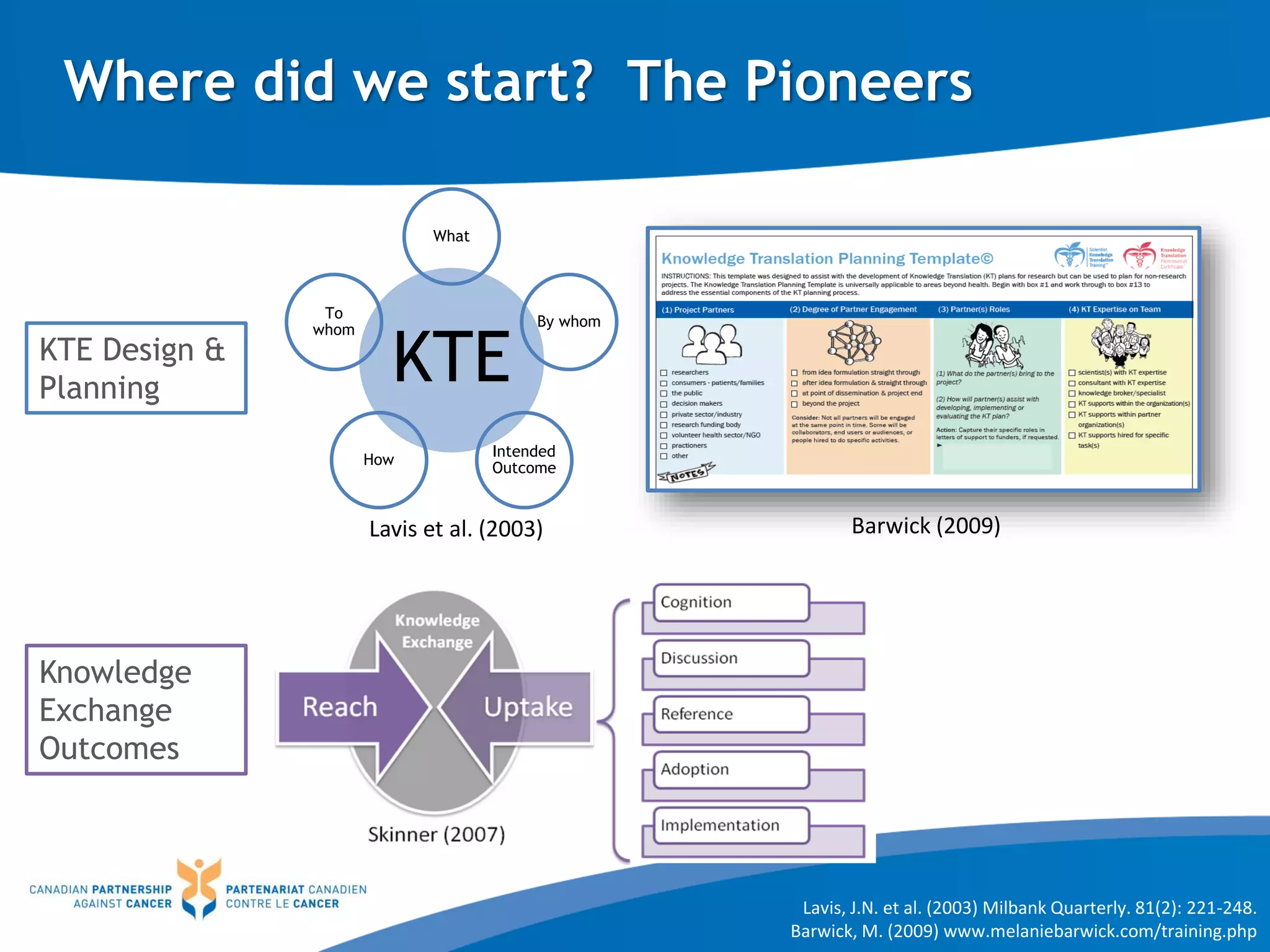
Where did we start? The Pioneers
KTE
What
By whom
Intended
Outcome
How
To
whom
Lavis et al. (2003) Barwick (2009)
Lavis, J.N. et al. (2003) Milbank Quarterly. 81(2): 221-248.
Barwick, M. (2009) www.melaniebarwick.com/training.php
KTE Design &
Planning
Knowledge
Exchange
Outcomes
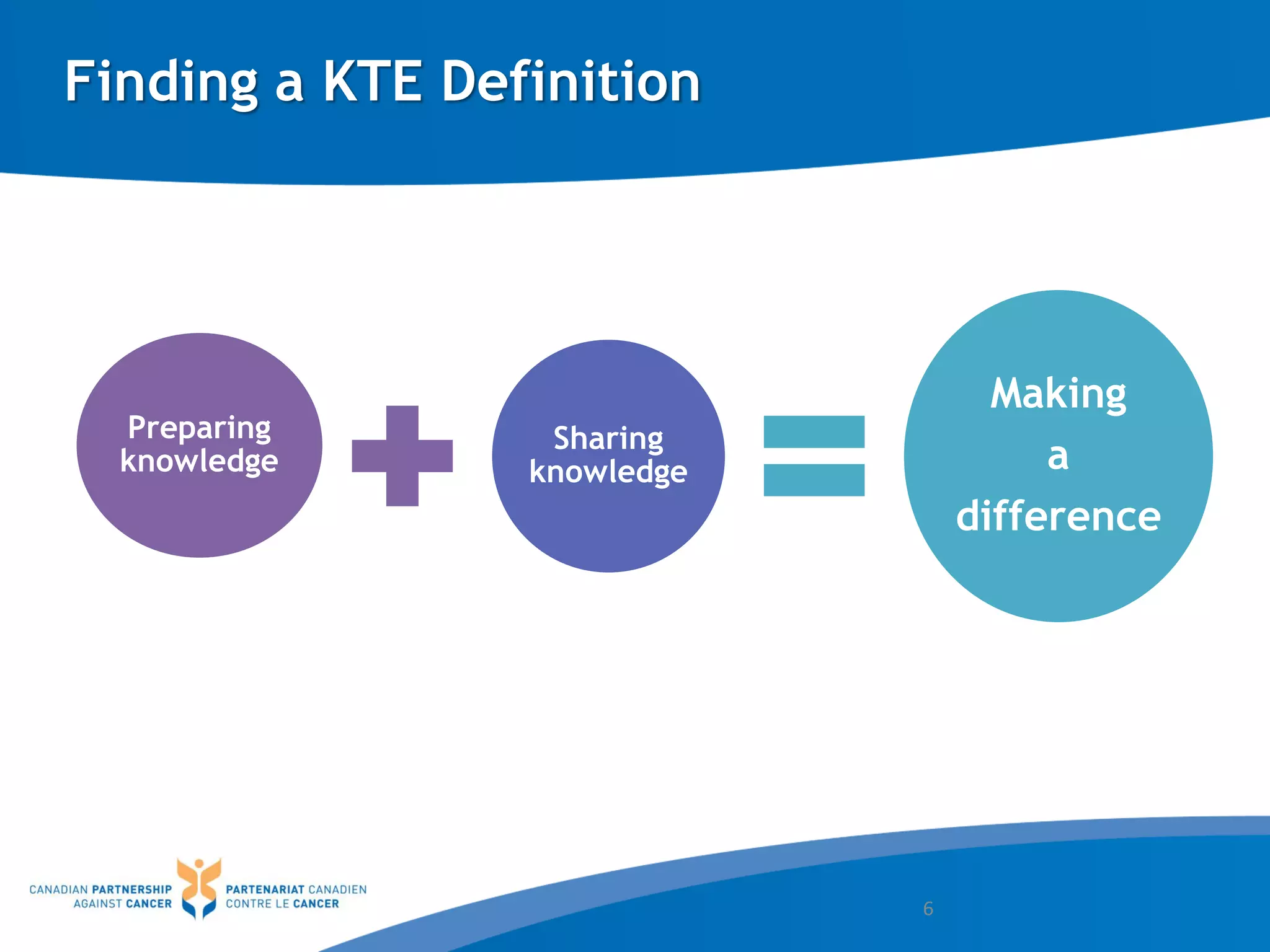
Finding a KTE Definition
6
Preparing
knowledge
Sharing
knowledge
Making
a
difference
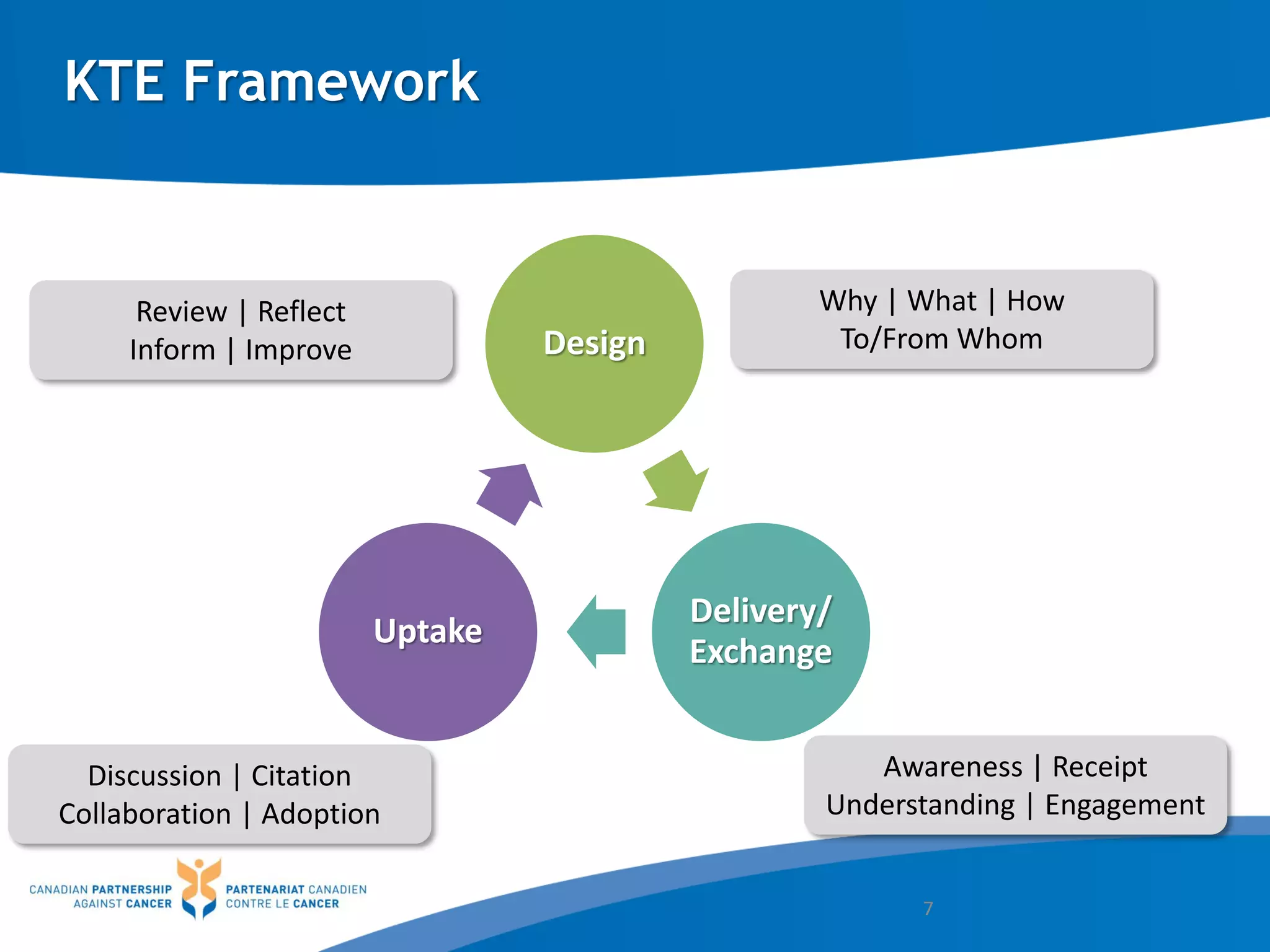
KTE Framework
7
Design
Delivery/
Exchange
Uptake
Why | What | How
To/From Whom
Discussion | Citation
Collaboration | Adoption
Awareness | Receipt
Understanding | Engagement
Review | Reflect
Inform | Improve
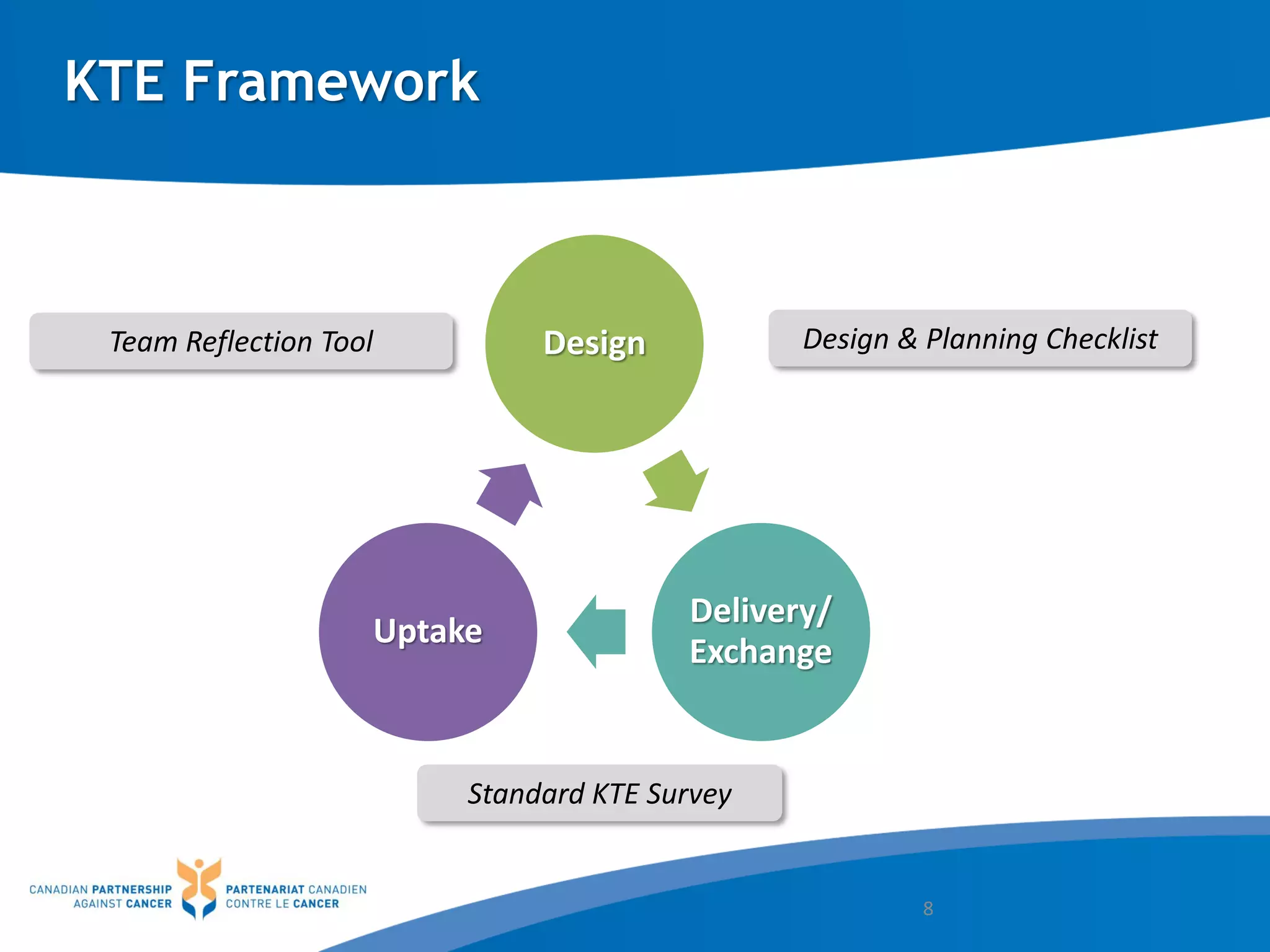
KTE Framework
8
Design
Delivery/
Exchange
Uptake
Team Reflection Tool Design & Planning Checklist
Standard KTE Survey
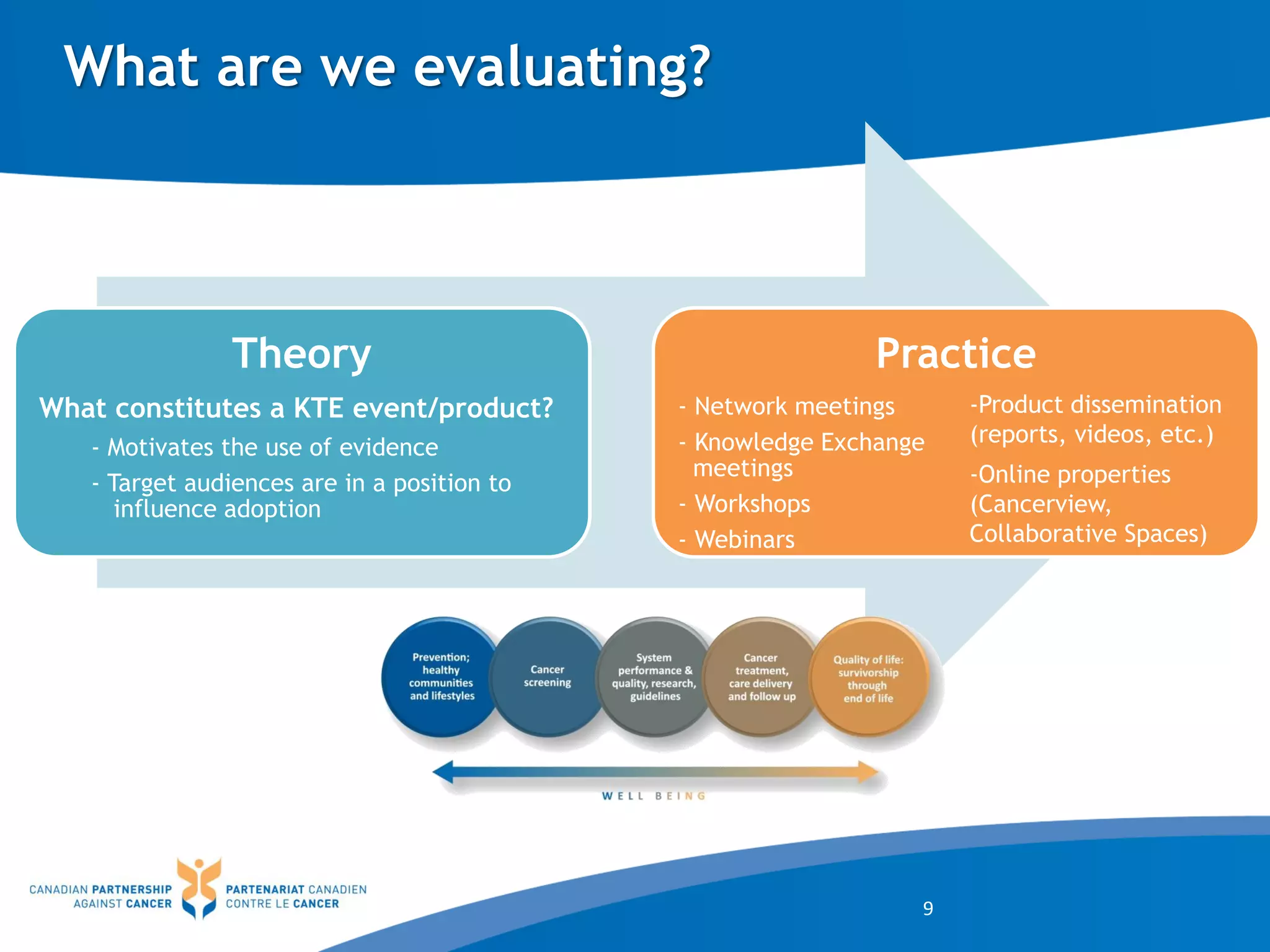
What are we evaluating?
9
Theory
What constitutes a KTE event/product?
- Motivates the use of evidence
- Target audiences are in a position to
influence adoption
Practice
- Network meetings
- Knowledge Exchange
meetings
- Workshops
- Webinars
-Product dissemination
(reports, videos, etc.)
-Online properties
(Cancerview,
Collaborative Spaces)
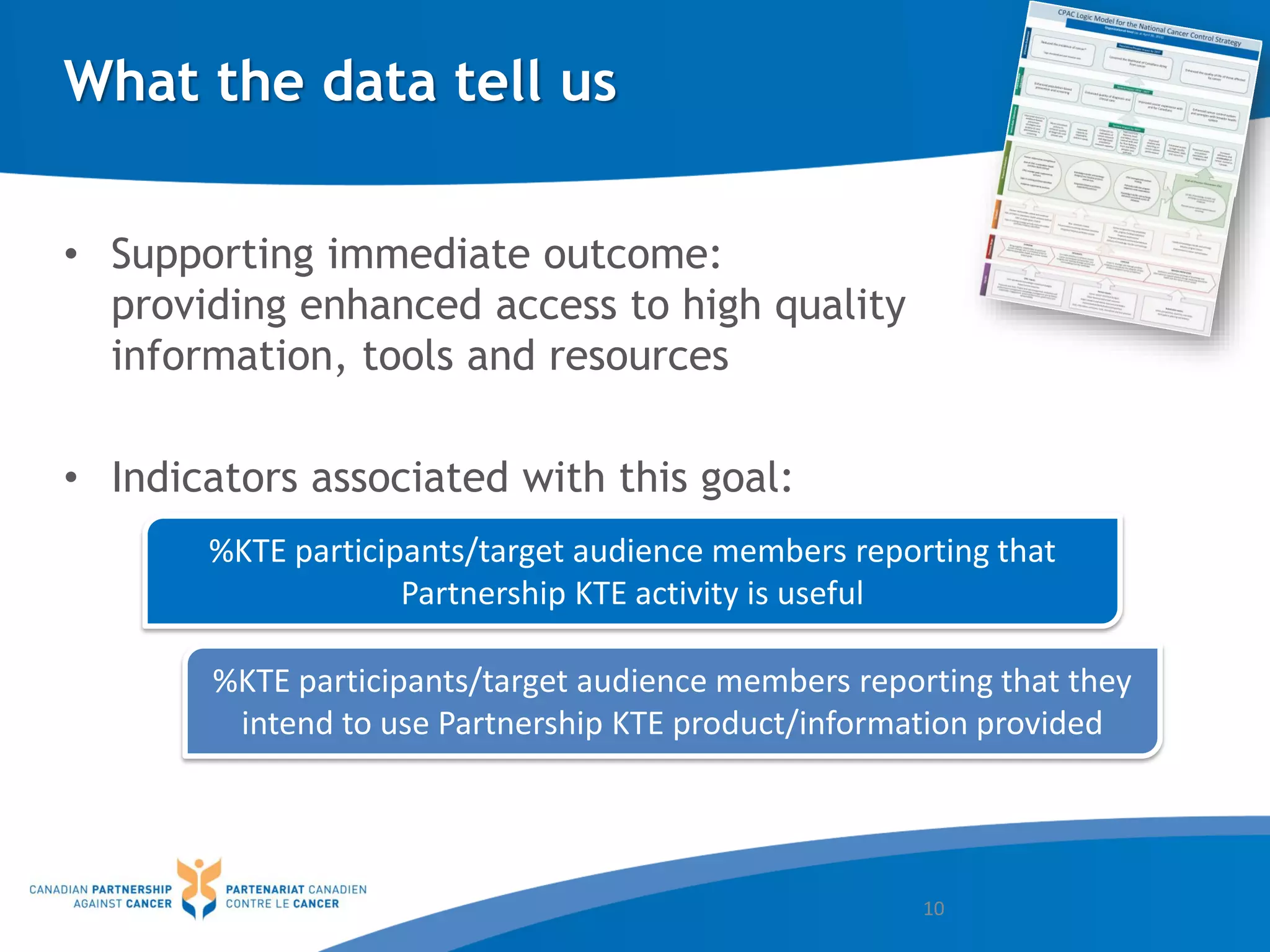
What the data tell us
• Supporting immediate outcome:
providing enhanced access to high quality
information, tools and resources
• Indicators associated with this goal:
10
%KTE participants/target audience members reporting that
Partnership KTE activity is useful
%KTE participants/target audience members reporting that they
intend to use Partnership KTE product/information provided
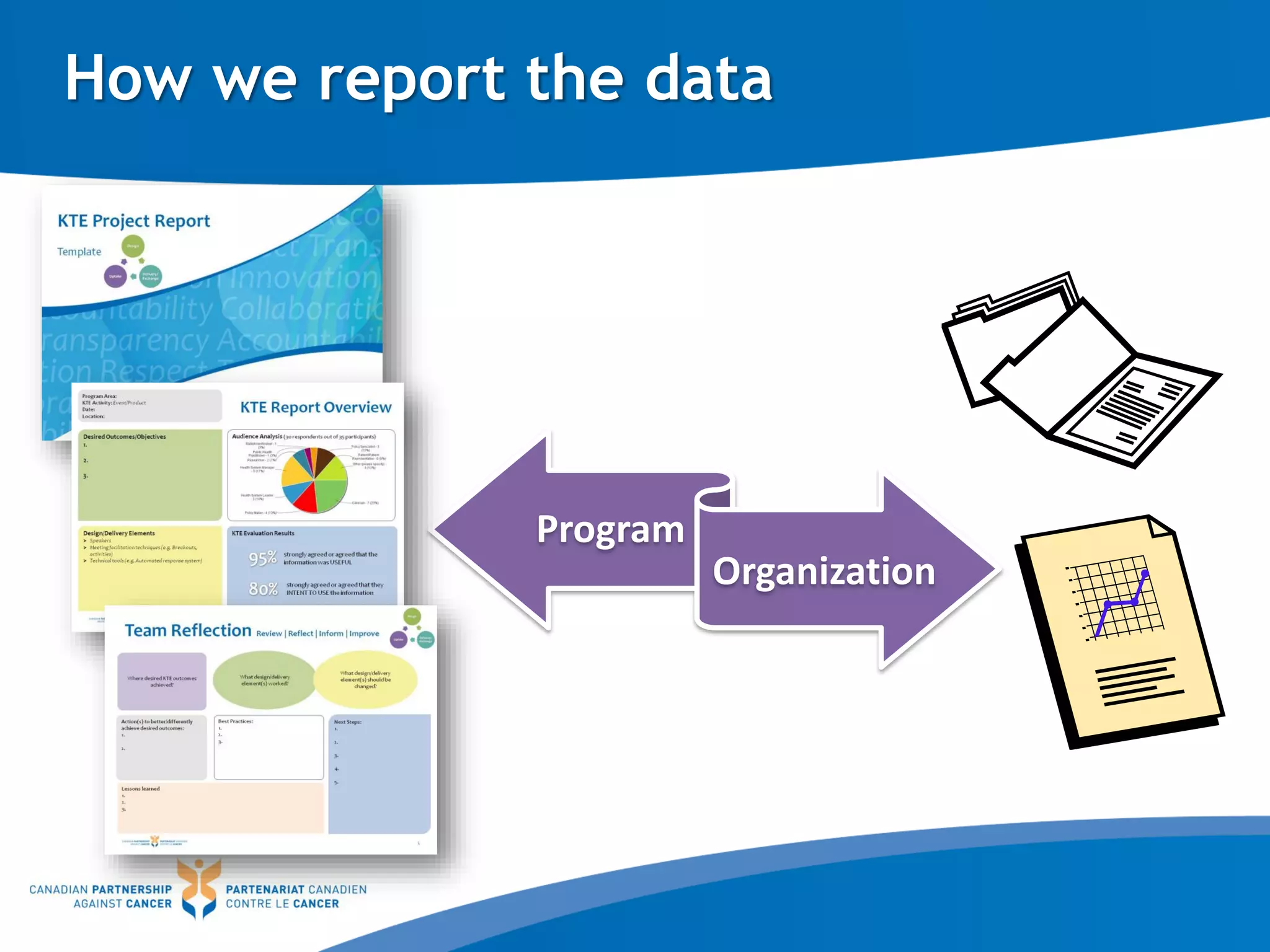
How we report the data
Program
Organization
Evolution of the KTE
Survey
13
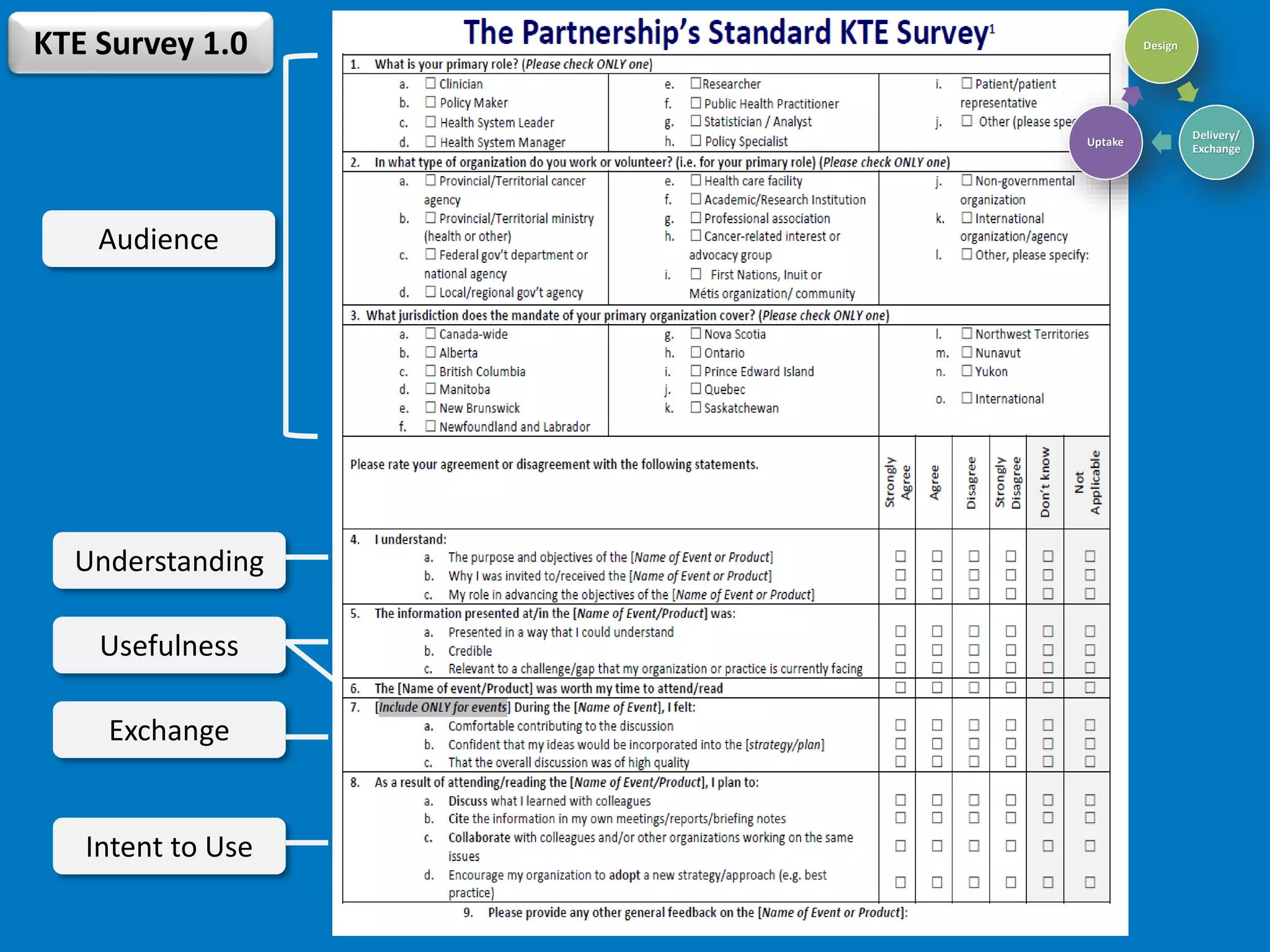
Audience
Understanding
Usefulness
Intent to Use
Exchange
KTE Survey 1.0 Design
Delivery/
Exchange
Uptake
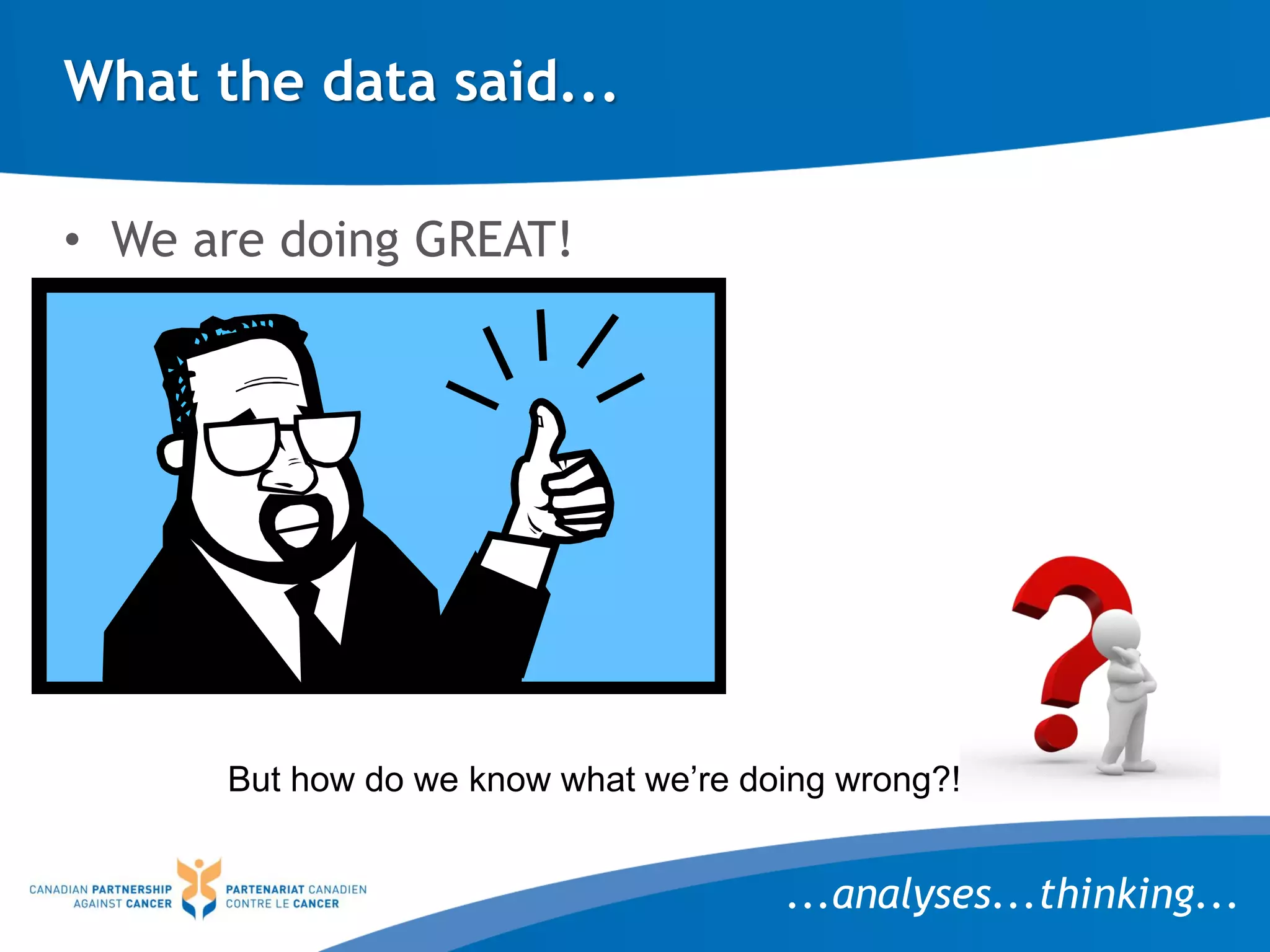
What the data said...
• We are doing GREAT!
But how do we know what we’re doing wrong?!
...analyses...thinking...
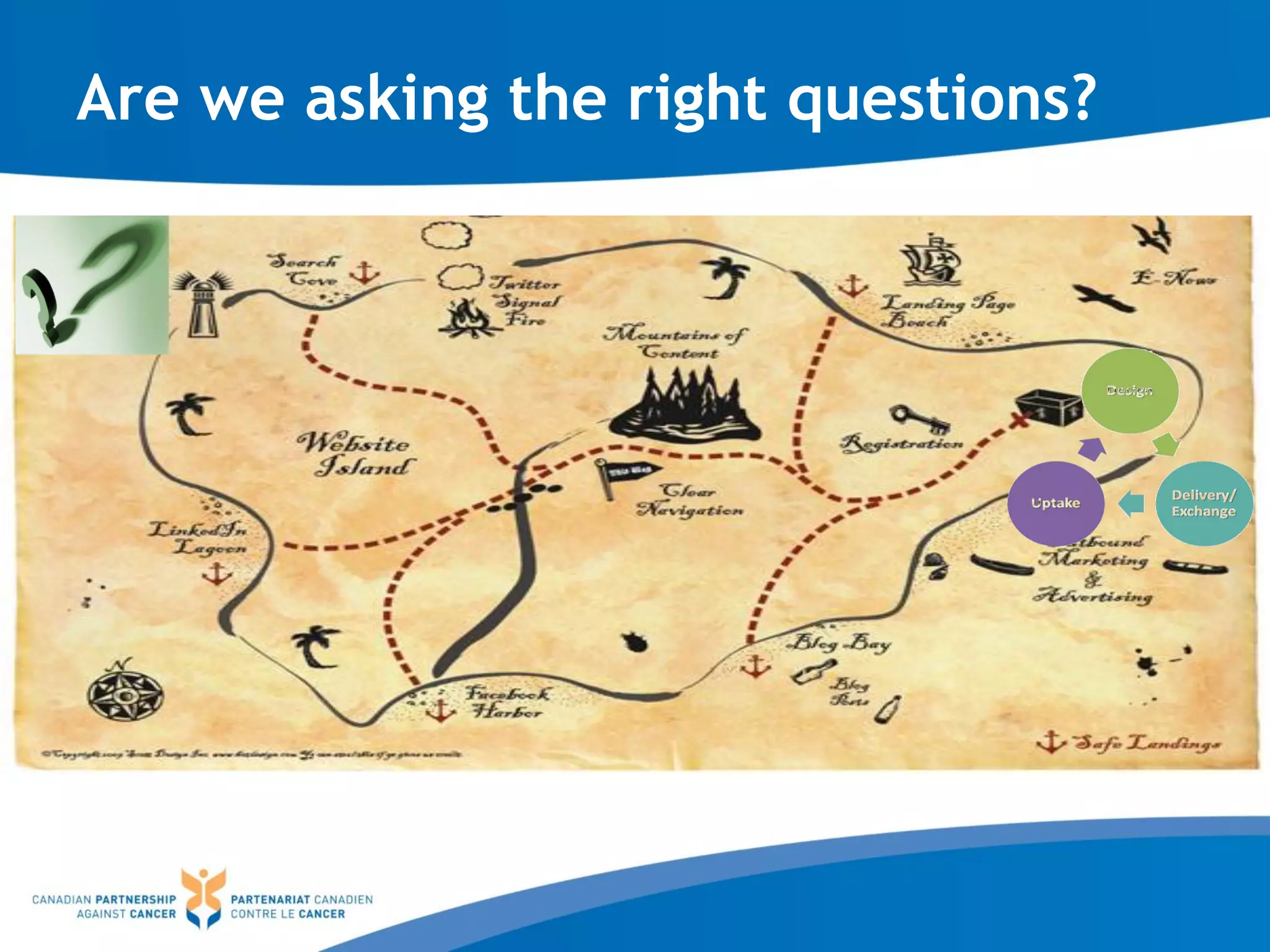
Are we asking the right questions?
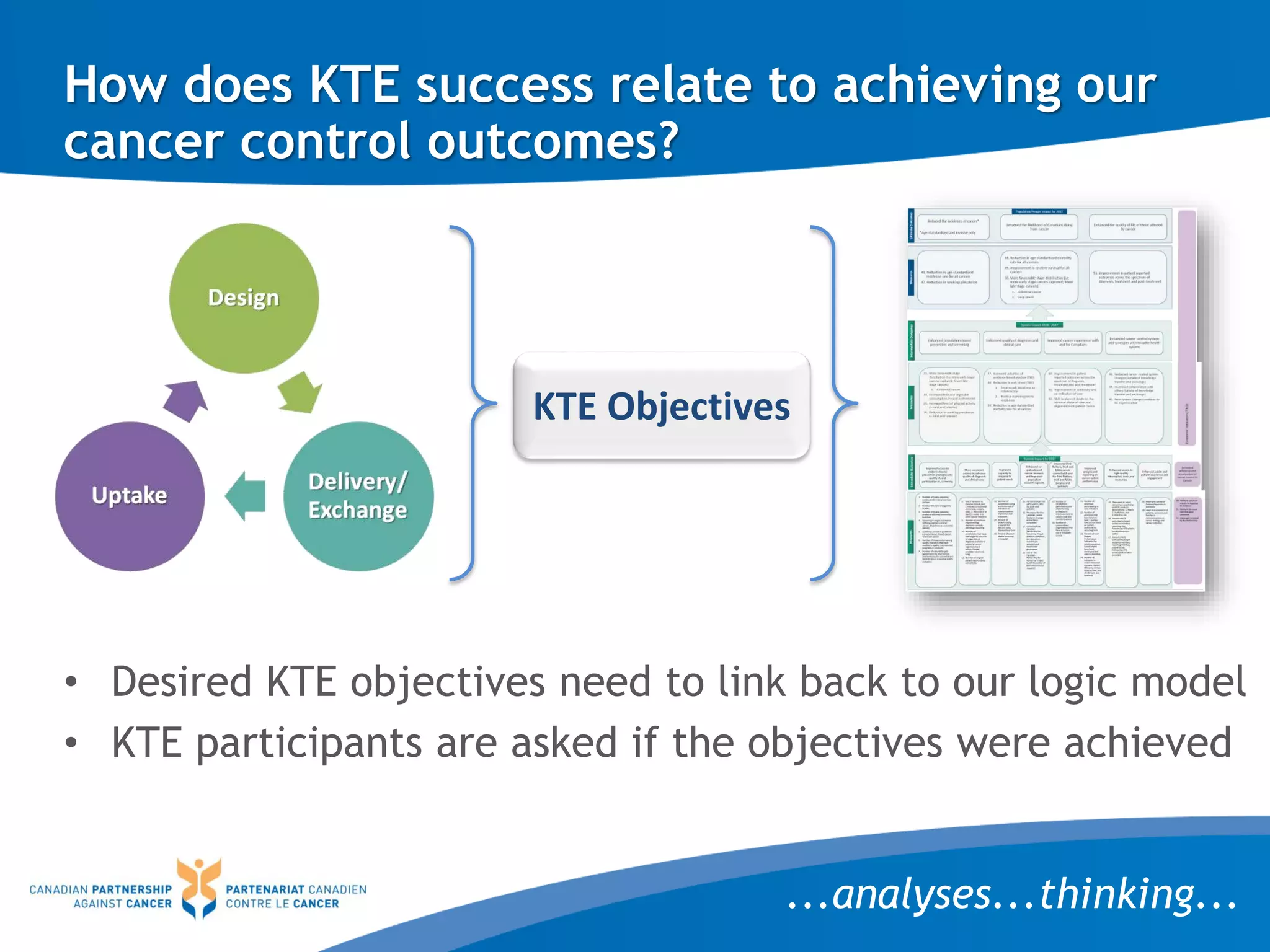
How does KTE success relate to achieving our
cancer control outcomes?
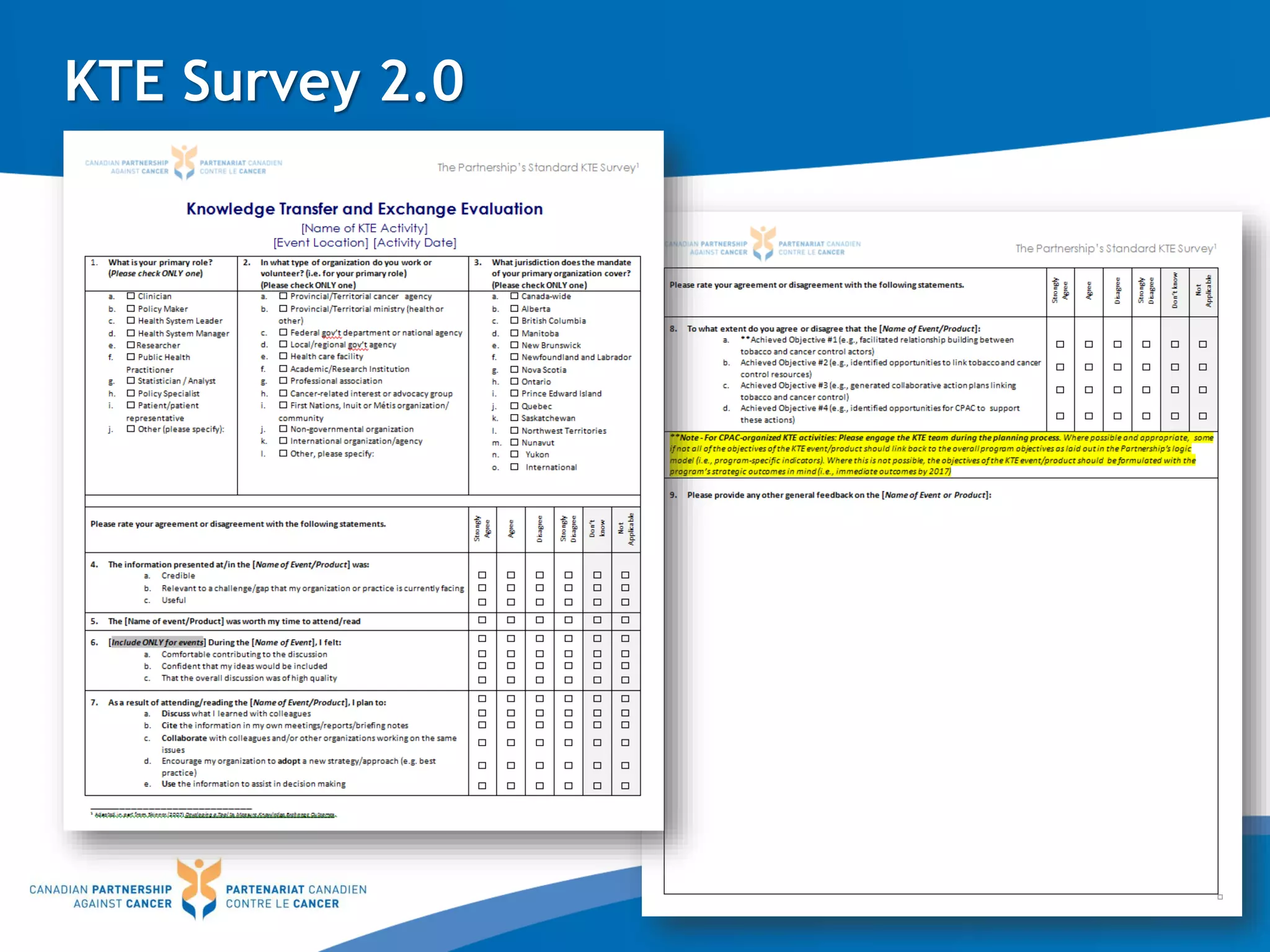
• Desired KTE objectives need to link back to our logic model
• KTE participants are asked if the objectives were achieved
...analyses...thinking...
KTE Objectives
KTE Survey 2.0
Access to the Partnership’s KTE toolkit
• Email KTE@partnershipagainstcancer.ca
• Once final, available on our website
• Publishing in the works
Survey link:
Thanks!

From setting the stage to setting trends by Mandy Sangha

  • 1.
    From setting thestage to setting trends Canadian Knowledge Mobilization Forum Mandy Sangha Specialist, Knowledge Management Methods and Adoption Karen Singh Director, Knowledge Management
  • 2.
    Presentation Outline Overview ofthe Partnership, our mandate and our approach to the Management of Knowledge Resources Conceptual Framing of the KTE Challenge CPAC’s approach to Evaluating the Impact of KTE CPAC’s Assessment of our KTE Measurement Approach (the Standard KTE Survey)
  • 3.
  • 4.
    4 Evaluation Challenge: Common elementsfor evaluation across different contexts
  • 5.
    Where did westart? The Pioneers KTE What By whom Intended Outcome How To whom Lavis et al. (2003) Barwick (2009) Lavis, J.N. et al. (2003) Milbank Quarterly. 81(2): 221-248. Barwick, M. (2009) www.melaniebarwick.com/training.php KTE Design & Planning Knowledge Exchange Outcomes
  • 6.
    Finding a KTEDefinition 6 Preparing knowledge Sharing knowledge Making a difference
  • 7.
    KTE Framework 7 Design Delivery/ Exchange Uptake Why |What | How To/From Whom Discussion | Citation Collaboration | Adoption Awareness | Receipt Understanding | Engagement Review | Reflect Inform | Improve
  • 8.
    KTE Framework 8 Design Delivery/ Exchange Uptake Team ReflectionTool Design & Planning Checklist Standard KTE Survey
  • 9.
    What are weevaluating? 9 Theory What constitutes a KTE event/product? - Motivates the use of evidence - Target audiences are in a position to influence adoption Practice - Network meetings - Knowledge Exchange meetings - Workshops - Webinars -Product dissemination (reports, videos, etc.) -Online properties (Cancerview, Collaborative Spaces)
  • 10.
    What the datatell us • Supporting immediate outcome: providing enhanced access to high quality information, tools and resources • Indicators associated with this goal: 10 %KTE participants/target audience members reporting that Partnership KTE activity is useful %KTE participants/target audience members reporting that they intend to use Partnership KTE product/information provided
  • 11.
    How we reportthe data Program Organization
  • 12.
    Evolution of theKTE Survey
  • 13.
    13 Audience Understanding Usefulness Intent to Use Exchange KTESurvey 1.0 Design Delivery/ Exchange Uptake
  • 14.
    What the datasaid... • We are doing GREAT! But how do we know what we’re doing wrong?! ...analyses...thinking...
  • 15.
    Are we askingthe right questions?
  • 16.
    How does KTEsuccess relate to achieving our cancer control outcomes? • Desired KTE objectives need to link back to our logic model • KTE participants are asked if the objectives were achieved ...analyses...thinking... KTE Objectives
  • 17.
  • 18.
    Access to thePartnership’s KTE toolkit • Email KTE@partnershipagainstcancer.ca • Once final, available on our website • Publishing in the works Survey link:
  • 19.