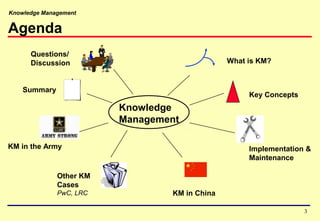
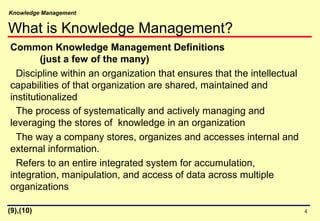
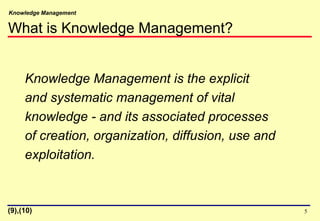
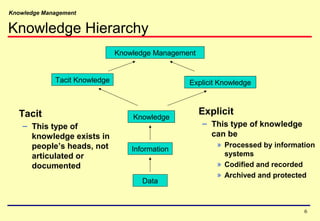
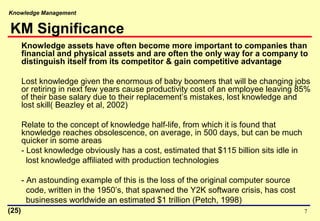
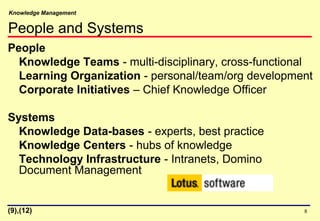
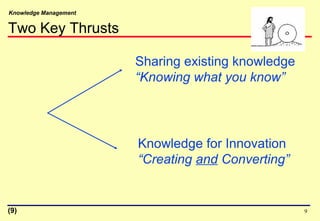
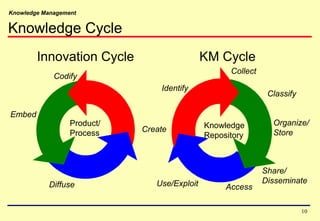
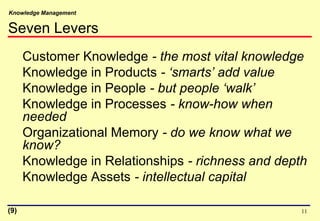
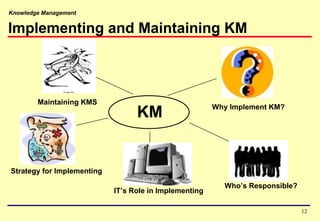
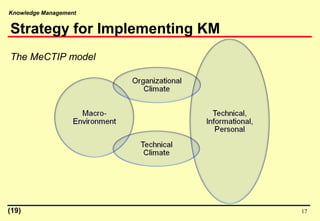
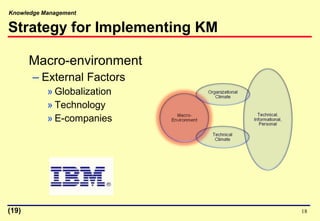
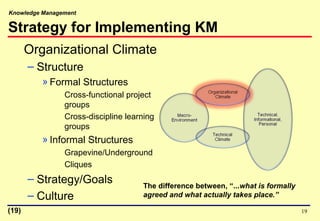
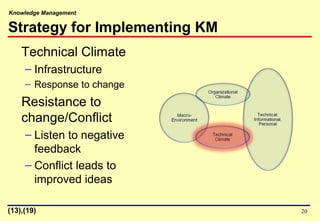
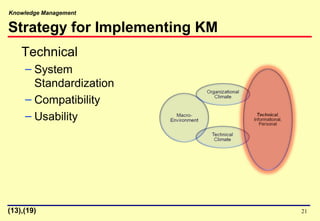
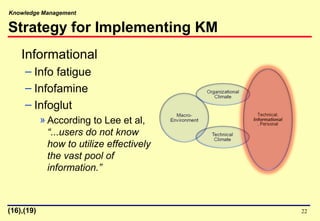
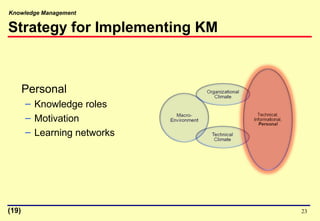
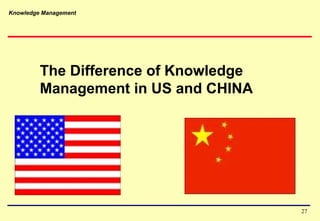
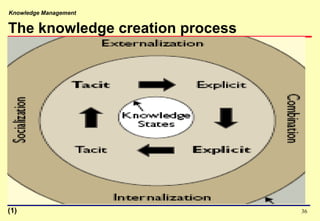
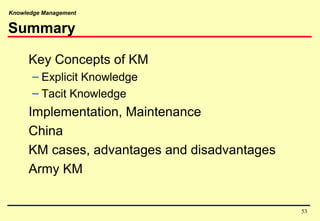
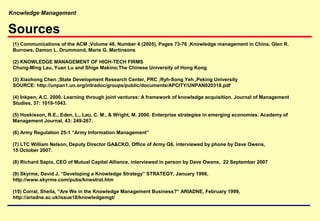
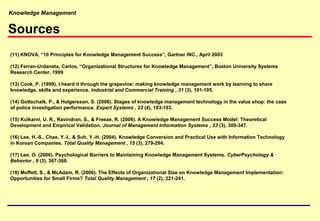
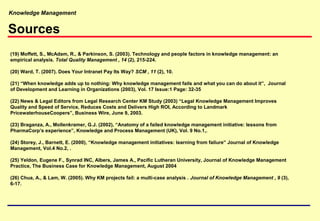
This document discusses knowledge management. It begins by defining knowledge management as the explicit and systematic management of vital knowledge and its processes. It notes that knowledge can be tacit, residing in people's minds, or explicit, able to be codified and processed by systems. The document then outlines several key concepts in knowledge management including differentiating tacit and explicit knowledge, the knowledge hierarchy, and knowledge assets being important for competitive advantage. It discusses implementing knowledge management through people, systems, and ensuring responsibility is shared. The role of information technology is also examined, as is maintaining knowledge management systems over time. Cultural differences between US and Chinese approaches to knowledge management are explored, such as individualism versus collectivism.