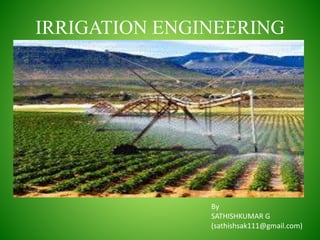
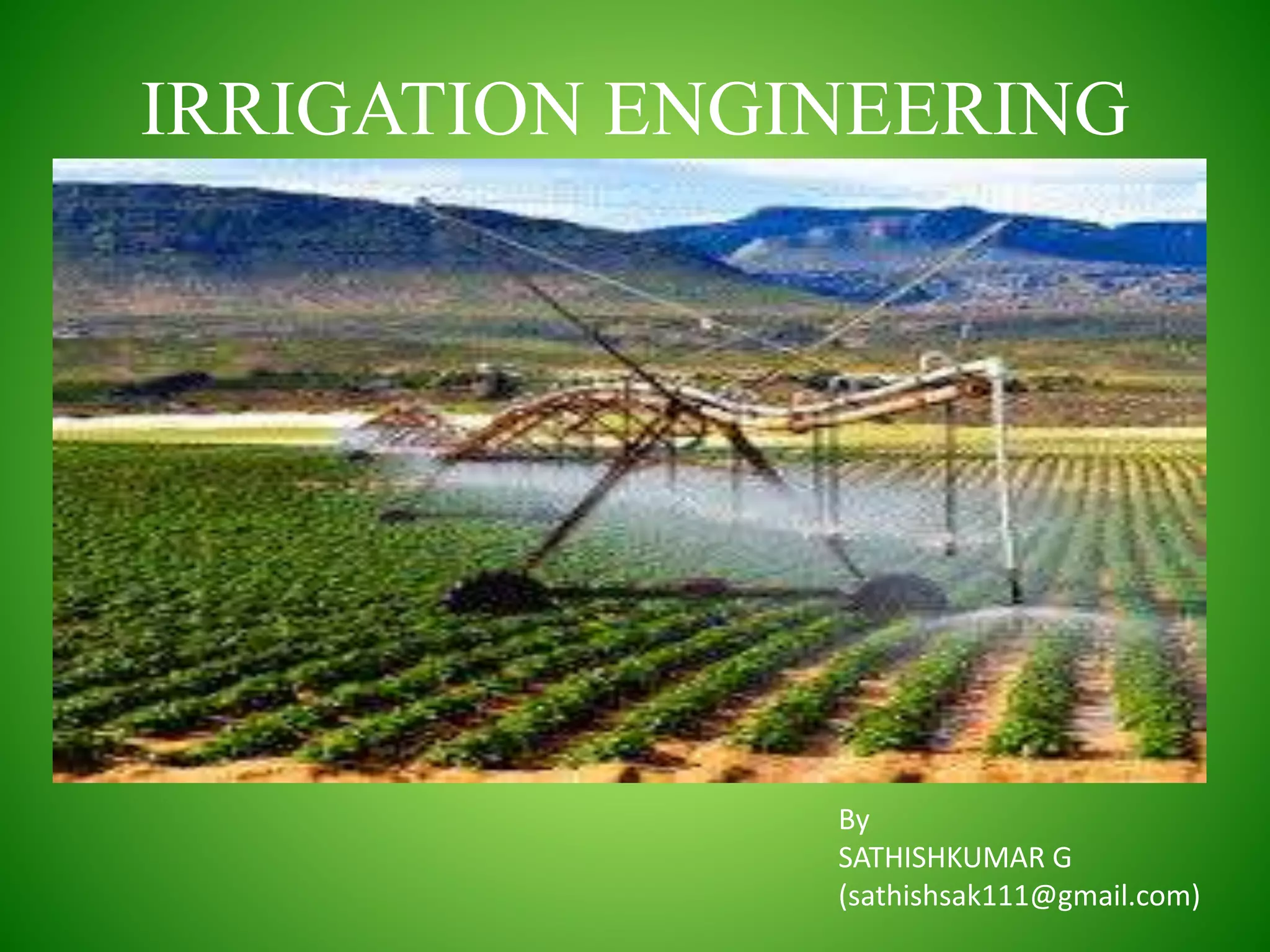
IRRIGATION ENGINEERING
By
SATHISHKUMAR G
(sathishsak111@gmail.com)
CONTENTS:
• WHAT IS IRRIGATION ENGINEERING
• DEFINITION
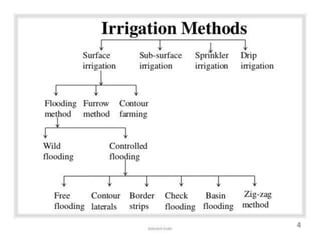
• METHODS OF IRRIGATION
WHAT IS IRRIGATION ENGINEERING:
• Water is required for agriculture.
• Sometimes this water requirement is fulfilled
by rain, but there are some dry areas where
irrigation is the only process by which water
is supplied to crops.
DEFINITION:
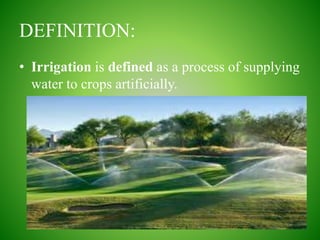
• Irrigation is defined as a process of supplying
water to crops artificially.
SURFACE IRRIGATION:
• Surface irrigation is defined as the group of
application techniques where water is applied
and distributed over the soil surface by
gravity.
• It is by far the most common form of
irrigation throughout the world and has been
practiced in many areas virtually unchanged
for thousands of years..
SURFACE IRRIGATION:
SPRINKLER IRRIGATION:
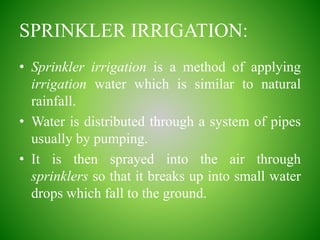
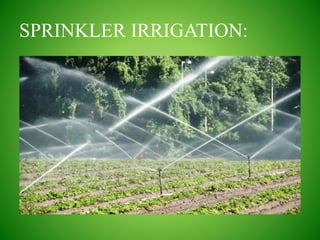
• Sprinkler irrigation is a method of applying
irrigation water which is similar to natural
rainfall.
• Water is distributed through a system of pipes
usually by pumping.
• It is then sprayed into the air through
sprinklers so that it breaks up into small water
drops which fall to the ground.
SPRINKLER IRRIGATION:
DRIP IRRIGATION:
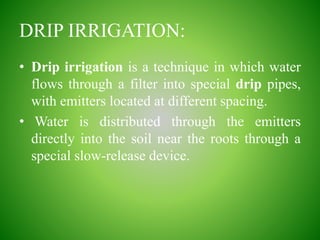
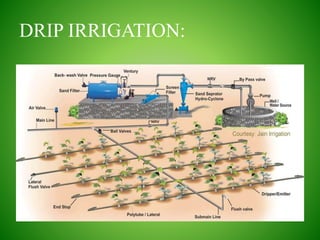
• Drip irrigation is a technique in which water
flows through a filter into special drip pipes,
with emitters located at different spacing.
• Water is distributed through the emitters
directly into the soil near the roots through a
special slow-release device.
DRIP IRRIGATION:
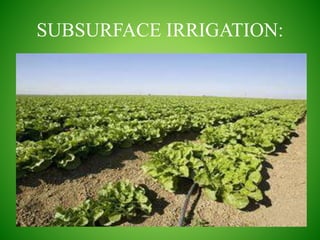
SUBSURFACE IRRIGATION:
• Subsurface irrigation consists of methods
whereby irrigation water is applied below the
soil surface.
• The specific type of irrigation method varies
depending on the depth of the water table.
When the water table is well below the
surface, drip or trickle irrigation emission
devices can be buried below the soil surface
(usually within the plant root zone).
SUBSURFACE IRRIGATION:
SURFACE IRRIGATION:
• FLOODING METHOD
• FURROW METHOD
• CONTOUR FARMING
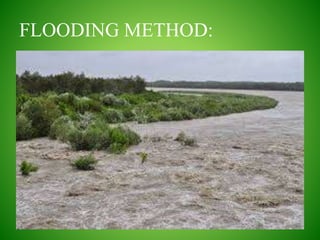
FLOODING METHOD:
• Some methods of flood control have been
practiced since ancient times.
• These methods include planting vegetation to
retain extra water, terracing hillsides to slow
flow downhill, and the construction of flood
ways (man-made channels to divert
floodwater).
FLOODING METHOD:
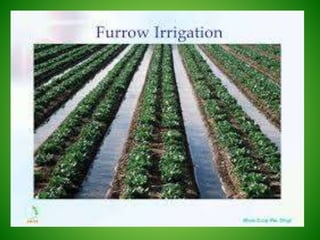
FURROW METHOD:
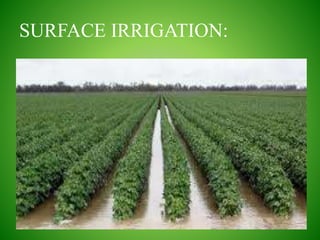
• Furrow irrigation is a type of surface
irrigation in which trenches or “furrows” are
dug between crop rows in a field.
• Farmers flow water down the furrows (often
using only gravity) and it seeps vertically and
horizontally to refill the soil reservoir.
• Flow to each furrow is individually
controlled.
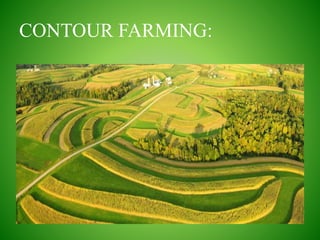
CONTOUR FARMING:
• Contour farming is growing crops "on the
level" across or perpendicular to a slope rather
than up and down the slope.
• The rows running across the slope are
designed to be as level as possible to facilitate
tillage and planting operations on the
contour.
CONTOUR FARMING:
FLOODING METHOD:
• WILD FLOODING
• CONTROLED FLOODING
WILD FLOODING:
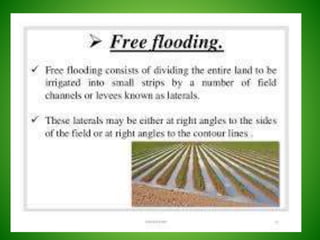
• Wild flooding is when water is allowed to flow
freely across farmland. It is a relatively cheap
form of irrigation, but uses water inefficiently
and some areas get more than others.
THANK YOU

IRRIGATION ENGINEERING

  • 1.
  • 2.
    CONTENTS: • WHAT ISIRRIGATION ENGINEERING • DEFINITION • METHODS OF IRRIGATION
  • 3.
    WHAT IS IRRIGATIONENGINEERING: • Water is required for agriculture. • Sometimes this water requirement is fulfilled by rain, but there are some dry areas where irrigation is the only process by which water is supplied to crops.
  • 4.
    DEFINITION: • Irrigation isdefined as a process of supplying water to crops artificially.
  • 6.
    SURFACE IRRIGATION: • Surfaceirrigation is defined as the group of application techniques where water is applied and distributed over the soil surface by gravity. • It is by far the most common form of irrigation throughout the world and has been practiced in many areas virtually unchanged for thousands of years..
  • 7.
  • 8.
    SPRINKLER IRRIGATION: • Sprinklerirrigation is a method of applying irrigation water which is similar to natural rainfall. • Water is distributed through a system of pipes usually by pumping. • It is then sprayed into the air through sprinklers so that it breaks up into small water drops which fall to the ground.
  • 9.
  • 10.
    DRIP IRRIGATION: • Dripirrigation is a technique in which water flows through a filter into special drip pipes, with emitters located at different spacing. • Water is distributed through the emitters directly into the soil near the roots through a special slow-release device.
  • 11.
  • 12.
    SUBSURFACE IRRIGATION: • Subsurfaceirrigation consists of methods whereby irrigation water is applied below the soil surface. • The specific type of irrigation method varies depending on the depth of the water table. When the water table is well below the surface, drip or trickle irrigation emission devices can be buried below the soil surface (usually within the plant root zone).
  • 13.
  • 14.
    SURFACE IRRIGATION: • FLOODINGMETHOD • FURROW METHOD • CONTOUR FARMING
  • 15.
    FLOODING METHOD: • Somemethods of flood control have been practiced since ancient times. • These methods include planting vegetation to retain extra water, terracing hillsides to slow flow downhill, and the construction of flood ways (man-made channels to divert floodwater).
  • 16.
  • 17.
    FURROW METHOD: • Furrowirrigation is a type of surface irrigation in which trenches or “furrows” are dug between crop rows in a field. • Farmers flow water down the furrows (often using only gravity) and it seeps vertically and horizontally to refill the soil reservoir. • Flow to each furrow is individually controlled.
  • 19.
    CONTOUR FARMING: • Contourfarming is growing crops "on the level" across or perpendicular to a slope rather than up and down the slope. • The rows running across the slope are designed to be as level as possible to facilitate tillage and planting operations on the contour.
  • 20.
  • 21.
    FLOODING METHOD: • WILDFLOODING • CONTROLED FLOODING
  • 22.
    WILD FLOODING: • Wildflooding is when water is allowed to flow freely across farmland. It is a relatively cheap form of irrigation, but uses water inefficiently and some areas get more than others.
  • 28.