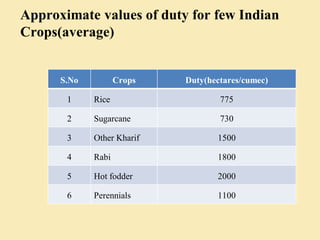
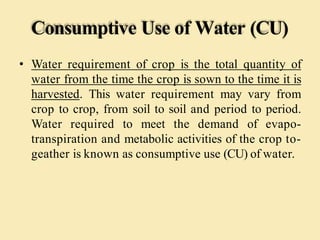
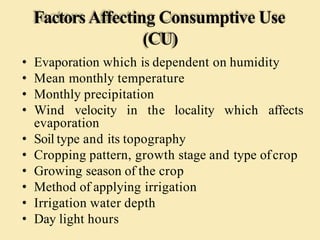
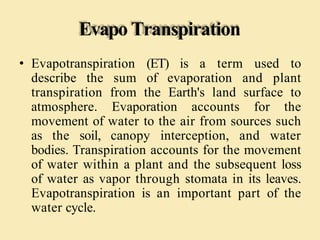
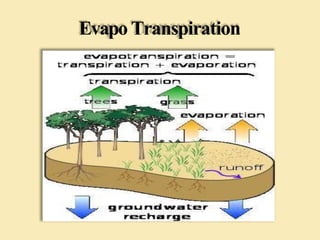
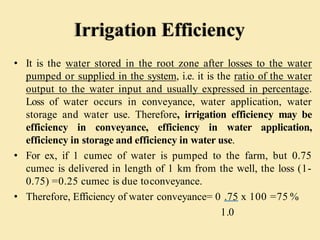
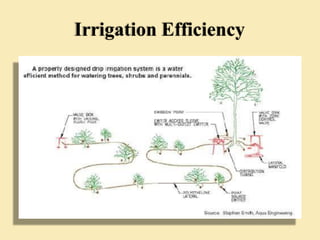
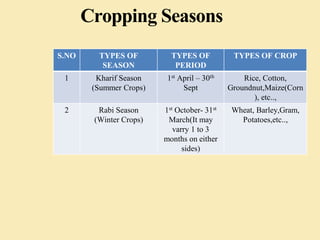
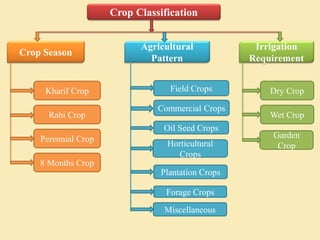
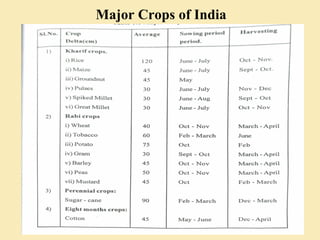
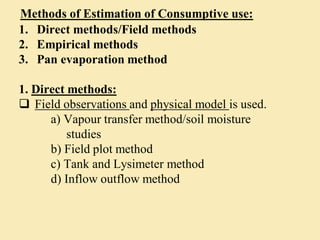
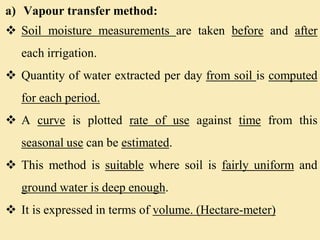
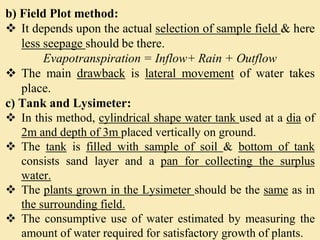
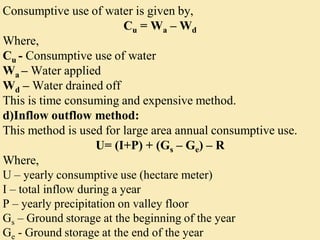
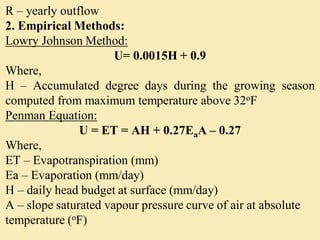
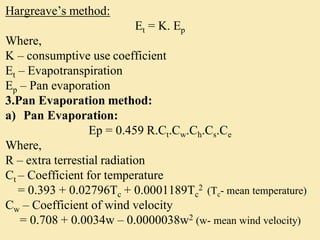
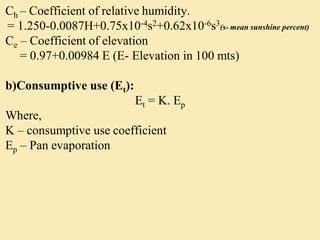
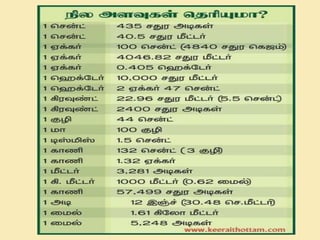
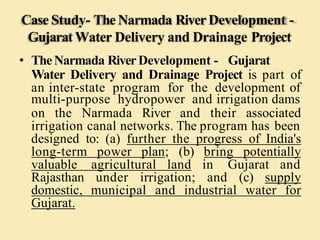
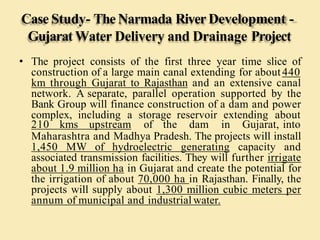
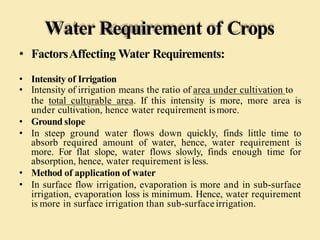
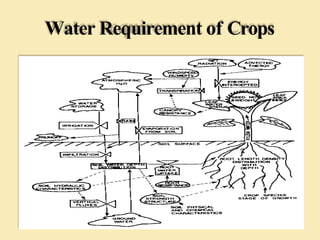
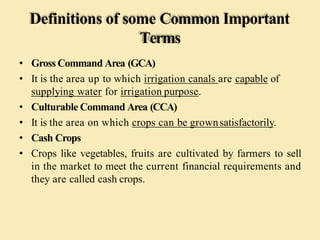
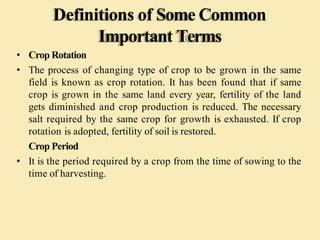
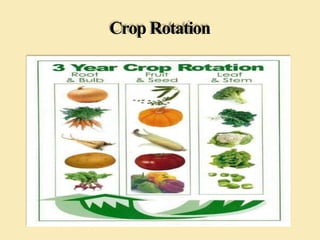
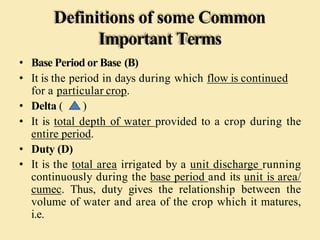
Irrigation engineering involves planning and designing water supply systems for crop irrigation. Key factors that necessitate irrigation include insufficient or uneven rainfall, requirements of perennial crops, and converting desert areas. Benefits of irrigation include increased crop yields, elimination of mixed cropping, prosperity of farmers, and sources of revenue from water taxes. Factors affecting the water requirements of crops include climate, soil type, irrigation method, and ground slope. Important terms include gross command area, culturable command area, crop rotation, base period, delta, and duty. The relationship between duty, base period, and delta is defined. Methods to improve duty involve efficient irrigation methods, reducing canal seepage and evaporation losses, and farmer training.

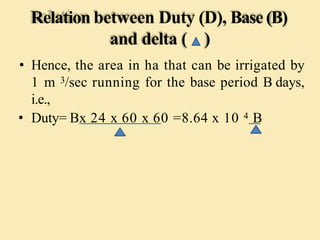
![Relation between Duty (D), Base(B)
and Delta ( )
• Let, D=Duty of crop in ha / cumec
• B=Base period of crop in days
• =Delta is depth of water in m.
• Now 1 cumec of water running continuously for
a period of ‘B’ days provides a volume of
• [ (Bx 24 x 60 x 60) x 1]m3
• Amount of water required to flood 1ha of land
with a depth m = (1 x 10 4) m2 x m](https://image.slidesharecdn.com/unit-i-200311140356/85/CROP-WATER-REQUIREMENT-23-320.jpg)