WRE – I
                                                 UNIT‐ VI
                                                 UNIT

Prof S S
P f S S JAHAGIRDAR
BE (CIVIL), ME(ENV.),PhD(persuing)
NK Orchid college of Engg. and Tech. , Solapur
NK Orchid college of Engg  and Tech    Solapur
Contents
 Types of irrigation methods
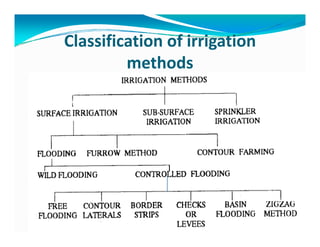
Classification of irrigation
Classification of irrigation 
         methods 
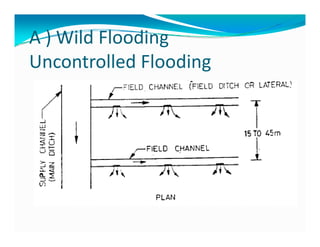
A ) Wild Flooding 
  )             g
Uncontrolled Flooding 
Wild Flooding
   d ood g
 Water is applied by spreading on 
 land.
 No preparation in the form of levees 
 or borders or ditches.
 Water can be directly applied from 
 natural stream or river during flood.
 natural stream or river during flood
 Suitable for smooth and flat land.
 Wastage of water .
B ) Controlled Flooding
B ) Controlled Flooding 
1. Free flooding method 
Free Flooding
  ee ood g
Also known as irrigation by plots.
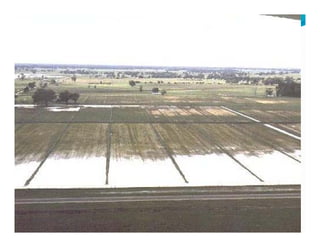
Water is spread on the land with 
proper methods to control depth of 
application.
All methods of controlled flooding 
requires preparation of land .
requires preparation of land 
Land is divided in to small strips by 
                                p y
levees.
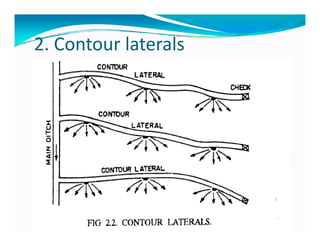
2 Contour laterals
2. Contour laterals
Contour laterals
Co tou ate a s
    pp                p
  Applicable for steeper terrain.
  Field is divided in to small contour 
  laterals.
  laterals
  Spacing of contour laterals depend upon
   p      g                      p      p
1. the prominent grade of the field 
   between two adjacent ditches or laterals, 
   between two adjacent ditches or laterals  
2. the uniformity of slope and 
                  y       p
3. the soil type
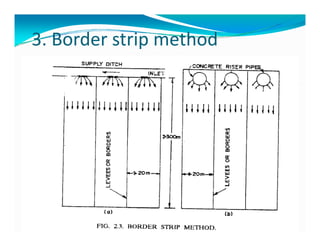
3. Border strip method
3 o de st p et od
Border strip method
 o de st p et od
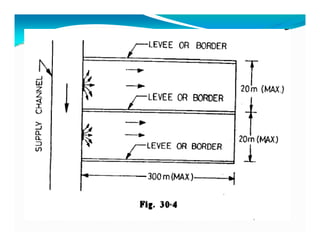
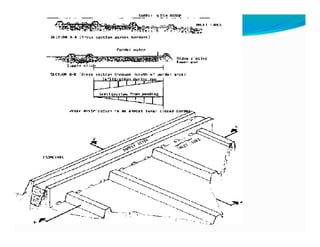
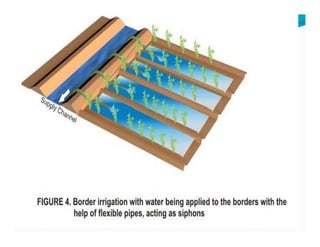
 Farm is divided into series of strips
 Width= 10 to 20 m
 Length = 100 to 300 m
 L    th     t        
 Strips are separated by levees
 For applying water through supply 
 channel earth or concrete channel is 
 provided
4. Check flooding
Check flooding
C ec ood g
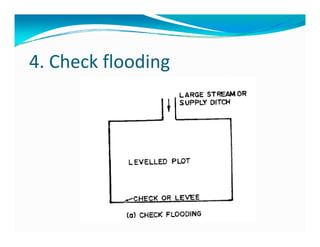
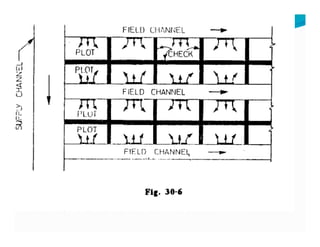
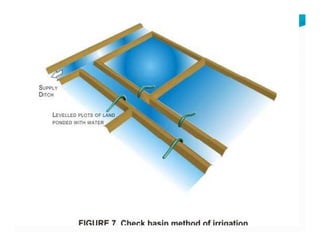
 Large stream discharges water into 
 relatively level plot surrounded by 
 levees or checks
 Width of levees at the base = 2 to 3 m
 Height = not more than 25 to 30 cm 
 high
 Method is most suitable for permeable 
                              p
 soil as large amount of water is applied.
5. Basin flooding
Basin Flooding 
 as     ood g
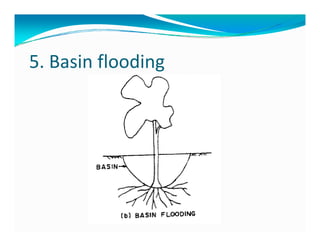
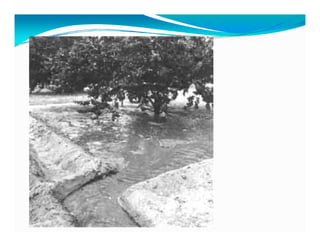
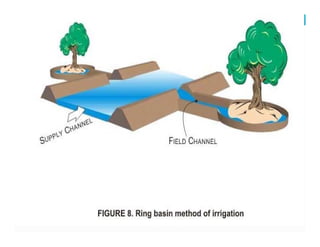
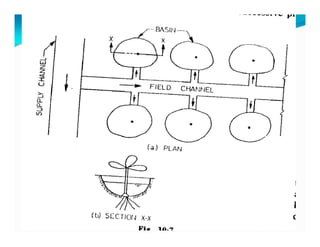
 Special form of check flooding 
 applied to orchards.
 Basins are formed for each tree.
            f      df     h
 Water is supplied through a 
 W t  i         li d th   h   
 supply ditch.
 supply ditch
 No. of basins can be 
 interconnected
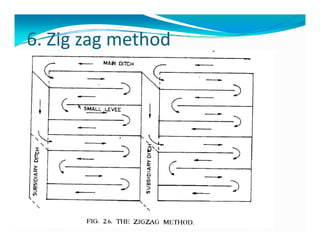
6. Zig zag method
6 g ag et od
Zig Zag method
  g ag et od
 Special method of flooding
 Water takes circuitous path before 
 reaching dead end of plot.
 reaching dead end of plot
 Area is divided in to square or 
                        q
 rectangular plots.
 Suitable for relatively level plot
 S it bl  f   l ti l  l l  l t
 Unsuitable for modern farming with 
 machinery.
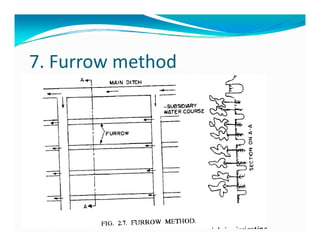
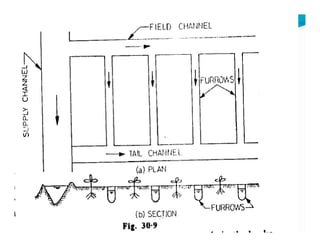
7. Furrow method 
Furrow method
 u o    et od
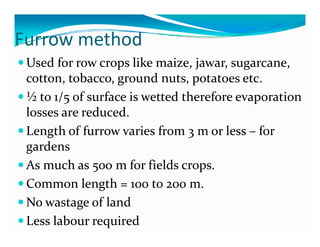
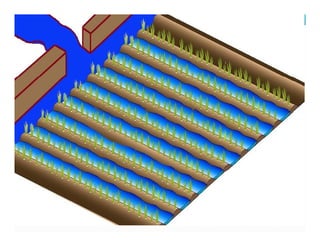
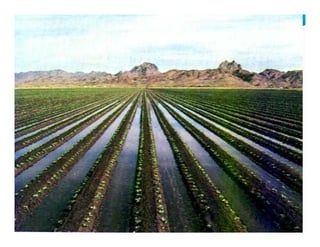
 Used for row crops like maize, jawar, sugarcane, 
 cotton, tobacco, ground nuts, potatoes etc.
 cotton  tobacco  ground nuts  potatoes etc
 ½ to 1/5 of surface is wetted therefore evaporation 
 losses are reduced.
 l         d d
 Length of furrow varies from 3 m or less – for 
 gardens
 As much as 500 m for fields crops.
              5                   p
 Common length = 100 to 200 m.
 No wastage of land
 Less labour required
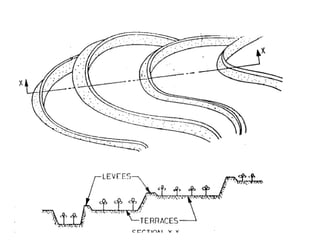
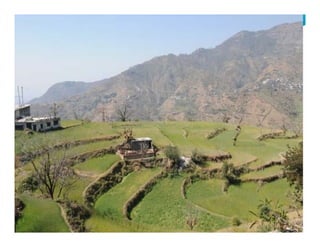
8. Contour farming
Contour farming
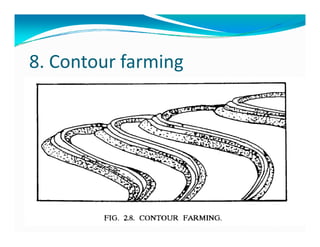
Co tou a      g
                   y                p
  Practiced in hilly areas with steep 
  slopes.
  Field operations are done across 
     ld                 d
  the slope instead of uphill or 
  downhill.
  Strips are also known as terrace or 
  benches.
  b    h
C) Subsurface methods
 )
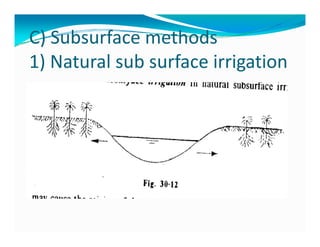
1) Natural sub surface irrigation
*  Water reaches below the land 
 surface from natural  resources 
    f  f              l             
 such as streams, lakes, ponds etc.
 such as streams  lakes  ponds etc
* Water seeping may raise the 
  Water seeping may raise the 
 water table and water may be 
 available for plants in the root 
 zone.
 zone
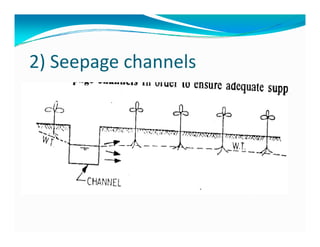
2) Seepage channels
Channels are spaced 15 to 100 m 
apart.
apart
Depth of channel varies from 0.25 
   p
to 0.50 m.
Water table is maintained near the 
W t  t bl  i   i t i d          th  
root zone of the crop.
3) Drip or trickle irrigation
 To be covered in next class 
 along with sprinkler irrigation.
 along with sprinkler irrigation
University questions
U e s ty quest o s
 What is meant by surface and sub surface irrigation? What 
            yp                   y
 are their types? Discuss briefly the various techniques used  q
 for distributing water in the farm.                                                 
                             (Nov  2009, 7 marks)
 What is meant by ‘border flooding’? How does it differ from 
 ‘check flooding’ and ‘free flooding’? Draw suitable sketches 
 to explain these methods.                  
 to explain these methods                   
                            (Nov 2007 8 marks)
 Discuss in brief various methods of surface irrigation.               
                            (May 2007, 8 marks)
  Write short not on ‘Furrow irrigation’       
                                   g
                             (Nov 2006, 4 marks)
Water application methods (part – i)

Water application methods (part – i)

  • 1.
    WRE – I UNIT‐ VI UNIT Prof S S P f S S JAHAGIRDAR BE (CIVIL), ME(ENV.),PhD(persuing) NK Orchid college of Engg. and Tech. , Solapur NK Orchid college of Engg  and Tech    Solapur
  • 2.
  • 3.
  • 4.
    A ) Wild Flooding  ) g Uncontrolled Flooding 
  • 5.
    Wild Flooding d ood g Water is applied by spreading on  land. No preparation in the form of levees  or borders or ditches. Water can be directly applied from  natural stream or river during flood. natural stream or river during flood Suitable for smooth and flat land. Wastage of water .
  • 6.
    B ) ControlledFlooding B ) Controlled Flooding  1. Free flooding method 
  • 7.
    Free Flooding eeood g Also known as irrigation by plots. Water is spread on the land with  proper methods to control depth of  application. All methods of controlled flooding  requires preparation of land . requires preparation of land  Land is divided in to small strips by  p y levees.
  • 9.
  • 10.
    Contour laterals Co tou atea s pp p Applicable for steeper terrain. Field is divided in to small contour  laterals. laterals Spacing of contour laterals depend upon p g p p 1. the prominent grade of the field  between two adjacent ditches or laterals,  between two adjacent ditches or laterals   2. the uniformity of slope and  y p 3. the soil type
  • 11.
  • 13.
    Border strip method o dest p et od Farm is divided into series of strips Width= 10 to 20 m Length = 100 to 300 m L th     t     Strips are separated by levees For applying water through supply  channel earth or concrete channel is  provided
  • 16.
  • 17.
    Check flooding C ec oodg Large stream discharges water into  relatively level plot surrounded by  levees or checks Width of levees at the base = 2 to 3 m Height = not more than 25 to 30 cm  high Method is most suitable for permeable  p soil as large amount of water is applied.
  • 20.
  • 21.
    Basin Flooding  as ood g Special form of check flooding  applied to orchards. Basins are formed for each tree. f df h Water is supplied through a  W t  i   li d th h    supply ditch. supply ditch No. of basins can be  interconnected
  • 25.
  • 26.
    Zig Zag method g ag et od Special method of flooding Water takes circuitous path before  reaching dead end of plot. reaching dead end of plot Area is divided in to square or  q rectangular plots. Suitable for relatively level plot S it bl  f   l ti l  l l  l t Unsuitable for modern farming with  machinery.
  • 27.
  • 29.
    Furrow method u o et od Used for row crops like maize, jawar, sugarcane,  cotton, tobacco, ground nuts, potatoes etc. cotton  tobacco  ground nuts  potatoes etc ½ to 1/5 of surface is wetted therefore evaporation  losses are reduced. l     d d Length of furrow varies from 3 m or less – for  gardens As much as 500 m for fields crops. 5 p Common length = 100 to 200 m. No wastage of land Less labour required
  • 32.
  • 34.
    Contour farming Co tou a g y p Practiced in hilly areas with steep  slopes. Field operations are done across  ld d the slope instead of uphill or  downhill. Strips are also known as terrace or  benches. b h
  • 36.
  • 37.
    *  Water reaches below the land  surface from natural  resources  f  f   l     such as streams, lakes, ponds etc. such as streams  lakes  ponds etc * Water seeping may raise the   Water seeping may raise the  water table and water may be  available for plants in the root  zone. zone
  • 38.
  • 39.
    Channels are spaced 15 to 100 m  apart. apart Depth of channel varies from 0.25  p to 0.50 m. Water table is maintained near the  W t  t bl  i   i t i d   th   root zone of the crop.
  • 40.
  • 41.
    University questions U e sty quest o s What is meant by surface and sub surface irrigation? What  yp y are their types? Discuss briefly the various techniques used  q for distributing water in the farm.                                                  (Nov  2009, 7 marks) What is meant by ‘border flooding’? How does it differ from  ‘check flooding’ and ‘free flooding’? Draw suitable sketches  to explain these methods.                   to explain these methods                    (Nov 2007 8 marks) Discuss in brief various methods of surface irrigation.                (May 2007, 8 marks) Write short not on ‘Furrow irrigation’        g (Nov 2006, 4 marks)