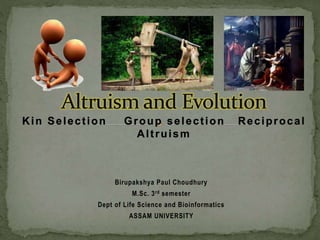
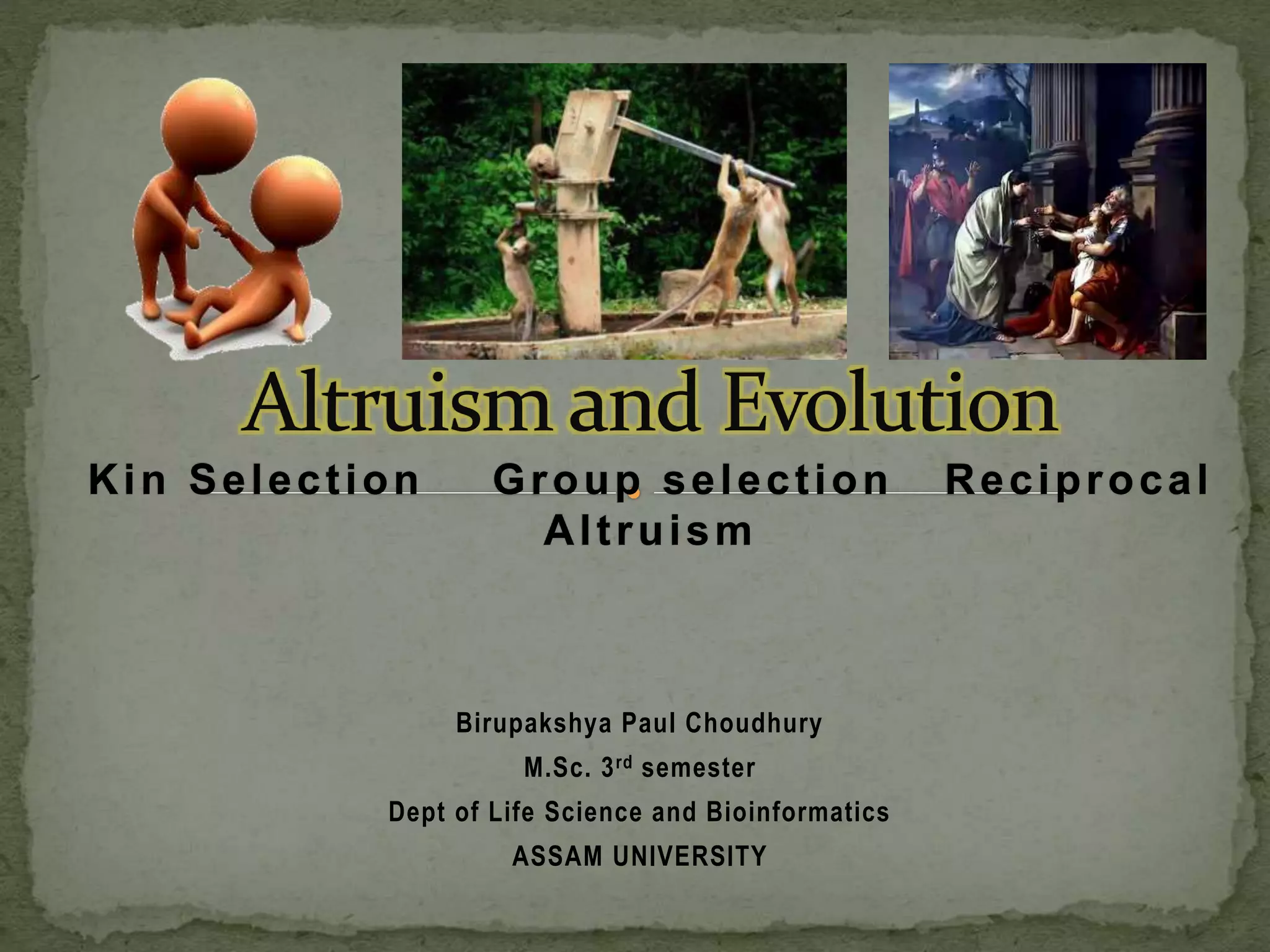
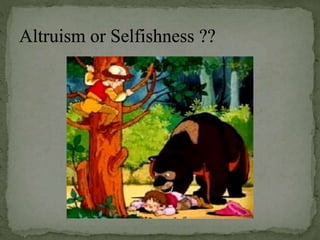
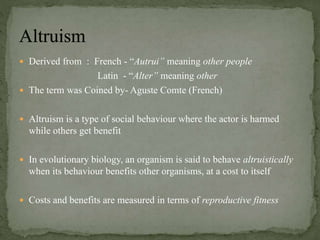
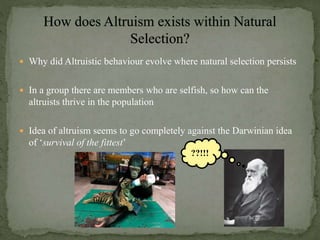
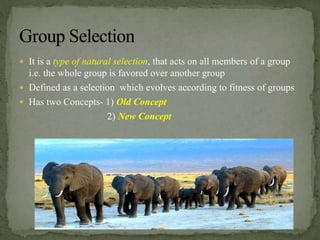
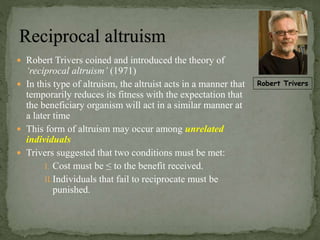
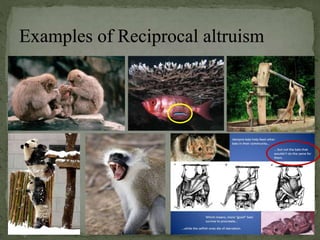
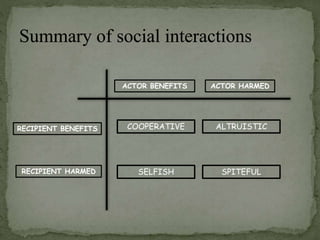
This document discusses different theories for how altruistic behavior evolved in animals despite natural selection favoring selfish behavior. It describes theories of group selection, kin selection, and reciprocal altruism. Group selection proposes that groups with more altruistic members are more likely to survive. Kin selection explains that animals help relatives to increase indirect fitness. Reciprocal altruism occurs when organisms help each other with the expectation of future help in return. The document analyzes these theories in terms of evolutionary biology to explain the prevalence of altruism in animal societies.



![谷歌留痕技术 [ 𝙩𝙤𝙥 𝟮𝟯𝟯. 𝙘 𝙤𝙢 ]](https://cdn.slidesharecdn.com/ss_thumbnails/top233-260130174328-3833018c-thumbnail.jpg?width=640&height=640&fit=bounds)


