Downloaded 284 times
![
"An individual with a well developed sexually selected
character [such as a peacock's flashy tail] is an individual
which has survived a test. A female which could
discriminate between a male possessing a sexually
selected character, from one without it, can discriminate
between a male which has passed a test and one which
has not been tested. Females which selected males with
the most developed characters can be sure that they
have selected from among the best genotypes of the
male population. "
Amotz Zahavi (1975)](https://image.slidesharecdn.com/hajaj-131210085421-phpapp01/85/Zahavi-s-handicap-principle-6-320.jpg)





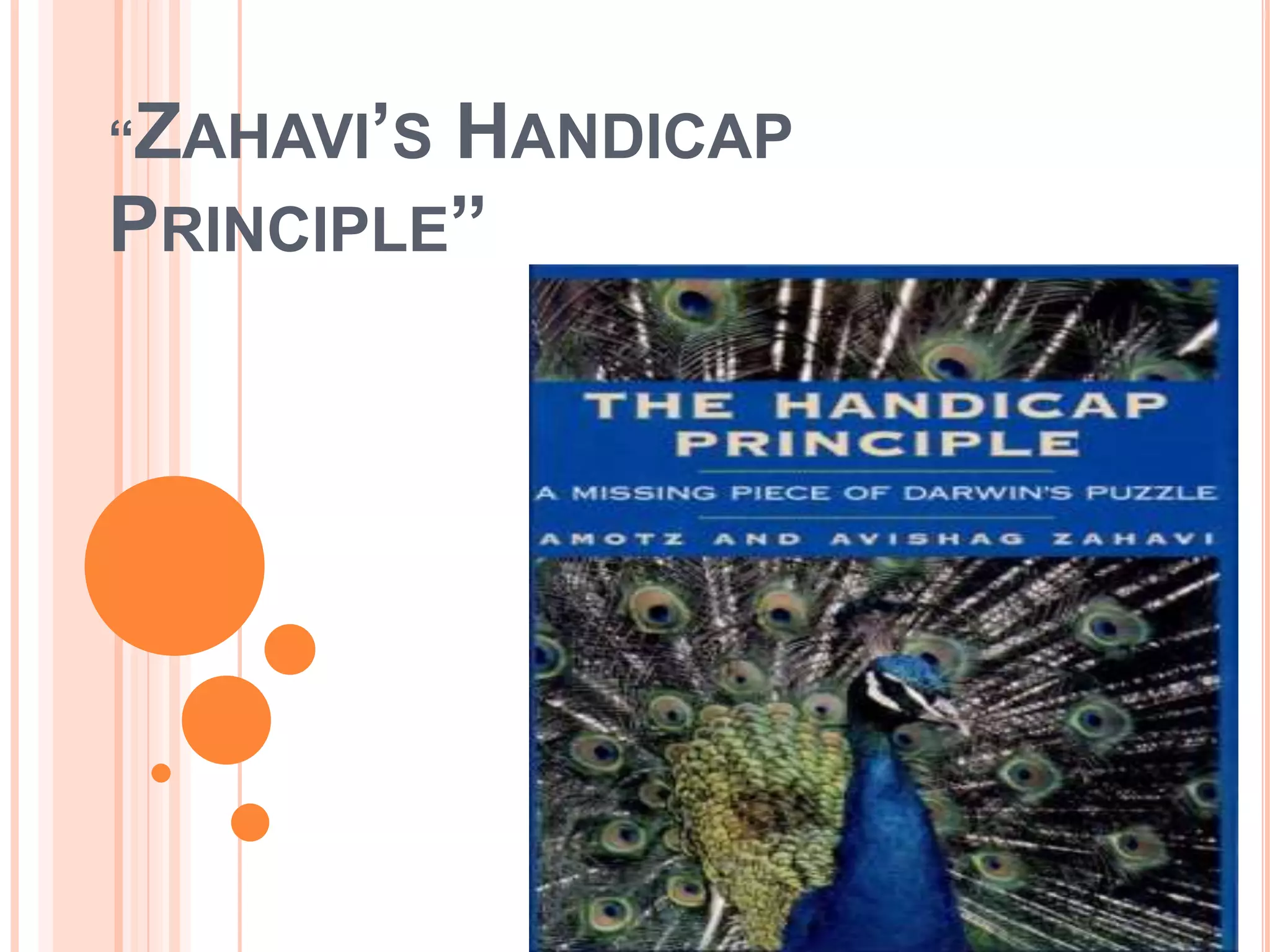
The document discusses Zahavi's handicap principle, which proposes that sexually selected traits like a peacock's tail function as honest signals of genetic fitness. These traits are handicaps that reduce survival chances but indicate to potential mates that the individual is strong enough to survive despite the handicap. Examples given include the peacock's heavy tail, gazelle stotting behavior, and mating displays in birds of paradise. The principle relies on signals being costly and honest, ensuring only fit individuals can display the handicap. This makes the signals reliable indicators of genetic quality.


