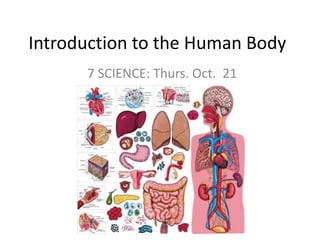
Introduction to the Human Body7 SCIENCE: Thurs. Oct.  21
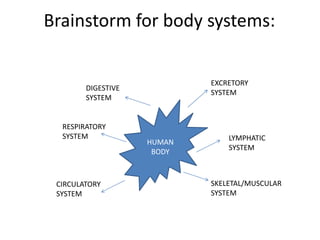
Brainstorm for body systems:EXCRETORY SYSTEMDIGESTIVE SYSTEMHUMAN BODYRESPIRATORY SYSTEMLYMPHATIC SYSTEMSKELETAL/MUSCULAR SYSTEMCIRCULATORY SYSTEM
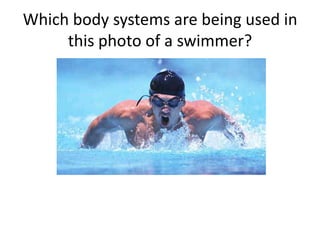
Which body systems are being used in this photo of a swimmer?
Human body proportionsThere is a reason that your foot is the size that is it : Try it out! In your group, you will take a ruler and measure specific body parts:Foot: Measure the distance between your wrist and elbow. Record.Measure the length of the inside of your foot, from the very end of your heel to the end of your big toe. Record.Compare these measurements. What do you find?Elbow: Measure the distance between your shoulder and your elbow. Record.Measure the distance between your elbow and your wrist. Record.Compare these measurements. What do you find?When your arm is straight down at your side, your elbow should be at the same level as your belly button
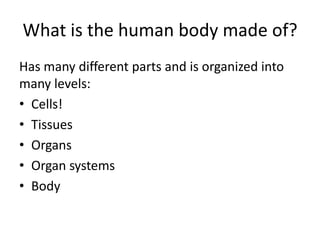
What is the human body made of?Has many different parts and is organized into many levels:Cells!TissuesOrgansOrgan systemsBody
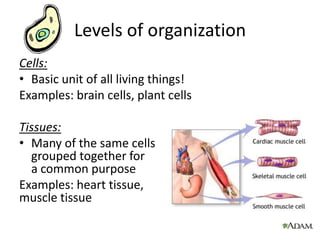
Levels of organizationCells:Basic unit of all living things!Examples: brain cells, plant cellsTissues:Many of the same cells grouped together for a common purposeExamples: heart tissue, muscle tissue
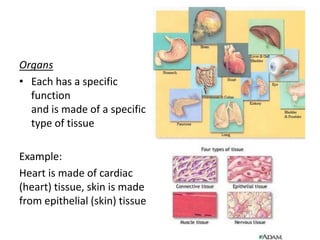
Organs Each has a specific functionand is made of a specific type of tissueExample:Heart is made of cardiac (heart) tissue, skin is made from epithelial (skin) tissue
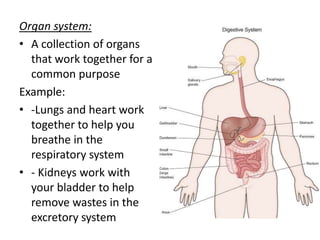
Organ system:A collection of organs that work together for a common purpose Example: -Lungs and heart work together to help you breathe in the respiratory system- Kidneys work with your bladder to help remove wastes in the excretory system
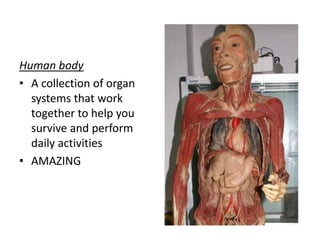
Human bodyA collection of organ systems that work together to help you survive and perform daily activitiesAMAZING
Introduction to the human body

Introduction to the human body

  • 1.
    Introduction to theHuman Body7 SCIENCE: Thurs. Oct. 21
  • 2.
    Brainstorm for bodysystems:EXCRETORY SYSTEMDIGESTIVE SYSTEMHUMAN BODYRESPIRATORY SYSTEMLYMPHATIC SYSTEMSKELETAL/MUSCULAR SYSTEMCIRCULATORY SYSTEM
  • 3.
    Which body systemsare being used in this photo of a swimmer?
  • 4.
    Human body proportionsThereis a reason that your foot is the size that is it : Try it out! In your group, you will take a ruler and measure specific body parts:Foot: Measure the distance between your wrist and elbow. Record.Measure the length of the inside of your foot, from the very end of your heel to the end of your big toe. Record.Compare these measurements. What do you find?Elbow: Measure the distance between your shoulder and your elbow. Record.Measure the distance between your elbow and your wrist. Record.Compare these measurements. What do you find?When your arm is straight down at your side, your elbow should be at the same level as your belly button
  • 5.
    What is thehuman body made of?Has many different parts and is organized into many levels:Cells!TissuesOrgansOrgan systemsBody
  • 6.
    Levels of organizationCells:Basicunit of all living things!Examples: brain cells, plant cellsTissues:Many of the same cells grouped together for a common purposeExamples: heart tissue, muscle tissue
  • 7.
    Organs Each hasa specific functionand is made of a specific type of tissueExample:Heart is made of cardiac (heart) tissue, skin is made from epithelial (skin) tissue
  • 8.
    Organ system:A collectionof organs that work together for a common purpose Example: -Lungs and heart work together to help you breathe in the respiratory system- Kidneys work with your bladder to help remove wastes in the excretory system
  • 9.
    Human bodyA collectionof organ systems that work together to help you survive and perform daily activitiesAMAZING