Human excretion relative with H2o
INDEX Definition Human Excretion Organs of Human excretory system Chart Human excretion Human Excretion relative with H2O What helps water to Human Excretory system Pictures
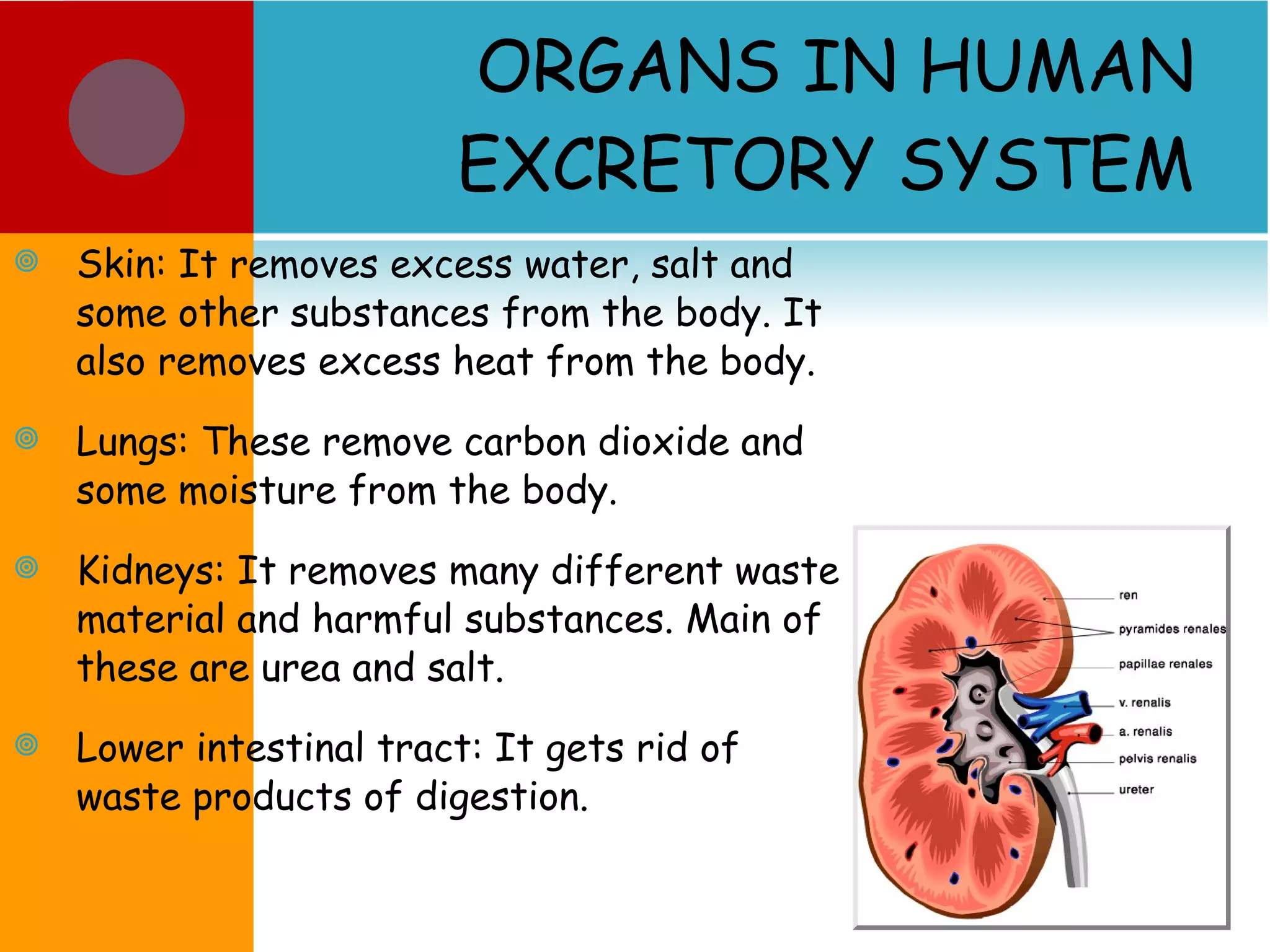
WHAT IS HUMAN EXCRETION? Human excretion is the process of removing excess water, waste material and harmful substances from human body. Also  Excretion  is the process of eliminating waste products of metabolism and other non-useful materials. It is an essential process in all forms of life. It contrasts secretion, where the substance may have specific tasks after leaving the cell.
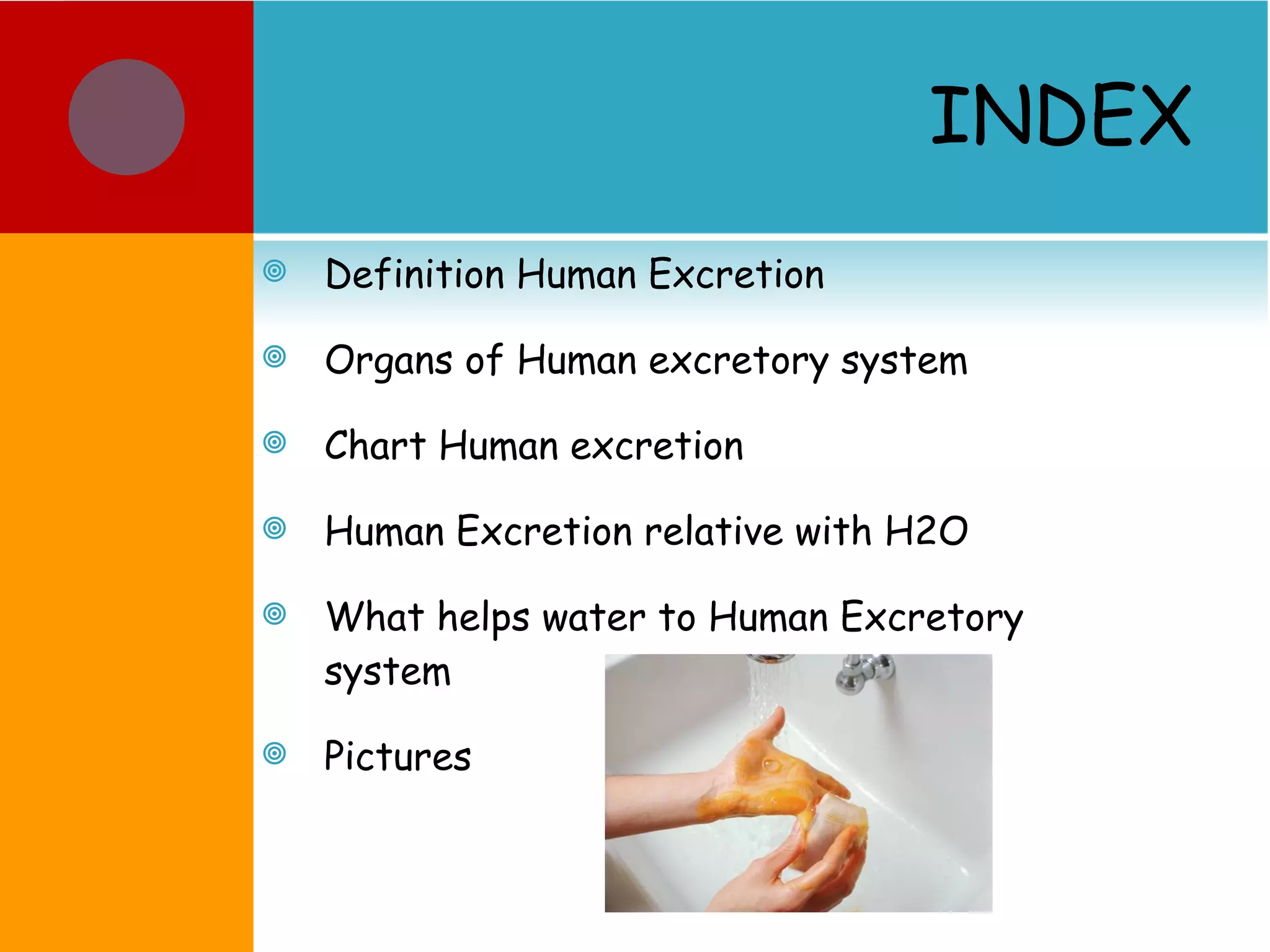
ORGANS IN HUMAN EXCRETORY SYSTEM Skin: It removes excess water, salt and some other substances from the body. It also removes excess heat from the body. Lungs: These remove carbon dioxide and some moisture from the body. Kidneys: It removes many different waste material and harmful substances. Main of these are urea and salt. Lower intestinal tract: It gets rid of waste products of digestion.
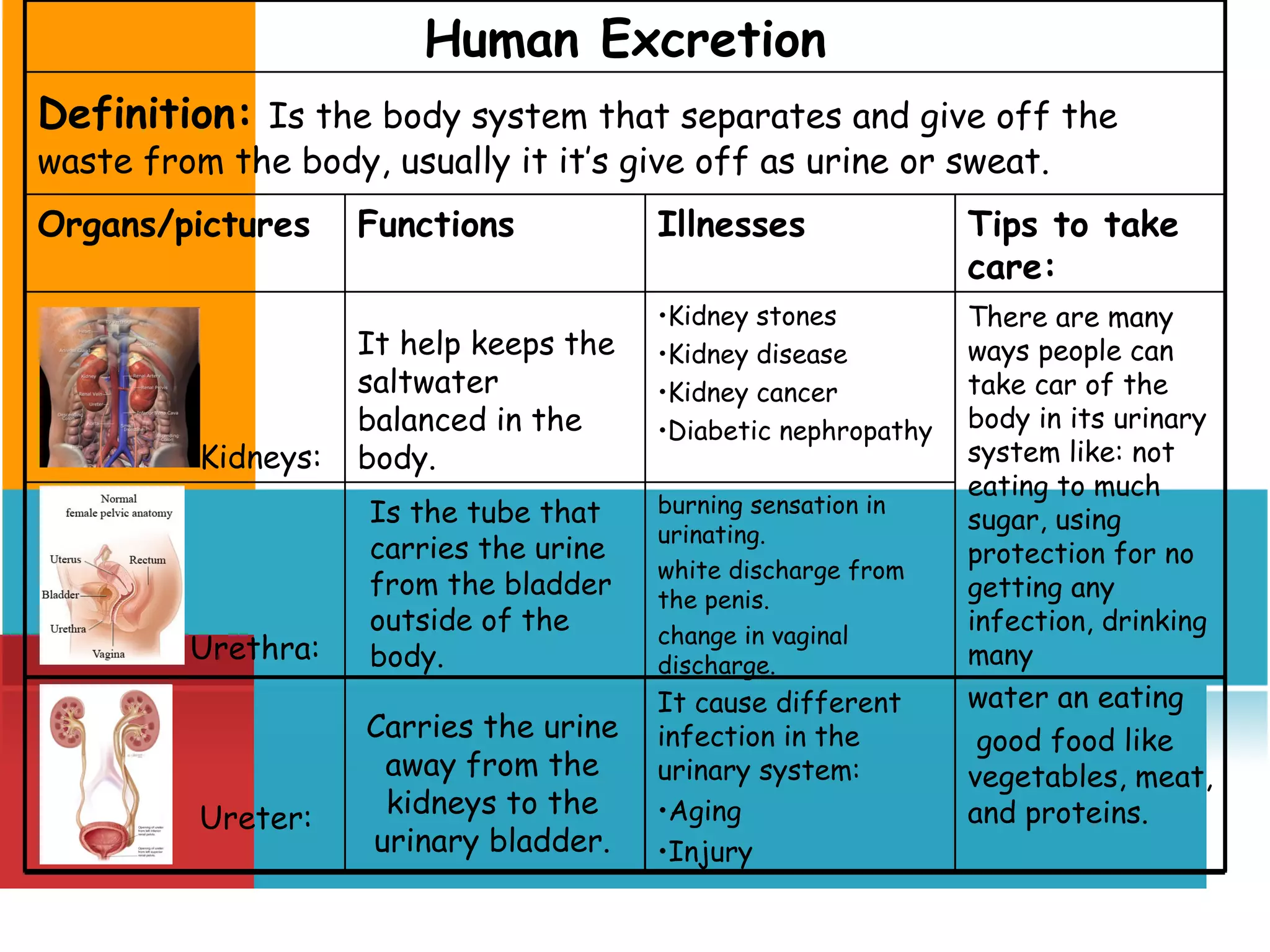
Human Excretion Definition:   Is the body system that separates and give off the waste from the body, usually it it’s give off as urine or sweat. Organs/pictures Functions Illnesses Tips to take care: Kidneys: Kidney stones Kidney disease Kidney cancer Diabetic nephropathy There are many ways people can take car of the body in its urinary system like: not eating to much sugar, using protection for no getting any infection, drinking many water an eating good food like vegetables, meat, and proteins. Urethra: burning sensation in urinating.  white discharge from the penis.  change in vaginal discharge. It help keeps the saltwater balanced in the body. Is the tube that carries the urine from the bladder outside of the body. Ureter: It cause different infection in the urinary system: Aging Injury Carries the urine away from the kidneys to the urinary bladder.
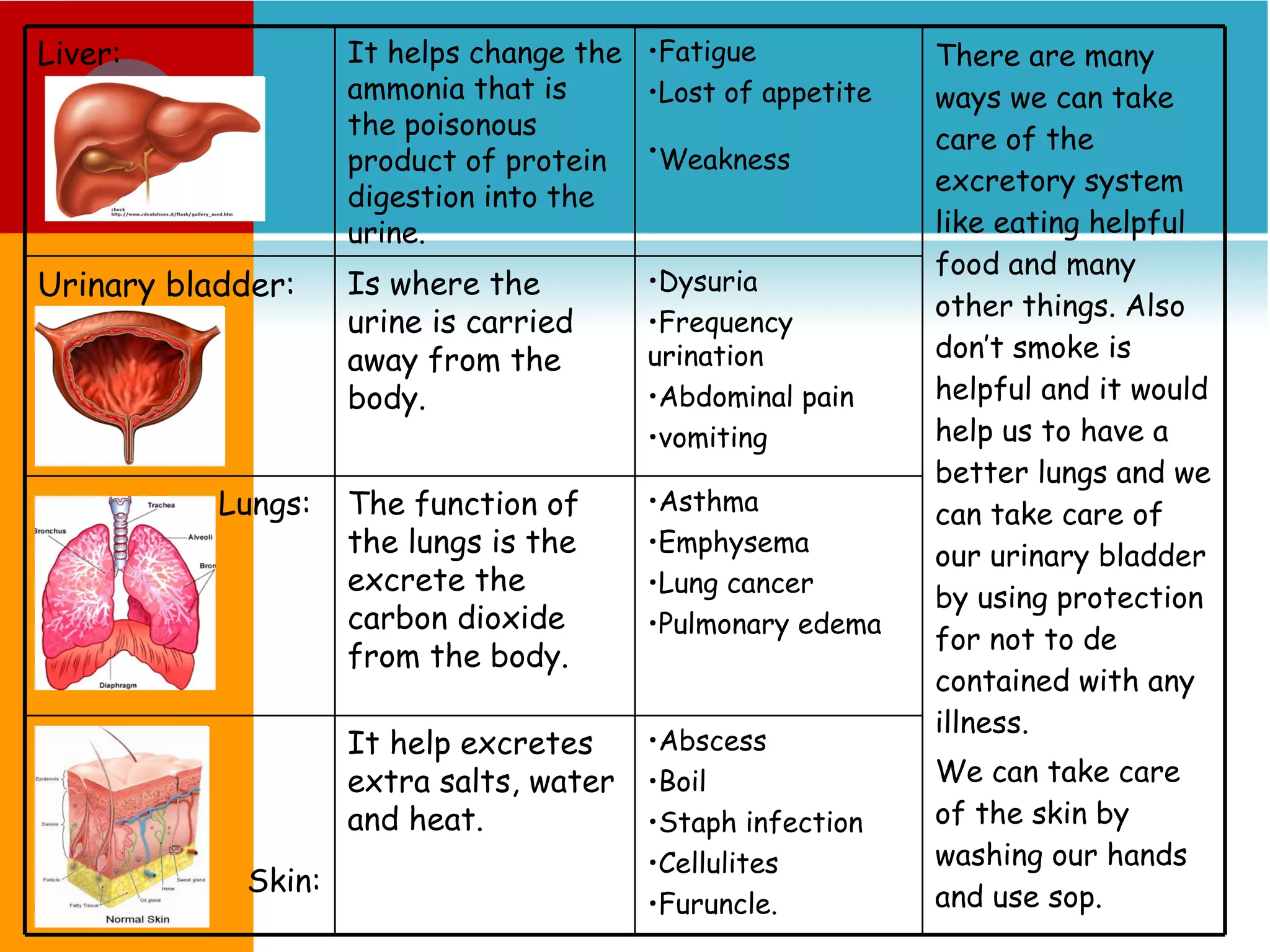
Liver: It helps change the ammonia that is the poisonous product of protein digestion into the urine. Fatigue Lost of appetite Weakness   There are many ways we can take care of the excretory system like eating helpful food and many other things. Also don’t smoke is helpful and it would help us to have a better lungs and we can take care of our urinary bladder by using protection for not to de contained with any illness. We can take care of the skin by washing our hands and use sop. Urinary bladder: Is where the urine is carried away from the body. Dysuria Frequency urination Abdominal pain vomiting Lungs: The function of the lungs is the excrete the carbon dioxide from the body. Asthma Emphysema Lung cancer Pulmonary edema Skin: It help excretes extra salts, water and heat. Abscess Boil Staph infection Cellulites Furuncle.
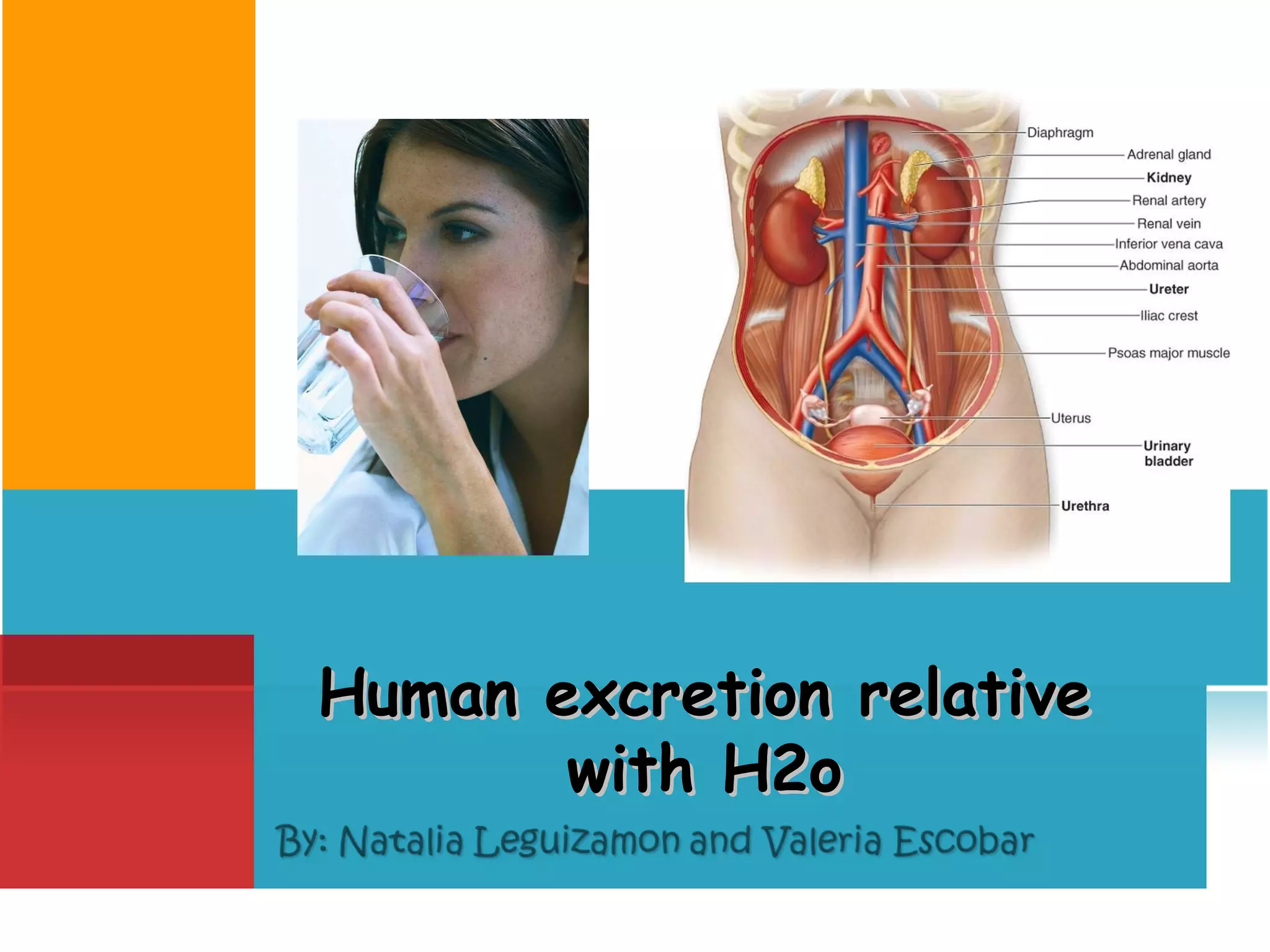
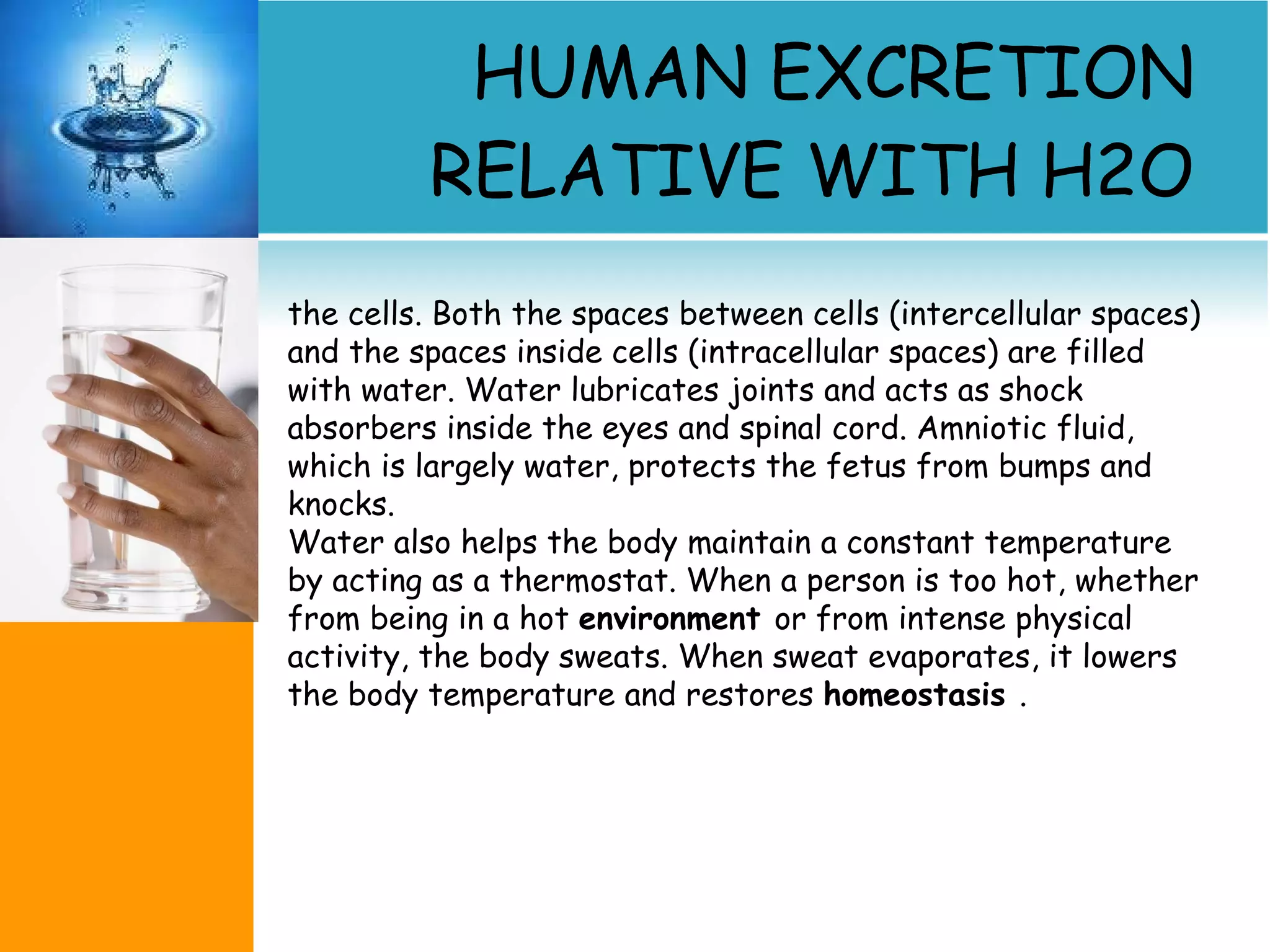
HUMAN EXCRETION RELATIVE WITH H2O the cells. Both the spaces between cells (intercellular spaces) and the spaces inside cells (intracellular spaces) are filled with water. Water lubricates joints and acts as shock absorbers inside the eyes and spinal cord. Amniotic fluid, which is largely water, protects the fetus from bumps and knocks.  Water also helps the body maintain a constant temperature by acting as a thermostat. When a person is too hot, whether from being in a hot  environment  or from intense physical activity, the body sweats. When sweat evaporates, it lowers the body temperature and restores  homeostasis  .
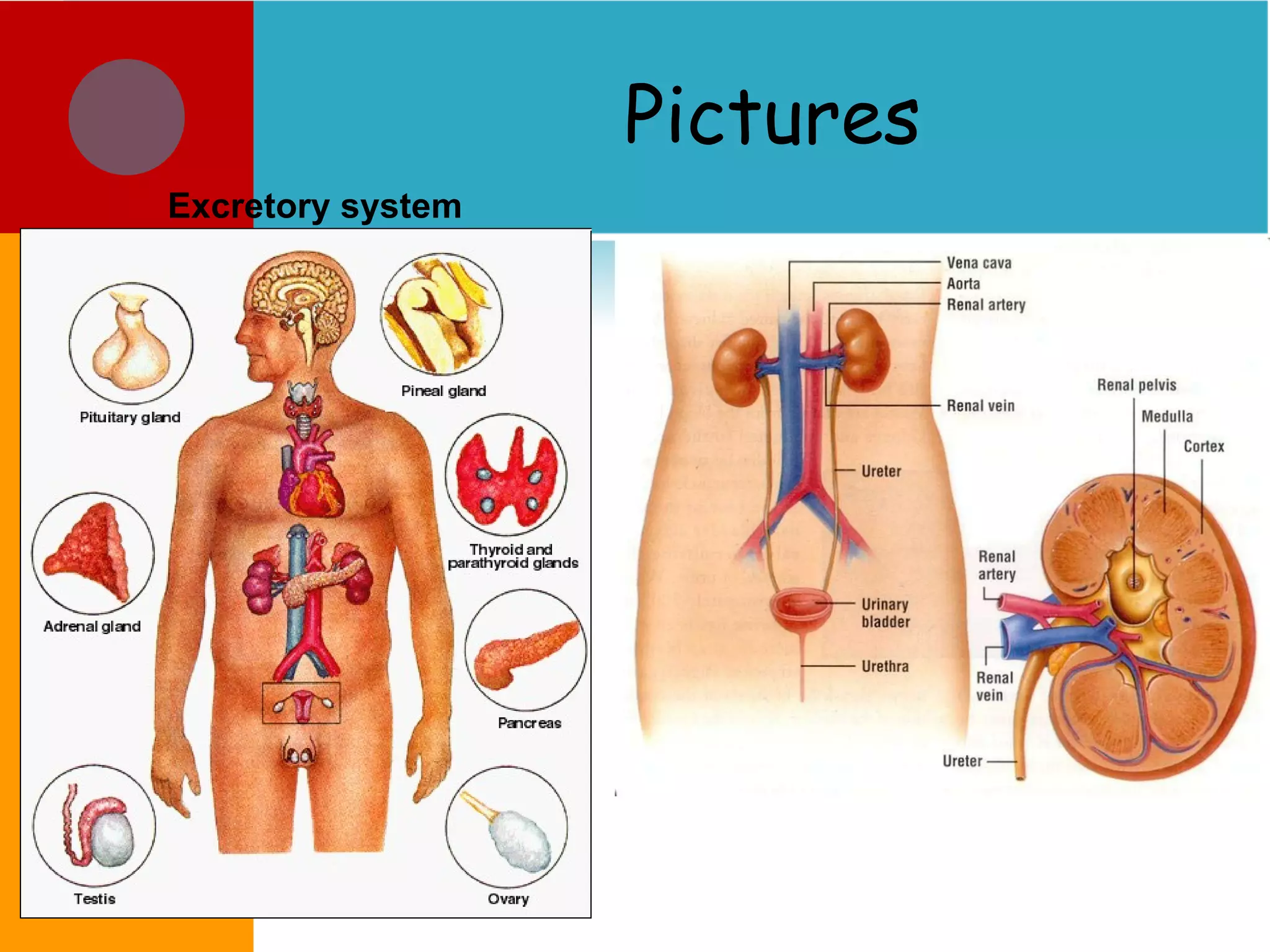
Pictures Excretory system

Human excretion with h2 o

  • 1.
  • 2.
    INDEX Definition HumanExcretion Organs of Human excretory system Chart Human excretion Human Excretion relative with H2O What helps water to Human Excretory system Pictures
  • 3.
    WHAT IS HUMANEXCRETION? Human excretion is the process of removing excess water, waste material and harmful substances from human body. Also Excretion is the process of eliminating waste products of metabolism and other non-useful materials. It is an essential process in all forms of life. It contrasts secretion, where the substance may have specific tasks after leaving the cell.
  • 4.
    ORGANS IN HUMANEXCRETORY SYSTEM Skin: It removes excess water, salt and some other substances from the body. It also removes excess heat from the body. Lungs: These remove carbon dioxide and some moisture from the body. Kidneys: It removes many different waste material and harmful substances. Main of these are urea and salt. Lower intestinal tract: It gets rid of waste products of digestion.
  • 5.
    Human Excretion Definition: Is the body system that separates and give off the waste from the body, usually it it’s give off as urine or sweat. Organs/pictures Functions Illnesses Tips to take care: Kidneys: Kidney stones Kidney disease Kidney cancer Diabetic nephropathy There are many ways people can take car of the body in its urinary system like: not eating to much sugar, using protection for no getting any infection, drinking many water an eating good food like vegetables, meat, and proteins. Urethra: burning sensation in urinating. white discharge from the penis. change in vaginal discharge. It help keeps the saltwater balanced in the body. Is the tube that carries the urine from the bladder outside of the body. Ureter: It cause different infection in the urinary system: Aging Injury Carries the urine away from the kidneys to the urinary bladder.
  • 6.
    Liver: It helpschange the ammonia that is the poisonous product of protein digestion into the urine. Fatigue Lost of appetite Weakness There are many ways we can take care of the excretory system like eating helpful food and many other things. Also don’t smoke is helpful and it would help us to have a better lungs and we can take care of our urinary bladder by using protection for not to de contained with any illness. We can take care of the skin by washing our hands and use sop. Urinary bladder: Is where the urine is carried away from the body. Dysuria Frequency urination Abdominal pain vomiting Lungs: The function of the lungs is the excrete the carbon dioxide from the body. Asthma Emphysema Lung cancer Pulmonary edema Skin: It help excretes extra salts, water and heat. Abscess Boil Staph infection Cellulites Furuncle.
  • 7.
    HUMAN EXCRETION RELATIVEWITH H2O the cells. Both the spaces between cells (intercellular spaces) and the spaces inside cells (intracellular spaces) are filled with water. Water lubricates joints and acts as shock absorbers inside the eyes and spinal cord. Amniotic fluid, which is largely water, protects the fetus from bumps and knocks. Water also helps the body maintain a constant temperature by acting as a thermostat. When a person is too hot, whether from being in a hot environment or from intense physical activity, the body sweats. When sweat evaporates, it lowers the body temperature and restores homeostasis .
  • 8.