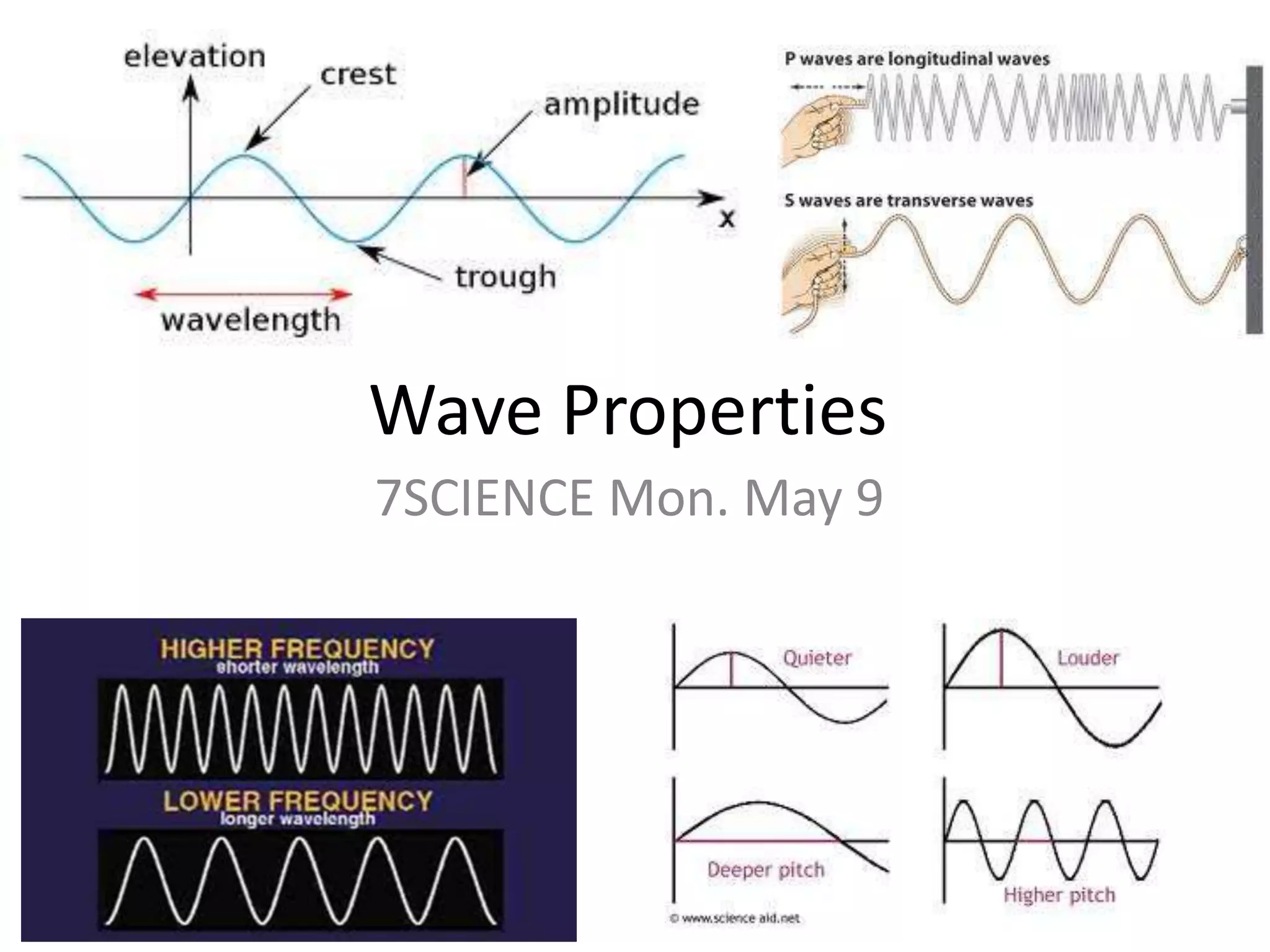
Wave Properties7SCIENCE Mon. May 9
ReviewWhat are the two main type of wave?Mechanical and electromagneticWhat is the difference?Mechanical waves must travel through matterHow do you describe the shape of these waves?Transverse and compressional wavesWhat are the parts of a wave?Crest, trough, amplitude and wavelengthWhat type of wave are sound waves?Mechanical, transverse
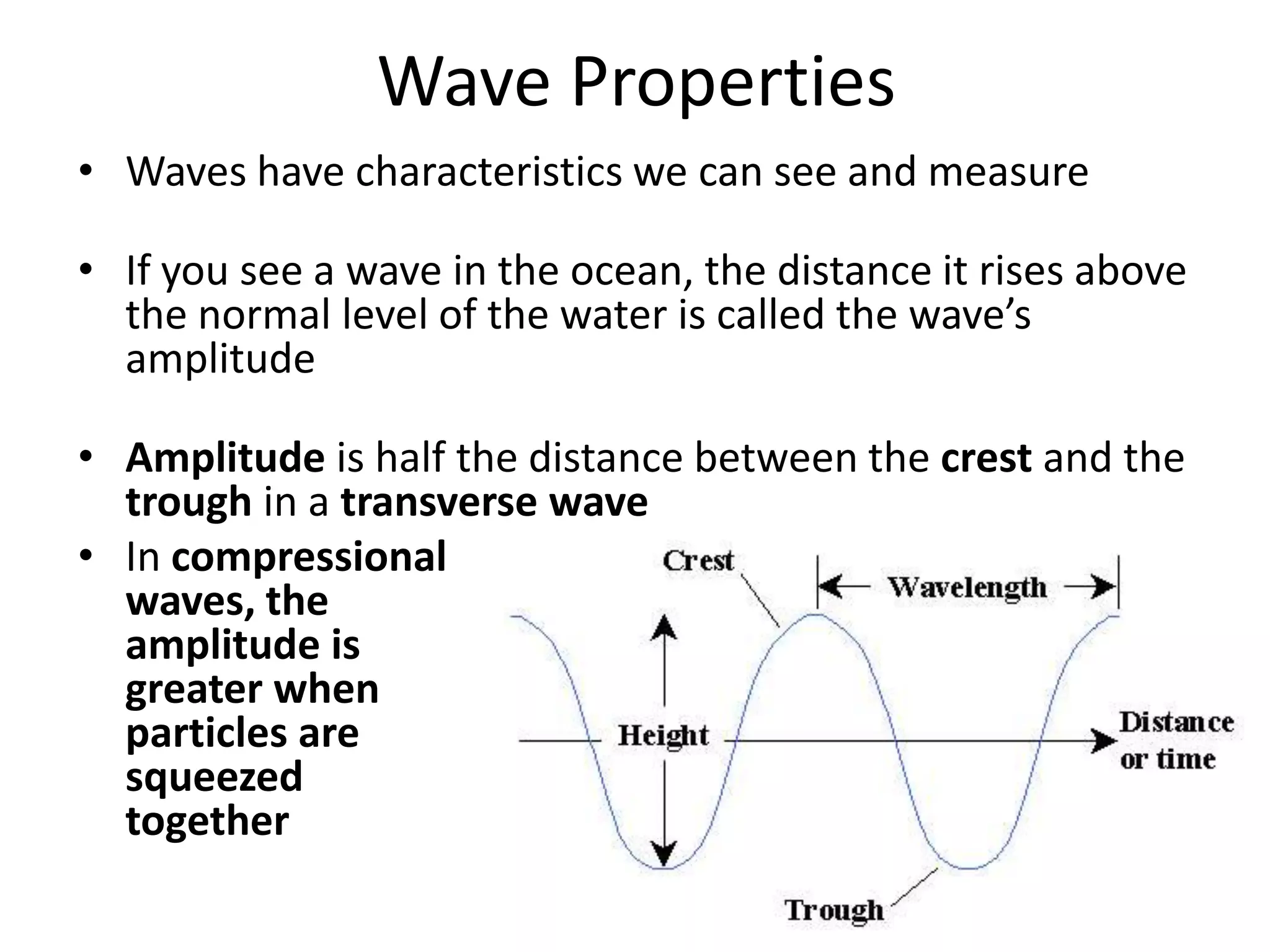
Wave PropertiesWaves have characteristics we can see and measureIf you see a wave in the ocean, the distance it rises above the normal level of the water is called the wave’s amplitudeAmplitude is half the distance between the crest and the trough in a transverse waveIn compressional waves, the amplitude is greater when particles are squeezed together
AmplitudeA wave’s amplitude measures the amount of energy the wave carries Waves with large amplitudes carry more energy than those with small amplitudesExample: bright light has a greater amplitude than dim light, and sound waves that are loud have greater amplitudes than soft sounds
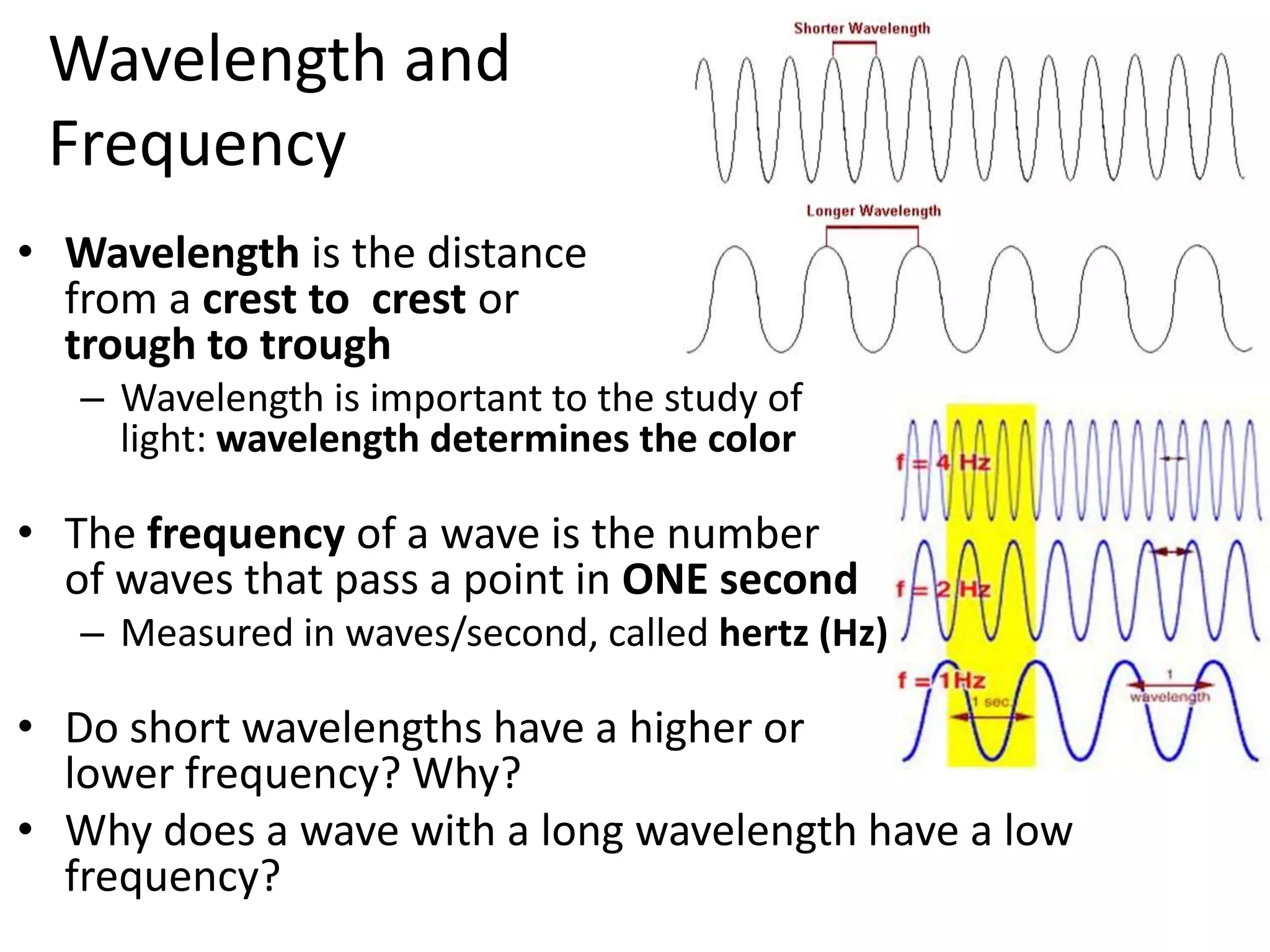
Wavelength and FrequencyWavelength is the distance from a crest to  crest or trough to trough Wavelength is important to the study of light: wavelength determines the colorThe frequency of a wave is the number of waves that pass a point in ONE secondMeasured in waves/second, called hertz (Hz)Do short wavelengths have a higher orlower frequency? Why?Why does a wave with a long wavelength have a low frequency?

Wave properties

  • 1.
  • 2.
    ReviewWhat are thetwo main type of wave?Mechanical and electromagneticWhat is the difference?Mechanical waves must travel through matterHow do you describe the shape of these waves?Transverse and compressional wavesWhat are the parts of a wave?Crest, trough, amplitude and wavelengthWhat type of wave are sound waves?Mechanical, transverse
  • 3.
    Wave PropertiesWaves havecharacteristics we can see and measureIf you see a wave in the ocean, the distance it rises above the normal level of the water is called the wave’s amplitudeAmplitude is half the distance between the crest and the trough in a transverse waveIn compressional waves, the amplitude is greater when particles are squeezed together
  • 4.
    AmplitudeA wave’s amplitudemeasures the amount of energy the wave carries Waves with large amplitudes carry more energy than those with small amplitudesExample: bright light has a greater amplitude than dim light, and sound waves that are loud have greater amplitudes than soft sounds
  • 5.
    Wavelength and FrequencyWavelengthis the distance from a crest to crest or trough to trough Wavelength is important to the study of light: wavelength determines the colorThe frequency of a wave is the number of waves that pass a point in ONE secondMeasured in waves/second, called hertz (Hz)Do short wavelengths have a higher orlower frequency? Why?Why does a wave with a long wavelength have a low frequency?