






Introduction & Exploration 
Professional Learning Communities 
DBE-VVOB partnership 
National Colloquium on Professional Learning Communities 
Pretoria, September 18-19, 2014
Outline 
1. Drivers for educational reform 
2. Gap between policy and practice 
3. Effectiveness professional development 
4. Professional Learning Communities 
– Salient features 
– Potential 
– Impact 
– Ambiguities
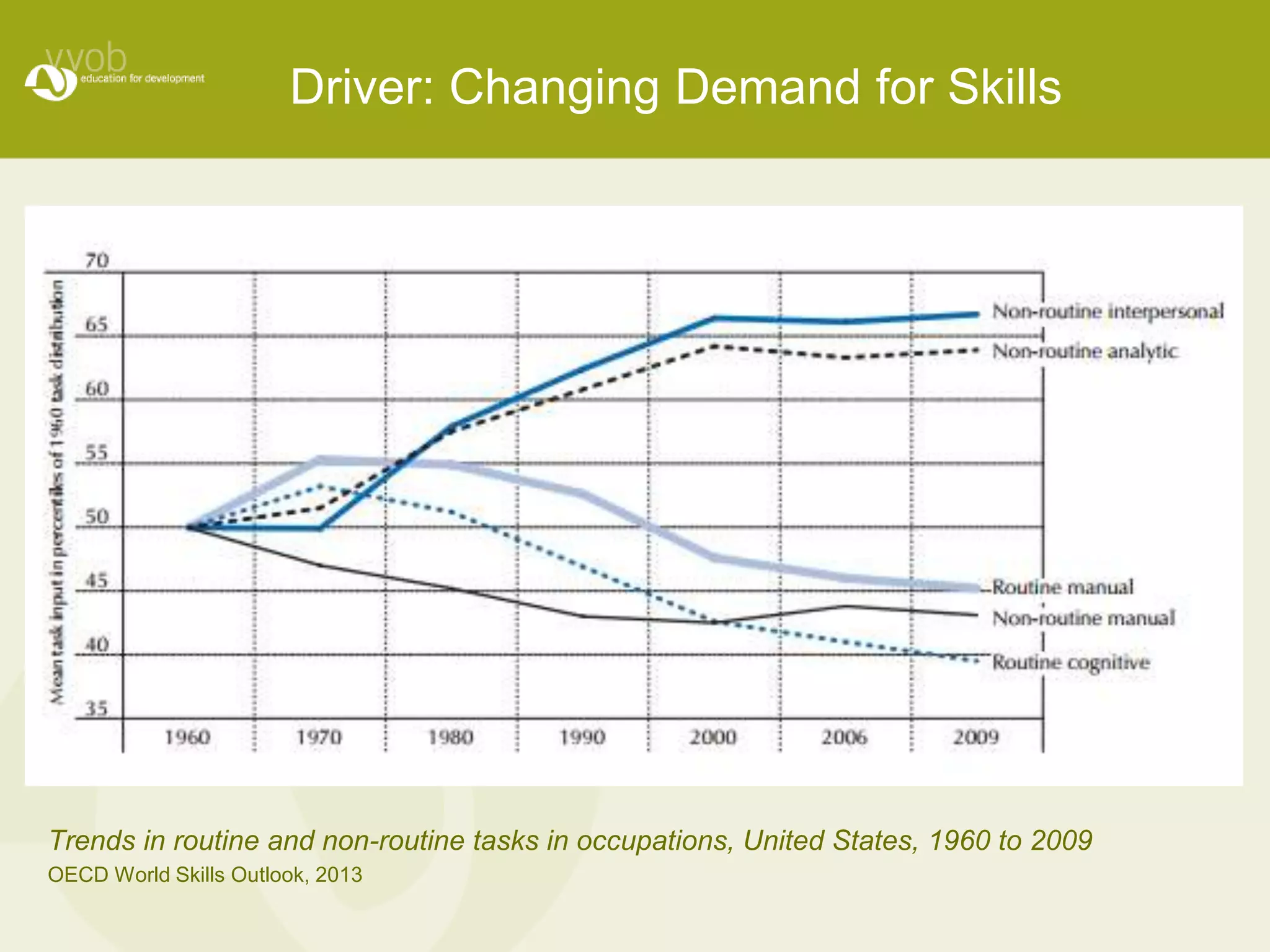
Driver: Changing Demand for Skills 
Trends in routine and non-routine tasks in occupations, United States, 1960 to 2009 
OECD World Skills Outlook, 2013
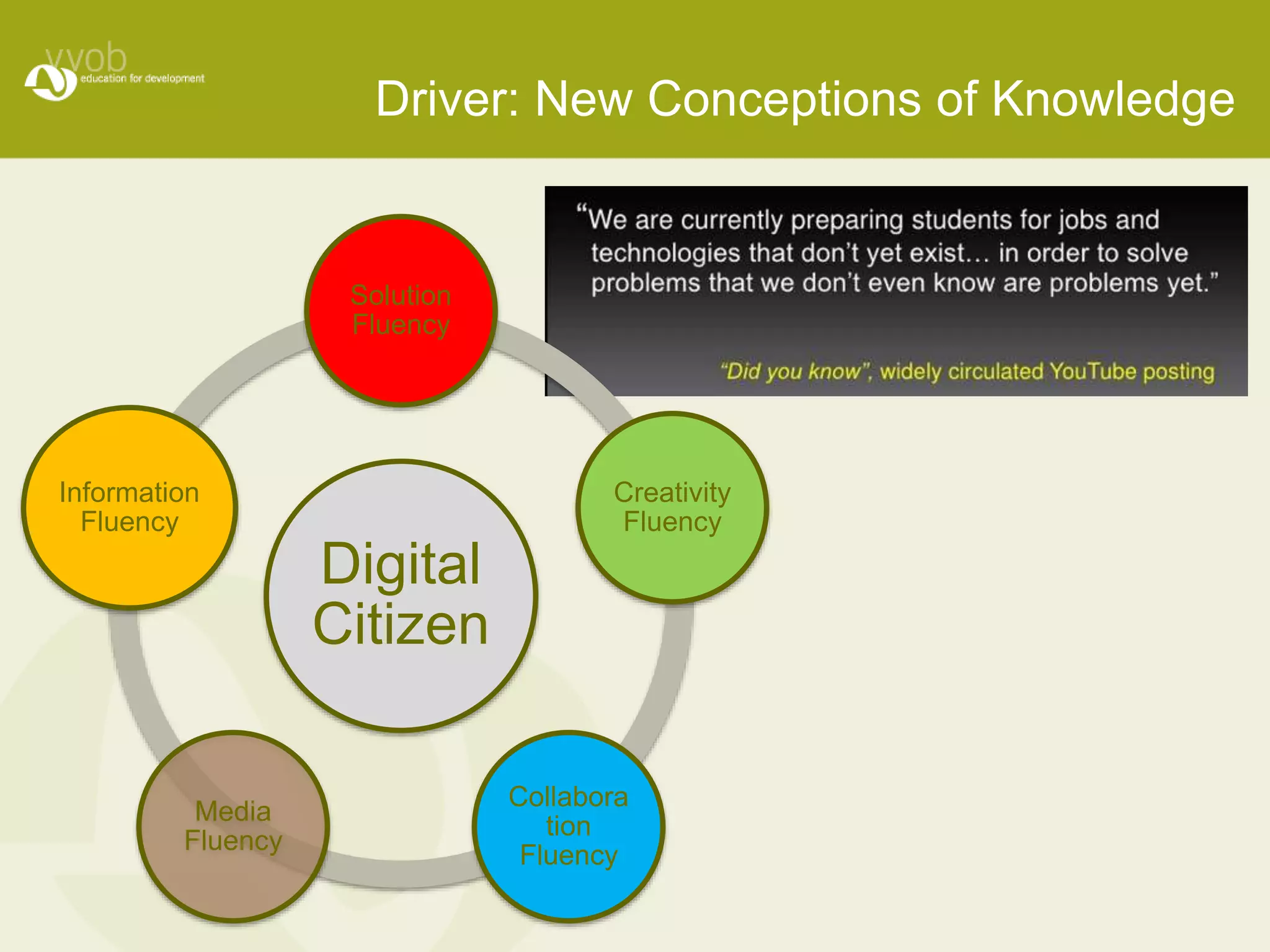
Driver: New Conceptions of Knowledge 
Solution 
Fluency 
Digital 
Citizen 
Creativity 
Fluency 
Collabora 
tion 
Fluency 
Information 
Fluency 
Media 
Fluency
Driver: International Education Assessments 
• Global competition 
• Expose weaknesses SA education 
system (outcomes, inequality…) 
• Trend towards ‘evidence-based’ 
approaches
Historical Warning 
“And it ought to be remembered that there is nothing more 
difficult to take in hand, more perilous to conduct, or more 
uncertain in its success, then to take the lead in the 
introduction of a new order of things. 
Because the innovator has for enemies all those who have 
done well under the old conditions, and lukewarm defenders 
in those who may do well under new”. 
The Prince, 
N. Machiavelli, 1515
Hurricane Metaphor for Education Reform 
“ In classrooms both change and continuity unfold in regular, 
undisturbed patterns. The trend, regardless of what new 
structures policymakers design, is small alterations over time in 
stable teaching practices.” 
Prof. L.Cuban, 2010 
http://larrycuban.wordpress.com/2010/09/07/are-school-reforms-more-like-a-pendulum-or-a-hurricane
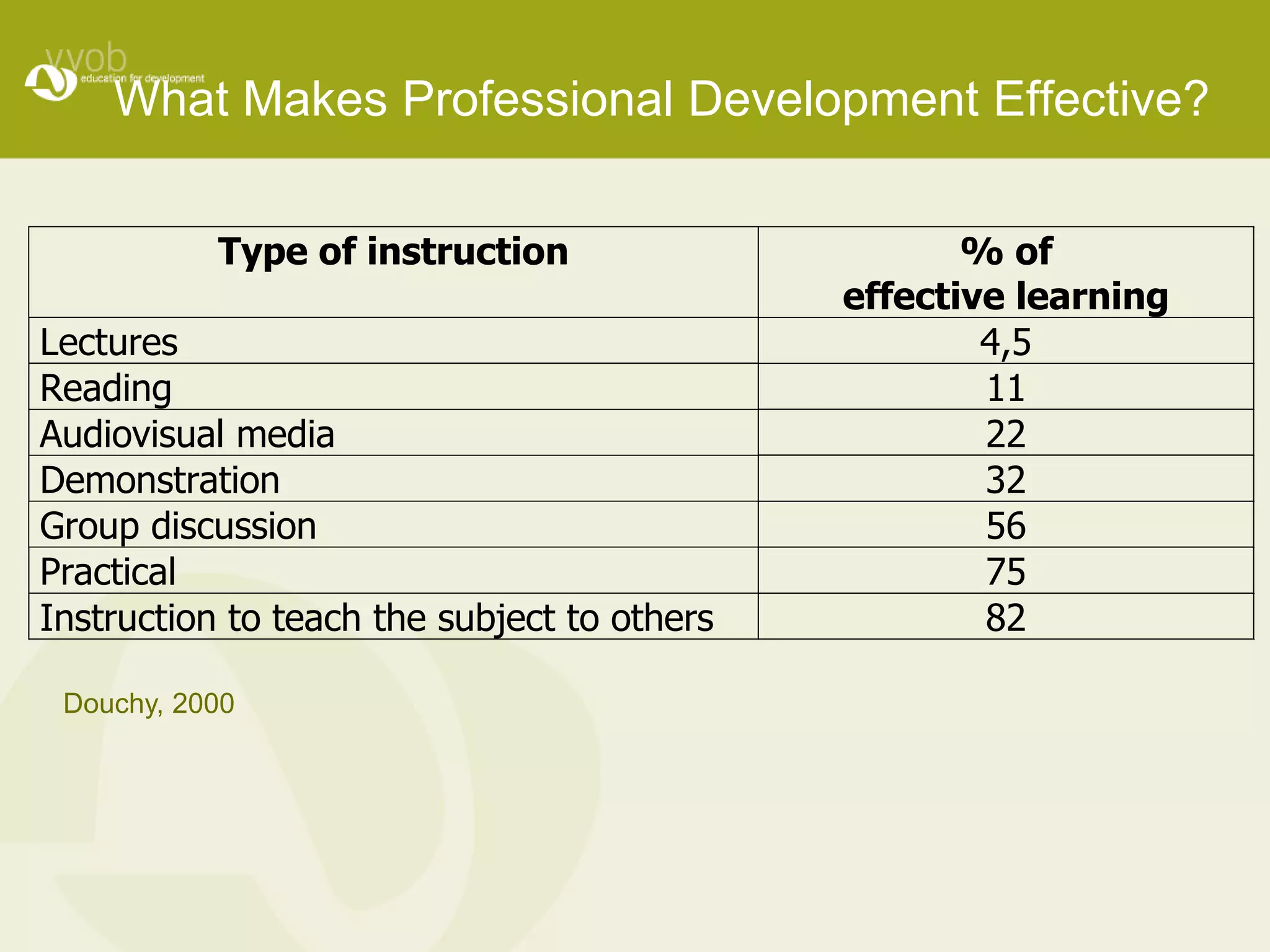
What Makes Professional Development Effective? 
Type of instruction % of 
effective learning 
Lectures 4,5 
Reading 11 
Audiovisual media 22 
Demonstration 32 
Group discussion 56 
Practical 75 
Instruction to teach the subject to others 82 
Douchy, 2000
Implementation Gap 
“Most teachers are still teaching largely in isolation, as over half 
of teachers report very rarely or never team-teaching with 
colleagues, and two-thirds report the same rates for observing 
their colleagues teach. Some 46% of teachers report never 
receiving feedback on their teaching from their school leader, 
and 51% have never received feedback from other members of 
the school management.” 
TALIS 2013
What Makes Professional Development Effective? 
Planning of professional development 
“The effectiveness of any professional development activity, regardless 
of its content, structure or format, depends mainly on how well it is 
planned” 
Guskey, 2014
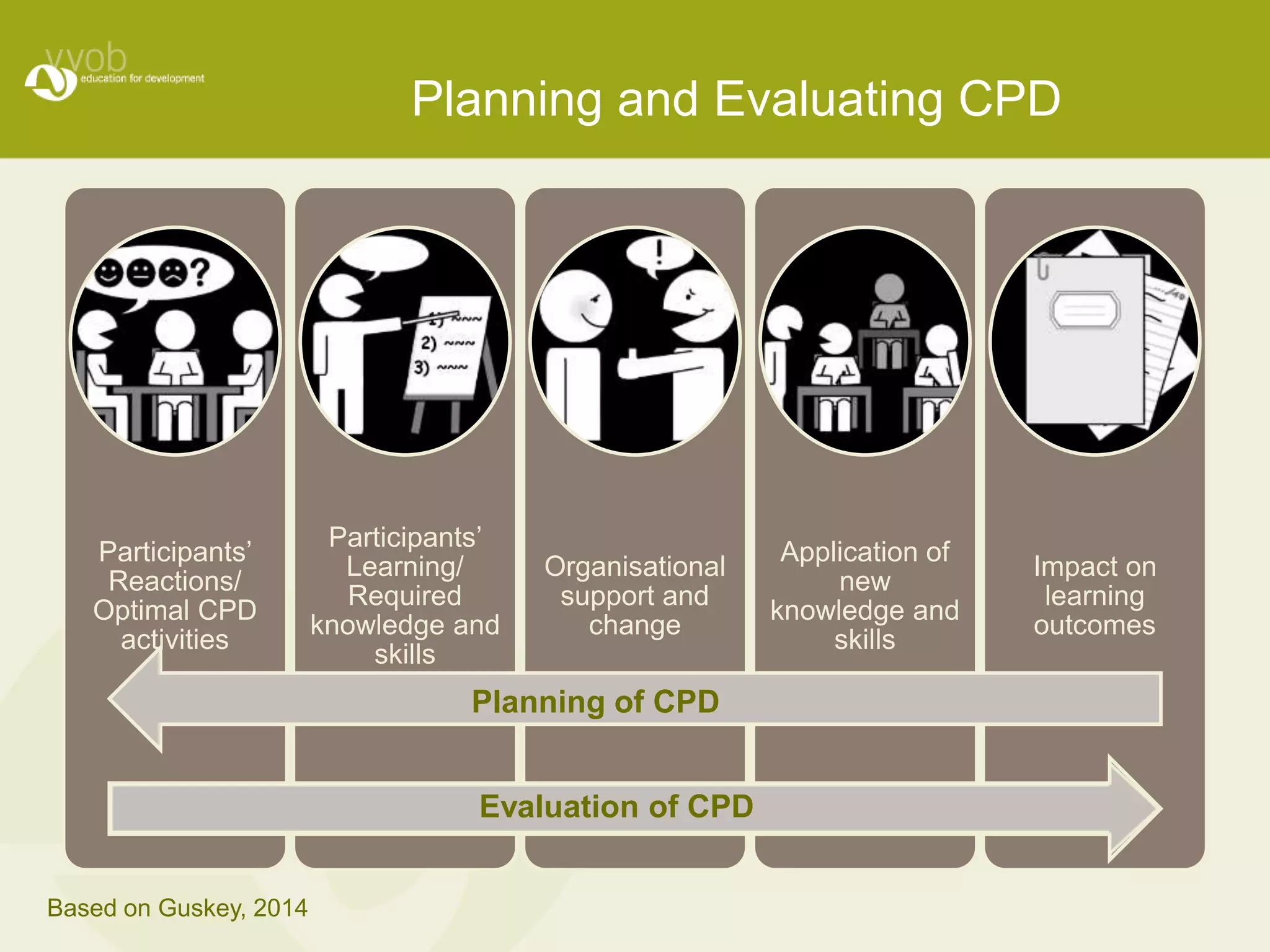
Planning and Evaluating CPD 
Participants’ 
Reactions/ 
Optimal CPD 
activities 
Participants’ 
Learning/ 
Required 
knowledge and 
skills 
Organisational 
support and 
change 
Application of 
new 
knowledge and 
skills 
Impact on 
learning 
outcomes 
Planning of CPD 
Evaluation of CPD 
Based on Guskey, 2014
Learning Community 
Corporate business origin of PLCs 
“Learning organisations are those organisations where people 
continually expand their capacity to create the results they desire, 
where new and expansive patterns of thinking are nurtured, where 
collective aspiration is explored, and where people are continually 
learning to see the whole together.” 
Senge, 1990
Anthropological origin of PLCs 
"Communities of practice are an integral part of our daily lives. While 
the term may be new, the experience is not. Most communities of 
practice do not have a name or issue membership cards.“ 
Lave and Wenger, 1991 
Learning as Social Participation
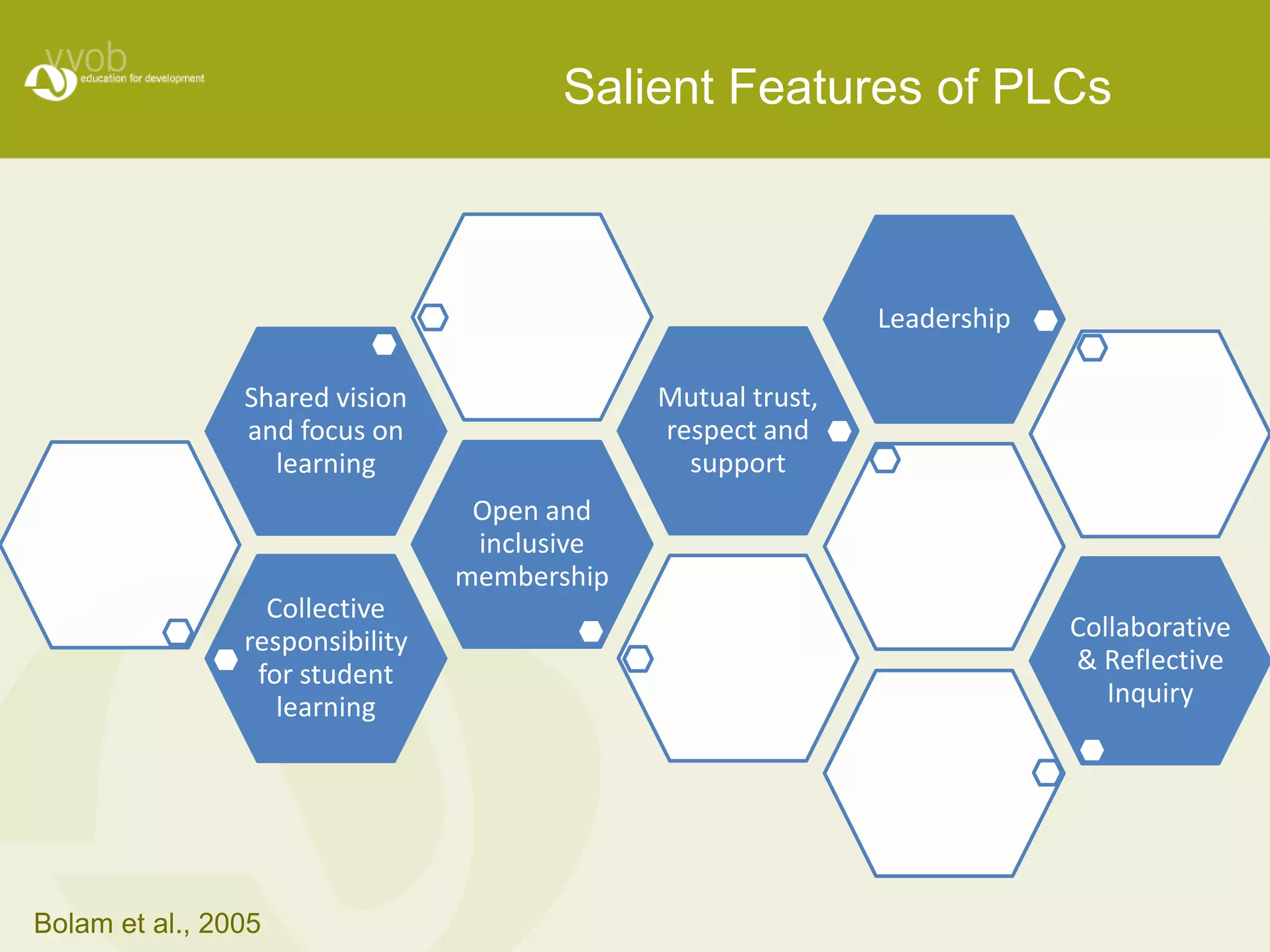
Salient Features of PLCs 
Collective 
responsibility 
for student 
Bolam et al., 2005 
learning 
Open and 
inclusive 
membership 
Shared vision 
and focus on 
learning 
Mutual trust, 
respect and 
support 
Leadership 
Collaborative 
& Reflective 
Inquiry
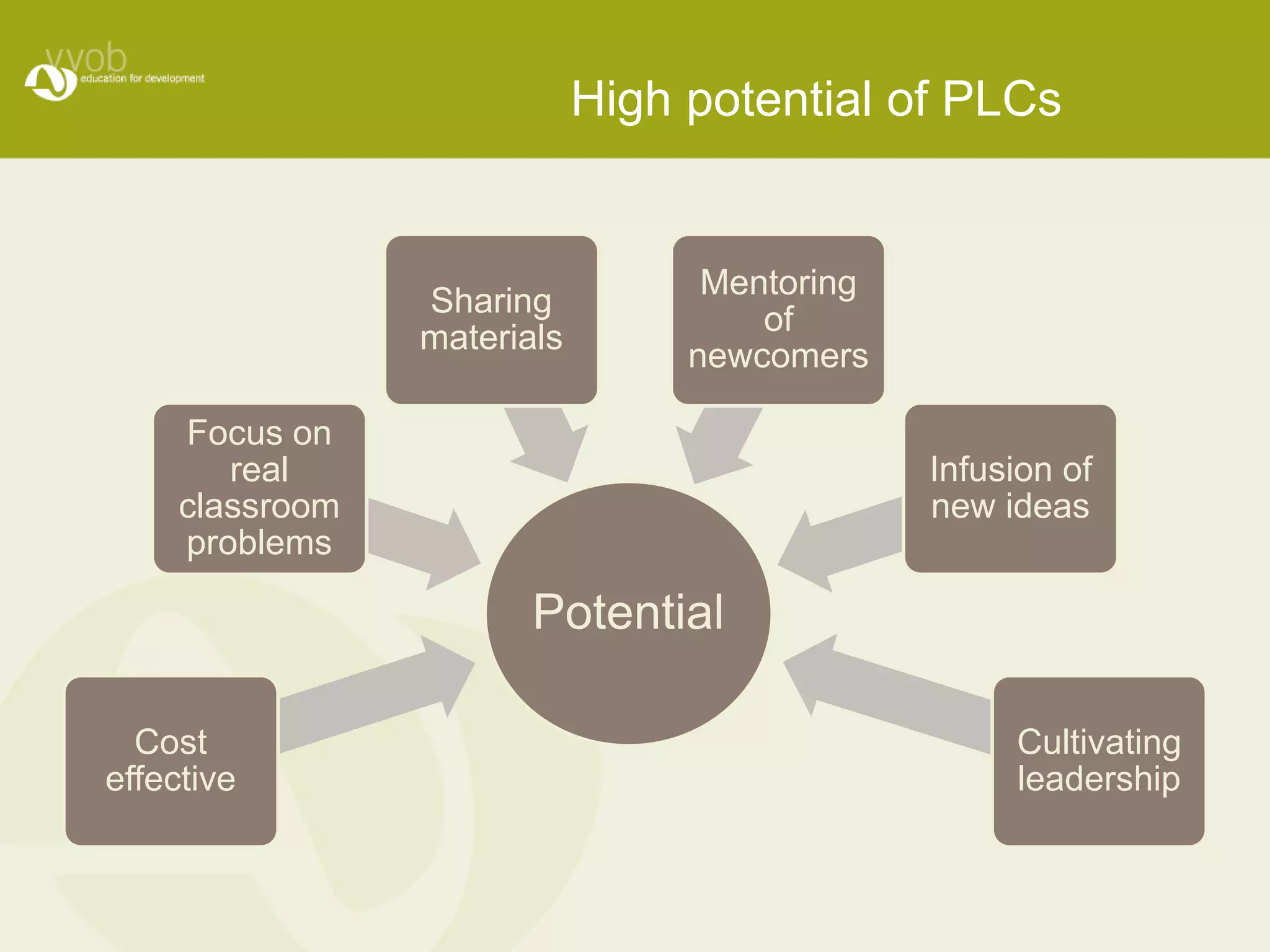
High potential of PLCs 
Potential 
Focus on 
real 
classroom 
problems 
Cost 
effective 
Sharing 
materials 
Mentoring 
of 
newcomers 
Infusion of 
new ideas 
Cultivating 
leadership
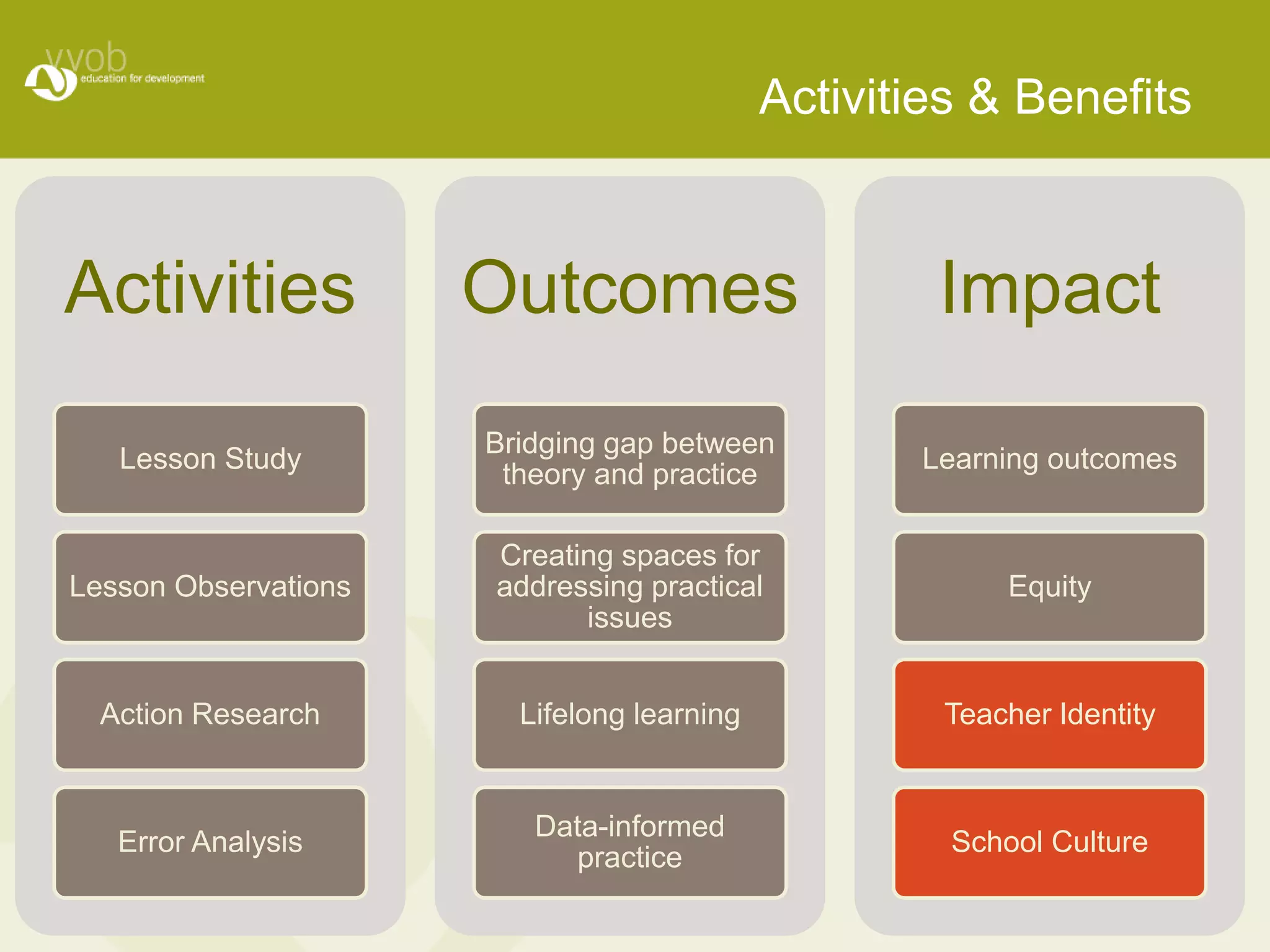
Activities & Benefits 
Activities 
Lesson Study 
Lesson Observations 
Action Research 
Error Analysis 
Outcomes 
Bridging gap between 
theory and practice 
Creating spaces for 
addressing practical 
issues 
Lifelong learning 
Data-informed 
practice 
Impact 
Learning outcomes 
Equity 
Teacher Identity 
School Culture
Ambiguities 
• Teacher preparedness 
– Opportunity cost 
– Time consuming 
– Perceived as ‘add-on’ 
– Proper training and coaching 
– Past experiences with CPD of 
weak translation to practice 
• School preparedness 
– Funding 
– Time 
– Leadership for effective CPD and change: supportive environment
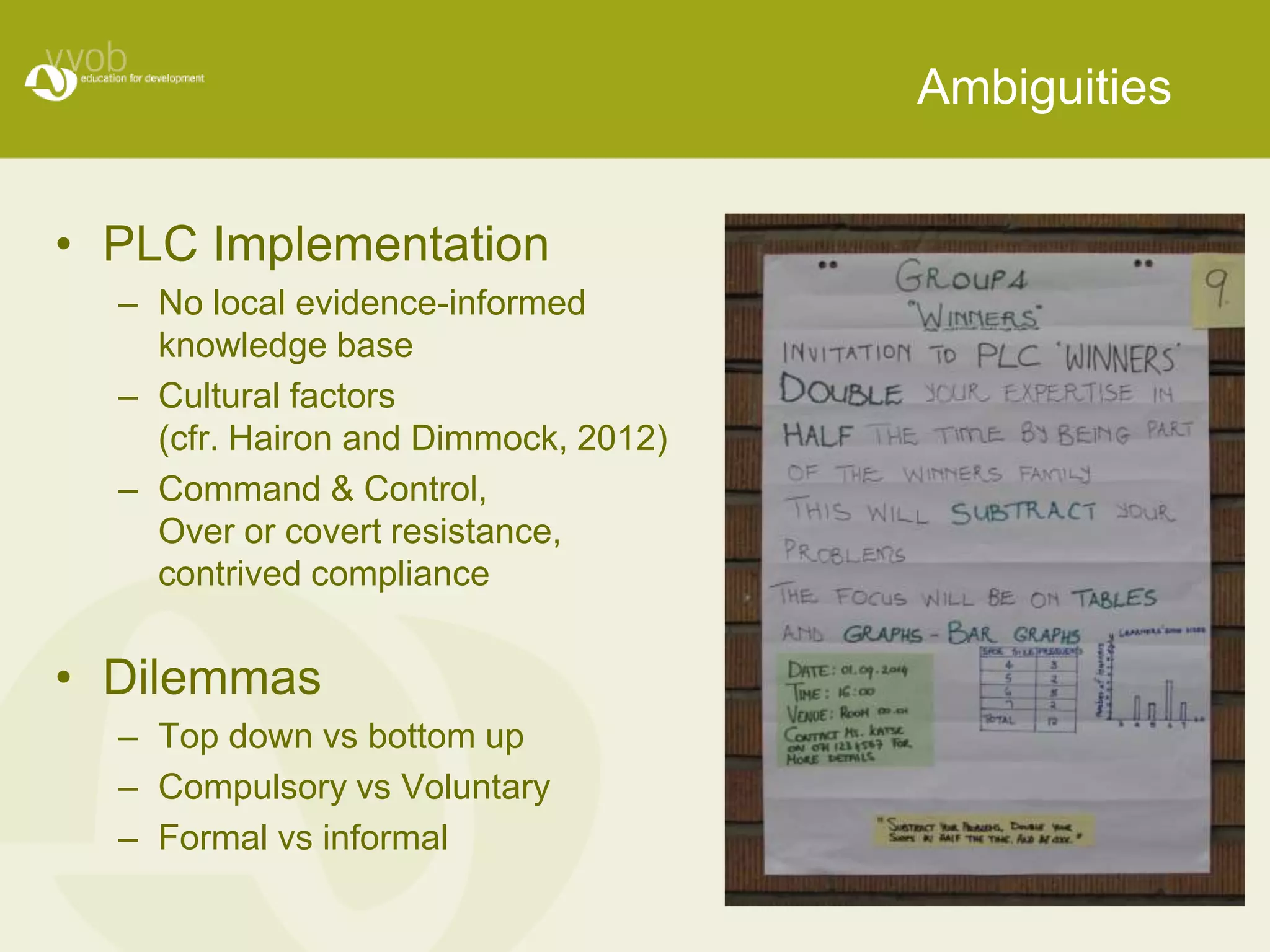
Ambiguities 
• PLC Implementation 
– No local evidence-informed 
knowledge base 
– Cultural factors 
(cfr. Hairon and Dimmock, 2012) 
– Command & Control, 
Over or covert resistance, 
contrived compliance 
• Dilemmas 
– Top down vs bottom up 
– Compulsory vs Voluntary 
– Formal vs informal
Impact of PLCs 
• Ingvarson, Meiers and Beavis (2005): 
– positive correlations between participation in PLCs and… 
• Application of knowledge and innovations in teaching 
practice 
• Student outcomes 
• Teachers’ confidence 
• Vescio, Ross and Adams (2008): 
– Participation of teachers in PLCs resulted in changes in teaching 
practice 
– Evidence of improvement of student learning as a result of 
participation of teachers in PLCs
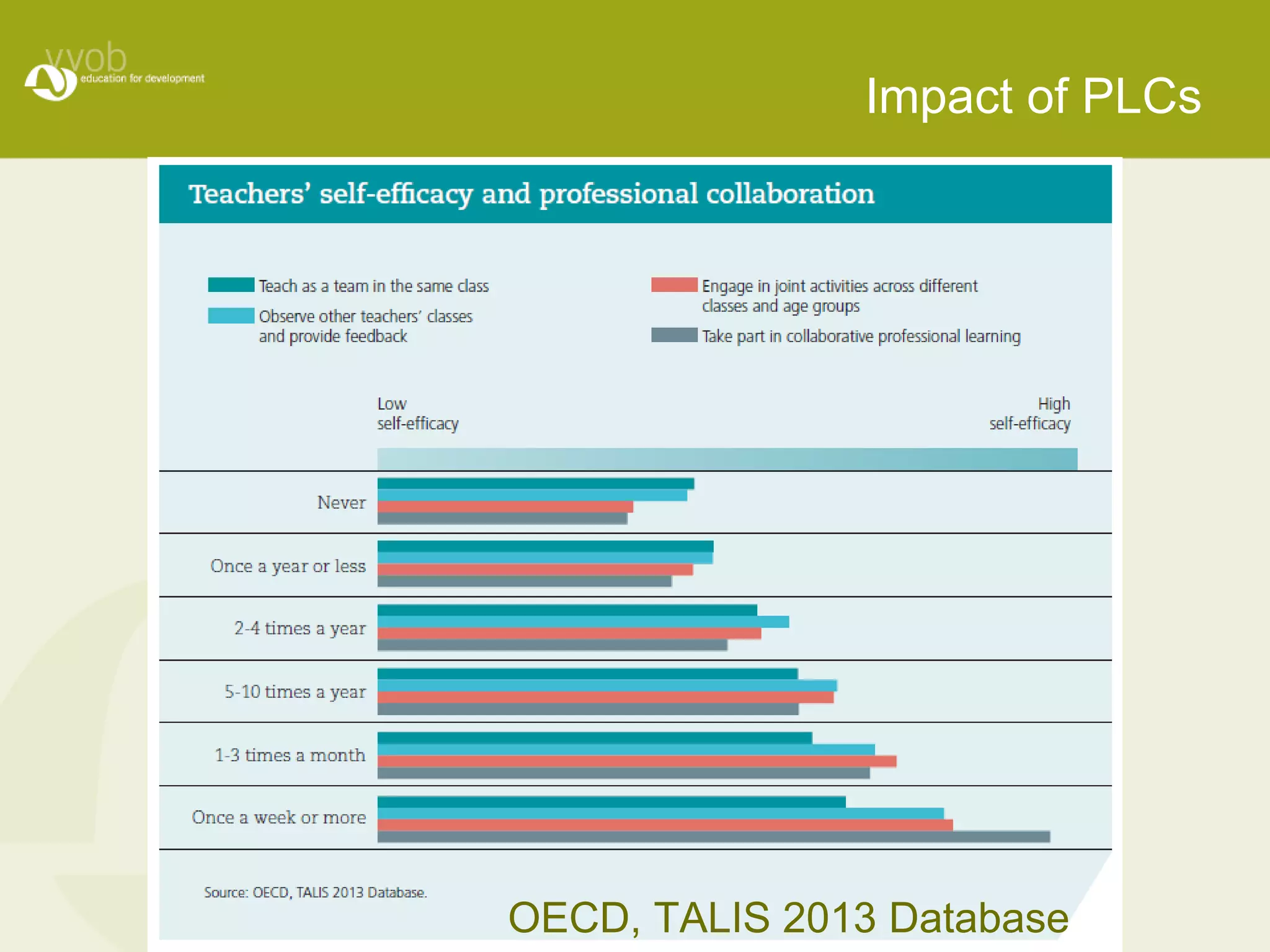
Impact of PLCs 
OECD, TALIS 2013 Database
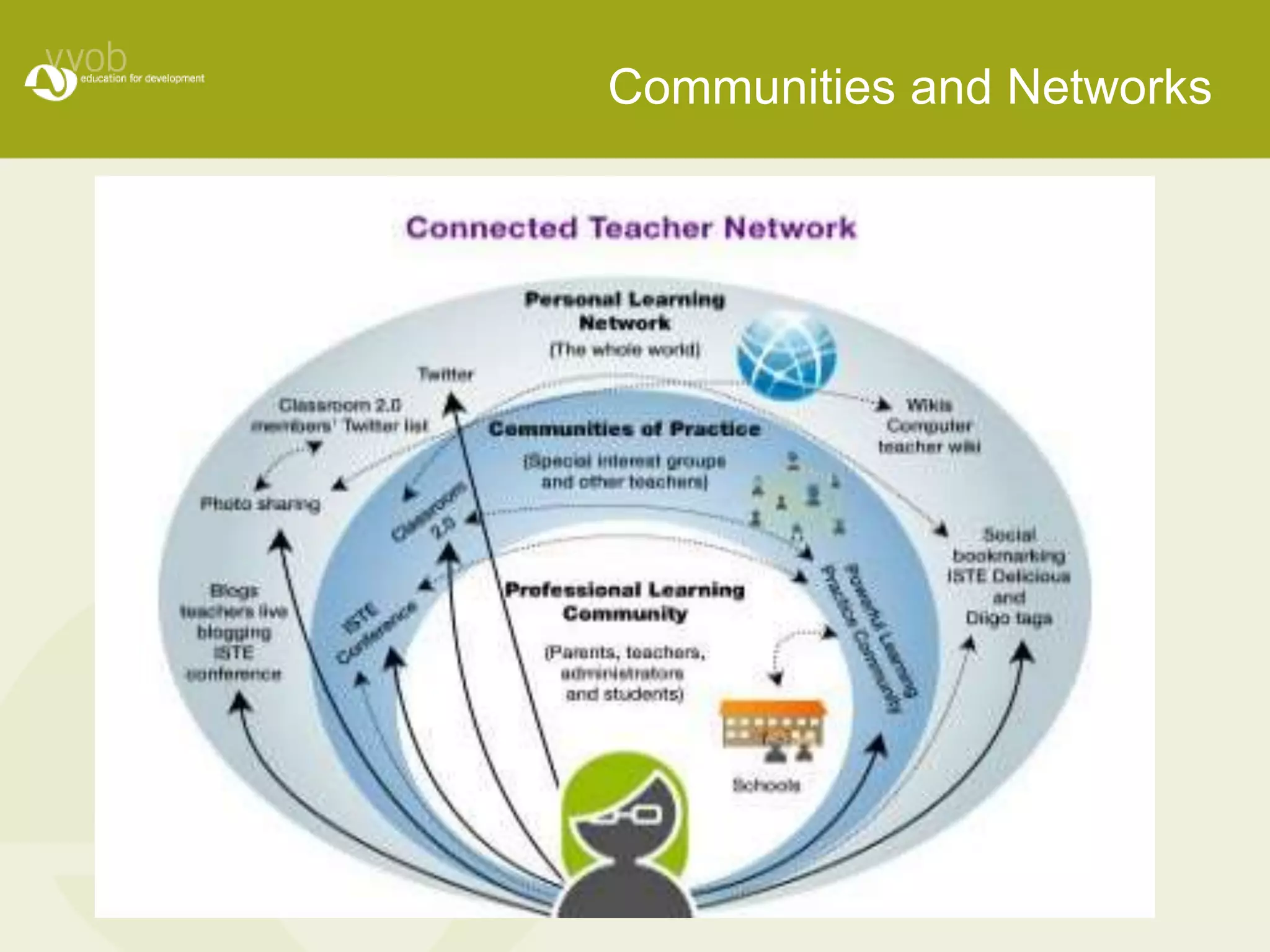
Communities and Networks
Growing PLCs 
“…you cannot force a plant to grow by pulling its leaves… 
what you can do is create the infrastructure in which it can 
prosper.” 
- Etienne Wenger, 1999
References 
References 
• H. Timperley, A. Wilson, H. Barrar & I. Fung (2007), Teacher Professional Learning 
and Development: Best Evidence Synthesis Iteration, Wellington, New Zealand: 
Ministry of Education, http://educationcounts.edcentre.govt.nz/goto/BES 
• Vescio, V., Ross, D. and Adams, A. (2008) ‘A review of research on the impact of 
professional learning communities on teaching practice and student learning’, 
Teaching and Teacher Education, 24(1), pp. 80–91. 
• Ingvarson, L., Meiers, M. and Beavis, A. (2005) ‘Factors affecting the impact of 
professional development programs on teachers’ knowledge, practice, student 
outcomes & efficacy’, Professional Development for Teachers and School Leaders, 
[online] Available from: http://research.acer.edu.au/professional_dev/1. 
• Hairon, S. and Dimmock, C. (2012) ‘Singapore schools and professional learning 
communities: teacher professional development and school leadership in an Asian 
hierarchical system’, Educational Review, 64(4), pp. 405–424. 
• Lave, J. and Wenger, E. (1991) Situated learning: Legitimate peripheral participation, 
Cambridge university press. 
• Brodie, K. (2014) ‘Learning about learner errors in professional learning 
communities’, Educational Studies in Mathematics, 85(2), pp. 221–239.
Contact 
– Stefaan.vandewalle@vvob.be 
– Twitter @stefaanvw 
– http://www.vvob.be/southafrica

Exploration of Professional Learning Communities (PLCs)

  • 1.
    Introduction & Exploration Professional Learning Communities DBE-VVOB partnership National Colloquium on Professional Learning Communities Pretoria, September 18-19, 2014
  • 2.
    Outline 1. Driversfor educational reform 2. Gap between policy and practice 3. Effectiveness professional development 4. Professional Learning Communities – Salient features – Potential – Impact – Ambiguities
  • 3.
    Driver: Changing Demandfor Skills Trends in routine and non-routine tasks in occupations, United States, 1960 to 2009 OECD World Skills Outlook, 2013
  • 4.
    Driver: New Conceptionsof Knowledge Solution Fluency Digital Citizen Creativity Fluency Collabora tion Fluency Information Fluency Media Fluency
  • 5.
    Driver: International EducationAssessments • Global competition • Expose weaknesses SA education system (outcomes, inequality…) • Trend towards ‘evidence-based’ approaches
  • 6.
    Historical Warning “Andit ought to be remembered that there is nothing more difficult to take in hand, more perilous to conduct, or more uncertain in its success, then to take the lead in the introduction of a new order of things. Because the innovator has for enemies all those who have done well under the old conditions, and lukewarm defenders in those who may do well under new”. The Prince, N. Machiavelli, 1515
  • 7.
    Hurricane Metaphor forEducation Reform “ In classrooms both change and continuity unfold in regular, undisturbed patterns. The trend, regardless of what new structures policymakers design, is small alterations over time in stable teaching practices.” Prof. L.Cuban, 2010 http://larrycuban.wordpress.com/2010/09/07/are-school-reforms-more-like-a-pendulum-or-a-hurricane
  • 8.
    What Makes ProfessionalDevelopment Effective? Type of instruction % of effective learning Lectures 4,5 Reading 11 Audiovisual media 22 Demonstration 32 Group discussion 56 Practical 75 Instruction to teach the subject to others 82 Douchy, 2000
  • 9.
    Implementation Gap “Mostteachers are still teaching largely in isolation, as over half of teachers report very rarely or never team-teaching with colleagues, and two-thirds report the same rates for observing their colleagues teach. Some 46% of teachers report never receiving feedback on their teaching from their school leader, and 51% have never received feedback from other members of the school management.” TALIS 2013
  • 10.
    What Makes ProfessionalDevelopment Effective? Planning of professional development “The effectiveness of any professional development activity, regardless of its content, structure or format, depends mainly on how well it is planned” Guskey, 2014
  • 11.
    Planning and EvaluatingCPD Participants’ Reactions/ Optimal CPD activities Participants’ Learning/ Required knowledge and skills Organisational support and change Application of new knowledge and skills Impact on learning outcomes Planning of CPD Evaluation of CPD Based on Guskey, 2014
  • 12.
    Learning Community Corporatebusiness origin of PLCs “Learning organisations are those organisations where people continually expand their capacity to create the results they desire, where new and expansive patterns of thinking are nurtured, where collective aspiration is explored, and where people are continually learning to see the whole together.” Senge, 1990
  • 13.
    Anthropological origin ofPLCs "Communities of practice are an integral part of our daily lives. While the term may be new, the experience is not. Most communities of practice do not have a name or issue membership cards.“ Lave and Wenger, 1991 Learning as Social Participation
  • 14.
    Salient Features ofPLCs Collective responsibility for student Bolam et al., 2005 learning Open and inclusive membership Shared vision and focus on learning Mutual trust, respect and support Leadership Collaborative & Reflective Inquiry
  • 15.
    High potential ofPLCs Potential Focus on real classroom problems Cost effective Sharing materials Mentoring of newcomers Infusion of new ideas Cultivating leadership
  • 16.
    Activities & Benefits Activities Lesson Study Lesson Observations Action Research Error Analysis Outcomes Bridging gap between theory and practice Creating spaces for addressing practical issues Lifelong learning Data-informed practice Impact Learning outcomes Equity Teacher Identity School Culture
  • 17.
    Ambiguities • Teacherpreparedness – Opportunity cost – Time consuming – Perceived as ‘add-on’ – Proper training and coaching – Past experiences with CPD of weak translation to practice • School preparedness – Funding – Time – Leadership for effective CPD and change: supportive environment
  • 18.
    Ambiguities • PLCImplementation – No local evidence-informed knowledge base – Cultural factors (cfr. Hairon and Dimmock, 2012) – Command & Control, Over or covert resistance, contrived compliance • Dilemmas – Top down vs bottom up – Compulsory vs Voluntary – Formal vs informal
  • 19.
    Impact of PLCs • Ingvarson, Meiers and Beavis (2005): – positive correlations between participation in PLCs and… • Application of knowledge and innovations in teaching practice • Student outcomes • Teachers’ confidence • Vescio, Ross and Adams (2008): – Participation of teachers in PLCs resulted in changes in teaching practice – Evidence of improvement of student learning as a result of participation of teachers in PLCs
  • 20.
    Impact of PLCs OECD, TALIS 2013 Database
  • 21.
  • 22.
    Growing PLCs “…youcannot force a plant to grow by pulling its leaves… what you can do is create the infrastructure in which it can prosper.” - Etienne Wenger, 1999
  • 23.
    References References •H. Timperley, A. Wilson, H. Barrar & I. Fung (2007), Teacher Professional Learning and Development: Best Evidence Synthesis Iteration, Wellington, New Zealand: Ministry of Education, http://educationcounts.edcentre.govt.nz/goto/BES • Vescio, V., Ross, D. and Adams, A. (2008) ‘A review of research on the impact of professional learning communities on teaching practice and student learning’, Teaching and Teacher Education, 24(1), pp. 80–91. • Ingvarson, L., Meiers, M. and Beavis, A. (2005) ‘Factors affecting the impact of professional development programs on teachers’ knowledge, practice, student outcomes & efficacy’, Professional Development for Teachers and School Leaders, [online] Available from: http://research.acer.edu.au/professional_dev/1. • Hairon, S. and Dimmock, C. (2012) ‘Singapore schools and professional learning communities: teacher professional development and school leadership in an Asian hierarchical system’, Educational Review, 64(4), pp. 405–424. • Lave, J. and Wenger, E. (1991) Situated learning: Legitimate peripheral participation, Cambridge university press. • Brodie, K. (2014) ‘Learning about learner errors in professional learning communities’, Educational Studies in Mathematics, 85(2), pp. 221–239.
  • 24.
    Contact – Stefaan.vandewalle@vvob.be – Twitter @stefaanvw – http://www.vvob.be/southafrica