Research Students
                                     Teaching (ReTeach)
                                               Academic Development

                                                               #reteach


                    Chrissi Nerantzi, Craig Despard, Dr Sian Etherington
                            @chrissinerantzi @despard1974 @sianeth1

Tell me, I will forget;
Show me, I may remember;
Involve me, and I will understand.

Chinese Proverb
the journey
• Learning
• We as learners
• We as teachers
• Good teaching
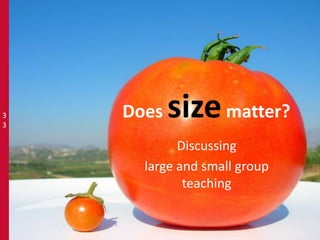
• Does size matter?
• We are in the 21st
  century
• Sharing experiences
• Now what?
Who is who?
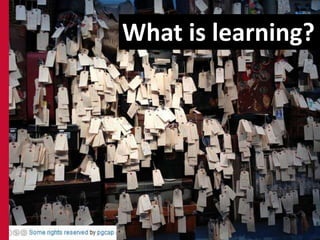
What is learning?
1. Learning is         5. Learning is like
   everywhere                   eating

   2. Learning is           6. Learning is
   experiencing              relearning

3. Learning is change       7. Learning is
                             unlearning

   4. Learning is       8. Learning is a want,
    important                not a need
Good teaching
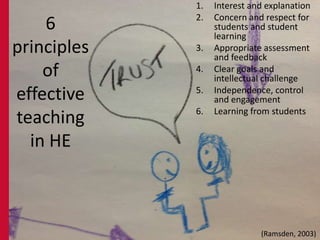
1.   Interest and explanation
             2.   Concern and respect for
    6             students and student
                  learning
principles   3.   Appropriate assessment
                  and feedback
    of       4.   Clear goals and
                  intellectual challenge
effective    5.   Independence, control
                  and engagement
             6.   Learning from students
teaching
  in HE


                             (Ramsden, 2003)
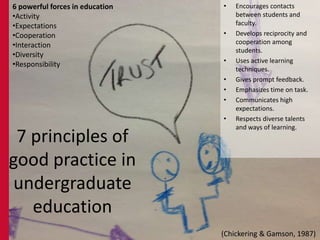
6 powerful forces in education   •   Encourages contacts
•Activity                            between students and
•Expectations                        faculty.
•Cooperation                     •   Develops reciprocity and
•Interaction                         cooperation among
                                     students.
•Diversity
                                 •   Uses active learning
•Responsibility
                                     techniques.
                                 •   Gives prompt feedback.
                                 •   Emphasizes time on task.
                                 •   Communicates high
                                     expectations.
                                 •   Respects diverse talents
                                     and ways of learning.
 7 principles of
good practice in
undergraduate
   education
                                 (Chickering & Gamson, 1987)
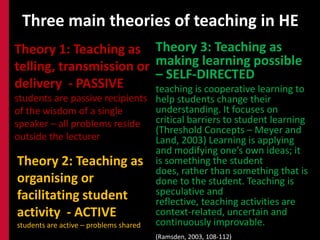
Three main theories of teaching in HE
Theory 1: Teaching as Theory 3: Teaching as
telling, transmission or making learning possible
                         – SELF-DIRECTED
delivery - PASSIVE       teaching is cooperative learning to
students are passive recipients         help students change their
of the wisdom of a single               understanding. It focuses on
speaker – all problems reside           critical barriers to student learning
                                        (Threshold Concepts – Meyer and
outside the lecturer                    Land, 2003) Learning is applying
                                        and modifying one’s own ideas; it
Theory 2: Teaching as                   is something the student does,
                                        rather than something that is done
organising or                           to the student. Teaching is
facilitating student                    speculative and reflective,
                                        teaching activities are context-
activity - ACTIVE                       related, uncertain and
students are active – problems shared   continuously improvable.
                                        (Ramsden, 2003, 108-112)
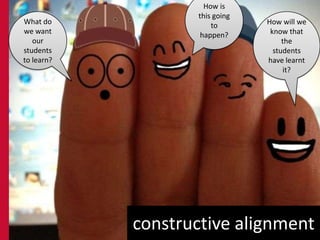
How is
                   this going
What do                to       How will we
we want             happen?      know that
   our                               the
students                          students
to learn?                       have learnt
                                     it?


            constructive alignment
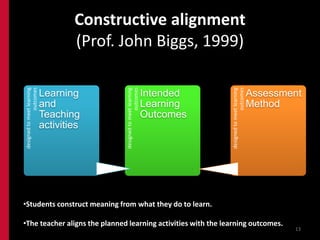
Constructive alignment
                                    (Prof. John Biggs, 1999)
               outcomes


                                                          outcomes


                                                                                                 outcomes
designed to meet learning


                                           designed to meet learning


                                                                                  designed to meet learning
                            Learning                                   Intended                               Assessment
                            and                                        Learning                               Method
                            Teaching                                   Outcomes
                            activities


•Students construct meaning from what they do to learn.

•The teacher aligns the planned learning activities with the learning outcomes.
                                                                                                                      14
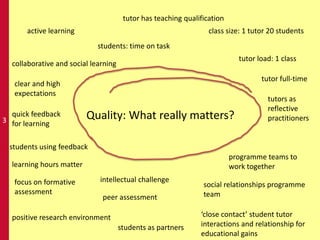
tutor has teaching qualification
      active learning                                             class size: 1 tutor 20 students
                             students: time on task
                                                                            tutor load: 1 class
  collaborative and social learning
                                                                                   tutor full-time
   clear and high
   expectations
                                                                                     tutors as
                                                                                     reflective
  quick feedback
3 for learning            Quality: What really matters?                              practitioners


 students using feedback
                                                                          programme teams to
  learning hours matter                                                   work together
   focus on formative        intellectual challenge
                                                                social relationships programme
   assessment                                                   team
                              peer assessment

  positive research environment                                ‘close contact’ student tutor
                                      students as partners     interactions and relationship for
                                                               educational gains
Gibbs, G (2010) Dimensions of quality, York:   Gibbs, G (2012) Implications of ‘Dimensions
The Higher Education Academy, pp. 19-37        of quality’ in a market environment, York:
                                               The Higher Education Academy


                                                    Prof. Graham Gibbs
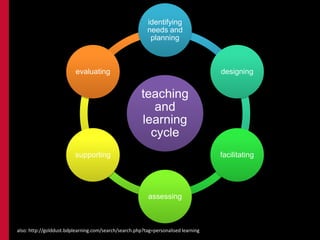
identifying
                                                         needs and
                                                          planning


                          evaluating                                                designing


                                                       teaching
                                                          and
                                                       learning
                                                         cycle
                         supporting                                                 facilitating


                                                          assessing


also: http://golddust.bdplearning.com/search/search.php?tag=personalised learning
sharing experiences
continue the conversation
       http://teachingessentialshe.wordpress.com//
observe
others
teaching!
References
Biggs, J (1999) Teaching for Quality Learning at University, SRHE/OUP.

Biggs, J & Tang, C (2011) Teaching for Quality Learning at University.

Chickering, A. W. & Gamson, Z. F. (1987) "Seven principles for good practice
in undergraduate education" American Association of Higher Education
Bulletin vol.39 no.7 pp.3-7

Meyer J H F and Land R (2003) Threshold Concepts and Troublesome
Knowledge 1 – Linkages to Ways of Thinking and Practising’ in Improving
Student Learning – Ten Years On. C.Rust (Ed), Oxford: OCSLD.

Ramsden, P (2003) Learning to teach in Higher Education, Oxon: Routledge
Falmer.

Research Students Teaching

  • 1.
    Research Students Teaching (ReTeach) Academic Development #reteach Chrissi Nerantzi, Craig Despard, Dr Sian Etherington @chrissinerantzi @despard1974 @sianeth1 Tell me, I will forget; Show me, I may remember; Involve me, and I will understand. Chinese Proverb
  • 2.
    the journey • Learning •We as learners • We as teachers • Good teaching • Does size matter? • We are in the 21st century • Sharing experiences • Now what?
  • 3.
  • 4.
  • 5.
    1. Learning is 5. Learning is like everywhere eating 2. Learning is 6. Learning is experiencing relearning 3. Learning is change 7. Learning is unlearning 4. Learning is 8. Learning is a want, important not a need
  • 6.
  • 7.
    1. Interest and explanation 2. Concern and respect for 6 students and student learning principles 3. Appropriate assessment and feedback of 4. Clear goals and intellectual challenge effective 5. Independence, control and engagement 6. Learning from students teaching in HE (Ramsden, 2003)
  • 8.
    6 powerful forcesin education • Encourages contacts •Activity between students and •Expectations faculty. •Cooperation • Develops reciprocity and •Interaction cooperation among students. •Diversity • Uses active learning •Responsibility techniques. • Gives prompt feedback. • Emphasizes time on task. • Communicates high expectations. • Respects diverse talents and ways of learning. 7 principles of good practice in undergraduate education (Chickering & Gamson, 1987)
  • 9.
    Three main theoriesof teaching in HE Theory 1: Teaching as Theory 3: Teaching as telling, transmission or making learning possible – SELF-DIRECTED delivery - PASSIVE teaching is cooperative learning to students are passive recipients help students change their of the wisdom of a single understanding. It focuses on speaker – all problems reside critical barriers to student learning (Threshold Concepts – Meyer and outside the lecturer Land, 2003) Learning is applying and modifying one’s own ideas; it Theory 2: Teaching as is something the student does, rather than something that is done organising or to the student. Teaching is facilitating student speculative and reflective, teaching activities are context- activity - ACTIVE related, uncertain and students are active – problems shared continuously improvable. (Ramsden, 2003, 108-112)
  • 10.
    How is this going What do to How will we we want happen? know that our the students students to learn? have learnt it? constructive alignment
  • 11.
    Constructive alignment (Prof. John Biggs, 1999) outcomes outcomes outcomes designed to meet learning designed to meet learning designed to meet learning Learning Intended Assessment and Learning Method Teaching Outcomes activities •Students construct meaning from what they do to learn. •The teacher aligns the planned learning activities with the learning outcomes. 14
  • 12.
    tutor has teachingqualification active learning class size: 1 tutor 20 students students: time on task tutor load: 1 class collaborative and social learning tutor full-time clear and high expectations tutors as reflective quick feedback 3 for learning Quality: What really matters? practitioners students using feedback programme teams to learning hours matter work together focus on formative intellectual challenge social relationships programme assessment team peer assessment positive research environment ‘close contact’ student tutor students as partners interactions and relationship for educational gains
  • 13.
    Gibbs, G (2010)Dimensions of quality, York: Gibbs, G (2012) Implications of ‘Dimensions The Higher Education Academy, pp. 19-37 of quality’ in a market environment, York: The Higher Education Academy Prof. Graham Gibbs
  • 14.
    identifying needs and planning evaluating designing teaching and learning cycle supporting facilitating assessing also: http://golddust.bdplearning.com/search/search.php?tag=personalised learning
  • 15.
  • 16.
    continue the conversation http://teachingessentialshe.wordpress.com//
  • 17.
  • 18.
    References Biggs, J (1999)Teaching for Quality Learning at University, SRHE/OUP. Biggs, J & Tang, C (2011) Teaching for Quality Learning at University. Chickering, A. W. & Gamson, Z. F. (1987) "Seven principles for good practice in undergraduate education" American Association of Higher Education Bulletin vol.39 no.7 pp.3-7 Meyer J H F and Land R (2003) Threshold Concepts and Troublesome Knowledge 1 – Linkages to Ways of Thinking and Practising’ in Improving Student Learning – Ten Years On. C.Rust (Ed), Oxford: OCSLD. Ramsden, P (2003) Learning to teach in Higher Education, Oxon: Routledge Falmer.

Editor's Notes

  • #2 we needlabels to use for name tags (add star and circle)flipchart papermarkers (different colours)blue tagpost-it notesred paper hearts, 1 for each participantprint: parcel pageprint: QR code community pagetake: learning retention flashcards (purple and orange)take:flashcards Bloomask participants to bring: smart deviceuse technologies throughout: camera: take photographs of activities, people and productscamcorder: capture some of the activitiestwitter: use hashtag #reteach, encourage participants to use it for questions, observations throughout the session
  • #5 speed dating activityask everybody to get up and form 2 lines (x – x)talk to each other about who they are, what they teach, what they love about learning and teaching
  • #6 activity with post-it notesanswer this question individuallyswap responsesdiscuss briefly 2-3observations
  • #7 Source: http://kedrickwan.com/learning/
  • #8 1. complete this task2.then ask everybody to share > post-it notes on wall in specific areas 1/2/3/43. reflect individually: implication for teaching
  • #9 Flipchart activity: What is good teaching in HE? part 1: In groups discuss, capture on flipchartshare findingspart 2: handout UK PSFTrigger further reflection
  • #13 Handout, not show in classhttp://www.teachthought.com/learning/8-characteristics-of-education30/
  • #16 ask participants to bring a module guide with themactivity 1: to put labels in the right order low > high level thinking – use flashcardsactivity 2: to discuss this linked to the learning outcomeslearning outcomes verbs, find them online. use own devicesIn the 1950s, Bloom found that 95% of the test questions developed to assess student learning required them only to think at the lowest level of learning, the recall of information. Recognizing that there are different levels of thinking behaviours important to learning, Benjamin Bloom and his colleagues developed a classification system which has served educators since 1956.The inclusion of higher level thinking skills with information skills activities is a valuable tool and model for teachers seeking to provide challenges for their students.
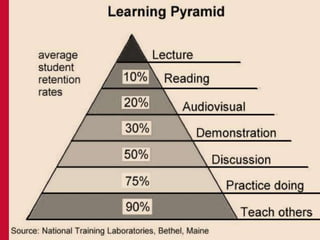
  • #17 activity: use flashcards: purple and orange, place on wall at the beginning of the session and ask participants to put in right order and add the percentages too, then show next slide
  • #18 flashcards on wall activity: then show this slide
  • #19 activity:benefits and challengeslearning environment class sizediverse student bodylearning habits and preferences
  • #22 Watch and discuss the question Fred is raising
  • #23 activity
  • #24 Activity: Identify development needs*** confident** ok* Not confident at all
  • #25 open your heart activity: think of a tricky learning and teaching situation you experienced recently.Capture it in the heart.Share with your buddy and identify together possible solutions. Share with another pair.Reflect on this experience. What would you do differently next time?
  • #26 print: this!final activity: reflective parcel1 minute paperask everybody to reflect on session and complete
  • #27 print!
  • #28 http://edudemic.com/2013/03/the-10-skills-modern-teachers-must-have/
  • #30 create a quiz with socrativeinvite participants to complete it at the end of the session