Aulia nNisa Khusnia, M.A
Muhammadiyah University of
Purwokerto
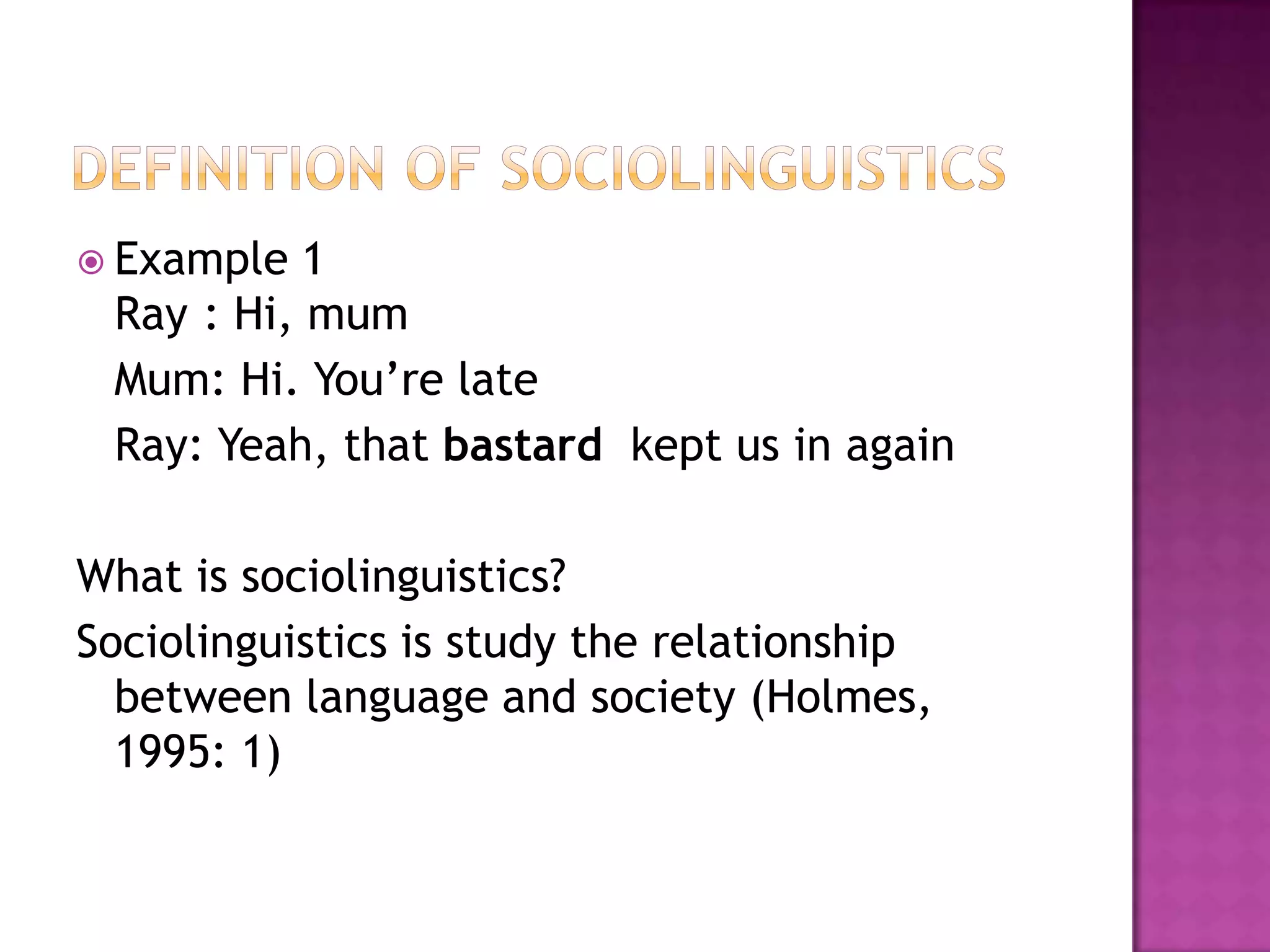
 Example 1
Ray : Hi, mum
Mum: Hi. You’re late
Ray: Yeah, that bastard kept us in again
What is sociolinguistics?
Sociolinguistics is study the relationship
between language and society (Holmes,
1995: 1)
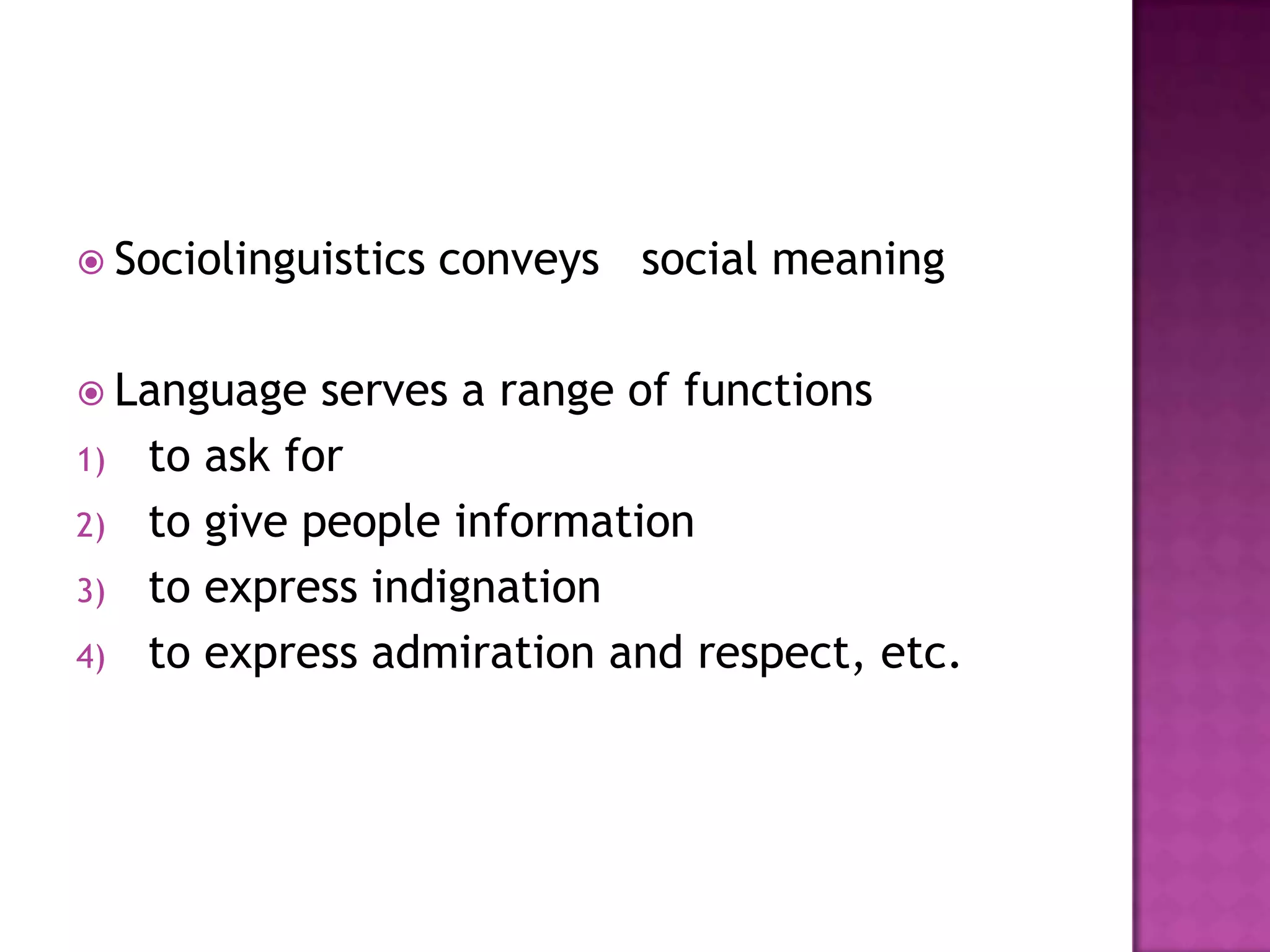
 Sociolinguistics conveys social meaning
 Language serves a range of functions
1) to ask for
2) to give people information
3) to express indignation
4) to express admiration and respect, etc.
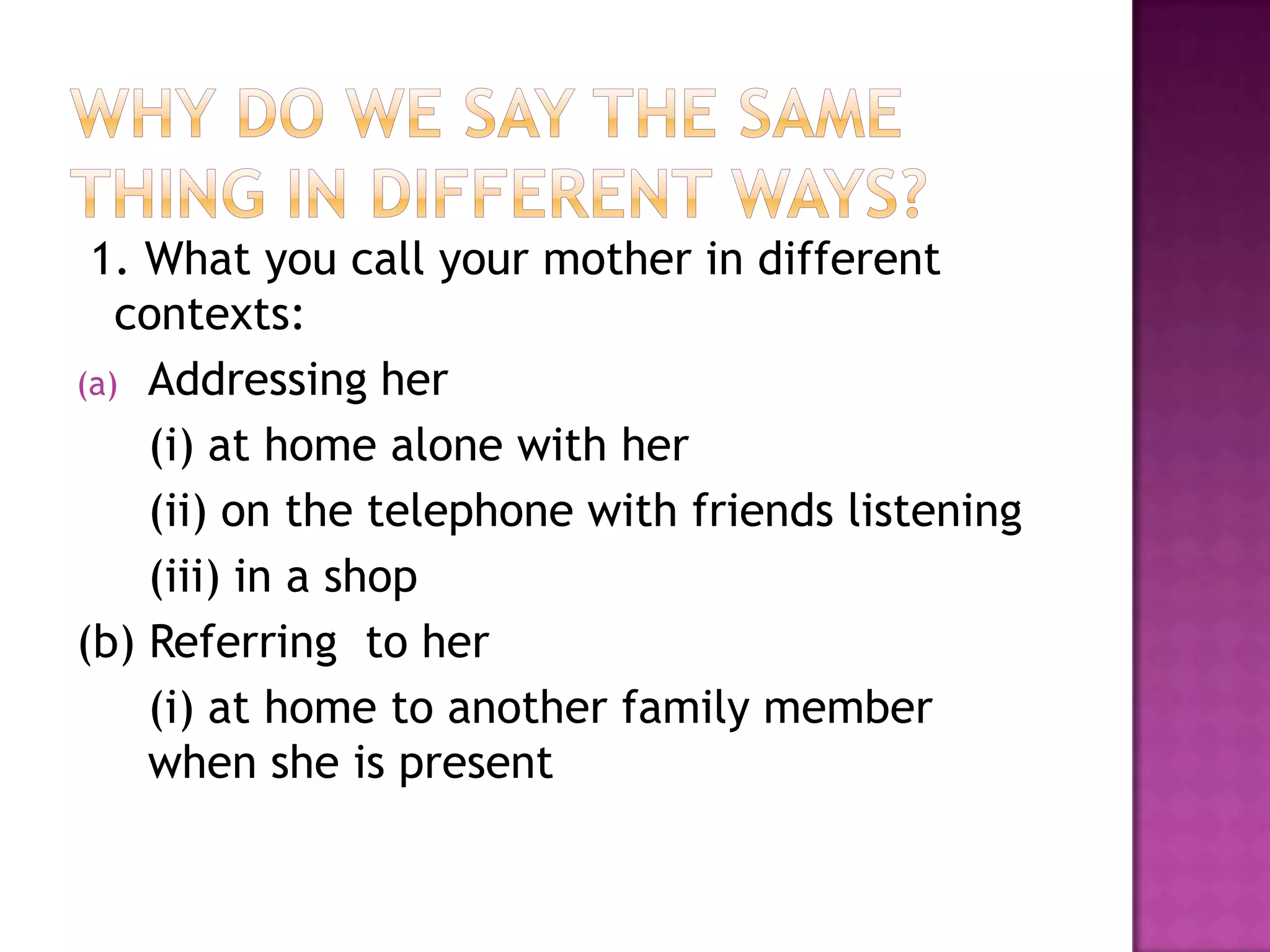
1. What you call your mother in different
contexts:
(a) Addressing her
(i) at home alone with her
(ii) on the telephone with friends listening
(iii) in a shop
(b) Referring to her
(i) at home to another family member
when she is present
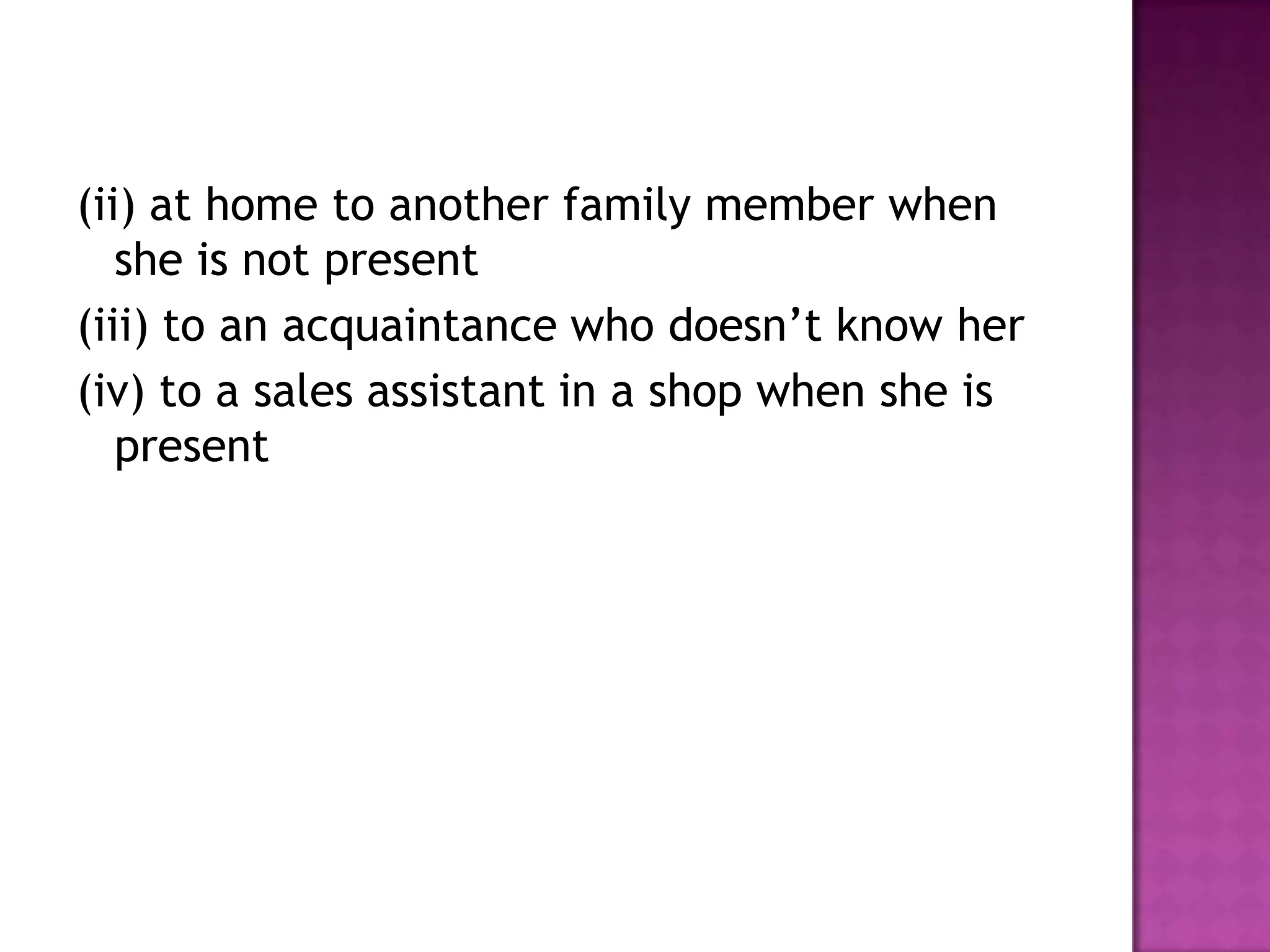
(ii) at home to another family member when
she is not present
(iii) to an acquaintance who doesn’t know her
(iv) to a sales assistant in a shop when she is
present
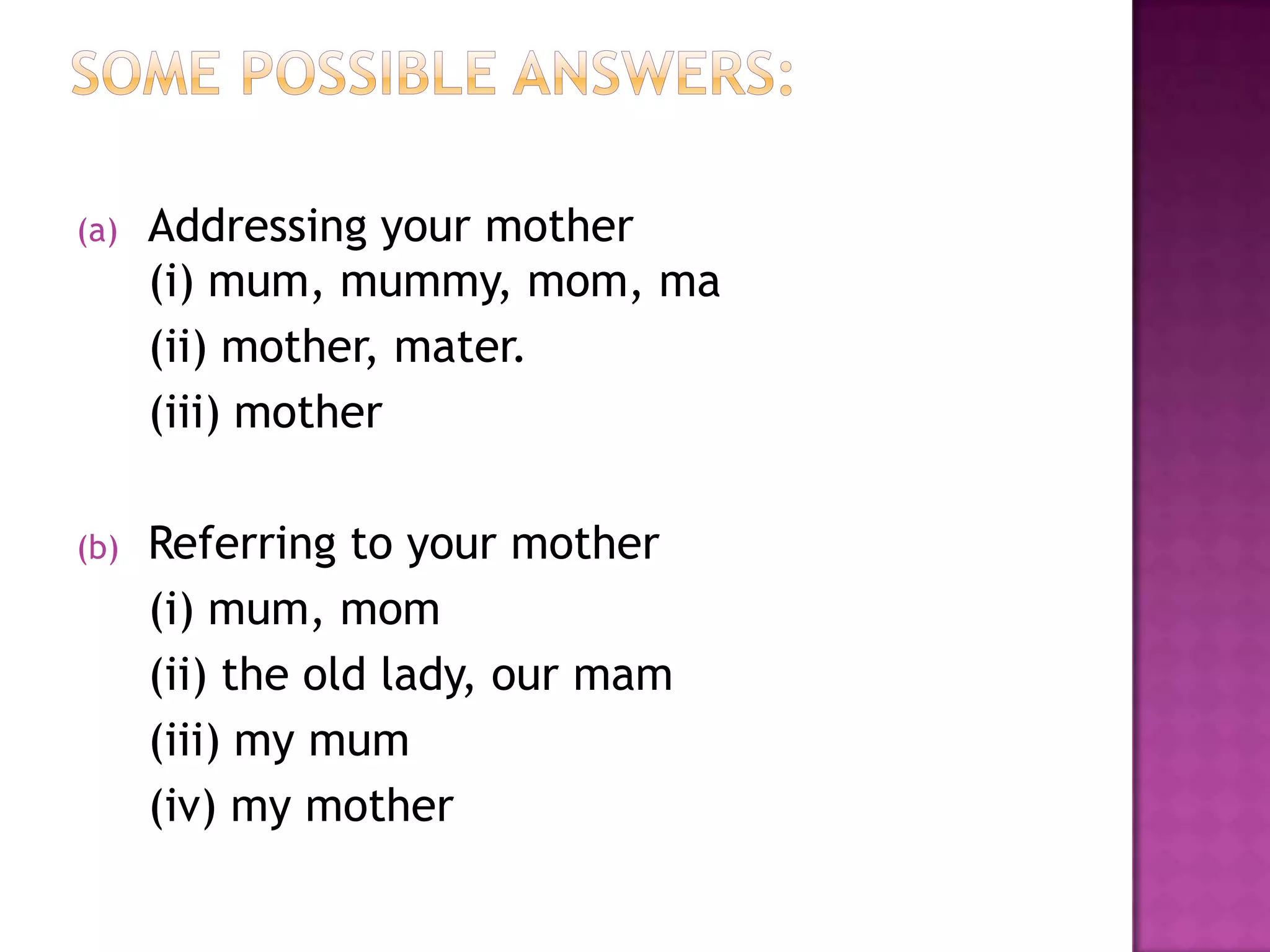
(a) Addressing your mother
(i) mum, mummy, mom, ma
(ii) mother, mater.
(iii) mother
(b) Referring to your mother
(i) mum, mom
(ii) the old lady, our mam
(iii) my mum
(iv) my mother
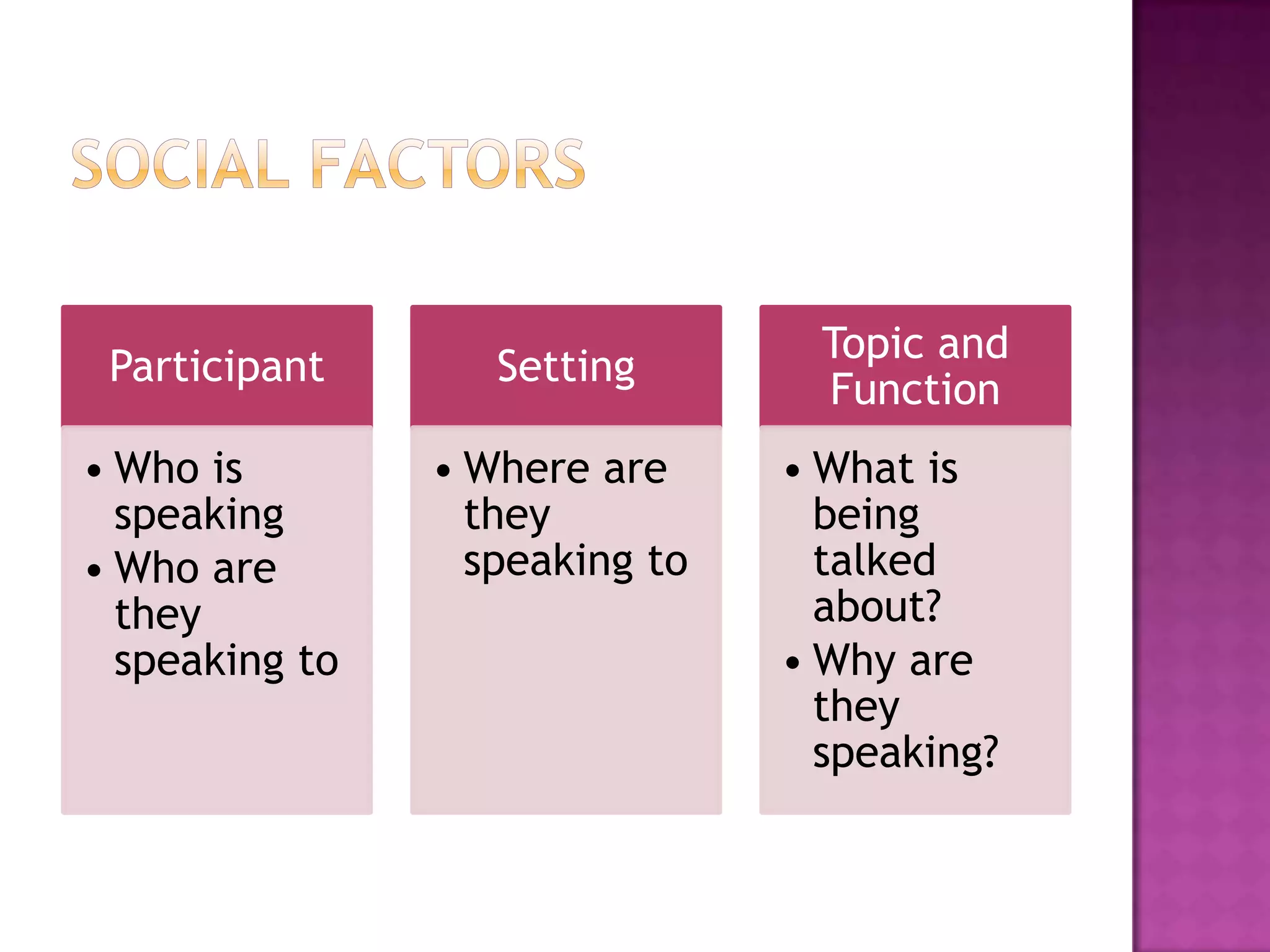
Participant
• Who is
speaking
• Who are
they
speaking to
Setting
• Where are
they
speaking to
Topic and
Function
• What is
being
talked
about?
• Why are
they
speaking?
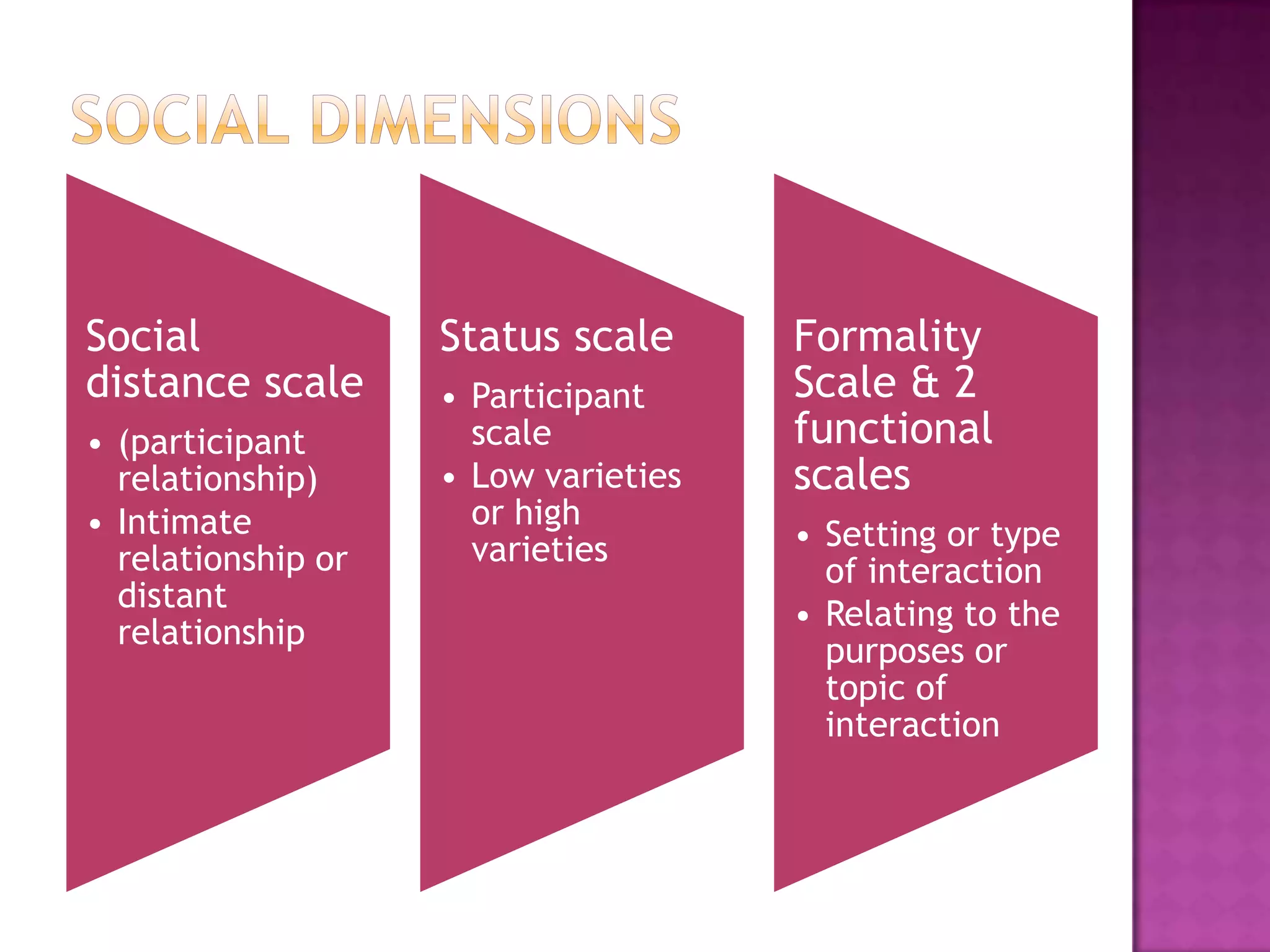
Social
distance scale
• (participant
relationship)
• Intimate
relationship or
distant
relationship
Status scale
• Participant
scale
• Low varieties
or high
varieties
Formality
Scale & 2
functional
scales
• Setting or type
of interaction
• Relating to the
purposes or
topic of
interaction
Why people use one set of forms in some
contexts, but different forms in others
The step which need to be taken in providing
an explanation are
1. to identify clearly the linguistic variation
involved e.g. vocabulary, sounds,
grammatical construction, dialects,
languages)
2. to identify clearly the different social or
non- linguistics factors which lead speakers
to use one form rather than another
e.g features relating to participants, setting or
function of interaction
 When two varieties of the same language are
used (H & L)
 H formal e.g. religion, newspaper,
broadcasting, education, etc
 L informal e.g. education
(discussion) , gossiping, and shopping
 Language shift
use one language to different language
two distinct codes in different domains
use different varieties of just one language
for their communicative need
 Language death ( language are no longer
spoken anywhere)
 Language loss ( the process of language
death gradually loss of fluency and
competence by its speaker)
 Economic
People learn English- dominated countries
to get a job
 Social
(i) no active steps to maintain their ethnic
language
(ii) not see it as offering any advantages to
their children
a. The pattern of language use more domains-
more chances
b. Demographic factors
c. Attitudes to minority language
identity and culture
self esteem
 Vernacular language
a language which has not been standardized
and has no official status
 Lingua francas
describes a language serves as a regular
means of communication between different
linguistic groups in multilingual speech
community
1. has no native speaker
2. a means of communication between people
who don’t have a common language
3. Pidgin linguistics structures such as: sound,
vocabulary, grammatical features, a new
variety ( borrowing/ emerging from some
languages)
4. Example: in Papua New Guinea, Pidgin
Chinese English spoken by Chinese
languages a Neo Melanesia / Tok Piksin
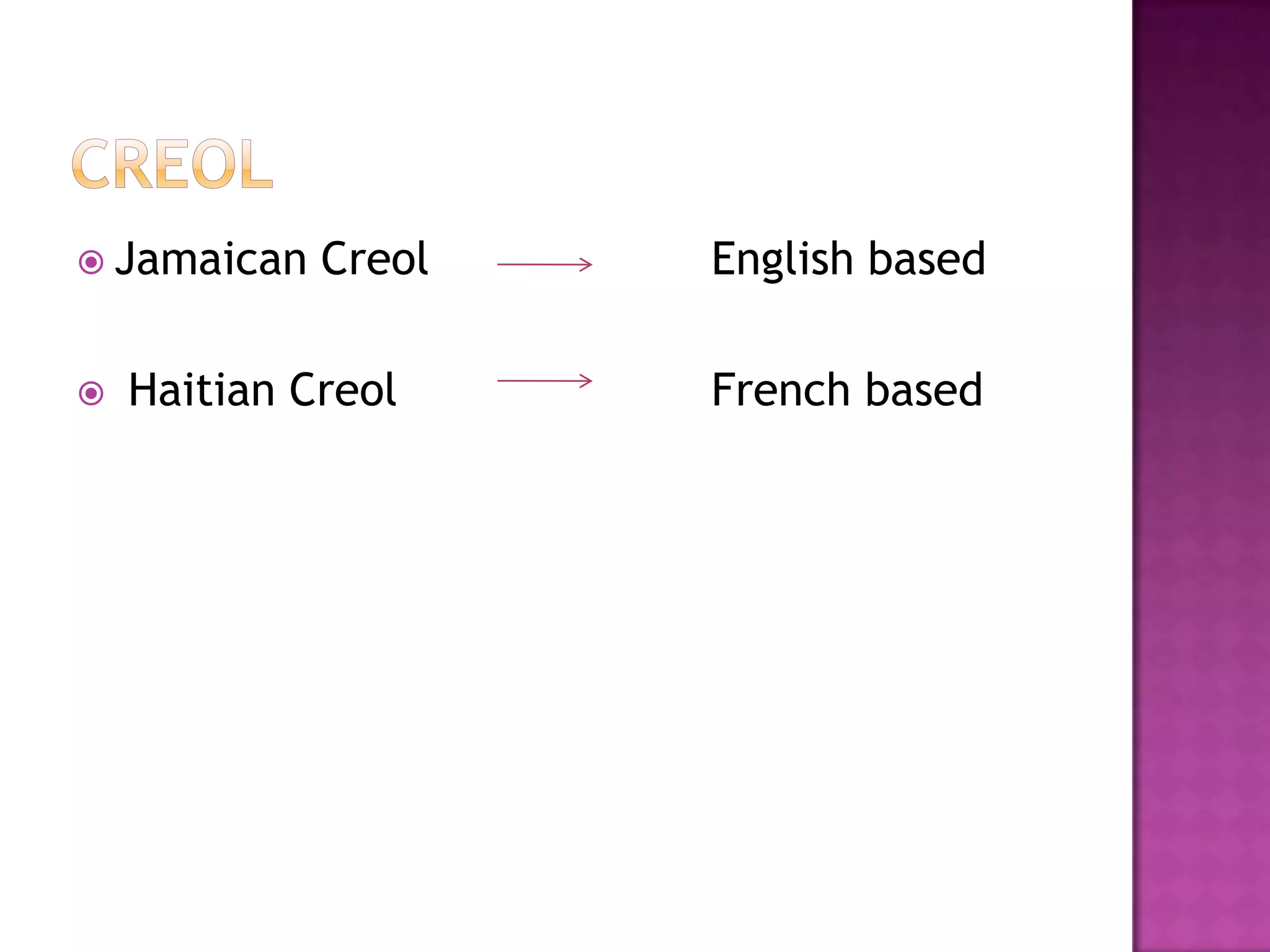
 Jamaican Creol English based
 Haitian Creol French based
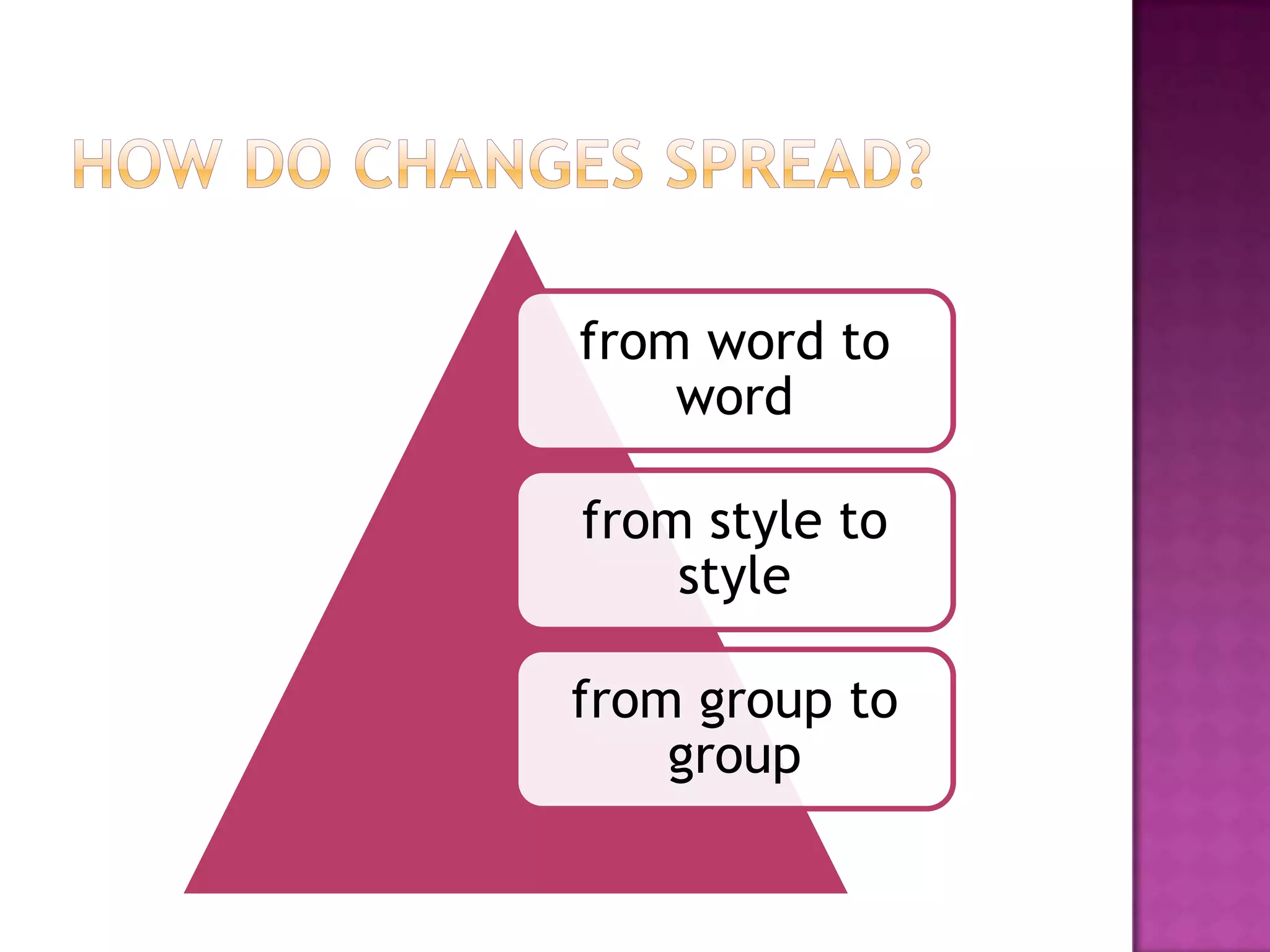
from word to
word
from style to
style
from group to
group
 Holmes, Janet.1996. Introduction to
Sociolinguistic. England: Longman Group.
 Wardhaugh, Ronald. 1998. An Introduction to
sociolinguistics. USA: Blackwell Publisher Inc.

Introduction to sociolinguistics

  • 1.
    Aulia nNisa Khusnia,M.A Muhammadiyah University of Purwokerto
  • 2.
     Example 1 Ray: Hi, mum Mum: Hi. You’re late Ray: Yeah, that bastard kept us in again What is sociolinguistics? Sociolinguistics is study the relationship between language and society (Holmes, 1995: 1)
  • 3.
     Sociolinguistics conveyssocial meaning  Language serves a range of functions 1) to ask for 2) to give people information 3) to express indignation 4) to express admiration and respect, etc.
  • 4.
    1. What youcall your mother in different contexts: (a) Addressing her (i) at home alone with her (ii) on the telephone with friends listening (iii) in a shop (b) Referring to her (i) at home to another family member when she is present
  • 5.
    (ii) at hometo another family member when she is not present (iii) to an acquaintance who doesn’t know her (iv) to a sales assistant in a shop when she is present
  • 6.
    (a) Addressing yourmother (i) mum, mummy, mom, ma (ii) mother, mater. (iii) mother (b) Referring to your mother (i) mum, mom (ii) the old lady, our mam (iii) my mum (iv) my mother
  • 7.
    Participant • Who is speaking •Who are they speaking to Setting • Where are they speaking to Topic and Function • What is being talked about? • Why are they speaking?
  • 8.
    Social distance scale • (participant relationship) •Intimate relationship or distant relationship Status scale • Participant scale • Low varieties or high varieties Formality Scale & 2 functional scales • Setting or type of interaction • Relating to the purposes or topic of interaction
  • 9.
    Why people useone set of forms in some contexts, but different forms in others The step which need to be taken in providing an explanation are 1. to identify clearly the linguistic variation involved e.g. vocabulary, sounds, grammatical construction, dialects, languages) 2. to identify clearly the different social or non- linguistics factors which lead speakers to use one form rather than another
  • 10.
    e.g features relatingto participants, setting or function of interaction
  • 11.
     When twovarieties of the same language are used (H & L)  H formal e.g. religion, newspaper, broadcasting, education, etc  L informal e.g. education (discussion) , gossiping, and shopping
  • 12.
     Language shift useone language to different language two distinct codes in different domains use different varieties of just one language for their communicative need  Language death ( language are no longer spoken anywhere)  Language loss ( the process of language death gradually loss of fluency and competence by its speaker)
  • 13.
     Economic People learnEnglish- dominated countries to get a job  Social (i) no active steps to maintain their ethnic language (ii) not see it as offering any advantages to their children
  • 14.
    a. The patternof language use more domains- more chances b. Demographic factors c. Attitudes to minority language identity and culture self esteem
  • 15.
     Vernacular language alanguage which has not been standardized and has no official status  Lingua francas describes a language serves as a regular means of communication between different linguistic groups in multilingual speech community
  • 16.
    1. has nonative speaker 2. a means of communication between people who don’t have a common language 3. Pidgin linguistics structures such as: sound, vocabulary, grammatical features, a new variety ( borrowing/ emerging from some languages) 4. Example: in Papua New Guinea, Pidgin Chinese English spoken by Chinese languages a Neo Melanesia / Tok Piksin
  • 17.
     Jamaican CreolEnglish based  Haitian Creol French based
  • 18.
    from word to word fromstyle to style from group to group
  • 19.
     Holmes, Janet.1996.Introduction to Sociolinguistic. England: Longman Group.  Wardhaugh, Ronald. 1998. An Introduction to sociolinguistics. USA: Blackwell Publisher Inc.