INTRODUCTION TO 
BONE FRACTURE 
Suheab A. Maghrabi, MBBS, MSc. 
Teaching Assistant, Orthopaedic Department, 
College of Medicine, University of Hail, 
Hail, Saudi Arabia.
Definition 
• A bone fracture is a break in 
the structural continuity of 
bone.
Pathology of bone fracture 
• Single highly stressful traumatic incident . 
• Repetitive stress of normal degree leading to mechanical 
failure 
• Normal stress acting on an abnormally weakened bone 
(pathological fracture).
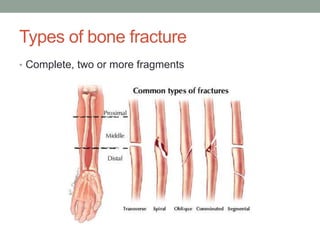
Types of bone fracture 
• Complete, two or more fragments
Cont. 
• Incomplete: 
• “Greenstick”, in the pediatric age group. 
• Due to thicker periosteum and softer bone. 
• Stress fracture 
• Compression fracture.
Cont. 
• Physeal fracture 
• Fracture through the physis 
(growth plate). 
• Need special care. 
• Can result in growth arrest.
Bone healing 
• With-callus (secondary healing): 
1. Tissue destruction and hematoma development. 
2. Inflammation and cellular proliferation. 
3. Callus formation. 
• Contains osteoprogenic, osteoclast, osteoblast, and chodroprogenic 
cells. 
• Development of immature bone (woven). 
4. Consolidation. 
• Woven bone turn into lamellar bone. 
5. Remodeling.
Cont. 
• Without-callus (primary healing): 
• Cutting cone mechanism.
Factors affecting bone healing 
• Mechanical stability. 
• Blood supply. 
• Patient general health. 
• Age.
Principle of fracture treatment 
• REDUCE, HOLD, EXERCISE. 
• Aim of reduction: 
• Adequate apposition. 
• Normal alignment. 
• Restore length.
Cont. 
• Reduction methods: 
1. Manipulation: 
• Minimal displacement, most of children fracture. 
• Stages: 
• Pulling distal fragment (dis-impaction). 
• Reverse the original direction of the deforming force. 
• Alignment adjustment. 
2. Mechanical traction: 
• Either until union or till the operation. 
• e.g. Shaft of femur.
Cont. 
3. Open reduction, indications: 
• Fail of closed reduction. 
• Articular fracture. 
• Avulsion fracture. 
• Neurovascular injury. 
• Pathological fracture. 
• Unstable fracture. 
• Multiple fractures. 
• Poor healing potential.
Cont. 
• HOLD. 
• Methods: 
• Cast/ splint. 
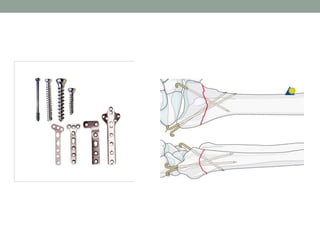
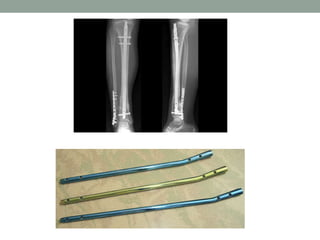
• Internal fixation 
• wires 
• Screws 
• Plates and screws 
• IM Nail 
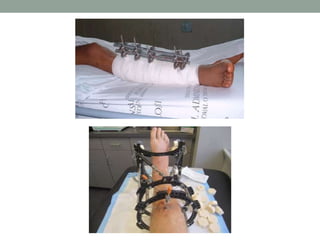
• External fixation 
• Ring and pins. 
• Sever soft tissue damage. 
• Sever comminuted fracture. 
• Pelvic and open fractures.
Open fracture 
• Bone Fracture with open wound. 
• Gastilo classification 
• I, less than 1cm, low energy, clean wound. 
• II, more than 1cm, medium energy, clean wound. 
• III, high energy, extensive soft tissue loss, vascular injury 
• IIIA, minimum soft tissue damage 
• IIIB, soft tissue damage and periosteal stripping. 
• IIIC, vascular injury 
• Treatment 
• Wound debridement 
• Prophylactic antibiotic 
• Stabilization of fracture 
• Early definitive wound care.
Thank you

Introduction to bone fracture

  • 1.
    INTRODUCTION TO BONEFRACTURE Suheab A. Maghrabi, MBBS, MSc. Teaching Assistant, Orthopaedic Department, College of Medicine, University of Hail, Hail, Saudi Arabia.
  • 2.
    Definition • Abone fracture is a break in the structural continuity of bone.
  • 3.
    Pathology of bonefracture • Single highly stressful traumatic incident . • Repetitive stress of normal degree leading to mechanical failure • Normal stress acting on an abnormally weakened bone (pathological fracture).
  • 4.
    Types of bonefracture • Complete, two or more fragments
  • 5.
    Cont. • Incomplete: • “Greenstick”, in the pediatric age group. • Due to thicker periosteum and softer bone. • Stress fracture • Compression fracture.
  • 6.
    Cont. • Physealfracture • Fracture through the physis (growth plate). • Need special care. • Can result in growth arrest.
  • 7.
    Bone healing •With-callus (secondary healing): 1. Tissue destruction and hematoma development. 2. Inflammation and cellular proliferation. 3. Callus formation. • Contains osteoprogenic, osteoclast, osteoblast, and chodroprogenic cells. • Development of immature bone (woven). 4. Consolidation. • Woven bone turn into lamellar bone. 5. Remodeling.
  • 9.
    Cont. • Without-callus(primary healing): • Cutting cone mechanism.
  • 10.
    Factors affecting bonehealing • Mechanical stability. • Blood supply. • Patient general health. • Age.
  • 11.
    Principle of fracturetreatment • REDUCE, HOLD, EXERCISE. • Aim of reduction: • Adequate apposition. • Normal alignment. • Restore length.
  • 12.
    Cont. • Reductionmethods: 1. Manipulation: • Minimal displacement, most of children fracture. • Stages: • Pulling distal fragment (dis-impaction). • Reverse the original direction of the deforming force. • Alignment adjustment. 2. Mechanical traction: • Either until union or till the operation. • e.g. Shaft of femur.
  • 13.
    Cont. 3. Openreduction, indications: • Fail of closed reduction. • Articular fracture. • Avulsion fracture. • Neurovascular injury. • Pathological fracture. • Unstable fracture. • Multiple fractures. • Poor healing potential.
  • 14.
    Cont. • HOLD. • Methods: • Cast/ splint. • Internal fixation • wires • Screws • Plates and screws • IM Nail • External fixation • Ring and pins. • Sever soft tissue damage. • Sever comminuted fracture. • Pelvic and open fractures.
  • 18.
    Open fracture •Bone Fracture with open wound. • Gastilo classification • I, less than 1cm, low energy, clean wound. • II, more than 1cm, medium energy, clean wound. • III, high energy, extensive soft tissue loss, vascular injury • IIIA, minimum soft tissue damage • IIIB, soft tissue damage and periosteal stripping. • IIIC, vascular injury • Treatment • Wound debridement • Prophylactic antibiotic • Stabilization of fracture • Early definitive wound care.
  • 20.

Editor's Notes