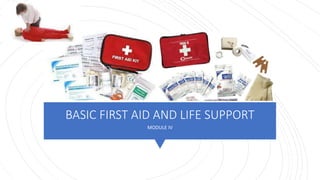
BASIC FIRST AID AND LIFE SUPPORT
MODULE IV
Introduction to FIRST AID
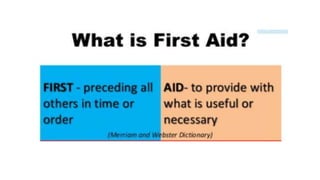
What Is First Aid?
How about the this second photo?
What You Can Say About This Photo?
First Aid
Is a temporary or immediate care given to a person who
has been injured or suddenly taken ill in the absence of
medical assistance.
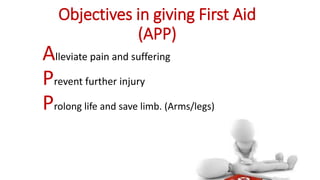
Objectives in giving First Aid
(APP)
Alleviate pain and suffering
Prevent further injury
Prolong life and save limb. (Arms/legs)
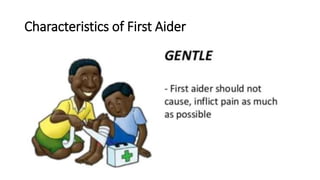
Characteristics of First Aider
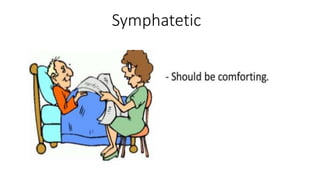
Symphatetic
Golden Rules Of Emergency Care
DO’s
1. Obtain consent, when possible.
2. Think of the worst
3. Call for help
4. Identify yourself to the victim
5. Provide comfort and emotional care/
support.
6. Respect the victim modesty and
physical privacy.
7. Care for the most serious injuries.
8. Assist the victim modesty and physical
privacy.
9. Handle the victim to a minimum.
10. Keep on looking away.
11. Loosen tight clothing
DONT’s
1. further harm the victim
2. let the victim see his own injury
3. Leave the victim alone except to get help
4. Assume obvious injuries as the only one
injury
5. Deny the victim physical or emotional
coping
6. Make unrealistic promises
7. Trust the judgment of a confused victim
8. Require victim to make decision
1. GETTING STARTED
2. EMERGENCY ACTION PRINCIPLES
3. ACTIVATE MEDICAL ASSISTANCE
4. DO SECONDARY SURVEY
A.
1.
B.
C.
a.
2. Emergency Action Principle
b.
Tap the victim on its
shoulder to check if
there’s a response,
if none proceed to the
next.
Conciousness
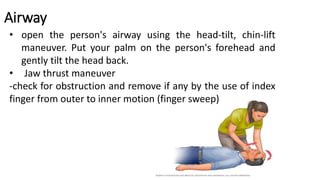
Airway
• open the person's airway using the head-tilt, chin-lift
maneuver. Put your palm on the person's forehead and
gently tilt the head back.
• Jaw thrust maneuver
-check for obstruction and remove if any by the use of index
finger from outer to inner motion (finger sweep)
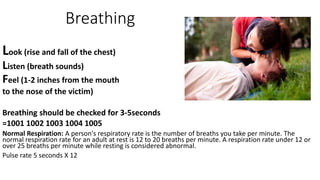
Breathing
Look (rise and fall of the chest)
Listen (breath sounds)
Feel (1-2 inches from the mouth
to the nose of the victim)
Breathing should be checked for 3-5seconds
=1001 1002 1003 1004 1005
Normal Respiration: A person's respiratory rate is the number of breaths you take per minute. The
normal respiration rate for an adult at rest is 12 to 20 breaths per minute. A respiration rate under 12 or
over 25 breaths per minute while resting is considered abnormal.
Pulse rate 5 seconds X 12
Circulation
Check for circulation
-pulse palpation
Normal pass rate-60-80 beats per minute
Carotid Pulse- located at the groove part on the side of the neck and should be
checked for 5-10seconds.
To check your pulse over your carotid artery, place your index and middle fingers
on your neck to the side of your windpipe. When you feel your pulse, look at your
watch and count the number of beats in 10 seconds. Multiply this number by 6 to
get your heart rate per minute.
3. Activate Medical Assistance
-Arrange Transport Facilties
INFORMATION
-Name, Age, Condition of Victim
-What happened?
-Location and Contact #
-First Aid given
4. Do Secondary Survey
1. Check for other injuries
2. Interview the victim (VSAMPLE)
Victims info
Signs and symptoms
Allergies
Medications
Past medical history
Last meal taken
Events prior to injuries
3. Check for V/S
-V/S (Vital Signs)
1. PR-Pulse Rate
2. RR-Respiratory Rate
3. BT-Bodyb Temperature
4. BP-Blood Pressure
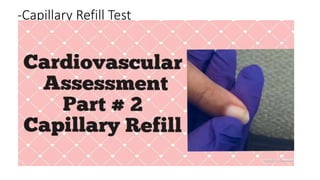
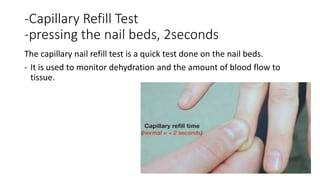
-Capillary Refill Test
-pressing the nail beds, 2seconds
The capillary nail refill test is a quick test done on the nail beds.
- It is used to monitor dehydration and the amount of blood flow to
tissue.
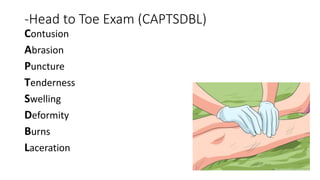
-Head to Toe Exam (CAPTSDBL)
Contusion
Abrasion
Puncture
Tenderness
Swelling
Deformity
Burns
Laceration
Stages Of Coping with Grief and Loss
1. Denial & Isolation
• The first reaction to learning about the terminal illness, loss, or death
of a cherished loved one is to deny the reality of the situation. “This
isn’t happening, this can’t be happening,” people often think. It is a
normal reaction to rationalize our overwhelming emotions.
2. Anger
• As the masking effects of denial and isolation begin to wear, reality
and its pain re-emerge. We are not ready. The intense emotion is
deflected from our vulnerable core, redirected and expressed instead
as anger. The anger may be aimed at inanimate objects, complete
strangers, friends or family.
3. Bargaining
The normal reaction to feelings of helplessness and vulnerability is
often a need to regain control through a series of “If only” statements,
such as:
• If only we had sought medical attention sooner…
• If only we got a second opinion from another doctor…
• If only we had tried to be a better person toward them…
4. Depression
• There are two types of depression that are associated with mourning.
The first one is a reaction to practical implications relating to the loss.
Sadness and regret predominate this type of depression. We worry
about the costs and burial. We worry that, in our grief, we have spent
less time with others that depend on us. This phase may be eased by
simple clarification and reassurance. We may need a bit of helpful
cooperation and a few kind words.
5. Acceptance
• Reaching this stage of grieving is a gift not afforded to everyone.
Death may be sudden and unexpected or we may never see beyond
our anger or denial. It is not necessarily a mark of bravery to resist the
inevitable and to deny ourselves the opportunity to make our peace.
This phase is marked by withdrawal and calm. This is not a period of
happiness and must be distinguished from depression
INTRODUCTION TO BASIC FIRST AID AND LIFE SUPPORT

INTRODUCTION TO BASIC FIRST AID AND LIFE SUPPORT

  • 1.
    BASIC FIRST AIDAND LIFE SUPPORT MODULE IV
  • 2.
    Introduction to FIRSTAID What Is First Aid?
  • 3.
    How about thethis second photo?
  • 4.
    What You CanSay About This Photo?
  • 6.
    First Aid Is atemporary or immediate care given to a person who has been injured or suddenly taken ill in the absence of medical assistance.
  • 7.
    Objectives in givingFirst Aid (APP) Alleviate pain and suffering Prevent further injury Prolong life and save limb. (Arms/legs)
  • 9.
  • 13.
  • 15.
    Golden Rules OfEmergency Care DO’s 1. Obtain consent, when possible. 2. Think of the worst 3. Call for help 4. Identify yourself to the victim 5. Provide comfort and emotional care/ support. 6. Respect the victim modesty and physical privacy. 7. Care for the most serious injuries. 8. Assist the victim modesty and physical privacy. 9. Handle the victim to a minimum. 10. Keep on looking away. 11. Loosen tight clothing DONT’s 1. further harm the victim 2. let the victim see his own injury 3. Leave the victim alone except to get help 4. Assume obvious injuries as the only one injury 5. Deny the victim physical or emotional coping 6. Make unrealistic promises 7. Trust the judgment of a confused victim 8. Require victim to make decision
  • 16.
    1. GETTING STARTED 2.EMERGENCY ACTION PRINCIPLES 3. ACTIVATE MEDICAL ASSISTANCE 4. DO SECONDARY SURVEY
  • 17.
  • 18.
  • 20.
  • 21.
  • 22.
  • 23.
    Tap the victimon its shoulder to check if there’s a response, if none proceed to the next. Conciousness
  • 24.
    Airway • open theperson's airway using the head-tilt, chin-lift maneuver. Put your palm on the person's forehead and gently tilt the head back. • Jaw thrust maneuver -check for obstruction and remove if any by the use of index finger from outer to inner motion (finger sweep)
  • 25.
    Breathing Look (rise andfall of the chest) Listen (breath sounds) Feel (1-2 inches from the mouth to the nose of the victim) Breathing should be checked for 3-5seconds =1001 1002 1003 1004 1005 Normal Respiration: A person's respiratory rate is the number of breaths you take per minute. The normal respiration rate for an adult at rest is 12 to 20 breaths per minute. A respiration rate under 12 or over 25 breaths per minute while resting is considered abnormal. Pulse rate 5 seconds X 12
  • 26.
    Circulation Check for circulation -pulsepalpation Normal pass rate-60-80 beats per minute Carotid Pulse- located at the groove part on the side of the neck and should be checked for 5-10seconds. To check your pulse over your carotid artery, place your index and middle fingers on your neck to the side of your windpipe. When you feel your pulse, look at your watch and count the number of beats in 10 seconds. Multiply this number by 6 to get your heart rate per minute.
  • 27.
    3. Activate MedicalAssistance -Arrange Transport Facilties INFORMATION -Name, Age, Condition of Victim -What happened? -Location and Contact # -First Aid given
  • 28.
    4. Do SecondarySurvey 1. Check for other injuries 2. Interview the victim (VSAMPLE) Victims info Signs and symptoms Allergies Medications Past medical history Last meal taken Events prior to injuries 3. Check for V/S
  • 29.
    -V/S (Vital Signs) 1.PR-Pulse Rate 2. RR-Respiratory Rate 3. BT-Bodyb Temperature 4. BP-Blood Pressure
  • 30.
  • 31.
    -Capillary Refill Test -pressingthe nail beds, 2seconds The capillary nail refill test is a quick test done on the nail beds. - It is used to monitor dehydration and the amount of blood flow to tissue.
  • 32.
    -Head to ToeExam (CAPTSDBL) Contusion Abrasion Puncture Tenderness Swelling Deformity Burns Laceration
  • 34.
    Stages Of Copingwith Grief and Loss
  • 36.
    1. Denial &Isolation • The first reaction to learning about the terminal illness, loss, or death of a cherished loved one is to deny the reality of the situation. “This isn’t happening, this can’t be happening,” people often think. It is a normal reaction to rationalize our overwhelming emotions.
  • 37.
    2. Anger • Asthe masking effects of denial and isolation begin to wear, reality and its pain re-emerge. We are not ready. The intense emotion is deflected from our vulnerable core, redirected and expressed instead as anger. The anger may be aimed at inanimate objects, complete strangers, friends or family.
  • 38.
    3. Bargaining The normalreaction to feelings of helplessness and vulnerability is often a need to regain control through a series of “If only” statements, such as: • If only we had sought medical attention sooner… • If only we got a second opinion from another doctor… • If only we had tried to be a better person toward them…
  • 39.
    4. Depression • Thereare two types of depression that are associated with mourning. The first one is a reaction to practical implications relating to the loss. Sadness and regret predominate this type of depression. We worry about the costs and burial. We worry that, in our grief, we have spent less time with others that depend on us. This phase may be eased by simple clarification and reassurance. We may need a bit of helpful cooperation and a few kind words.
  • 40.
    5. Acceptance • Reachingthis stage of grieving is a gift not afforded to everyone. Death may be sudden and unexpected or we may never see beyond our anger or denial. It is not necessarily a mark of bravery to resist the inevitable and to deny ourselves the opportunity to make our peace. This phase is marked by withdrawal and calm. This is not a period of happiness and must be distinguished from depression