FIRS
TA Presentation On Safety, Cure And
Treatment
AID
WhatIs FirstAid?
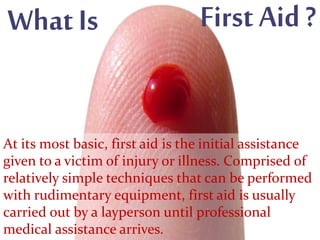
At its most basic, first aid is the initial assistance
given to a victim of injury or illness. Comprised of
relatively simple techniques that can be performed
with rudimentary equipment, first aid is usually
carried out by a layperson until professional
medical assistance arrives.
Why is it is Important ?
It affords people with
the ability to provide
help during various
emergency situations.
First aid helps ensure
that the right methods
of administering
medical assistance are
provided
Knowledge in first
aid also benefits the
individuals
themselves.
It makes one ethically
and mentally ready to
face difficult medical
situations
Common First Aid Topics
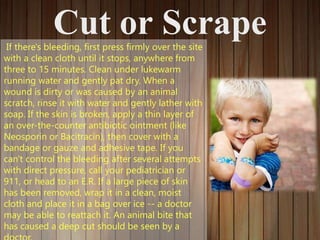
Cut or ScrapeIf there's bleeding, first press firmly over the site
with a clean cloth until it stops, anywhere from
three to 15 minutes. Clean under lukewarm
running water and gently pat dry. When a
wound is dirty or was caused by an animal
scratch, rinse it with water and gently lather with
soap. If the skin is broken, apply a thin layer of
an over-the-counter antibiotic ointment (like
Neosporin or Bacitracin), then cover with a
bandage or gauze and adhesive tape. If you
can't control the bleeding after several attempts
with direct pressure, call your pediatrician or
911, or head to an E.R. If a large piece of skin
has been removed, wrap it in a clean, moist
cloth and place it in a bag over ice -- a doctor
may be able to reattach it. An animal bite that
has caused a deep cut should be seen by a
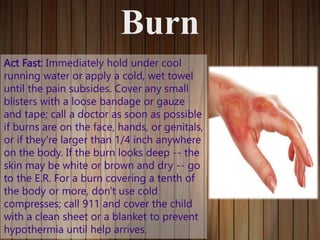
Burn
Act Fast: Immediately hold under cool
running water or apply a cold, wet towel
until the pain subsides. Cover any small
blisters with a loose bandage or gauze
and tape; call a doctor as soon as possible
if burns are on the face, hands, or genitals,
or if they're larger than 1/4 inch anywhere
on the body. If the burn looks deep -- the
skin may be white or brown and dry -- go
to the E.R. For a burn covering a tenth of
the body or more, don't use cold
compresses; call 911 and cover the child
with a clean sheet or a blanket to prevent
hypothermia until help arrives.
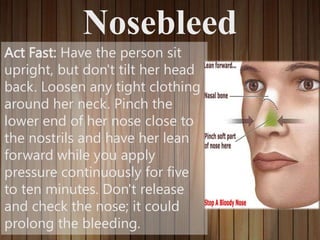
Nosebleed
Act Fast: Have the person sit
upright, but don't tilt her head
back. Loosen any tight clothing
around her neck. Pinch the
lower end of her nose close to
the nostrils and have her lean
forward while you apply
pressure continuously for five
to ten minutes. Don't release
and check the nose; it could
prolong the bleeding.
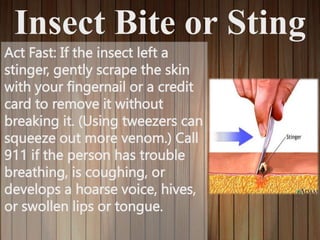
Insect Bite or Sting
Act Fast: If the insect left a
stinger, gently scrape the skin
with your fingernail or a credit
card to remove it without
breaking it. (Using tweezers can
squeeze out more venom.) Call
911 if the person has trouble
breathing, is coughing, or
develops a hoarse voice, hives,
or swollen lips or tongue.
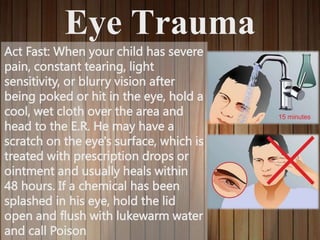
Eye Trauma
Act Fast: When your child has severe
pain, constant tearing, light
sensitivity, or blurry vision after
being poked or hit in the eye, hold a
cool, wet cloth over the area and
head to the E.R. He may have a
scratch on the eye's surface, which is
treated with prescription drops or
ointment and usually heals within
48 hours. If a chemical has been
splashed in his eye, hold the lid
open and flush with lukewarm water
and call Poison
Why do I need a first aid k
Falls, bee stings, burns, allergic reactions -- all of
these are common accidents that can happen in
any home or on any outing. That’s when a first
aid kit comes in handy. When you have a well-
stocked first aid kit, you have the supplies you
need to be ready for most minor emergencies.
Putting a kit together is as simple as placing
some basic items in a small container, such as a
plastic tub, tool kit or tote bag. Keep one in your
medicine cabinet at home, making sure it’s out of
young children’s reach.
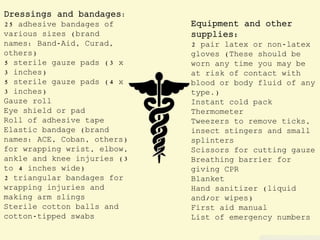
Dressings and bandages:
25 adhesive bandages of
various sizes (brand
names: Band-Aid, Curad,
others)
5 sterile gauze pads (3 x
3 inches)
5 sterile gauze pads (4 x
3 inches)
Gauze roll
Eye shield or pad
Roll of adhesive tape
Elastic bandage (brand
names: ACE, Coban, others)
for wrapping wrist, elbow,
ankle and knee injuries (3
to 4 inches wide)
2 triangular bandages for
wrapping injuries and
making arm slings
Sterile cotton balls and
cotton-tipped swabs
Equipment and other
supplies:
2 pair latex or non-latex
gloves (These should be
worn any time you may be
at risk of contact with
blood or body fluid of any
type.)
Instant cold pack
Thermometer
Tweezers to remove ticks,
insect stingers and small
splinters
Scissors for cutting gauze
Breathing barrier for
giving CPR
Blanket
Hand sanitizer (liquid
and/or wipes)
First aid manual
List of emergency numbers
Medicine for cuts and
injuries:
Antiseptic solution or
wipes, such as hydrogen
peroxide, povidone-iodine
(one brand name: Betadine)
or chlorhexidine (one brand
name: Betasept)
Antibiotic ointment (brand
names: Neosporin,
Bactroban) that contain
ingredients such as
bacitracin or mupirocin
Sterile eyewash or saline,
such as contact lens saline
solution
Calamine lotion for stings
or poison ivy
Hydrocortisone cream,
ointment or lotion for
itching
Other medicines:
Pain and fever medicines,
such as aspirin,
acetaminophen (one brand
name: Tylenol) or
ibuprofen (brand names:
Advil, Motrin).
Antihistamine to treat
allergies and swelling
Decongestants to treat
nasal congestion
Anti-nausea medicine to
treat motion sickness and
other types of nausea
Anti-diarrhea medicine
Antacid to treat upset
stomach
Laxative to treat
constipation
Thank You
And Remember : Safety is better than cure
Made BY :
Danish Joshi (9)
Ashutosh Dhingra (8)

First aid

  • 1.
    FIRS TA Presentation OnSafety, Cure And Treatment AID
  • 2.
    WhatIs FirstAid? At itsmost basic, first aid is the initial assistance given to a victim of injury or illness. Comprised of relatively simple techniques that can be performed with rudimentary equipment, first aid is usually carried out by a layperson until professional medical assistance arrives.
  • 3.
    Why is itis Important ?
  • 4.
    It affords peoplewith the ability to provide help during various emergency situations. First aid helps ensure that the right methods of administering medical assistance are provided Knowledge in first aid also benefits the individuals themselves. It makes one ethically and mentally ready to face difficult medical situations
  • 5.
  • 6.
    Cut or ScrapeIfthere's bleeding, first press firmly over the site with a clean cloth until it stops, anywhere from three to 15 minutes. Clean under lukewarm running water and gently pat dry. When a wound is dirty or was caused by an animal scratch, rinse it with water and gently lather with soap. If the skin is broken, apply a thin layer of an over-the-counter antibiotic ointment (like Neosporin or Bacitracin), then cover with a bandage or gauze and adhesive tape. If you can't control the bleeding after several attempts with direct pressure, call your pediatrician or 911, or head to an E.R. If a large piece of skin has been removed, wrap it in a clean, moist cloth and place it in a bag over ice -- a doctor may be able to reattach it. An animal bite that has caused a deep cut should be seen by a
  • 7.
    Burn Act Fast: Immediatelyhold under cool running water or apply a cold, wet towel until the pain subsides. Cover any small blisters with a loose bandage or gauze and tape; call a doctor as soon as possible if burns are on the face, hands, or genitals, or if they're larger than 1/4 inch anywhere on the body. If the burn looks deep -- the skin may be white or brown and dry -- go to the E.R. For a burn covering a tenth of the body or more, don't use cold compresses; call 911 and cover the child with a clean sheet or a blanket to prevent hypothermia until help arrives.
  • 8.
    Nosebleed Act Fast: Havethe person sit upright, but don't tilt her head back. Loosen any tight clothing around her neck. Pinch the lower end of her nose close to the nostrils and have her lean forward while you apply pressure continuously for five to ten minutes. Don't release and check the nose; it could prolong the bleeding.
  • 9.
    Insect Bite orSting Act Fast: If the insect left a stinger, gently scrape the skin with your fingernail or a credit card to remove it without breaking it. (Using tweezers can squeeze out more venom.) Call 911 if the person has trouble breathing, is coughing, or develops a hoarse voice, hives, or swollen lips or tongue.
  • 10.
    Eye Trauma Act Fast:When your child has severe pain, constant tearing, light sensitivity, or blurry vision after being poked or hit in the eye, hold a cool, wet cloth over the area and head to the E.R. He may have a scratch on the eye's surface, which is treated with prescription drops or ointment and usually heals within 48 hours. If a chemical has been splashed in his eye, hold the lid open and flush with lukewarm water and call Poison
  • 11.
    Why do Ineed a first aid k Falls, bee stings, burns, allergic reactions -- all of these are common accidents that can happen in any home or on any outing. That’s when a first aid kit comes in handy. When you have a well- stocked first aid kit, you have the supplies you need to be ready for most minor emergencies. Putting a kit together is as simple as placing some basic items in a small container, such as a plastic tub, tool kit or tote bag. Keep one in your medicine cabinet at home, making sure it’s out of young children’s reach.
  • 13.
    Dressings and bandages: 25adhesive bandages of various sizes (brand names: Band-Aid, Curad, others) 5 sterile gauze pads (3 x 3 inches) 5 sterile gauze pads (4 x 3 inches) Gauze roll Eye shield or pad Roll of adhesive tape Elastic bandage (brand names: ACE, Coban, others) for wrapping wrist, elbow, ankle and knee injuries (3 to 4 inches wide) 2 triangular bandages for wrapping injuries and making arm slings Sterile cotton balls and cotton-tipped swabs Equipment and other supplies: 2 pair latex or non-latex gloves (These should be worn any time you may be at risk of contact with blood or body fluid of any type.) Instant cold pack Thermometer Tweezers to remove ticks, insect stingers and small splinters Scissors for cutting gauze Breathing barrier for giving CPR Blanket Hand sanitizer (liquid and/or wipes) First aid manual List of emergency numbers
  • 14.
    Medicine for cutsand injuries: Antiseptic solution or wipes, such as hydrogen peroxide, povidone-iodine (one brand name: Betadine) or chlorhexidine (one brand name: Betasept) Antibiotic ointment (brand names: Neosporin, Bactroban) that contain ingredients such as bacitracin or mupirocin Sterile eyewash or saline, such as contact lens saline solution Calamine lotion for stings or poison ivy Hydrocortisone cream, ointment or lotion for itching Other medicines: Pain and fever medicines, such as aspirin, acetaminophen (one brand name: Tylenol) or ibuprofen (brand names: Advil, Motrin). Antihistamine to treat allergies and swelling Decongestants to treat nasal congestion Anti-nausea medicine to treat motion sickness and other types of nausea Anti-diarrhea medicine Antacid to treat upset stomach Laxative to treat constipation
  • 15.
    Thank You And Remember: Safety is better than cure
  • 16.
    Made BY : DanishJoshi (9) Ashutosh Dhingra (8)