First Aid
Stella Maris School Jambi
February 13,2015
First Aid
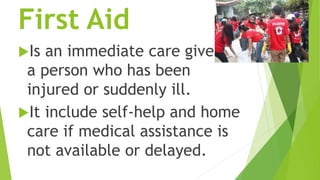
Is an immediate care given to
a person who has been
injured or suddenly ill.
It include self-help and home
care if medical assistance is
not available or delayed.
Roles and Responsibilities
 Bridge fills the gap between the patient and the
doctor.
 Ensure safety of himself/herself and that of
bystanders.
 Gain access to the victim.
 Determine any threats to patient’s life.
 Summon advance medical care as needed.
 Provide needed care for the patient.
 Record all finding and care to the patient.
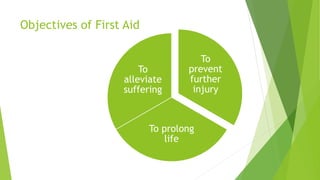
Objectives of First Aid
To
prevent
further
injury
To prolong
life
To
alleviate
suffering
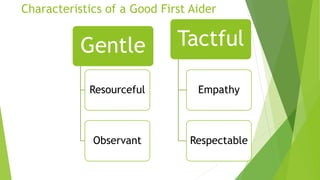
Characteristics of a Good First Aider
Gentle
Resourceful
Observant
Tactful
Empathy
Respectable
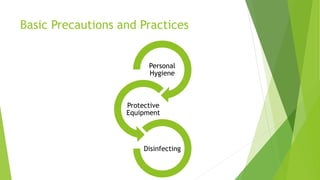
Basic Precautions and Practices
Personal
Hygiene
Protective
Equipment
Disinfecting
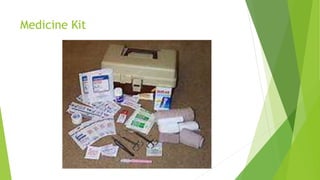
Medicine Kit
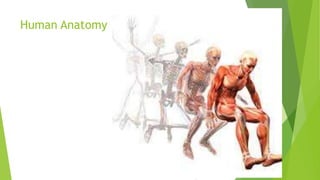
Human Anatomy
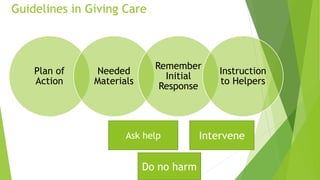
Guidelines in Giving Care
Plan of
Action
Needed
Materials
Remember
Initial
Response
Instruction
to Helpers
Ask help Intervene
Do no harm
Emergency Action Principles
Survey
the
Scene
Do
Primary
Survey
Activate
EMS
Do 2nd
Survey
Is the scene safe?
What happened? How
many are involved?
Check responsiveness
Protect spine
Check: Airway
Breathing
Circulation
Call help
Give info: what
happened, number of
injured civilians
Ask the victim’s
name
Assess the vital signs
Vital Signs
Pulse rate
Adult 60-90 bpm
Child 80-100bpm
Infant 100-
120bpm
Respiratory Rate
Adult 12-20bpm
Child 18-25bpm
Infant 25-35bpm
 Determine the skin
appearance
 Look at the face and
lips
 Record the
appearance,
temperature and color
 Do head-to-toe exam
 Look for fracture,
burn, puncture,
deformity, abrasion
and contusion.
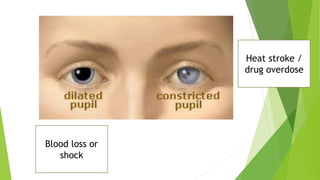
 Compare the eyes if
dilated or constricted
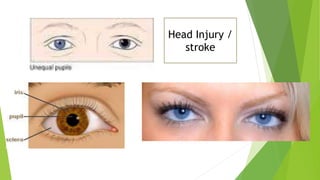
 Unequal pupil suggests
stroke or head injury
Heat stroke /
drug overdose
Blood loss or
shock
Head Injury /
stroke
Methods of Transfer
I. One-man carry/ assist
Assist to walk – conscious (short distance)
Carry in arms –lovers carry (long distance)
Piggy back carry (long distance)
Soft Tissue Injuries
Wound Is a break in the
continuity of a
tissue of the body
either internal or
external.
Closed wound
Blunt object
result in
contusion or
bruises
Application of
external forces
(punctured)
Signs and Symptoms
 Pain and tenderness
 Swelling
 Discoloration / bruises
 Uncontrolled
restlessness
 Thirst
 Shock
 Vomiting or cough –up
blood (internal)
 Blood in the urine or
feces
 Blood along the
mouth, nose or ear
canal
First Aid Management
P
R
I
C
E
S
- rotect
- est
- ce
application
/warm
- ompress
- levate
- plint
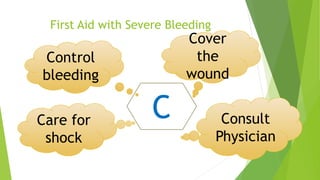
First Aid with Severe Bleeding
C
Control
bleeding
Cover
the
wound
Consult
Physician
Care for
shock
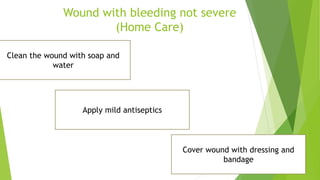
Wound with bleeding not severe
(Home Care)
Clean the wound with soap and
water
Apply mild antiseptics
Cover wound with dressing and
bandage
Burns
Is an injury involving the
skin, bones, muscles,
nerves and blood vessels
Thermal – contact with fire, hot
objects, steams or hot liquids.
Chemical – will continue to cause
tissue destruction until chemical
agent is removed.
Electrical – severity from exposure
to electrical current.
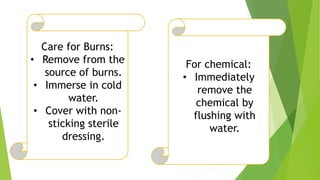
Care for Burns:
• Remove from the
source of burns.
• Immerse in cold
water.
• Cover with non-
sticking sterile
dressing.
For chemical:
• Immediately
remove the
chemical by
flushing with
water.
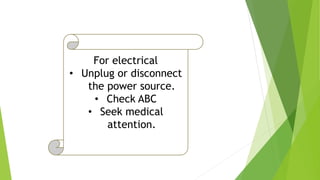
For electrical
• Unplug or disconnect
the power source.
• Check ABC
• Seek medical
attention.
Bandaging
technique
Narro
w
Cravat
Open
phase
Broad Cravat
Apex
Side
Side
tail
Thank You!
Reference:
Philippine
Red Cross
Manual

First aid

  • 1.
    First Aid Stella MarisSchool Jambi February 13,2015
  • 2.
    First Aid Is animmediate care given to a person who has been injured or suddenly ill. It include self-help and home care if medical assistance is not available or delayed.
  • 3.
    Roles and Responsibilities Bridge fills the gap between the patient and the doctor.  Ensure safety of himself/herself and that of bystanders.  Gain access to the victim.  Determine any threats to patient’s life.  Summon advance medical care as needed.  Provide needed care for the patient.  Record all finding and care to the patient.
  • 4.
    Objectives of FirstAid To prevent further injury To prolong life To alleviate suffering
  • 5.
    Characteristics of aGood First Aider Gentle Resourceful Observant Tactful Empathy Respectable
  • 6.
    Basic Precautions andPractices Personal Hygiene Protective Equipment Disinfecting
  • 7.
  • 8.
  • 9.
    Guidelines in GivingCare Plan of Action Needed Materials Remember Initial Response Instruction to Helpers Ask help Intervene Do no harm
  • 10.
    Emergency Action Principles Survey the Scene Do Primary Survey Activate EMS Do2nd Survey Is the scene safe? What happened? How many are involved? Check responsiveness Protect spine Check: Airway Breathing Circulation Call help Give info: what happened, number of injured civilians Ask the victim’s name Assess the vital signs
  • 11.
    Vital Signs Pulse rate Adult60-90 bpm Child 80-100bpm Infant 100- 120bpm Respiratory Rate Adult 12-20bpm Child 18-25bpm Infant 25-35bpm
  • 12.
     Determine theskin appearance  Look at the face and lips  Record the appearance, temperature and color  Do head-to-toe exam  Look for fracture, burn, puncture, deformity, abrasion and contusion.  Compare the eyes if dilated or constricted  Unequal pupil suggests stroke or head injury
  • 13.
    Heat stroke / drugoverdose Blood loss or shock
  • 14.
  • 15.
    Methods of Transfer I.One-man carry/ assist Assist to walk – conscious (short distance) Carry in arms –lovers carry (long distance) Piggy back carry (long distance)
  • 16.
    Soft Tissue Injuries WoundIs a break in the continuity of a tissue of the body either internal or external.
  • 17.
    Closed wound Blunt object resultin contusion or bruises Application of external forces (punctured)
  • 18.
    Signs and Symptoms Pain and tenderness  Swelling  Discoloration / bruises  Uncontrolled restlessness  Thirst  Shock  Vomiting or cough –up blood (internal)  Blood in the urine or feces  Blood along the mouth, nose or ear canal
  • 19.
    First Aid Management P R I C E S -rotect - est - ce application /warm - ompress - levate - plint
  • 20.
    First Aid withSevere Bleeding C Control bleeding Cover the wound Consult Physician Care for shock
  • 21.
    Wound with bleedingnot severe (Home Care) Clean the wound with soap and water Apply mild antiseptics Cover wound with dressing and bandage
  • 22.
    Burns Is an injuryinvolving the skin, bones, muscles, nerves and blood vessels Thermal – contact with fire, hot objects, steams or hot liquids. Chemical – will continue to cause tissue destruction until chemical agent is removed. Electrical – severity from exposure to electrical current.
  • 23.
    Care for Burns: •Remove from the source of burns. • Immerse in cold water. • Cover with non- sticking sterile dressing. For chemical: • Immediately remove the chemical by flushing with water.
  • 24.
    For electrical • Unplugor disconnect the power source. • Check ABC • Seek medical attention.
  • 25.
  • 26.
  • 27.