SHOCK
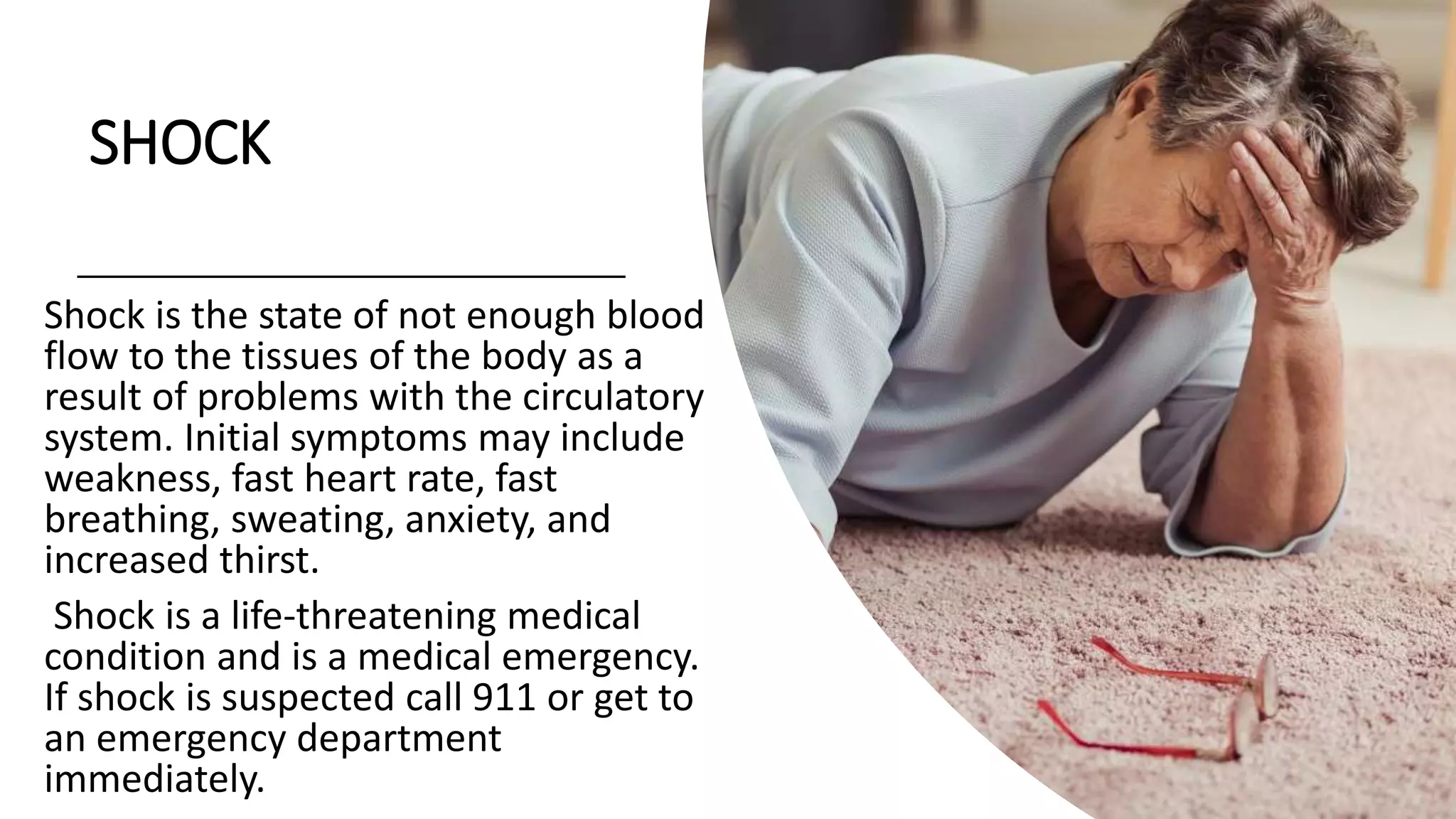
Shock is the state of not enough blood
flow to the tissues of the body as a
result of problems with the circulatory
system. Initial symptoms may include
weakness, fast heart rate, fast
breathing, sweating, anxiety, and
increased thirst.
Shock is a life-threatening medical
condition and is a medical emergency.
If shock is suspected call 911 or get to
an emergency department
immediately.
SHOCK
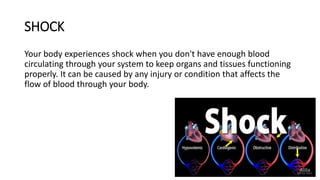
Your body experiences shock when you don't have enough blood
circulating through your system to keep organs and tissues functioning
properly. It can be caused by any injury or condition that affects the
flow of blood through your body.
Causes of Shock
1.Pump failure
2. hemorrhage/excessive bleeding
3. suffocation/too much heat
4. Nausea and vomiting
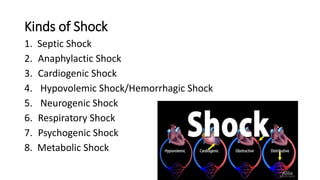
Kinds of Shock
1. Septic Shock
2. Anaphylactic Shock
3. Cardiogenic Shock
4. Hypovolemic Shock/Hemorrhagic Shock
5. Neurogenic Shock
6. Respiratory Shock
7. Psychogenic Shock
8. Metabolic Shock
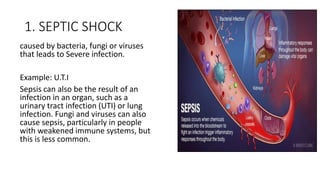
1. SEPTIC SHOCK
caused by bacteria, fungi or viruses
that leads to Severe infection.
Example: U.T.I
Sepsis can also be the result of an
infection in an organ, such as a
urinary tract infection (UTI) or lung
infection. Fungi and viruses can also
cause sepsis, particularly in people
with weakened immune systems, but
this is less common.
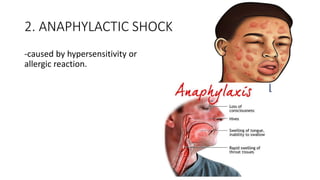
2. ANAPHYLACTIC SHOCK
-caused by hypersensitivity or
allergic reaction.
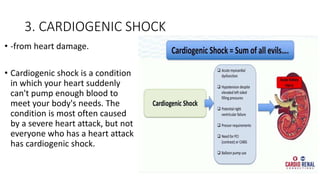
3. CARDIOGENIC SHOCK
• -from heart damage.
• Cardiogenic shock is a condition
in which your heart suddenly
can't pump enough blood to
meet your body's needs. The
condition is most often caused
by a severe heart attack, but not
everyone who has a heart attack
has cardiogenic shock.
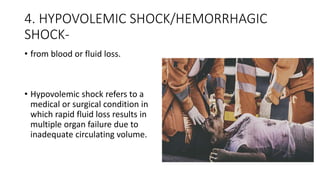
4. HYPOVOLEMIC SHOCK/HEMORRHAGIC
SHOCK-
• from blood or fluid loss.
• Hypovolemic shock refers to a
medical or surgical condition in
which rapid fluid loss results in
multiple organ failure due to
inadequate circulating volume.
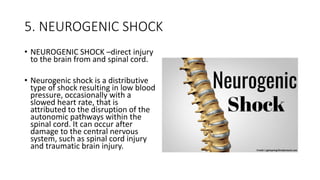
5. NEUROGENIC SHOCK
• NEUROGENIC SHOCK –direct injury
to the brain from and spinal cord.
• Neurogenic shock is a distributive
type of shock resulting in low blood
pressure, occasionally with a
slowed heart rate, that is
attributed to the disruption of the
autonomic pathways within the
spinal cord. It can occur after
damage to the central nervous
system, such as spinal cord injury
and traumatic brain injury.
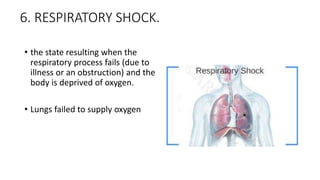
6. RESPIRATORY SHOCK.
• the state resulting when the
respiratory process fails (due to
illness or an obstruction) and the
body is deprived of oxygen.
• Lungs failed to supply oxygen
7. PSYCHOGENIC SHOCK-
• Due to extreme fear, grief, anger,
anguish.
• Sometimes may lead to fainting
or trauma.
8. METABOLIC SHOCK
Known as hyperchloremic
metabolic acidosis.
Due too much acid intake or
dosage.
The most common causes are
gastric ulcer, overdose (i.e
hyperkalemia), early renal failure
due to too much acid,
hypermetabolism.
PREVENTION OF SHOCK
Proper Positioning
-Elevate the lower part of the body 8-12 inches to increase blood
flow of the brain.
Proper Body Temperature
-loosen tight clothing or unbuttoning clothes.
Proper Referral
-proper treatment
Shock

Shock

  • 1.
    SHOCK Shock is thestate of not enough blood flow to the tissues of the body as a result of problems with the circulatory system. Initial symptoms may include weakness, fast heart rate, fast breathing, sweating, anxiety, and increased thirst. Shock is a life-threatening medical condition and is a medical emergency. If shock is suspected call 911 or get to an emergency department immediately.
  • 2.
    SHOCK Your body experiencesshock when you don't have enough blood circulating through your system to keep organs and tissues functioning properly. It can be caused by any injury or condition that affects the flow of blood through your body.
  • 3.
    Causes of Shock 1.Pumpfailure 2. hemorrhage/excessive bleeding 3. suffocation/too much heat 4. Nausea and vomiting
  • 4.
    Kinds of Shock 1.Septic Shock 2. Anaphylactic Shock 3. Cardiogenic Shock 4. Hypovolemic Shock/Hemorrhagic Shock 5. Neurogenic Shock 6. Respiratory Shock 7. Psychogenic Shock 8. Metabolic Shock
  • 5.
    1. SEPTIC SHOCK causedby bacteria, fungi or viruses that leads to Severe infection. Example: U.T.I Sepsis can also be the result of an infection in an organ, such as a urinary tract infection (UTI) or lung infection. Fungi and viruses can also cause sepsis, particularly in people with weakened immune systems, but this is less common.
  • 6.
    2. ANAPHYLACTIC SHOCK -causedby hypersensitivity or allergic reaction.
  • 7.
    3. CARDIOGENIC SHOCK •-from heart damage. • Cardiogenic shock is a condition in which your heart suddenly can't pump enough blood to meet your body's needs. The condition is most often caused by a severe heart attack, but not everyone who has a heart attack has cardiogenic shock.
  • 8.
    4. HYPOVOLEMIC SHOCK/HEMORRHAGIC SHOCK- •from blood or fluid loss. • Hypovolemic shock refers to a medical or surgical condition in which rapid fluid loss results in multiple organ failure due to inadequate circulating volume.
  • 9.
    5. NEUROGENIC SHOCK •NEUROGENIC SHOCK –direct injury to the brain from and spinal cord. • Neurogenic shock is a distributive type of shock resulting in low blood pressure, occasionally with a slowed heart rate, that is attributed to the disruption of the autonomic pathways within the spinal cord. It can occur after damage to the central nervous system, such as spinal cord injury and traumatic brain injury.
  • 10.
    6. RESPIRATORY SHOCK. •the state resulting when the respiratory process fails (due to illness or an obstruction) and the body is deprived of oxygen. • Lungs failed to supply oxygen
  • 11.
    7. PSYCHOGENIC SHOCK- •Due to extreme fear, grief, anger, anguish. • Sometimes may lead to fainting or trauma.
  • 12.
    8. METABOLIC SHOCK Knownas hyperchloremic metabolic acidosis. Due too much acid intake or dosage. The most common causes are gastric ulcer, overdose (i.e hyperkalemia), early renal failure due to too much acid, hypermetabolism.
  • 13.
    PREVENTION OF SHOCK ProperPositioning -Elevate the lower part of the body 8-12 inches to increase blood flow of the brain. Proper Body Temperature -loosen tight clothing or unbuttoning clothes. Proper Referral -proper treatment