"First Aid Factor Bluff
Challenge!"
Game Setup:
The class will be divided into five (5)
groups. A set of statement cards,
each
containing either a true or false first
aid fact, will be prepared, with an
equal
number of true and false statements.
3.
"First Aid Factor Bluff
Challenge!"
Game Rules:
A statement will be read aloud, and the team must
decide whether it is a true
fact or a false bluff. Teams have a limited time to
discuss and reach a
consensus on their answer. (5 seconds)
• After making their decision, the team reveals their
choice to the moderator.
• If the team correctly identifies the statement as a
fact or bluff, they earn points.
Incorrect guesses result in no points awarded.
• The team with the highest total score at the end of
all rounds wins the game.
Statement #5
"Performing CPRcan help
maintain blood flow and
oxygenation to
vital organs in a person
experiencing cardiac arrest."
14.
Statement #5
Fact!
The humanbody needs oxygen, and
the heart pumps out blood with
oxygen in it, if it stops functioning due
to cardiac arrest then CPR will help
keeping the person alive while waiting
for help.
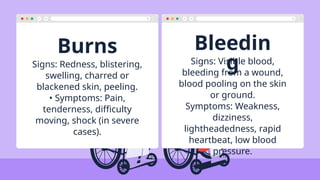
Burns Bleedin
g
Signs: Redness,blistering,
swelling, charred or
blackened skin, peeling.
• Symptoms: Pain,
tenderness, difficulty
moving, shock (in severe
cases).
Signs: Visible blood,
bleeding from a wound,
blood pooling on the skin
or ground.
Symptoms: Weakness,
dizziness,
lightheadedness, rapid
heartbeat, low blood
pressure.
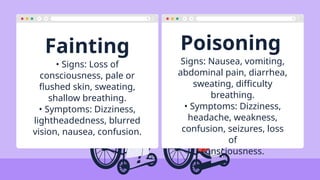
Choking Hyperventilation
Signs: Inabilityto speak or
breathe, clutching at
throat, cyanosis (blue
skin).
• Symptoms: Gasping for
air, wheezing, coughing,
panic, loss of
consciousness.
Signs: Rapid breathing,
deep breathing, chest pain,
dizziness, tingling in
extremities.
• Symptoms: Shortness of
breath, feeling of
suffocation, numbness or
tingling in
fingers or lips.
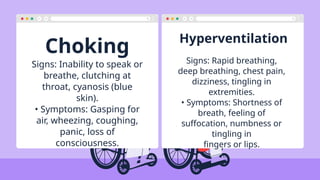
Heart Attack Stroke
Signs:Chest pain or discomfort,
shortness of breath, nausea,
lightheadedness, cold sweat.
• Symptoms: Pain or discomfort
in arms, back, neck, jaw, or
stomach, fatigue, anxiety.
Signs: Sudden numbness or
weakness in face, arm, or
leg (especially on one side
of the body), confusion,
trouble speaking or
understanding speech,
difficulty walking, severe
headache.
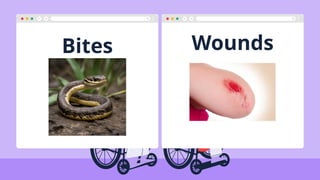
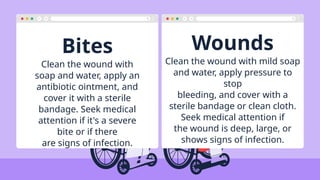
Bites Wounds
Clean thewound with
soap and water, apply an
antibiotic ointment, and
cover it with a sterile
bandage. Seek medical
attention if it's a severe
bite or if there
are signs of infection.
Clean the wound with mild soap
and water, apply pressure to
stop
bleeding, and cover with a
sterile bandage or clean cloth.
Seek medical attention if
the wound is deep, large, or
shows signs of infection.
29.
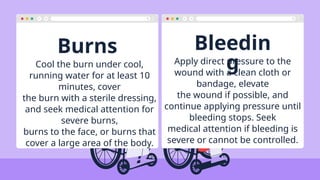
Burns Bleedin
g
Cool theburn under cool,
running water for at least 10
minutes, cover
the burn with a sterile dressing,
and seek medical attention for
severe burns,
burns to the face, or burns that
cover a large area of the body.
Apply direct pressure to the
wound with a clean cloth or
bandage, elevate
the wound if possible, and
continue applying pressure until
bleeding stops. Seek
medical attention if bleeding is
severe or cannot be controlled.
30.
Fainting Poisoning
Lay theperson flat and elevate
their legs, loosen any tight
clothing, and
provide fresh air. If the person
does not regain consciousness
within a minute, seek
medical attention.
Call poison control immediately
for guidance, remove any
contaminated clothing, and
rinse the affected area with
water if appropriate. Seek
medical attention if symptoms
are severe or if the substance
ingested is toxic
31.
Choking Hyperventilation
Perform abdominalthrusts
(Heimlich maneuver) to dislodge
the
obstruction, encourage
coughing if the person is able to
cough, and seek medical
attention if the obstruction
cannot be cleared.
Encourage slow breathing,
breathing into a paper bag if
available, and reassurance.
Remove the person from
stressful situations if possible
and seek medical attention if
symptoms persist.
32.
Heart Attack Stroke
Callemergency services
immediately, help the person
rest in a
comfortable position, and assist
with any prescribed medication
(e.g., aspirin).
Monitor the person's vital signs
and be prepared to perform CPR
if necessary.
Recognize the signs of stroke
(FAST: Face drooping, Arm
weakness, Speech
difficulty, Time to call
emergency services), keep
the person calm and
comfortable,
and provide reassurance
while waiting for medical
help.
33.
Activity: "First AidExplorers: Journeying through Common
Conditions"
Direction:
• Divide the class into five (5) groups.
• Assign each group a specific common first aid condition to
research
thoroughly. Groups will utilize credible sources like medical
websites, first aid
manuals, and academic journals to focus on creating a step-
by-step first aid
management infographics.
• Prepare visual aids for group presentation of infographic.
Groups can use the
provided format or present their findings creatively.













![Argumentative Essay [Autosaved].pptxasdf](https://cdn.slidesharecdn.com/ss_thumbnails/argumentativeessayautosaved-251123231228-be72e8ed-thumbnail.jpg?width=640&height=640&fit=bounds)


