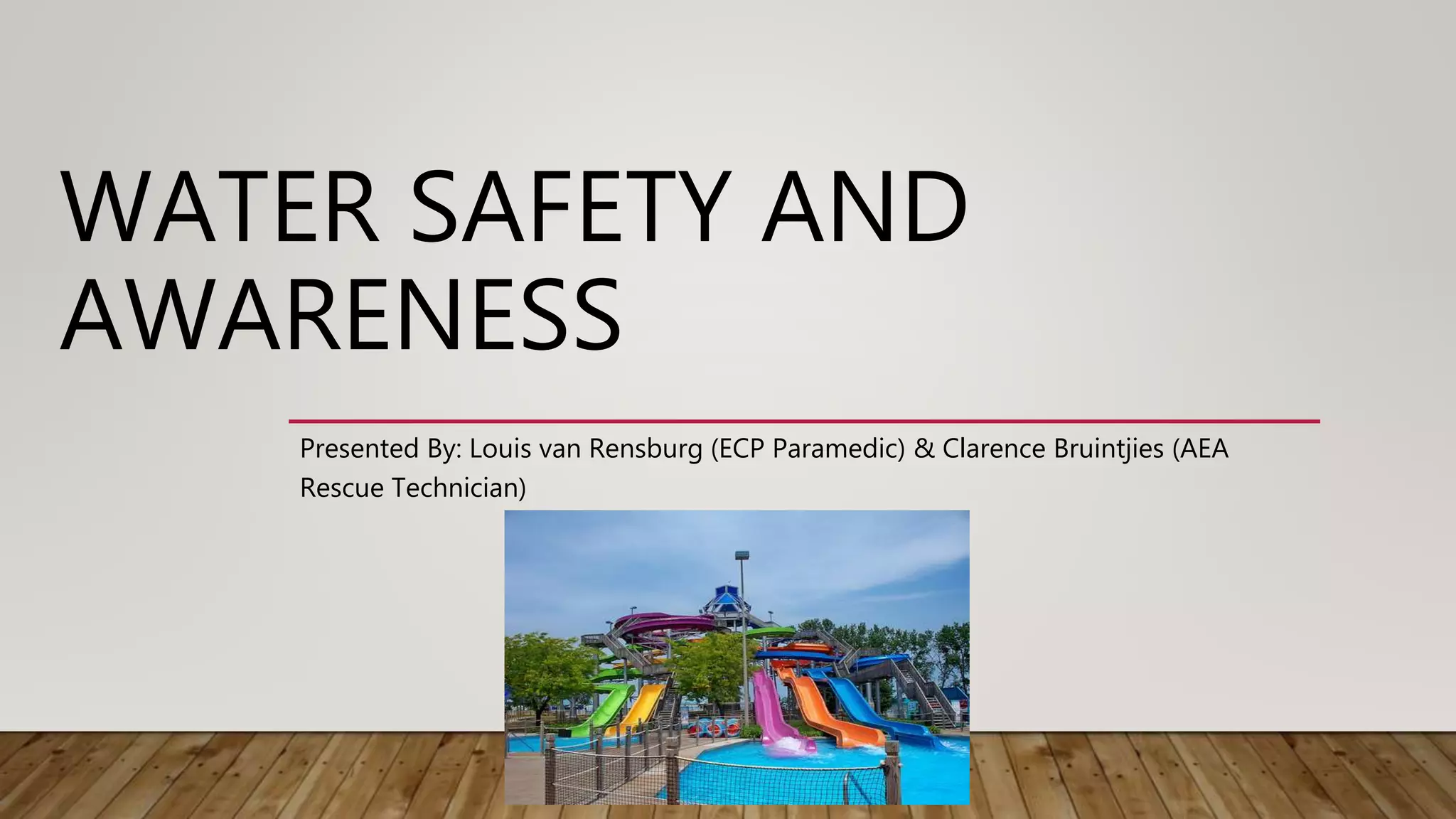


WATER SAFETY AND
AWARENESS
Presented By: Louis van Rensburg (ECP Paramedic) & Clarence Bruintjies (AEA
Rescue Technician)
WATER SAFETY
• Water is dangerous and a lot of people is ignorant to the
fact.
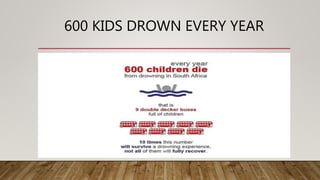
• Approximately 600 kids drown every year. (Most
drownings is preventable)
• Be alert all round, drownings or water related injuries isn’t
seasonal.
600 KIDS DROWN EVERY YEAR
WATER SAFETY TIPS
• Always enforce buddy principle (Seems unnecessary but it
saves lives)
• Supervise children at all times or don’t allow them to swim or
use slides if unsupervised.
• If your (a employee of water park) uncertain about a
individuals capability to swim enforce life jackets to be worn.
• Don’t allow jumping and running around slides/pool
TEAMWORK MOST IMPORTANT
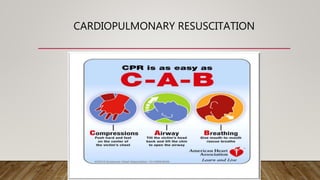
CARDIOPULMONARY RESUSCITATION
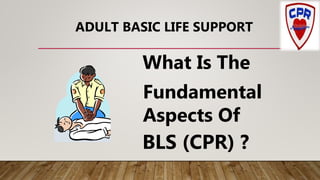
What Is The
Fundamental
Aspects Of
BLS (CPR) ?
ADULT BASIC LIFE SUPPORT
• Immediate recognition of sudden cardiac
arrest (SCA)
• Activation of the emergency response
system
• Early cardiopulmonary resuscitation (CPR)
• Rapid defibrillation With an automated
external defibrillator (AED)
• Initial recognition and response to heart
attack and stroke are also considered part of
BLS.
ADULT BASIC LIFE SUPPORT
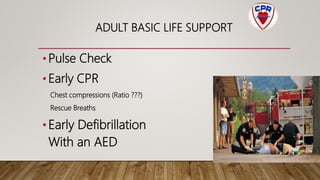
• Pulse Check
• Early CPR
Chest compressions (Ratio ???)
Rescue Breaths
•Early Defibrillation
With an AED
ADULT BASIC LIFE SUPPORT
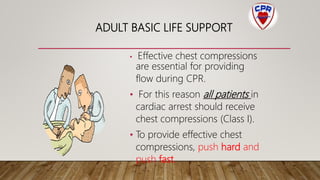
• Effective chest compressions
are essential for providing
flow during CPR.
• For this reason all patients in
cardiac arrest should receive
chest compressions (Class I).
• To provide effective chest
compressions, push hard and
push fast.
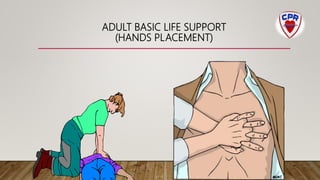
ADULT BASIC LIFE SUPPORT
(HANDS PLACEMENT)
FIRST AID AND RESCUE
• Adult 30:2
• Child 30:2 and if two rescuers 15:2
(What Speed and Depth)
100 compression per min and 5cm of depth
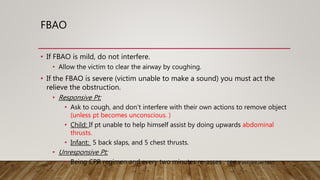
FBAO
• If FBAO is mild, do not interfere.
• Allow the victim to clear the airway by coughing.
• If the FBAO is severe (victim unable to make a sound) you must act the
relieve the obstruction.
• Responsive Pt:
• Ask to cough, and don’t interfere with their own actions to remove object
(unless pt becomes unconscious. )
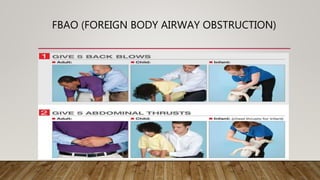
• Child: If pt unable to help himself assist by doing upwards abdominal
thrusts.
• Infant: 5 back slaps, and 5 chest thrusts.
• Unresponsive Pt:
• Being CPR regimen and every two minutes re-asses , see if you cant see FBAO
FBAO (FOREIGN BODY AIRWAY OBSTRUCTION)
THE END

Water Safety and Awareness

  • 1.
    WATER SAFETY AND AWARENESS PresentedBy: Louis van Rensburg (ECP Paramedic) & Clarence Bruintjies (AEA Rescue Technician)
  • 2.
    WATER SAFETY • Wateris dangerous and a lot of people is ignorant to the fact. • Approximately 600 kids drown every year. (Most drownings is preventable) • Be alert all round, drownings or water related injuries isn’t seasonal.
  • 3.
    600 KIDS DROWNEVERY YEAR
  • 4.
    WATER SAFETY TIPS •Always enforce buddy principle (Seems unnecessary but it saves lives) • Supervise children at all times or don’t allow them to swim or use slides if unsupervised. • If your (a employee of water park) uncertain about a individuals capability to swim enforce life jackets to be worn. • Don’t allow jumping and running around slides/pool
  • 5.
  • 6.
  • 7.
    What Is The Fundamental AspectsOf BLS (CPR) ? ADULT BASIC LIFE SUPPORT
  • 8.
    • Immediate recognitionof sudden cardiac arrest (SCA) • Activation of the emergency response system • Early cardiopulmonary resuscitation (CPR) • Rapid defibrillation With an automated external defibrillator (AED) • Initial recognition and response to heart attack and stroke are also considered part of BLS. ADULT BASIC LIFE SUPPORT
  • 9.
    • Pulse Check •Early CPR Chest compressions (Ratio ???) Rescue Breaths •Early Defibrillation With an AED ADULT BASIC LIFE SUPPORT
  • 10.
    • Effective chestcompressions are essential for providing flow during CPR. • For this reason all patients in cardiac arrest should receive chest compressions (Class I). • To provide effective chest compressions, push hard and push fast. ADULT BASIC LIFE SUPPORT
  • 11.
    ADULT BASIC LIFESUPPORT (HANDS PLACEMENT)
  • 12.
    FIRST AID ANDRESCUE • Adult 30:2 • Child 30:2 and if two rescuers 15:2 (What Speed and Depth) 100 compression per min and 5cm of depth
  • 13.
    FBAO • If FBAOis mild, do not interfere. • Allow the victim to clear the airway by coughing. • If the FBAO is severe (victim unable to make a sound) you must act the relieve the obstruction. • Responsive Pt: • Ask to cough, and don’t interfere with their own actions to remove object (unless pt becomes unconscious. ) • Child: If pt unable to help himself assist by doing upwards abdominal thrusts. • Infant: 5 back slaps, and 5 chest thrusts. • Unresponsive Pt: • Being CPR regimen and every two minutes re-asses , see if you cant see FBAO
  • 14.
    FBAO (FOREIGN BODYAIRWAY OBSTRUCTION)
  • 16.