introducing...
      design thinking


Zaana Howard | Associate Lecturer | Information Systems School
                    QUT | 8 March 2013
two things:
What is design thinking?
The design thinking process
what is
    design thinking?
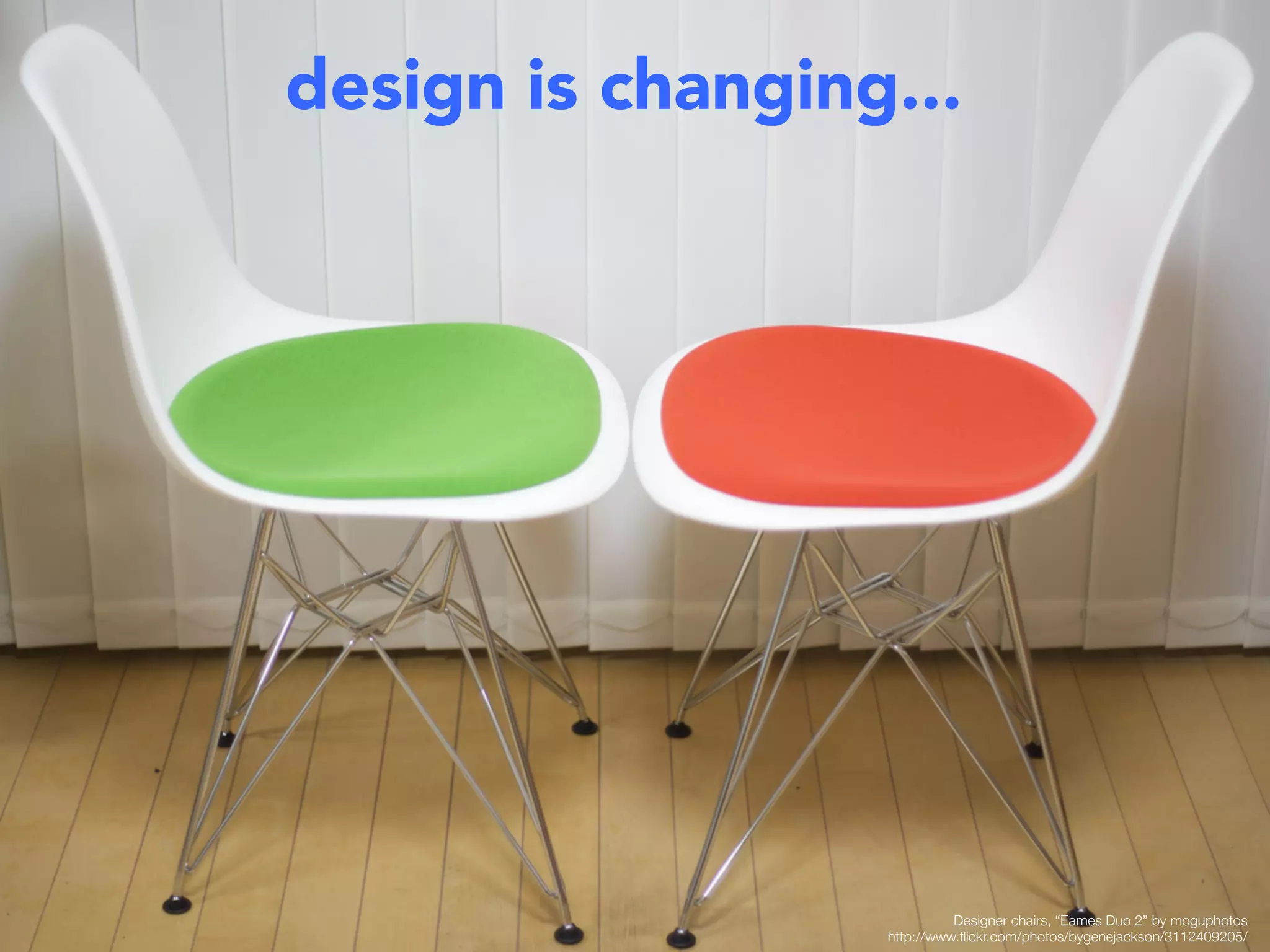
design is changing...


                             Designer chairs, “Eames Duo 2” by moguphotos 
                   http://www.flickr.com/photos/bygenejackson/3112409205/
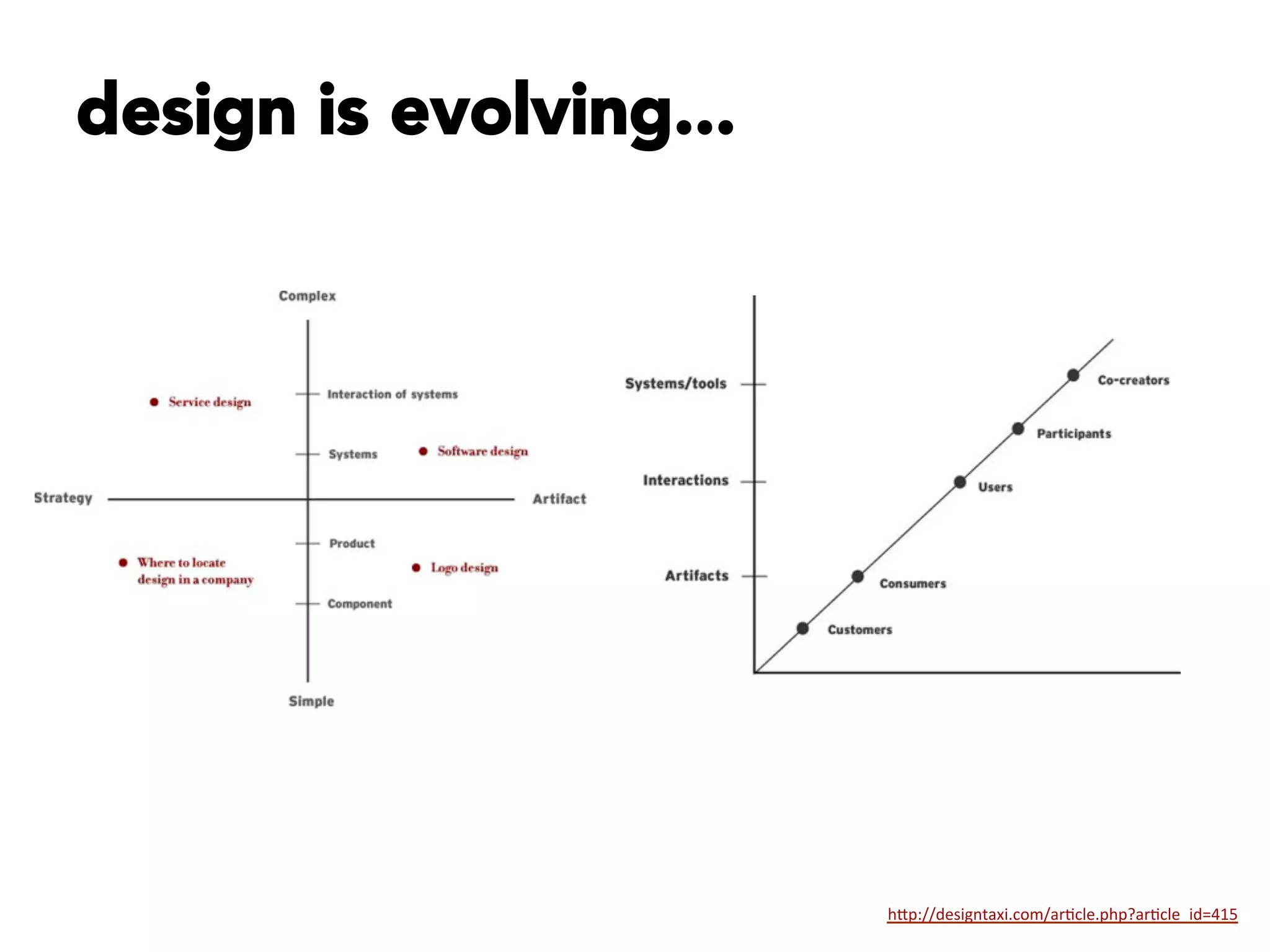
design is evolving...


                         h"p://designtaxi.com/ar4cle.php?ar4cle_id=415	
  	
  
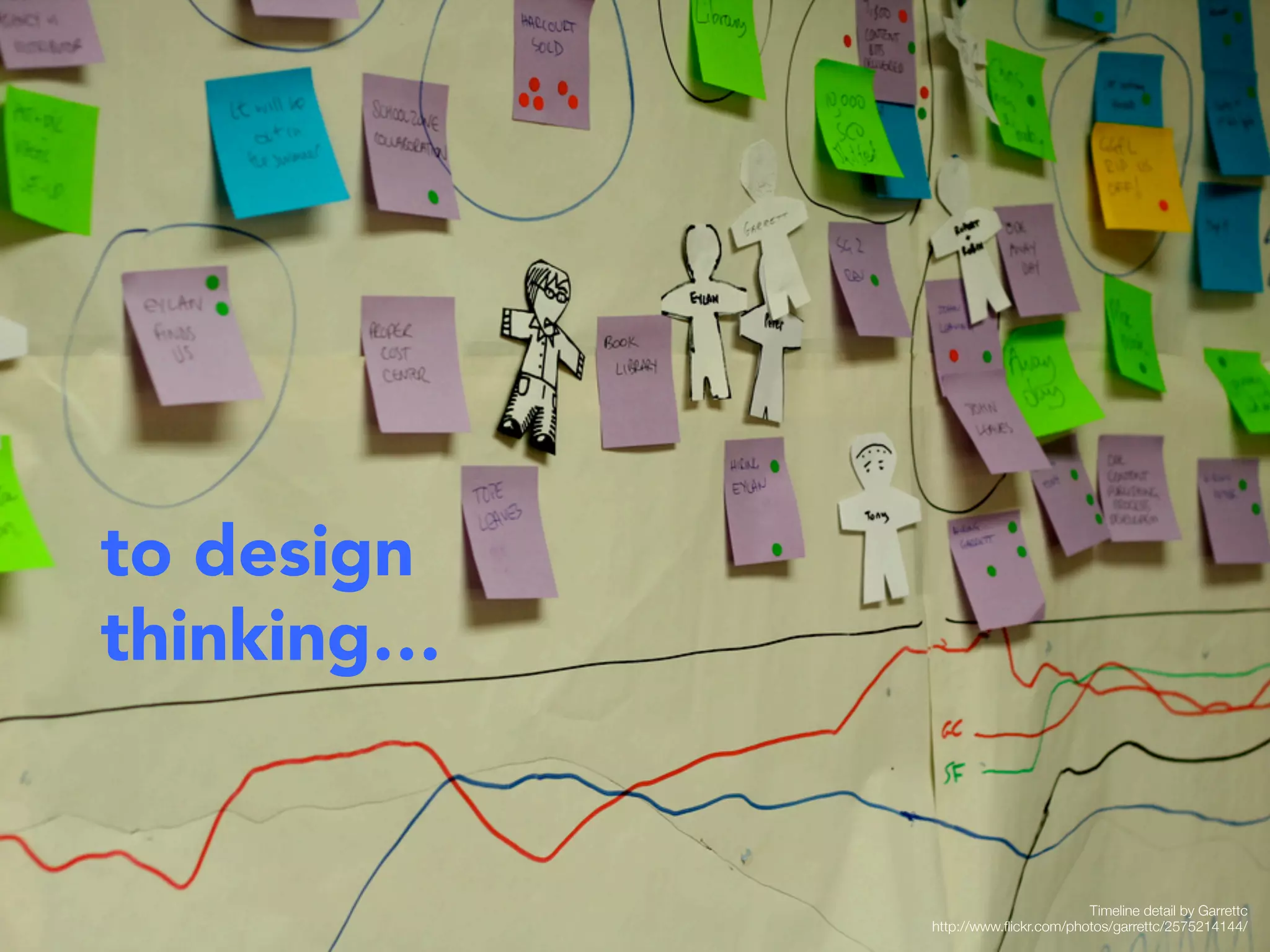
to design
thinking…


                                     Timeline detail by Garrettc
             http://www.flickr.com/photos/garrettc/2575214144/
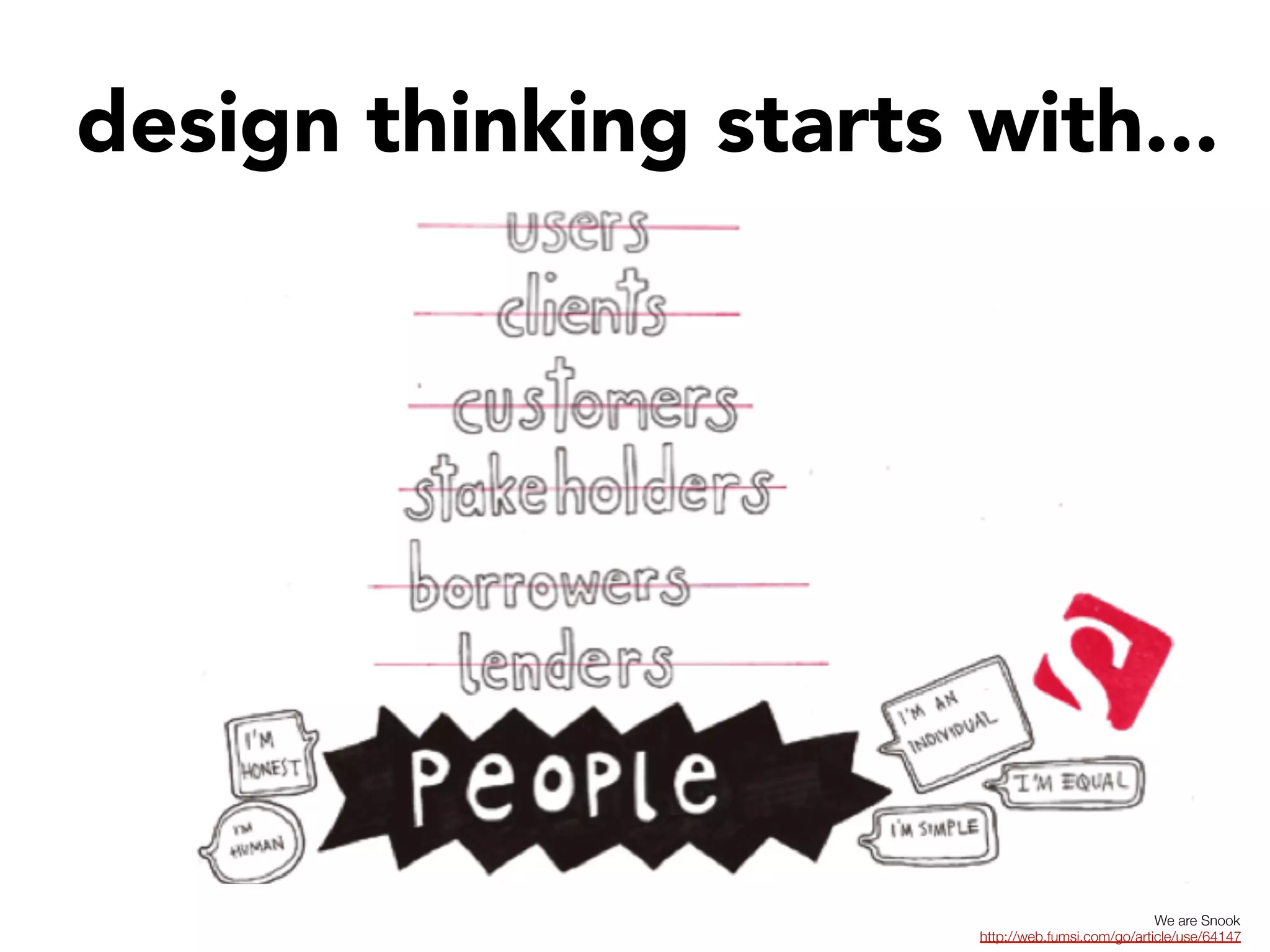
design thinking starts with...


                                                    We are Snook
                        http://web.fumsi.com/go/article/use/64147
design thinking is a
   human centred &
      collaborative
approach to problem solving that is
 creative, iterative &
          practical.


                          (Brown, 2008)
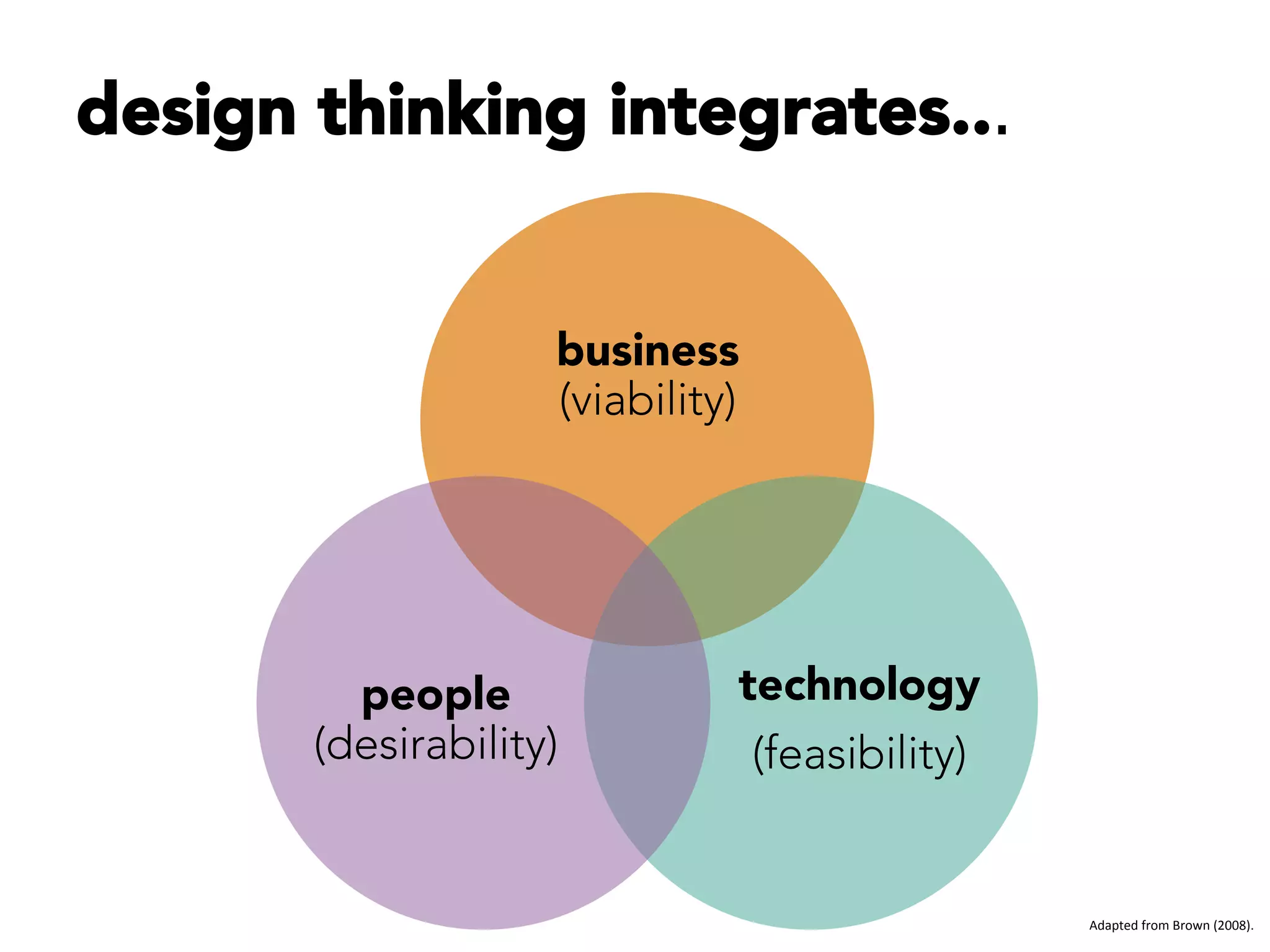
design thinking integrates...


                     business
                     (viability)


         people                 technology
       (desirability)
           (feasibility)


                                                  Adapted	
  from	
  Brown	
  (2008).	
  	
  
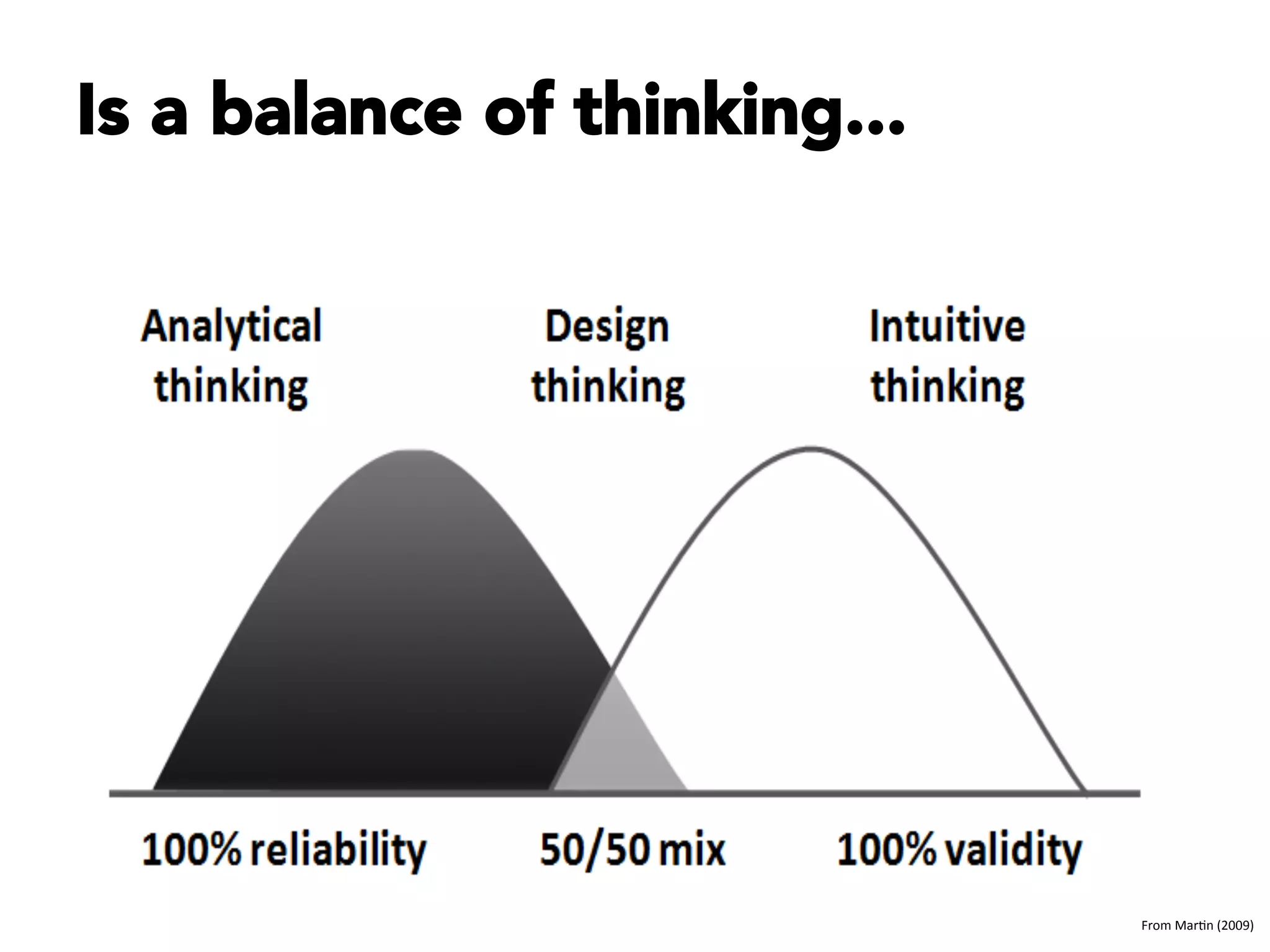
Is a balance of thinking...


                               From	
  Mar4n	
  (2009)	
  
a note on language:


user centred design;
human centred design;
user experience;
design thinking (+ more...)

often interchanged, all related but
each has its own distinct definition,
history and foundations
the
    design thinking
        process
design thinking comprises
    mindsets & modes
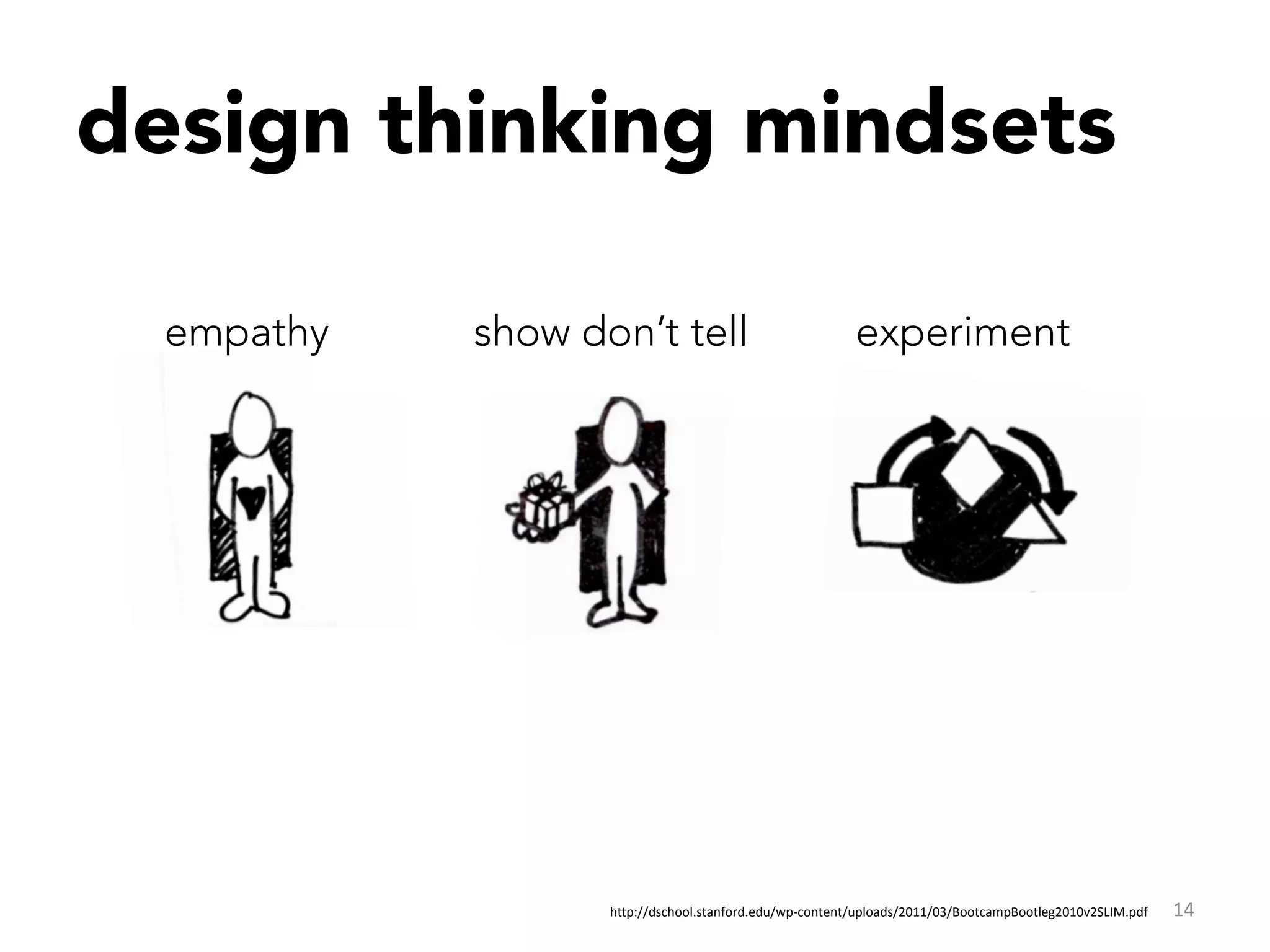
design thinking mindsets

  empathy
   show don’t tell
                               experiment


                    h"p://dschool.stanford.edu/wp-­‐content/uploads/2011/03/BootcampBootleg2010v2SLIM.pdf	
     14	
  
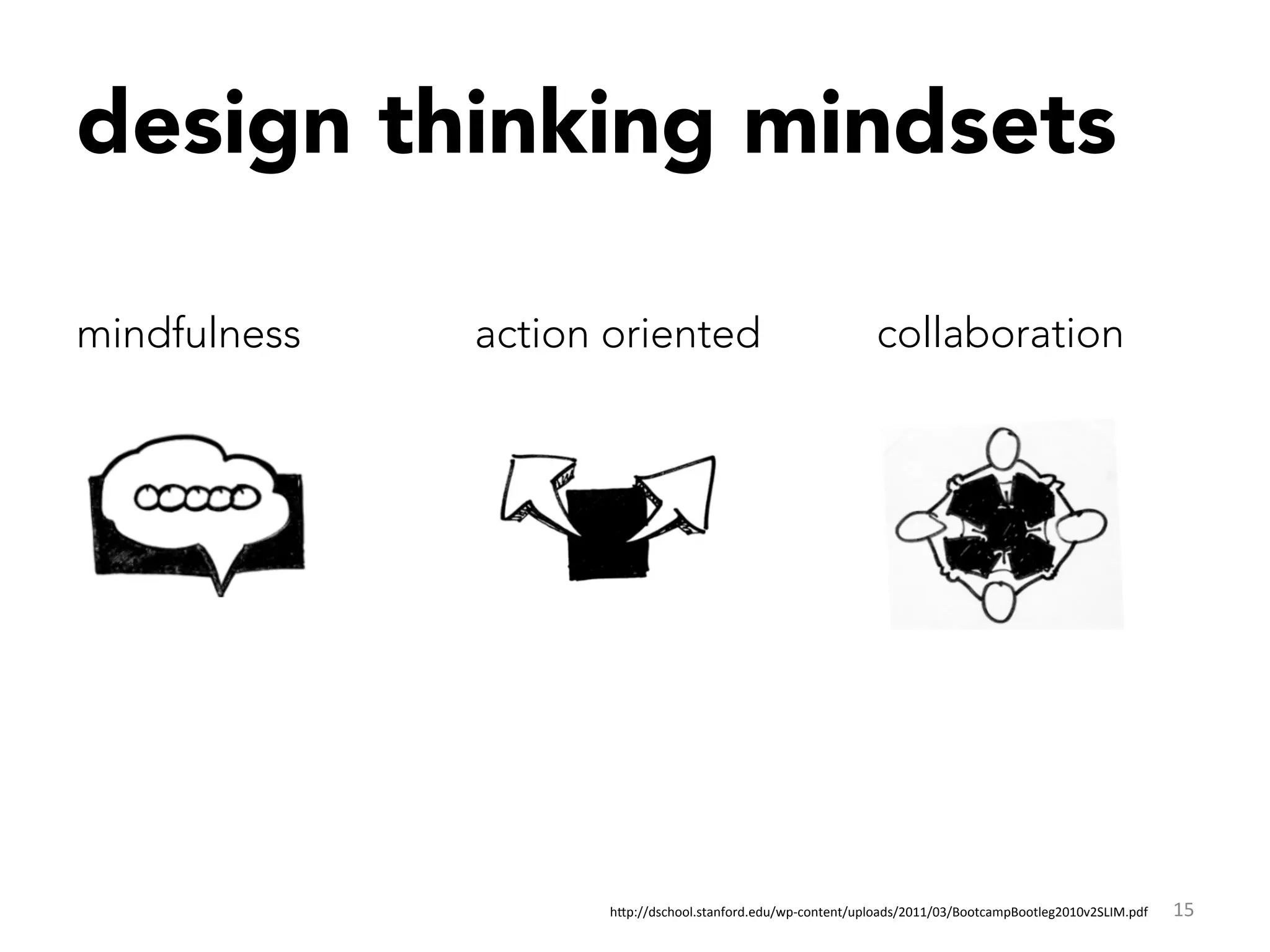
design thinking mindsets

mindfulness
   action oriented
                                  collaboration


                      h"p://dschool.stanford.edu/wp-­‐content/uploads/2011/03/BootcampBootleg2010v2SLIM.pdf	
     15	
  
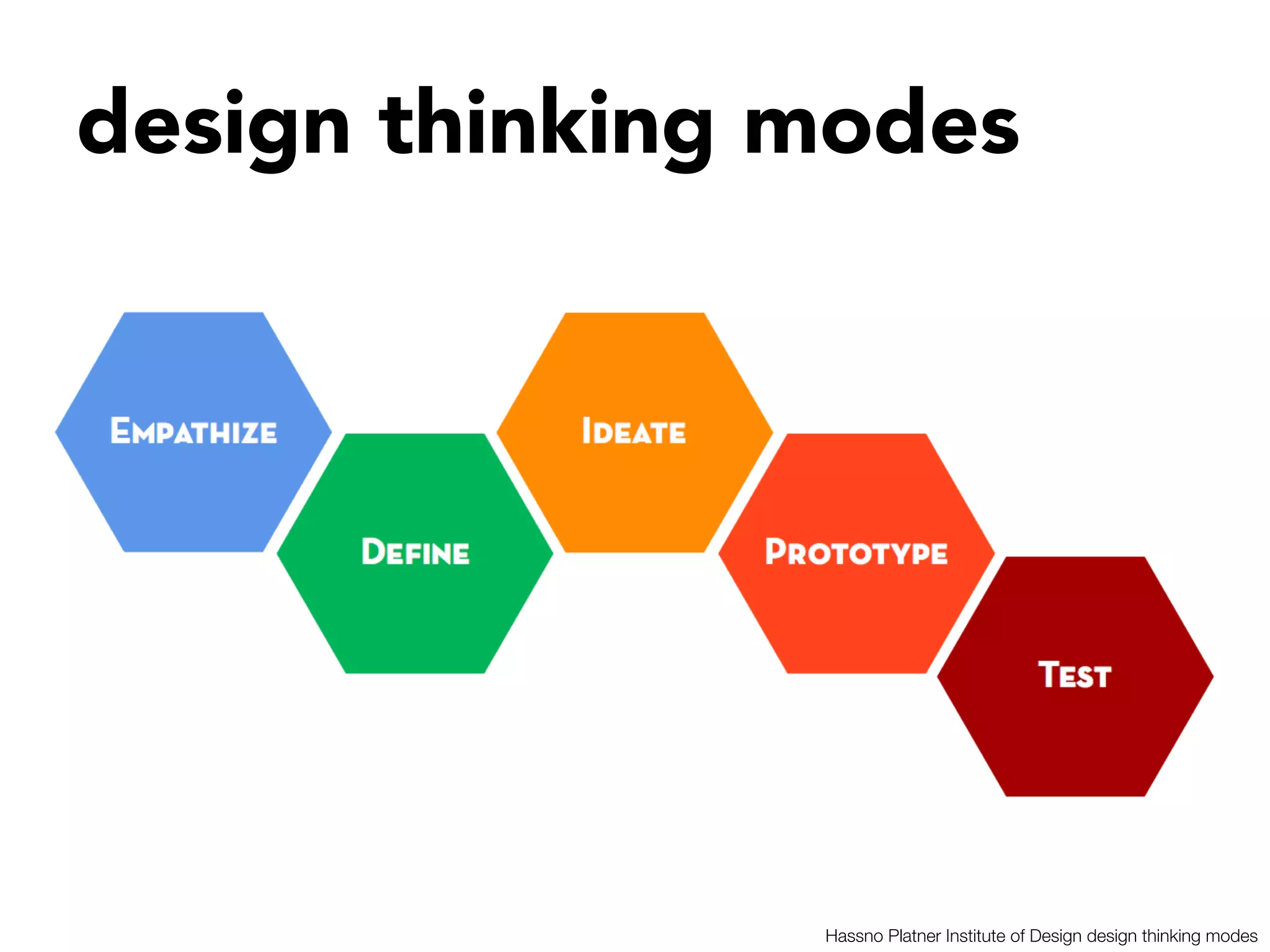
design thinking modes


                 Hassno Platner Institute of Design design thinking modes
design thinking modes


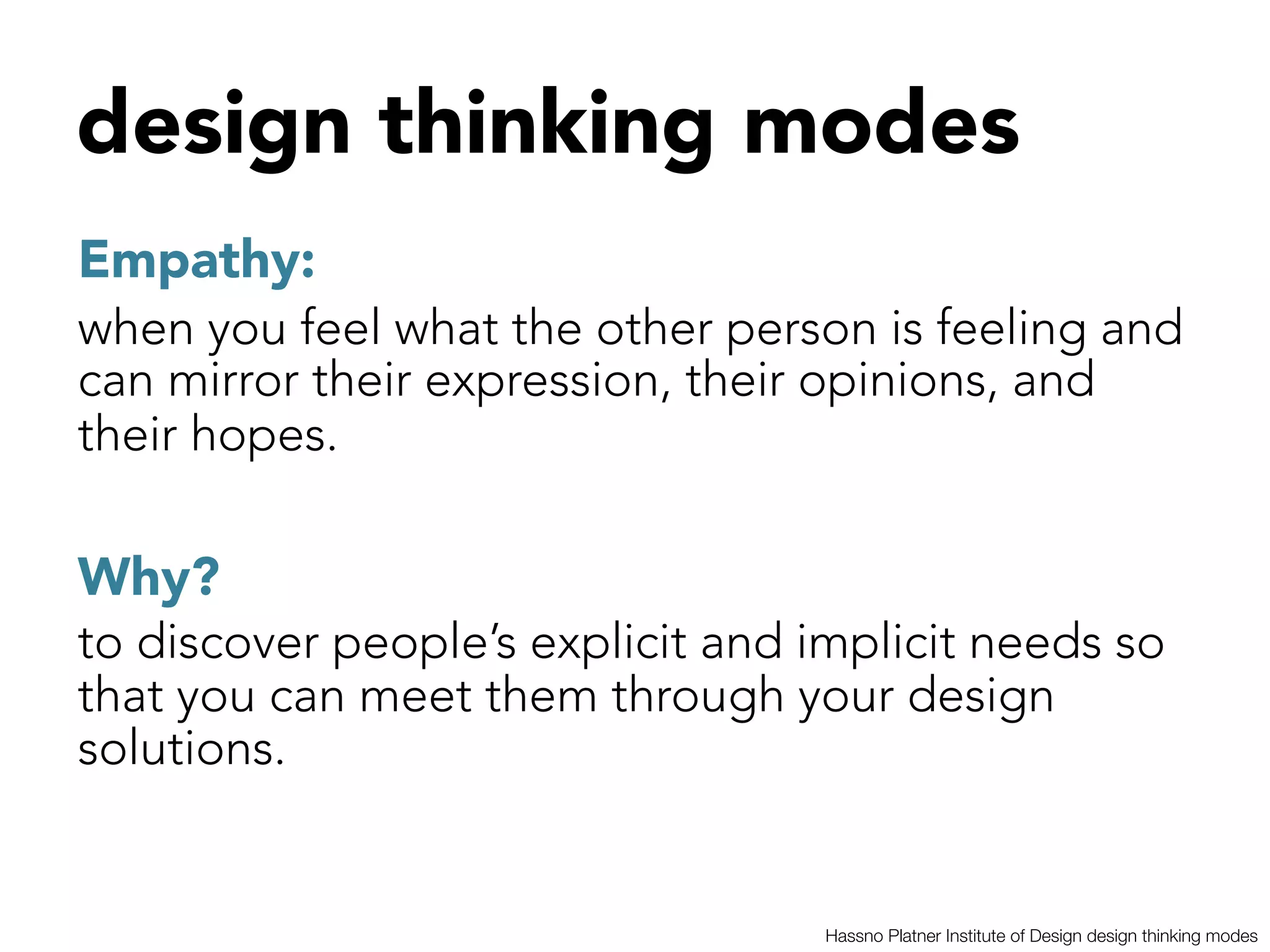
Empathy: 
when you feel what the other person is feeling and
can mirror their expression, their opinions, and
their hopes.

Why? 
to discover people’s explicit and implicit needs so
that you can meet them through your design
solutions.


                                   Hassno Platner Institute of Design design thinking modes
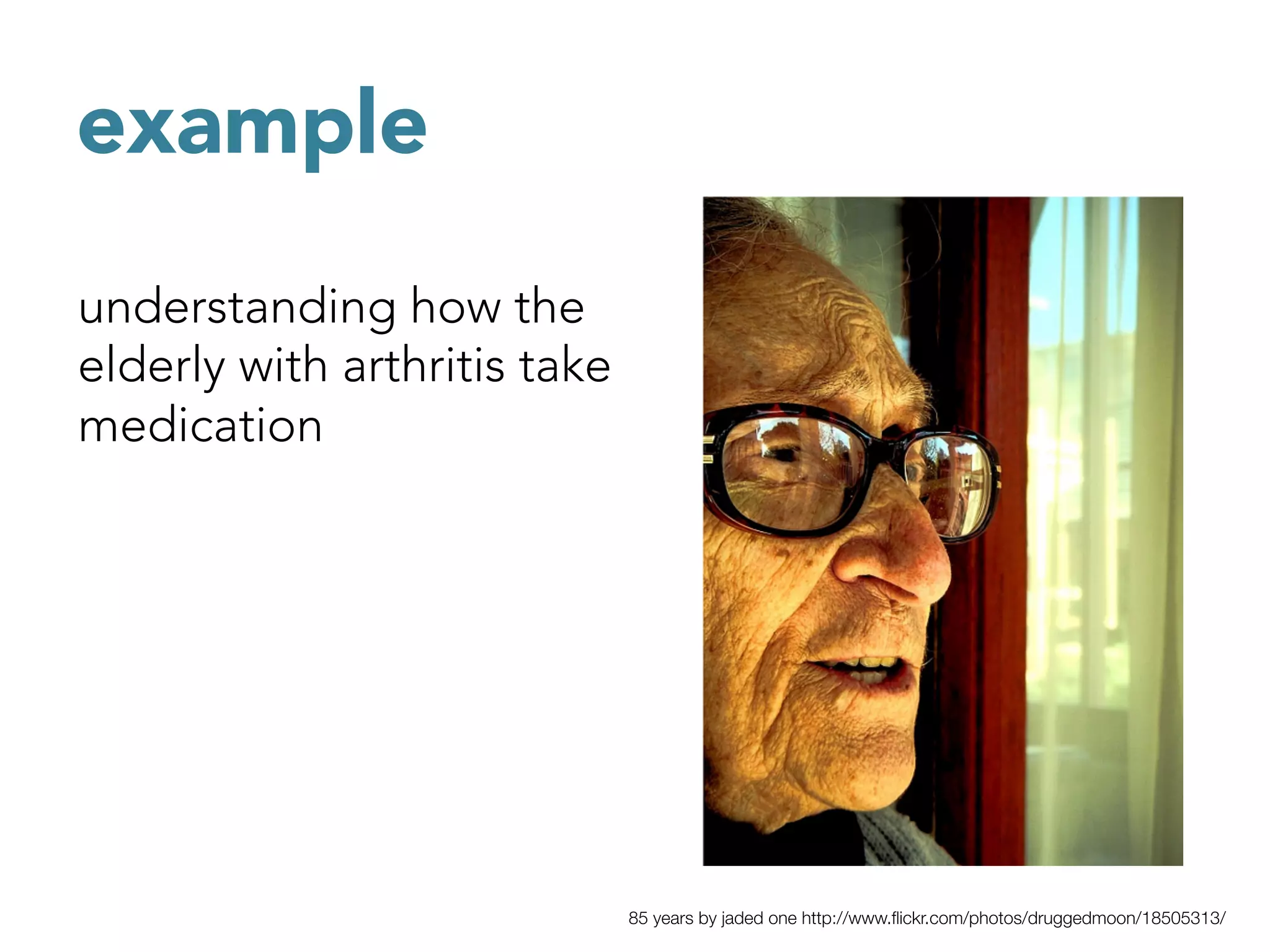
example

understanding how the
elderly with arthritis take
medication


                              85 years by jaded one http://www.flickr.com/photos/druggedmoon/18505313/
design thinking modes


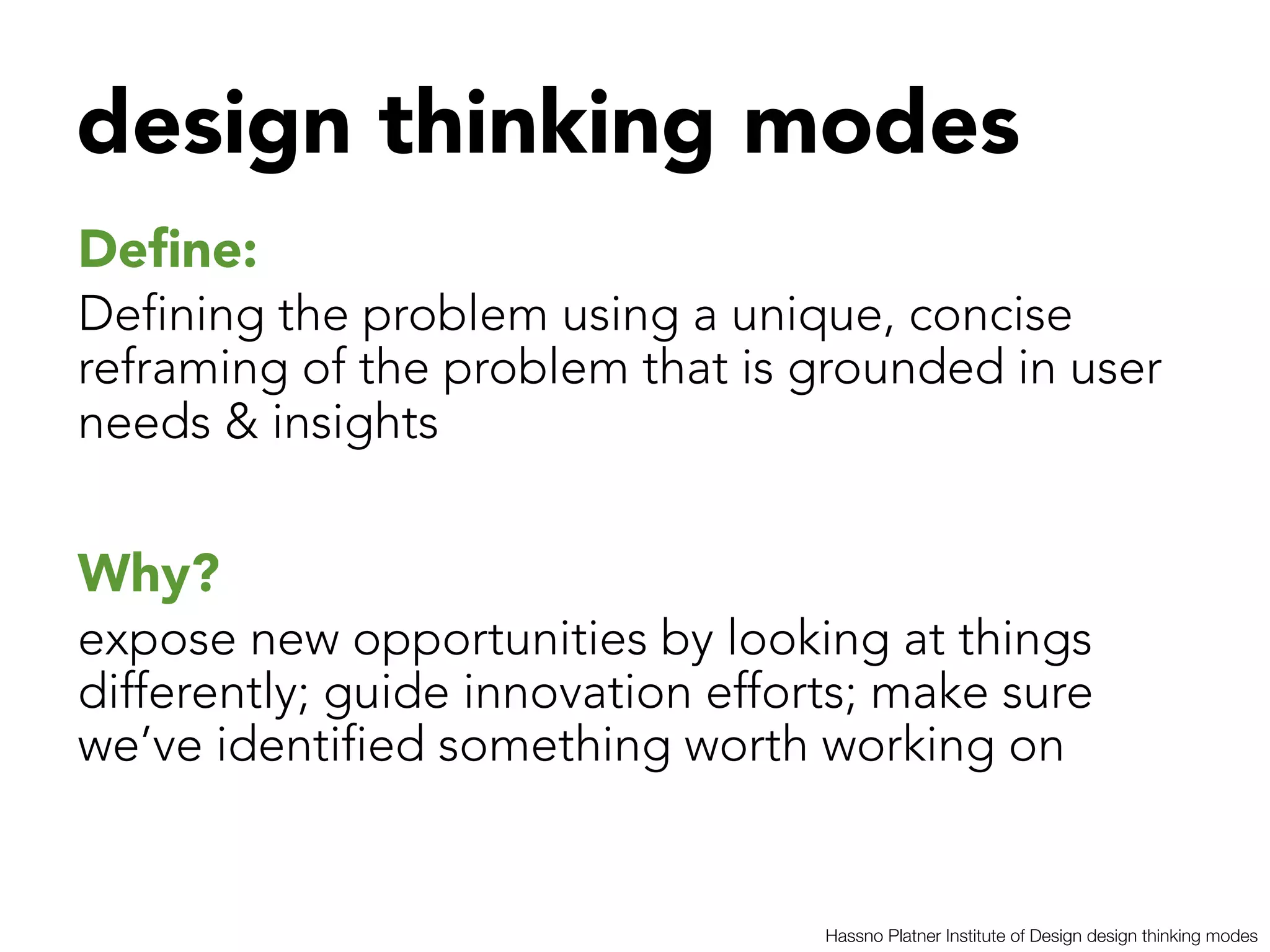
Define: 
Defining the problem using a unique, concise
reframing of the problem that is grounded in user
needs & insights


Why?
expose new opportunities by looking at things
differently; guide innovation efforts; make sure
we’ve identified something worth working on 


                                   Hassno Platner Institute of Design design thinking modes
design thinking modes


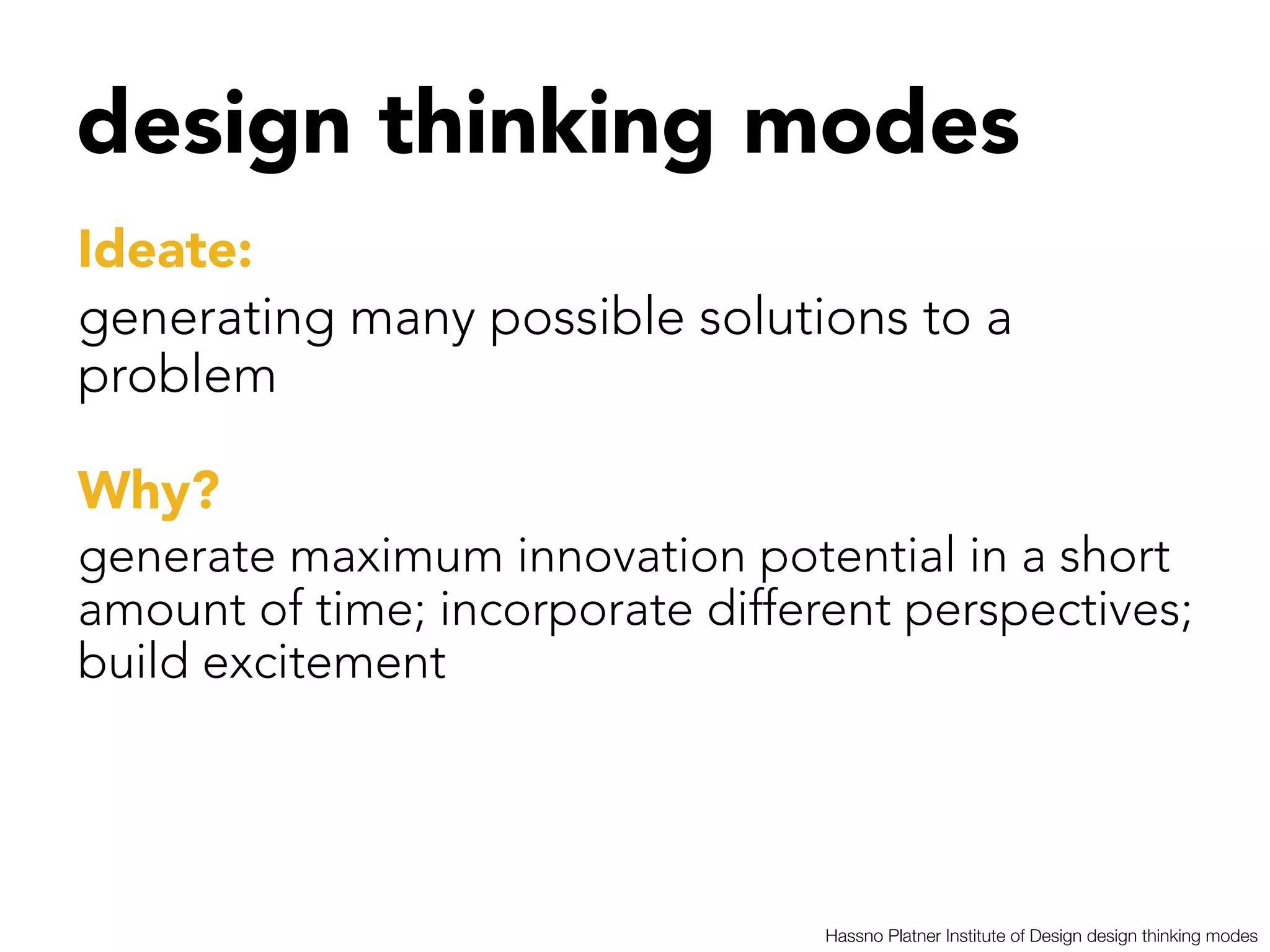
Ideate: 
generating many possible solutions to a
problem 

Why?
generate maximum innovation potential in a short
amount of time; incorporate different perspectives;
build excitement


                                 Hassno Platner Institute of Design design thinking modes
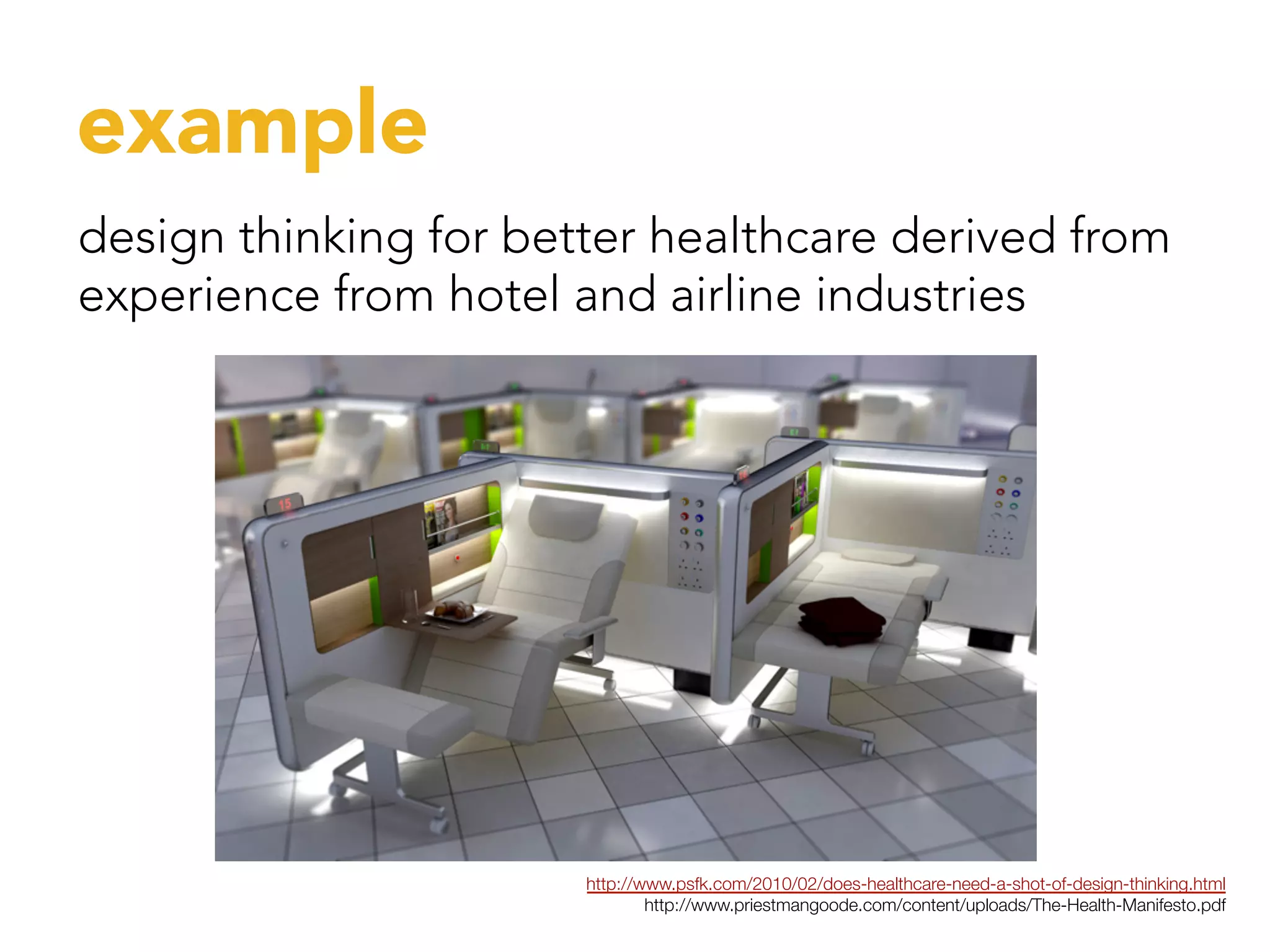
example
design thinking for better healthcare derived from
experience from hotel and airline industries


                       http://www.psfk.com/2010/02/does-healthcare-need-a-shot-of-design-thinking.html 
                               http://www.priestmangoode.com/content/uploads/The-Health-Manifesto.pdf
design thinking modes


Prototype:  


is creating a concrete embodiment of a concept
which becomes a way to test your hypotheses get
you closer to your final solution 

Why?
to gain empathy; to explore; to test; to inspire


                                  Hassno Platner Institute of Design design thinking modes
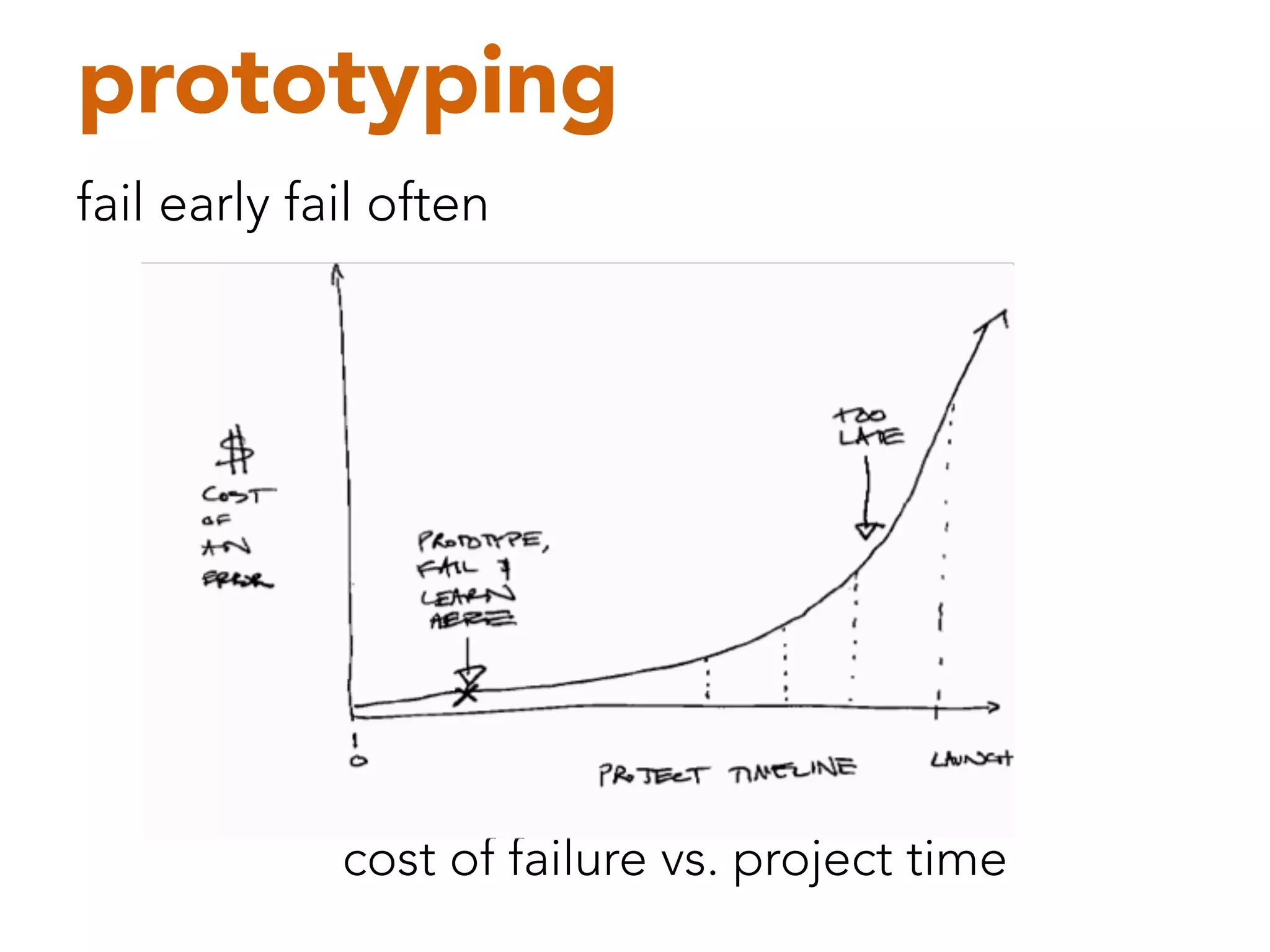
prototyping

fail early fail often


              cost of failure vs. project time
design thinking modes


Test:
test your concept with users using your
prototypes/

Why?
To understand how users understand and use
the concept. It is a way of continuing to gain
empathy for your users and evaluate your solution.


                                  Hassno Platner Institute of Design design thinking modes
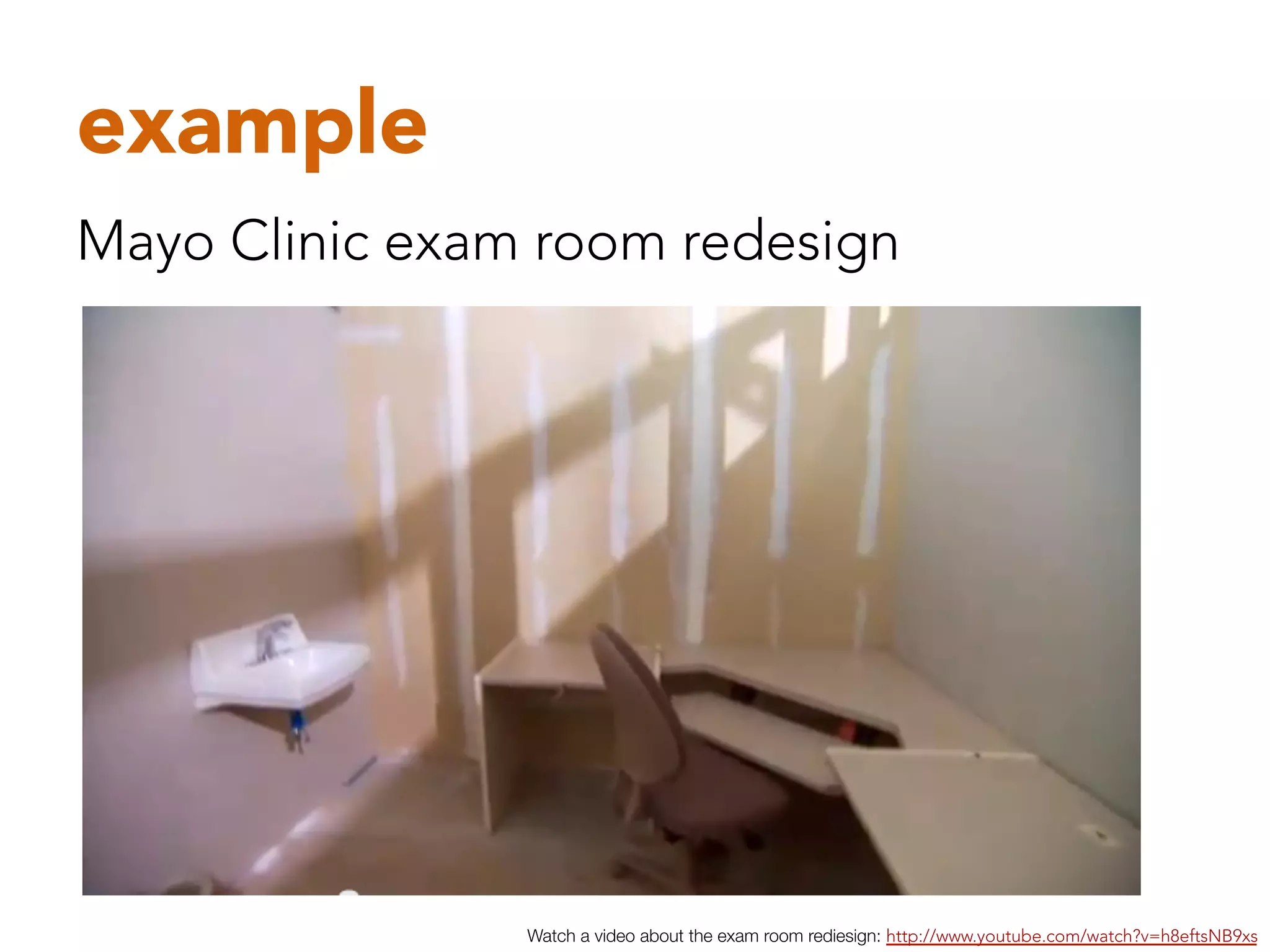
example
Mayo Clinic exam room redesign


                Watch a video about the exam room rediesign: http://www.youtube.com/watch?v=h8eftsNB9xs
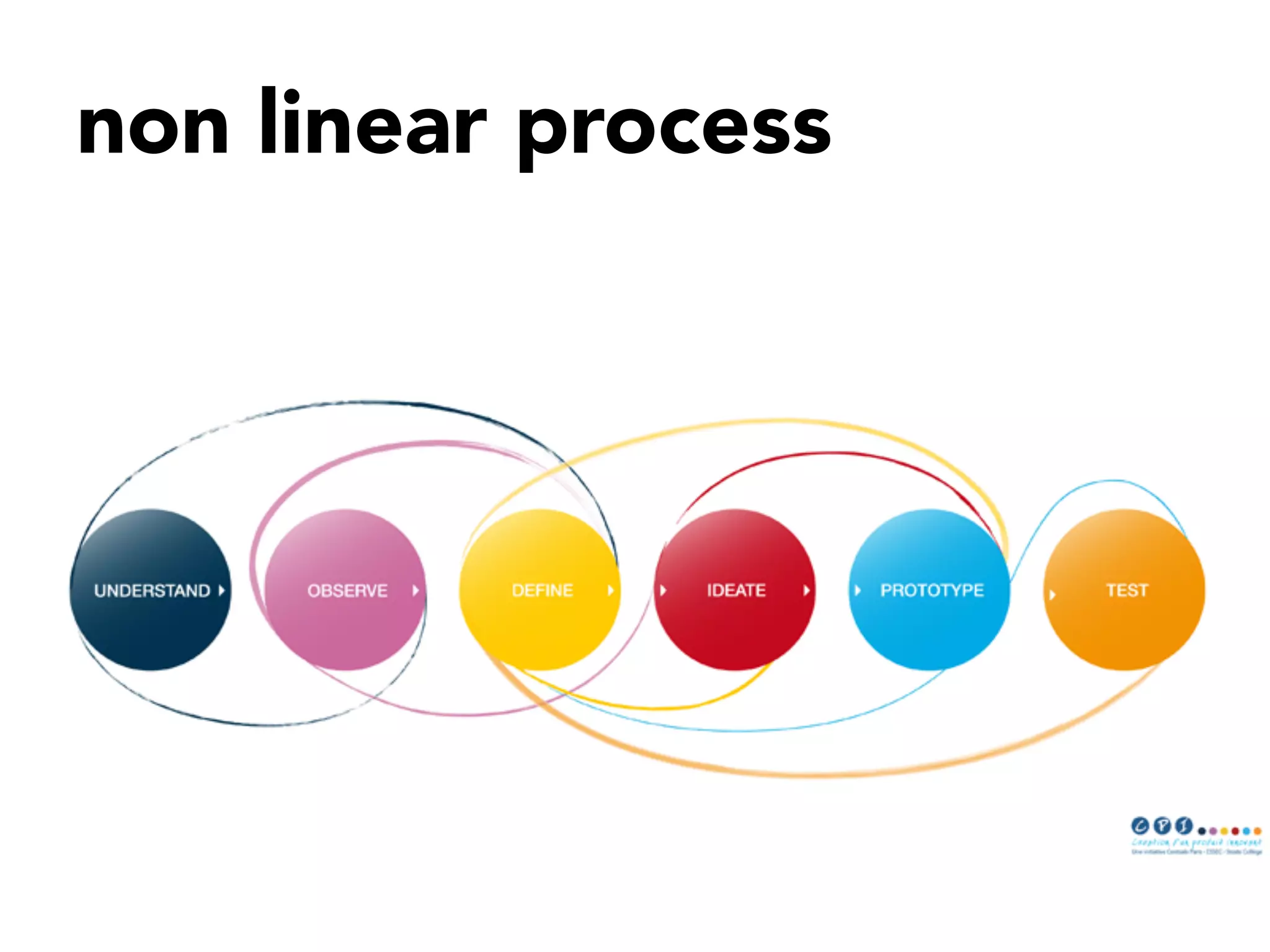
non linear process
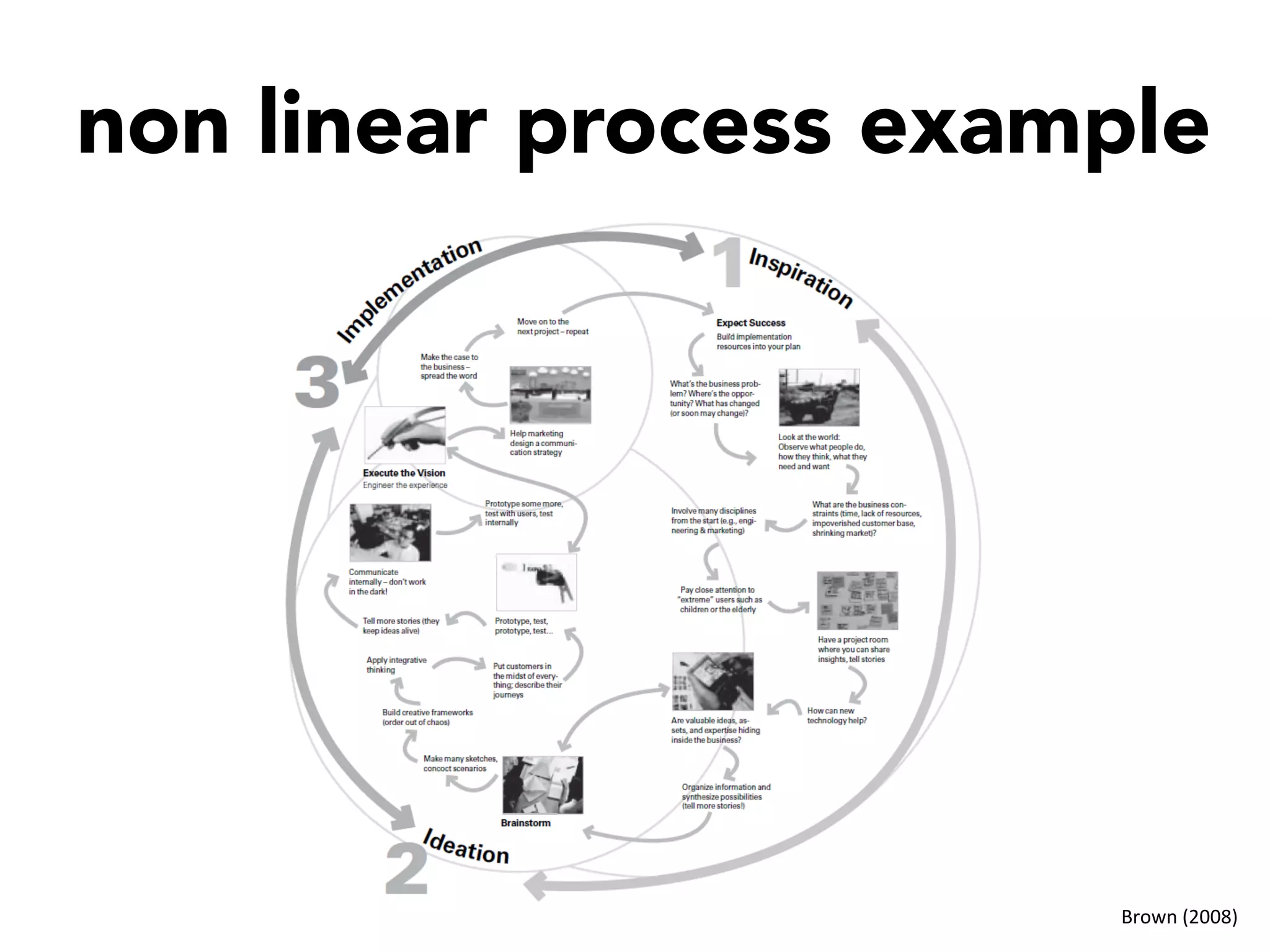
non linear process example


                        Brown	
  (2008)	
  
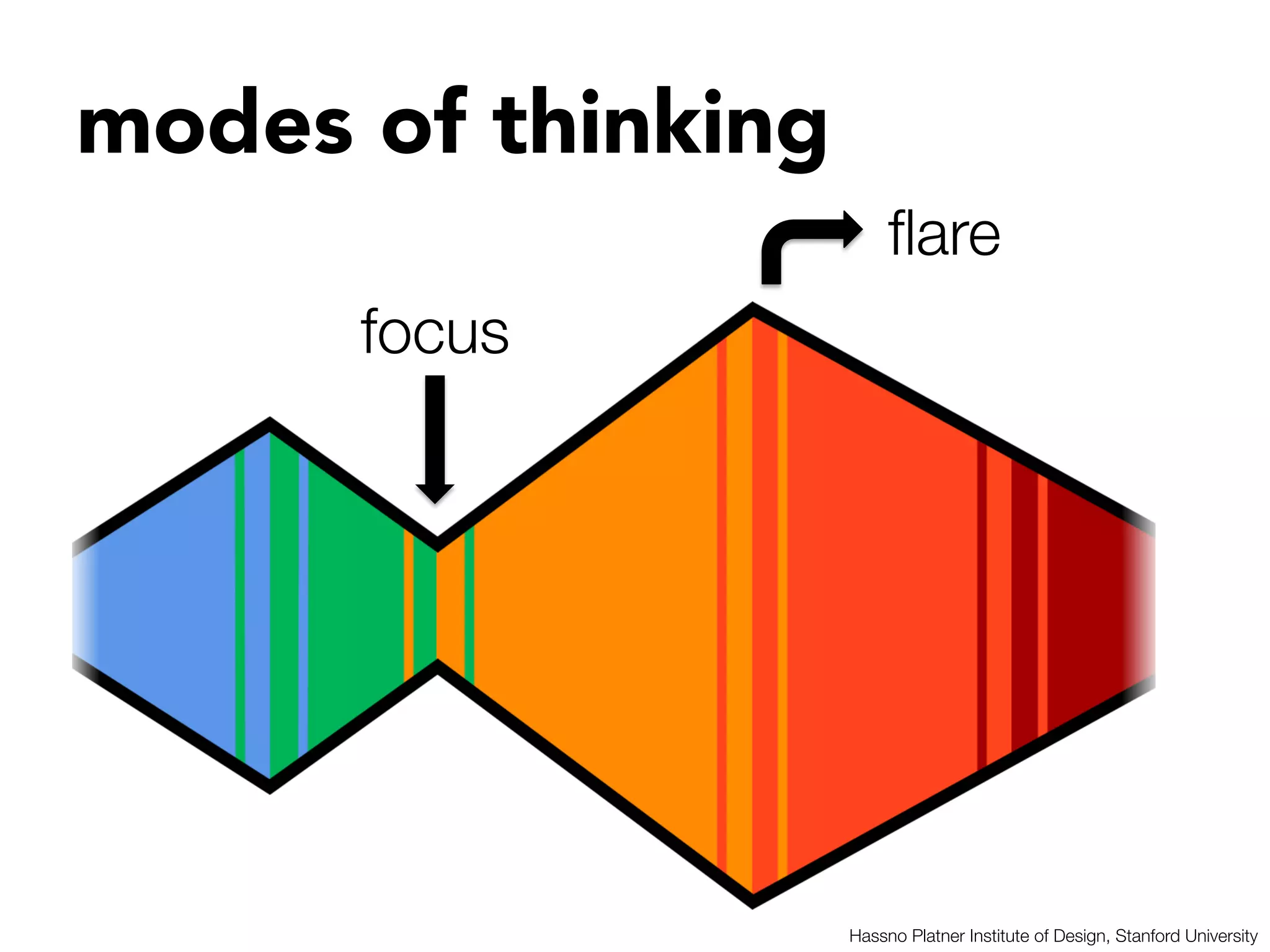
modes of thinking
                          flare
      focus


                     Hassno Platner Institute of Design, Stanford University
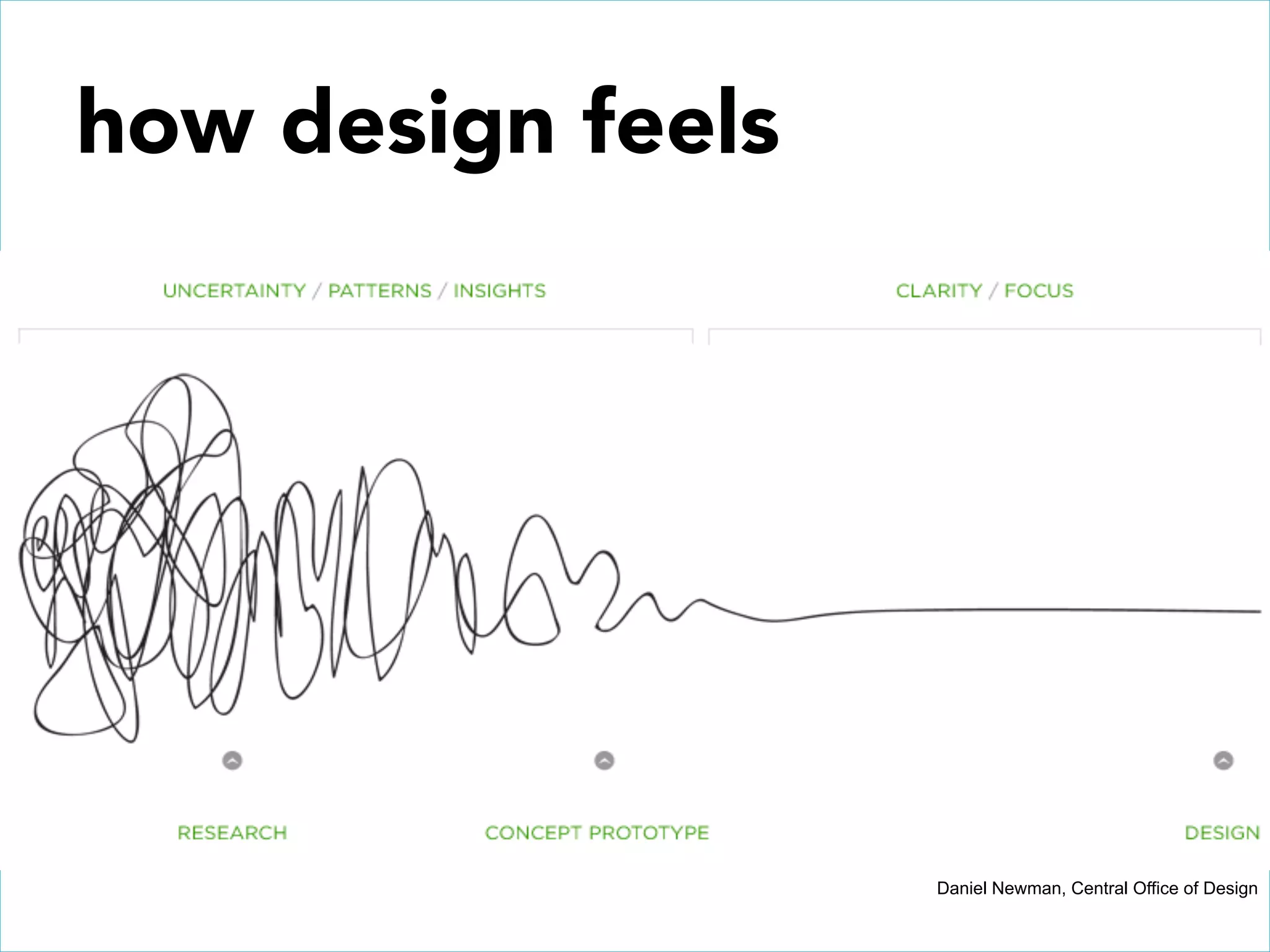
how design feels


                    Daniel Newman, Central Office of Design
key is collaboration:
most problems are too complex for
one person.

multiple perspectives, skills,
disciplines, experiences and
knowledge is key.
top three takeaways:
•  design thinking is an approach to
   problem solving & innovation
•  5 modes of design thinking guide
   the design process
•  people first!


                   Zaana Howard | QUT
    @zaana | zaanahoward@gmail.com | zaanahoward.com

Introducing design thinking

  • 1.
    introducing... design thinking Zaana Howard | Associate Lecturer | Information Systems School QUT | 8 March 2013
  • 2.
    two things: What isdesign thinking? The design thinking process
  • 3.
    what is design thinking?
  • 4.
    design is changing... Designer chairs, “Eames Duo 2” by moguphotos http://www.flickr.com/photos/bygenejackson/3112409205/
  • 5.
    design is evolving... h"p://designtaxi.com/ar4cle.php?ar4cle_id=415    
  • 6.
    to design thinking… Timeline detail by Garrettc http://www.flickr.com/photos/garrettc/2575214144/
  • 7.
    design thinking startswith... We are Snook http://web.fumsi.com/go/article/use/64147
  • 8.
    design thinking isa human centred & collaborative approach to problem solving that is creative, iterative & practical. (Brown, 2008)
  • 9.
    design thinking integrates... business (viability) people technology (desirability) (feasibility) Adapted  from  Brown  (2008).    
  • 10.
    Is a balanceof thinking... From  Mar4n  (2009)  
  • 11.
    a note onlanguage: user centred design; human centred design; user experience; design thinking (+ more...) often interchanged, all related but each has its own distinct definition, history and foundations
  • 12.
    the design thinking process
  • 13.
  • 14.
    design thinking mindsets empathy show don’t tell experiment h"p://dschool.stanford.edu/wp-­‐content/uploads/2011/03/BootcampBootleg2010v2SLIM.pdf   14  
  • 15.
    design thinking mindsets mindfulness action oriented collaboration h"p://dschool.stanford.edu/wp-­‐content/uploads/2011/03/BootcampBootleg2010v2SLIM.pdf   15  
  • 16.
    design thinking modes Hassno Platner Institute of Design design thinking modes
  • 17.
    design thinking modes Empathy: when you feel what the other person is feeling and can mirror their expression, their opinions, and their hopes. Why? to discover people’s explicit and implicit needs so that you can meet them through your design solutions. Hassno Platner Institute of Design design thinking modes
  • 18.
    example understanding how the elderlywith arthritis take medication 85 years by jaded one http://www.flickr.com/photos/druggedmoon/18505313/
  • 19.
    design thinking modes Define: Defining the problem using a unique, concise reframing of the problem that is grounded in user needs & insights Why? expose new opportunities by looking at things differently; guide innovation efforts; make sure we’ve identified something worth working on Hassno Platner Institute of Design design thinking modes
  • 20.
    design thinking modes Ideate: generating many possible solutions to a problem Why? generate maximum innovation potential in a short amount of time; incorporate different perspectives; build excitement Hassno Platner Institute of Design design thinking modes
  • 21.
    example design thinking forbetter healthcare derived from experience from hotel and airline industries http://www.psfk.com/2010/02/does-healthcare-need-a-shot-of-design-thinking.html http://www.priestmangoode.com/content/uploads/The-Health-Manifesto.pdf
  • 22.
    design thinking modes Prototype: is creating a concrete embodiment of a concept which becomes a way to test your hypotheses get you closer to your final solution Why? to gain empathy; to explore; to test; to inspire Hassno Platner Institute of Design design thinking modes
  • 23.
    prototyping fail early failoften cost of failure vs. project time
  • 24.
    design thinking modes Test: testyour concept with users using your prototypes/ Why? To understand how users understand and use the concept. It is a way of continuing to gain empathy for your users and evaluate your solution. Hassno Platner Institute of Design design thinking modes
  • 25.
    example Mayo Clinic examroom redesign Watch a video about the exam room rediesign: http://www.youtube.com/watch?v=h8eftsNB9xs
  • 26.
  • 27.
    non linear processexample Brown  (2008)  
  • 28.
    modes of thinking flare focus Hassno Platner Institute of Design, Stanford University
  • 29.
    how design feels Daniel Newman, Central Office of Design
  • 30.
    key is collaboration: mostproblems are too complex for one person. multiple perspectives, skills, disciplines, experiences and knowledge is key.
  • 31.
    top three takeaways: • design thinking is an approach to problem solving & innovation •  5 modes of design thinking guide the design process •  people first! Zaana Howard | QUT @zaana | zaanahoward@gmail.com | zaanahoward.com