INTRODUCE
MODALS
Tina Merlina, S.S, M.Hum
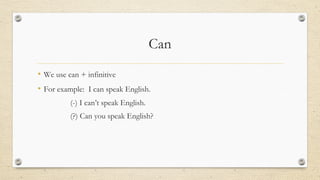
Can
• We use can + infinitive
• For example: I can speak English.
(-) I can’t speak English.
(?) Can you speak English?
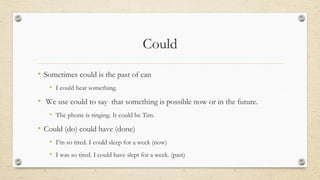
Could
• Sometimes could is the past of can
• I could hear something.
• We use could to say that something is possible now or in the future.
• The phone is ringing. It could be Tim.
• Could (do) could have (done)
• I’m so tired. I could sleep for a week (now)
• I was so tired. I could have slept for a week. (past)
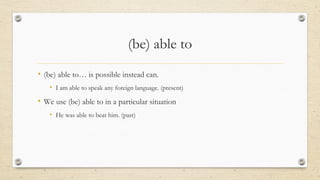
(be) able to
• (be) able to… is possible instead can.
• I am able to speak any foreign language. (present)
• We use (be) able to in a particular situation
• He was able to beat him. (past)
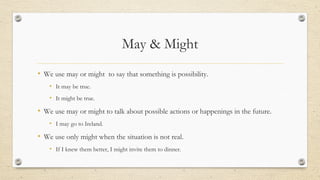
May & Might
• We use may or might to say that something is possibility.
• It may be true.
• It might be true.
• We use may or might to talk about possible actions or happenings in the future.
• I may go to Ireland.
• We use only might when the situation is not real.
• If I knew them better, I might invite them to dinner.
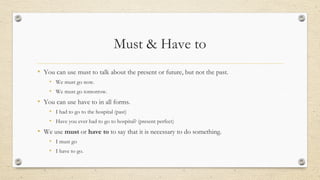
Must & Have to
• You can use must to talk about the present or future, but not the past.
• We must go now.
• We must go tomorrow.
• You can use have to in all forms.
• I had to go to the hospital (past)
• Have you ever had to go to hospital? (present perfect)
• We use must or have to to say that it is necessary to do something.
• I must go
• I have to go.
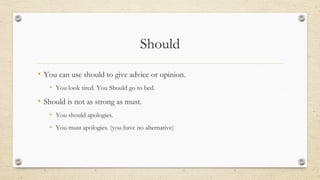
Should
• You can use should to give advice or opinion.
• You look tired. You Should go to bed.
• Should is not as strong as must.
• You should apologies.
• You must apologies. (you have no alternative)

Introduce modals

  • 1.
  • 2.
    Can • We usecan + infinitive • For example: I can speak English. (-) I can’t speak English. (?) Can you speak English?
  • 3.
    Could • Sometimes couldis the past of can • I could hear something. • We use could to say that something is possible now or in the future. • The phone is ringing. It could be Tim. • Could (do) could have (done) • I’m so tired. I could sleep for a week (now) • I was so tired. I could have slept for a week. (past)
  • 4.
    (be) able to •(be) able to… is possible instead can. • I am able to speak any foreign language. (present) • We use (be) able to in a particular situation • He was able to beat him. (past)
  • 5.
    May & Might •We use may or might to say that something is possibility. • It may be true. • It might be true. • We use may or might to talk about possible actions or happenings in the future. • I may go to Ireland. • We use only might when the situation is not real. • If I knew them better, I might invite them to dinner.
  • 6.
    Must & Haveto • You can use must to talk about the present or future, but not the past. • We must go now. • We must go tomorrow. • You can use have to in all forms. • I had to go to the hospital (past) • Have you ever had to go to hospital? (present perfect) • We use must or have to to say that it is necessary to do something. • I must go • I have to go.
  • 7.
    Should • You canuse should to give advice or opinion. • You look tired. You Should go to bed. • Should is not as strong as must. • You should apologies. • You must apologies. (you have no alternative)