Modal and related
verbs
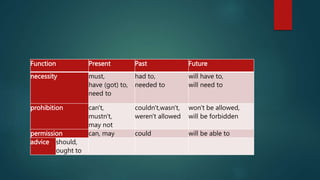
Function Present Past Future
necessity must,
have (got) to,
need to
had to,
needed to
will have to,
will need to
prohibition can't,
mustn't,
may not
couldn't,wasn't,
weren't allowed
won't be allowed,
will be forbidden
permission can, may could will be able to
advice should,
ought to
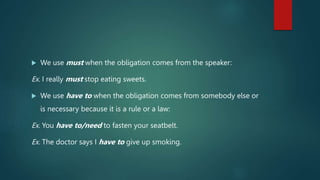
 We use must when the obligation comes from the speaker:
Ex. I really must stop eating sweets.
 We use have to when the obligation comes from somebody else or
is necessary because it is a rule or a law:
Ex. You have to/need to fasten your seatbelt.
Ex. The doctor says I have to give up smoking.
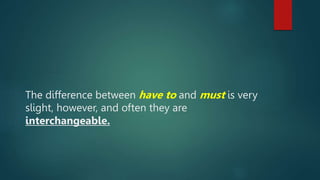
The difference between have to and must is very
slight, however, and often they are
interchangeable.
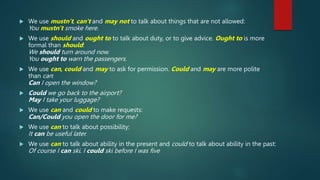
 We use mustn't, can't and may not to talk about things that are not allowed:
You mustn't smoke here.
 We use should and ought to to talk about duty, or to give advice. Ought to is more
formal than should:
We should turn around now.
You ought to warn the passengers.
 We use can, could and may to ask for permission. Could and may are more polite
than can:
Can I open the window?
 Could we go back to the airport?
May I take your luggage?
 We use can and could to make requests:
Can/Could you open the door for me?
 We use can to talk about possibility:
It can be useful later.
 We use can to talk about ability in the present and could to talk about ability in the past:
Of course I can ski. I could ski before I was five
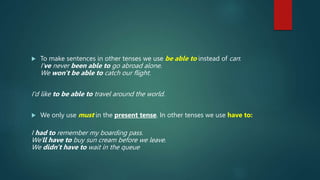
 To make sentences in other tenses we use be able to instead of can:
I've never been able to go abroad alone.
We won't be able to catch our flight.
I'd like to be able to travel around the world.
 We only use must in the present tense. In other tenses we use have to:
I had to remember my boarding pass.
We'll have to buy sun cream before we leave.
We didn't have to wait in the queue

Modal & related verbs.pptx

  • 1.
  • 2.
    Function Present PastFuture necessity must, have (got) to, need to had to, needed to will have to, will need to prohibition can't, mustn't, may not couldn't,wasn't, weren't allowed won't be allowed, will be forbidden permission can, may could will be able to advice should, ought to
  • 3.
     We usemust when the obligation comes from the speaker: Ex. I really must stop eating sweets.  We use have to when the obligation comes from somebody else or is necessary because it is a rule or a law: Ex. You have to/need to fasten your seatbelt. Ex. The doctor says I have to give up smoking.
  • 4.
    The difference betweenhave to and must is very slight, however, and often they are interchangeable.
  • 5.
     We usemustn't, can't and may not to talk about things that are not allowed: You mustn't smoke here.  We use should and ought to to talk about duty, or to give advice. Ought to is more formal than should: We should turn around now. You ought to warn the passengers.  We use can, could and may to ask for permission. Could and may are more polite than can: Can I open the window?  Could we go back to the airport? May I take your luggage?  We use can and could to make requests: Can/Could you open the door for me?  We use can to talk about possibility: It can be useful later.  We use can to talk about ability in the present and could to talk about ability in the past: Of course I can ski. I could ski before I was five
  • 6.
     To makesentences in other tenses we use be able to instead of can: I've never been able to go abroad alone. We won't be able to catch our flight. I'd like to be able to travel around the world.  We only use must in the present tense. In other tenses we use have to: I had to remember my boarding pass. We'll have to buy sun cream before we leave. We didn't have to wait in the queue