GERUND OR INFINITIVE UNIT 6
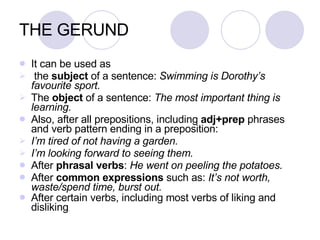
THE GERUND It can be used as the  subject  of a sentence:  Swimming is Dorothy’s favourite sport. The  object  of a sentence:  The most important thing is learning. Also, after all prepositions, including  adj+prep  phrases and verb pattern ending in a preposition: I’m tired of not having a garden. I’m looking forward to seeing them. After  phrasal verbs :  He went on peeling the potatoes. After  common expressions  such as:  It’s not worth, waste/spend time, burst out. After certain verbs, including most verbs of liking and disliking .
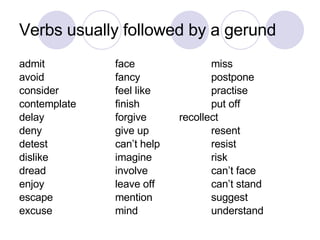
Verbs usually followed by a gerund admit  face miss avoid  fancy postpone consider  feel like practise contemplate  finish put off delay  forgive recollect deny give up resent detest can’t help resist dislike imagine risk dread involve can’t face enjoy leave off can’t stand escape  mention suggest excuse mind understand
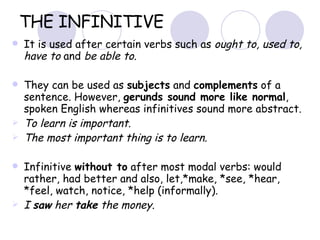
THE INFINITIVE It is used after certain verbs such as  ought to, used to, have to  and  be able to.  They can be used as  subjects  and  complements  of a sentence. However,  gerunds sound more like normal , spoken English whereas infinitives sound more abstract.  To learn is important.  The most important thing is to learn. Infinitive  without to  after most modal verbs: would rather, had better and also, let,*make, *see, *hear, *feel, watch, notice, *help (informally).  I  saw  her  take  the money. *only in active sentences
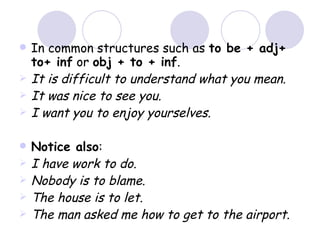
In common structures such as  to be + adj+ to+ inf  or  obj + to + inf . It is difficult to understand what you mean. It was nice to see you. I want you to enjoy yourselves. Notice also :  I have work to do.  Nobody is to blame. The house is to let.  The man asked me how to get to the airport.
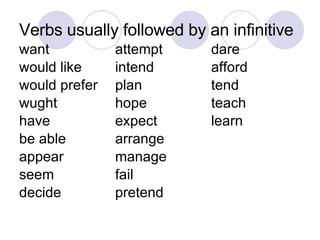
Verbs usually followed by an infinitive want attempt dare would like intend afford would prefer plan tend wught hope teach have expect learn be able arrange appear manage seem fail decide pretend
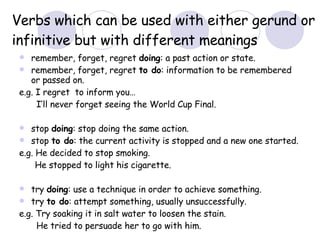
Verbs which can be used with either gerund or infinitive but with different meanings remember, forget, regret  doing : a past action or state. remember, forget, regret  to do : information to be remembered or passed on. e.g. I regret  to inform you…   I’ll never forget seeing the World Cup Final. stop  doing : stop doing the same action. stop  to do : the current activity is stopped and a new one started. e.g. He decided to stop smoking. He stopped to light his cigarette. try  doing : use a technique in order to achieve something.  try  to do : attempt something, usually unsuccessfully. e.g. Try soaking it in salt water to loosen the stain.   He tried to persuade her to go with him.

Gerund Or Infinitive

  • 1.
  • 2.
    THE GERUND Itcan be used as the subject of a sentence: Swimming is Dorothy’s favourite sport. The object of a sentence: The most important thing is learning. Also, after all prepositions, including adj+prep phrases and verb pattern ending in a preposition: I’m tired of not having a garden. I’m looking forward to seeing them. After phrasal verbs : He went on peeling the potatoes. After common expressions such as: It’s not worth, waste/spend time, burst out. After certain verbs, including most verbs of liking and disliking .
  • 3.
    Verbs usually followedby a gerund admit face miss avoid fancy postpone consider feel like practise contemplate finish put off delay forgive recollect deny give up resent detest can’t help resist dislike imagine risk dread involve can’t face enjoy leave off can’t stand escape mention suggest excuse mind understand
  • 4.
    THE INFINITIVE Itis used after certain verbs such as ought to, used to, have to and be able to. They can be used as subjects and complements of a sentence. However, gerunds sound more like normal , spoken English whereas infinitives sound more abstract. To learn is important. The most important thing is to learn. Infinitive without to after most modal verbs: would rather, had better and also, let,*make, *see, *hear, *feel, watch, notice, *help (informally). I saw her take the money. *only in active sentences
  • 5.
    In common structuressuch as to be + adj+ to+ inf or obj + to + inf . It is difficult to understand what you mean. It was nice to see you. I want you to enjoy yourselves. Notice also : I have work to do. Nobody is to blame. The house is to let. The man asked me how to get to the airport.
  • 6.
    Verbs usually followedby an infinitive want attempt dare would like intend afford would prefer plan tend wught hope teach have expect learn be able arrange appear manage seem fail decide pretend
  • 7.
    Verbs which canbe used with either gerund or infinitive but with different meanings remember, forget, regret doing : a past action or state. remember, forget, regret to do : information to be remembered or passed on. e.g. I regret to inform you… I’ll never forget seeing the World Cup Final. stop doing : stop doing the same action. stop to do : the current activity is stopped and a new one started. e.g. He decided to stop smoking. He stopped to light his cigarette. try doing : use a technique in order to achieve something. try to do : attempt something, usually unsuccessfully. e.g. Try soaking it in salt water to loosen the stain. He tried to persuade her to go with him.