Noun
Clauses
What is a Noun?
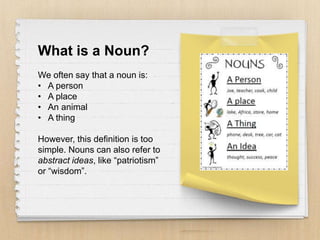
We often say that a noun is:
• A person
• A place
• An animal
• A thing
However, this definition is too
simple. Nouns can also refer to
abstract ideas, like “patriotism”
or “wisdom”.
What is a Noun?
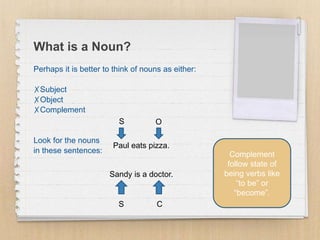
Perhaps it is better to think of nouns as either:
✗Subject
✗Object
✗Complement
Look for the nouns
in these sentences:
Paul eats pizza.
Sandy is a doctor.
S O
S C
Complement
follow state of
being verbs like
“to be” or
“become”.
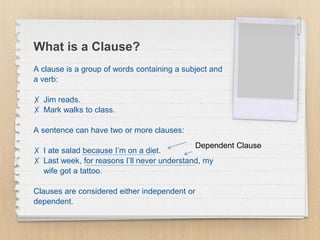
What is a Clause?
A clause is a group of words containing a subject and
a verb:
✗ Jim reads.
✗ Mark walks to class.
A sentence can have two or more clauses:
✗ I ate salad because I’m on a diet.
✗ Last week, for reasons I’ll never understand, my
wife got a tattoo.
Clauses are considered either independent or
dependent.
Dependent Clause
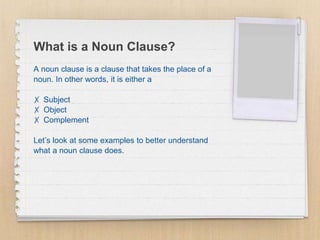
What is a Noun Clause?
A noun clause is a clause that takes the place of a
noun. In other words, it is either a
✗ Subject
✗ Object
✗ Complement
Let’s look at some examples to better understand
what a noun clause does.
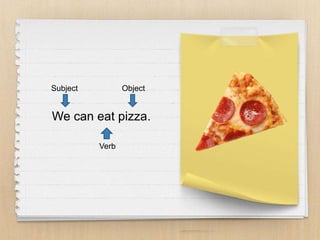
We can eat pizza.
Subject Object
Verb
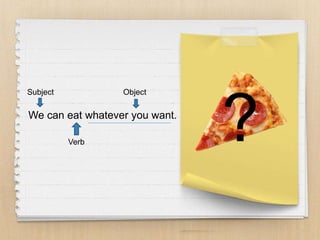
We can eat whatever you want.
?
Subject Object
Verb
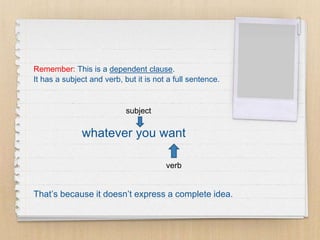
Remember: This is a dependent clause.
It has a subject and verb, but it is not a full sentence.
whatever you want
That’s because it doesn’t express a complete idea.
subject
verb
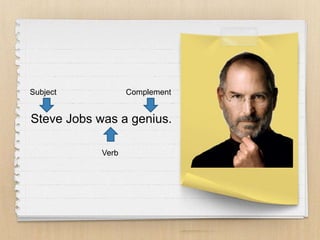
Steve Jobs was a genius.
Subject Complement
Verb
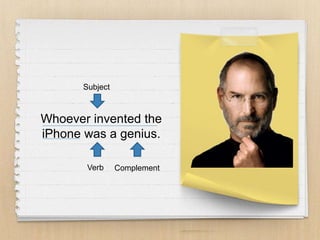
Whoever invented the
iPhone was a genius.
Subject
Verb Complement
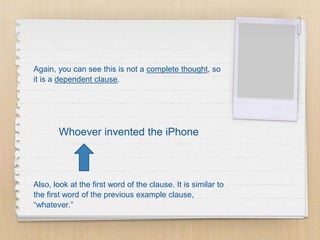
Again, you can see this is not a complete thought, so
it is a dependent clause.
Whoever invented the iPhone
Also, look at the first word of the clause. It is similar to
the first word of the previous example clause,
“whatever.”
First Words
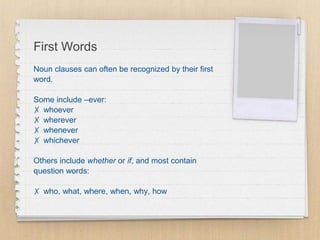
Noun clauses can often be recognized by their first
word.
Some include –ever:
✗ whoever
✗ wherever
✗ whenever
✗ whichever
Others include whether or if, and most contain
question words:
✗ who, what, where, when, why, how
First Words
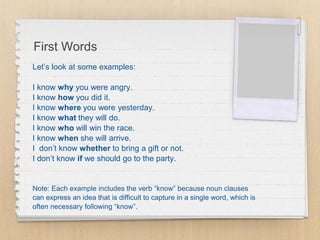
Let’s look at some examples:
I know why you were angry.
I know how you did it.
I know where you were yesterday.
I know what they will do.
I know who will win the race.
I know when she will arrive.
I don’t know whether to bring a gift or not.
I don’t know if we should go to the party.
Note: Each example includes the verb “know” because noun clauses
can express an idea that is difficult to capture in a single word, which is
often necessary following “know”.
First Words
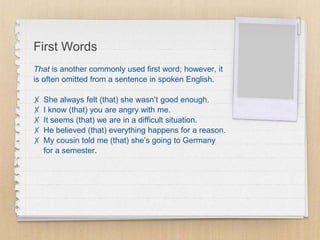
That is another commonly used first word; however, it
is often omitted from a sentence in spoken English.
✗ She always felt (that) she wasn’t good enough.
✗ I know (that) you are angry with me.
✗ It seems (that) we are in a difficult situation.
✗ He believed (that) everything happens for a reason.
✗ My cousin told me (that) she’s going to Germany
for a semester.
Look for the Verb
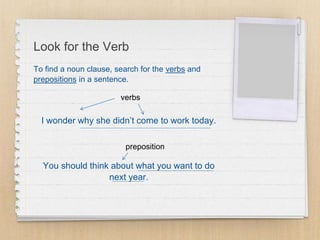
To find a noun clause, search for the verbs and
prepositions in a sentence.
I wonder why she didn’t come to work today.
You should think about what you want to do
next year.
verbs
preposition
More
Examples
What she said inspired me.
The noun clause here acts
as a subject.
Once you retire, you can
do whatever you want.
Here, the noun clause
is a direct object of the
verb “do”.
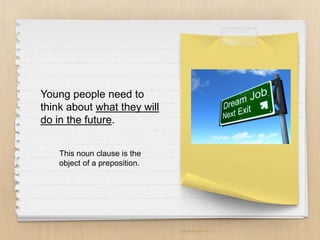
Young people need to
think about what they will
do in the future.
This noun clause is the
object of a preposition.
Ask your guests what they
want to drink as soon as
they arrive.
Be careful with these
types of sentence. The
dependent clause is in the
middle of the main clause.
Practice
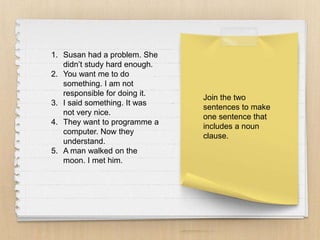
Join the two
sentences to make
one sentence that
includes a noun
clause.
1. Susan had a problem. She
didn’t study hard enough.
2. You want me to do
something. I am not
responsible for doing it.
3. I said something. It was
not very nice.
4. They want to programme a
computer. Now they
understand.
5. A man walked on the
moon. I met him.
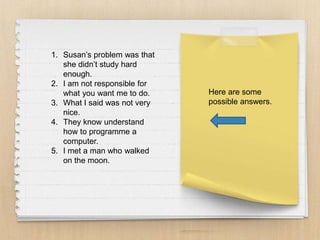
1. Susan’s problem was that
she didn’t study hard
enough.
2. I am not responsible for
what you want me to do.
3. What I said was not very
nice.
4. They know understand
how to programme a
computer.
5. I met a man who walked
on the moon.
Here are some
possible answers.
If you found this grammar
lesson useful, you can
check out TED-IELTS.com
for more free English
practice. Also take a look at
my other teaching blog,
which gives lesson plans
for teachers.

A Guide to Noun Clauses

  • 1.
  • 2.
    What is aNoun? We often say that a noun is: • A person • A place • An animal • A thing However, this definition is too simple. Nouns can also refer to abstract ideas, like “patriotism” or “wisdom”.
  • 3.
    What is aNoun? Perhaps it is better to think of nouns as either: ✗Subject ✗Object ✗Complement Look for the nouns in these sentences: Paul eats pizza. Sandy is a doctor. S O S C Complement follow state of being verbs like “to be” or “become”.
  • 4.
    What is aClause? A clause is a group of words containing a subject and a verb: ✗ Jim reads. ✗ Mark walks to class. A sentence can have two or more clauses: ✗ I ate salad because I’m on a diet. ✗ Last week, for reasons I’ll never understand, my wife got a tattoo. Clauses are considered either independent or dependent. Dependent Clause
  • 5.
    What is aNoun Clause? A noun clause is a clause that takes the place of a noun. In other words, it is either a ✗ Subject ✗ Object ✗ Complement Let’s look at some examples to better understand what a noun clause does.
  • 6.
    We can eatpizza. Subject Object Verb
  • 7.
    We can eatwhatever you want. ? Subject Object Verb
  • 8.
    Remember: This isa dependent clause. It has a subject and verb, but it is not a full sentence. whatever you want That’s because it doesn’t express a complete idea. subject verb
  • 9.
    Steve Jobs wasa genius. Subject Complement Verb
  • 10.
    Whoever invented the iPhonewas a genius. Subject Verb Complement
  • 11.
    Again, you cansee this is not a complete thought, so it is a dependent clause. Whoever invented the iPhone Also, look at the first word of the clause. It is similar to the first word of the previous example clause, “whatever.”
  • 12.
    First Words Noun clausescan often be recognized by their first word. Some include –ever: ✗ whoever ✗ wherever ✗ whenever ✗ whichever Others include whether or if, and most contain question words: ✗ who, what, where, when, why, how
  • 13.
    First Words Let’s lookat some examples: I know why you were angry. I know how you did it. I know where you were yesterday. I know what they will do. I know who will win the race. I know when she will arrive. I don’t know whether to bring a gift or not. I don’t know if we should go to the party. Note: Each example includes the verb “know” because noun clauses can express an idea that is difficult to capture in a single word, which is often necessary following “know”.
  • 14.
    First Words That isanother commonly used first word; however, it is often omitted from a sentence in spoken English. ✗ She always felt (that) she wasn’t good enough. ✗ I know (that) you are angry with me. ✗ It seems (that) we are in a difficult situation. ✗ He believed (that) everything happens for a reason. ✗ My cousin told me (that) she’s going to Germany for a semester.
  • 15.
    Look for theVerb To find a noun clause, search for the verbs and prepositions in a sentence. I wonder why she didn’t come to work today. You should think about what you want to do next year. verbs preposition
  • 16.
  • 17.
    What she saidinspired me. The noun clause here acts as a subject.
  • 18.
    Once you retire,you can do whatever you want. Here, the noun clause is a direct object of the verb “do”.
  • 19.
    Young people needto think about what they will do in the future. This noun clause is the object of a preposition.
  • 20.
    Ask your guestswhat they want to drink as soon as they arrive. Be careful with these types of sentence. The dependent clause is in the middle of the main clause.
  • 21.
  • 22.
    Join the two sentencesto make one sentence that includes a noun clause. 1. Susan had a problem. She didn’t study hard enough. 2. You want me to do something. I am not responsible for doing it. 3. I said something. It was not very nice. 4. They want to programme a computer. Now they understand. 5. A man walked on the moon. I met him.
  • 23.
    1. Susan’s problemwas that she didn’t study hard enough. 2. I am not responsible for what you want me to do. 3. What I said was not very nice. 4. They know understand how to programme a computer. 5. I met a man who walked on the moon. Here are some possible answers.
  • 24.
    If you foundthis grammar lesson useful, you can check out TED-IELTS.com for more free English practice. Also take a look at my other teaching blog, which gives lesson plans for teachers.