Interview Preparation
Prepared by:
Ahmadshah Nejati
Coming together is a beginning
Keeping together is progress
Working together is success.
Workshop Objectives
•
•
•
•
•

Preparing for interview
The interview experience
Do’s and don’ts at interview
Questions to expect and to ask
Interview resources
The Interview Session
 09.30 – Introduction
 10:00 - Interviewers prepare in groups, for group
work.
 10:30 – Ice breaking
 10.45 - Tea break!
 11:00 - Lecture
 12.00 – Lunch break!
 01:00- Team work
 02:00 – Training Feedback (Closing of the session)
Introduction
 To identify the skills, knowledge, attributes, which is
necessary for interview success.
 To enable participants to experience the interview process
in a safe and supportive environment.
 To allow participants to understand the interview process
from both the interviewer’s and the candidate’s
perspectives.
 To practice interview preparation, questioning and
answering techniques, and giving and receiving feedback.
 To increase participants’ awareness and experience of the
techniques as a recruiter may use to gain information from
applicants.
Group Activity
Lets make the team. While considering the
following tips:
•
•
•
•
•

Gender
Age
Education Background
Different occupational background
Etc…
Ice Breaker !!!
Find 10 Things in Common
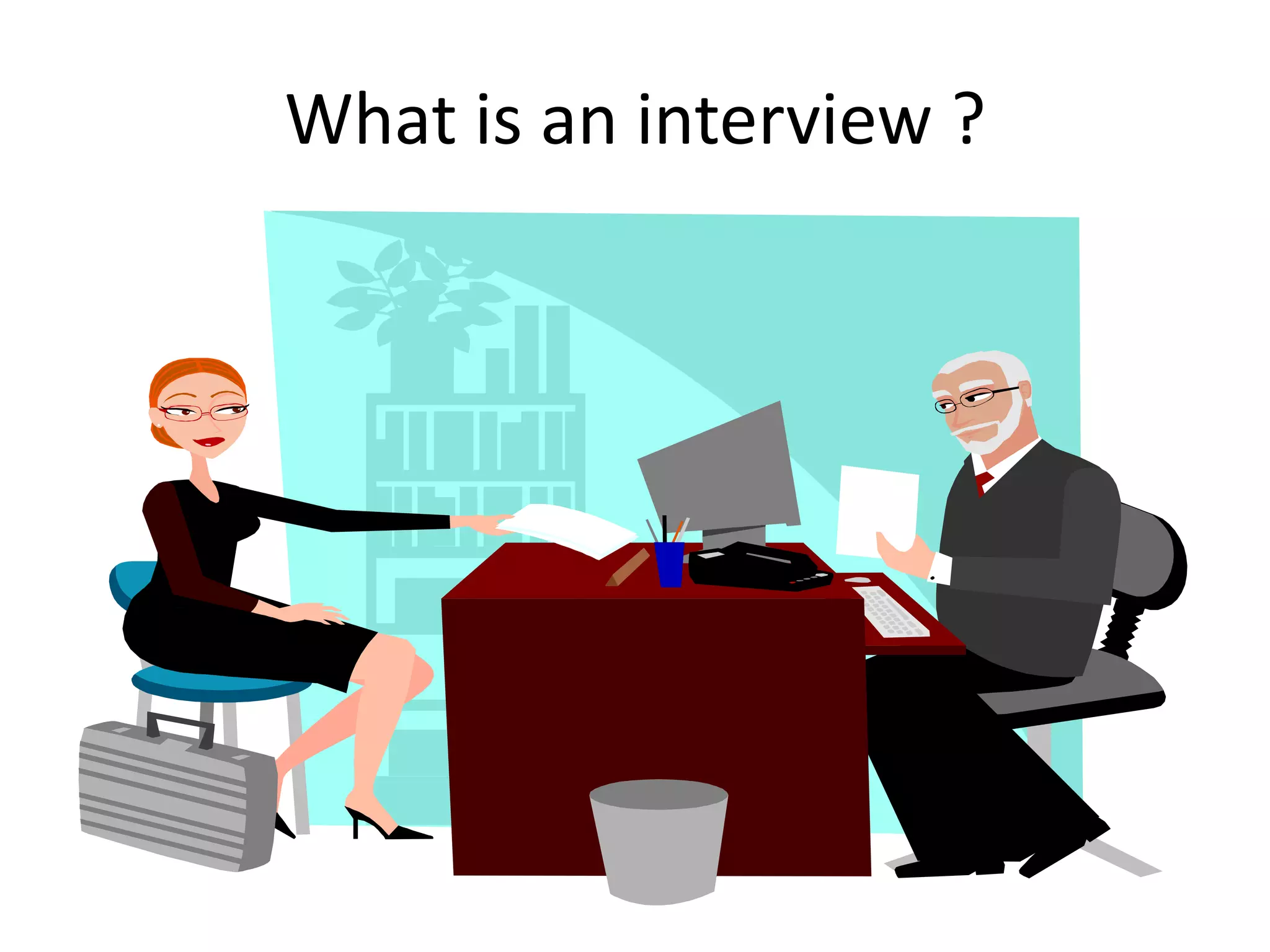
What is an interview ?
Cont.
• An interview is a conversation between two
or more people (the interviewer and the
interviewee) where questions are asked by the
interviewer to obtain information from the
interviewees.
From Wikipedia, the free encyclopedia
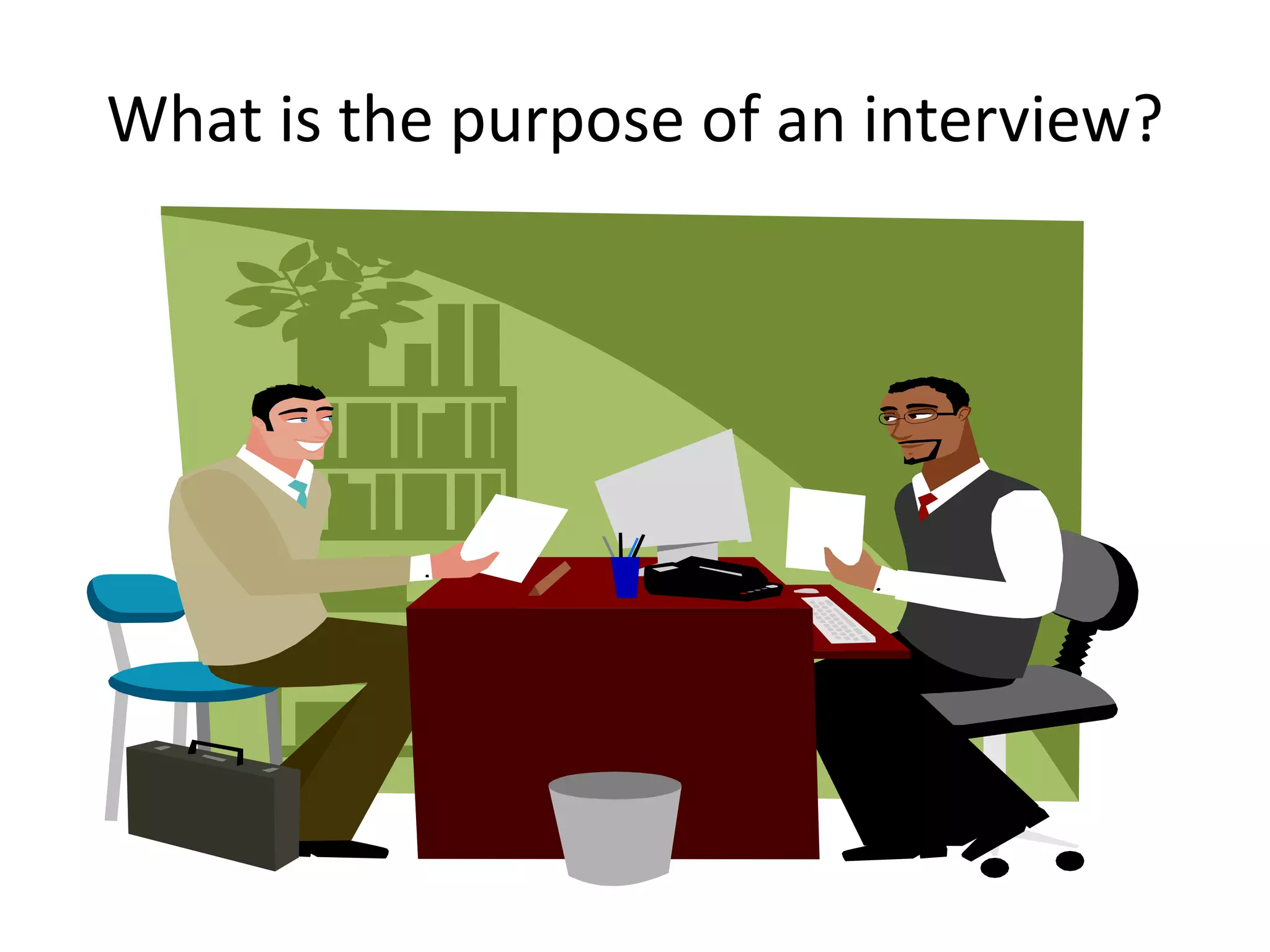
What is the purpose of an interview?
Conti…
• An opportunity to meet face to face
• To discuss your qualifications
• To assess your ability and skills
• To show your skills and personality

• To sell yourself
When does the interview start?
The interview starts when the
employer calls to set up the interview!
What do you ask when you receiving a
call for interview?
• The time and date of
the interview
• The name of the
person you are
meeting with
• The address of the
place where the
interview is taking
place
• The phone number of
the office in case you
need to call them.
What % of employers hire potential
employees based on the following?
•
•
•
•

Appearance and impression
Reliable and punctual
Work experience (depends on the job)
Education/training
Cont.
•
•
•
•

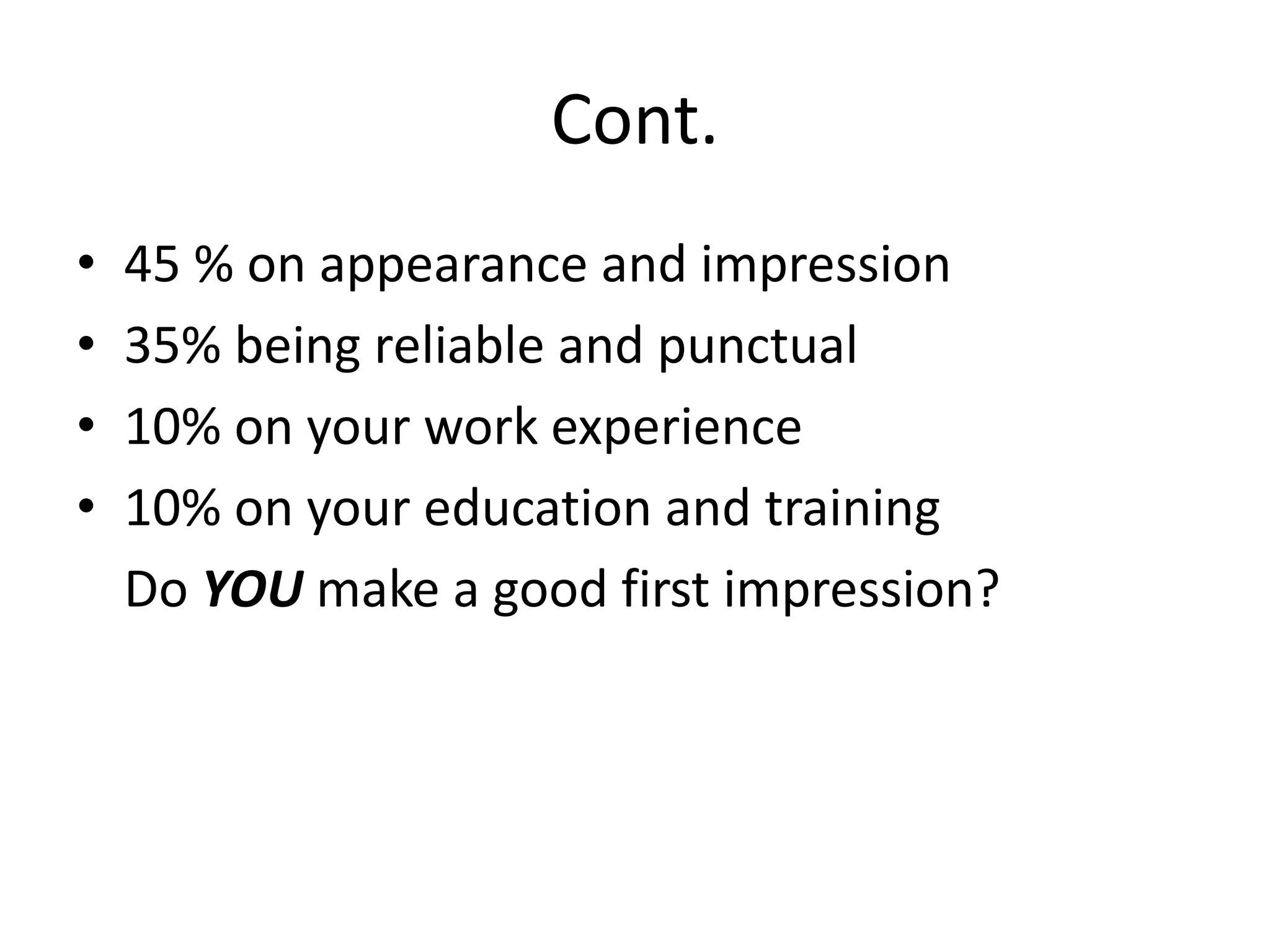
45 % on appearance and impression
35% being reliable and punctual
10% on your work experience
10% on your education and training
Do YOU make a good first impression?
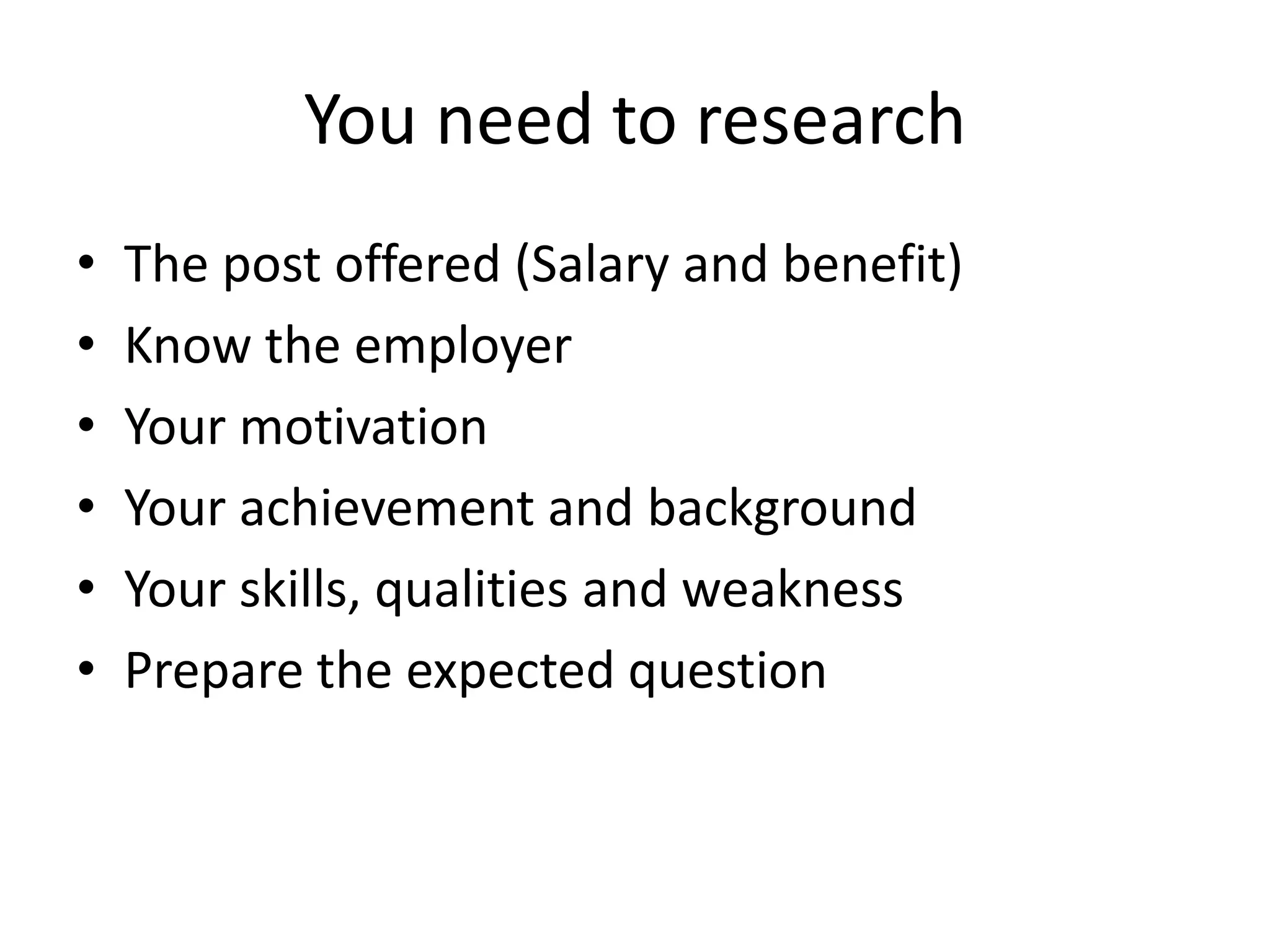
You need to research
•
•
•
•
•
•

The post offered (Salary and benefit)
Know the employer
Your motivation
Your achievement and background
Your skills, qualities and weakness
Prepare the expected question
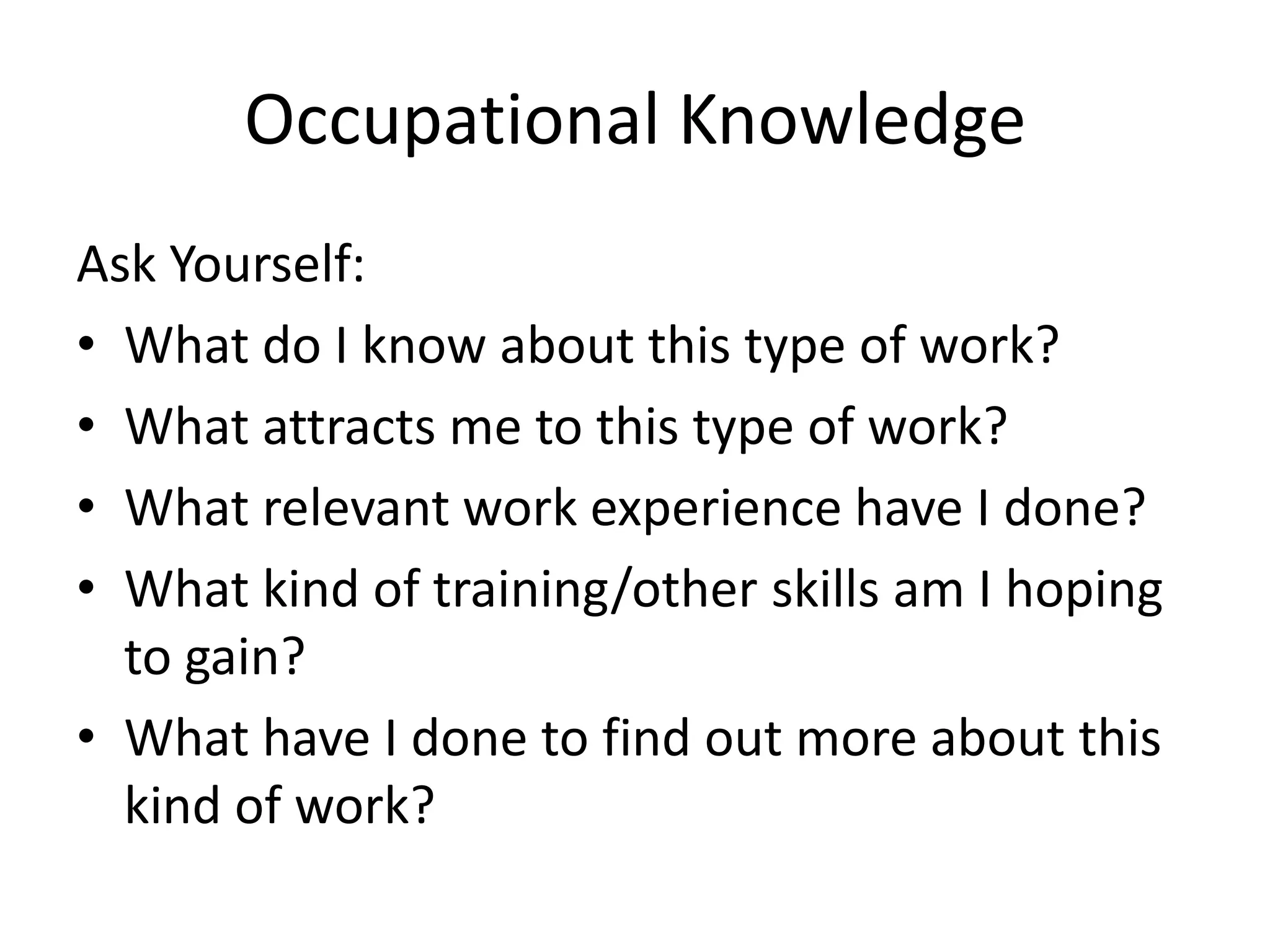
Occupational Knowledge
Ask Yourself:
• What do I know about this type of work?
• What attracts me to this type of work?
• What relevant work experience have I done?
• What kind of training/other skills am I hoping
to gain?
• What have I done to find out more about this
kind of work?
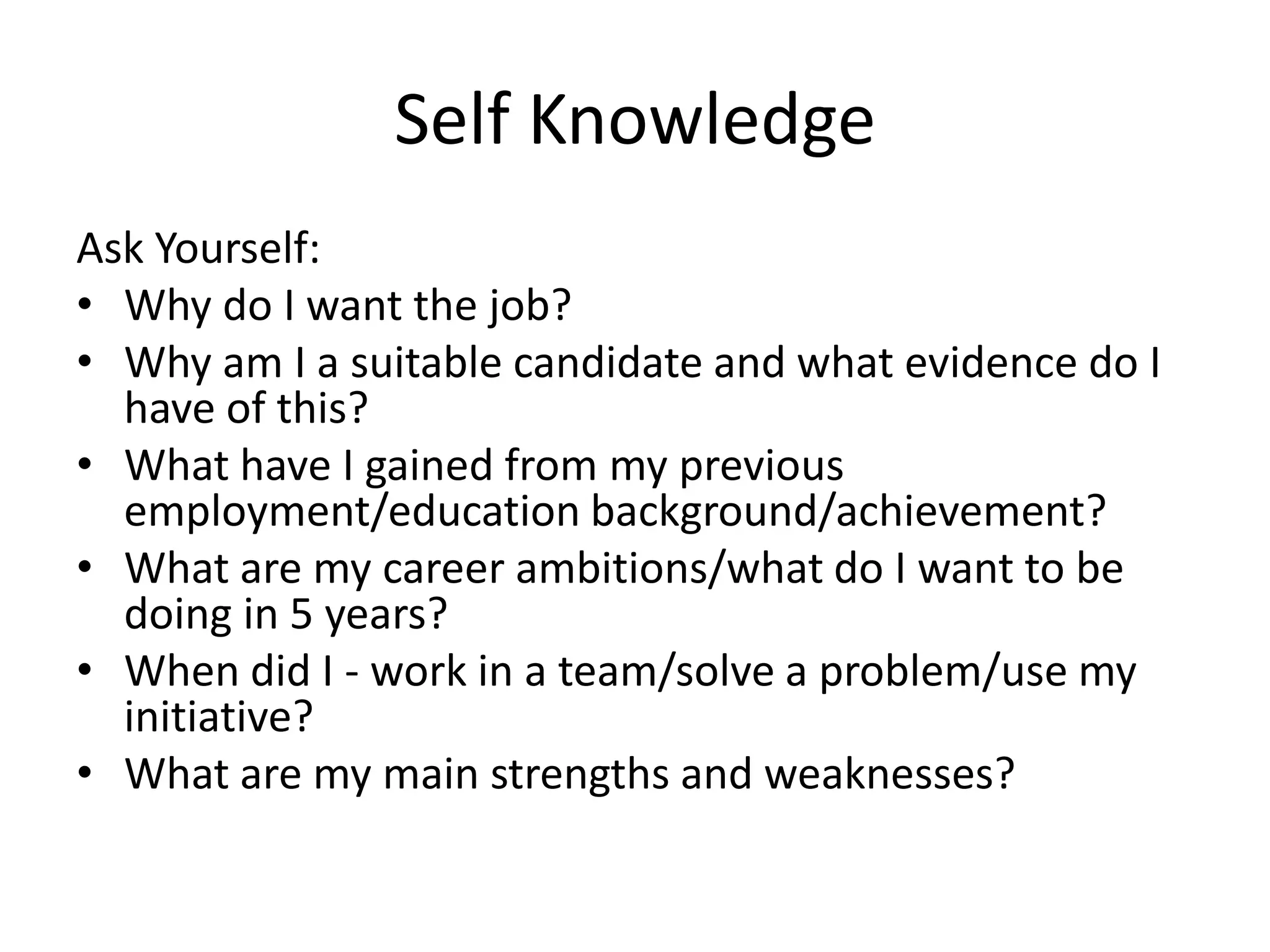
Self Knowledge
Ask Yourself:
• Why do I want the job?
• Why am I a suitable candidate and what evidence do I
have of this?
• What have I gained from my previous
employment/education background/achievement?
• What are my career ambitions/what do I want to be
doing in 5 years?
• When did I - work in a team/solve a problem/use my
initiative?
• What are my main strengths and weaknesses?
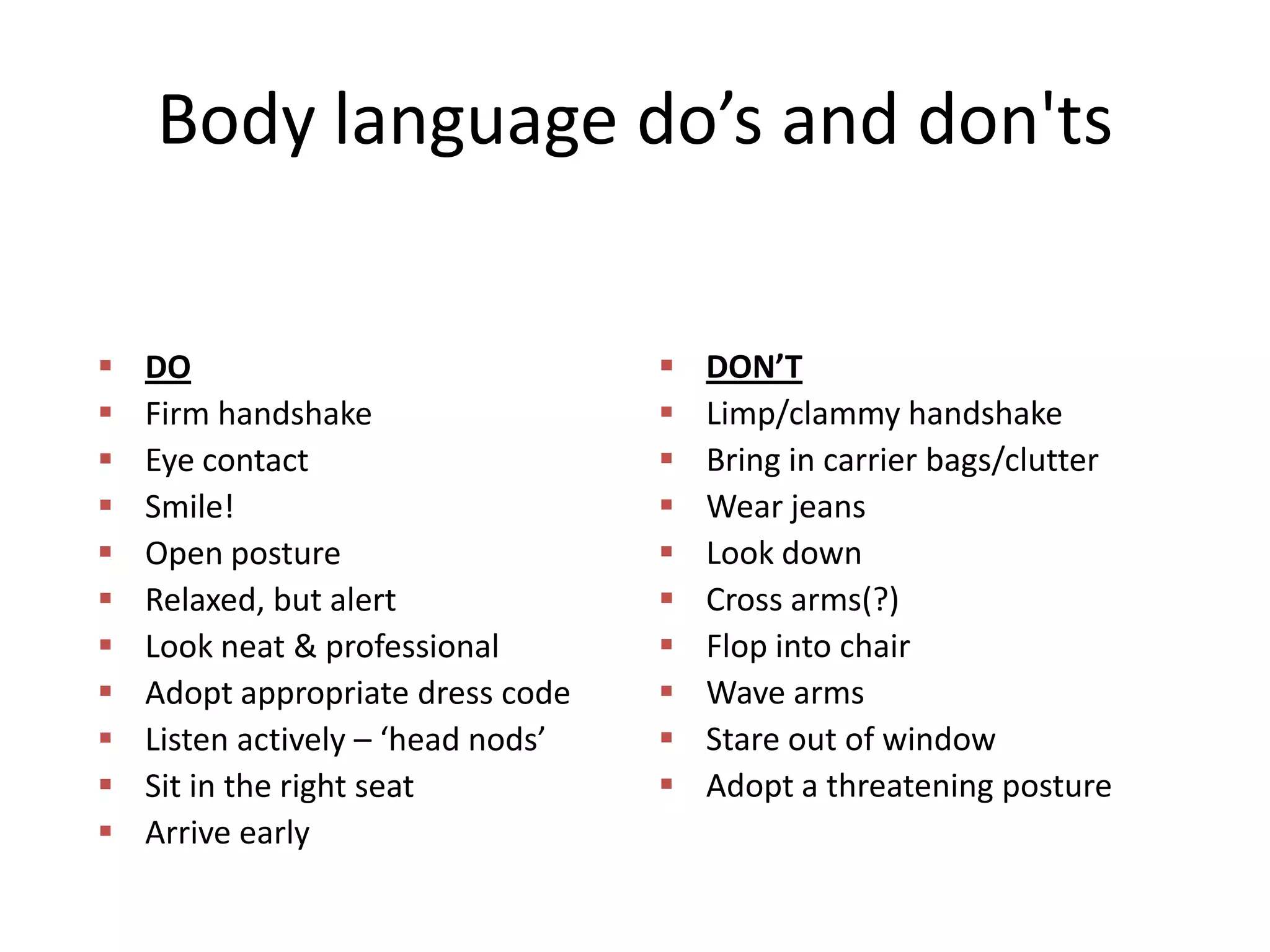
Body language do’s and don'ts












DO
Firm handshake
Eye contact
Smile!
Open posture
Relaxed, but alert
Look neat & professional
Adopt appropriate dress code
Listen actively – ‘head nods’
Sit in the right seat
Arrive early












DON’T
Limp/clammy handshake
Bring in carrier bags/clutter
Wear jeans
Look down
Cross arms(?)
Flop into chair
Wave arms
Stare out of window
Adopt a threatening posture
Interview room
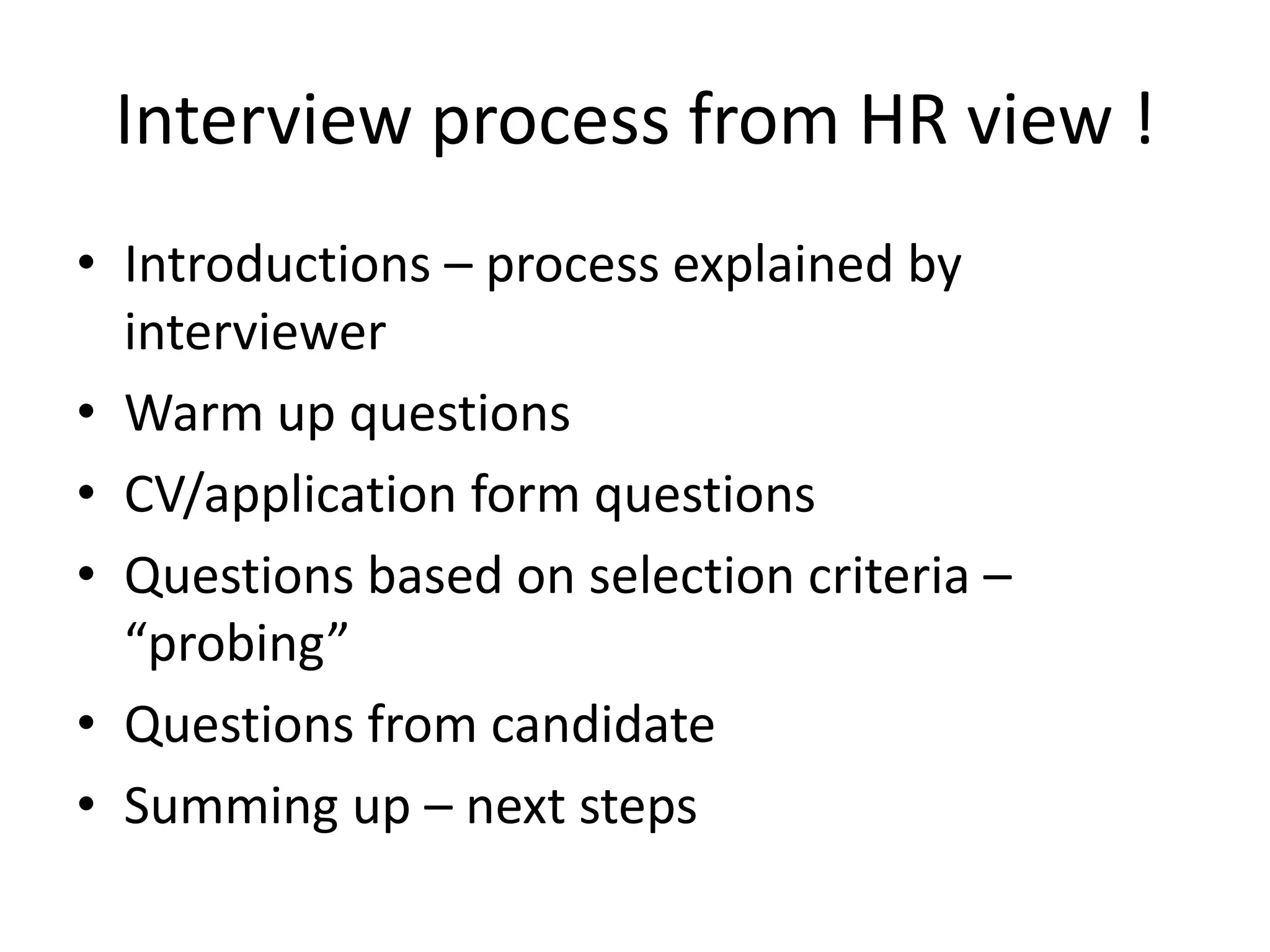
Interview process from HR view !
• Introductions – process explained by
interviewer
• Warm up questions
• CV/application form questions
• Questions based on selection criteria –
“probing”
• Questions from candidate
• Summing up – next steps
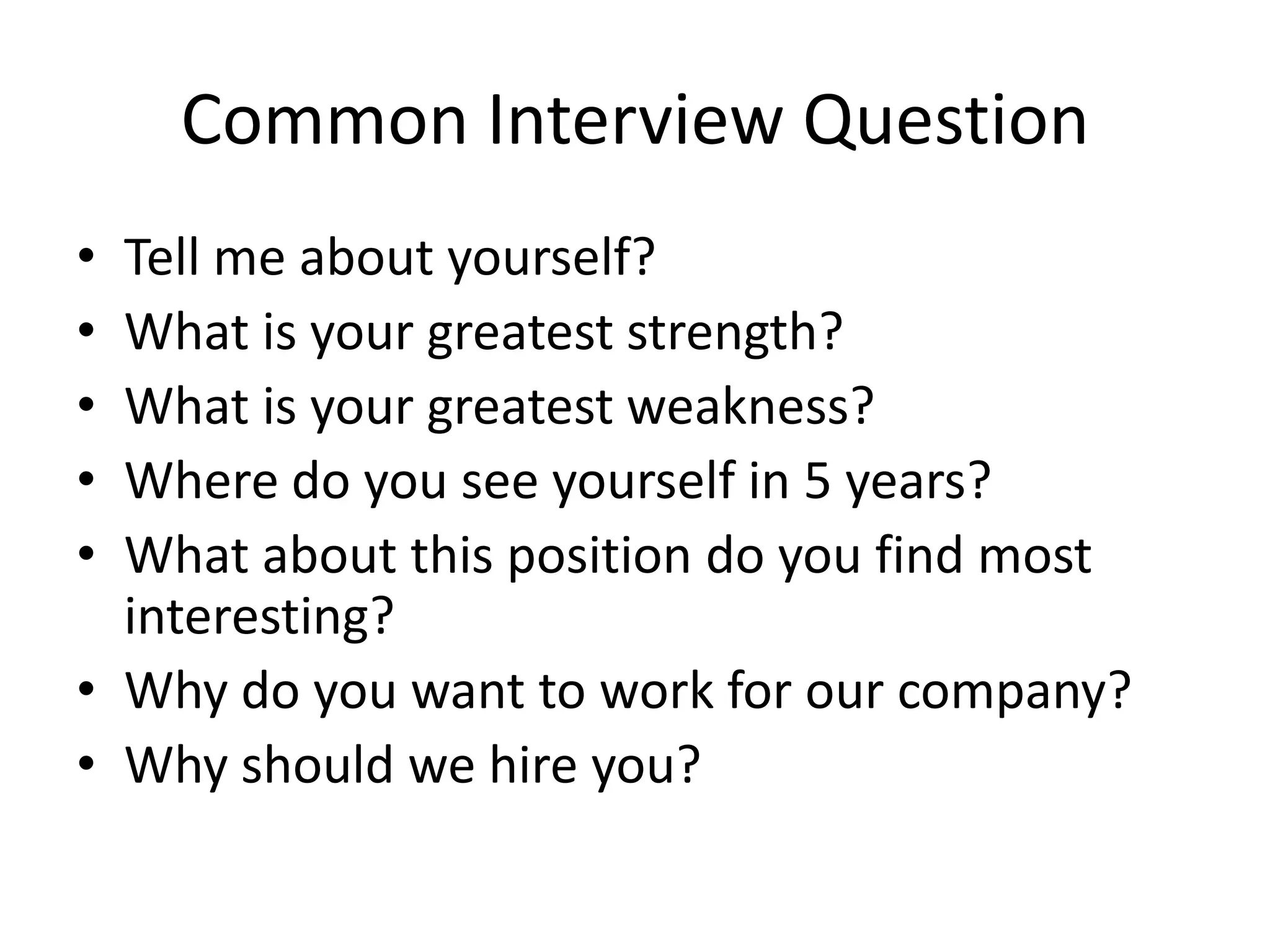
Common Interview Question
•
•
•
•
•

Tell me about yourself?
What is your greatest strength?
What is your greatest weakness?
Where do you see yourself in 5 years?
What about this position do you find most
interesting?
• Why do you want to work for our company?
• Why should we hire you?
Tell me about yourself?
• This is most often asked question in interviews.
You need to have a short statement prepared in
your mind. Limit it to work-related items unless
instructed otherwise.
• Talk about things you have done and jobs you
have held that relate to the position, you are
interviewing for.
• Start with the item from back and work up to the
present.
What is your greatest strength?
• Numerous answers are good, just stay positive. A
few good examples:
• Your ability to prioritize,
• Your problem-solving skills
• Your ability to work under pressure
• Your ability to focus on projects
• Your professional expertise,
• Your positive attitude
What is your greatest weakness?
• I am a sensitive person, and when I am seeing
the things is going wrong, I am getting into
heart and going to be disappointed.
• I am so impatient, and I can not stop myself
when I want to achieve my goals, thus I will
work day and night, and maybe this issue
affect my personal life.
Where do you see yourself in 5 years?
• I want to be a good HR Officer with a
professional organization, and as I studied
your organization background, so I will see
myself as a good HR Officer in your
organization within 5 years.
What about this position do you find
most interesting?
The main source of this question is the own
vacancy announcement.
Why do you want to work for our
company?
• If you've researched this company then you
can say something like:
• I had a research about your company
background, and during my research I had
found it out, which you’re a successful
company, and it will be my pleasure if I be a
team member with this company.
Why should we hire you?
• “As I understand your needs, you are looking
for someone who can manage the sales and
marketing of your company. As you’ve said
you need someone with a strong background
in trade book sales. This is where I’ve spent
almost all of my career, so I’ve chalked up 18
years of experience exactly in this area. I
believe that I know the right contacts,
methods, principles, and successful
management techniques”
After interview
• Know your performance critically, what went
wrong and right?
• Make some notes
• Ask for feedback
• Do not get disappointed, each interview event
is an opportunity for learning
Any question
Check out !
• Closing activity
• Feedback Forms
• Resource Packages

THANK YOU FOR YOUR TIME!

Interview preparation

  • 1.
  • 2.
    Coming together isa beginning Keeping together is progress Working together is success.
  • 3.
    Workshop Objectives • • • • • Preparing forinterview The interview experience Do’s and don’ts at interview Questions to expect and to ask Interview resources
  • 4.
    The Interview Session 09.30 – Introduction  10:00 - Interviewers prepare in groups, for group work.  10:30 – Ice breaking  10.45 - Tea break!  11:00 - Lecture  12.00 – Lunch break!  01:00- Team work  02:00 – Training Feedback (Closing of the session)
  • 5.
    Introduction  To identifythe skills, knowledge, attributes, which is necessary for interview success.  To enable participants to experience the interview process in a safe and supportive environment.  To allow participants to understand the interview process from both the interviewer’s and the candidate’s perspectives.  To practice interview preparation, questioning and answering techniques, and giving and receiving feedback.  To increase participants’ awareness and experience of the techniques as a recruiter may use to gain information from applicants.
  • 6.
    Group Activity Lets makethe team. While considering the following tips: • • • • • Gender Age Education Background Different occupational background Etc…
  • 7.
  • 8.
    Find 10 Thingsin Common
  • 9.
    What is aninterview ?
  • 10.
    Cont. • An interviewis a conversation between two or more people (the interviewer and the interviewee) where questions are asked by the interviewer to obtain information from the interviewees. From Wikipedia, the free encyclopedia
  • 11.
    What is thepurpose of an interview?
  • 12.
    Conti… • An opportunityto meet face to face • To discuss your qualifications • To assess your ability and skills • To show your skills and personality • To sell yourself
  • 13.
    When does theinterview start?
  • 14.
    The interview startswhen the employer calls to set up the interview!
  • 15.
    What do youask when you receiving a call for interview? • The time and date of the interview • The name of the person you are meeting with • The address of the place where the interview is taking place • The phone number of the office in case you need to call them.
  • 16.
    What % ofemployers hire potential employees based on the following? • • • • Appearance and impression Reliable and punctual Work experience (depends on the job) Education/training
  • 17.
    Cont. • • • • 45 % onappearance and impression 35% being reliable and punctual 10% on your work experience 10% on your education and training Do YOU make a good first impression?
  • 18.
    You need toresearch • • • • • • The post offered (Salary and benefit) Know the employer Your motivation Your achievement and background Your skills, qualities and weakness Prepare the expected question
  • 19.
    Occupational Knowledge Ask Yourself: •What do I know about this type of work? • What attracts me to this type of work? • What relevant work experience have I done? • What kind of training/other skills am I hoping to gain? • What have I done to find out more about this kind of work?
  • 20.
    Self Knowledge Ask Yourself: •Why do I want the job? • Why am I a suitable candidate and what evidence do I have of this? • What have I gained from my previous employment/education background/achievement? • What are my career ambitions/what do I want to be doing in 5 years? • When did I - work in a team/solve a problem/use my initiative? • What are my main strengths and weaknesses?
  • 21.
    Body language do’sand don'ts            DO Firm handshake Eye contact Smile! Open posture Relaxed, but alert Look neat & professional Adopt appropriate dress code Listen actively – ‘head nods’ Sit in the right seat Arrive early           DON’T Limp/clammy handshake Bring in carrier bags/clutter Wear jeans Look down Cross arms(?) Flop into chair Wave arms Stare out of window Adopt a threatening posture
  • 22.
  • 23.
    Interview process fromHR view ! • Introductions – process explained by interviewer • Warm up questions • CV/application form questions • Questions based on selection criteria – “probing” • Questions from candidate • Summing up – next steps
  • 24.
    Common Interview Question • • • • • Tellme about yourself? What is your greatest strength? What is your greatest weakness? Where do you see yourself in 5 years? What about this position do you find most interesting? • Why do you want to work for our company? • Why should we hire you?
  • 25.
    Tell me aboutyourself? • This is most often asked question in interviews. You need to have a short statement prepared in your mind. Limit it to work-related items unless instructed otherwise. • Talk about things you have done and jobs you have held that relate to the position, you are interviewing for. • Start with the item from back and work up to the present.
  • 26.
    What is yourgreatest strength? • Numerous answers are good, just stay positive. A few good examples: • Your ability to prioritize, • Your problem-solving skills • Your ability to work under pressure • Your ability to focus on projects • Your professional expertise, • Your positive attitude
  • 27.
    What is yourgreatest weakness? • I am a sensitive person, and when I am seeing the things is going wrong, I am getting into heart and going to be disappointed. • I am so impatient, and I can not stop myself when I want to achieve my goals, thus I will work day and night, and maybe this issue affect my personal life.
  • 28.
    Where do yousee yourself in 5 years? • I want to be a good HR Officer with a professional organization, and as I studied your organization background, so I will see myself as a good HR Officer in your organization within 5 years.
  • 29.
    What about thisposition do you find most interesting? The main source of this question is the own vacancy announcement.
  • 30.
    Why do youwant to work for our company? • If you've researched this company then you can say something like: • I had a research about your company background, and during my research I had found it out, which you’re a successful company, and it will be my pleasure if I be a team member with this company.
  • 31.
    Why should wehire you? • “As I understand your needs, you are looking for someone who can manage the sales and marketing of your company. As you’ve said you need someone with a strong background in trade book sales. This is where I’ve spent almost all of my career, so I’ve chalked up 18 years of experience exactly in this area. I believe that I know the right contacts, methods, principles, and successful management techniques”
  • 32.
    After interview • Knowyour performance critically, what went wrong and right? • Make some notes • Ask for feedback • Do not get disappointed, each interview event is an opportunity for learning
  • 33.
  • 34.
    Check out ! •Closing activity • Feedback Forms • Resource Packages THANK YOU FOR YOUR TIME!