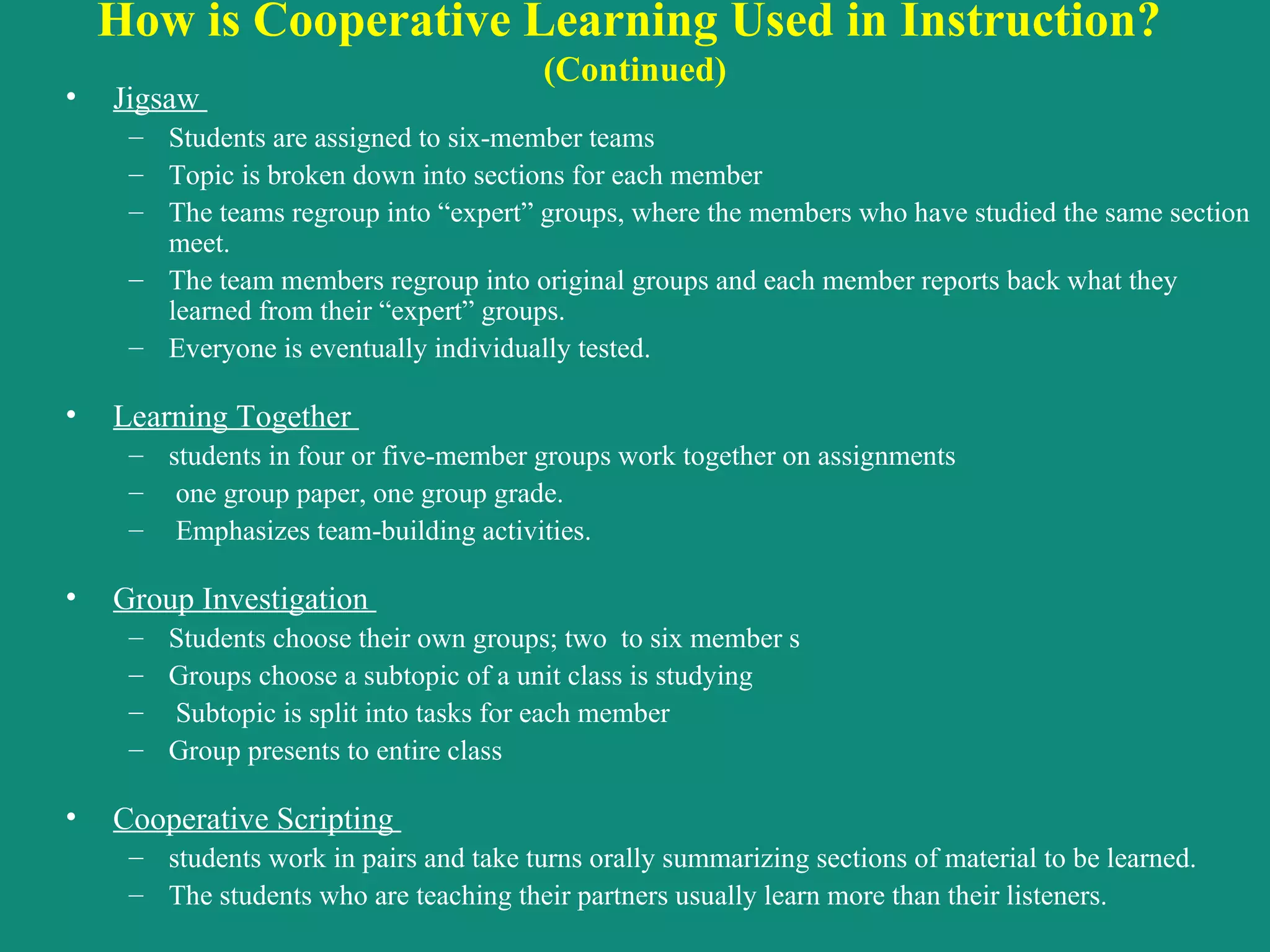
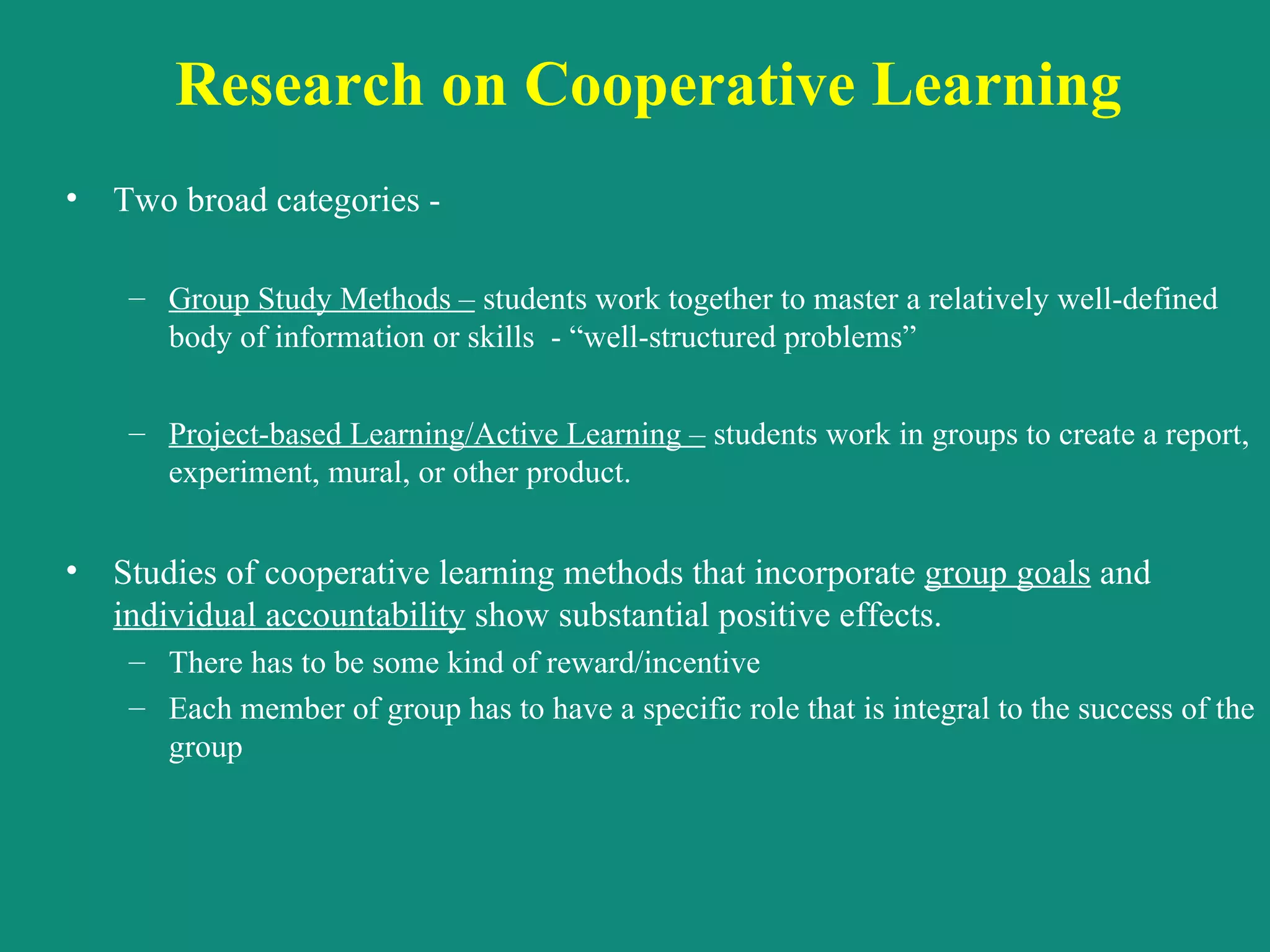
The document discusses constructivist approaches to instruction and cooperative learning. It defines constructivism as the view that students must actively construct knowledge through experiences like discovering ideas themselves and applying concepts, rather than passively receiving information. Historical influences include Piaget and Vygotsky emphasizing cognitive disequilibrium and social learning. Constructivist methods focus on complex, authentic tasks, scaffolding, discovery learning, and social interaction through cooperative groups. Research shows constructivist approaches improve achievement, though more study is needed to define their effectiveness. Cooperative learning involves small, mixed-ability groups using strategies like STAD, TGT, CIRC and Jigsaw to promote peer teaching and mastery of concepts.