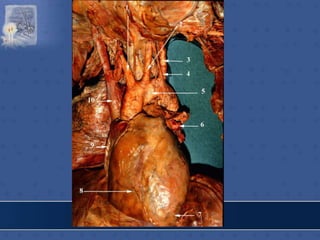
INTERIOR OF HEART
.
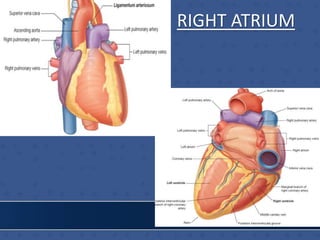
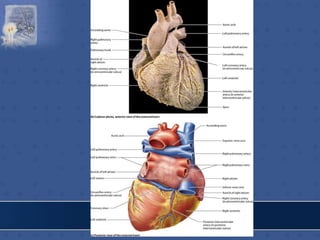
RIGHT ATRIUM
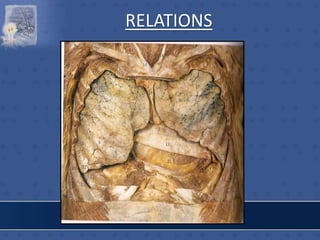
RELATIONS
Right Atrium
• External features:
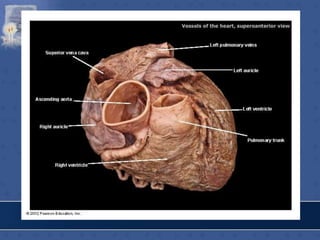
1.Right Auricle
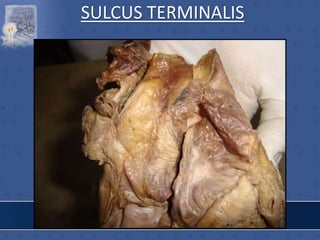
2.Sulcus terminalis
SULCUS TERMINALIS
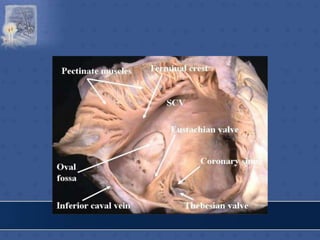
Interior Of Right Atrium
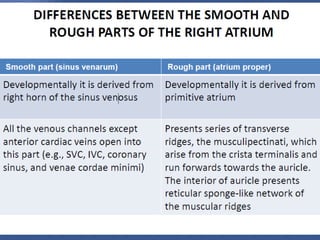
1.Smooth Posterior Part (Sinus
Venarum):
• Development: derived from right horn of sinus venosus
• Tributaries: → SVC opens at the upper end
→ IVC opens at the lower end
→Coronary Sinus……Valve of coronary sinus
→Venae cordis minimi
• Intervenous Tubercle of lower: →directs superior vena caval
blood 2 right atrium during embryonic life….
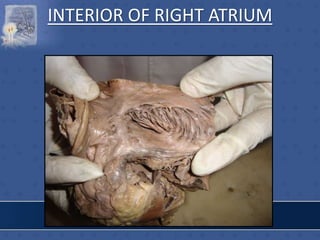
INTERIOR OF RIGHT ATRIUM
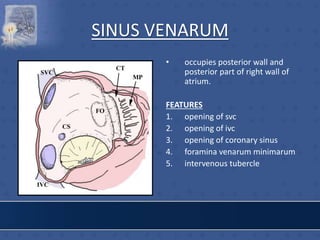
SINUS VENARUM
• occupies posterior wall and
posterior part of right wall of
atrium.
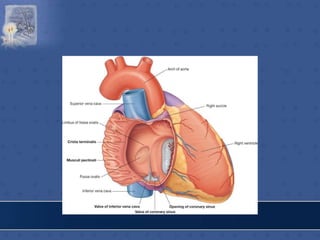
FEATURES
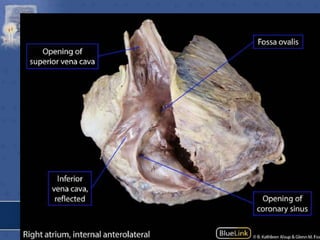
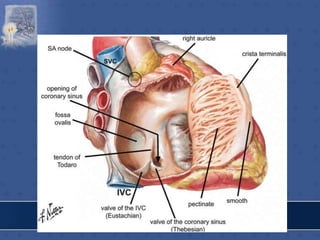
1. opening of svc
2. opening of ivc
3. opening of coronary sinus
4. foramina venarum minimarum
5. intervenous tubercle
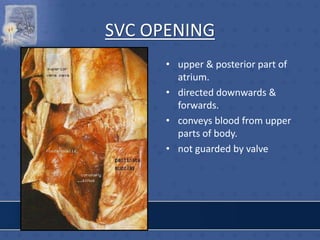
SVC OPENING
• upper & posterior part of
atrium.
• directed downwards &
forwards.
• conveys blood from upper
parts of body.
• not guarded by valve
IVC OPENING
• lower & posterior part of
atrium close to septum.
• conveys blood from lower
part of body.
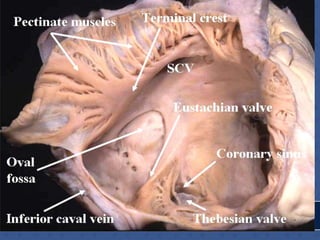
• opening guarded by a
rudimentary semilunar
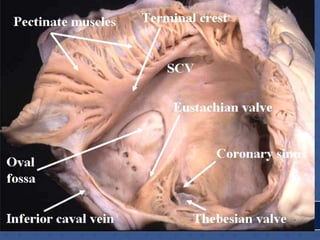
valve [eustachian valve] -
formed by duplication of
endocardium containing a
few muscle fibres.
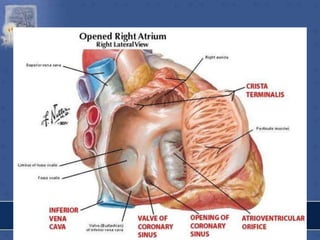
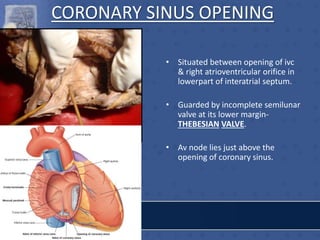
CORONARY SINUS OPENING
• Situated between opening of ivc
& right atrioventricular orifice in
lowerpart of interatrial septum.
• Guarded by incomplete semilunar
valve at its lower margin-
THEBESIAN VALVE.
• Av node lies just above the
opening of coronary sinus.
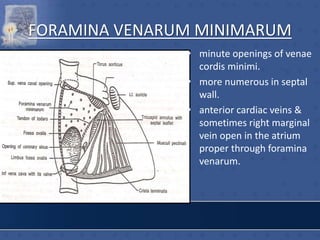
FORAMINA VENARUM MINIMARUM
• minute openings of venae
cordis minimi.
• more numerous in septal
wall.
• anterior cardiac veins &
sometimes right marginal
vein open in the atrium
proper through foramina
venarum.
INTERVENOUS TUBERCLE
• small conical muscular projection immediately
below opening of svc.
• scarcely visible in human.
• probably regulates the blood flow of svc.
ATRIUM PROPER
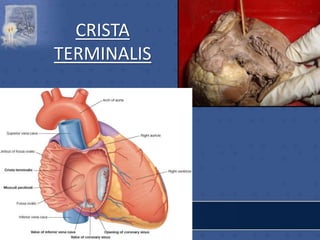
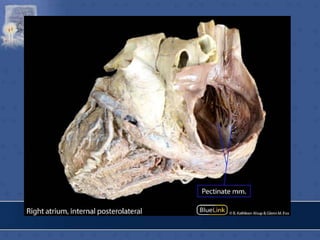
• LIES IN FRONT OF CRISTA TERMINALIS.
2.Rough anterior Part:
• Development:→ derived from primitive atrial
chamber
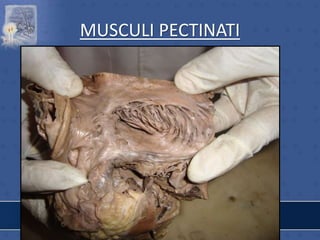
→ Musculi Pectinati
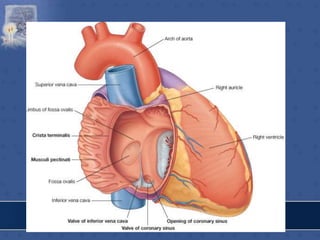
CRISTA
TERMINALIS
MUSCULI PECTINATI
3.Interatrial Septum:
• Development: →derived from Septum primum and
septum secundum
• Fossa ovalis →represents the site of embryonic
septum primum
• Annulus ovalis (Limbus fossa ovalis) →represents
the lower free edge of septum secundum
RT.SIDE OF INTERATRIAL SEPTUM
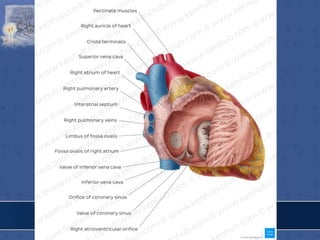
• FOSSA OVALIS
• LIMBUS FOSSA OVALIS
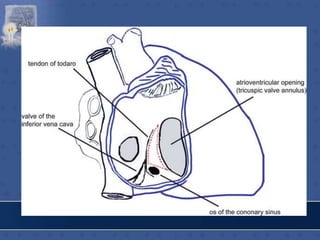
• TRIANGLE OF KOCH
[Triangular area bounded
in front by base of septal
leaflet of tricuspid
valve,behind by antero-
median margin of opening
of coronary sinus,above by
tendon of todaro-av node
lodges in the triangle]
• TORUS AORTICUS
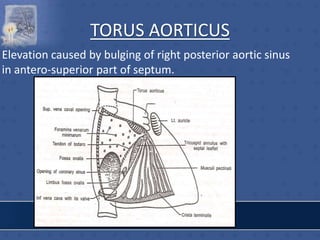
TORUS AORTICUS
Elevation caused by bulging of right posterior aortic sinus
in antero-superior part of septum.
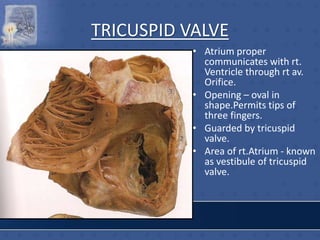
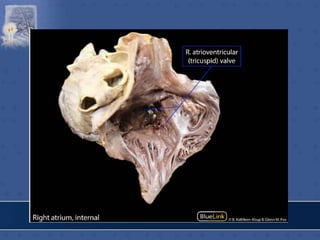
TRICUSPID VALVE
• Atrium proper
communicates with rt.
Ventricle through rt av.
Orifice.
• Opening – oval in
shape.Permits tips of
three fingers.
• Guarded by tricuspid
valve.
• Area of rt.Atrium - known
as vestibule of tricuspid
valve.
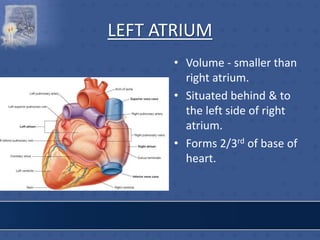
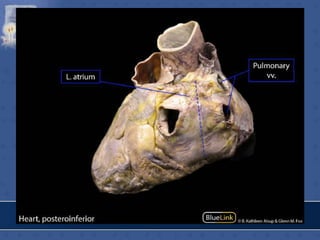
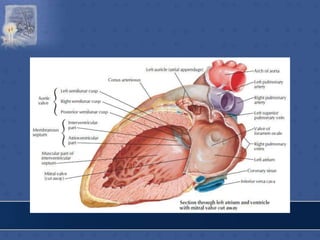
LEFT ATRIUM
• Volume - smaller than
right atrium.
• Situated behind & to
the left side of right
atrium.
• Forms 2/3rd of base of
heart.
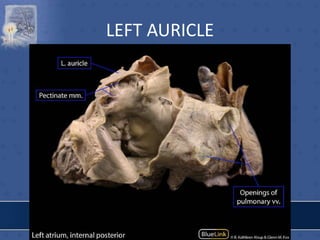
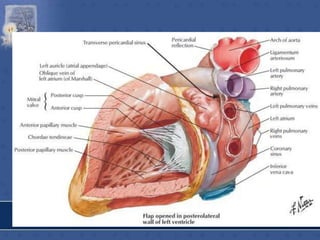
LEFT AURICLE
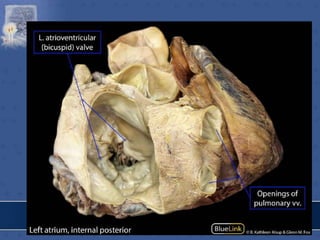
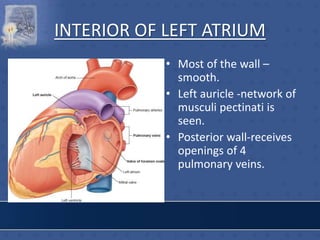
INTERIOR OF LEFT ATRIUM
• Most of the wall –
smooth.
• Left auricle -network of
musculi pectinati is
seen.
• Posterior wall-receives
openings of 4
pulmonary veins.
CLINICAL IMPORTANCE
• POTENTIAL SITE FOR FORMATION OF
THROMBI.
• IN SURGICAL AMPUTATION OF LEFT AURICLE
DURING MITRAL VALVOTOMY OPERATION,
CIRCUMFLEX BRANCH OF LEFT CORONARY
ARTERY MAY BE INJURED.
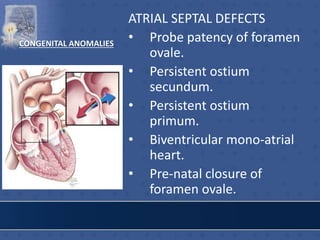
CONGENITAL ANOMALIES
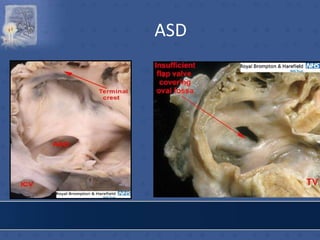
ATRIAL SEPTAL DEFECTS
• Probe patency of foramen
ovale.
• Persistent ostium
secundum.
• Persistent ostium
primum.
• Biventricular mono-atrial
heart.
• Pre-natal closure of
foramen ovale.
ASD
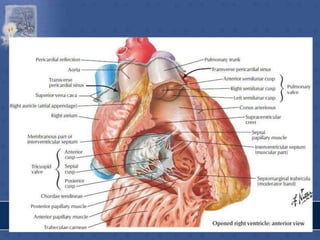
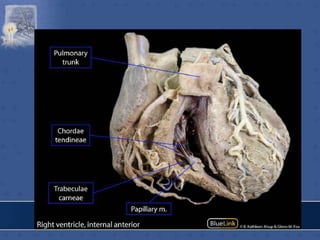
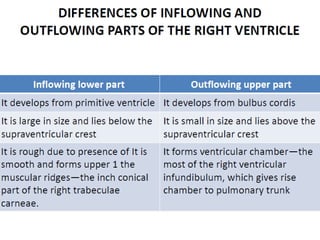
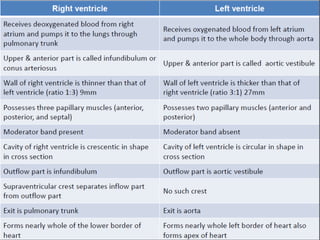
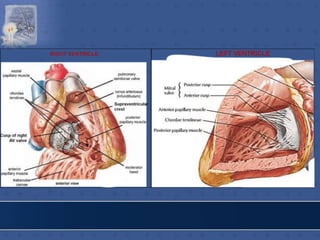
RIGHT VENTRICLE
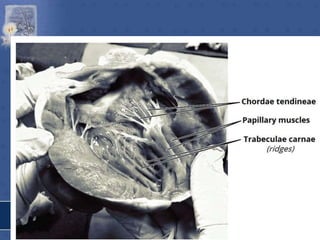
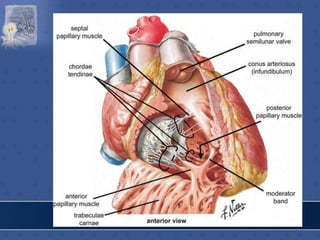
• Generel Features:
1.Interior has 2 parts
2.Interior has 2 orifices
3.Inflowing part has 3 types of muscular ridges
→Ridges
→Bridges
→Pillars(papillary muscles)
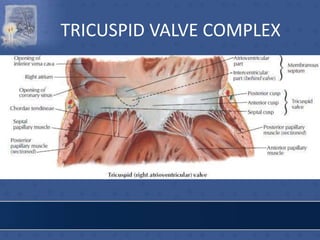
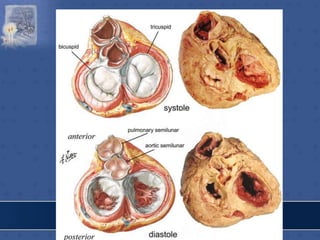
TRICUSPID VALVE COMPLEX
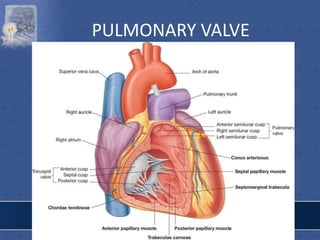
PULMONARY VALVE
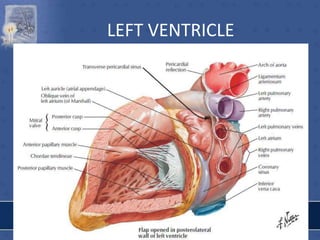
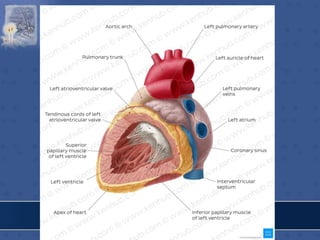
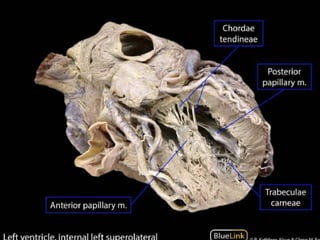
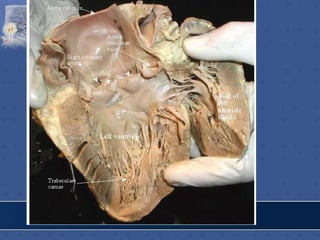
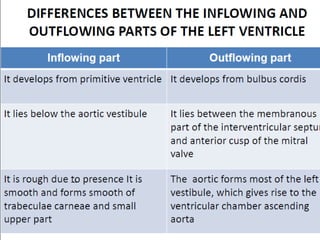
LEFT VENTRICLE
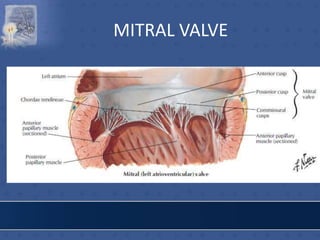
MITRAL VALVE
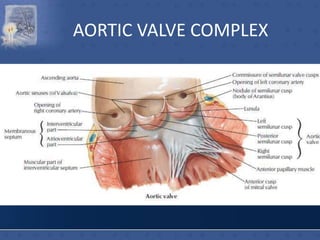
AORTIC VALVE COMPLEX
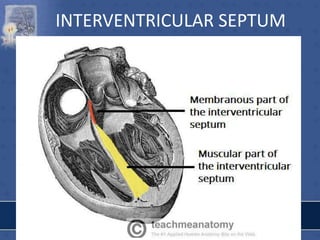
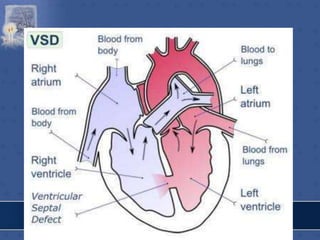
INTERVENTRICULAR SEPTUM
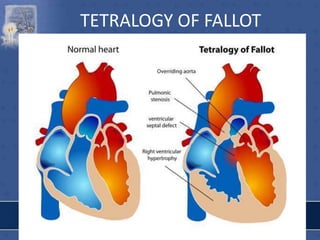
TETRALOGY OF FALLOT
THANK YOU
FEATURES
RIGHT SIDE
1. FOSSA OVALIS
2. LIMBUS FOSSA OVALIS
3. FORAMINA VENARUM
MINIMARUM
4. ATRIO VENTRICULAR
NODE[AV NODE].
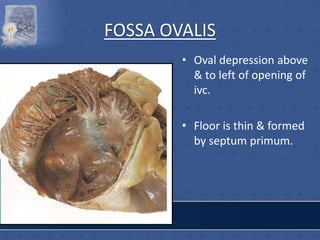
FOSSA OVALIS
• Oval depression above
& to left of opening of
ivc.
• Floor is thin & formed
by septum primum.

INTERIOR OF HEART.ppt

  • 1.
  • 4.
  • 6.
  • 7.
    Right Atrium • Externalfeatures: 1.Right Auricle 2.Sulcus terminalis
  • 8.
  • 10.
    Interior Of RightAtrium 1.Smooth Posterior Part (Sinus Venarum): • Development: derived from right horn of sinus venosus • Tributaries: → SVC opens at the upper end → IVC opens at the lower end →Coronary Sinus……Valve of coronary sinus →Venae cordis minimi • Intervenous Tubercle of lower: →directs superior vena caval blood 2 right atrium during embryonic life….
  • 11.
  • 13.
    SINUS VENARUM • occupiesposterior wall and posterior part of right wall of atrium. FEATURES 1. opening of svc 2. opening of ivc 3. opening of coronary sinus 4. foramina venarum minimarum 5. intervenous tubercle
  • 15.
    SVC OPENING • upper& posterior part of atrium. • directed downwards & forwards. • conveys blood from upper parts of body. • not guarded by valve
  • 17.
    IVC OPENING • lower& posterior part of atrium close to septum. • conveys blood from lower part of body. • opening guarded by a rudimentary semilunar valve [eustachian valve] - formed by duplication of endocardium containing a few muscle fibres.
  • 18.
    CORONARY SINUS OPENING •Situated between opening of ivc & right atrioventricular orifice in lowerpart of interatrial septum. • Guarded by incomplete semilunar valve at its lower margin- THEBESIAN VALVE. • Av node lies just above the opening of coronary sinus.
  • 19.
    FORAMINA VENARUM MINIMARUM •minute openings of venae cordis minimi. • more numerous in septal wall. • anterior cardiac veins & sometimes right marginal vein open in the atrium proper through foramina venarum.
  • 21.
    INTERVENOUS TUBERCLE • smallconical muscular projection immediately below opening of svc. • scarcely visible in human. • probably regulates the blood flow of svc.
  • 23.
    ATRIUM PROPER • LIESIN FRONT OF CRISTA TERMINALIS.
  • 26.
    2.Rough anterior Part: •Development:→ derived from primitive atrial chamber → Musculi Pectinati
  • 27.
  • 28.
  • 30.
    3.Interatrial Septum: • Development:→derived from Septum primum and septum secundum • Fossa ovalis →represents the site of embryonic septum primum • Annulus ovalis (Limbus fossa ovalis) →represents the lower free edge of septum secundum
  • 31.
    RT.SIDE OF INTERATRIALSEPTUM • FOSSA OVALIS • LIMBUS FOSSA OVALIS • TRIANGLE OF KOCH [Triangular area bounded in front by base of septal leaflet of tricuspid valve,behind by antero- median margin of opening of coronary sinus,above by tendon of todaro-av node lodges in the triangle] • TORUS AORTICUS
  • 33.
    TORUS AORTICUS Elevation causedby bulging of right posterior aortic sinus in antero-superior part of septum.
  • 34.
    TRICUSPID VALVE • Atriumproper communicates with rt. Ventricle through rt av. Orifice. • Opening – oval in shape.Permits tips of three fingers. • Guarded by tricuspid valve. • Area of rt.Atrium - known as vestibule of tricuspid valve.
  • 37.
    LEFT ATRIUM • Volume- smaller than right atrium. • Situated behind & to the left side of right atrium. • Forms 2/3rd of base of heart.
  • 40.
  • 42.
    INTERIOR OF LEFTATRIUM • Most of the wall – smooth. • Left auricle -network of musculi pectinati is seen. • Posterior wall-receives openings of 4 pulmonary veins.
  • 44.
    CLINICAL IMPORTANCE • POTENTIALSITE FOR FORMATION OF THROMBI. • IN SURGICAL AMPUTATION OF LEFT AURICLE DURING MITRAL VALVOTOMY OPERATION, CIRCUMFLEX BRANCH OF LEFT CORONARY ARTERY MAY BE INJURED.
  • 45.
    CONGENITAL ANOMALIES ATRIAL SEPTALDEFECTS • Probe patency of foramen ovale. • Persistent ostium secundum. • Persistent ostium primum. • Biventricular mono-atrial heart. • Pre-natal closure of foramen ovale.
  • 46.
  • 47.
    RIGHT VENTRICLE • GenerelFeatures: 1.Interior has 2 parts 2.Interior has 2 orifices 3.Inflowing part has 3 types of muscular ridges →Ridges →Bridges →Pillars(papillary muscles)
  • 53.
  • 55.
  • 57.
  • 61.
  • 62.
  • 68.
  • 70.
  • 71.
  • 75.
    FEATURES RIGHT SIDE 1. FOSSAOVALIS 2. LIMBUS FOSSA OVALIS 3. FORAMINA VENARUM MINIMARUM 4. ATRIO VENTRICULAR NODE[AV NODE].
  • 76.
    FOSSA OVALIS • Ovaldepression above & to left of opening of ivc. • Floor is thin & formed by septum primum.